Perovskite solar cells (PSCs) made from organic-inorganic halides are a promising photovoltaic technology thanks to their remarkable power conversion efficiency (PCE). Further improvements in these devices is limited, however, by the problem of photoinduced charge carriers (electrons and holes) recombining in the photoactive perovskite layer. A team of researchers at North China Electric Power University and the Chinese Academy of Sciences, both in Beijing, has now made the first ever p-n perovskite homojunction whose built-in electric field reduces the losses from this recombination by orienting the transport of photo-charge-carriers in a particular direction. The new homojunction structure is very different to existing perovskite solar cell architectures and could expand applications of these materials beyond solar cells.
Organic-inorganic halide perovskites have an ABX3 structure, where A is caesium and methylammonium (MA) or formamidinium (FA), B is lead or tin and X is chlorine, bromine or iodine. These materials can absorb light over a broad range of solar spectrum wavelengths thanks to their tuneable bandgaps, and charge carriers can diffuse through them quickly and over long lengths. These and other excellent properties have allowed the solar cell efficiencies of perovskites to skyrocket from an initial 3.8% (in 2009) to over 23% today. This makes their performance comparable to that of established technologies such as silicon, GaAs and CdTe.
Improving device architecture
Researchers recently found that reducing carrier recombination losses both in the perovskite layer and at the interfaces between the different layers in these heteromaterials could allow for PCEs that approach theoretical values. Although there are many ways to do this, one of the most promising is to improve the device architecture in heterojunction PSCs containing a perovskite layer in contact with electron/hole materials. In these structures, the perovskite also forms a homojunction thanks to its unique self-doping property.
“This homojunction should minimize the presence of impurities that act as carrier recombination centres,” explains team leader Meicheng Li. “What is more, a natural built-in electric field that forms in this homojunction could enhance the oriented transport of photo-induced electron/holes, thus decreasing their recombination rates even further.”
The researchers say they have now fabricated such a perovskite p-n homojunction structure using a technique called deposition processing. They then integrated this junction into planar PSCs.
n- or p-type self-doping
“We could make the perovskite either n- or p-type self-doped by controlling defect populations in the material,” explains Li. “For example, MAPbI3 films we made with Pb2+-rich/MA+-deficient/I−-deficient precursors are n-doped and those with MA+-rich/Pb2+-deficient precursors are p-doped.”
The growth conditions and the ratio of the precursors can thus be controlled precisely to realize the perovskite homojunction, he adds.
Li and colleagues identified the built-in electric field in the homojunction using a cross-sectional Kelvin probe microscopy technique. They found that this field indeed orients the direction in which the photo-induced carriers are transported and thus reduces losses from carrier recombination.
New architecture for perovskite solar cells
The researchers measured a PCE of 20.80% in planar PSCs made with a MAPbI3 p-n homojunction This increased to 21.38% in a FA0.15MA0.85PbI3 p-n one, a value that exceeds the previously reported higest efficiency for planar PSCs.
“Our structure is a new architecture for perovskite solar cells,” Li tells Physics World. “This homojunction could be exploited in other applications too, such as light emission devices, sensors and optoelectronics components.”
Orderly motion could be restored to a panicked human crowd though the actions of people called “game changers”. That is the conclusion of Ajinkya Kulkami, Sumesh Thampi and Mahesh Panchagnula of the Indian Institute of Technology Madras, who have modelled the emergence of disorder in an orderly moving human crowd.
Even at the best of times, large crowds can be terrifying because the lack of control and helplessness experienced by individuals. But when things go wrong, as they did in the Mina stampede at the 2015 Hajj in Saudi Arabia, many lives can be lost.
As a result, scientists are keen on developing models of crowd behaviour that can be used to understand the causes of crowd crushes and stampedes and try to avoid future disasters.
In this latest work, Panchagnula and colleagues looked at crowd dynamics using a variation of the Vicsek model of active matter. According to Panchagnula, the research is an extension of work that the team had been doing on the mixing of particulate materials. “We wanted to see what would happen to active materials,” he told Physics World.
Human-like characteristics
Their model describes individual members of a group as self-propelled agents that modify the direction of their motion in response to the actions of other members of the group. Each of the 6120 agents had the human-like characteristics of a diameter of 0.5 m and a mass of 60 kg and the group was confined to a circular region with a radius of 22.5 m. This results in a density of agents that is on par with a typical crowd.
Each agent is subject to three different forces: a propulsion force that drives the agent forward; a space exclusion force that prevents agents from getting too close together; and a coordination coefficient that defines how the motion of an agent is affected by the motions of its neighbours. Panchagnula says that the coordination coefficient depends on the “state-of-mind” of an agent with regards to how willing an individual is to follow the crowd. In terms of a physical description, he likens the effect to a shear force between individuals that results in the crowd having a viscosity.
At relatively high values of the coordination coefficient, computer simulations of the model show that the agents organize themselves into an orderly flow that circles round the enclosure — behaviour that is analogous to an orderly crowd. However, if there is a deterioration in the state-of-mind of the agents – caused by dialling down the coordination coefficient – the crowd undergoes a phase transition to a disorderly state in which agents “panic” and move in random directions. To return the crowd to an orderly state, the coordination coordinate must be increased well beyond the value at which the transition to disorder occurred. Called hysteresis, this behaviour is seen in many physical phase transitions – most famously in how a ferromagnet responds to an external magnetic field.
Restoring order
Further investigation revealed that the magnitude of the hysteresis increases with both the number of agents in the crowd and the size of the enclosure. This, according to Panchagnula, suggests that restoring order by simply improving agents’ state-of-mind becomes increasingly difficult as crowds become larger.
Fortunately, the team discovered that order can be restored by placing special “game changer” agents at specific points in a disordered crowd. They found that the game changers should be deployed in locations within the enclosure that experience the fastest motion when the crowd is moving in an orderly circular manner. Panchagnula explains that these game changers would move as if in an orderly crowd, which would nucleate an orderly region that would then grow to encompass the entire crowd.
Tamas Vicsek, who developed the eponymous model, describes the research as “interesting” but points out that he is not aware of any experimental observations of game changers restoring order from disorder. He does say, however, that observations have been made of “informed agents” leading groups of fish and even humans.
With regards to deploying game changers in real crowds, Vicsek points out that 612 agents (or 10% of the total crowd) were used in the simulation – which would probably not be practical.
Panchagnula says that the team is now modelling crowds in more complicated enclosures such as a rectangle with an entrance and exit at opposite ends.
An international team of scientists has synthesized a carbon nanowire doped with ruthenium and nitrogen that significantly outperforms conventional platinum-based catalysts for producing hydrogen from water. The team attributes the improved catalytic activity to individual ruthenium atoms embedded in the carbon matrix, rather than the presence of ruthenium nanoparticles.
The ability to generate clean and sustainable energy from hydrogen depends on making electrochemical water splitting cheaper and more efficient. Platinum is currently used as the catalyst of choice for water electrolysis, but it is most efficient in acidic conditions – which are impractical for most applications because they demand expensive proton-exchange membranes. In the preferred alkaline electrolytes, however, the catalytic activity of platinum nanoparticles is some two orders of magnitude lower. As a result, hydrogen production by electrolysis is not competitive enough to be widely used and most hydrogen is industrially obtained by steam-reforming methane.
Researchers have therefore been searching for better water-splitting catalysts, with most attention focusing on other noble metals similar to platinum, notably ruthenium. Carbon nanowires doped with ruthenium have shown promise, which has generally been attributed to the presence of ruthenium nanoparticles.
However, while comparable, the performance of these alternative catalysts hadn’t yet surpassed that of commercial platinum versions. But the ruthenium-based catalyst demonstrated by scientists in the US, China and Canada has now set a new efficiency record for water electrolysis.
The scientists prepared carbon nanowires co-doped with ruthenium and nitrogen at several different temperatures. In all cases, a transmission electron microscope showed that most elements were uniformly distributed throughout the samples. This included oxygen and tellurium, traces of which were left over from the fabrication process. The one notable exception was ruthenium, which formed dense clumps in the nanowire – confirming that both single atoms and ruthenium nanoparticles were present in the samples.
When the team tested the samples’ water-splitting performances, they found that all of them exhibited catalytic activity – even in a weakly-alkaline environment. Furthermore, the sample prepared at 700 K displayed a very low electron transfer resistance – about 20 Ω, compared with 136 Ω in platinum-based catalysts. This sample outperforms not only current commercial catalysts, but also other recent experiments with ruthenium-based materials.
When the researchers adjusted the fabrication method to reduce the number of nanoparticles in the samples, the results were practically unchanged. This suggests, say the researchers, that the ruthenium nanoparticles are not the main contributor to the water-splitting activity, as was previously thought.
The researchers also ran some simulations to determine which active centres contribute most to the water-splitting activity. They tested different arrangements of ruthenium and nitrogen atoms embedded in the nanowires, taking into account both the energy needed to form these configurations and the energy needed to adsorb a hydrogen atom to the catalyst surface.
Their analysis revealed that the RuC2N2 atomic arrangement is the most active site for hydrogen production. The researchers hope that results will help scientists to design more efficient ruthenium single-atom catalysts, while also highlighting the importance of atomic-scale mechanisms in understanding these materials’ electrocatalytic reactions.
Flow-based acoustofluidic cytometer developed by researchers in the USA and China. (Courtesy: Arum Han)
Even if you are not a scientist or an engineer, you have probably heard of “cellular dynamics”. For a long time, scientists and bioengineers have been interested in studying cell-specific responses to different forces. Different techniques use various forces — such as mechanical force in atomic force microscopy and optical force in optical tweezers — to measure deformation of cellular structures. Combined with other diagnostic technologies, these cellular-level analyses can lead to better understanding of disease progression, such as cancer development and metastasis. But although these techniques can analyse different biophysical properties of cells, they suffer from low throughput and high cost.
Over the past decade, various research teams have demonstrated high-throughput quantification of human cancer cell deformability by exploiting developments in microfluidic systems. However, many of those studies relied on constricting microchannels in which physical contact with cells is inevitable. This in turn, can result in measurement inaccuracy arising from even minimal changes in device fabrication. In addition, a narrowing channel can be destructive to cells when they pass through. Overall, most of these systems fall short on analysing cell deformation independent of the cell size.
To enable contact-free cell manipulation and measurement of compressibility-dependent effects, some researchers have utilized a microfluidic acoustophoresis technique. In this approach, flow of cells is controlled through a microfluidic channel; the flow is then stopped and a transducer generates an acoustic field. Consequently, cell displacement influenced by the acoustic wave is recorded. While exciting, this approach is time consuming because the cells needs to be flushed in each round as they must be stationary when measuring their displacement.
Researchers in the US and China have now developed a new acoustofluidic cytometer that can measure cell deformation independent of cell size and achieve higher throughput analyses. In this continuous-flow cell mechanotyping method, cells are introduced into the acoustic field at a constant position and their movement through to the exit position is controlled by the acoustophoretic force (Lab on a Chip 10.1039/C8LC00711J).
The continuous flow and contact-free microfluidic inlets decouple the cell size-dependent effects, as cells with different sizes, densities and compressibility (i.e., different biophysical properties) experience different acoustophoretic forces. Analyses are performed using existing mathematical equations that relate acoustic radiation force to the densities of the cell and medium, as well as the compressibility of the cell.
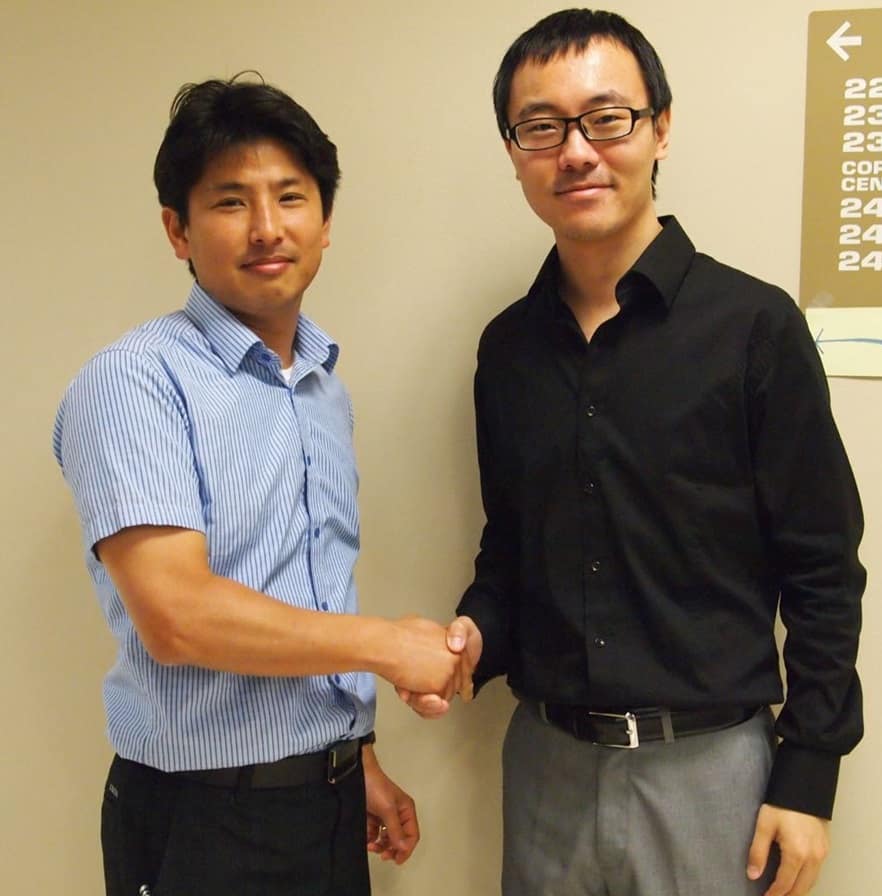
Arum Han (left) and Han Wang. (Courtesy: Han Wang)
The researchers, led by Arum Han from Texas A&M University and Han Wang from Tsinghua University, developed this label-free and non-invasive acoustofluidic cytometer to enhance single cell mechanotyping methods based on cells’ intrinsic biophysical properties. They used the device to measure the biophysical properties of different cancer cell lines under continuous flow. They then took advantage of the cells’ displacement to analyse single cell acoustophoresis-based deformation.
“The developed system can be used in a variety of applications, such as phenotyping of cancer cells with different metastatic potential based on their biophysical properties, …and even for analysing erythrocytes with regard to malaria infection,” say the authors.
The UK could lose almost half of its European funding under a “no-deal Brexit”, according to a report released today by the House of Lords’ subcommittee on EU home affairs. the report urges the government to explain how it would replace the loss of European funding adding that doing so via national UK programmes represents a “formidable” challenge.
The UK currently gets around 4% of its science funding from the European Union (EU) but wins far more back in return than it puts in. Indeed, the Lords’ report says the UK is the second largest recipient of Horizon 2020 funding — a major EU funding programme that runs between 2013 to 2020 — and has so far received 15.2% of grants distributed through the programme, totalling €5.7bn.
There are less than 50 days to go before the UK is supposed to leave the European Union on 29 March. A “withdrawal agreement” was made by the UK government and the European Union (EU) late last year but was rejected by the UK parliament in January over concerns about the Irish border. Under the withdrawal agreement, the UK is set to maintain its access to the €80bn Horizon 2020 programme, which would coincide with the expected end of the transition period.
Finding alternatives
If the UK crashes out of the EU without a deal, however, the UK government has previously announced that it will underwrite funding from EU programmes until the end of 2020. But according to the Lords’ report, the UK government still needs to agree terms with the EU for UK organisations to continue to participate in Horizon 2020 under “third country” status. That is particularly relevant as access to European Research Council grants as well as Marie Skłodowska-Curie Actions – awards that help researchers to work in different countries — is currently not allowed for third countries and so will not be covered in the government’s underwriting agreement.
These two funds represent a considerable source of funding for researchers in the UK. From 2007 to 2013, for example, UK scientists won €1.7bn of ERC grants – more than any other country and during that time they were also awarded about a quarter (€1.1bn) of all Marie Skłodowska-Curie Actions. According to UK government statistics, these two programmes account for about 44% of UK funding from Horizon 2020.
The lack of clarity over the future availability of EU funds for mobility and research is causing great concern among researchers in the UK
Michael Jay
The report warns that if the UK government cannot secure access to these programmes in a no-deal Brexit then it would need to find alternative UK funding schemes. “It would be a formidable challenge to try to replicate at a national level the substantial benefits of the EU’s programmes for research and innovation and international mobility,” the report warns.
The report also raises concerns about UK participation in the Eurasmus programme in which around €1bn is expected to be allocated to the UK between 2014 and 2020 to support university student exchanges as well as work and vocational training placements. “The lack of clarity over the future availability of EU funds for mobility and research is causing great concern among researchers in the UK,” says Michael Jay, who chairs the House of Lords EU home affairs sub-committee. “Participation in EU research programmes provides clear benefits in addition to grant funding. It offers access to large-scale research facilities, joint infrastructure and equipment, and access to the most talented researchers across Europe.”
The committee calls on the UK government to now secure access to future European programmes such as Horizon 2020’s successor – Horizon Europe, which will run until from 2020 to 2027. “We strongly believe that it is in the UK and the EU’s mutual interest to preserve current close levels of cooperation on research and innovation and educational mobility, and that the UK should participate fully in the Erasmus and Horizon Europe programmes as an associated third country,” the report states. Jay, meanwhile, adds that “full association” with Horizon Europe is “by far the best outcome for UK science”.
There is an interstellar interloper in our solar system that has astronomers firing shots at each other. Careering through our solar system fast enough to escape the gravitational pull of our Sun, it has excited, inspired and confounded astronomers. Is it an asteroid? Is it a comet? Is it a broken-off solar sail from an alien spacecraft? Or could it even be an alien probe? These are all proposals made in bona fide peer-reviewed scientific papers, based on observations of this mysterious object. As it speeds back out into interstellar space, the debate in the astronomy community continues apace on Earth.
Ever since the first news stories about ‘Oumuamua broke in mid-October 2017, comparisons with science fiction have filled headlines, especially the mention of aliens. Here is an interstellar object that scientists can’t define – in fact, they aren’t even sure what it’s doing in our celestial neighbourhood.
Planet Earth is teeming with life. Even in the harshest environments, life finds a way. Our galaxy is packed with stars, many of which host their own planetary systems, with many of those home to rocky planets orbiting at a distance conducive to temperate atmospheres. It seems unlikely that we are alone in the galaxy but, as it stands, there has been no convincing evidence of alien life.
If it is out there, we will probably find evidence of it one day, but is ‘Oumuamua it? Extraordinary claims require extraordinary evidence and Occam’s razor dictates that we must favour the solution that requires the least speculation. The route to that solution can only be found in the evidence.
From what distant deeps or skies: An illustration depicting ‘Oumuamua’s hyperbolic trajectory through the solar system, including its nearest approach to the Sun. (Courtesy: Jordan Collver)
Fleeting visitor
The name scientists gave ‘Oumuamua translates from Hawaiian as “a messenger from the distant past, reaching out to us”. On 19 October 2017 – 40 days after it had gone past its closest approach to our Sun – ‘Oumuamua was spotted by the Pan-STARRS1 telescope in Hawaii, some 33 million kilometres from Earth. Pan-STARRS1 sits near the summit of Haleakalā on the island of Maui and, each night, it scans the sky looking for near-Earth objects (NEOs). The telescope has a digital camera with nearly 1.4 billion pixels pointed at 1000 square degrees of the night sky (there are more than 40,000 square degrees in the whole sky). Roughly every hour, the camera takes four images, which are then compared to check for moving objects among the stars.
One of its primary purposes is to find NEOs that may pose a threat to Earth. Alien conspiracists need not get too excited though. Astronomers are looking for rocks and comets on potential collision courses with Earth, rather than alien spacecraft. That said, scientists scan those images looking for something we’ve never seen before and that’s what Rob Weryk, from the University of Hawaii Institute for Astronomy (IfA), noticed in October 2017. His team checked the data for a couple of days to get a good idea of the object’s orbit before picking up the phone to astrobiologist Karen Meech, who is also based at the IfA.
Meech had been hoping for the discovery of an interstellar visitor for most, if not all, of her career. Describing the moment she got the call, Meech says “My first thought was – does it really have to be today? It was Sunday. I had just got back from the big Division for Planetary Sciences meeting the day before, and it had been months since I had had a day off. But it was very exciting, so we immediately leapt into writing telescope proposals. There was this tremendous pressure because we had only a short amount of time to observe it and gather the data.”
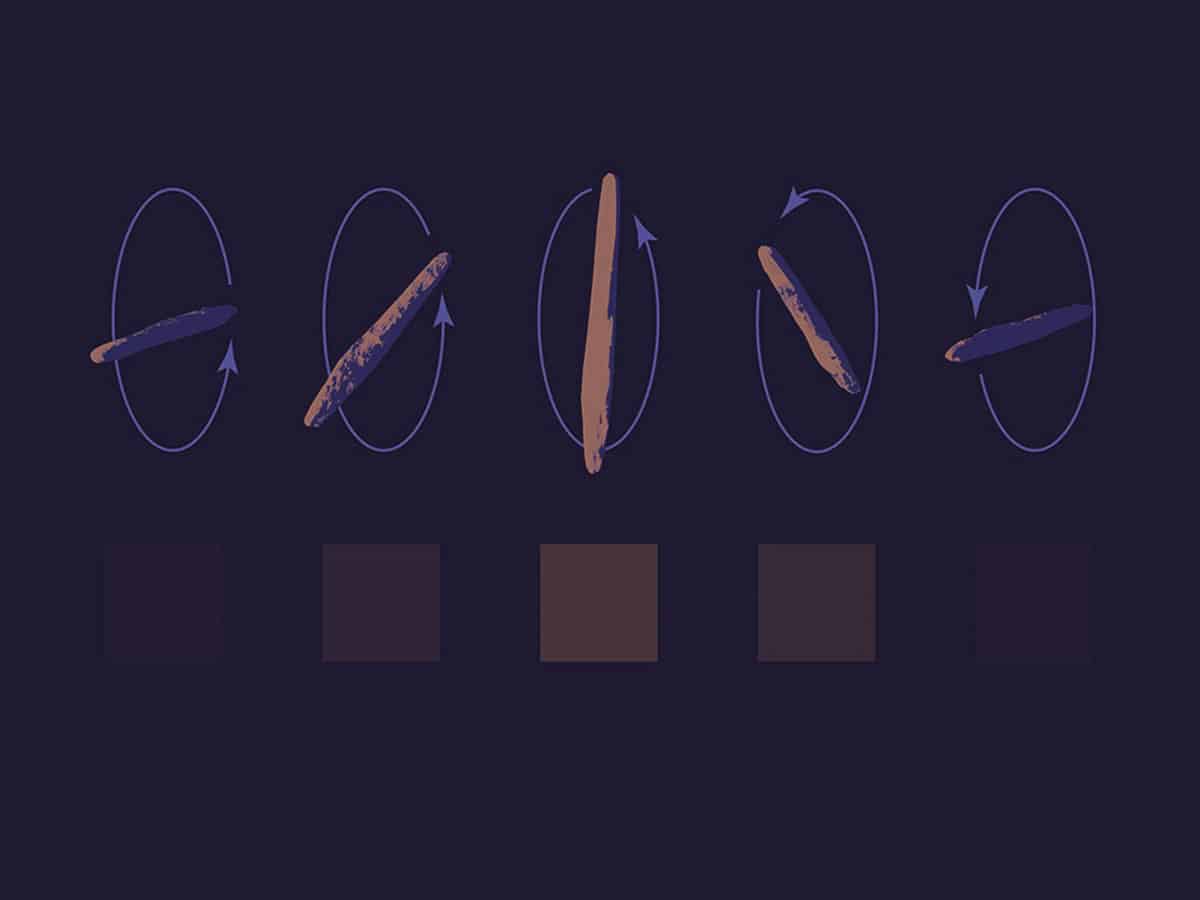
The observations showed that ‘Oumuamua has a highly irregular shape, unlike anything from our solar system. It appeared to be a cigar-shaped object, roughly 10 times longer than it is wide, rotating on its axis every 7.3 hours. These observations came, principally, from the Canada–France–Hawaii Telescope. As ‘Oumuamua spins and tumbles, its brightness fluctuates dramatically and, although its speed and trajectory suggest that it has been inside our solar system since around 1837, it spent much of that time too far from the Sun to reflect enough light for us to see it. Once it got close enough to the Sun it was moving too fast to remain in the field of view of telescopes long enough to be observed or photographed.
Observations show that ‘Oumuamua has the highest orbital eccentricity ever observed, at 1.20. An eccentricity over 1.0 means an object is moving faster than our Sun’s escape velocity, and so is not bound to the solar system. Trajectory calculations also confirmed that it had come from interstellar space, with its origin likely to be somewhere in the constellation Lyra – home to the fictional aliens in Carl Sagan’s novel Contact, the possible alien in Gene Brewer’s novel K-PAX and the Galactic Empire in Isaac Asimov’s Foundation novel trilogy.
Give science-fiction fans a crumb and our imaginations will run wild. Comparisons of ‘Oumuamua with science fiction are most striking with regard to Arthur C Clarke’s 1973 sci-fi novel Rendezvous with Rama. Indeed, Meech reveals that the scientists had briefly called the object “Rama” before deciding that its discovery in Hawaii should be recognized by naming it in Hawaiian. Clarke’s fictional spacecraft is also cylindrical and about a kilometre long, and in the story, astronomers first believe it to be an asteroid. Only after further observations and, ultimately landing a spacecraft on it, do they discover that it is alien in origin. Having re-read Clarke’s classic sci-fi novel, Meech found many similarities with the discovery of ‘Oumuamua. “But what was funny, in the book, was that the poor fellow who discovered it was having trouble getting telescope time to follow it up. That certainly didn’t happen here,” she says.
Twisted tumbler: We know that ‘Oumuamua must be a highly elongated object because it varied dramatically in brightness over every 7-to-8-hour period. (Courtesy: NASA/JPL-Caltech)
Curiouser and curiouser
Meech and the team had no problems in persuading those in charge of telescopes to turn their gaze towards the first interstellar visitor detected in human history. The consensus initially favoured the asteroid hypothesis, until research done by Marco Micheli of the European Space Agency and colleagues, published in June 2018 (Nature559 223), showed that it was not moving as expected. Anything moving away from the Sun has its acceleration slowed by gravity – this even allows for the slingshot effect. The Micheli et al. paper showed that ‘Oumuamua was, in fact, accelerating at a rate that was not consistent with the effects of gravity. Something else was propelling it. Meech, who was also one of the authors on the paper, says that they rejected two possible solutions to the acceleration almost immediately because they were implausible as they would require ‘Oumuamua to be unfeasibly thin or less dense than aerogel. In other words, those solutions would have required ‘Oumuamua to have been manufactured by an intelligent being.
The team ultimately settled on the most likely solution being that ‘Oumuamua is a comet with the acceleration caused by “outgassing”. The idea is that the Sun’s heat causes gases and dust to escape from the comet, which is thereby propelled forward. But astronomers have seen no evidence of any such outgassing from ‘Oumuamua – seemingly counting against the comet hypothesis. However, absence of evidence is not always evidence of absence. If the dust particles are too large, for example, they would not be picked up on the visual wavelengths the astronomers were using. Something that should have shown up at the wavelengths they were using is cyanide (CN) gas. Water is abundant on comets, but it is hard to detect directly, so scientists infer it from other data. When water escapes from a comet, it drags CN gas with it. But even though CN gas is very bright, no such gas was detected. In fact, no gas of any kind was detected.
A month after it was first observed, Northern Arizona University astronomer David Trilling used NASA’s Spitzer Space Telescope to study ‘Oumuamua, in the hope of measuring its thermal radiation via infrared. Despite 33 hours of observation time, it proved too faint for Spitzer to see, but this null result was significant in itself, as it allowed Trilling and colleagues to set an upper limit for the amount of thermal radiation emitted by the object. This, in turn, helped them determine that ‘Oumuamua must be no more than about 140 m long – any bigger and its thermal radiation would have been visible. The thermal radiation of any such object can also be used to determine the reflectivity of its surface, or albedo (the lower the temperature, the higher the albedo). The lack of any infrared readings therefore meant that ‘Oumuamua must have a very high albedo – indeed, it could be up to 10 times more reflective than comets from our solar system.
This is surprising because ‘Oumuamua has been travelling through interstellar space for millions of years, which should have darkened its surface, to give its reddish hue (much more in line with the surface of an asteroid). But a dark surface with low reflectivity would retain more heat, which wasn’t what Trilling’s team detected. One possible solution is that ‘Oumuamua’s surface has been recently refreshed as it made its closest approach to our Sun, in the month before we first spotted it. The problem is, ‘Oumuamua shows no signs of such outgassing, and indeed, Spitzer’s observations also did not pick up any signs of carbon dioxide or carbon monoxide – both gases would be clearly seen in infrared if water was evaporating off its surface. So if not quite a comet or an asteroid, what exactly could ‘Oumuamua be?
In November 2018 Loeb and colleague Shmuel Bialy published a paper in an attempt to understand the unexplained trajectory of the object. The pair suggested that ‘Oumuamua could be a “light-sail” created by an alien civilization and that it is now being accelerated by sunlight. They write that it is “unclear whether ‘Oumuamua might be a defunct technological debris of equipment that is not operational anymore or whether it is functional”. Unsurprisingly, the mention of possible alien artefacts, made by bona fide scientists, quickly caught the attention of the global media, and the research hit headlines around the world.
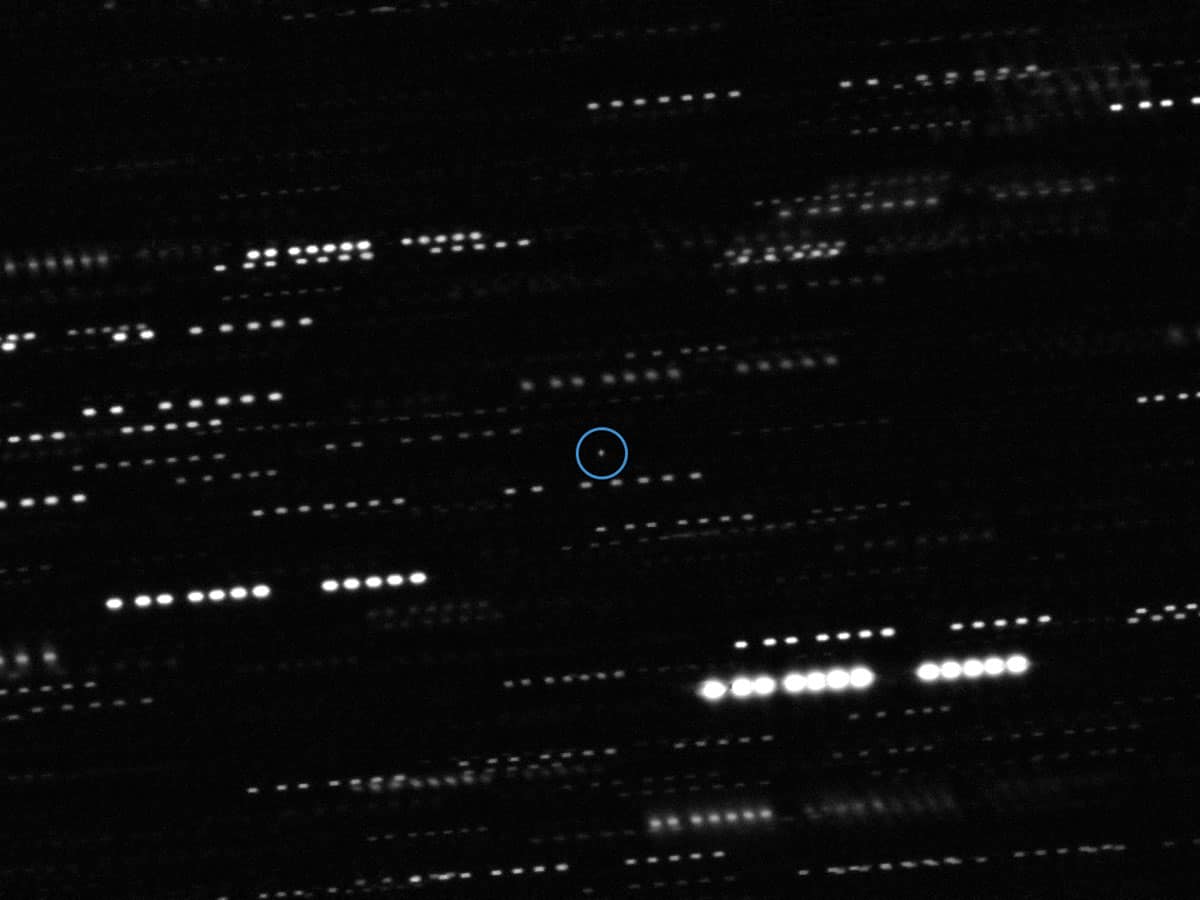
Fast and curious: ‘Oumuamua (centre of blue circle) surrounded by the trails of faint stars that are smeared as the telescopes tracked the moving object. (Courtesy: ESO/K Meech et al.)
Loeb says he was surprised by the reaction. “We did not have a press release. The paper was submitted for publication and posted on arXiv at the same time. It was reviewed and accepted for publication within a record time of only a few days,” he says. Loeb admits he was glad to see the excitement about the paper, but claims it was not written for that purpose. “We just followed the standard practice of scientific research. I prefer not to assign probabilities to the nature of ‘Oumuamua. We just need to be practical and collect more data on it or other members of its population. The interpretation of existing and future data is my plan for the future.”
The reaction from the scientific community, on the other hand, was much more critical. “I was furious for several reasons,” says Meech. “The science part of it – up until his wild and crazy speculations at the end – while thorough, was not new.” Meech tells Physics World that the Nature paper she and her team published had already talked about solar-radiation pressure, but they did not have the opportunity to lay out the detailed mathematical calculations that Loeb’s paper did, due to the length constraints of such Nature papers. While Meech doesn’t dispute the option of solar-radiation pressure propelling ‘Oumuamua, she explains that for it to be true, astronomers would have to make unreasonable assumptions. “Either ‘Oumuamua is 10,000 times less dense than a comet, or it is a very thin piece of material, both of which are not plausible”, she says, adding that Loeb “went through all the maths, and went for the most exotic, unreasonable solution with no proof whatsoever”.
In their paper (Ap. J.868 L1), Loeb and Bialy point out that light-sails with similar dimensions have been designed and constructed by our own civilization. They refer to projects such as the Japan Aerospace Exploration Agency’s 2010 IKAROS craft, which was the first to successfully demonstrate solar-sail technology in space; and the ongoing Breakthrough Starshot Initiative. Indeed, the duo’s research was supported in part by a grant from Starshot, which aims to develop a fleet of light-sail spacecraft capable of performing a fly-by mission that would take only 20 years to reach our nearest star system, Alpha Centauri.
Mass appeal
Loeb, who is chair of Starshot’s advisory committee, defended the potential conflict of interest in the paper’s funding. “We can only see things that we have experience of. I know this sort of technology, so I can see it as a possibility,” he says. “I received positive reactions from distinguished astronomers, such as Martin Rees.” That is not quite how Rees, the UK’s Astronomer Royal, sees things. “The person who claimed that is somebody who always goes for the most publicity-worthy interpretation,” he says. Whether Loeb is courting publicity or not is unclear, but the paper got significant coverage, with Loeb even being featured on national morning TV shows.
While frontpage headlines featuring the words “alien” or “extraterrestrial” are sure to sell newspapers, does this kind of extremely speculative research run the risk of undermining science in the mind of the public? A room full of astronomers understands that, in the balance of probability, ‘Oumuamua is far more likely to be a strange comet, and that Loeb’s evidence-based speculations are just that. The public, however, may not have this nuanced view. So should every research paper be carefully worded with public opinion in mind, or is it acceptable for scientists to speculate within the bounds of science, if the data allows for it? It might be easier to define what ‘Oumuamua is than to agree upon an answer to these questions. Meech’s TED Talk “The story of ‘Oumuamua, the first visitor from another star system” has so far been viewed more than three million times, and she concedes that she has Loeb to thank for much of that.
To solve the debate over ‘Oumuamua’s true nature, we need more evidence. But how often should we expect to see interstellar objects such as ‘Oumuamua? In 2017 Toni Engelhardt and Robert Jedicke of the IfA, with colleagues, looked at the data from three solar system surveys that cumulatively covered a period of 19 years’ worth of observations, and found no interstellar objects (Ap. J.153 133). They concluded that, at any moment, there could be an interstellar asteroid near the Sun where ‘Oumuamua was found – but until recently, we did not have telescopes capable of detecting them and, in that area, the glare of the Sun makes them very hard to see even today.
Playing catch-up?
The last observations of ‘Oumuamua were taken by the Hubble Space Telescope in January 2018 and astronomers will get no more data unless a space mission can catch up with the object before it leaves our solar system. Aerospace engineer Andreas Hein is currently exploring the possibility of sending a space mission to reach ‘Oumuamua (arXiv:1711.03155). Dubbed Project Lyra, the proposal for this mission to intercept ‘Oumuamua has been put forth by the Institute for Interstellar Studies – a UK-based not-for profit company led by Hein, whose long-term aim is to enable both robotic and human exploration and colonization of nearby stars.
“Our conclusion is that we could reach ‘Oumuamua using current technologies and an Oberth manoeuvre, slowing down at Jupiter before using the gravity well of the Sun for a fly-by,” says Hein. The proximity of such a solar fly-by makes it more of a fry-by due to the extreme temperatures, but Hein says that it is possible and “the optimal launch date would be 2020–2021”.
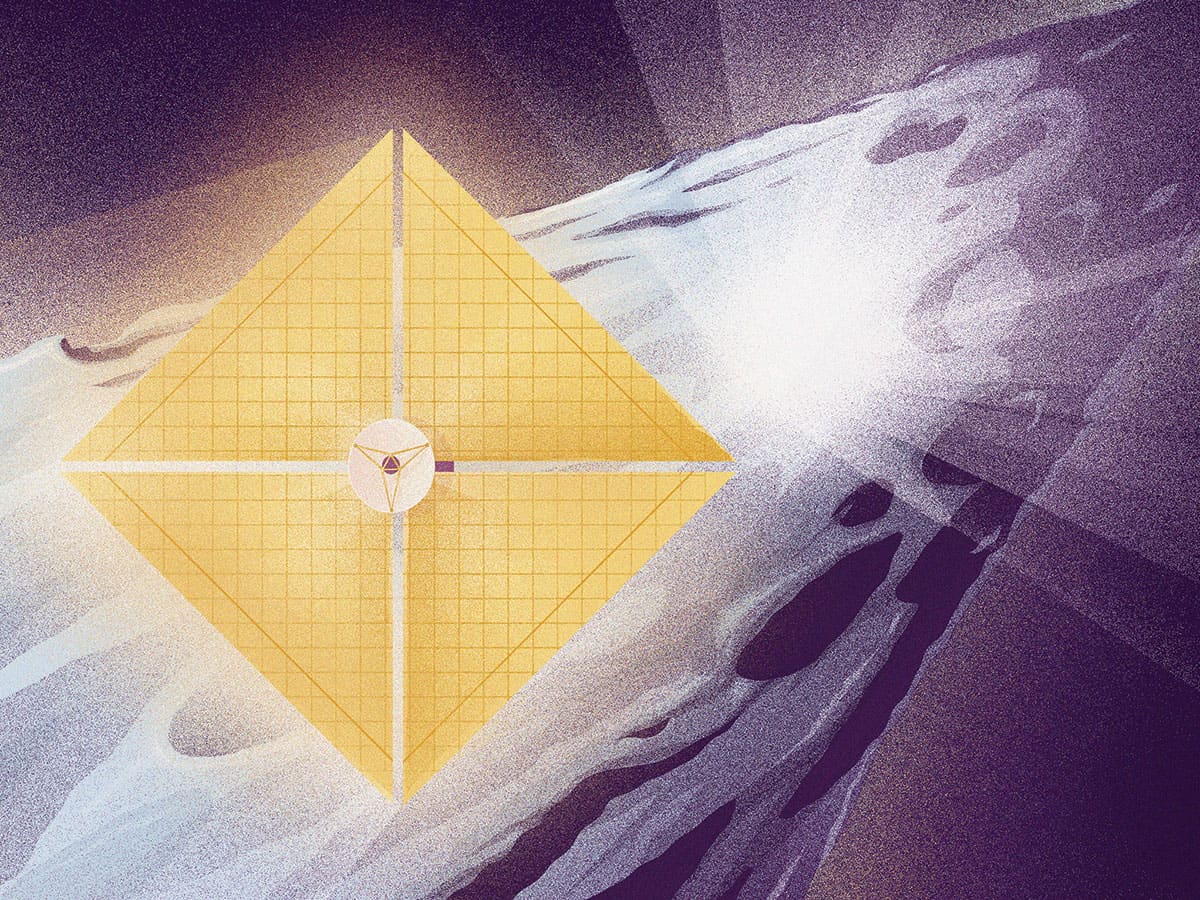
Catch and release: A depiction of the Project Lyra spacecraft, complete with its solar sail, intercepting ‘Oumuamua and shooting it with an impactor. (Courtesy: Jordan Collver)
Their research is still to be published in a peer-reviewed journal, and Meech is far from optimistic. “We had a Keck meeting a while ago, looking at the design of missions to get to these once-in-a-lifetime objects,” she says. “It is perfectly possible but for ‘Oumuamua the time has come and gone.” Indeed, if a spacecraft were to catch up with the object, it would be at a distance of 100 AUs from the Sun, where it would be very difficult to see the object.
Project Lyra proposes positioning a telescope on the spacecraft to solve this issue. Assuming that the spacecraft can get near enough to ‘Oumuamua, the plan is to fire an impactor at the object to send up a cloud of dust and debris for the main spacecraft to fly through and collect data. Hein jokes that a telescope would also be useful here as you would not want to fire anything without first being sure that it is not an alien spacecraft.
The brightest star in Lyra is Vega and, surrounding it, there is the debris disc of a nascent solar system. Could ‘Oumuamua be something ejected from this early planetary formation? Astronomers used the Hubble Space Telescope to accurately track back ‘Oumuamua’s trajectory. Although Vega currently lies along the path, once you take into account the motion of the stars (as measured by the Gaia telescope) and go back in time, Vega was not in that part of the sky.
Coryn Bailer-Jones and a team from the Max Planck Institute for Astronomy in Heidelberg, Germany, have attempted to narrow down the possible origin stars of ‘Oumuamua, and come up with four candidates. ‘Oumuamua is travelling at such a velocity that to generate the required energy would need the kind of highly turbulent system generated by binary stars, but none of the four stars is in a binary system. It is possible that it has gathered speed by encountering other solar systems on its way to us, though that would also have changed its course significantly. ‘Oumuamua’s home star is, unfortunately, something else we just don’t know yet. The next data release from the Gaia telescope may provide the answer.
The furthest man-made objects from Earth as of today are the Voyager probes, sent out in the 1970s and only just leaving our solar system. ‘Oumuamua will eventually overtake those probes in about 2038. We can only hope that we’ve found more examples of whatever ‘Oumuamua is by then. Meech and Loeb will keep their eyes on the data with equally voracious interest. Surely astronomers everywhere will be thrilled if we ever get a more complete idea of what ‘Oumuamua is – unless it actually turns out to have been an alien scout, ahead of an invasion. Don’t worry though, it’s probably not.
Data centres have only been able to stabilize their electricity usage over the past decade – despite rapidly increasing demand – because of efficiency improvements, particularly the shift from small to large facilities, the team found. But such efficiency improvements will not be enough for future energy stability.
“A lot of the efficiency gains [in] data centres so far have come from correcting some pretty egregious energy wasting practices – things like allowing cold and hot air to mix together, or continuing to run servers that aren’t actually doing anything useful,” says Arman Shehabi at Lawrence Berkeley National Laboratory, US. “Once [these have been corrected], the potential for improvement slows down. We’re not there yet, but … it’s not too far away.”
Over the past two decades, data centres have been the backbone of the digital economy, responsible for processing more and more zettabytes of data. But their services come at a high energy cost; the centres are estimated to require between 10 and 100 times the electricity per unit of floor space as other types of infrastructure.
A 2007 report for the US Congress found that, in the previous year, US data centres consumed some 60 billion kilowatt-hours (kWh) – 1.6% of total US electricity sales – at a cost of about $4.5 billion.
Two years ago, however, the US Department of Energy reported a surprising slowdown in data-centre energy growth since 2010. The precise reason was unknown, which is why Shehabi and colleagues from Lawrence Berkeley, Northwestern University and Koomey Analytics attempted to find out.
The researchers developed a model to characterize IT equipment in US data centres from the bottom up, based on information in the literature and more than 30 experts on data centres. The model included parameters to adjust the distribution and characteristics of the equipment. And the researchers fed in data on equipment sales compiled by a market-research firm.
Their main finding was that, in terms of energy usage, the massive increase in data-centre workload of recent years has been offset by relatively straightforward efficiency measures made possible by an adoption of larger-scale infrastructure. Such measures included the use of cold air taken from outdoors for cooling, and maximizing the workload from individual processors.
Had efficiency practices stayed the same since 2010, the researchers found, US data centres would be on course to consume nearly 170 billion kWh of electricity by 2020, compared with the 72 billion kWh implied by current trends. On the other hand, the analysis showed that efficiency measures could have been made faster: had this been so, usage at 2020 would be more like 45 billion kWh.
According to Shehabi, the 125 billion kWh difference in potential electricity usage for 2020 illustrates “just how different electricity demand could be from the near flat growth we’re experiencing now”. Decreasing or even maintaining stable demand after 2020 “depends on finding and implementing new efficiency measures to offset demand growth,” he adds.
Such measures could include breakthroughs in chip design for servers, and liquid cooling, according to Shehabi, who reported the study in Environmental Research Letters (ERL).
Principles of supersymmetry have been used to boost the performance of an array of solid-state lasers. The work was led by Mercedeh Khajavikhan at the University of Central Florida in the US. Her team used ideas underpinning the speculative supersymmetry theory of particle physics to suppress unwanted high-frequency modes in their array. The result was a focussed beam intensity that is more than four times greater than achieved by conventional laser arrays.
Increasing the power of a laser beam normally requires increasing the cross-sectional area of the laser cavity. This is a problem because wider cavities can support multiple transverse modes, which can create turbulence that degrades beam quality.
High-frequency supermodes
To avoid this problem, narrow solid-state laser cavities can be placed in a parallel array. If the cavities are close to one another, the modes in each cavity can couple together through evanescent electric fields that “leak” between cavities. In theory, this allows all the cavities to oscillate in step, meaning the power can be scaled up without the instabilities associated with a wider laser cavity. The problem is that such arrays can support several high-frequency “supermodes”, which degrade the laser light and make it difficult to focus the beam to a small spot.
At first glance, supersymmetry has little to do with solid-state lasers. It was first proposed in the late 1970s and it attempts to resolve long-standing problems with the Standard Model of particle physics. These include the “hierarchy problem”, which is our lack of understanding of why the weak force is much, much stronger than gravity. Supersymmetry attempts to resolve these problems by introducing a high-energy “superpartner” for every known particle.
Khajavikhan colleagues at Central Florida realized that ideas from supersymmetry could be borrowed to make better lasers. The supermodes that plague cavity arrays could be suppressed, they reasoned, if every mode except the fundamental mode was evanescently coupled to a high-energy “super-supermode”. These super-supermodes would be designed to have low quality factors and thus high losses, which would prevent the supermodes from reaching the lasing threshold. The laser could then produce a much higher energy laser beam than a standard laser array while still emitting light only at the fundamental frequency.
Creativity and ingenuity
Now, after what Khajavikhan describes as “a lot of creativity and ingenuity from our postdoc Mohammad Hokmabadi to implement and validate these abstract ideas”, the Central Florida researchers have built a supersymmetric laser array.
It comprises nine evanescently coupled quantum-well cavities etched onto a wafer. Five quantum wells form the laser itself and the other four play the role of lossy superpartners. The researchers compared the device’s far-field light output to the output of a laser containing just one quantum well and to that of a standard laser array containing five active cavities but no superpartner. The single quantum well laser produced a beam with a spread of around 24º and relatively low output power. The standard laser array produced 10 times the output power as the single quantum well laser for the same pump intensity. However, supermodes caused the beam to degrade in quality, broadening to 38° spread.
The supersymmetric laser, however, emitted almost as much power as the standard laser array, but did so in just the fundamental mode, producing a beam waist of just 11.6°. This produced an intensity at the focus 4.2 times as high as with the standard laser array. “We foresee many applications of supersymmetric laser arrays in medicine, military, industry and communications,” says Khajavikhan: “Wherever there is a need for high power integrated laser arrays having a high beam quality.”
Ortwin Hess at Imperial College, who last year helped design a laser that took completely the opposite approach and suppressed turbulence by maximizing the number of modes in a broad area laser, is impressed with the work of Christodoulides and colleagues: “I think their method is very nice,” he says. Hess adds that he is very pleased that researchers have succeeded in taking two different approaches to solving the same problem.
Optical physicist Lan Yang of Washington University of St Louis in Missouri, US agrees: “The marriage of theory and experiment is quite novel. This is a wonderful, collaborative work,” she says.” She says that more work is now needed to check the stability of the laser’s intensity: “If they can find a strategy to manipulate the lasing profile, that will be even better.”
The availability of resources needed to develop the next generation of materials is not guaranteed, particularly in the US, which is also facing growing competition from overseas. That is according to a new report from the National Academies of Sciences, Engineering, and Medicine, which calls on US government agencies to upgrade or replace key infrastructure as well as develop a national strategy to bring together research teams from academia, government and industry.
Commissioned by the National Science Foundation (NSF) and the Department of Energy, the report — Frontiers of Materials Research: A Decadal Survey — builds on two previous decadal surveys of the field that were published in 1990 and 2010. The latest report identifies several areas that are “critical” to the field, including computational materials science and engineering as well as digital manufacturing and materials for quantum information science. It also finds that bringing together computational methods with materials characterization and synthesis is accelerating the discovery of designer materials and their use in products.
We were really struck by how broad and deep this field is
Laura Greene
According to the report, that accelerating growth promises “enormous potential for impacting the quality and sustainability of Earth’s environment” — for example, the design of new materials to catalyse a range of important chemical reactions. Further research, the report continues, “could certainly improve sustainable manufacturing of materials – for example, choice of raw materials, energy-efficient manufacturing methods, and recyclability”. As for basic research, the panel cites work on the fundamental understanding of metals and alloys, including nanostructured metallic alloys, two-dimensional materials, composite materials and metamaterials.
“We were really struck by how broad and deep this field is, how quickly it’s evolving and how many, many methods have really played a major change in the way materials research is done,” says physicist Laura Greene from Florida State University, who is one of three co-chairs of the committee that prepared the report. “We’re feeling it’s growing more quickly as time moves on.”
Making the case
The panel calls for continued government support of facilities that are key to materials-science research. These include the Oak Ridge, Lawrence Berkeley and Argonne national laboratories, the SLAC National Accelerator Laboratory, the National Synchrotron Light Source II and the National Institute of Standards and Technology.
“We make a case for improving large physics facilities to keep improving synchrotron activities, X-ray activities, and others that have to do with manufacturing methods,” says panel co-chair Matthew Tirrell, who is director of the University of Chicago’s Institute for Molecular Engineering and chief research officer at Argonne National Laboratory.
The report also points to the need for close collaboration between universities, government laboratories and industry — as well as between scientific fields and different types of research institution. “The willingness to talk across fields all the way to industrial application seems much higher than in the past,” says Tom Lubensky, a physicist at the University of Pennsylvania and also a co-chair of the panel.
To build on that willingness, the panel recommends that the NSF should develop a new type of centre to “enable and indeed stimulate, students, faculty, and industrial scientists and engineers to work side by side”. It also calls for the US government to start assessing the threat of worldwide competition for resources next year and to define a strategy “to combat this threat” by 2022.
Researchers in the US, Switzerland and Finland say they have imaged magnetic monopoles (magnets with only one pole) in an artificial spin ice material. The result, obtained at the Advanced Light Source (ALS) at the Lawrence Berkeley National Laboratory (LBL), is not only important for fundamental physics studies, it will be of interest for developing spintronics and information technology devices of the future.
Magnetic monopoles were first predicted by Paul Dirac in 1931 in his work on quantum electrodynamics, but they have never been seen in nature. They are elementary particles that act as isolated magnetic north and south poles and are the magnetic analogues of electric charges.
Topological excitations
In recent years, researchers have found a classical analogue to these elusive particles in topological excitations within pyrochlore spin ice systems. These are a class of geometrically frustrated magnetic materials in which the disorder of the magnetic moments at low temperatures is exactly the same as the proton disorder in water ice (which explains where their name comes from). They contain rare-earth ion moments that occupy the corners of a tetrahedral structure and local constraints mean that these moments obey the “ice rules”: two of the moments point into, and two of the moments point out of, the tetrahedron.
When each of these dipole moments is replaced by a dimer of two opposite magnetic charges, configurations called Coulomb phases can be obtained. These act as isolated magnetic charges that behave like isolated electric charges. “Observing such magnetic charges thus proves that we are dealing with emergent magnetic monopoles,” explains study lead author Alan Farhan of the LBL and the Paul Scherrer Institute.
A single Ising-type macrospin
Farhan and colleagues say they have now succeeded in fabricating a 3D and macroscopically degenerate artificial spin ice in which thermally-driven moment fluctuations exist. They have been able to image these fluctuations for the first time, something that has allowed them to characterize the temperature-dependent behaviour of these defects, which indeed seem to behave like isolated magnetic charges.
The new spin ice consists of elongated nanomagnets lithographically placed onto a square lattice, itself placed on a pre-etched silicon substrate. Each nanomagnet is small enough to be mono-domain so that the magnetic moments in each magnet can only point in one of two possible directions along each of the magnet’s long axis. “Each nanomagnet thus represents a single Ising-type macrospin,” explains Farhan.
The researchers grew one set of nanomagnets on top of a pre-etched plateau and another set on the base of the substrate. This generates a quasi-3D spin system, they say.
PEEM
They imaged and tracked the movement of emergent magnetic monopoles in their structure and studied the behaviour of these monopoles as a function of temperature using synchrotron-based photoemission electron microscopy (PEEM) at the ALS.
These spin-ice monopoles have very different origins to those predicted by Dirac and are thus unlikely to help in the development of grand unified theories and string theories, but they are nonetheless crucial for fundamental physics studies. “Being defects that can be imaged, tracked and eventually manipulated at the nanoscale, they will also be important for researchers working in the fields of spintronic and future information technologies,” says Farhan.
The team, which includes researchers from the University of California at Santa Cruz, Aalto University, the University of Innsbruck, the University of California at Berkeley and ETH Zurich, says that it will now be looking further into the low-temperature physics of these artificial spin ice systems. “This future work will aim to answer the long-standing question about the true spin ice ground state,” Farhan tells Physics World.