I first got into quantum physics during my bachelor’s degree at St Joseph’s College, Bangalore, where I started a project studying ion traps. Being able to manipulate a single ion was amazing and that’s when I became an experimentalist at heart. I then began working on photon sources during my PhD at the Centre for Quantum Technologies at the National University of Singapore before moving to Vienna to work on quantum key distribution (QKD) and other quantum technologies.
What excites you about quantum communication?
Many of the technologies that have been proposed or have been thought of for several years are now mature enough for applications. It’s a time when you can start engaging with industry and pushing this technology out into the real world. This is what gets me excited and I want to see happen in my lifetime. QKD is probably the oldest quantum technology that is now ready, but I think QKD is just the tip of the iceberg. There are many other aspects of quantum technologies, such as metrology and sensing, that are starting to become better than any other possible classical technology. This is all exciting.
Can you describe the basics of QKD?
QKD is about getting a message securely from one point to another. It is the protocol used to distribute a random key that is used to encode and decode a message. QKD comes in quite a few different flavours, all of which have different applications and different niches. But essentially QKD uses various features of quantum mechanics, such as entanglement, to distribute a key between two parties.
China did not spend billions of dollars on a QKD network that includes a dedicated satellite for nothing
Siddarth Koduru Joshi
Where are we currently with QKD?
QKD is being refined to fit certain applications. It’s relatively easy for two people to talk to each other – via pairs of links – using QKD. But this is like doing so with walkie-talkies and is really resource-wasteful. What you want instead is a mobile-phone-like network. QKD is now about going over longer distances and cutting the costs. As well as being used on Earth it is also being tested in space and with drones.
Quantum explorer: Siddarth Koduru Joshi says that cubesats could be used to create a quantum communication network in space. (Courtesy: Siddarth Koduru Joshi)
Did you say drones?
Yes. It’s not enough to be able to communicate with fixed, land-based ground stations. But maybe you also want to talk to a ship or a vehicle or a plane while it is moving? Using a drone is a nice testing platform for rapid-tracking QKD and it’s something that we’re working on at the moment.
Is anyone buying these systems yet?
The companies that build QKD systems are flourishing, so people are buying them. Of course, who is buying them is usually confidential. China did not spend billions of dollars on a QKD network that includes a dedicated satellite for nothing. They also see commercial applications and are connecting their banking centres to QKD networks. It is now just a question of how much are you willing to pay for what level of security? As things get cheaper, I expect that QKD will be more widely implemented.
What is it like doing QKD in space?
One of the biggest challenges is identifying the best protocol as there are a number of ways to do quantum communication. For example, you can encode a key on the ground and then send it up into space. But this means that you suffer early losses in the signal as it passes through the atmosphere. Alternatively, you can send a key from space to the ground where the losses would be after the signal is sent, but this requires more complex equipment up in space to produce the quantum signal. What we need is conclusive data showing which method is best for each case and to convince everyone else in the community that is the right direction to pursue.
Do we need to do QKD in space?
Yes. Losses of more than about 40 or 50 dB severely hinder QKD communication rates when sending signals through optical fibres. This limits us to around 400 km, which is not much on a global scale. It is possible to use quantum repeaters to boost the distance, but they are very complex pieces of technology that wouldn’t be practical to deploy widely. Yet if you’re using satellites then you may have some initial losses sending a signal through the atmosphere but after that you could transmit over gigantic distances in space given that it would be mostly loss-free.
Given that researchers in China demonstrated space-based QKD earlier this year, is there a quantum space race?
China has done an incredible amount of work in this field and made huge progress. The goal is to have a fully functional constellation of satellites, not just one. While China has a head start, I think other countries are starting to catch up. Especially when the technology miniaturizes enough so that it can be put on cubesats, which would cost around a million to launch instead of a billion for a dedicated satellite.
You also have a proposal to study quantum gravity using the International Space Station (ISS). What’s that all about?
The idea is to see whether there are any differences between an entangled system and a non-entangled classical system as they make their way to the ISS. We make the test by sending up entangled systems into space and measuring the entanglement and simultaneously sending up a classical system under the same conditions and then comparing the two. If there is no difference, then it will be an important baseline measurement where we can place limits on the effect of gravity on a quantum system. But if we see some difference then it could turn our understanding of physics upside down.
Could liquid water and liquid phase-change materials (PCMs) have the same underlying physics? The answer could be yes, according to new work by researchers in the US and Germany who have studied a PCM alloy made from germanium (Ge), antimony (Sb) and tellurium (Te) in the ratio of 1:2:4 using quasi-electron neutron scattering. The experiments reveal that the so-called Stokes-Einstein relation, which connects the viscosity of a liquid to the diffusion coefficient of its molecules, appears to break down above the melting point of the material and at very low viscosities – just as in water. The result will be important when making phase-change memories from GeSbTe alloys and related PCMs in the future.
PCMs can be reversibly switched between their glassy and crystalline states by applying a voltage that heats up the material or by directly heating them up with a laser. This ability to switch between two “0” and “1” states – a crystalline state with high electrical conductivity and a meta-stable amorphous state with low electrical conductivity – means that they are one of the new types of non-volatile memory being studied to meet the world’s ever-increasing demand for digital information, the volume of which is doubling every two years. Such memories could work a thousand times faster than current flash computer memory, say the researchers, who are led by Charles Austen Angell of Arizona State University, Tempe. They could also be much more durable with respect to the number of daily read-writes.
The Stokes-Einstein relation and its breakdown
The viscosity and the atomic self-diffusion coefficient play a fundamental role in the ultrafast switching behaviour of PCMs and the connection between the two parameters can be described by the long-established Stokes-Einstein relation (SER), which works surprisingly well for simple liquids at high temperatures near and above their melting temperature. In liquids that can be supercooled, however, this relation beaks down well below the melting point at temperatures where viscosities rapidly increase.
“The situation is different, however, for a small number of unusual liquids (which include water) that can be supercooled,” explains Angell. Here, this breakdown is found to occur above the melting point of the liquid and at very low viscosities. Now, our team has unexpectedly found this behaviour to hold in the high mobility state of PCMs too. Could there be a connection?”
QENS
The researchers obtained their result using quasi-electron neutron scattering (QENS) to study the PCM Ge1Sb2Te4. This technique allows them to directly determine both the so-called structural α-relaxation time (which is proportional to shear viscosity) and the self-diffusion coefficient of a sample.
Their result implies that although the PCM’s viscosity may sharply increase as the material cools, atomic diffusivity can remain high because it favours fast phase switching behaviour when the PCM is very fluid.
“The same behaviour is seen in supercooled silicon and germanium,” Angell tells Physics World. “Can it be that the underlying physics of these liquids has a common basis?” In these materials, the SER breakdown above the melting point and at low viscosities is thought to come from submerged liquid-liquid transitions that kick start crystallization and fragile-strong transitions during ultrafast cooling that preserve the liquid state.
Metal-semiconductor transition in nanoscopic PCM bits
“Above the transition, the liquid is very fluid and crystallization occurs extremely rapidly once nucleated, while below the transition the liquid stiffens up and retains the amorphous, low-conductivity state down to room temperature,” explains Angell. “In nanoscopic ‘bits” made of this material, this amorphous state remains stable indefinitely until instructed by a computer-programmed heat pulse to increase instantly to a temperature at which it flash crystallizes (on a nanosecond timescale) to the conducting, metallic ‘on’ state.
“A second, slightly larger heat pulse can then take the ‘bit’ instantaneously above its melting point, and then with no further heat input and close contact with a cold substrate, for example, it quenches at a rate that is high enough to avoid crystallization. It then freezes into a (semiconducting) ‘off’ state.”
“The amorphous phases of this kind of material can be regarded as ‘semi-metallic glasses’,” explains team member Shuai Wei. “Contrary to the strategy in the research field of ‘metallic glasses’, where people have made efforts for decades to slow down the crystallization in order to obtain the bulk glass, here we want those semi-metallic glasses to crystallize as fast as possible in the liquid, but to stay as stable as possible when in the glass state. I think now we have a promising new understanding of how this is achieved in the PCMs under study.”
The process of fabricating the membrane and the principle of water- and proton-selective permeation through it. Credit: Zishu Cao
Zeolites have played an important role in the chemical industry in past decades. These microporous, aluminosilicate materials are well-known catalysts and adsorbents for catalytic reforming and separation of petrochemicals. More recently, zeolites have also been used to remove radioactive cesium from seawater following the Fukushima Daiichi nuclear disaster. Now, recent work from the University of Cincinnati, has opened even more doors for the material by tweaking its geometry and surface chemistry.
Zishu Cao and her colleagues fabricated membranes by tiling with 6-nanometre-thick zeolite flat sheets, they synthesized by a modified hydrothermal crystallization procedure. The resultant membrane was much thinner than a conventional zeolite membrane, with a thickness of less than 500 nanometres versus a traditional membrane’s thickness of several micrometres.
Tiling enhancements
Cao’s adviser, Junhang Dong of the Department of Chemical and Environmental Engineering, says Cao’s two-dimensional zeolite sheets overcome the major transport issues the conventional thicker zeolite membranes typically experience when they are several microns thick.
“The potential for zeolite membranes in the energy and chemical industries is enormous,” says Dong, “but the practical realization of their use is hindered by two serious issues caused by intercrystalline spaces in the films and their randomly oriented polycrystalline structure.”
These intercrystalline spaces, or gaps between the randomly oriented crystals that comprise the films, undermine the separation selectivity by causing nonselective permeation of molecules and ions. In addition, the random orientation of the crystals in the films results in longer and un-preferred diffusion paths making the membrane permeation inefficient.
The two-dimensional, zeolite nanosheet tiled membranes synthesized by Cao, however, provide an oriented straight channel structure that provides both reduced intercrystalline spaces and shortened diffusion lengths for enhanced selectivity and membrane flux.
“Imagine you are using blocks to waterproof a roof. Now we are using tiles or shingles to construct the roof,” says Dong.
Petrochemical inspiration
Their readily scalable membrane fabrication by zeolite nanosheet lamination was inspired by recent work from the University of Minnesota, where researchers synthesized organophilic pure-silica zeolite nanosheets suitable for petrochemical separations. In Cao’s work, they incorporated aluminium ions into the silica-based zeolite framework to make the surface ionic and strongly hydrophilic – both favorable properties for water and ion separations. To the group’s knowledge, the ionic zeolite nanosheet laminated membrane is the first of its kind.
In their recently published paper, Cao displayed its potential for water desalination. The group chose to study this application because of its relevance to a wide range of needs in treating high salinity wastewaters, from industrial activities such as oil and gas drilling and power plant desulphurization and cooling. They reported high water flux with high salt rejection rates for brines containing up to 24% dissolved sodium chloride by weight.
The group says many routes are possible – desalination was just an example of the membrane’s capabilities. From here, they are exploring high-performance battery ion separators, catalysts, adsorbents, and thin-film sensors.
In this short video for our 100 Second Science series, Rachel Lea introduces the form of radiotherapy known as brachytherapy. Over a hundred years old, this treatment involves targeting cancer cells with radioactive sources no larger than a grain of rice. Lea, a principal clinical scientist at the Christie Hospital in Manchester, describes the medical situations in which brachytherapy is used and how the treatment has evolved over the decades.
“The [ice] thickness and coverage in the Arctic are now dominated by the growth, melting and deformation of seasonal ice,” says Ronald Kwok of NASA’s Jet Propulsion Laboratory and ICESat-2 science team. “We’ve lost so much of the thick ice that changes in thickness are going to be slower due to the different behaviour of this ice type.”
Kwok’s analysis of satellite data and submarine measurements covering six key areas of the Arctic shows that between 1958–1976 and 2011–2018, the average ice thickness near the end of the melt season decreased by 2 m, some 66%,.
If these losses continue, scientists expect trends in ice thickness and volume to be more closely controlled by shorter-term seasonal changes. Younger ice is more susceptible to variations in wind and weather.
“The transition from a thicker older ice cover to a largely seasonal ice cover has implications on the types of thickness changes we expect to see,” says Kwok. “Even though seasonal ice grows faster than multiyear sea ice, there is a limit to how thick seasonal ice can grow during a given winter; multiyear ice has more than a year’s worth of growth and deformation to add to its thickness.”
An update to work carried out a decade ago, the study includes CryoSat-2 observations as well as the record of multiyear sea ice coverage from NASA’s QuikSCAT satellite and EumetSat’s ASCAT.
Scatterometer data gathered from 1999 to 2017 indicate that the Arctic has lost more than 2 million sq. km of multiyear ice – a decrease of over 50%. According to the report, multilayer ice now covers less than one-third of the Arctic Ocean. It can be found to the north of the coast of Greenland and around the Canadian Arctic Archipelago.
The next steps are to examine regional effects and the impact of ice deformation on the behaviour of the ice cover.
“Ice extent — satellite data cells containing ice above a threshold — gives information about coverage while ice thickness provides additional insights into the impact of thermodynamics and dynamics on the behaviour of the ice cover,” explains Kwok.
Prostate cancer patients may soon have a new treatment option: gold nanoparticles. Current treatments, such as radiation therapy or surgery, come with risks such as dangerous reactions to anaesthetics, uncontrolled bleeding, fatal blood clots, impotence, erectile problems and sepsis. To spare patients from such risks, a new clinical trial in the US is utilizing Aurolase nanoshell therapy to treat prostate cancer with minimal collateral damage to the surrounding tissue. To date, 11 patients have undergone the procedure, with highly promising results.
Naomi Halas.
Naomi Halas from Rice University invented the Auroshells (or nanoshells) and collaborated with Duke University’s Jennifer West to apply this technology to the treatment of cancer. They co-founded the medical device company Nanospectra Biosciences to manufacture the nanoshells and expand their use in the medical field.
The team successfully demonstrated that Aurolase nanoshells were safe and effective in animal models of cancer, as a monotherapy or in combination with radiotherapy in the short term, and also in the long term for over one year.
The clinical trial begins
Martin Feeney was 70 years old when he was diagnosed with low-grade prostate cancer, but he delayed the standard-of-care, active surveillance treatment for 12 months because it would have required biopsies that could potentially have caused serious side effects. A year later, his cancer had advanced and he was faced with two treatment choices: whole-organ irradiation or removal surgery. Knowing the possible side effects for these treatments, he decided instead to enrol into the Aurolase clinical trial with Art Rastinehad at Mount Sinai hospital. The procedure still required surgery, but it would be minimal and mostly target the tumour tissue.
The Aurolase surgery pioneered at Mount Sinai utilizes MRI/ultrasound-guided ablation of gold nanoshell-loaded neoplastic lesions. The nanoshells – silica spheres with a gold shell – are delivered intravenously and accumulate in the tumour. MRI and ultrasound are used to locate the cancerous lesions as accurately as possible. Then a fibre probe that emits infrared light is inserted into the lesion. The nanoparticles absorb the light, converting it into heat that destroys the tumour while sparing adjacent tissue.
This treatment resulted in minimal side effects with no sign of relapse three months after Feeney’s procedure. Of the 11 patients who have now undergone this procedure, only two have shown adverse events, which were non-serious and self-resolving. The patients had prostate cancer lesions ranging between 0.23 and 3.28 cc in volume, and the average patient’s lesions had a Gleason score of 7 which characterizes non-aggressive, slow growing prostate cancer.
Elsewhere, Doug Flewellen, who was recruited for the trial by Steven Canfield at the University of Texas, has successfully undergone the procedure and is now in the follow-up period.
After tumour ablation using Aurolase nanoshells, all patients’ lesions were completely removed, proving thus far that this therapy is quite safe and a feasible treatment alternative to radiation and removal surgery. Furthermore, Rastinehad tells Physics World that 70% of patients have no signs of relapse at one year and that the trial will continue to recruit until next year.
Buying a computer typically involves staring long and hard at lists of specifications. As you try to weigh up processor speed against RAM, or hard-drive capacity against screen size, you may find yourself imagining what you might use the machine for, and how well each device might serve those needs.
This is a problem we are currently facing with quantum computers. New prototype devices are being announced every few months. Each time, it is the number of quantum bits, or qubits, that grabs the headlines, but figuring out how well the qubits work, and what they might be useful for, is not as easy to quantify. Often, it means going back and staring long and hard at lists of specifications.
But this isn’t the only way to get to know a quantum device – we can also try them out. We can run programs that push their capabilities to the limit and give us relatable ways to understand their performance. Then we won’t just have a list of numbers; we’ll have experience.
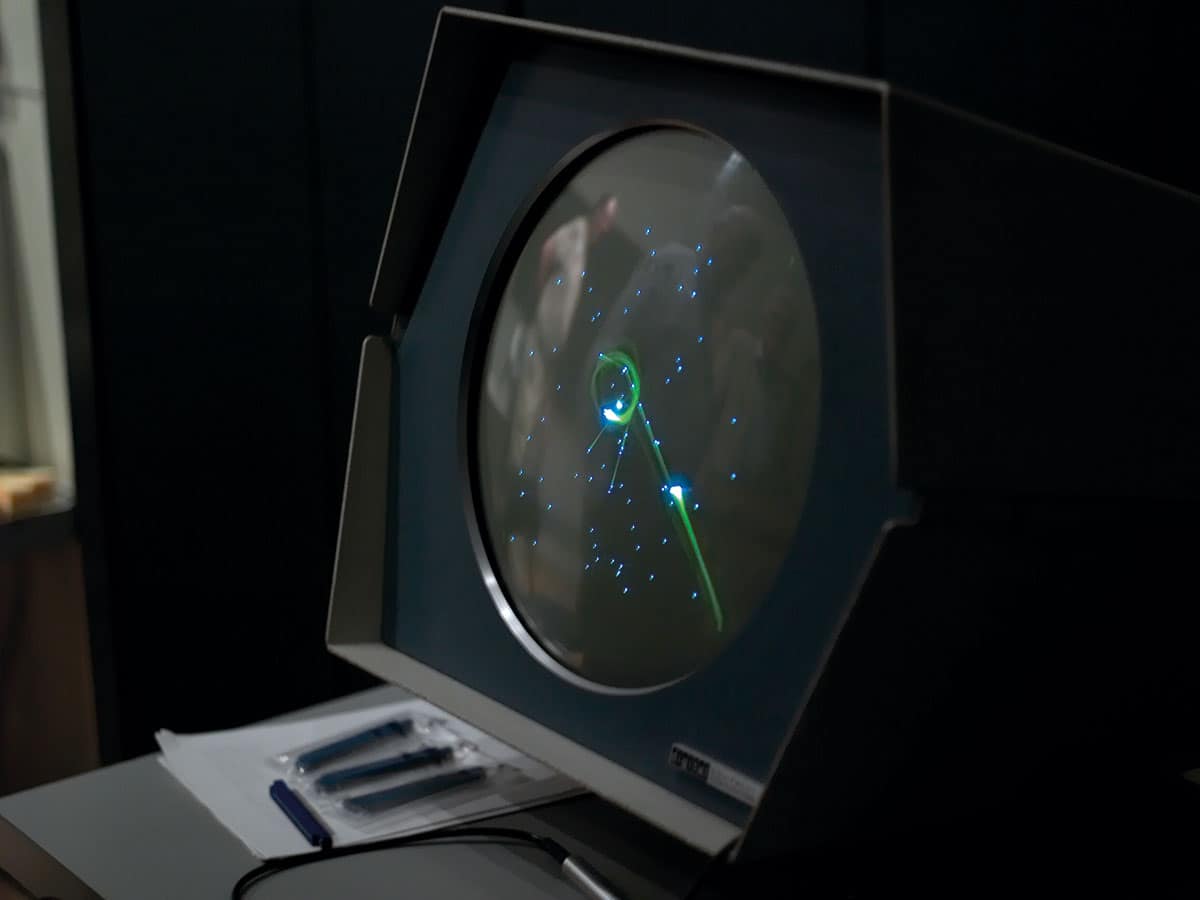
To decide what kind of program to run, let’s look back to the early days of digital computing. In 1961 scientists at the Massachusetts Institute of Technology (MIT) received a new model of computer: the PDP-1. Before it was even installed, people were already trying to figure out how to use it, and what they were going to do with it. Three researchers in particular – Steve Russell, Martin Graetz and Wayne Wiitanen – decided that they wanted to create a program that could do three things: push the device to its limits, behave differently each time it ran, and operate in the form of a game.
The game they made was called Spacewar!, and it was the first computer game to be more than just an expensive version of an ordinary board game. Players began with one spaceship each, both of them perilously close to their local star. Their first challenge was to fight against the star’s gravity well. Then, once they had achieved something close to a stable orbit, their job was to hunt down and destroy their opponent.
The game did more than just give players experience with the PDP-1 – it also gave them an insight into orbital mechanics. They soon learned that gravity is not a force you can easily run away from, but one you have to work with. Developing a winning strategy meant working out what kind of orbit you wanted and how to achieve it. This was the first example of a concept we’ve seen many times since: games that offer people the chance to play with and learn about physics that is outside their daily experience.
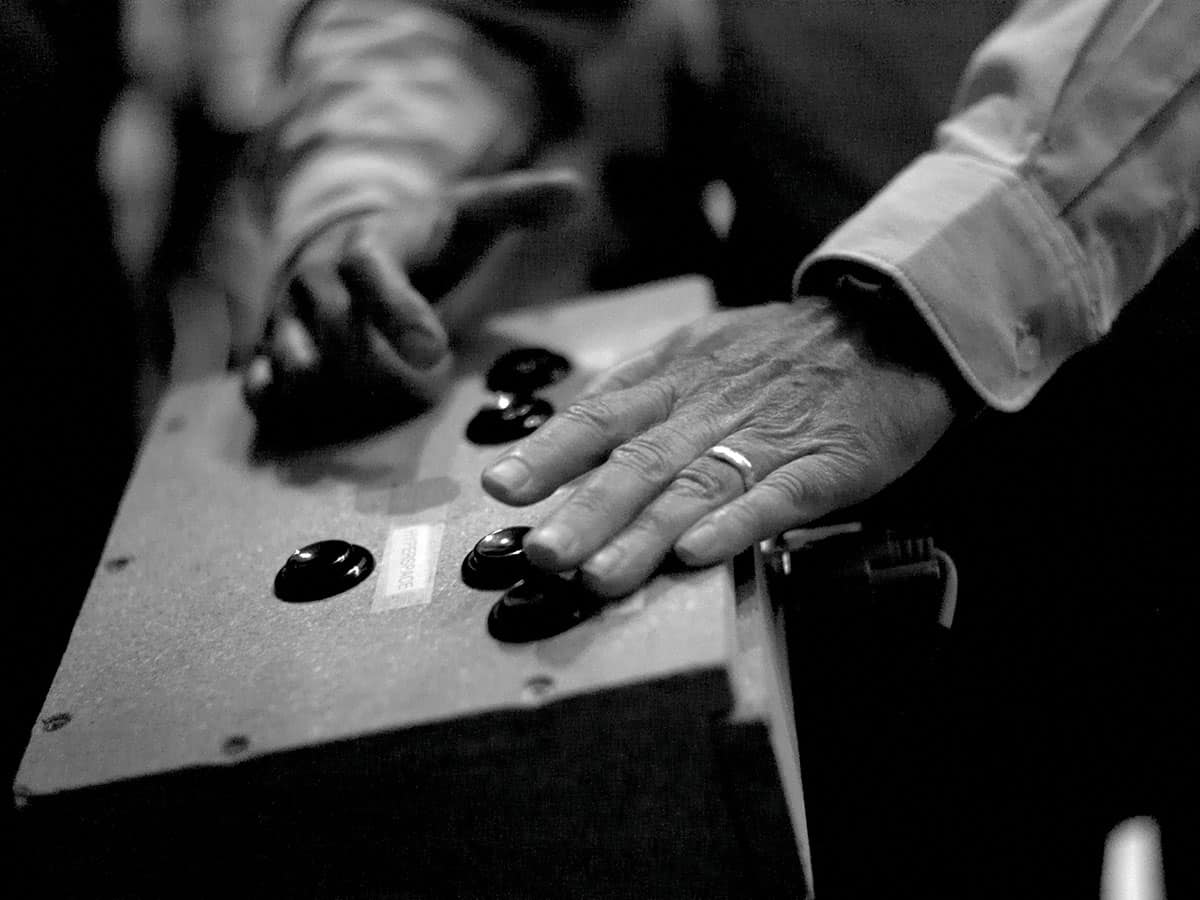
Gaming the system: (above) Spacewar! running on a PDP-1 at the Computer History Museum in California. (below) Steve Russell, one of the game’s co-creators, demonstrates the original Spacewar! controller. (Courtesy: CC BY Joi Ito)(Courtesy: CC BY Joi Ito)
These aspects of Spacewar! are exactly what we need now for quantum computers. We need programs that serve as examples of what a program can be, and that allow new users to learn by experimenting with the code. We need programs that will take full advantage of a device’s capabilities and demonstrate its strengths and weaknesses. And we need programs that enable users to experience an otherwise inscrutable area of physics directly; to learn how it works; and to figure out how it can be harnessed.
We need programs that enable users to experience an otherwise inscrutable area of physics directly; to learn how it works; and to figure out how it can be harnessed
Quantum battleships
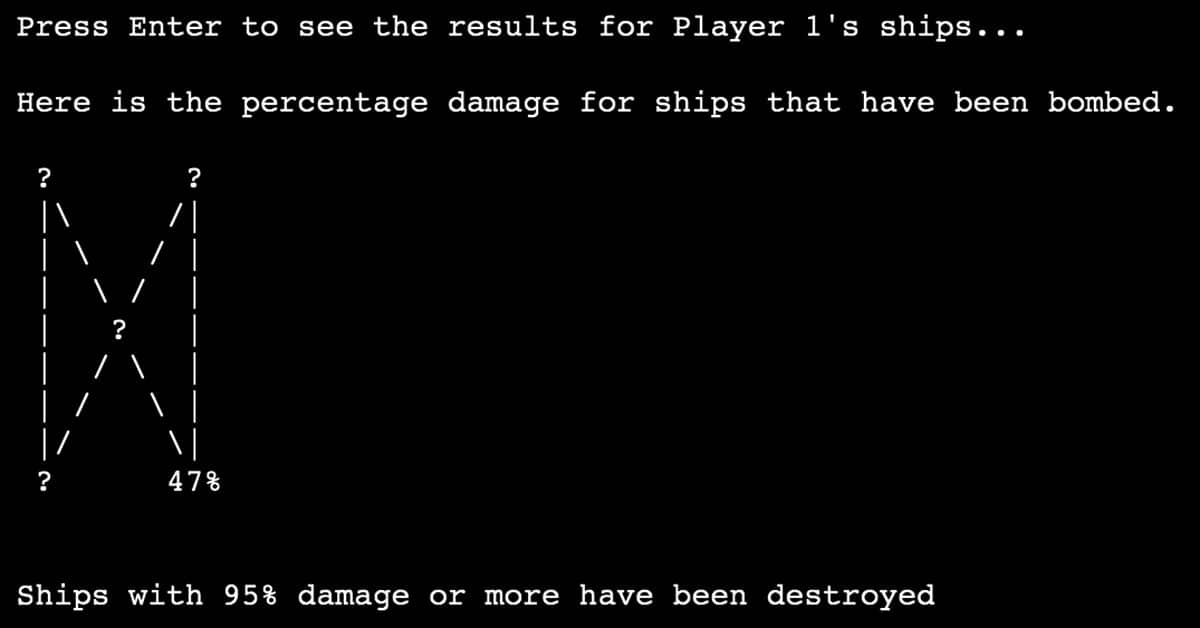
This philosophy is part of what motivated me to start making games that run on quantum computers. After a few initial experiments, my first proper game was called Battleships with partial NOT gates. Like more traditional versions of Battleships, mine is played on a grid where each point represents a place where a ship might be hiding (figure 1). The grid is tailored to suit the device used to play the game. At the time I created it, this meant the one and only device that was available to use: a five-qubit prototype quantum processor made by IBM. So the grid for my Battleships game had five points, one for each qubit. To get my ships running on this real device, all I needed to do was use IBM’s open-source Qiskit package to write my quantum program.
Figure 1(a) (top): Screenshot from Battleships with partial NOT gates, showing a ship that has been partly destroyed. Figure 1(b) (above): The five-qubit IBM device used for the game. The qubits are located within the five dark squares.
The game requires two players, each of whom must choose three of their five qubits to play the role of ships. For each qubit-ship chosen, we’ll use the qubit state 0 to represent a ship that is intact, and 1 to represent one that is destroyed. The other player then has to try and sink these ships by turning each 0 into a 1. In terms of standard computing, this operation is known as a NOT gate. It is the simplest of the logic gates that underpin all digital computing. In our game, though, it simply plays the role of a successful attack.
Now let’s add in some quantum. Qubits can, famously, exist in states other than just 0 or 1. They can also be in one of an infinite number of superpositions, some of which are weighted more towards 0, and some more towards 1. But if we actually measure the state of one of these superposition qubits, we force it to randomly choose between the two binary options. The weighting of the superposition determines the probabilities of each outcome.
Because quantum computers can access superposition states, they can perform partial versions of standard logic gates. We can, for example, make them do half of a NOT. Applying this to a qubit in a 0 state moves it into a superposition halfway between 0 and 1. If we run this operation many times, measuring the qubit each time to extract an output, we’ll find that 0 and 1 come out with equal probability. The result, in the game, is a ship that is half destroyed.
If, instead, we did two of these half-NOT gates before making a measurement, something very different would happen. The first half-NOT would take the qubit state 0 and park it in a superposition between 0 and 1. Then the second would take this superposition and continue the journey. The result would be a qubit in state 1, and a ship that is destroyed.
This is how quantum superpositions and single-qubit rotations manifest themselves in the game: not as philosophical conundrums or arcane concepts reserved only for the initiated, but as partially damaged ships and not entirely effective weapons. We have taken the exotic elements of quantum programming and given them mundane jobs in a game. With their mysticism stripped away, it becomes easier to start thinking about what you might want to do with them.
This is the main goal of Battleships with partial NOT gates. Like Spacewar!, it aims to provide an example of programming for others to build upon. It is a game for people to look at and declare “I could do that.” Because you could. In fact, you could do better.
Quantum awesomeness
Each run of Battleships with partial NOT gates uses only three of the five qubits on the device. To these qubits, we apply only one type of quantum operation. Clearly, we are not pushing the device to its limits. Hence, to find a better quantum heir for Spacewar!, we’ll have to look elsewhere.
All the power of a quantum computer comes from its ability to explore the full “state space” for its qubits. For a single qubit, that means being able to achieve the states 0, 1 and all possible superpositions. For two qubits, the available space becomes more complex. The system has four basic states – 00, 01, 10 and 11 – and with these we can create more kinds of superposition states. As more qubits are added, the system becomes increasingly complex. For n qubits, there are 2n basic states for us to put into superpositions: an exponential growth in the number of possibilities.
The vast majority of possible many-qubit states will exhibit some degree of entanglement – one of the signature aspects of quantum mechanics. Entanglement allows information to be stored non-locally across qubits, leading to effects that Albert Einstein referred to as “spooky action at a distance”. Creating and manipulating entanglement in a controlled manner is notoriously difficult, and for the past few decades, creating and studying specific entangled states for a few qubits was easily enough to net you a PhD. But building a quantum computer is even more daunting. We need to make a device that can reliably create any entangled state we desire, for an arbitrarily large number of qubits.
One way to test whether a device makes the grade is by creating and running random quantum programs. A random quantum program does exactly what it says on the tin: it takes all the operations your quantum computer can do and throws them randomly into a program. This is typically run on a bunch of qubits that all start off in the 0 state: no superpositions and no entanglement. As it is run, superpositions are created and entanglement begins to build up. If you run it for long enough, you’ll end up with a completely random example of one of the infinite possible states for your qubits, no matter how complex or entangled it might be. Then you just need to measure your qubits, do some statistics and prove that you got the state you expected given the program you ran. This is part of a test that Google hopes to run, which would serve as a proof-of-principle that quantum computers can do what would be practically impossible for normal ones.
Let’s make this into a game. Suppose we have an opponent who creates a small random quantum program that involves randomly chosen pairs of qubits getting entangled in a random way. The program is then run, and we analyse the results. Our aim is to work out what our opponent did, and to add extra lines to the program that will undo it. In its basic concept, this game is a bit like Tetris. You, the player, must battle against the forces of chaos. You take whatever randomness the game throws at you and try to undo its effects as best you can. If you are good, you will be able to keep order for a long time. If you are inept, you will essentially become an extra source of randomness yourself, and the game will quickly become unplayable.
The incompetence of this game’s players, and the random quantum programs the opponent creates, would require the quantum computer to create and manipulate complex entangled states almost constantly. It would provide a real test for the device, and it could even be used as part of experiments that prove the power of quantum computation. We’ll give the game a name that reflects this: Quantum Awesomeness.
In the near-term, our experience of playing Quantum Awesomeness will be dominated by another, much less welcome effect. Qubits inevitably interact with their environment, and the operations we perform are never quite perfect. As these errors build up over long quantum programs, the results we get from a device will strongly deviate from the results we want and expect. Eventually, the output from each qubit will be just a coin flip, unrelated to any other qubit or the program that was run. Any complex superposition states will have long since decohered away.
There is, however, a silver lining to this problem, which is that playing Quantum Awesomeness could give us a feel for how noisy a device is. Once we have seen how many rounds can be played before the game becomes an exercise in frustration (think of playing Tetris with faulty controls that jam or misbehave more and more as each game goes on, and a flickering screen to compound the problem), we will get a sense of how long our quantum programs can become while still producing good results.
Quantum Awesomeness also gives us another way to compare different devices. In quantum computers, entanglement is created via operations that interact with pairs of qubits. But not all qubit pairs can be interacted with directly. Each device will have a connectivity graph that lists all the pairs for which a particular two-qubit operation can be performed. The better connected a device is, the more flexible and adaptable it will be in creating quantum programs, and the faster it will be able to create complex superposition states.
Within Quantum Awesomeness, the connectivity graph becomes the board on which the game is played. The better connected the device, the more moves that both the opponent and player have at their disposal. The very properties that make a quantum processor more useful will also make its version of Quantum Awesomeness more engaging to play.
Figure 2: Grids from games of Quantum Awesomeness played on (a: top rows) an error-free simulation of IBM’s 16-bit device and (b: bottom rows) the real physical system.
Figure 2 shows a Quantum Awesomeness board for IBM’s publicly available 16-qubit device, which has a ladder-like connectivity graph. In each image, the coloured circles denote qubits. The numbers inside the circles give a measure of how entangled each qubit is, which is calculated from the results of measurements. The opponent entangles randomly chosen pairs of qubits. Using the fact that the numbers for the two qubits in each pair should be equal, the player’s job is to work out which pairs were entangled.
In a hypothetical perfect quantum computer with no noise, this job is not difficult. This can be seen in the puzzle in figure 2a (top two rows), which was produced by an error-free simulation of the 16-qubit device. The two qubits in each pair have numbers that are exactly equal, making it easy to pick them out. The solution here is pairs A, C, E, G, P, R, T and V.
Things get trickier when we run the game on the real device. Results from one run are shown in figure 2b (bottom two rows). The presence of noise means that our measure of entanglement is not completely accurate, and so the numbers for the two qubits in each pair can differ. This can cause ambiguities that take a little more effort to resolve. For example, should the 63 to the lower right be paired with the neighbouring 59? Or with the 58? Although the 59 is closer in value to the 63, when we look at the neighbours of these numbers, we can see that it is actually pair V that is correct. The solution here is pairs C, G, H, I, L, M, R and V.
The first quantum hackers
The development of Spacewar! spurred the development of an emerging hacker culture (in the original, positive sense of the word). The game’s code was freely shared, which meant that others were able to learn from it and adapt it. New features were added, variants were made, and it was (and still is) ported to a variety of different systems.
The nascent field of quantum programming has already begun to head in this same fruitful direction. If you want to program a job for a real quantum device, your choices are to use IBM’s Qiskit, Rigetti’s Forest or ProjectQ from ETH Zurich. All are open-source projects that encourage contribution. The same is true for the software that they run. Whether it be games, or scientific studies that lead to published papers, a lot of the source code is online and well documented – ready for newcomers to learn from, or to adapt and use themselves.
Until a few years ago, experimental quantum computing was something that you could only do if you worked in one of the right labs. Even theorists working in the same field had little access to it. Now, thanks to devices put online by IBM and Rigetti, using real quantum hardware is something that’s accessible to all. You can run experiments while sitting in your pyjamas. You can try out a new idea without needing to write a grant application or try to convince venture capitalists that it will earn them a tonne of money.
“The people of Tlön are taught that the act of counting modifies the amount counted, turning indefinites into definites.” By starting his first full-length book, with a quote from Argentinian author Jorge Luis Borges – someone notorious for penning intricate commentaries on completely imaginary texts – science writer Adam Becker gives the reader an early indication that this isn’t going to be just any old account of quantum’s first century.
What is Real? the Unfinished Quest for the Meaning of Quantum Physics features all the usual suspects – Niels Bohr, Werner Heisenberg, Erwin Schrodinger, Wolfgang Pauli et al. are all here – but the perspective is shifted. Reminiscent of the famous Sermon on the Mount scene from Monty Python’s Life of Brian, which takes the attention away from Jesus’ address, and onto the squabbling audience, the quantum story that we’ve all heard countless times before is pushed into the background. A new set of characters is brought into focus, allowing their much more interesting tale to be told.
Through this version of its retelling, What is Real aims to convince the reader that the course of scientific progress is dictated as much by the vagaries of the Zeitgeist and the forcefulness of personalities, as by the strength of the ideas themselves. In his wide-ranging and character-driven history of the struggle for a coherent interpretation of quantum mechanics, Becker shows us just how important context is when trying to understand why certain ideas are accepted as gospel, and why others are forgotten, dismissed or even actively suppressed.
What is Real picks up where many popular versions end, namely with the growing popularity of Bohr and Heisenberg’s take on the “meaning” of the nascent quantum formalisms (much later dubbed the “Copenhagen interpretation”), as well as with Einstein’s dismay at the consequences for his principle of local realism (“spooky action at a distance”), and the looming spectre of the so-called “measurement problem” in quantum mechanics. Some traditional accounts bring these issues to a head shortly after the 1927 Solvay conference, with all dissent neatly dismissed with some insightful pronouncements from Bohr and colleagues.
Becker, who is also a visiting scholar at the Office for History of Science and Technology at the University of California, Berkeley, authoritatively argues that these issues were in fact just “swept under the carpet” by a perfect storm of personal and political circumstances. The foremost of these was the diaspora of more traditionally “philosophical” continental European physicists, scattered by the rise of fascism in their native countries throughout the 1930s. Coupled with the poisoned chalice of unprecedented US military funding, this led inexorably to the mid-century dominance of the pragmatic “shut up and calculate” approach.
Amid this turmoil, the Bohr cult of personality helped the Copenhagen interpretation quietly pass into canon. This was apparently due in no small part to the revisionist efforts of Heisenberg (with his own post-war reputation-laundering agenda), and Belgian physicist Léon Rosenfeld – portrayed unflatteringly here as a fervid Bohr acolyte and personal enforcer.
Despite this collective aversion to looking closely at the flawed heart of this otherwise unprecedentedly successful theory – and the added stigma attached to the entire field during the nightmarish McCarthy-era – a handful of these scattered individuals thankfully chose to ignore their better judgement and began to chip away at the dominance of the Copenhagen interpretation. It is the story of these dissidents that Becker tells.
Novel approaches to “the quantum story” have been like buses in 2018 – you wait ages for one to arrive, and then (at least) three come along at once. Philip Ball’s tremendously well-received Beyond Weird (April 2018) and Jean Bricmont’s eagerly anticipated Quantum Sense and Nonsense (June 2018) are just two of the other major popular-science titles this year to have shone a long-overdue spotlight on the murky world of quantum interpretations. So why read Becker’s book?
“Ultimately, this is a story about people,” Becker reflects in the final chapter, and indeed, what sets this book apart from the competition is its exquisite collection of character studies of some of the most compelling personalities from the modern era of physics. From the principled, incisive John Bell, to the recalcitrant David Bohm and his battles with the House Un-American Activities Committee, to the resolute John Clauser, who was part of the colourful Fundamental Fysiks Group, set up in San Francisco in the mid-1970s.
Special mention must go to the sardonic Hugh Everett III, a practical joker by all counts – who seemingly worked up his famous many-worlds interpretation just to ruffle feathers and amuse himself – chucking a conceptual hand-grenade into the fray and then heading off into the higher levels of the military-industrial complex, in pursuit of what Becker calls “a Mad Men lifestyle”.
Quite justifiably, whole books have been written about these individual characters, their idiosyncrasies and their impact. But what this book does so well is to seamlessly knit all these profiles together, cleverly intertwined with the backdrop of some of the 20th century’s defining moments. The result is what appears to be one of the first attempts at a complete history for a general audience of the battle to bring quantum foundations back to the mainstream of physics. In this role, it fills an important gap in the popular literature between mythologies of the early-20th century “quantum revolution”, and contemporary accounts of the modern fields of quantum information theory and quantum cosmology.
This book attempts a complete history of the battle to bring quantum foundations back to the physics mainstream
On top of everything, this book is also a joy to read. How often can you describe a popular-science book as “pacey”? Nevertheless, Becker manages to end almost every chapter on a cliff-hanger, with plenty of excruciating near-misses in-between – no mean feat, considering that the action often takes place decades or continents apart. Another pleasant surprise is that What is Real has been written with great humour and a good dollop of irreverence as well. Humorous anecdotes are told with relish, such as the many exploits of Everett, or Bohm’s characterization of his detractors as “little farts”. Don’t worry, there’s plenty of pathos too, with a tragic recurring theme of leading players’ lives being cut short before the full implications of their work were widely understood or appreciated.
As someone with a history in scientific publishing (having worked for Public Library of Science, or PLOS, in a previous life), it must have filled Becker with a quiet horror to discover how many times the idiosyncrasies of the journals process have had measurable effect on the course of this story; from papers languishing in drawers for months and being accepted despite editors fundamental mis-reading, to crucial insights lying unread in an obscure journal for the want of the cost of a publication fee.
Becker – like Ball – makes a compelling case that physicists dismiss philosophy at their peril. While he also agrees with Ball that the Copenhagen interpretation is essentially vague, incomplete and unsatisfying, Becker remains a strong advocate for the ultimate need for a coherent interpretation of quantum mechanics. Although his position is never stated explicitly, I got the impression that he feels the most likely candidate is one of the myriad variations on the many-worlds theme.
In the final chapter, “Outrageous fortune” (references to Hamlet are a running theme), Becker underlines his motivation for telling this tale, writing that “Their ideas aren’t all that matters – their stories matter too. The history behind the physics can guide us in our pursuits…The path that led us here can give hints about the way forward.” To my mind, this alone is a succinct justification for the necessary existence of “history of science” as a discipline, to help us avoid repeating the mistakes of the past.
This wonderfully written book is light on the physics but heavy on the story and is therefore a great choice for readers with a working appreciation of the “standard” view of quantum mechanics. For anyone who has been intrigued by other popular accounts of the quantum world but came away feeling somewhat cheated by the Copenhagen sleight-of-hand, I cannot recommend this book highly enough.
Wastewater treatment is complicated and requires several processes that must be carried out one after the other. This is because each process deals with one type of contaminant. A new biomimetic nanocoagulant that can remove a broad spectrum of pollutants in a single step might be the answer to this problem, and it might even prove itself to be a cost-effective alternative to existing techniques. The micellar nanomaterial, developed by researchers in China and the US, has a core-shell structure similar to that of the sea-anemone Actinia (which extends its tentacles to ensnare prey). It readily disperses in water and absorbs dissolved contaminants.
By 2050, nearly two-thirds of the world’s population may have limited access to clean water. This problem is becoming ever more serious since traditional physiochemical and biological treatment techniques, such as coagulation, sand filtration and activated sludge processes, may no longer be good enough to remove the increasing number of contaminants that are polluting water resources today. While more advanced techniques, like oxidation, adsorption and membrane filtration, can effectively remove “emerging” contaminants like pesticides and pharmaceuticals, these processes do require the wastewater to be pre-treated first to remove colloidal and suspended particles.
Coagulation
This pre-treatment can be followed by coagulation, for example, which is a crucial step in water and wastewater treatment plants. Coagulants work by destabilizing and aggregating colloidal water contaminants into larger aggregates (flocs) by neutralizing their charge, then absorbing and enmeshing them. The worry here is that conventional coagulants are ineffective for removing many new types of contaminant.
A coagulant that could remove multiple impurities, including emerging ones, would avoid having to apply all these different steps and allow for single-stage water treatment, so saving time and money. A team of researchers led by Huazhang Zhao of Peking University and the Beijing Engineering Research Center of Advanced Wastewater Treatment in collaboration with Menachem Elimelech and colleagues at Yale University has now succeeded in developing a coagulant made up of an organic core and an inorganic shell using a self-assembly method that could fit the bill.
Stable core-shell structure
“We made our nanocoagulant by first hydrolysing the organic component, 3-(trimethoxysilyl)propyl-n-octadecyldimethylammonium chloride (TPODAC), into a charged quaternary ammonium compound with a hydrophobic long carbon chain and silanol head group,” explains Zhao. “After condensation of the silanol with an inorganic component, aluminium chloride, the product self-assembles into a micellar nanocoagulant. The aliphatic carbon chains cluster together inside the nanocoagulant by hydrophobic attraction and the positively-charged hydrophilic quaternary ammonium-Si-Al complexes disperse outside it thanks to electrostatic repulsion. The result is a stable core-shell structure.”
When added to wastewater with a pH of greater than 4.0, the alumino-silicate shell of the nanocoagulant hydrolyses into flocs that enmesh particulate contaminants, he explains. “To capture these dissolved contaminants, the nanocoagulant behaves like the marine organism Actinia when it catches its prey,” he tells Physics World. “Actinia has a spherical body with tentacles that are retracted while the creature is resting, but these tentacles extend when it feeds. In the same way, when the shell of the nanocoagulant hydrolyses, it turns outwards. This eversion exposes the aliphatic micelles of the core that can then capture contaminants.”
The researchers tested their nanocoagulant on secondary wastewater effluent from a municipal sewage treatment plant. Contaminants in the water include dissolved organic carbon, nitrates and phosphorus. They then tested the ability of the nanocoagulant to remove pharmaceuticals and other micropollutants that were present in the wastewater samples in the parts per trillion to parts per billion range. “We found that the nanostructure can remove a broad spectrum of these water contaminants in a single treatment step with more than 90% efficiency,” says Zhao.
The researchers, reporting their work in Nature Nanotechnology 10.1038/s41565-018-0307-8, say they will now be adapting the techniques they have developed to create other smart materials that might be used in water treatment.
A strong candidate for “word of the year” would be “quantum”. The 16 October 2018 edition of the Financial Times featured an article by Ilyas Khan with the headline: “Why you need to quantum-proof your cyber security now”. Five days later the New York Times published an article by Cade Metz on “The next tech talent shortage: quantum computing researchers”, describing competition between firms in the US, London, Paris, Montreal and Beijing for scientists experienced in quantum computing. The broad interest in this topic stems from the expectation that future computers will exploit aspects of quantum mechanics, in particular entanglement of quantum states, to solve problems that are too difficult or impossible for machines operating on classical physics.
Modern quantum mechanics, developed by Werner Heisenberg, Erwin Schrödinger, Wolfgang Pauli, Paul Dirac and others in the mid-1920s is the most successful and accurate theory we have. And yet, despite being the foundation of nuclear, solid-state and semiconductor physics, enabling the invention of the transistor, the laser and magnetic resonance imaging, fundamental questions about the interpretation of quantum mechanics persist to this day. To address this, Jeffrey Bub, a physicist and philosopher at the University of Maryland, and his artist daughter Tanya Bub have created Totally Random – Why Nobody Understands Quantum Mechanics, a non-fiction graphic novel that is subtitled “a serious comic on entanglement”.
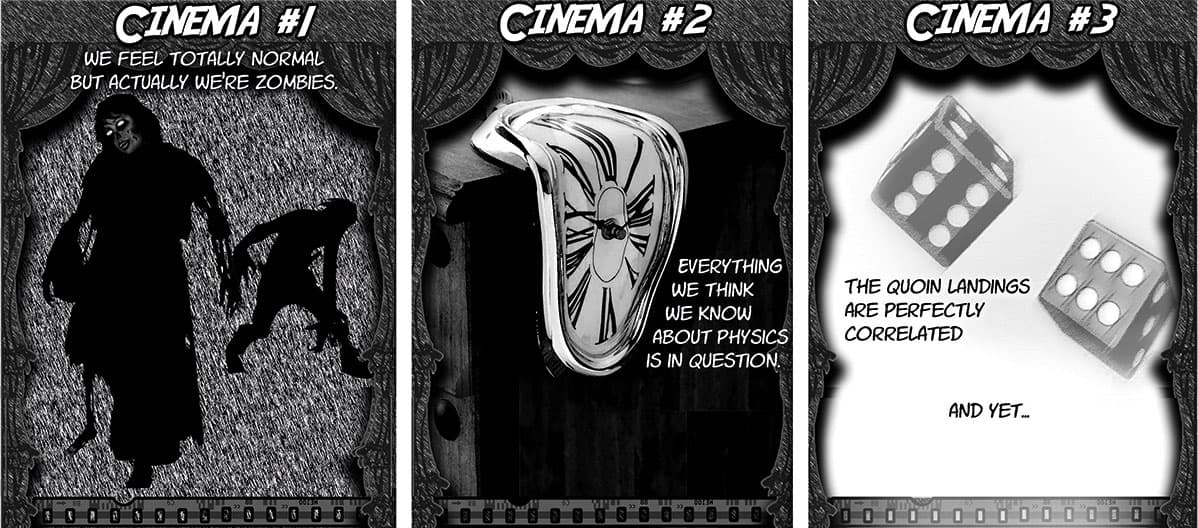
A serious comic: Tanya Bub and Jeffrey Bub use graphic art and a sense of humour to explain the complexities of quantum physics. (Courtesy: Tanya Bub and Jeffrey Bub/Princeton University Press)
Jeff and Tanya (represented as J and T, respectively) are heard but not seen in the comic, appearing as disembodied voices, with J explaining the “curious correlation” at the heart of quantum mechanics. While real experiments on entanglement involve photon polarizations, Totally Random considers the results of flipping two identical coins. For two ordinary US quarters, these would be two heads, two tails, one head and one tail, or one tail and one head, with each result being equally likely, regardless of the coins configuration prior to flipping. The Bubs introduce an imaginary “Superquantum Entangler Pr-01”, which looks very much like a two-slot toaster, that “entangles” the two quarters, so that when flipped they now behave like quantum particles – the modified quarters being dubbed “Quoins”.
Now when the Quoins are flipped, how they land (heads or tails) will depend on their initial orientation on the thumb. If both Quoins are flipped starting with heads up, then one will land heads up, and the other with the tail facing up. If the Quoins are flipped with one head and one tail facing up, they will land with either both heads or both tails facing. No matter whether they are flipped simultaneously or one at a time, either adjacent to each other or separated by a great distance, this correlation between how they are situated before being flipped and the result of flipping persists.
Clearly, the Superquantum Entangler Pr-01 is doing something to the quarters, but what? Maybe the Entangler rigs the quarters somehow, changing some inner state of the coin, so that the way they land is dependent on how they are flipped. Totally Random presents one of the clearest explanations I’ve seen of Bell’s theorem, demonstrating without mathematics that no internal rigging (or “hidden variables”, if you will) would yield the observed correlations of the Quoins for all four starting configurations. It then shows that if the Quoins were somehow communicating their orientation information to each other, they would have to send signals faster than the speed of light in order to maintain the correlations.
Having stated the central mystery, the Bubs then consider physicists’ various attempts to interpret these correlations. The story opens up, and caricatures of many of the pioneers of quantum mechanics appear, each promising to account for what happens at the moment when the flipped Quoins are examined. Schrödinger’s cat makes an obligatory appearance, as does Hugh Everett’s many-worlds interpretation (when one of the narrators protests “You can’t prove that the world split off into two branches!” Everett, portrayed as a carnival worker, nonchalantly replies “Can’t prove it didn’t.”) and David Bohm’s pilot waves (which are written on a paper aeroplane that literally pokes Albert Einstein in the eye). Any anxiety “from uncontrollable urges to picture an underlying reality” can be resolved by calling Dr Bohr at 1-800-Let-It-Go (which actually turns out to be the number for a medical alert company). The Bubs give each their due, though a preference for the Copenhagen Interpretation comes through.
The final third of the book illustrates the various ways that, even without understanding their origin, these correlations can be useful, such as for quantum encryption and the teleportation of information. Here we see the potential applications for entanglement that are driving much of the current interest in this subject.
Tanya Bub’s artwork at times invokes the stippling photo-realism of American cartoonist Drew Friedman. However, I would have liked a bit more of an introduction to the underlying correlations of the flipped Quoins, and some scenes are unnecessarily drawn out. I also found the arguments in the Quantum Casino (where a couple are able to exploit the correlations of Quoins to beat a complex game of chance) a bit hard to follow. There is an extensive notes section at the back of the book that will be useful for those who want to delve deeper into the material presented, and like all good comic books, there are ads for sea monkeys and X-ray specs at the very end.
Totally Random provides an accessible introduction to questions of nonlocality, superposition and entanglement, topics that have relevancy for applications such as Bitcoin and cryptocurrency. In some ways a graphic novel is the ideal method to engage with such concepts. As Clifford Johnson, author of his own non-fiction graphic novel about modern concepts in theoretical physics The Dialogues (May 2018) has argued, there is a natural connection between physics and comics, in that both involve constructions of space and time.