Fascinating physics facts about snow, Feynman’s Nobel medal up for auction, magnetic levitation makes a comeback

Winter has already arrived in much of the northern hemisphere and with it snow. Folks at the Perimeter Institute for Theoretical Physics in Waterloo, Canada – which has already had a snowfall or two this winter —  have put together “14 fascinating physics facts about flakes (of snow)”. They have also posted a video of a 2012 lecture by Kenneth Libbrecht, who studies the physics of snow at Caltech. You can watch it above.

Earlier this month, items associated with the late Stephen Hawking sold for nearly £1m at auction. If you missed out on acquiring a piece of physics history, 43 items that once belonged to the Nobel Laureate Richard Feynman will be auctioned at Sotheby’s in New York today at 10:00 local time.

Items include Feynman’s Nobel Prize medal, which he bagged in 1965 for his work on theoretical particle physics including quantum electrodynamics. If you have a spare $1m, it could be yours. If your budget is a bit tighter, you could bid on a Brazilian tambourine once owned by Feynman, which is expected to fetch about $4000. Most of the items on the block are books, papers and manuscripts including a 1959 draft of Feynman’s prescient lecture on nanotechnology “There is plenty of room at the bottom” – which is expected to bag about $25,000.

Birmingham International maglev

In 1984 the world’s first commercial transport system based on magnetic levitation (maglev) opened at Birmingham International Airport. It ran for 11 years before closing because of high maintenance costs. Other projects have been proposed and prototypes built across the world, but the technology has never taken off.  In “Magnetic levitation: the return of transport’s great ‘what if?’”, Christopher Beanland describes how maglev transport is enjoying a revival in Asia.

Topological Dirac magnons spotted for the first time at zero magnetic field

The discovery of the first 2D material that acts as a magnetic topological insulator in the absence of an external magnetic field has been claimed by physicists in South Korea and the US. The material is chromium triiodide and its magnetic properties were characterized by analysing spin oscillations that were induced by neutron scattering.

When atoms inside a 2D material are arranged in certain patterns, their constituent electrons can display a fascinating range of behaviours not usually seen in everyday materials. Within the 2D honeycomb lattice of graphene, for example, so-called “Dirac electrons” can move at relativistic speed and behave much like photons with zero mass.

Some materials can also have interesting properties related to topology. In 2D, topological insulators are a class of materials in which electrons flow freely along the edges of a sheet but cannot flow along the surface. This effect is dependent upon the spin of the electrons and as a result, 2D topological insulators are of great interest to physicists developing spintronic devices in which information is stored and processed using the spin states of electrons.

Particle-like collective oscillations

Another route to spintronics is to store and transport information using magnons, which are particle-like collective oscillations of the spin magnetic moments of a material. Physicists have predicted that some 2D magnets could be 2D magnetic topological insulators. In such materials, magnons could travel along the edges of a sheet, much like electrons in a conventional 2D topological insulator. What is more, these oscillations are expected to be photon-like “Dirac magnons” that could propagate for long times without dissipating energy as heat. This could make them very useful for creating practical spintronic devices.

To look for evidence of topological Dirac magnons,  Lebing Chen at at Rice University and colleagues fabricated precisely-aligned sheets of chromium triiodide, which is a magnetic compound that has a honeycomb lattice structure. The samples were then studied at the Spallation Neutron Source at Oak Ridge National Laboratory using inelastic neutron scattering. Neutrons have magnetic moments and this means that they can create magnons when they scatter from a chromium triiodide sheet. By measuring the energy lost by neutrons during the scattering process, the team was able to work-out the properties of magnons in chromium triiodide.

No field required

The team found evidence for topological Dirac magnons, even in the absence of an applied magnetic field. This is unlike previous studies of a different 2D material, which observed similar effects but only in the presence of an external magnetic field.

Chen’s team believe that the effect in chromium triiodide could be caused by the interaction between the spins of moving electrons and the magnetic field created by the relative motion of positively-charged ions in the 2D material – an effect called spin-orbit coupling.

Through future research, Chen and colleagues hope to continue to explore the potential for the materials to be used in the rapidly-advancing field of spintronics.

The research is described in Physical Review X.

Tripled climate cuts needed to fulfil pledge

The world is not yet living up to its undertaking to tackle global warming, and it will have to make tripled climate cuts − at least − if it is to do so, a report says.

The emissions gap − the difference between the global emissions of greenhouse gases scientists expect in 2030 and the level they need to be at to honour the world’s promises to cut them − is the largest ever.

The 2018 Emissions Gap Report is published by the UN Environment Programme (UNEP). While it is still possible to keep global warming below 2 °C, its authors say, the world’s current pace of action to cut emissions must triple for that to happen.

In 2015 almost 200 governments adopted the target of keeping global warming to no more than 2 °C above pre-industrial levels, and to try for a lower level, 1.5 °C. Their decision is set out in the Paris Agreement.

Inadequate targets

But the Gap Report spells out in detail a criticism scientists have been making since soon after the Agreement was reached, saying the current pace of countries’ plans for reducing emissions − which they decide for themselves − is not enough to meet the Paris targets.

As well as allowing signatories the freedom to cut emissions as savagely or as modestly as they wish, the Agreement is also condemned by those who believe its targets are themselves so unrealistic that they fail to measure up to the scale and urgency of the climate crisis.

The combination of increasing greenhouse gas emissions and increasingly inadequate action to slow them means that the emissions gap is bigger than it has ever been.

Meeting the 2 °C target will require climate action efforts to triple, the Gap Report says. But to meet the 1.5 °C limit, which many governments and scientists are urging, needs nations not just to triple their efforts, but to increase them five-fold.

The science is clear … governments need to move faster and with greater urgency. We’re feeding this fire while the means to extinguish it are within reach

Joyce Msuya, UN Environment

Current action to limit emissions suggests that global warming will reach about 3°C above pre-industrial levels by the end of the century, and will continue to rise after that. If the gap is not closed by 2030, the report’s authors say, it is highly unlikely that the 2 °C target can be reached.

In 2017 global emissions rose again, after a three-year decrease, as countries’ efforts to combat climate change fell short of what was necessary for global emissions to peak. That year global emissions reached reached 53.5 gigatonnes of carbon dioxide equivalent (GtCO2e), the highest levels yet recorded. Just 57 countries, representing 60% of global emissions, were on track to peak emissions by 2030.

(A gigatonne is a thousand million tonnes. “GtCO2e” is an abbreviation for “gigatonnes of equivalent carbon dioxide” − emissions of various GHGs put on a common footing to express them in terms of the amount of CO2 that would have the same global warming effect.)

The Gap Report has been released just before this year’s UN global climate summit, the 24th Conference of the Parties (COP24) to the UN Framework Convention on Climate Change (UNFCCC) in the Polish city of Katowice.

Critical decade ahead

Two of the contributors are researchers from IIASA, based in Laxenburg, Austria: Joeri Rogelj and Daniel Huppmann.
“This year’s report shows with renewed urgency that emissions reductions in the next decade are critical, and that there are readily available options to achieve this,” said Rogelj.

He is a lead author of the chapter that updated the assessment of the emissions gap, which found that little or no progress had been made in the past year on new policies or more ambitious pledges.

New, more conservative assumptions about the potential contribution of negative emissions technologies (geoengineering) in the future mean that even bigger emissions cuts will be needed.

Huppmann led the year-long effort to compile a large database of emissions scenarios through the IIASA Scenario Explorer. The 2018 Emissions Gap Report draws from this database, first published in Nature Climate Change.

Closing the gap

The report outlines a roadmap which could still meet the Paris Agreement targets and close the emissions gap by 2030. It includes possible contributions by government fiscal policy, the pace of innovation, and a review of climate action by groups other than governments.

If they make commitments to the strongest climate action globally, the authors say, emissions could be cut by 19 GtCO2e, enough to close the 2 °C gap.

Governments could subsidize low-emission alternatives and impose higher taxes on fossil fuels. If a carbon price of US$70 a tonne were adopted, emissions could be cut by 40% in some countries.

Removing fossil-fuel subsidies would cut global emissions by 10% by 2030, compared with a situation where no climate policies were imposed.

“If the IPCC report represented a global fire alarm, this report is the arson investigation,” said UN Environment’s deputy executive director, Joyce Msuya. “The science is clear; for all the ambitious climate action we’ve seen, governments need to move faster and with greater urgency. We’re feeding this fire while the means to extinguish it are within reach.”

Proton therapy: not all RBE models are equal

Protons have an increased relative biological effectiveness (RBE) compared with photons. And for clinical treatments, the proton therapy community has adopted a constant RBE value of 1.1. RBE, however, is dependent upon many factors, including the deposited dose, the type of tissue being irradiated and the linear energy transfer (LET) of the beam. As such, use of this constant RBE value may lead to inaccurate predictions of clinical outcome.

To account for the effects of variable RBE, researchers have developed numerous RBE models, most of which are based on the linear-quadratic (LQ) model and use data from in vitro cell irradiation. Researchers from the University of Bergen and Haukeland University Hospital have analysed a range of these variable RBE models to explore their differences and similarities (Phys. Med. Biol. 63 185013).

“The number of published dose planning studies including variable RBE for protons is steadily increasing,” explains lead author Eivind Rørvik. “These studies provide important insight into RBE effects; however, most studies include only one or a couple of different RBE models, and these vary from one study to another. We saw the need for a general comparison of RBE predictions from the various models, and an analysis of why their predictions differ.”

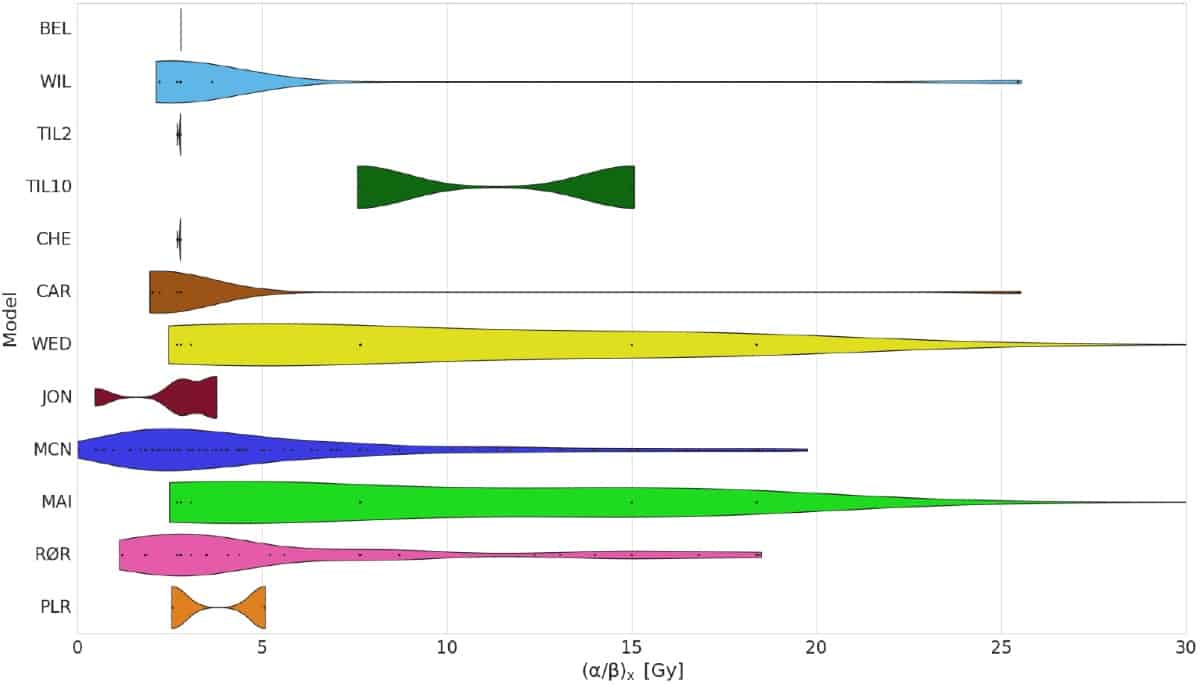
A literature search revealed 11 different phenomenological RBE models based on the LQ model and proton-irradiated cells. For comparison, the researchers also examined two plan-based models, which assume a linear dependence of RBE on dose-averaged LET (LETd). In particular, the team explored the different experimental data that the models were based upon, including cell-specific parameters such as reference radiosensitivity (α/β)x and physical quantities such as LETd.

The in vitro databases used to create the various RBE models differed greatly. Several experiments used V-79 (Chinese hamster lung) cells, which generally led to an (α/β)x value of 2–3 Gy. Other models, based on five to 33 cell lines, had a greater range of (α/β)x values. The range of LETd values used to derive the models also varied considerably.

(α/β)x values

To investigate the impact of these differences, Rørvik and colleagues simulated a spread-out Bragg peak (SOBP) in a water phantom using FLUKA Monte Carlo code. The plan was optimized to give a physical dose of 2 Gy across the SOBP. They then varied the physical dose and (α/β)x and evaluated the mean RBE calculated by the different models.

All models estimated a monotonous rise in RBE across the SOBP and an RBE of above 1.1 at the distal dose falloff region. One model gave a significantly higher dose than the others, while all but one of the cell-based models consistently estimated a higher RBE-weighted dose than the two plan-based models. In the entrance region, differences between the models were small, with the vast majority predicting RBE values below 1.1 until the proximal part of the SOBP.

Clinical cases

The researchers also analysed three patient cases: a prostate adenocarcinoma, a thoracic sarcoma and a pituitary adenoma. For each, they optimized proton therapy plans according to hospital protocols using an RBE of 1.1. They then recalculated the plans with the FLUKA Monte Carlo code using RBE values from the different models. Finally, they created and compared dose–volume histograms for planning target volumes (PTVs) and organs-at-risk.

Dose metrics

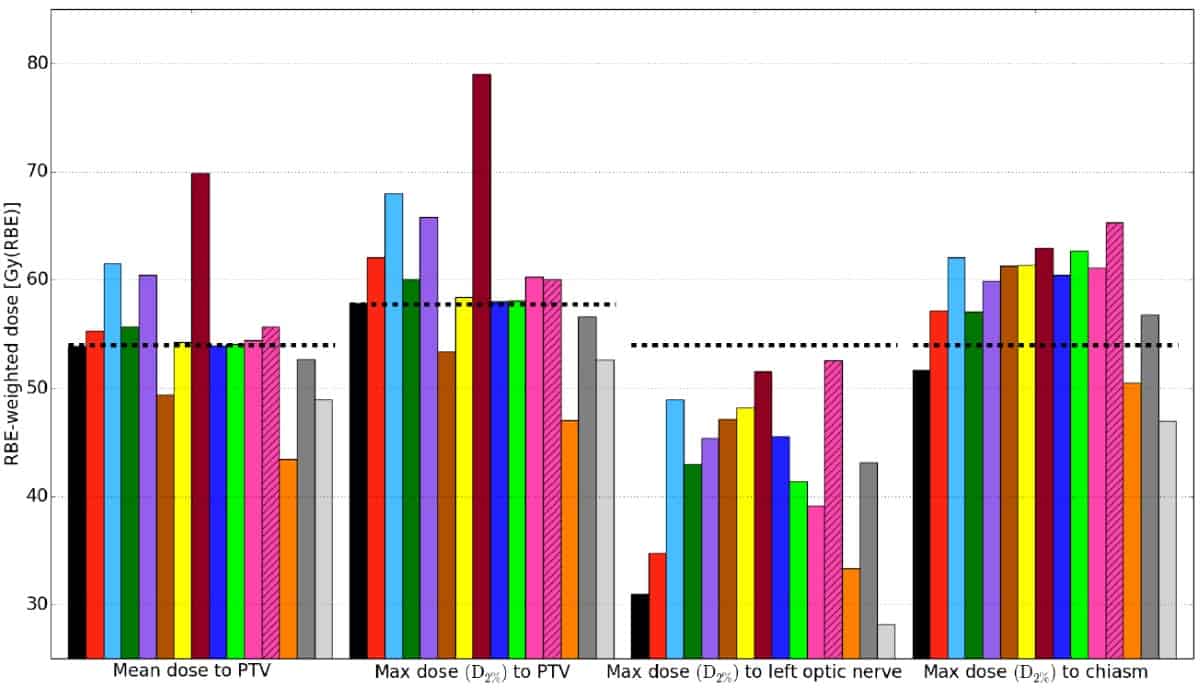
Again, they observed large variations between estimates of RBE and RBE-weighted doses from the different RBE models — attributed to the considerable differences in experimental input data and model assumptions for the various models. The largest deviations between models appeared in organs exposed to low physical doses, with high LETd and low (α/β)x values. The greatest variation was seen for the pituitary adenoma case, where maximum dose to the left optic nerve ranged from 28–54 Gy(RBE), corresponding to RBE values of 1.0–1.9.

For all patient cases, the estimated mean RBE to the PTV was in the range 1.09–1.29. RBE-weighted doses estimated by the models met recommended dose constraints, except for the chiasm (which is located partly within the PTV) and right optic nerve in the pituitary case.

Looking ahead

The authors note that it is not possible to determine a superior model from this analysis, but suggest that a model could be selected for a specific clinical case based on the experimental database used to generate it.

“To choose one of the existing models for clinical treatment is perhaps a bit premature; but one of the simpler LET-weighting strategies could be a starting point to use alongside the conventional RBE of 1.1,” suggests Rørvik. “In such cases, one can directly identify and avoid hot spots resulting from specific combinations of LET values, without addressing the uncertainties associated with different tissues.”

The researchers are currently focusing on improving RBE models, including further analysis of previous in vitro experiments. “In our opinion, there is still room to reduce the uncertainties in the RBE modelling, both based on deeper analysis of existing in vitro data, but also by designing and performing new experiments specific for creating RBE models,” says Kristian Ytre-Hauge, leader of the University of Bergen group.

“We are also exploring different strategies to include RBE-based optimization in proton therapy planning,” Ytre-Hauge tells Physics World. “In addition, our group is currently implementing the proton beam line at UFHPTI in our FLUKA software, to correlate studies of variable RBE with follow-up data in patients treated with passive proton therapy.”

SUPA power: Scottish universities combine forces to boost research and training

It’s a healthy time for physics in Scotland, with more and more PhD students opting to pursue postgraduate opportunities in the field. Scottish universities have long played an important role in training the next generation of physicists, inspiring bright minds, and developing skills and expertise. And over the last 14 years this process has been amplified by the formation of the Scottish Universities Physics Alliance (SUPA).

Launched in 2004, the network pools the best of Scotland’s postgraduate physics resources to provide a vibrant environment for students, as well as a gateway for science and industry to make the most of the nation’s talents. “It’s not just a research collaboration, it’s a strategic alliance,” explains Professor Alan Miller, SUPA’s current CEO and Director of the SUPA Graduate School.

The arrangement links all eight physics departments Scotland, located at the universities of Aberdeen, Dundee, Edinburgh, Glasgow, Heriot-Watt, St Andrews, Strathclyde and West of Scotland. It’s a critical mass of more than 1200 physicists, and at the heart of the scheme is the graduate school – which now serves more than 600 PhD students.

Connected course, connected students

“Today, we offer around 50 advanced PhD-level courses, about 800 hours of lectures, to all of the physics PhD students in Scotland,” Miller explains. Topics on offer include astronomy and space science; condensed matter and materials science; energy, nuclear and plasma physics; particle physics; photonics; and physics and life sciences – as well as courses covering transferable skills such as data analysis and programming.

To maintain a strong dialogue between lecturers and students, the graduate school features dedicated video classrooms provided at each member university. “It’s a high-bandwidth, high-definition system that’s been designed so that any of the students at any of the universities can ask questions in real-time,” says Miller.

Also, lectures are recorded and are available on the My.SUPA website. And while digital technology plays a big role, the graduate school also encourages its members to meet in person. There are welcome events, annual gatherings and newsletters that keep everyone in the field well connected, along with career seminars to highlight employment opportunities for PhD physicists.

Physics in Scotland has grown and done incredibly well over the past decade

Alan Miller, Director of the SUPA Graduate School

According to Miller, physics is rising in popularity among Scottish PhD students after navigating some tough times. He recent resurgence has been buoyed by a series of big science breakthroughs, including the long-awaited experimental detection of the Higgs boson – which was predicted in 1964 by, among others, Edinburgh University’s Peter Higgs.

Access to expertise

For a single university it is expensive to offer specialist courses at PhD level, but SUPA’s model of sharing and using the latest technology to engage students helps to balance the costs while providing easy access to lecturers at the forefront of their fields from across eight physics departments. And it’s not just Scottish institutions that are benefitting, with SUPA recently extending its support to Newcastle University in England, which is regenerating its post-graduate physics provision. “Students can sit at a PC and still be part of the lectures,” says Miller.

SUPA engages with a number of established Doctoral Training Centres – in areas such as condensed matter, intelligent sensing and measurement, applied photonics, soft matter and functional interfaces, and the Scottish Data-Intensive Science Triangle – all of which are able to participate in the training network.

As CEO, Miller keeps an eye on key metrics such as research assessment exercises as part of a dashboard measuring SUPA’s impact. The numbers highlight how pooling resources are boosting Scotland’s research power in physics, with a combined quality and scale that puts SUPA among the top-tier universities in the UK.

Members also benefit from SUPA’s strong international links to major facilities such as CERN and other overseas associations. “Our international Max Planck partnership involves multiple Scottish universities, all of whom are SUPA members, which brings close links with research institutes in Germany,” says Miller.

Partner benefits

Another key focus for SUPA is to build strong collaborations with other research pooling networks such as the Scottish Universities Life Science Alliance (SULSA). Recently, the partnership won leverage funding from the Scottish Funding Council to build on strengths between the two fields. “Right now we are building a network of researchers working on optical imaging in universities, industry and across the health sector,” says Miller.

SUPA is an opportunity to focus not just on advancing physics, but also on delivering economic benefits to the region by forging closer ties between universities and businesses. “SUPA has links with a number of industry facing organizations, including Fraunhofer UK as well as others such as Technology Scotland, which together serve as an efficient conduit,” Miller notes.

The alliance’s successes are very much interlinked with the efforts of all its members, but SUPA’s value is clear. The number and quality of PhD students passing through its graduate school are a clear sign that the organization has found a winning formula that’s capable of benefiting the community for years to come. “Physics in Scotland has grown and done incredibly well over the past decade,” concludes Miller.

More information about SUPA, including post-graduate opportunities for studying physics in Scotland, is available on the SUPA website.


Christmas competition

Ever feel your winter wardrobe is missing something? Are your festive woollens just a bit too mainstream? Is there not enough science depicted on your clothes? Don’t worry, Physics World has a solution. After some office-wide discussions, a bit of tuneless Christmas singing and many scribbled doodles that are more scribble than doodle, we are proud to present our ideas for festive physics jumpers, as drawn by Physics World features editor Sarah Tesh.

We haven’t actually knitted them yet, but if you have the skills to make one of our designs come to life – or can draw your own fun festive physics jumpers – we’d love to see them. Our top five favourites will win a copy of Stephen Hawking’s final book Brief Answers to the Big Questions and we’ll publish them in the New Year. Terms and conditions apply (see below).

See “this article from October” for Physics World managing editor Matin Durrani’s review of Brief Answers to the Big Questions.

MERRY CHRISTMAS AND HAPPY NEW YEAR!

Christmas physics jumpers

How to enter

To enter the competition, send your festive physics designs – or photographs of actual knitted jumpers that you have created featuring physics puns – to us by 7 January 2019.

Please include your full name and contact details with your entry.

Send your entries by e-mail to pwld@iop.org or by post to:
Physics World
Temple Circus
Temple Way
Bristol
BS1 6HG
UK

Terms and conditions

These terms and conditions apply to all entries to the Physics World Christmas Jumper Competition – December 2018, however submitted.

  1. Promoter is IOP Publishing Limited (“IOP”) of Temple Circus, Temple Way, Bristol, UK, BS1 6HG.
  2. No purchase necessary.
  3. All entries must be received by the closing date of 7 January 2019.
  4. IOP will not accept:
    1. responsibility for competition entries that are lost, mislaid, damaged or delayed in transit, regardless of cause; or
    2. proof of posting or transmission as proof of receipt of entry to the competition
  5. The winners will be selected by the Physics World team within 30 days of the closing date and notified using the contact details submitted with the entry. If IOP cannot contact any winner within 90 days of the closing date, it shall have the right to declare their entry void and to choose a new winner.
  6. IOP’s decision is final and no correspondence will be entered into.
  7. Competition entries cannot be returned.
  8. IOP does not claim any rights of ownership in your competition entry. In connection with any publicity of the competition IOP may, but is not required to, make your entry available on its Physics World website, in the print copies of Physics World, on its social media channels and on any other media. You agree to grant IOP a non-exclusive, worldwide, irrevocable licence, for the full period of any intellectual property rights in the competition entry and any accompanying materials, to use, display, publish, transmit, copy, edit, alter, store, re-format and sub-licence the competition entry and any accompanying materials for such purposes.
  9. Entrants must be over 16 and have the right to enter.
  10. IOP can change or withdraw these terms, the prize or the competition without notice and can refuse any entry.
  11. No entries allowed from IOP employees or anyone connected with the competition, including their immediate families.
  12. Only five prizes. No cash alternative.
  13. As not all countries in the world accept the legality of competitions, it is the sole responsibility of each non United Kingdom based entrant to ensure that he or she is not breaching any laws of their country of residence by submitting an entry. IOP will not be held responsible for any entrant entering any competitions unlawfully. If in any doubt, the entrant should check with the relevant authorities in his or her country.
  14. Delivery costs paid by IOP but any other costs winner’s responsibility.
  15. IOP shall request permission to use winner’s name, location and/or affiliation for promotion. Personal data will be processed in accordance with all applicable Data Protection Act Legislation in the UK and as set out in IOP’s privacy notice.
  16. Terms governed by English law.

ESRF celebrates 30 years of synchrotron science

In this episode of Physics World Weekly, we’re celebrating the birthday of a European project that has shone a bright light over science for the past three decades. The European Synchrotron Radiation Facility (ESRF), launched 30 years ago, has provided researchers with the equivalent of a giant microscope to study a range of materials and processes in physics, biology, chemistry and many other disciplines. Jon Cartwright, editor of ESRF News, joins Physics World journalists to discuss the facility’s highlights and how a major new upgrade will keep the ESRF at the forefront of science.

To begin the podcast, Physics World’s general physics editor Hamish Johnston discusses some of the top stories making the headlines on this website this week. If you enjoy what you hear, then you can subscribe via the Apple podcast app or your chosen podcast host.

As promised in the podcast, here are a couple of films that Physics World produced at the ESRF back in 2013.


Elastic foam uses machine learning to detect how its shape changes

Elastic foams that can detect deformities in their shape have been created by scientists in the US. The materials use a combination of optical fibres and machine learning techniques to measure deformations. The research could lead to the development of soft robots that are more responsive to their environment and better able to cope with damage, the researchers claim.

Our traditional view of robots is that they are very machine-like and made from hard materials like plastics and metals. The aim of soft robotics, however, is to make robots that are soft, flexible and more like living organisms.

For these robots to reach their full potential they need to know their own shape and sense changes and deformations in it. Such capabilities could improve their locomotion, enable them to protect themselves, and help them recover from being damaged.

Disoriented movement

A robot operating autonomously could easily injure itself without realising, says Robert Shepherd, who heads the Organic Robotics Lab at Cornell University in New York. “It’s going to continue moving its limb and thinking its hand or foot is going to be in one position, when it’s actually going to be in a different position,” he says.

Most previous attempts to build self-sensing systems have involved surface mounting or embedding sensors that each detect something specific, such as a change in pressure or the curve of a robot limb. But these systems give limited information about the robot’s overall shape and configuration, and any changes in these parameters. “We need skins, or internal neural-like sensors, to communicate this information three-dimensionally and continuously,” Shepherd says.

To help move towards such a system, Shepherd and his colleagues placed an array of 30 optical fibres in a silicon foam and then bent and twisted it more than 2000 times while measuring changes in the light exiting the optical array.

“The optical fibres transmit light into the foam, that light gets scattered in the foam, and some of that light re-enters the fibres,” Cornell’s Ilse Van Meerbeek told Physics World. “When the foam is deformed, the light re-entering the fibres changes in intensity. We use that change in intensity to build a model that maps the light intensities to the deformation of the foam.”

100% accuracy

This allowed the team to train a machine learning system so that it could predict with 100% accuracy whether the foam had been bent upwards or downwards or twisted anti-clockwise or clockwise. It was also able to sense the magnitude of the deformation with an average error of just 0.06°. “We twisted and bent the foam to a range of angles spanning about 180° degrees,” van Meerbeek says.

The current set-up uses a large light source and camera that are external to the foam. This would not be practical for an autonomous robot, but the team says that this study was designed to demonstrate the performance of the prediction model, rather than address the engineering challenges involved in building a robot. They add that the light and camera could be replaced with much smaller LEDs and photodiodes, which could then be integrated, along with the optical fibres, into soft actuators to build a robotic system.

Although the current device can only detect four types of deformation, the team believes it could be used to detect other shape changes and more arbitrary deformations, particularly if combined with more powerful artificial inteligence techniques. “We have shown that we can detect bend and twist, but as long as the deformation causes a change in light scattering, we expect that in principle we can build a model to detect it,” explains van Meerbeek.

According to van Meerbeek, soft robots that can sense their own shape can be more reliably controlled than current robotic systems. “This may enable soft robots to be useful household aids or companions,” she says. “It could also enable more comfortable prostheses that have better sensing, allowing them to perform more complex tasks.”

The foam is described in Science Robotics.

Dipolar quantum mixture makes its debut

Researchers at the Institute for Quantum Optics and Quantum Information in Austria have succeeded in creating the first ever dipolar quantum mixture in which Bose-Einstein condensates made of two different highly magnetic species coexist and interact with each other over a long range. The condensates, made of erbium and dysprosium, might be used to study the quantum behaviour of ultracold gases (such as fermionic superfluids) in more detail as well as to create novel states of matter containing many-body quantum states.

A Bose-Einstein condensate (BEC) is an exotic state of matter and is produced when a gas of atoms is cooled (in an optical trap) until the de Broglie wavelength of the atoms becomes comparable to the distance between them. The atoms then collapse into the same quantum ground state and can therefore be described by the same wavefunction. The phenomenon was predicted nearly a century ago by Albert Einstein and Satyendra Nath Bose, and researchers created the first such condensate in 1995 with rubidium atoms – work that earned them the Nobel prize in Physics.

“So far, most BECs have been created with such alkali atoms,” explains IQOQI team leader Francesca Ferlaino. “These are relatively simple atomic species in the sense that their quantized energy spectra only have a few ‘lines’. At ultralow temperatures, alkali atoms interact with each other via a force that extends over a very short range.

“In contrast, the rare-earth magnetic atoms we studied, erbium (Er) and dysprosium (Dy), have very rich energy spectra with many different lines. It is for this reason that researchers believed that it might be difficult to cool these many-valence-electron atoms down to the temperatures required.”

“We have now shown that the complexity of atomic physics can open up new possibilities and have merged the physics of heteronuclear mixtures with that of magnetic dipolar quantum gases for the first time to create a new dipolar quantum mixture.”

Two-species laser- and evaporative cooling

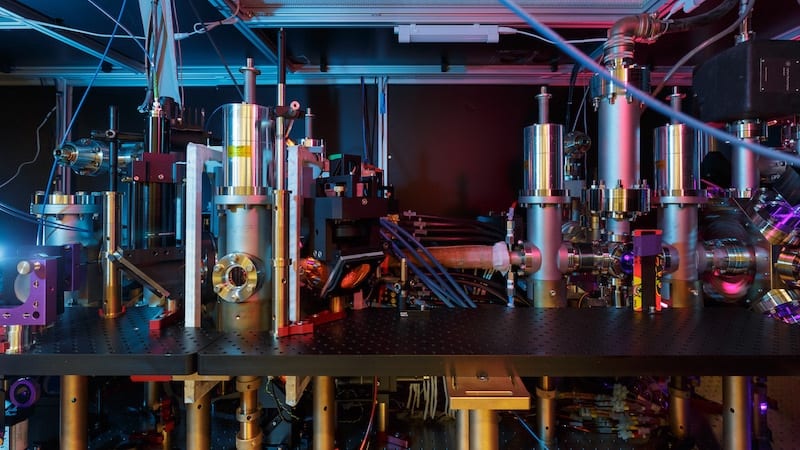
Combining the two species was no easy task, however, she says, and required simultaneous laser- and evaporative cooling. In previous work, published earlier this year in Physical Review A 10.1103/PhysRevA.97.023633, Ferlaino and colleagues developed an efficient way to laser cool both Er and Dy atoms at the same time down to 10 μK using a novel five-laser-beam technique that combines lasers and magnetic fields. In the new work, they now trap the Er and Dy atomic clouds produced in this way in a high-power infrared beam and then selectively evaporate the hottest erbium atoms. The dysprosium atoms become colder thanks to this process, allowing temperatures of about 100 nK to be attained for both species.

“The magnetic field in this experiment is extremely important since the atomic scattering and loss processes in the mixture depend very strongly on this field,” explains Ferlaino. “We also used traps whose shape and depth we could tune so that the more weakly trapped Er would evaporate more easily than Dy and thus serve as the coolant for the Dy.”

Apparatus

Different isotopes

The researchers studied different isotopes of Dy and Er and produced dipolar Bose-Bose mixtures with five different isotope combinations, as well as one Bose-Fermi mixture. They observed clear evidence for strong repulsive interactions between the species in one isotope mixture (166Er and 164Dy).

“The Er-Dy mixture is unique in that both species strongly interact with each other over a long range, as do both condensates,” Ferlaino tells Physics World. “This is a rather unexplored area for quantum matter and we do not yet know which novel phases of matter we might be able to access and realize.”

“Imagine a fluid made of gas-phase atoms, something that is, in itself, counter-intuitive, in which particles can spontaneously form special geometrical patterns to minimize their energy,” she continues. “Now mix two of those patterns and bring the ensemble into the quantum regime in which correlations between the particles dramatically increases. It is not yet clear whether these two dipolar-quantum fluids will be miscible, how the mixture will re-organize and which novel states will be established.”

The researchers, reporting their work in Physical Review Letters 10.1103/PhysRevLett.121.213601, say they are now busy developing a microscope able to directly observe the atoms in the condensates with a high resolution while they are still trapped. “We will also be studying how the magnetic field affects the scattering properties of the atoms so that we can change the interaction between them. This is a key parameter for all further studies.”

3D tumour model shows potential to improve cancer drug discovery

In the early stages of cancer drug development, candidate molecules are tested on tumour cell lines grown in 2D and 3D models. But there is poor correlation between these models and “true” human tumour pathophysiology, often leading to overestimation of drug efficiency.

The biochemical and mechanical cues of the 3D network of extracellular molecules, known as the extracellular matrix (ECM), are thought to be critical to tumour progression, and so models are being developed to better reflect these cell–matrix interactions. Current 3D models are based on synthetic materials or derived from natural components, but display deficient cellular adhesion and ECM-like mechanical stiffness, respectively.

This has led researchers to investigate a new type of 3D model – tissue scaffolds, prepared by removing cells from sections of animal tissue. There have been promising results growing cancer cell lines in decellularized rat lungs, and this spurred teams in China and Australia to examine models made from an animal with closer genetic compatibility to humans – the pig.

The scientists have now thoroughly examined the structural and biomolecular features of porcine lung sections, characterized breast cancer cell growth within the scaffolds, and tested the model’s sensitivity to a chemotherapeutic agent (Biofabrication 10.1088/1758-5090/aae270).

“Our various analyses demonstrate that our organotypic tumour model based on decellularized lung scaffold provides a promising alternative to study the biology of breast cancer and examine drug response,” says first author Wenfang Li from the Dalian University of Technology, China.

Evaluating the scaffold

Li and the team dissected tissue from frozen porcine lungs and decellularized them using chemicals commonly found in detergents. Microscopy and histology were used to confirm that all the cells were removed, and Masson’s trichrome staining (along with more advanced Raman spectroscopy techniques) confirmed that a critical component of the ECM, collagen, was preserved. Collagen fibres are cleaved by decellularization and, as this impacts adhesion, the team decided to use a chemical cross-linker to restore collagen.

They then examined the physical and mechanical structure of the porcine scaffold, using a variety of methods including scanning electron microscopy to examine pore size and compression experiments to evaluate mechanical strength.

“The decellularized lung scaffolds had favourable biomechanical characteristics,” says Li, pointing out that the porous structure was critical for adhesion and crosslinking improved the mechanical strength to levels comparable with patient tumours.

Supporting growth

Li seeded the millimetre-scale porcine scaffold with MCF-7 breast cancer cells, and tumouroids formed within three days. Confocal microscopy of fluorescently stained structural proteins confirmed the complete infiltration of the scaffold, with adhesion to the porous surface and cellular aggregation. The presence of viable, proliferating cells that caused the tumouroid mass to grow, provided further evidence that the decellularized porcine lung scaffolds have good biocompatibility as a tumour model.

The team also found that as the tumouroid increased in size, more internal cells were starved of nutrients and oxygen and so experienced cell death. This localized lack of oxygen, and subsequent cell death, is promisingly similar to the conditions observed in large tumours within patients.

Another encouraging sign of the model’s correlation with in vivo tumour growth was a noticeably stronger expression of breast cancer malignancy markers within MCF-7 cells in the 3D porcine scaffold, than that found in 2D cultures of the cell line.

Testing treatment

Finally, at 14 days post-seeding, tumouroids within the porcine scaffold were treated with the chemotherapeutic agent, 5-FU. The team found markedly less cell death in their new model than in MCF-7 cells grown in 2D cell culture, and this higher level of drug resistance is suggested to be due to enhanced cell–cell contacts in the closely packed tumouroid clusters.

“Another application of the lung scaffold is to serve as the model of breast cancer metastasis, as lungs are one of the most common sites for metastatic colonization,” said Li, who plans to investigate this metastatic mechanism in future studies.

However, when comparing cell survival after 5-FU treatment in a 3D model that utilizes a popular tissue engineering scaffold (chitosan/gelatin), the team didn’t find a significant difference in the drug resistance. Although the porcine model has the advantage of simple and cost-effective preparation, whether it is a better representation of in vivo tumour growth over the current 3D models remains to be seen.

Li points out that “real tumours” are formed by various cell types and tissues. “Thus, we aim to develop a more complex tumour model with diverse cell types and vascular system, to more accurately represent the tumour microenvironment in vivo” says Li.

Copyright © 2026 by IOP Publishing Ltd and individual contributors