A new value for the Hubble constant – the expansion rate of the universe — has been calculated by an international group of astrophysicists. The team used primordial distance scales to study more than 200 supernovae observed by telescopes in Chile and Australia. The new result agrees well with previous values of the constant obtained using a specific model of cosmic expansion, while disagreeing with more direct observations from the nearby universe – so exacerbating a long-running disagreement between cosmologists and astronomers.
The Hubble constant is calculated by looking at distant celestial objects and determining how fast they are moving away from Earth. A plot of the speeds of the objects versus their distance from Earth falls on a straight line, the slope of which is the Hubble constant.
Obtaining an object’s speed is straightforward and involves measuring the redshift of the light it emits, but quantifying its distance is much more complicated. Historically, this has been done using a “distance-ladder”, whereby progressively greater length scales are measured by using one type of “standard candle” to calibrate the output of another standard candle. The distance to stars known as Cepheid variables (one type of standard candle) is first established via parallax, and that information is used to calibrate the output of type Ia supernovae (another type of standard candle) located in galaxies containing Cepheids. The apparent brightness of other supernovae can then be used to work out distances to galaxies further away.
Large discrepancy
This approach has been refined over the years and has most recently yielded a Hubble constant of 73.5 ± 1.7 kilometres per second per magaparsec (one megaparsec being 3.25 million light-years). That number, however – obtained by starting close to Earth and moving outwards – is at odds with calculations of the Hubble constant that take the opposite approach — moving inwards from the dawn of time. The baseline in that latter case comes from length scales of temperature fluctuations in the radiation dating back to just after the Big Bang, known as the cosmic microwave background. The cosmic expansion rate at that time is extrapolated to the present day by assuming that the universe’s growth has accelerated under the influence of a particular kind of dark energy. Using the final results from the European Space Agency’s Planck satellite, a very different Hubble constant of 67.4 ± 0.5 is obtained.
To try to resolve the problem by using an alternative approach, scientists have in recent years created what is known as an “inverse distance ladder”. This also uses the cosmic microwave background as a starting point, but it calculates the expansion rate at a later time – about 10 billion years after the Big Bang – when the density fluctuations imprinted on the background radiation had grown to create clusters of galaxies distributed within “baryon acoustic oscillations”. The oscillations are used to calibrate the distance to supernovae – present in the galaxies – thanks to the fact that the oscillations lead to a characteristic separation between galaxies of 147 megaparsecs.
In the latest work, the Dark Energy Survey collaboration draws on galaxy data from the Sloan Digital Sky Survey as well as 207 newly-studied supernovae captured by the Dark Energy Camera mounted on the 4-metre Víctor M Blanco telescope in Chile. Using spectra obtained mainly at the similarly-sized Anglo-Australian Telescope in New South Wales, the collaboration calculates a value for the Hubble constant of 67.8 ± 1.3 – so agreeing with the Planck value while completely at odds with the conventional distance ladder.
Fewer assumptions
“The key thing with these results,“ says team member Ed Macaulay of the University of Portsmouth in the UK, “is that the only physics you need to assume is plasma physics in the early universe. You don’t need to assume anything about dark energy.”
Adam Riess, an astrophysicist at the Space Telescope Science Institute in Baltimore, US who studies the distance-ladder, says that the new work “adds more weight” to the disparity in values of the Hubble constant obtained from the present and early universe. (Indeed, the distance-ladder itself has gained independent support from expansion rates calculated using gravitational lensing.) He reckons that the similarity between the Planck and Dark Energy Survey results means that redshifts out to z=1 (going back about 8 billion years) are “probably not where the tension develops” and that the physics of the early universe might be responsible instead.
Chuck Bennett of Johns Hopkins University, who led the team on Planck’s predecessor WMAP, agrees. He points to a new model put forward by his Johns Hopkins colleagues Marc Kamionkowski, Vivian Poulin and others that adds extra dark energy to the universe very early on (before rapidly decaying). This model, says Bennett, “proves that it is theoretically possible to find cosmological solutions to the Hubble constant tension”.
Macaulay is more cautious. He acknowledges the difficulty of trying to find an error, reckoning that potential systematic effects in any of the measurements “are about ten times smaller” than the disparity. But he argues that more data are needed before any serious theoretical explanations can be put forward. To that end, he and his colleagues are attempting to analyse a further 2000 supernovae observed by the Dark Energy Camera, although they are doing so without the aid of (costly) spectroscopic analysis. Picking out the right kind of supernovae and then working out their redshift “will be very difficult,” he says, “and not something that has been done with this many supernovae before”.
A preprint describing the research is available on arXiv.
It’s hard-hitting stuff, with Diesendorf and Elliston also taking side-swipes at Trainer for dated data and challenging Smil’s view that the transition will be a slow process. They point to the possibility of mass production of low-cost renewable systems that are very different and faster to install than what went before. “Regions with insufficient local RE [renewable energy] resources will in future be able to import RE via transmission line and/or tanker carrying renewable fuels,” they add. A brave new green energy world, somewhat different from the brave new nuclear world that Brook and Bradshaw envisage and not totally incompatible with the “conserver society” that Trainer looks to.
Going on the offensive, Diesendorf and Elliston say: “contrary to unsupported claims by pro-nuclear RE critics that base-load power stations are essential, several of the simulation studies achieve reliability with zero or negligible base-load capacity. Furthermore, base-load power stations are poor partners for variable RElec, because of the former’s relative inflexibility in operation. Flexible, dispatchable power stations and storage technologies, together with demand response, are the appropriate partners.”
Going nuclear
That stands in sharp contrast to what you can sometimes hear from the nuclear lobby. For example, European nuclear lobby group Foratom says nuclear plants can be used to balance variable renewables. “To date, two-thirds of nuclear power plants in France have been operated routinely in flexible mode,” Foratom says. “This has demonstrated on a grand scale the ability of nuclear energy to balance the intermittency of variable renewables. Actually, nuclear energy appears as being the only large-scale, non-weather-dependent low-carbon technology that is capable of doing so.” Er, what about hydro, geothermal and biomass?
However, Foratom does say that, while “technically, existing nuclear power plants and new designs can perform both frequency control and load-following operations,” actual practices “are heterogeneous in the EU”. The group says “the decision to perform load-following depends very much on how flexibility is valued by the national electricity market and on legal/regulatory constraints”. It believes the EU needs “a well-functioning electricity market recognizing the specificities of long-term investments in low-carbon energy sources and a functioning EU Emissions Trading Scheme delivering a long-term and predictable carbon price”. This, it claims, “would lead to a level playing field for all low-carbon energy sources in a market where subsidies were not needed. In such a market, a proper reward for flexibility would encourage nuclear power plant operators to operate in a flexible way.”
So nuclear power plant operators should be paid fully if they provide such services. Fair enough, but can nuclear plants really ramp up and down fast, often and safely to meet renewable shortfalls? The more usual case made for nuclear is that it offers baseload power – a case that, perversely, relies on its fixed output. The problem is that, as Diesendorf and Elliston note, in the new flexible supply and demand energy system context, the baseload concept is now seen by some as less relevant. Maybe that’s why the nuclear lobby is trying to talk up the alleged potential for flexibility. There are certainly issues related to grid frequency stability when variable renewables replace large conventional plants, and maybe the nuclear lobby would do better to stick to that, rather than trying for bulk supply balancing, but there are also some other solutions to the frequency support problem, e.g. the use of smart invertors to create “synthetic” inertia from battery stores and, for bulk supply, the conversion of surplus power from variable renewables to hydrogen and its use in gas turbines to make power when needed to balance renewable lulls. Those plants would also provide inertia and frequency stability.
All power to gas
In that context, it is interesting to see that the Power to Gas (P2G) idea is now being taken more seriously in the UK. The Institution of Mechanical Engineers has called on the government to support the growth of hydrogen and power-to-gas storage, in a report Energy from Gas: Taking a Whole System Approach. It worries about the sustainability of lithium ion batteries, whereas it says hydrogen “can be stored in the gas grid, pressurized canisters or salt caverns for “minutes, days, weeks or months, making it a more valuable medium than the battery”. P2G electrolysers can provide “sub-second response and continuous operating durations of days, weeks or months as required by electricity grid operators, making them a more valuable energy converter than a battery”. So, as its lead author said, with P2G “the UK gas grid has the potential to store excess electricity in the form of hydrogen for a greater amount of time than some other forms of energy storage, such as batteries”.
There is now a £20 m hydrogen R&D fund that may help move things on, although much of that is focused on the use of hydrogen for heating, as a replacement for fossil gas – the other main option to its use for power grid balancing. Not everyone is fully onboard, however. A report from the Oxford Institute for Energy Studies Decarbonisation of Heat and the Role of ‘Green Gas’ in the UK says that, although green gas production and use may be viable for heating, it would be institutionally tricky, needing a large-scale state interventionist approach. Certainly, there would have to be regulatory controls over companies feeding hydrogen to the gas grid, but it’s not immediately obvious it would be that hard. But then this report seems to focus just on hydrogen produced by steam reformation of fossil gas, with carbon capture and storage (CCS) to make it carbon neutral. That would certainly require extensive central facilities. Producing hydrogen by electrolysis using surplus wind and solar power may not.
Costly issues
Cost is obviously the bottom line. On that, an Element Energy/E4tech study for the National Infrastructure Commission says all options for heat decarbonization – including hydrogen – are “significantly more costly” than staying with the status quo, although that, of course, will have hidden environmental and climate costs. However, the study also says that, of all the options, re-purposing the gas grid to deliver low-carbon hydrogen is the lowest cost option for heat decarbonizing, likely to cost about £100 bn less than electrifying the heating system by deployment of heat pumps. It does look like the electrification/heat pump route is dead, or less central now, and that hydrogen could be part of the way forward for heating, as well as playing a role in grid balancing.
There will of course be limits. Unless the amount of renewable capacity installed is very large, there may not be sufficient surplus to make hydrogen for both heating and balancing. But since most 100% renewables scenarios typically have enough renewables to meet demand most of the time, at times of low demand there should be plenty of surplus. Nevertheless, the use of green power surpluses (not continuous power) means that the expensive electrolysers would be left idle when there is no surplus, undermining their economics. An alternative route might be to use some of the surplus power to warm up large heat stores, adding to heat from other sources, and possibly from combined heat and power (CHP) plants, so as to meet heat demand peaks later on, via heat networks. That might be more economic than using hydrogen from P2G for heating via the gas mains. But it depends on whether P2G electrolysis turns out to be viable on a significant scale. In my next post I will look at the latest P2G studies – it is actually looking quite good. Either way, a balanced 100% renewable heat and power system does look increasingly viable.
The EXPLORER PET/CT scanner is the world’s first medical imaging system that can capture a 3D image of the entire human body simultaneously. The scanner, designed and built by the multi-institutional EXPLORER consortium, has now produced its first human images.
The brainchild of UC Davis scientists Simon Cherry and Ramsey Badawi, EXPLORER has a far higher sensitivity than current commercial scanners and can produce a whole-body diagnostic scan in as little as 20-30 s. It can also create movies that track radiolabelled drugs as they move around the body. The machine can scan up to 40 times faster, or use up to 40 times less radiation dose, than current PET scans, making it possible to conduct repeated studies in an individual, or dramatically reduce dose in paediatric studies.
“The trade-off between image quality, acquisition time and injected radiation dose will vary for different applications, but in all cases, we can scan better, faster or with less radiation dose, or some combination of these,” Cherry explains.
Imaging first
Badawi and Cherry first conceptualized the total-body scanner 13 years ago. In 2011, a $1.5 million grant from the National Cancer Institute allowed them to establish a consortium of researchers and other collaborators. And in 2015, a $15.5 million grant from the NIH enabled them to team up with a commercial partner and build the first EXPLORER scanner.
The first human images were acquired in collaboration with Shanghai-based United Imaging Healthcare (UIH) — which built the system and will manufacture the scanner — and Zhongshan Hospital.
“While I had imagined what the images would look like for years, nothing prepared me for the incredible detail we could see on that first scan,” says Cherry. “While there is still a lot of careful analysis to do, I think we already know that EXPLORER is delivering roughly what we had promised.”
The team used the scanner to image the delivery and distribution of fluorodeoxyglucose in real time. The resulting movie shows how, in the first few seconds after injection into a leg vein, the tracer travelled to the heart and was then distributed through the arteries to all organs in the body. Gradual accumulation of the glucose could be seen in the heart, brain and liver.
“The level of detail was astonishing, especially once we got the reconstruction method a bit more optimized,” says Badawi. “We could see features that you just don’t see on regular PET scans. And the dynamic sequence showing the radiotracer moving around the body in three dimensions over time was, frankly, mind-blowing. There is no other device that can obtain data like this in humans, so this is truly novel.”
UC Davis is working with UIH to get the first system delivered and installed at the EXPLORER Imaging Center in Sacramento, and the researchers hope to begin research projects and imaging patients as early as June 2019.
“I don’t think it will be long before we see a number of EXPLORER systems around the world,” says Cherry. “But that depends on demonstrating the benefits of the system, both clinically and for research. Now, our focus turns to planning the studies that will demonstrate how EXPLORER will benefit our patients and contribute to our knowledge of the whole human body in health and disease.”
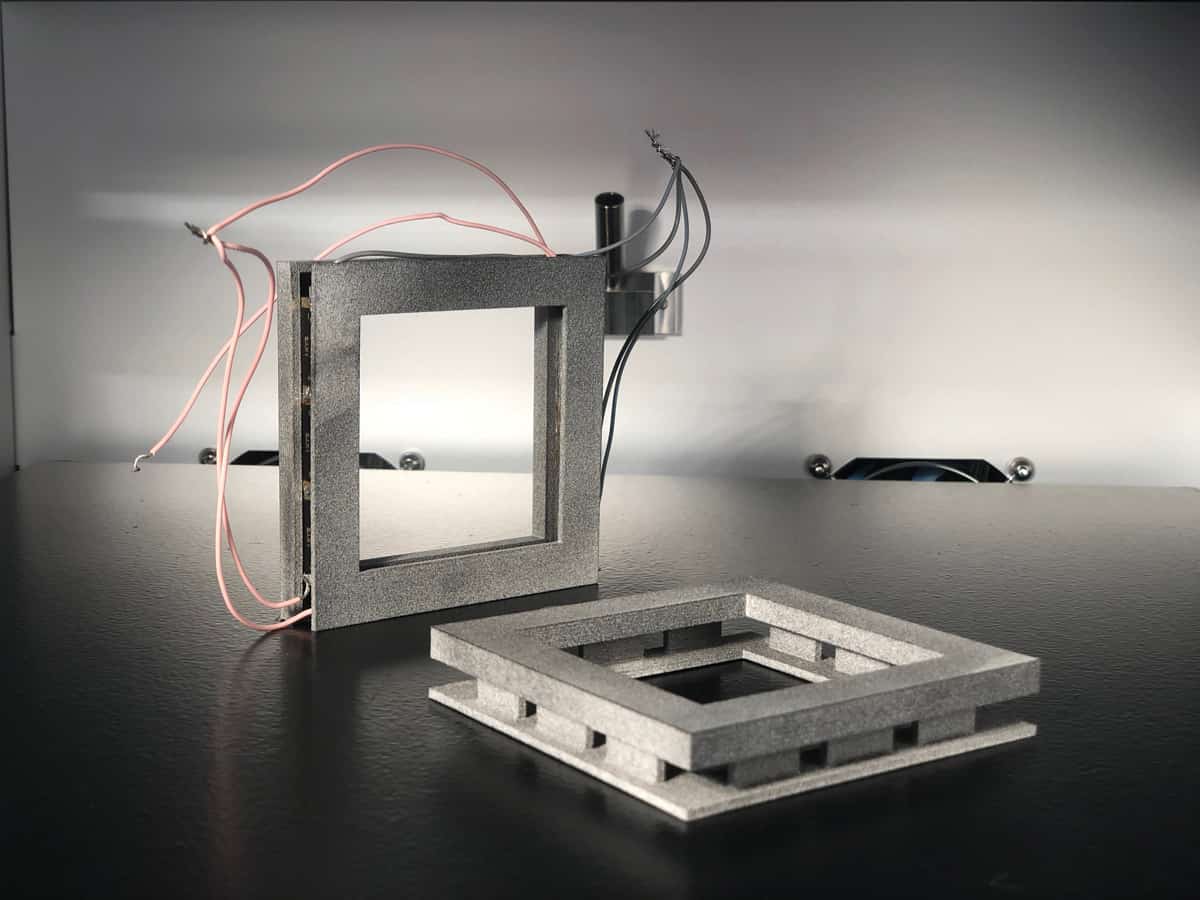
Composites made from epoxy resin containing graphene could be used to shield electronic devices from electromagnetic radiation and dissipate excess heat in these devices at the same time. This is the new finding from researchers at the University of California, Riverside (UCR) who have tested composites containing different thicknesses of few-layer graphene fillers. The best materials boast a thermal conductivity, K, of around 8 W/m/K (which is 35 times larger than the matrix material on its own) while providing a total electromagnetic interference shielding, SEtot, of 45 dB in the important X-band frequency range (of between 8.2 GHz to 12.4 GHz).
“Heat and electromagnetic radiation are inevitably produced in electronic devices, especially those operating at high frequencies,” explains research team leader Alexander Balandin, who is in the Department of Electrical and Computer Engineering at UCR. “As electronic devices become ever smaller and operate at higher and higher frequencies, they generate even more heat and electromagnetic waves. These not only degrade the devices themselves (EM waves also produce heat), but they can adversely affect neighbouring electronics systems. EM radiation might also be dangerous for human and animal health and the environment.”
The problem of excess heat is usually solved by using interface materials with a high thermal conductivity that dissipate this heat. And EM shielding materials are the answer to blocking EM radiation. “These two types of materials often have very different characteristics, however – an excellent shielding material can be a poor heat conductor while an efficient thermal interface material is usually an insulator, which means that EM waves pass right through it,” says Balandin. “This means that both types of material need to be employed in the same device, which adds to complexity and cost.”
Both functions at once
The UCR researchers have now found that composites containing the “wonder material” graphene can block EM radiation while dissipating excess heat. “Surprisingly, we discovered that the graphene composites can block EM energy even below the so-called percolation threshold, and remain electrically insulating (which is an important property for a thermal interface material).” Electrical percolation is the term used to describe composites in which electrically conductive filler particles form a continuous network, allowing for electrical current to flow.
Team members Fariborz Kargar and Zahra Barani of the UCR Phonon Optimized Engineered Materials (POEM) Center, led by Balandin, prepared epoxy-resin composites containing a high loading fraction of few-layer graphene fillers (FLG). They processed the material in their lab to determine the optimum aspect ratio, lateral dimensions, and thickness of the fillers. For EM shielding applications, for example, fillers with high aspect ratios are best, and for thermal applications optimum lateral dimensions and thickness are required, says Balandin.
Optical image of the dual-function graphene composites
They then prepared two batches of the composites using fillers with very different thicknesses. In the first batch, referred to as GF-A, the lateral dimensions of the FLG fillers ranged from 1.5 to 10 microns while their thicknesses were between 0.35 to 12 nm, which corresponds to 1 to 40 graphene monolayers, respectively. In the second batch (GF-B), the lateral dimensions were between 2-8 microns, but the thicknesses were much smaller – ranging from 0.35 to 3 nm, corresponding to 1-8 graphene monolayers, respectively.
Graphene composites can block more than 99.99% of high-frequency EM radiation
The researchers found that the best composites had an efficient total electromagnetic interference shielding SEtot of 45 dB, in the X-band frequency range while simultaneously providing a high thermal conductivity, K, of around 8 W/m/K. “Our results also show that graphene composites can block more than 99.998% of high-frequency EM radiation,” says Balandin.
“Electromagnetic shielding requires interactions of the EM waves with the charge carriers inside the shielding material so that the EM radiation is either reflected or absorbed,” he explains. For this reason, the shielding material must be electrically conductive or contain electrically conducting fillers. Graphene is a good conductor of electricity, which allows fillers made from this material to reflect and absorb EM waves. It is also a good conductor of heat – thanks to the unique properties of phonons (quanta of crystal lattice vibrations) in 2D materials. Our group discovered this property back in 2008.”
The UCR team, reporting its work in Advanced Electronic Materials 10.1002/aelm.201800558, says that it is now busy testing out its graphene composites as protective coatings in real-world heat-generating electromagnetic devices.
Everyone has an idea of what the Internet of Things (IoT) is all about. To some, it’s about “virtual assistants” such as Amazon’s Alexa that you can ask about the weather, get to play music or tell you about your commute. To others, it’s the £10 Raspberry Pi computer to make your project come alive. It could be fitness trackers, sleep monitors, fridges that order milk when you’ve run out, smart cat flaps that let only your cat in, or kettles that boil water just as you come home.
I’ve even heard about the IoT in the context of smart buildings that “know” what employees want from their workplace. I’m not sure about you, but I usually have no idea what I want from my workplace so getting technology to sort out my wishes will be challenging to say the least. So my question is: despite all the possibilities offered by an Internet of Things, what can it do for us?
Market forces
There have been some dramatic predictions about just how big the IoT market will be. One early projection from Cisco in 2014 claimed there would be 20–30 billion devices connected to the Internet by 2020 and 500 billion by 2025. With at least seven billion people on the planet by then, that would mean more than 70 devices would be connected to each of us on average.
But given that most people in developing nations have bigger problems to worry about than whether their kettle’s already coming to the boil when they walk through their front door, what are these hundreds of devices actually going to do for us? It’s a question that many Physics World readers could well be working on now and, if they’re not, they may do later in their careers.
First, let’s strip away the froth and try to understand what the IoT is. In my view, it brings together three technologies: incredibly cost-effective computing power, fast connectivity (including Wi-Fi and cloud computing), and cheap and tiny sensors. Much of the relevant technology has been built on the back of smartphones, which have given us GPS sensors that cost just a few dollars and chips as tiny as the dimples on a golf ball.
Two or three decades ago, GPS or gyros were the size of shoe boxes, cost over $10,000, and were available only to the military. Thanks to the advances in microelectronics and Moore’s law holding together for so long, even my MacBook’s charger now has more computing power than my first laptop in 1990. And with low-price radio technology – Bluetooth, Wi-Fi, GSM and 4G chip sets – this connectivity is so cheap that the screw-terminal power connectors cost more.
Behind all these advances lies some hardcore physics, without which the IoT would not exist. But knowing the physics doesn’t mean we can predict what will be the successful applications, which are shaped by people and our desires. Humans are a complicated bunch so it’s never easy to know which applications will win out. Perhaps the top application of IoT won’t be a fridge that orders milk or a kettle that boils as you walk in the door but something we haven’t thought of yet.
As for the security of the IoT, sure it’s a worry – an unintended consequence of connecting things together. In the past, security didn’t matter so much. The password to launch a nuclear-tipped Minuteman missile is said to have been eight zeros, which was fine as you first had to get past armed guards into a concrete bunker. But imagine if someone could set one off remotely: now that would be a worry.
Who dares wins
The possibilities of the IoT are limitless. I was once at an exhibition where I saw an IoT device that was meant to be put inside the stomach of a cow by inserting it up its backside. Once I had stopped laughing, the business case – a way of monitoring the cow’s health to improve milk yield – became pretty clear.
The challenge for those working on the IoT is “what’s it for?”
But as with all new technology, the challenge for those working on the IoT is to decide: “what’s it for?”. Applications will be key, as they were with music. Years ago, the only way to listen to music was for someone to play live in front of you. Then we invented the wax drum, the gramophone and radio. These devices were expensive and bulky so then we saw more mobile technology: the Walkman, CD players, iPods and smartphones that let us stream millions of songs via Amazon Music or Spotify.
These technologies have succeeded because businesses knew that people like listening to music and strove to deliver it. Discovering “what’s the thing for?” will be the opportunity for firms. I’ve come across loads of “hacker” projects on the Internet that want to water plants smartly or build automated houses with a Raspberry Pi. The problem is that most people aren’t prepared to invest enough time to make these projects work, which to me suggests they’ll either never work or can’t be that important. Products will succeed only if they do something useful faster, more cheaply and with less effort than before. Only then will the investment be worthwhile.
I believe that what’s holding the IoT back is the right software to make the various things “talk” to each other. Now if you’ve ever written or developed software, you’ll know just how long it takes to remove bugs (or “unintended features” as the coders’ joke goes). The problem is that it’s vastly more expensive and time-consuming to write this kind of software than it is to develop hardware.
But with falling hardware prices, perhaps the future for the IoT will lie in monthly subscription services rather than selling products to customers. And if you think that concept is a long way from pure physics, it is. But then, that’s business.
Physics has one of the largest gender gaps among all science, technology, engineering and mathematics (STEM) subjects; but within medical physics, the percentage of women is around 40%. So what is medical physics getting right, where could it improve further, and how could these factors be exploited to improve gender equality throughout physics as a whole?
The first speaker, Francis Duck from the University of Bath, took a look at how physics was first introduced into medicine at the turn of the nineteenth century and how, in parallel, women began training in medicine for the first time.
The use of electricity for medical treatments (diathermy) began in the mid-1890s, Duck explained, with UV therapy and radiography also being introduced. “In my view, 1895 was really the start of modern medical physics,” he said. And around that time, medicine became the first high-level profession to accept women.
During World War I, the wide use of medical technologies created a need for scientific expertise to support medical staff, providing opportunities for women to take posts previously reserved for men. Indeed, at this time, women often ran X-ray departments single handed. And in 1929, the Marie Curie Hospital opened for radiological treatment of women, with cervical cancer one of the first tumours to be successfully treated with radium. Such treatments required careful dosimetry, and women physicists took up this role.
Here and now
So how have things progressed since? Penny Gowland, from the Sir Peter Mansfield Imaging Centre, explained that at the University of Nottingham, half of undergraduates studying medical physics are female – in stark contrast to just 20% studying physics. So what’s driving that choice? Perhaps women are pressured by society into more “caring” jobs, she suggested. But more importantly, underrepresented groups tend to focus on careers with well-defined pathways.
Penny Gowland.
Gowland pointed out that medical physics is the only applied physics degree in existence and proposed bringing back degrees in applied physics. Demonstrating the real-world applications of all areas of physics could encourage more women to enter the field.
Further down the line, Gowland emphasized the need for good working practices in academia, with part-time and flexible working welcomed. She also noted that within medical physics, women tend to concentrate in applied rather than pure subject areas. “I think it is to do with confidence, which can be lacking in underrepresented groups,” she said. “Women need to be more confident.”
Ursula Johnson from University College London Hospitals, told attendees about working as a radiotherapy physicist within the UK’s National Health Service (NHS). She explained that her career choice stemmed in part from a school trip to a hospital’s radiotherapy unit, which demonstrated how physics learnt at school could be relevant to the real world.
Ursula Johnson.
Johnson pointed out that roughly 75% of NHS employees are women and, as such, “we don’t feel unusual, we are the majority”. While the gender balance may differ across medical physics sub-groups, in radiotherapy, it’s very much 50:50. “The NHS has a well-defined entry route, clear goals to achieve and a clear career structure — this may be quite appealing to women,” she said.
NHS policies promote equality and diversity, and support working flexible and part-time working. But how practical is this for medical physicists supporting clinical services? “Radiotherapy physicists need to be physically available, a lot of work is hands-on and being present is still necessary,” Johnson explained.
Johnson noted that at higher levels, women haven’t yet achieved equality, representing just 20% of heads of department in radiotherapy. She suggested that the barrier for women is not prejudice but rather confidence in putting themselves forward for promotion. In addition, readiness for a senior role often comes at a time when many women have increased family responsibilities, while part-time flexible working may be harder to achieve at higher job grades.
Industry options
The final speaker, Giulia Thompson from Elekta, provided the industry perspective. Her route into medical physics, she explained, began in her final year at school when a teacher’s explanation of the photoelectric effect inspired a shift in focus from humanities to physics. Following a PhD, in 2000 she joined radiotherapy technology provider Elekta, where she is now head of physics and research within the UK global engineering department.
Giulia Thompson.
“The fact that my school made pupils study physics [to a high level] made a massive difference,” Thompson told the group. “My high-school physics teacher was female, and she was a good teacher. That was another contributing factor.”
Thompson’s transition into industry was in part prompted by a need to make a positive impact on people’s lives, she said, noting that this also motivates many of her male colleagues. She emphasized the importance of believing it’s not selfish to be successful and explained that women are sometimes less happy to speak out. “If you have something to say, feel confident that you can say it,” she said.
Thompson noted that Elekta has around 30% female employees globally, with four of nine members of its board of directors now women. She described how companies can help by supporting events such as the AAPM Women Physicists Luncheon, or engaging with schools and universities via talks, prizes or visits. At Lancaster University, for example, Elekta awards a prize for the best female engineering student.
Collective thoughts
Later in the day, attendees split into groups to discuss what medical physics is getting right – and what it is still getting wrong. The groups highlighted many positives, including several related to working in the NHS, which offers a clear career pathway, a variety of roles and a standardized recruitment process that protects against bias.
Heather Williams and Phil Marsden organized and chaired the meeting.
Elsewhere, the prevalence of women working in medical physics — in hospitals, industry and academia — provides a wide range of role models to encourage others to apply. The multi-disciplinary nature of the job, with team working playing a key part, is another positive aspect. Meanwhile, the inclusion of medical physics within the UK’s A Level syllabus should encourage future interest.
As for where medical physics “could do better”, one example is that fewer women take part in large research projects, which are essential for career progression. This may be due to part-time workers being allocated more of the routine clinical work, leaving less time for research. Another issue disproportionally affecting women is returning to a medical physics role after a career break.
Other challenges highlighted by the groups included tackling presenteeism, introducing double-blind peer review to mitigate gender bias, and improving clarity of entry requirements for jobs within industry and academia.
Take-home points
The meeting concluded with another lively group conversation looking at how some of these issues could be tackled, starting with promotion of careers in medical physics. While bodies such as IOP, IPEM and the NHS produce many excellent resources, these need to be publicized and employed more. There’s also a current emphasis on university outreach, while it may be more productive to target schools and emphasize applied physics in careers information.
The meeting attendees discuss how to improve access and progression in medical physics for women. (Courtesy: Heather Williams)
For those working as medical physicists, career development is an important concern. Here, there’s a need for mentors to instil the confidence to apply for promotion. More time and support for training is key, as is the need to challenge managers’ expectations regarding part-time and flexible working — emphasizing that it’s a worker’s output, not hours, that count. In a similar vein, increased opportunities for job sharing could enable more part-time workers to move into senior roles.
Importantly, the field needs an alternative means to achieve qualifications such as the Higher Specialist Scientist Training (HSST) course. This 5-year programme requires study at a centre away from the usual workplace, which can place it beyond the reach of those with family responsibilities and prevent their progression to higher levels.
Another essential is an official scheme for medical physicists returning to work after a career break. While a returners scheme does exist, it is not well-publicized and may not be suitable for those who have been away for longer than five years. Such a programme should enable workers to easily retain or regain clinical registration, and will help maintain the profession’s existing skill base. And for those who choose to return part-time, it’s important that their role is scaled appropriately and includes developmental areas such as research and outreach.
Finally, the attendees considered how to boost connections and transitions between academia, industry and hospitals. It can be difficult, for example, for NHS staff to apply successfully for a role outside of the NHS if they are unfamiliar with the environment they hope to move into. Some type of network across the three areas, or perhaps the use of exchange programmes, could help overcome practical and psychological barriers in moving between them. This may be an area in which the professional bodies could provide help.
The field of medical physics is getting a lot right, and as the day’s activities proved, there’s no lack of enthusiasm, ideas and willingness to improve things even further.
Ten years ago, solar photovoltaic (PV) power generation was something of a curiosity. The entire world boasted only about 10 gigawatts of generation capacity, over 40% of which was in Germany, and these early installations were typically supported with generous government subsidies. A decade of phenomenal growth has changed this picture utterly. In 2018 the world’s installed capacity will likely surpass 500 GW – enough to power the whole of Brazil.
This astonishing and near-exponential growth has, for the most part, been driven by simple economics. Just as automobiles only really started to replace horse-drawn vehicles following the advent of the mass-market, affordable Model T Ford, solar’s upswing accelerated when prices entered the realm of cost-competitiveness with fossil fuels. Initially, near-parity came with the help of subsidies, but at some point – the exact moment is hard to pin down, as the costing is complex – most reliable information sources began to show that even without them, cost-parity with fossil fuels is now within reach.
This achievement is all the more remarkable because it has happened without any dramatic shift in the underlying PV technology. In the main, today’s solar cells are very similar to the one demonstrated at Bell Laboratories in 1954. That device – the first true solar cell – was based on a simple junction between n-type (electron-rich) and p-type (electron-poor) silicon, and it converted sunlight into electricity with an efficiency of 5%. Over the years, increasing sophistication in cell design, via the addition of highly doped silicon and anti-reflection layers, has pushed the efficiency to over 25%, but the core p-n junction structure remains. As a result, even though silicon PV is rapidly approaching pensionable age, when it should be putting up its feet and letting younger whippersnapper technologies carry the load, it still accounts for around 95% of the global solar market.
Given its status as the leading solar-cell technology, [silicon] has a slightly unfortunate characteristic: it doesn’t absorb light very well.
The question is, does it matter? After all, silicon PV works. Its price has come down to a competitive level. Where is the problem? As with most semiconductor-related matters, the answer lies in the core properties of the material. Silicon is undoubtedly the world’s favourite semiconductor, underpinning most of modern computing amongst myriad other applications. However, given its status as the leading solar-cell technology, it has a slightly unfortunate characteristic: it doesn’t absorb light very well.
The light-absorption properties of semiconductors depend on the energy separation between their conduction and valence bands of electrons. Such bandgaps fall into two types: direct-gap and indirect-gap. For indirect-gap materials, of which silicon is one, the process of absorbing an electron is phonon-assisted due to the presence of an offset in the respective minima and maxima of the band structure. While this may sound like a minor problem, it means that indirect materials absorb light much less strongly (the difference is several orders of magnitude) than their direct-bandgap cousins, which require no phonon assistance.
This basic material property in turn defines the practicalities of producing silicon solar cells. Because silicon absorbs light relatively weakly, greater thicknesses of material are required to ensure that sufficient light is absorbed. The total thickness is generally only hundreds of microns, and for you and me, that might seem trivial. For an electron, though, with a considerably shorter stride length, it’s a significant distance to travel. Hence, for electrons to traverse the material effectively, PV-grade silicon must take the form of highly crystalline, high-purity wafers.
Under the microscope: The ribbon-like structure of antimony selenide – a candidate material for third-generation PV cells – is readily apparent in this scanning-electron-microscope image. (Image source: Oliver Hutter)
This means one thing: cost. Silicon production for solar modules is a large-scale, complex and surprisingly slow wafer-growth process. Were it not for the material’s links to the microelectronics industry (and related economies of scale from mass production in East Asia) the cost of silicon PV would never have fallen as low as it has, and if the price of solar power production continues to fall, the material production costs will at some point become a limiting factor.
Looking beyond silicon
The drive to cut production costs is one reason why research in the field has long focused on alternative materials. If silicon is the solar equivalent of cathode-ray tube – something that does the job but is rather antiquated and a bit chunky – then the time will come when everyone will want to transition to a nice flat-screen, ultra-high definition version. Fortunately, a second generation of PV technology is already well established in the form of thin-film solar cells. In particular, two materials, cadmium telluride (CdTe) and copper indium gallium selenide (CuIn1–xGaxSe2, or CIGS for short), make highly effective cells. Unlike silicon, they have a direct bandgap, so they need to be only a few microns thick to have sufficient optical absorption (hence the term thin-film). Lower-quality, lower-purity materials are acceptable, and production can occur via rapid deposition methods such as evaporation or sputtering directly onto a piece of low-grade window glass.
Another advantage is that whereas production of the core material for silicon modules is separate from module fabrication, thin-film modules are produced in-line. That means a rolling production process where glass goes in at one end and near-complete modules come out at the other – significantly faster and more streamlined.
These thin-film technologies are not particularly new, being children of the 1970s, but over the intervening decades their performance has gradually improved, tracing the similarly gradual increase in our understanding of how such materials function. It is only relatively recently that their performance has begun to equal that of their flabbier silicon predecessor. Now that this point has been reached, their potential benefits are starting to be realized. Panels are being produced in a fraction of the time, using less starting material, with a lower carbon cost of fabrication, and in a such way that makes them much lighter and sometimes even flexible. This is already a mature industrial technology: companies such as CdTe module producer First Solar have installed gigawatts worth of modules already.
The transition beyond silicon is unlikely to stop with these early thin-film materials, though. The solar research community continues to seek ways to evolve onto the next generation of the technology. A number of third-generation concepts using novel materials physics have been suggested, including “intermediate-band” solar cells, nanostructured devices and hot carrier solar cells. While undoubtedly exciting, practicality has so far not matched prediction in these more radical departures from the established architecture. Instead, a sizeable fraction of research has focused on finding improved thin-film materials.
Any of the current raft of new materials may take off, or all may ultimately fade along with other former great hopes.
One reason that improvements are needed is that although both cadmium telluride and CIGS are highly effective, they rely on tellurium and indium – two of the rarest elements in the Earth’s crust. As we (hopefully) look towards a glorious future of terawatt-level PV power generation, the availability of raw materials will become intrinsically linked to the cost of commercial devices, and thus just as important as the materials’ functionality. This insight has driven interest in what are termed Earth-abundant absorber materials, but progress in developing such materials has often been slow and interest tends to tail off whenever the development process hits a seemingly insurmountable barrier. Although research on new materials has been ever-present, in the early part of this decade there was nevertheless a developing sense in some circles that no improved materials would be found, and that emphasis should therefore be placed on enhancing established technologies.
Promising perovskites
This viewpoint has emphatically changed in recent years with the advent of perovskite solar cells and, in particular, cells based on a compound called methyl ammonium lead iodide (MAPI). This hybrid between organic and inorganic materials first appeared as an off-shoot from the field of dye-sensitized solar cells, where the light-absorbing medium consists of nanoparticles coated with photo-conductive dyes. While various new potential PV materials have appeared over the years, nothing else has had the seismic impact of MAPI. Most technologies have a long development period, with light-to-power conversion efficiencies slowly creeping up over years (and even decades) of research – something that can be seen on the US National Renewable Energy Laboratory’s regularly updated solar-cell efficiency chart (PDF). CdTe and CIGS solar cells, for example, both took around 40 years to reach a conversion efficiency of 20%. The excitement surrounding MAPI stems from the fact that it achieved the same feat in around four years, going from basically unknown to competitive with the highest-efficiency materials out there in a comparative blink of an eye. This caused tremendous excitement in the solar-energy community and research into the material subsequently exploded, with thousands of research papers on MAPI published annually.
Bright starts, fading finishes
Scientists have studied a wide palette of materials for solar cell applications over the years. Far too often, though, progress follows a familiar pattern: someone makes an initial device, interest grows, more cell work follows, problems emerge, the problems can’t be solved, people give up and then move on. The reasons why a given material fails to make the cut tend to be particular to the material itself, and unfortunately, they often only become apparent after a lot of work has been put in.
All that glitters: Iron pyrite, also known as fool’s gold, was once a promising candidate for making solar cells. (Image courtesy: iStock/assistantua)
One notable entry on the long list of next big things that never quite panned out is iron pyrite, FeS2. Boasting fantastic absorption properties, a simple structure and a lovely, Earth-abundant composition, it received a great deal of attention in the 1980s and 1990s. Low-efficiency cells were made, but somehow they never really got much better. This was primarily due to problems with the surface of the material, which behaves in a way that is dramatically different to the rest of it; in fact, it remains an open question whether films of the material are n-type or p-type. The fact that pyrite is commonly known as fool’s gold is entirely coincidental.
Other earth-abundant materials have had similar struggles. PV cells made from tin sulfide have reached similar performance levels as pyrite. However, moving beyond that mark has been a struggle, since tin sulfide takes on many different phases depending on how it is produced, and this changes the doping completely. Theorists predicted that copper bismuth sulfide would be a wonder material, but it proved tremendously tricky to work with, as the precursor material would much rather form copper sulfide and bismuth sulfide separately. Consequently, even the best cells made from copper bismuth sulfide barely produce a current. An amorphous, non-crystalline, version of silicon also attracted considerable research interest after it was found to have an increased bandgap and higher optical absorption, allowing it to be used as a thin film. Unfortunately, the down side of its amorphous nature was an inherently large number of defects in the material. Despite a vast amount of research, the efficiency of amorphous silicon solar cells has never exceeded ~11%, with the high defect density forming an apparently insurmountable limit. These materials may ultimately be resurgent, but for the moment they serve as an example of how hidden issues can scupper the development of new solar-cell materials.
However, for all its wonderful properties, MAPI also turned out to have limitations. As well as converting sunlight efficiently and being relatively inexpensive, PV materials must also be highly stable. This is because there are additional costs, beyond those of the actual solar cell, associated with setting up a module array. These balance of systems costs mean that for a PV technology to be economically viable, cells must survive use for decades. Unfortunately, MAPI degrades rapidly when exposed to moisture and sunlight – clearly less than ideal for a material intended to be placed on a rooftop. These stability issues are by no means the death knell of the material, as they may yet be solved, but MAPI is looking a little less like the ultimate solution than it once did.
Playing the numbers
What MAPI’s emergence has done, though, is to showcase once more the potential of new materials for PV. If something like MAPI can appear from nowhere and develop at such a blistering pace, it raises the tantalizing prospect that other such materials may exist, but have yet to be tested. The overall impression is that we are entering an age of accelerated materials discovery, encompassing both experiment and theory. Rapid material-screening methods have become increasingly sophisticated, with numerous research groups able to deposit and characterize the properties of a new PV material, at a range of compositions, in a single step. This makes it possible to create material-property libraries in a fraction of the time required previously.
This work is underpinned by specialists in density functional theory, who use supercomputer-based calculations to predict the band structure, defect composition and stability of new compounds – all of which helps guide experimentalists. Emerging early-stage cell technologies are receiving renewed interest; the MAPI research community has now mutated into a broader research area focused on perovskite structured devices; and inorganic nano-ribbon compounds such as antimony selenide are showing early signs of promise.
All of this research is something of a numbers game. Any of the current raft of new materials may take off, or all may ultimately fade along with other former great hopes. Without a solar-powered crystal ball, it is hard to say which materials will persevere. The silicon standard-bearer may continue to dominate thanks to its industrial might; established thin-film materials may continue to grow market share; or an unheard-of new material may rise above the crowd thanks to the recent surge in materials discovery.
It also seems plausible that numerous complimentary solar technologies will enter a sort of symbiotic co-existence, with different materials finding different applications. Silicon, for example, might remain dominant for rigid modules, whereas thin-film may become the go-to choice for integrating power generation into buildings or providing lightweight power generation in remote areas. Other newer, still undeveloped, technologies may become the solution to an as-yet-unrealized need. Whatever happens, the palate of useable PV technologies is being continually broadened in tandem with falling prices. The dream of parity with fossil fuels has been reached by quiet and gradual evolution, but a material revolution may yet be a true game changer.
Back in 2010 Oxford PV was a small start-up with a big dream: it wanted to pioneer the market in solar windows. The idea of integrating sources of renewable energy directly into the buildings they power promised to transform the electrical grid – perhaps even realizing the goal of making cities carbon neutral on a relatively short timescale – and the company’s founders seemed well placed to turn it into reality. One of them, physicist Henry Snaith, had developed a dye-sensitized solar photovoltaic (PV) cell in his laboratory at the UK’s University of Oxford that was thin enough to be semi-transparent, while maintaining relatively high efficiencies. Using this material to make electricity-generating windows seemed like a logical next step.
Soon, however, the concept ran into difficulties. As it turns out, creating an effective, commercially competitive solar window using dye-sensitized cells was not nearly as easy as Oxford PV’s founding team initially hoped. “Solar windows are a very difficult product to commercialize,” explains Chris Case, the company’s chief technology officer. “They need to be both architecturally satisfying and sufficiently transparent. From a commercial product standpoint, this means you have to figure out how to make electrically active windows in different ways for every building, while meeting regulatory installation requirements.”
For the Oxford PV team, these challenges meant that solar windows went on the back burner. By 2012 researchers there were experimenting with a novel perovskite material that has the deeply un-windowlike property of being highly light-absorbent. The new plan was to install layers of this perovskite directly onto previously installed silicon solar cells, greatly improving their absorption efficiency. While typical silicon PV cells have an efficiency of around 25%, Case says that the perovskite-on-silicon technique could push this past the 30% mark without requiring major changes to existing installations. “By simply piggybacking perovskite on top of silicon, we have a platform that’s already accepted,” he says.
Reviving the dream
Despite the exit of one early pioneer, however, the dream of creating windows that can power the buildings behind them is far from dead. This is partly because the dye-sensitized techniques pioneered at Oxford PV are no longer the only option. A more recent startup in the field is the American firm UbiQD. Spun out of the Los Alamos National Laboratory in 2014, the company’s full name – “ubiquitous quantum dots” – hints at its ambitions. Quantum dots (QDs) are semiconducting nanoparticles typically made up of just thousands of atoms, and the company’s founder and chief executive, Hunter McDaniel, argues that they could resolve some of the challenges associated with making windows that generate electricity from sunlight.
Relatively cheap and easy to manufacture, QDs have a variety of unique optical properties, including their ability to re-emit the light they absorb at specific frequencies. These frequencies can be finely tuned by altering the shape, size and composition of QDs, allowing close control over their re-emitted light. So instead of using QDs to absorb light directly on the window’s surface, UbiQD’s design relies on directing incoming light to PV strips around the window’s edge. “Inside a luminescent solar concentrator, sunlight excites QDs, causing them to glow,” McDaniel explains. “Most of that light they emit gets trapped in the window pane and is ultimately guided into small solar cells hidden in the window frame.”
Clear goal: A proof of concept sample from PHYSEE, showing the transparency of the coated glass. (Image courtesy: PHYSEE)
Because QDs can vary widely in their shapes, sizes and compositions, McDaniel adds that they offer an easy fix to one main drawback of solar windows: unattractive tints that block out too much sunlight. By carefully selecting the composition of their QD mixtures, UbiQD’s scientists aim to tune both the absorbent and aesthetic properties of their windows. “The right kind of near-infrared quantum dots can enable efficient luminescent solar concentration while maintaining a grey, colour-neutral tint without lines or haze,” McDaniel says.
UbiQD’s founder acknowledges that, on its own, the company cannot overcome all of the difficulties inherent in getting solar windows to market. As a small business, they are not set up to manage an entire production process for windows or window glass; instead, they hope to collaborate with existing manufacturers. “There are plenty of highly productive window manufacturing assets already deployed, so we don’t want to compete with or disrupt the existing industry – we want to partner with it,” McDaniel says. “We are seeking at least one partner at each step in the value chain, including window manufacturers and architects.”
Electricity and data
One of the companies UbiQD is currently talking to is another 2014 start-up, PHYSEE. Based in Delft in the Netherlands, PHYSEE has developed a niche in the solar-window industry thanks to products that use incoming sunlight as a source of both energy and data on the local climate. In the near future, the company intends to release products that direct sunlight to sensors between solar cells, making it possible to detect changes in environmental factors such as light levels, temperature and humidity.
Instead of QDs, PHYSEE’s products rely on window coatings composed of inorganic host materials, doped with impurities of rare-earth metals in specific oxidation states. Like UbiQD, however, their windows will redirect light to external PV strips. “We are currently developing products that will work on the principle of luminescent solar concentrators, which will use the whole window surface for solar collection,” explains Ana Jung, head of R&D at PHYSEE. Whereas conventional glass reflects 30% of the incoming sunlight, she explains, the company’s next generation of products will capture this light with a patented luminescent coating on the glass surface and subsequently re-emit it towards the edges of the window. There, integrated solar cells will convert it into electricity.
Jung argues that PHYSEE’s upcoming products have some advantages over both QDs and the organic dyes used in Oxford PV’s original cells. “We are using stable materials that do not degrade over time,” she says. “The inorganic material uses no toxic heavy elements, so there are no environmental implications.” Jung adds that the composition of dopants in the product’s coating ensure desirable aesthetics as well. “The coatings have unique optical properties, including low self-absorption, which allows for high efficiencies and a broad absorption range. This means a large part of the solar spectrum can be captured, with almost no colouration of the window,” she says.
Like UbiQD, PHYSEE intends to collaborate with existing manufacturers and researchers, making use of well-established processes such as sputtering coatings onto glass. This technique, Jung points out, is already widely used in the glass industry for anti-reflection and solar-blocking coatings , which will mean “we can integrate our products into any existing manufacturing line,” she concludes.
Market impact
As researchers in these unconventional solar-energy firms work to make their products more efficient, attractive and structurally sound, managers also face a separate challenge: persuading both potential business partners and policymakers that such products could become a major part of the renewable-energy market. Case, of Oxford PV, believes that once industry professionals and policymakers properly understand the firm’s perovskite-on-silicon technique, it could completely transform the solar-cell market. “Getting acceptance of our technology in the marketplace is our main hurdle,” he says. “But once that’s done, we will go beyond what silicon can do. We now have a clear and identifiable roadmap to bring our solar-cell efficiency beyond 30%. That could really change the economics of the PV marketplace.”
In the coming decade, Case hopes that Oxford PV’s product will diversify the power grid, increasing opportunities in the developing world while contributing to carbon-neutral cities. “When you can build the infrastructure to power a community from an area the size of a single home, without the need for utility companies’ involvement, you reimagine the power grid in a way that can change society. I think we’re sitting on a complete disruption,” he argues.
Jung shares this attitude and is confident that PHYSEE’s products could transform the industry. “I believe that every window should be electricity and data generating,” she says, adding that urban environments will be the ideal environment for implementing the technology. “There’s a particularly big potential for buildings in cities that are built to be high, with mainly glass surfaces. In combination with solar panels, we are contributing to our ultimate goal of energy-neutral buildings.”
McDaniel is more cautious in predicting the impact of UbiQD’s product. Rather than completely disrupting the industry, he believes that collaborations between companies with different technologies will bring about more diverse future for the solar-window market. Nevertheless, he agrees that his company’s technology holds great potential for urban renewable energy. “It’s in urban settings, where the price of electricity is highest, that the space available for renewable energy sources is minimal,” he explains. “Ultimately, this technology will be seamlessly integrated into buildings and people won’t even know it’s there. What they will notice is lower energy bills, and the global benefits associated with utilization of renewable carbon-free energy.”
David Lidzey, chair: About 10 years ago, I was working on a project with colleagues in the chemistry department at the University of Sheffield. I needed a postdoc to do this work, and out of the blue, James Kingsley phoned me up and said, “Have you got any postdoc positions?” Later, we got funding to develop self-assembly techniques for making polymeric solar cells, and our academic collaborators really liked what James was doing in terms of re-engineering things to make devices more efficiently. That’s when they started asking for spares.
James Kingsley, managing director: We spent a lot of time designing speciality components that we needed for our research, but when we’d approach a manufacturer and ask, “Could you make this for us?” they would usually reply, “Yes, that’s fine; how many thousands would you like?” A large part of the cost of producing these components was getting the first one made – after that, incremental ones could be made much more cheaply. So even though we only needed one or two ourselves, we would often get a few extra made and hand them out to our collaborators. After a while, it got to the point where I was posting five different sets of things to people around the UK, and we decided that since they weren’t the only people in the world doing this sort of research, maybe there was a small business in it.
What was it like to start the company?
JK: It was hard work, but the great thing was that I could do it part-time. At the start, I was working for the company one day a week (as well as in evenings, weekends, hobby time and holiday time). That fraction gradually increased as the business grew, but it was several years before I stopped working for David’s research group entirely. Being on campus and in the university ecosystem was helpful in the early days. For many jobs – everything from packing boxes to more complicated things like designing some of the new components – we often took on undergraduates or postgraduates on a part-time basis. By doing that, we were able to access a pool of very talented people and add fractions of them to our workforce as needed.
The fact that Ossila is a know-how-based company rather than an intellectual-property-based company makes us much less reliant on outside investment, but of course it also limits the rate of growth. This is often seen as a less attractive way of doing business. More often, people want to get rich quick or die trying, because there’s a sort of glamour in that. But of course, the reality is that a lot of start-ups will fail.
Can you elaborate on what it means to be know-how-based rather than IP-based?
JK: To be eligible for a patent, you need to have done something that is “non-obvious to somebody skilled in the art” – it needs to be a breakthrough, a non-trivial step forward. A product, in contrast, is anything that solves a pain point for a customer. When we started Ossila, a lot of people were trying to make research-sized solar cells, and it was very difficult and time-consuming – either they couldn’t find the right components or they couldn’t get the components to work together easily. So we’ve engineered a package of components, a platform, where everything works together nicely, and by providing an off-the-shelf packaging component that works out of the box (or at least with a minimum of further equipment), researchers can focus on their material and whatever interesting twist they’re working on, rather than spending lots of time designing every component from the ground up. That’s not really a patentable innovation, but it solves a problem for our customers. I’m not saying that operating on a know-how basis is easy, but if you’ve developed something in your lab that other people need, then there’s a potential product in it even if it can’t be patented. I think that’s often overlooked.
What have been your biggest challenges, either technical or otherwise?
JK: We’re very much a company of makers: we productize the things we like to make and that we needed for our own research. We’ve got a fantastic, highly trained staff, but finding those people has been a challenge. The other thing is that when you’ve only got two product lines, manufacturing is relatively easy, but when you start having multiple product lines with different supply chains and long lead times on speciality components with rigorous quality parameters, all those things need to be controlled tightly. Now that our manufacturing is scaling up, we’re starting to read books from all the way back to the 1980s about Toyota’s production system to learn how they did it.
DL: Another ongoing challenge is to identify the right product for the right market. It’s easy to have an idea for a product, spend lots of time developing it, and then launch it only to find that it doesn’t sell anywhere near as much as you thought, while other products seem to fly off the shelves. Understanding what makes a good product, what the market wants, and what price the market is prepared to pay for it is a real challenge. But I think we’re getting better at it.
What are the next steps for Ossila?
DL: Lots of our customers are developing new types of technologies (such as solar cells, light-emitting diodes or field-effect transistors) and are doing basic spectroscopy research. We started out in the photovoltaics and thin-film electronics sector as we knew this area well, but we’re now diversifying into materials science in general. We still sell lots of materials for solar-cell research and semiconducting polymer research, but we’re also selling things that you could use to make different types of films or coatings, or to look at the properties of coatings on surfaces, or to measure conductivities of films. That has meant diversifying the materials we work on, from conductive polymers right the way through to two-dimensional semiconductors, graphene, carbon nanotubes and so on.
Another notable recent development is that for eight of our first nine years, we were based in an innovation centre at the University of Sheffield, with everyone squashed into half a dozen relatively small labs and offices. But earlier in 2018 we moved out to a purpose-built site, and that’s been good for us. On a practical level, we have more space, but making a more formal break from the university environment has also made us grow up as a company.
What do you know now that you wish you’d known when you started back in 2009?
JK: The number one thing I wish I’d done is to read more. The number of books that I needed to read to fully understand our business model was really quite large. As scientists, we read technical articles all the time, but I can think of several business books that fundamentally changed the way we think. Some of them are relatively famous, like The Lean Start-Up, while others are more esoteric or unusual. Within any book, there’s always some useful nugget of information that changes the way you think about your business.
DL: I never really appreciated the importance of effective operational structures within a company. Companies only work well when the people within the company are working well together, and we’re paying attention to this right now in terms of deciding how to structure the company as it grows.
Any advice for others seeking to start a business in this field?
DL: When we were trying to start Ossila, we struggled to convince people that a company without IP could be valuable or interesting. But in our field we’ve found that model works well, so my first piece of advice is that you don’t have to have some hugely valuable patent to start commercializing what you’ve done.
The other thing I’d like to mention is that we have a third co-founder, our technical director Alastair Buckley. Alastair came to the Department of Physics and Astronomy at Sheffield from a company that was developing technologies based on polymer light-emitting diodes, but unfortunately went bust after running out of capital. That was an important lesson, because it showed us how vulnerable tech companies can be if they’re based on large amounts of venture-capital funding. For that reason, we’ve always liked the organic growth model inasmuch as you only spend what you’re making. That makes the company much safer and more sustainable.
Besides electricity consumption, the indirect emissions of supply chains are the fastest-rising area of emissions worldwide, according to researchers in the US and Norway.
In the two decades to 2015, such indirect emissions rose by over 80% – nearly double the rise of direct emissions. The non-electrical indirect emissions of the industry sector alone now stand at 32 billion tonnes of carbon dioxide, the study shows.
Edgar Hertwich at Yale University, US, believes his and colleagues’ study exposes “the potential agency different sectors have over supply chain emissions”. The message is to “look at your purchases in addition to your direct energy consumption, to identify opportunities for emission reductions”.
The Greenhouse Gas Protocol, a corporate standard, defines three categories of emissions. “Scope 1” are the direct emissions of a sector, “scope 2” emissions relate to electricity consumption whilst “scope 3” emissions relate to all other indirect emissions, for instance from purchased materials, secondary transport and waste disposal.
Many previous analyses focused on the direct emissions of facilities, or on the carbon footprints of consumption – that is, all the emissions incurred in a product that is delivered to a consumer. But, according to Hertwich, no-one before had analysed the indirect, scope 2 and 3 emissions allocated to where production occurs, from an economy-wide perspective.
“The benefit is that it indicates emissions-mitigation opportunities in production, and potentially also trade-offs associated with any changes,” he says.
Hertwich and co-author Richard Wood of the Norwegian University of Science and Technology looked at the trajectory of scope 1, 2 and 3 emissions for five sectors – energy supply, transport, industry, buildings, and agriculture and forestry – between 1995 and 2015. They found that, as a whole, scope 1 emissions rose by 47%, but scope 2 emissions rose by 78%, and scope 3 emissions by 84%.
Most of the rises occurred in developing countries. The final levels of scope 1, 2 and 3 emissions were 32, 10 and 45 billion tonnes of carbon dioxide, respectively.
Hertwich identified a potential means of improving the industry sector, which at 32 billion tonnes of carbon dioxide saw the biggest scope 3 emissions.
“Given that half of industry emissions are from the production of materials, we can say that moving towards light-weight design and low-carbon materials are promising strategies, in addition to looking at opportunities to extend the lifetime of the materials,” he says. “Of course, each of these potential opportunities needs to be investigated further in detail.”
Hertwich hopes that this type of analysis will feature in the next report by the Intergovernmental Panel on Climate Change (IPCC), which currently does not consider how changes in one sector can affect another.
“A lot of mitigation measures will require more inputs of equipment and materials, such as the insulation and heat-recovery ventilation systems for buildings or high-speed trains,” he says. “We need to understand these trade-offs.”