Linnea Freear is a trainee clinical scientist at The Christie NHS Trust, in Manchester, UK. In this video interview, she explains why she has decided to pursue a career in medical physics. After graduating from the University of Manchester with a physics degree, Linnea considered various career options before deciding that medical physics would enable her to make a positive difference to the world.
This profile is part of a series of Physics World films produced at The Christie, which we will be sharing on this site over the next few weeks. In the meantime, take a look at our medical physics research updates, as well the careers section of our site, which contains lots of case studies and practical information for physics graduates.
A network of four spintronic oscillators can successfully be trained to recognize different spoken vowels, says a team of researchers at C2N and CNRS/Thales in France and AIST in Japan. Each of the nanoscale devices in the network acts like a nano-neuron and behaves just like its biological counterpart in that it can fire rhythmically in a controlled way and even oscillate in unison with the other devices present. The new network is an important step forward for neuromorphic computing based on spintronics.
Neuromorphic, or brain-inspired, computers aim to mimic the biological neural system at the physical level of neurons (brain nerve cells) and synapses (which are the connections between neurons) and will rely on neuronal-like networks rather than series of binary 1s and 0s. As well as being potentially much faster and energy efficient than conventional computers, such machines might also be able to learn how to perform new tasks rather than just being pre-programmed to do them.
The human brain contains a staggering 100 billion neurons, each of which receives electrical inputs from some of its neighbours and then “fires” an electrical output to others when the sum of the inputs exceeds a certain threshold. This process, also known as “spiking”, can be reproduced in nanoscale devices such as spintronic oscillators and this is why researchers have recently started looking into these structures to make neuromorphic computers.
Magnetization precession at microwave frequencies
The new neuromorphic network made by Julie Grollier and Damien Querlioz and colleagues at CNRS, Université Paris-Sud and Université Paris-Saclay, consists of four spintronic devices measuring 375 nm in diameter and a free layer of iron-boron Each device consists of a non-magnetic material layer sandwiched between two ferromagnetic material layers, with each ferromagnetic layer being magnetized in a different direction.
When a voltage is applied to the device, spin-polarized current flows from one magnetic layer – across the non-magnetic layer – into the second magnetic layer. This current exerts a torque in the second magnetic layer, making its magnetization precess at microwave frequencies. This precession can be monitored by measuring an oscillating voltage that develops across the device.
Coupled oscillators
The researchers connected the four spintronic oscillators together using millimetre-sized electrical wires. “In such a set-up, the microwave current generated by each oscillator propagates in a loop and in turn influences the frequency of the other oscillators,” explains Grollier. “The oscillators are thus coupled.”
To test their network, they then recorded vowels spoken by 37 different volunteers, digitized these recordings and transformed them using Fourier analysis into two frequencies. These were subsequently accelerated a hundred times and fed into the nano-oscillators using a nano-antenna in the form of high-amplitude microwave signals.
The oscillating voltage is analysed by a computer running a real-time machine-learning program. “Our system can correctly recognize different vowels and can classify them because each vowel leads to a specific synchronized configuration of the oscillators in the network – regardless of the person who pronounced it. For example, the sound “ih” synchronizes a single oscillator, while “ah” synchronizes two oscillators, and so on.
“This behaviour is not innate to the system, and we must train the network to achieve it,” stresses Grollier. “To do this, we gradually modify the frequency of each of the oscillators by adjusting the DC current flowing through it according to the learning law in the machine-learning program.”
The researchers, reporting their work in Nature 10.1038/s41586-018-0632-y, say that they would now like to develop algorithms that allow their oscillator network to learn more complex tasks, such as recognizing images. “We would also like to make a chip containing a larger number of these spintronics oscillators to exploit their rich physics for future computing applications,” Grollier tells Physics World.
Hawaii’s supreme court has ruled that construction of the protest-hit Thirty Meter Telescope (TMT) can begin. In a ruling yesterday, judges rejected an appeal to a decision last year by Hawaii’s Board of Land and Natural Resources (BLNR) to grant a construction permit to the TMT. This is the last hurdle before construction, should the TMT International Observatory (TIO) still go ahead with its preferred site on Mauna Kea.
The TMT will be one of the world’s largest ground-based telescopes with a 30 m primary mirror that is made up of 492 hexagonal segments. The structure that will house the telescope will be 66 m wide and 56 m tall. Mauna Kea was chosen as the observatory’s site in July 2009 and officials then began work on being granted the necessary approvals and permits. However, after construction began in 2014, some native Hawaiians protested. They regard the Mauna Kea summit as sacred and had previously objected to the growth in the number of telescopes there. This then led to the TMT organisation postponing construction.
We remain committed to being good stewards on the mountain and inclusive of the Hawaiian community
Henry Yang
In December 2015, Hawaii’s supreme court invalidated TMT’s building permit, ruling that the BLNR had not followed due process when it was approved. In early 2017, due to the disruption to proceedings, the TMT organisation chose La Palma in the Canary Islands as a back-up site. The BLNR then appointed retired judge Riki May Amano to re-hear the case and in July 2017 he recommended that the BLNR reissue the permit, which it did on 28 September that year. However, opponents of the decision challenged the new permit before the supreme court. In a 73-page ruling, released yesterday, the supreme court has now agreed with the BLNR’s decision.
“We are grateful for the Hawaii State Supreme Court’s ruling that will allow TMT to be built on Mauna Kea,” says Henry Yang, who chairs the TIO’s board of governors, in a statement. “We remain committed to being good stewards on the mountain and inclusive of the Hawaiian community. We honor the culture of the islands and its people and do our part to contribute to its future through our ongoing support of education and Hawaii Islands’ young people.” Yang adds that the group are “excited to move forward in Hawaii” and to “continue to respect and follow state and county regulations, as we determine our next steps.”
The TMT organisation must now submit construction plans to the Department of Land and Natural Resources for review and approval. If construction begins next year then the telescope could be complete by 2023.
A machine learning algorithm that can swiftly identify the most desirable LED phosphor host compound out of a database of almost 120,000 materials has been developed by researchers in the US. Efficient enough to run on a PC, the program was created by Jakoah Brgoch and colleagues at the University of Houston and has predicted the relevant properties of a highly efficient, thermally stable compound in well under a minute. The team’s algorithm could soon be used to speed up the discovery of new materials for use in commercially competitive LEDs.
Typically, LEDs are composed of an inorganic, luminescent “phosphor” material, doped with small quantities of rare earth elements. The interactions between phosphor hosts and the rare earth dopants are a strong indication of an LED’s performance. The key properties of a good phosphor are its photoluminescent quantum yield (photon production efficiency) and its thermal stability (resistance to breaking down under high temperatures). Previously, discoveries of new, higher-performance phosphor compounds were made either through trial-and-error, or by the intuition of chemists, meaning many, more optimal materials were likely missed.
Predictive model
Brogch’s team aimed to improve this discovery process by using machine learning to scan a list of 118,287 possible phosphor host compounds in Pearson’s Crystal Structure Database for the most desirable candidate. To create their algorithm, the team merged a model that can predict a compound’s Debye temperature – a strong indicator of its quantum yield – with evaluations of the size of a compound’s band gap – related to its thermal stability.
With these measures in place, the algorithm identified the compound NaBaB₉O₁₅ as having both one of the highest Debye temperatures and largest bandgaps in the entire database, displaying a quantum yield efficiency of 95% and an excellent thermal stability. Where the calculation would have previously taken weeks, Brogch and colleagues achieved the result in well under a minute, even when using a conventional PC to run their algorithm. The researchers tested the effectiveness of their program by synthesizing NaBaB₉O₁₅ in the lab, and substituting some of its composite ions with oxidized europium – which is a rare earth element.
As hoped, this resulted in a highly efficient, thermally stable LED, although the light it produced was too blue to be useful commercially. Brogch doesn’t see this as a significant setback, however. “Now we can to use the machine learning tools to find a luminescent material that emits in a wavelength that would be useful,” he says. “Our goal is to make LED light bulbs not only more efficient but also improve their colour quality, while reducing the cost.”
The blood—brain barrier is impermeable to most drugs. Focused ultrasound can reversibly open this barrier, allowing such drugs (blue circles) to enter the brain. (Credit: Focused Ultrasound Foundation)
An early-stage, non-invasive therapy, focused ultrasound works by focusing multiple beams of ultrasound onto targets deep within the body with a high degree of accuracy. In doing so, the focused sonic energy can destroy targeted cells while sparing adjacent normal tissue. But that’s not all it can do – as well as ablating tumours or other disease targets, focused ultrasound can be used to stimulate an immune response, open the blood–brain barrier (BBB) and much more.
Kassell, chairman of the Focused Ultrasound Foundation, explained that at the point where the ultrasound beams converge, a wide array of biological mechanisms can occur, creating an opportunity to treat an enormous variety of serious medical conditions. “Today, [treatments for] over 100 medical disorders are in various stages of development. Ten years ago, there were only three,” he said.
“Focused ultrasound has the potential to transform the treatment of a whole variety of serious medical disorders, and thereby impact the lives of millions of people around the world,” said Kassell.
“But there’s an enormous amount of work that remains to be done before focused ultrasound can achieve its potential.”
BBB opening
One exciting emerging application is the use of focused ultrasound to enhance drug delivery to the brain. The brain is protected by the BBB, which contains tight junctions that prevent passive diffusion of molecules from the blood into the brain.
“This is great for protecting the brain, but it’s also a big problem if we want to develop and use drugs in the brain,” explained Nathan McDannold, a physicist at Brigham & Women’s Hospital. “More than 98% of small molecules and practically all large-molecule drugs do not cross the BBB and cannot be used effectively in the brain.”
Application of focused ultrasound has been shown to cause increased permeability in the blood vessels in the brain. This effect is attributed to the presence of microbubbles, which expand and contract in response to the ultrasound. “If we inject microbubbles before ultrasound, we can concentrate the acoustic effects on the blood vessels in a gentle way,” McDannold said. “This results in an opening of tight junctions and an increase in active transport.
McDannold shared some examples of his group’s preclinical work. In one example, the team disrupted the BBB in and around the tumour in a rat brain. The aim was to enhance the amount of drug reaching the tumour, as well as to target infiltrating cells in the tumour periphery. He also showed a mouse model of Alzheimer’s disease, where the researchers injected an agent that targets amyloid-beta plaque, a hallmark of Alzheimer’s, following BBB disruption. Imaging revealed the plaque location and demonstrated the possibility of administering drugs to amyloid-beta plaques.
Concluding his presentation, McDannold updated on the current status of this field. He noted that BBB disruption is a reversible effect: the BBB can be opened for a few hours and then closes exponentially with a half-life of one to six hours.
“We’ve shown that it is safe – ultrasound can be applied repeatedly without significant pathology or any functional deficits,” he explained. “We can control where the barrier is opened, to direct the delivery of drugs only to areas that we want, and can also use feedback via acoustic monitoring to potentially control the level of opening.”
He noted that the approach is “drug-neutral”: following BBB disruption it’s possible to deliver therapeutics including small molecules, nanoparticles, liposomes and even stem cells. Finally, McDannold highlighted that BBB opening can be clinically translated, and that human trials are now underway.
Clinical translation
“We are working on trying to open the blood–brain barrier in various clinical trials,” said Nir Lipsman, a neurosurgeon at Sunnybrook Health Sciences Centre. He pointed out that current research is very much a concerted effort, with labs and institutes worldwide investigating focused ultrasound-induced BBB opening.
Nir Lipsman from Sunnybrook Health Sciences Centre. (Courtesy: Stephanie Gross; Focused Ultrasound Foundation)
“There may be effective agents for many neurodegenerative and other brain disorders, but we just can’t get enough drug into the brain to have a meaningful impact,” Lipsman explained. “A safe and reversible means of opening the BBB directly at the site of pathology has been a major goal for several decades.” He then presented a “greatest hits” of BBB studies happening around the world.
One key area of investigation is treatment of glioblastoma (GBM), the most aggressive brain tumour. Lipsman and his team launched a proof-of-concept trial using the Exablate system to open the BBB after GBM resection, under real-time MRI guidance. The aim is to enhance delivery of chemotherapeutics to the rim around the resected tumour where 98% of recurrences occur. “We performed a small trial in five patients to demonstrate that it is safe to open the BBB,” he said. “We managed to do that with no adverse effects.”
Elsewhere, a team in Taiwan led by Arthur Lung is using the NaviFUS system for transient BBB opening in patients with recurrent GBM. NaviFUS is a different type of device that utilizes intraoperative neuro-navigation guidance and CT-based treatment planning. In August of this year, the researchers treated two patients and demonstrated successful BBB opening.
And in France, Alexandre Carpentier and colleagues are investigating low-intensity ultrasound for transient BBB opening, again looking at recurrent GBM. The team has used the SonoCloud implantable transducer in 19 patients to date, with results that indicate the procedure is safe and may influence overall survival.
“Multiple centres around the world are using different technologies to achieve this,” Lipsman emphasized.
Beyond cancer treatments
BBB opening could also help deliver therapeutics to the brains of Parkinson’s disease patients.
“There’s been tremendous interest in trying to deliver growth factors to the brain, but so far, human trials using direct delivery have failed, likely because not enough got in,” said Lipsman.
He described a preclinical trial of focused ultrasound-mediated BBB opening, in which Richard Price and colleagues demonstrated significant delivery of the GDNF gene into the brains of rats. Importantly, this gene delivery also led to a change in the animals’ behaviours.
Elsewhere, Hairong Zhang and colleagues are studying BBB opening for delivery of antibodies to alpha synuclein, a protein that occurs in patients with Parkinson’s disease. They used sonication to open the BBB in 10 mice, and concurrently delivered the antibody. This resulted in enhanced antibody delivery, reduction of alpha synuclein levels and a change in the animals’ symptoms.
Lipsman pointed out that this antibody is several hundred times larger than a typical compound that can cross the BBB. “If this can get across, then you can cross virtually any compound that you want to deliver,” he said. “The hope is that this is translatable to humans.”
Another condition that could potentially benefit from BBB opening is Alzheimer’s disease. Motivated by preclinical data suggesting that opening the BBB may help clear amyloid-beta plaque, Lipsman and colleagues investigated this approach in a small trial. “We managed to safely, repeatably and reversibly open the BBB in six patients with mild to moderate Alzheimer’s disease,” he said, noting that larger trials are ongoing.
Finally, Lipsman described BBB opening after ischemic stroke, for intra-arterial delivery of mitochondria. “Even in conditions that we previously thought we really could not touch, such as stroke, focused ultrasound may play a profound role in delivering healthy things to the brain,” he said.
“It’s early days, but there’s intense interest in improving every aspect of the BBB opening process, both the hardware and software,” Lipsman concluded. “And as we work on the focused ultrasound, other groups of scientists are working to develop novel treatments to deliver to the brain.”
Vision for collaboration: Peter Littlewood. (Image courtesy: Faraday Institution)
What are the key challenges in energy storage research?
It depends what the energy storage is for. One application is electric vehicles, and I’d say we’ve reached a tipping point where nobody would start a car company based on the internal combustion engine anymore. But even so, when you buy an electric car, about half of the cost of it is the battery. There’s a need to push down that cost, and that’s happening already – it’s happening with the evolution of current technologies such as lithium-ion batteries, and it could potentially happen with breakthroughs in next-generation batteries. Lithium-ion batteries are not a single technology but a family of technologies, and at some point – probably in the next few years – they will evolve into something that might be called a solid-state battery, which will be safer, lighter and a bit more efficient.
Then you come to the harder things, and curiously these aren’t energy-storage problems per se – they’re about integrating renewables into the electrical grid. With wind and solar, there will be long periods where you’re not generating much energy, and there will also be substantial periods when you’re generating more than you can use. In the summer of 2018, for example, the weather in the UK was very hot, very dry and not very windy – good for solar, not so good for hydro or wind. For short periods, batteries are reasonable systems for storing renewable energy, but if you’re interested in large-scale storage, battery technologies are not ready, and they may never be. Sources of stored hydropower are now largely used up, and other, similarly mechanical, technologies have inherent efficiencies, so we’re almost certainly going to move into electrochemical storage. A beneficial side effect is that the chemicals you use, such as ammonia, are useful in their own right. That allows you to begin to decarbonize some heavy industry, which represents the third of the economy that will be most difficult to electrify.
Why is it so important to meet these challenges? You mentioned the recent heatwave.
I wouldn’t like to say that the heatwave was necessarily associated with climate change, but fundamentally we have to move to a more sustainable economy. The last time we had a sustainable economy was probably in the 15th or 16th century, when everyone was travelling by horse and cart. I think electrical storage is key to enabling us to use modern technologies in a sustainable way. Our capacity for generating power through renewable sources – solar, wind – is growing rapidly but the storage technologies need to keep up if we want to make the transition. Otherwise, we’ll stall. We’ve already seen that in Germany, where they put lots of renewables onto the grid and then had to back them
up with coal.
What will be the Faraday Institution’s role?
Our goal is to propel the development and take-off of energy-storage technology, and there are three ways we’re trying to do that. One is to put together substantial mission-driven research programmes. We’ve focused on issues that we think are likely to be important in the next few years, and we’re trying to bring together large groups of people to work on them in an organized way. Another focus is training and education. The world is going to need many more people who understand batteries, and I don’t just mean PhD electrochemists – it has to be a very broad group, extending to technicians, mechanics, first responders and others. We also need to make an impact on how these technologies are perceived in terms of education and diversity to make sure we get the right people coming into the field.
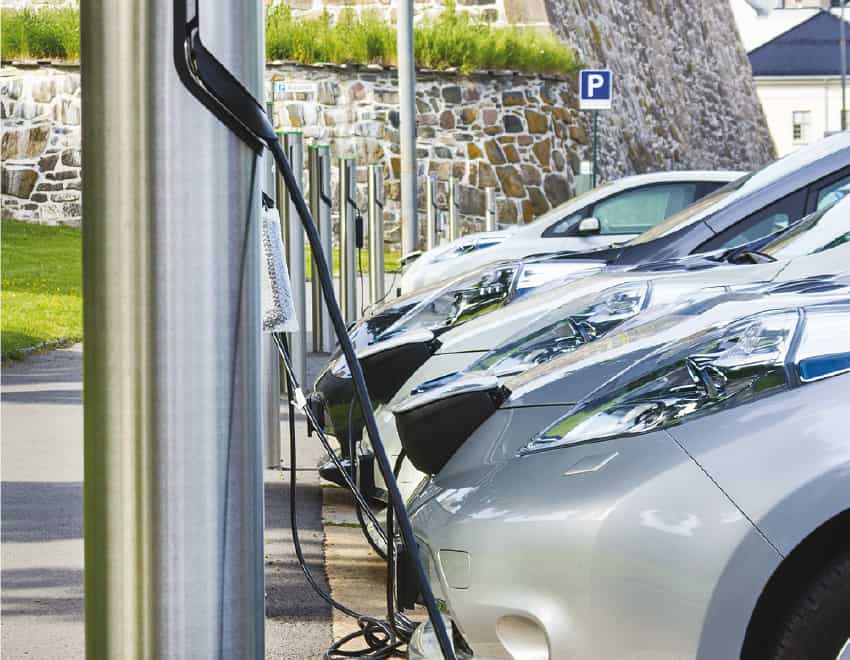
Fully charged: Rising numbers of electric vehicles create demand for better batteries. (Image courtesy: iStock/Jacek_Sopotnicki)
The third thing we do is to give policy advice with numbers in it. We can help explain the consequences of technologies, and explain the policy implications of making different choices. That’s important because a lot of what you need to do to get technology to market isn’t just a matter of inventing things, but also making sure you have the correct regulatory framework and the right policies in place.
You were instrumental in setting up another organization with a similar mission, the Joint Center for Energy Storage Research (JCESR) at Argonne National Laboratory in the US. How is the Faraday Institution different?
The JCESR’s research programme is probably at the more fundamental end of the spectrum, but it is based on a similar idea: take a thorny problem, bring in a large group of people to work on it and push hard. The key difference is that with the Faraday Institution we are essentially trying to build a virtual national laboratory. In the US you have energy labs like Argonne, Oak Ridge and Berkeley, and they have a mission that is driven by the public good as defined by the federal government. In the UK, the government has a strategy for industrial R&D, but it doesn’t have a straightforward mechanism of engaging the community in that. Of course, it can put out calls for proposals through the research councils, but these, by definition, are relatively small-scale. There’s no central organization around energy research in the UK like there is in the US.
The vision for the Faraday Institution is to become that national laboratory, but we didn’t want to construct lots of bricks and mortar because the research capability in the UK is largely in universities and in industry, not in government-run institutions. The model we have – and this is the really experimental part – is to try to bring together a community that operates as a national laboratory would, but without everyone being in the same building. We want to get people to think like that – to collaborate internally, work effectively, share ideas, challenge each other, and generally build relationships across the rather fragmented state of research in the UK’s university system. That’s a little bit like JCESR, because JCESR is a so-called “hub”, with research distributed across five national labs and five or six universities, with several companies as partners. We’ve simply scaled that up.
You mentioned bringing people together. A lot of the work in energy storage is being done by material scientists, chemists and engineers. What do you think physicists bring to the table?
Physicists love doing back-of-the-envelope calculations and looking into the fundamentals of things, but I think the main thing that physicists can do in this field is to be integrated. Here’s a personal example. I worked on oxide materials for superconductivity and magnetism for a long time, and it turns out that those same classes of materials are actually battery cathodes. But the electrochemistry community that works on battery cathodes and the materials-science community that works on superconductivity don’t communicate. There is knowledge of different kinds across that spectrum, from electrochemistry to materials science, but it needs to be integrated.
Beyond that, though, I think battery research has got to an interesting stage. For a long time, it has been largely empirical, driven by sets of principles that electrochemists understand, but there’s been very little development in terms of getting a microscopic understanding of what’s going on. We’re now at a point where it’s actually worth making an investment in understanding how a battery works. That might seem like an odd thing to say, but let me remind you that although semiconductor technology came in with the transistor in the 1950s, and integrated circuits turned up 15 years after that, it wasn’t until the 1980s that the fractional quantum Hall effect was discovered. The ability to study that problem only came about because of the vast investment in semiconductor engineering. And that’s often what happens: the really sharp, hard science only gets done after the technology has matured in some way, because then there is the need, the ability and the money around to invest in really understanding it properly. If you look at what’s happening now with battery technology, there are lots of physics tools being applied, and it’s a very interesting field for physicists because you’re forced to think about a problem that isn’t a traditional physics one. The goals are different.
What technologies has the Faraday Institution focused on in the first year of operations?
We’re running four major projects at the moment, three of which are directly related to current technology. One of these involves recycling. We’re among the first institutions to establish a substantial research programme in battery recycling, and it has to be a sprawling programme because the problem incorporates more than just the technology of recycling – it also involves everything from life-cycle analysis to policy. The other two current-technology projects are quite closely related. One goes by the name of “degradation,” which is associated with battery lifetime. In parallel with that, there’s a project on battery system modelling where the goal is to improve the models we have for the performance of batteries and battery systems. You can do that by bottom-up or physics-based modelling, or you can use top-down modelling, which is very data-driven: because we now have a lot of batteries on the market, we can collect data from them and begin to understand their performance using data-mining tools.
Conflict minerals: The cobalt in batteries is often mined in countries with weak governments and low environmental standards. (Image courtesy: Shutterstock/Fixazh)
The last project we have is aimed at developing new technologies around solid-state batteries. There are some obvious materials science, physics and chemistry questions about how to transition from a graphite anode to a lithium-metal anode; how to replace the liquid electrolyte by a solid electrolyte with a high mobility; and how to make a “softer” cathode material that doesn’t fracture, so that a large amount of charge can pass from one to another. We’re not alone in pursuing these questions, of course; there’s quite a lot of people working on ideas for solid-state batteries.
You mentioned both technology and policy as being important. Where do you think the biggest sticking points are?
I think the technology challenge is the standard one: can you actually do it? We know there are no rules against building batteries that are five or six times more energy-dense than what we have now, so it should be just a matter of fighting our way through that space. The intersection with policy, though, is very important. As an example, let’s look at recycling. The world, globally, plans to have about two-thirds of its vehicles electrified by either 2035 or 2040, so around that time we would need to be producing on the order of 10 million tonnes of batteries and battery materials every year. To put that in perspective, global production of silicon is 8 million tonnes, and aluminium is 63 million tonnes, so unless battery technology changes rapidly, we’ll be using a substantial fraction of the world’s nickel just for automobiles.
That clearly has huge ramifications in everything from geopolitics to recycling, and it’s quite clear that if you fail to get that stuff right, you will stall. At the moment, we’re struggling because battery manufacturers are sourcing cobalt from mines in the Congo and this is simply not acceptable. There’s cobalt elsewhere, and we need to get it from elsewhere and/or reduce the amount of cobalt being used in batteries. That’s a technology change, and it could be done, but it’s also a perfect example of how you could go wrong if you fail to consider things on a global scale.
There’s also a strong intersection of technology with local policy. In urbanized countries like the UK, people worry about charging electric cars; there’s a complaint that even fast charging takes 30 minutes and that’s much longer than fuelling up your car at a petrol station. But charging isn’t very difficult, and if you talk to people who own electric vehicles, they’ll tell you that the number of times they fast-charge tends to be very small. Consequently, they get used to the idea that they never visit a petrol station, and they find the fact that they used to have to go and fill up a tank every week kind of annoying.
There is, however, an infrastructure issue associated with integrating vehicles onto the electrical grid, and in the UK there’s also talk of adding another 30 GW of offshore wind to generation capacity. That will be a pretty straightforward thing to do; at least in principle, we know how to do that. The problem is that is if you’re getting 50 or 60% of the UK’s electricity coming from wind, you need to change the storage integration to make it worthwhile. At the moment, the way we incentivize wind producers to produce wind energy is by paying them even if they’ve got their turbines turned off, rather than giving them an incentive to generate more energy and store the extra electrons. So there’s many aspects where policy and regulation will need to play together with the technologies, and it’s important to ensure that those who make the decisions are getting the right kind of advice – by which I mean advice on what the system is going to look like in the long term, not just the next few years.
When will we see the impact of the Faraday Institution’s research in the commercial sphere?
We’re really targeting impacts on the five- to ten-year time scale, especially for new technologies like solid-state batteries. Even if you were to have a prototype now that you believed you could scale up, it would be several years before it could be in a vehicle. But I think other things might have a subtle impact much earlier. Better battery-management systems, for example, could make an impact just by helping your battery last 10% longer. I also think we’ll have a major impact in terms of people. We really want to train a new generation of scientists and engineers – electrochemists, electrical engineers, material scientists, physicists, mathematicians and computer scientists. We need people who have some understanding across that whole space, while also having sharp experience in one area. There’s a global shortage of battery scientists right at the moment, so anybody reading this should go check job ads.
UK power demand, according to National Grid, has a typical summer daytime peak of around 30 GW, but at night can fall to 17 GW. At present there is around 42 GW of renewable capacity installed, supplying nearly 32% of UK electricity, and more is on the way; by 2020 there should be 46 GW and by around 2027 maybe 60 GW, on current plans.
Not all this renewable capacity will deliver full power all the time, or at any one time. Over the last year, the average load factor for onshore wind turbines was 30%. For offshore projects it was 50%, while for PV solar it was just 10%. Even so, during summer nights there may soon, at times, be more output than is needed. Solar will, of course, be zero at night but it will peak in the daytime, so that renewables may soon sometimes supply a large part of daytime summer demand.
Certainly by 2027, which is when the Hinkley Point C nuclear plant may start up, it is hard to see what will be done with the output from its 3.2 GW capacity at times, especially since demand for electricity is falling (by about 2% in 2016-17 and 15% in the last decade) and could fall even more if energy efficiency were taken seriously.
The real problem with renewables will not be shortfalls, but regular excesses
Dave Elliott
Something on the supply side will have to give way. Nuclear plants must usually be kept running 24/7 to recoup their large investment costs, but it would be odd to shut down wind and solar projects to allow that to continue when wind and solar are able to deliver much cheaper power. Though they are sometimes being “curtailed” at present, in part due to grid congestion problems, but also due to there being excess generating capacity over demand. Curtailment is wasteful and provocative, since so-called constraint payments have been negotiated to compensate generators for when their contracted power is not needed.
Summer nights
There are, as far as I know, no plans to vary the output of the UK’s proposed new nuclear plants to compensate, so at some point — maybe in the mid-2030s — we may have around 16 GW of fixed inflexible nuclear capacity to deal with. That’s enough roughly to run the whole system on a summer night, without using any of the 65 GW or so of renewables that could be available by then. That would be pretty odd. And what about at other times? One justification sometimes made for large nuclear expansion is that nuclear plants can back up renewables when they are not available and electricity demand is high. There may well be some periods like this each year, with wind and/or solar lulls for days or even weeks. So is that what the nuclear plants will mainly be used for?
It is hard to see how that would work. For one thing, 16 GW isn’t enough to back up 65 GW of renewables. For another, could the very expensive nuclear plants mostly be left off-line the rest of the time, just waiting to ramp up for these rare events? No one is actually suggesting that. When pressed, nuclear proponents talk about making nuclear plants more flexible, so they can balance varying renewable supplies and varying demand all the time. It is true that some designs of nuclear plant can, and do, ramp up and down slowly to match daily demand rise and fall cycles (as they do in France), but it would be hard for them to do this fast and repeatedly to match renewable variations. Cheap, fast-start-up gas turbines are far better at that.
Storage systems like batteries, although costly, can also provide fast short-term balancing. So can pumped hydro reservoirs. Demand can be managed to reduce (delay) peaks, for example, by charging more for power at peak times. Extra power can be imported when demand is high, balanced by exports when there is too much available. With 65 GW of renewables and 16 GW of nuclear on the UK grid, there would certainly be times when large-scale interconnector exports would be possible, needed and lucrative, although some of this excess could go into longer-term storage when there are lulls in renewable availability, perhaps converted into hydrogen for use to make power again. We would certainly have plenty to spare. Even without nuclear.
Winter time
Ah, but what about winter? Isn’t that when things get difficult? Actually, it’s not too much of an issue for electricity — demand for that does increase in winter, but the UK’s maximum wintertime demand is typically well under 60 GW. On top of the current 8.8 GW of nuclear and 42 GW of renewable capacity, the UK also has about 30 GW of gas-fired generation capacity, and some other odds and ends (though soon no coal plants). In all, the total is near 100 GW, including some standby capacity and storage. That provides enough to ensure power-demand peaks can always be met, even when it’s very cold and renewables are at a low ebb. Solar output will be low, but wind plant output is highest in the winter. At present, gas plants do most of the flexible balancing. Nuclear is run continually to supply so-called baseload.
In the newly emerging system, the pattern is likely to change. There will be more storage, more demand management, more interconnectors, all helping to balance the increasing amount of variable renewable capacity. Gas plants will still be needed, including some fast-start-up open cycle plants, but they can increasingly be run on biogas or hydrogen produced and stored during periods when there is excess renewable output. The nuclear plants’ traditional selling point, that they can provide baseload, now becomes a problem: it’s not needed, or at least only, at most, at a low background level. In theory, some of the nuclear plants’ output could be stored when not needed, but it would be very odd to build large new expensive inflexible plants to be run like this — against type. What is needed is flexibility. Some say small modular reactors may be able to offer that, and perhaps some local heat as well, operating in Combined Heat and Power (CHP) mode. But so can local biomass or biomass-fired CHP plants. I know which I would rather live near.
The above analysis should illustrate that, although there will be balancing issues, the real problem with renewables will not be shortfalls, but regular excesses — if we install enough renewable capacity to be able to meet demand most of the time. But that “excess capacity” problem can be turned into a solution, if we can convert the excess output to storable hydrogen to meet power needs when there is a lull in renewables. Some storable heat would be useful too – heat demand is what peaks most in winter.
The big issue is how much excess do we want or need, and how do we handle the economics? At present, the rush to install renewables has led to a surplus of low-cost electricity in some countries, destabilising electricity markets with, for example, PV challenging gas plants in daytime peak markets in Germany. That’s a problem since these gas turbines will be needed at other times for balancing. So some sort of support for balancing capacity is needed. The UK capacity market was one attempt but has had some issues. Hopefully it can be improved. It does seem odd that it has been used to support nearly 8 GW of nuclear in each annual contract round so far.
The UK has very large renewable resources, which look likely to be able to supply over 50%, and even, some say, over 60% of the nation’s power by 2030, and much more later on. But the UK is not unique: many other countries can get high percentages of renewables. Some have already achieved over 50%. In my next few posts, I will look at the debate on whether a target of near-100% renewables by 2050 is possible globally.
The batteries we depend on for our mobile phones and computers are based on a technology that is more than a quarter-century old. Rechargeable lithium-ion (Li-ion) batteries were first introduced in 1991, and their appearance heralded a revolution in consumer electronics. From then on, we could pack enough energy in a small volume to start engineering a whole panoply of portable electronic devices – devices that have given us much more flexibility and comfort in our lives and jobs.
In recent years, Li-ion batteries have also become a staple solution in efforts to solve the interlinked conundrums of climate change and renewable energy. Increasingly, they are being used to power electric vehicles and as the principal components of home-based devices that store energy generated from renewable sources, helping to balance an increasingly diverse and smart electrical grid. The technology has improved too: over the past two and a half decades, battery experts have succeeded in making Li-ion batteries 5–10% more efficient each year, just by further optimizing the existing architecture.
Ultimately, though, getting from where we are now to a truly carbon-free economy will require better-performing batteries than today’s (or even tomorrow’s) Li-ion technology can deliver. In electric vehicles, for example, a key consideration is for batteries to be as small and lightweight as possible. Achieving that goal calls for energy densities that are much higher than the 300 Wh/kg and 800 Wh/L which are seen as the practical limits for today’s Li-ion technology. Another issue holding back the adoption of electric vehicles is cost, which is currently still around 300–200 $/kWh, although that is widely projected to go below 100 $/kWh by 2025 or even earlier. The time required to recharge a battery pack – still in the range of a few hours – will also have to come down, and as batteries move into economically critical applications such as grid storage and grid balancing, very long lifetimes (a decade or more) will become a key consideration too.
There is still some room left to improve existing Li-ion technology, but not enough to meet future requirements. Instead, the process of battery innovation needs a step change: materials-science breakthroughs, new electrode chemistries and architectures that have much higher energy densities, new electrolytes that can deliver the necessary high conductivity – all in a battery that remains safe and is long-lasting as well as economical and sustainable to produce.
Lithium magic
To appreciate why this is such a challenge, it helps to understand the basic architecture of existing batteries. Rechargeable Li-ion batteries are made up of one or more cells, each of which is a small chemical factory essentially consisting of two electrodes with an electrolyte in between. When the electrodes are connected (for example with a wire via a lamp), an electrochemical process begins. In the anode, electrons and lithium ions are separated, and the electrons buzz through the wire and light up the lamp. Meanwhile, the positively-charged lithium ions move through the electrolyte to the cathode. There, electrons and Li-ions combine again, but in a lower energy state than before.
The beauty of rechargeable batteries is that these processes can be reversed, returning lithium ions to the anode and restoring the energy states and the original difference in electrical potential between the electrodes. Lithium ions are well suited for this task. Lithium is not only the lightest metal in the periodic table, but also the most reactive and will most easily part with its electrons. It has been chosen as the basis for rechargeable batteries precisely because it can do the most work with the least mass and the fewest chemical complications. More specifically, in batteries using lithium, it is possible to make the electric potential difference between anodes and cathodes higher than is possible with other materials.
Solid benefits: The solid, nanoporous electrolyte material developed at imec. (Image courtesy: imec)
To date, therefore, the main challenge for battery scientists has been to find chemical compositions of electrodes and electrolyte that will let the lithium ions do their magic in the best possible way: electrodes that can pack in as many lithium ions as possible while setting up as high an electrical potential difference as possible; and an electrolyte that lets lithium ions flow as quickly as possible back and forth between the anode and cathode.
Seeking a solid electrolyte
The electrolyte in most batteries is a liquid. This allows the electrolyte not only to fill the space between the electrodes but also to soak them, completely filling all voids and spaces and providing as much contact as possible between the electrodes and the electrolyte. To complete the picture, a porous membrane is added between the electrodes. This inhibits electrical contact between the electrodes and prevents fingerlike outgrowths of lithium from touching and short-circuiting the battery.
For all the advantages of liquid electrolytes, though, scientists have long sought to develop solid alternatives. A solid electrolyte material would eliminate several issues at the same time. Most importantly, it would replace the membrane, allowing the electrodes to be placed much closer together without touching, thereby, making the battery more compact and boosting its energy density. A solid electrolyte would also make batteries stronger, potentially meaning that the amount of protective and structural casing could be cut without compromising on safety.
Unfortunately, the solid electrolytes proposed so far have generally fallen short in one way or another. In particular, they lack the necessary conductivity (expressed in milli-Siemens per centimetre, or mS/cm). Unsurprisingly, ions tend not to move as freely through a solid as they do through a liquid. That reduces both the speed at which a battery can charge and, conversely, the quantity of power it can release in a given time.
Scientists at imec – one of Europe’s premier nanotechnology R&D centres, and a partner in the EnergyVille consortium for sustainable energy and intelligent energy systems research – recently came up with a potential solution. The new material is a nanoporous oxide mix filled with ionic compounds and other additives, with the pores giving it a surface area of about 500 m2/mL – “comparable to an Olympic swimming pool folded into a shot glass,” says Philippe Vereecken, imec’s head of battery research. Because ions move faster along the pores’ surface than in the middle of a lithium salt electrolyte, he explains, this large surface area amplifies the ionic conductivity of the nanoengineered solid. The result is a material with a conductivity of 10 mS/cm at room temperature – equivalent to today’s liquid electrolytes.
Using this new electrolyte material, imec’s engineers have built a cell prototype using standard available electrodes: LFP (LiFePO4) for the cathode and LTO (Li4Ti5O12) for the anode. While charging, the new cell reached 80% of its capacity in one hour, which is already comparable to a similar cell made with a liquid electrolyte. Vereecken adds that the team hopes for even better results with future devices. “Computations show that the new material might even be engineered to sustain conductivities of up to 100 mS/cm,” he says.
Meanwhile, back at the electrode
Electrodes are conventionally made from sintered and compressed powders. Combining these with a solid electrolyte would normally entail mixing the electrode as a powder with the electrolyte also in powder form, and then compressing the result for a maximum contact. But even then, there will always remain pores and voids that are not filled and the contact surface will be much smaller than is possible with a liquid electrolyte that fully soaks the electrode.
Lithium-sulphur is a promising material that could store more energy than today’s technology allows
Imec’s new nano-composite material avoids this problem because it is actually applied as a liquid, via wet chemical coating, and only afterwards converted into a solid. That way it can impregnate dense powder electrodes, filling all cavities and making maximum contact just as a liquid electrolyte would. Another benefit is that even as a solid, the material remains somewhat elastic, which is essential as some electrodes expand and contract during battery charging and discharging. A final advantage is that because the solid material can be applied via a wet precursor, it is compatible with current Li-ion battery fabrication processes – something that Vereecken says is “quite important for the battery manufacturers” because otherwise more “disruptive” fabrication processes would have to be put in place.
To arrive at the energy densities required to give electric vehicles a long driving range, though, still more changes are needed. One possibility is to make the particles in the electrode powders smaller, so that they can be packed more densely. This would produce a larger contact surface with the electrolyte per volume, improving the energy density and charging rate of the cell. There is a catch, though: while a larger contact surface results in more ions being created and changing sides within the battery, it also gives more way for unwanted reactions that will degrade the battery’s materials and shorten its lifetime. “To improve the stability,” says Vereecken, “imec’s experts work on a solution where they coat all particles with an ultrathin buffer layer.” The challenge, he says, is to make these layers both chemically inert and highly conductive.
Introducing new materials
By combining solid electrolytes with thicker electrodes made from smaller particles, it may be possible to produce batteries with energy densities that exceed the current maximum of around 800 Wh/L. These batteries could also charge in 30 minutes or less. But to extend the energy density even further, to 1000 Wh/L and beyond, a worldwide effort is on to look for new and better electrode materials. Anodes, for example, are currently made from carbon in the form of graphite. That carbon could be replaced by silicon, which can hold up to ten times as many lithium ions per gram of electrode. The drawback is that when the battery is charged, a silicon anode will expand to more than three times its normal size as it fills with lithium ions. This may break up the electrode, and possibly even the battery casing.
A better alternative may be to replace carbon with pure lithium metal. A lithium anode will also store up to ten times as much lithium ions per gram of electrode as graphite, but without the swelling seen in silicon anodes. Lithium anodes were, in fact, used in the early days of Li-ion batteries, but as the metal is very reactive, especially in combination with liquid electrolytes, the idea was dropped in favour of more stable alternatives. Vereecken, however, believes that progress in solid electrolytes means it is “high time to revisit lithium metal as a material for the anode”, especially since it is possible to add protective functional coatings to nanoparticles.
Disruptive innovations are on the horizon for cathodes as well. Lithium-sulphur, for example, is a promising material that could store more energy than today’s technology allows. Indeed, the “ideal” lithium battery might well feature a lithium-air (lithium peroxide) cathode in combination with a pure lithium anode. But whereas the material composition of these batteries sounds simple, the path to realizing them will not be so easy, and there is still some way to go before any of these developments will be integrated into commercial batteries. Once that happens, though, huge payoffs are possible. The most obvious would be electrical cars that drive farther and charge faster, but better lithium batteries could also be the breakthrough needed to make renewable power ubiquitous – and thus finally let us off the fossil-fuel hook.
Computer simulations have reproduced the spreading and accumulation of defective proteins throughout the brain – a process characteristic of several neurodegenerative diseases including Alzheimer’s, Parkinson’s and amyotrophic lateral sclerosis (ALS). Created by US and UK researchers led by Alain Goriely at the University of Oxford, the model can approximate large-scale behaviours of complex neurological processes with surprising accuracy. The team’s work could one day lead to new treatments for neurodegenerative diseases.
Brain cells communicate with each other partly through electrical signals and partly through the exchange of chemical information in the form of complex protein molecules. These proteins have intricately-folded structures, which are vital to healthy brain activity. If proteins are made with misfolded forms, they can become toxic; spreading throughout the brain by copying themselves and accumulating in localized clumps. The body will then shut cells down as it attempts to rid the brain of toxic proteins, resulting in potentially irreversible damage.
In certain neurodegenerative diseases, these toxic proteins will spread and evolve in characteristic patterns. This results in atrophy in specific areas of the brain, leading to unique defects that characterize specific diseases. Previous attempts at modelling these processes have tried to recreate the individual cellular and biochemical mechanisms in simulations. However, the highly complex nature of the systems has made it very difficult to gain useful results.
Large-scale effects
Instead of focussing on microscopic local processes, Goriely’s team used “multiphysics” computer simulations – which deal with macroscopic effects such as diffusion — to simulate the spreading of toxic proteins throughout the entire brain. By modelling the large-scale effects of neurodegenerative diseases based on clinical data, the researchers aimed to eliminate the need to account for behaviours of individual cells and molecules.
The team first carried out a detailed magnetic resonance imaging scan on the brain of a patient to provide a virtual brain structure in which the virtual proteins could evolve. They then seeded three different misfolded proteins in specific locations in their virtual brain, based on clinical data of where the molecules typically first appear within the brains of patients with Alzheimer’s, Parkinson’s and ALS.
The team could accurately reproduce the characteristic spreading and accumulation of misfolded proteins observed in patients of all three diseases. By coupling their simulation to a mechanical tissue model, Goriely’s team could then reproduce atrophy in the areas of the brain associated with the cognitive defects in each condition. Their result suggests that important insights into intricate biological systems can be obtained from models based on universal physical laws – without the need to account for more complex cellular and biochemical processes.
The question I’m asked most of all, apart from “Do you know Brian Cox?”, is “What does the Institute of Physics (IOP) do?” It’s a more complicated question than you might think, but the motivation for what we do is simple. The IOP was formed in 1920 as a professional body to support the development of the profession of physics and the physicists who worked in it. It merged in 1960 with the Physical Society of London, which had been founded in 1874 to support the scholarly discipline of physics.
Bringing together the learned society and professional body made perfect sense, even if it’s a relatively unusual combination, especially in the UK and Ireland. What’s interesting, however, is that the IOP – like many other scientific societies – is a charity. It therefore exists for the benefit of the wider public and not directly for the sake of the discipline or the members themselves. Indeed, by law we are required each year to write a “public benefit statement”.
Staying true
As we approach a new decade of the 21st century, the question for all scientific societies is how to stay true to their founding principles, while remaining relevant in a changing and uncertain landscape. I hesitate to start with money, but it dictates the scale and scope of what societies can do. Many, like the IOP, rely on income from their publishing activities to support much of their work, which is what makes society publishers so different from their purely commercial rivals.
As we approach a new decade of the 21st century, the question for all scientific societies is how to stay true to their founding principles, while remaining relevant in a changing and uncertain landscape.
Paul Hardaker
Any learned society must therefore have a sustainable business model for its publishing programme if it is to survive and to curate the scholarly record of the discipline for generations to come. This requires significant investment in digital technology, in managing and maintaining the historical archive, and in the people who support the editorial and peer-review work. None of this is cheap or easy and we can be fortunate that IOP Publishing does such a good job.
Perhaps the most vital role for a society like the IOP is educating the next generation, which all starts in schools. I have never been a huge fan of the “leaky-pipeline” model, whereby people enter via the school system at one end and pop out at the other in universities or businesses, with some leaving the discipline along the way. I think it is a lot subtler than that and we should rather adopt a “whole-systems” approach.
Societies like ours must therefore not only support teachers – and we have a significant and successful programme here at the IOP – but also provide an independent benchmark for the quality of school curricula, of educational resources, teacher training and assessment methods. Furthermore, societies must encourage pedagogical research so we know how best to educate young people.
Societies like the IOP are also perfectly placed for developing professional standards, not only to raise the level of teaching in schools and universities, but also to support world-class, physics-based businesses. We can accredit degrees, offer chartered status and establish best-practice standards for diversity and inclusion. But, if we are clever, we can unite these strands so that an organization’s efforts to become more diverse and boost the professional qualifications of its staff are part of any accreditation programme for the services they provide.
Such efforts lie at the heart of a modern, progressive learned society, but simply delivering them is not enough in the long term. To ensure that a discipline like physics benefits the public, we often need new policies at national and international level, which in turn requires an evidence base that learned societies are well placed to marshal. And sometimes we also need to challenge both policy and policymakers to get things done.
Learned societies must also do more to engage members of the public so they play a more active role in areas such as sustainable energy, climate change, the security of our water resources and agriculture, and of course national security. In addition, we need the public’s input to maximize the value to society of a connected world, where data and bandwidth are growing exponentially, where artificial intelligence and machine learning will be an integral part of our future, and where illness and disease can spread so easily.
Learned societies must also do more to engage members of the public.
Digital services will be vital for learned societies in that effort to engage and expand their reach, as will be the need to form new and imaginative strategic partnerships. None of this will be easy, but it’ll keep such societies relevant. The world around us and the relative importance of things are very different from when Physics World was founded; it will be up to us to search out the new equilibrium.
What was it that Abraham Lincoln once said? “The dogmas of the quiet past are inadequate to the stormy present. The occasion is piled high with difficulty, and we must rise with the occasion. As our case is new we must think anew and act anew. We must disenthrall ourselves, and then we shall save our country.”