Amy McDowell: Improving MRI to help children with epilepsy

“It’s important for me that the projects that I take on are the sort of projects where I get a result and it gets used,” says Amy McDowell, a researcher in magnetic resonance imaging (MRI) physics at the UCL Great Ormond Street Institute of Child Health. Also a qualified clinical scientist, McDowell develops MRI techniques to solve specific clinical problems through a mix of technical and hands-on practical work.

Technical tasks include devising the sequences of radiofrequency pulses and magnetic field gradients that generate the images, and processing and analysing the images. McDowell’s computational skills have been crucial in each activity. “Programming is the basis of everything these days,” she says. McDowell also recruits patients for studies and carries out the scans. “I like the variety and the fact that every day is a challenge where I need to find out a new piece of information.”

McDowell’s most recent project focused on children with epilepsy undergoing surgery to remove the section of brain causing their seizures. Combined with electroencephalograms that measure the brain’s electrical activity, functional MRI (fMRI) can give surgeons more certainty about which tissue to remove, as compared to tests currently used in hospitals. The images light up areas of abnormal neuron behaviour, which is associated with the epilepsy; unlike a conventional MRI or CT scan, which simply shows anatomy.

McDowell and her colleagues’ technique minimizes false positive results, and therefore the risk of a healthy part of the brain being removed. The researchers also used an on-the-fly technique to correct for movement of the children if they have seizures mid-scan. Accepted for publication, their findings will enable hospitals worldwide to implement the improved scans.

Jonny Mitchell: Radiation protection on the road

Photo of Jonny Mitchell

Medical physics was not always part of Jonny Mitchell’s plan during his applied physics degree at the University of Portsmouth. Then, an ad for a technical officer at Integrated Radiological Services (IRS) Ltd, a Liverpool firm providing radiation protection services, popped up in the Merseyside’s job search­ — going on to get the job, he hasn’t looked back since.

Mitchell drives all over the UK, testing the radiation output and image quality of imaging devices, mainly in hospitals, dentists and veterinary practises. He works with MRI, CT and ultrasound scanners and X-ray sets, as well as treatment equipment such as lasers used for eye surgery.

“Ultimately, the goal is to make sure that every piece of equipment is safe for clinical use,” says Mitchell. Images must also be good enough quality to justify the radiation dose the patient receives. “Otherwise there’s no point in taking the image.” Mitchell uses his experimental and analytical skills to do the tests.

Travel and variety keep the job interesting, Mitchell says. “No day is the same because there are so many different pieces of equipment to learn how to use and they’re all slightly different. I’m always interacting with receptionists, radiology staff and people in the IT offices to get images, which I quite like.”

Sponsored by IRS, Mitchell is advancing his career through a part-time master’s in medical physics at the University of Liverpool. Combined with on-the-job training, the degree is the path to several professional accreditations that will enable him to give advice to clients without supervision.

Warren Campbell: Radiotherapy resident

Living in the shadow of the Rocky Mountains, Warren Campbell is one year into a residency working towards certification as a clinical radiotherapy physicist, at the University of Colorado Cancer Center in Aurora. The Canadian relocated from British Columbia, following his PhD, to get one of the highly coveted positions. Campbell’s intensive two-year training combines regular duties and rotations, enabling him to cut his teeth in all aspects of the field. This includes brachytherapy, where radioactive sources are placed in or near the tumour, and looking after the linacs used to treat most patients. “You have to understand every part of the linac and what it does, how it does what it does and what happens when something goes wrong,” says Campbell.

A broad skill set is crucial in Campbell’s work, including scientific problem-solving skills, often under time pressure. Typical scenarios he might face include a broken-down linac with a patient only part-way through treatment or a radiation measurement during treatment that doesn’t match the value predicted by calculations.

Campbell’s soft skills have proved vital too – “I can’t think of another sort of physics job where soft skills are more important,” he says. “It’s a very team-based career. You’re working with a lot of people from a lot of different backgrounds, physicians, radiation therapists, dosimetrists, nurses, and then the patients themselves.”

In one case, Campbell helped make a curious, elderly patient feel at ease by chatting to her about the physics of her treatment. As a young woman, she was one of the first at her high school allowed to study the subject. “She wanted to know everything about the physics involved,” he says. “I found that really rewarding.”

Physics World 30th anniversary podcast series – particle physics

In October 1988 the first ever edition of Physics World magazine was published, so this month marks our 30th birthday. The October 2018 issue of Physics World revisits some of the key topics and issues in physics from 30 years ago, examines how they’ve developed, and contemplates their prospects for the next three decades. Particle physics, gravitational waves, optics and laser technology, fusion energy, and high-temperature superconductivity, are all reviewed.

As part of the ongoing 30th anniversary celebrations we are also producing a five-part series of podcasts to look deeper into the crystal ball, exploring the future of these key fields in more detail. The episodes form part of our monthly Physics World Stories podcast series, hosted by Bristol-based science communicator Andrew Glester.

Particle physics is where we start as Glester looks for hints of life beyond the Standard Model of particle physics. Sharing their thoughts are Valerie Gibson of the University of Cambridge and Derek Fox who has recently published intriguing research using data from the Antarctic Impulsive Transient Antenna (ANITA) experiment.

One big difference over the coming 30 years will be the growing influence of China, which has released details for a huge particle collider that will produce over a million Higgs bosons in a seven-year period. Glester explores the plans for this the China Electron Positron Collider (CEPC) facility with Yifang Wang, Director of the Institute of High Energy Physics of Chinese Academy of Sciences and researcher Yiming Li. Glester also gets the thoughts on China’s rise as a scientific powerhouse from Dutch-born astronomer Richard de Grijs who spent a decade working at the Kavli Institute for Astronomy and Astrophysics at Peking University, before recently relocating to Australia.

If you enjoy what you hear, then you can subscribe via the Apple podcast app or your chosen podcast host.

The complicated relationship between science and sci-fi

Many commentators have pondered the relationship between science and science fiction. Some 20 years ago, Physics World wondered whether the use of sci-fi could help reverse the fall in the number of students studying physics, and more recently reminded us that Star Trek has “inspired countless of today’s scientists and astronauts”.

But it’s a complicated relationship. The “science” part of science fiction can be tenuous, from the obvious – “aspiring screenwriters, repeat after me: you don’t explode in space” – to the not-so-obvious, such as the recent devastating news that wormholes, upon which so much sci-fi depends, might not be a solution for faster-than-light travel after all.

As for the “fiction” part, well, “the whole of western literature has not been kind to scientists and is filled with images of scientists meddling with nature with disastrous results,” notes Lewis Wolpert, a fellow of the Royal Society. “And where is there a film sympathetic to science?”

So how important is the science in science fiction? And does it matter if books and films created for entertainment largely ignore the rules of physics? To help answer these questions, I sought out three different perspectives: from a physicist who has written about science; a film-maker who has won an award for her sci-fi short; and a novelist who once worked in scientific research.

The physicist and philosopher: David Deutsch

A founder member of the Centre for Quantum Computation at Oxford University’s Clarendon Laboratory, David Deutsch is known as the father of quantum computing. He has written two non-fiction books aimed at the general reader: The Fabric of Reality and The Beginning of Infinity.
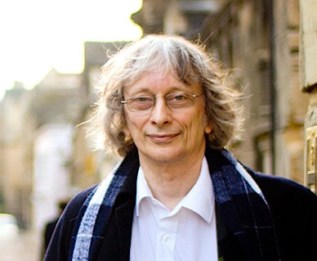
David Deutsch“The trouble is that the requirements of drama are very different from the requirements of science. If you want to make a film that genuinely represents science, you’ve got to explain the scientific problem. And you’re doing well if you can explain a real scientific problem in a one-hour TV documentary. If you did that in a feature film, that would take up one hour of the film already. So you’ve got to compromise on something.

Some science fiction is perhaps better called technology fiction. You imagine a piece of technology that doesn’t exist yet, but could exist in the future, and then you work out its consequences. The thing is there that it’s not really science, in that you’re not exploring the scientific problem and how it was solved. You’re starting with a piece of technology that is given, and its features rely on ideas that people already understand.

If something is a very good science fiction film, it usually doesn’t have very good fictional science – it usually has bad fictional science. Total Recall is a rip-roaring action adventure which hardly draws on the scientific premise at all, and where it does, it’s not done very well. But I think it’s still a very good film.

I think it is possible to make a genuine science-fiction film. It would take a master film-maker combined with somebody – let’s say a historian of science, if you’re going to do a real science story – who’s obsessed with a particular episode, and who can convey to the film-makers what was exciting to the people at the time, and why. And then they would have to hammer out how to convey that in this impossibly short time.

With a fictional science story, you’ve got the benefit that you can make up the science to fit the story. But to invent that fictional science with the dead ends and the failures and why it was exciting in the first place… I think that’s probably too difficult.”

The film-maker: Olga Osorio

Olga Osorio’s sci-fi short Einstein-Rosen – the story of Óscar and his younger brother Teo, who may or may not have found a wormhole outside their apartment building – won Best Fiction Film at last year’s CineGlobe Film Festival at CERN. You can watch the nine-minute film on Vimeo.

Olga Osorio“When we talk about the relationship between art and science, I think it is us, the art people, who have the problem more than the scientists. Scientists can go to watch films and listen to music, and so art is part of their life. But for artists, science can feel like a forbidden place.

With Einstein-Rosen, I was afraid. I thought, there is a lot of science in this film, and I’m not a scientist. I feel a huge attraction to scientific subjects, I’m a curious person, I want to know everything about everything. But because I don’t have a formal education in science, I was shy about talking about scientific things.

I was sure I was making a lot of mistakes, and I thought I needed a scientific person to give me advice. But if I got too much scientific advice, maybe I wouldn’t have been free to tell the story. In the end, because the story is supposed to be a joke, and because it’s only a short film, I decided OK, I’m going to do it. Nobody’s going to get hurt!

But I think it’s true that people from the artistic side are afraid of scientific things. We have this separation between science and art, and it’s terrible. When Einstein-Rosen was shown at CERN, I loved going to that place, but at the same time I was thinking, oh, I’m in the middle of all these scientists, and they’ll know I’m an impostor! And we won the prize, and they said something important to me: we need people like you who are able to tell our stories. And I thought, OK, I can do that.

For me, it doesn’t make sense that science and art are so separated. Artists and scientists have something very important in common: curiosity. I love science, but in my formal education, when I was 16, I had to choose between humanities and science. Why? This separation impoverishes all of us.”

The scientist turned novelist: Gianfranco D’Anna

After a scientific career that took him from the Ecole Polytechnique Fédérale de Lausanne in Switzerland to the famed Bell Labs in New Jersey, Gianfranco D’Anna become a novelist. His latest book, 60.7 Nanoseconds, is a fictionalized account of the 2011 faster-than-light neutrino claim.
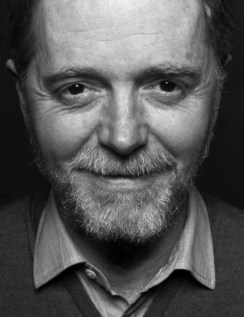
Gianfranco D'Anna

“There is a problem with the science-fiction fantasy of the genius who discovers all. Real science is more interesting than that. It’s the work of many, many people who are very clever, and work on the same subject at the same moment. It’s a community, it’s never the work of one person. Dr Frankenstein, on his own, in a castle? Doesn’t exist. Never existed. It’s not possible.

The genius has become the kind of ideal scientist. But the reality is never like this. Of course there are brilliant scientists – no discussion. But there is a bit of randomness in this process, especially today. At some point, one person in one lab has the chance of seeing something before the others. And maybe this person discovers something that is very important, but it could have been the next-door person. They’re all very good. There’s an element of chance.

The idea that science is done by geniuses is not only misleading, it’s counter-productive. When you have a young real-life student and they don’t do well on an exam, they say, ah, I’m not a genius, so I cannot become a scientist. This puts a limitation on young people’s ambitions.

Real science, the same as real life, is a succession of errors, hard work, gratification and disappointment. Telling this story ‘as it is’ is the best way to bring readers close to the collective enterprise that is the construction of scientific knowledge.

And if a particular project ends up in a blind alley, as in the faster-than-light neutrino saga, or if some form of misconduct is at play, as can occasionally happen, the story becomes even more worth telling because when science fails, it always teaches us something.”


Computer model picks which roofs to make green

The installation of green roofs in cities to reduce the “urban heat island” effect should take into account which areas are hottest, which people are most vulnerable and where air-conditioning usage is highest, say researchers in the US. The effect describes the heightened air temperatures of cities relative to the surrounding countryside.

Using computer models to include all these factors, the researchers found that in the US city of Chicago, areas to the south and west, as well as certain other isolated areas, would benefit most from green roof installation.

The methodology can and should be applied to other places that suffer from the urban heat island effect, the researchers say.

“Green roofs are one of the effective strategies to mitigate urban heating,” says Ashish Sharma of the University of Notre Dame, US. “However, the placement and implementation of green roofs … should have a scientific basis, which should include interdisciplinary experts.”

A green roof is a garden built on top of a roof and planted with drought-tolerant plants. The plants intercept sunlight and transpire, taking water in through their roots and transporting it to their leaves, where it evaporates. This cools the roof down, whereas a roof made of conventional materials would simply heat up.

According to the US National Weather Service, heat is the deadliest weather hazard in the US, with an average of 130 people losing their lives to heat stress every year between 1986 and 2015. In July 1995, an unprecedented heat wave was believed to cause over 700 deaths in Chicago. To tackle this problem, town planners in Chicago are hoping to install 6000 green roofs in the city by 2020.

To determine the best places for these green roofs, Sharma and colleagues compiled indices of social vulnerability based on people’s exposure to urban heat, their sensitivity to it, and their ability to adapt. The team combined these vulnerability indices with high-resolution temperature simulations of Chicago rooftops and data on the consumption of electricity for air conditioning units.

The output was a map that showed where in Chicago green roofs would deliver the greatest benefits: a large number of census tracts in south and west Chicago, along with isolated tracts throughout the city.

“[These areas] are the most vulnerable to heat, have a high adaptive capacity for strong reductions in roof temperatures with green-roof implementation, and are also likely to achieve substantial reductions in air conditioning,” says Sharma. “We found that … roof temperatures could decrease up to 7–8 °C in some neighbourhoods.”

Sharma believes the study is applicable to other cities and should help urban planners make informed choices. “There shouldn’t be just urban planners developing green-roof strategies, but atmospheric scientists, social scientists, ecosystem experts, utility providers and urban providers discussing where green roofs can benefit the most.”

The researchers are now estimating the monetary value of the energy savings associated with green roofs and exploring how green roofs could be combined with simpler “cool roofs”, which are resurfaced with reflective paint. “Some neighbourhoods may not be able to afford green roofs, because they are expensive or because current rooftops don’t have the structural capacity,” says Sharma.

Sharma and colleagues reported their findings in Environmental Research Letters (ERL).

What teaching physics in Kenya taught me about inspiring students to study maths and science

We met Mr Odhiambo at the base of the hill which rises above Maseno University in Western Kenya. I am grateful he has invited me and two Kenyan mathematicians to visit the school where he teaches. My mathematician colleagues, Lazarus Kioko and John Maina, are members of the African Maths Initiative (AMI) — an organization whose mission is to strengthen the culture of mathematics across Africa.

As a physics student, my own reason for being in Kenya is two-fold: to encourage more Kenyan students to study physics and to see how technology can be used in teaching physics. I had just finished helping to teach physics at a week-long maths camp organized jointly by AMI and its UK counterpart Supporting African Maths Initiatives (SAMI). The annual camp is an initiative to inspire high school students to study maths and science at university by giving them creative classes organized in collaboration between local and international academics.

Fostering academic relations

Since its foundation in 2011, thousands of young people have been hosted at the camp and the initiative has been replicated in several other countries across Africa including Ghana, Ethiopia and Tanzania. In fact, some former students have returned to the maths camp as teachers, having graduated in maths at university. Furthermore, the camps help to foster academic relations across continents through the collaboration between international and local academics who give the classes.

Odhiambo led us up the hill towards Emmatsi Secondary School, the high school where he teaches. His seven years of experience working as a dean at the school are clear as he guides us around the rounded boulders and over the stream snaking through the red earth. In Kenya schooling is split into eight years at primary and four years at secondary level. Odhiambo’s school is a small secondary school with around 250 students. Unfortunately, physics is not a popular choice amongst students in Kenya.

Since launching its Digital Literacy Programme (DLP) in 2016, the Kenyan government has delivered over 300,000 tablets to primary schools across the country, which makes the country the ideal testing ground for schemes to use technology in teaching. This provides benefits not only to primary schools but also to the surrounding community. For instance, the Emmatsi Secondary School sometimes uses the tablets and projector from the adjacent primary school. Indeed, when we reach the top of the hill and pass by the primary school from which emerge straining necks and the excited cries of “muzungu, muzungu!” — “foreigner, foreigner”.

Brand-new computer suite

After the warm welcome at the high school, including white tea and mandazi buns, we set up for the lesson in the brand-new computer suite. In the corner are piles of boxes and packing materials because the donated equipment had just been installed the week before the half-term break and we were the first to get them in action.

The third and fourth form students enter with pens and calculators to hand awaiting a lecture. They were about to be surprised.

I start off the lesson, forgetting to introduce myself, by brandishing a rock on a piece of string and asking them to name it. After some encouragement they roused the confidence to say that I was holding a pendulum and offered suggestions as to what might happen if it is released from different heights. We went into a discussion of energy, which involved me jumping off a chair to demonstrate the transformation of potential energy into kinetic energy.

Afterwards we got hi-tech and powered up the projector. I called on volunteers to use a simulation of a pendulum to conduct a series of experiments. Some of the students had not used a laptop before and it was heartening to see them learn how to use a trackpad. I hope that they enjoyed my lesson as much as I did!

Learning without the Internet

The peak of the hill was one of the few places I encountered during my time in Kenya where there is no mobile phone reception. This means that the school and its suite of computers are isolated from the Internet — because like most of Kenya, there is no wired broadband service in the area.

Although Kenya leads Africa in terms of Internet access, Odhiambo and his students are not alone. According to the Communications Authority of Kenya around one in seven Kenyans did not have access to Internet in 2016 – often because they do not have access to a smartphone. In neighbouring Ethiopia, however, just 2% of schools had internet access in 2012, which is one of the lowest figures globally. Even in the poorest European nations, 61% of schools have Internet access. Given how young the population is in Africa, this means that vast numbers of learners in Africa are without Internet access, putting them at a huge disadvantage compared to their global peers.

Mr Odhiambo

There are other challenges to using technology effectively in the classroom in the developing world. Schools often do not have the same money as schools in the West to invest in software, which is priced the same way as in the West despite the disparity in wealth. Some teachers do not have training on how to use resources in lessons, and the software often requires Internet connectivity to install.

Thankfully there is a solution to lack of Internet access called Kolibri. This is a wonderful free offline educational teaching platform that allows institutions such as schools to use free educational material and manage access to resources all without Internet access. AMI is keen to help tackle this challenge, and this has begun with Emmatsi – making it one of the first schools in Kenya to run Kolibri. AMI has also received a grant to carry out a trial installing Kolibri at a further four primary schools around Kitale.

I look forward to seeing how Odhiambo uses the new computers in teaching and will keep in touch with him. I know AMI will also continue to maintain contact with him.

With cheap smartphones, the proliferation of Internet coverage, and the sensible investment choices of the government, massive amounts of educational material can be made readily available even in the most remote parts of Kenya. If children, educators and governments make effective use of Internet resources I have confidence that more Africans will choose to delve into physics.

Local organizations such as the AMI are playing an important role in stimulating grass-roots initiatives to help bring about this future. However, science does not happen in a vacuum. More international collaboration between scientists, funders and educators in the developed world and Africa could dramatically improve the work. Furthermore, adapting technology to the needs of developing nations, such as making it work offline, will be key to helping a new generation of Africans face the future with confidence.

Trimodal imaging platform tracks implanted pancreatic islets

Trimodal imaging of pancreatic islets

Type I diabetes sufferers use insulin injections to control their blood sugar; but in unstable diabetes, blood sugar levels swing sharply and unpredictably, causing frequent episodes of hypo- or hyper-glycaemia. The transplantation of functioning pancreatic islet cells into the liver is a possible treatment for unstable diabetes, but current grafts are partially or fully rejected over time.

Artificial scaffolds show promising transplantation efficiency, but to better understand and therefore improve islet engraftment, more precise methods of non-invasively monitoring grafts are required. A number of imaging modalities have been used to track islet engraftments, each with its own limitations. Therefore, scientists are looking to combine imaging modalities to monitor islet distribution, number and viability.

Daniel Jirák and colleagues at the Institute for Clinical and Experimental Medicine, Charles University and Radboud University have previously combined MRI and fluorescent probes within nanoparticles. However, in this and other MRI studies, there is signal persistence in tissues thought to create false positives.

Therefore in this recent work, Jirák’s group has included a third imaging modality to confirm cell viability – bioluminescence. The aim is to resolve the MRI false-positive dilemma and provide a novel platform for in vivo insights into islet engraftment and rejection (Mol. Imaging Biol. 10.1007/s11307-018-1270-3).

The bioluminescence trick

Live cells genetically altered to express luciferase emit a bioluminescent signal in the presence of oxygen and adenosine triphosphate. These are crucial properties of live cells, making bioluminescence a marker of cell viability. To leverage bioluminescence in pancreatic islet implants, Jirák’s group bred luciferase transgenic Lewis rats, and then removed the bioluminescent pancreatic islet cells for further modification.

The researchers prepared bimodal poly(lactic-co-glycolic acid) (PLGA)-based nanoparticles by single-emulsion solvent evaporation, incorporating liquid perfluorocarbon marker for F-19 MR imaging, and indocyanine green dye for near-infrared fluorescent imaging. Nanoparticles were endocytosed into islet donor cells, which they tested in vitro.

Staining of intact membrane proteins showed that nanoparticle labelling had not affected islet cell viability, and a glucose stimulated insulin secretion test proved functionality. The researchers also tested the three imaging modalities in vitro, using an optical imager for fluorescent and bioluminescent readings and a 4.7T MR scanner with a homemade radiofrequency coil for MRI. The team established that good signal-to-noise ratios could be achieved for long exposure MRI, and that fluorescence imaging was sensitive in much shorter time frames.

Proof is in the in vivo study

Jirák’s team then transplanted prepared islet cells into an artificial scaffold that had been subcutaneously added into the abdomen of male adult Lewis rats. The three imaging modalities were performed at multiple time-points throughout a two-week period. The team found that the bioluminescent and F-19 MRI signals correlated well, showing islet cell presence in scaffolds throughout, with maximum signal on day four.

This correlation suggests that no false-positive signal occurred, contradicting other studies where F-19 probe persisted after cell death. Jirák and colleagues think that this apparent contradiction could be explained by increased washout of fluorine probe from dead islet cells, perhaps caused by differences in labelling formulation of PLGA nanoparticles, and the greater vascularization experienced by islets in the artificial mesh. Histological examination supports this theory, as macrophages, important in clearance, were found within the meshes.

Fluorescence, the third imaging modality, showed the strongest signal on day one but then rapidly decreased over the first week. This signal quenching suggests instability of the fluorescent dye, perhaps due to thermal degradation or leakage. The group performed long-term incubations in vitro and showed a decrease in fluorescent signal over time, confirming the dye’s instability and limited applicability for longitudinal studies.

Complementary modalities

Jirák’s group proved that these three imaging modalities complement one another in tracking pancreatic islet cell implants. The fluorescent dye is highly sensitive, quickly confirming implantation success; this is compared with the low sensitivity of F-19 MRI that requires one-hour image acquisition times. Despite this, F-19 MRI has been shown to be sensitive enough to quantify islet cell numbers and thereby estimate graft size. The need for genetic engineering to establish bioluminescence in islet cells limits this modality to non-human experiments for the moment, but in this context it will be useful in determining cell viability.

The team now hopes that this novel platform for in vivo multimodal tracking will provide kinetic insights into the process of engraftment and rejection of islet cell transplants in future studies.

Fewer, higher radiation doses safe for early breast cancer

A 10-year study of women with early-stage breast cancer has demonstrated that patients receiving fewer, higher radiation doses experienced similar adverse effects to healthy breast tissue as those undergoing conventional radiotherapy. The results, presented this week at the ASTRO Annual Meeting, indicate that treatments involving fewer hospital visits can be employed without increasing the risk of long-term side effects.

“This study says it’s possible to find a regimen that would allow early-stage breast cancer patients to be treated only once a week over five weeks rather than daily over the same time period,” explains lead author Murray Brunt, from University Hospitals of North Midlands and Keele University. “Findings should help doctors discuss risks and benefits with their patients for various courses of radiation therapy and inform shared decision-making between physicians and patients.”

Brunt reported the long-term results of the FAST clinical trial, led by the Institute of Cancer Research. The trial enrolled 915 women with early-stage invasive breast cancer at 18 UK centres from 2004 to 2007. Initial results indicated that hypofractionated therapy led to similarly low normal tissue effects as conventional therapy at two years following treatment (Radiother. Oncol. 10.1016/j.radonc.2011.06.026). The current study confirms that these similarities persist for an additional eight years.

Conventional versus hypofractionation

Patients in the trial underwent breast-conserving surgery and were then randomly assigned to one of three whole-breast radiotherapy schedules: 50 Gy delivered in 25 daily 2 Gy fractions over five weeks (conventional treatment); 30 Gy delivered in five once-weekly 6 Gy fractions; or 28.5 Gy in five once-weekly 5.7 Gy fractions. Patients were evaluated annually for normal tissue effects.

The research team observed low rates of moderate or severe long-term normal tissue effects for all treatment groups. They reported that severe side-effects occurred in 1.7% of 774 women with follow-up data at five years, and 2.3% of 392 women with follow-up data at 10 years.

Late normal tissue effects were similar for the conventional and the five-fraction 28.5 Gy group at five or 10 years. However, moderate/severe late effects to normal breast tissue were higher for the five-fraction 30 Gy regimen. Among patients on the conventional arm, physicians observed normal tissue effects in 7.5% and 9.1%, at five and 10 years, respectively; rates for the five-fraction 30 Gy arm were 18.0% and 18.4%, at five and 10 years.

“The profile of adverse effects to normal breast tissue was similar between the 28.5 Gy and 50 Gy groups, but rates were higher after 30 Gy given in five fractions over five weeks,” says Brunt. “This disparity is rooted in differences between the two regimens in fractionation sensitivity. The sensitivity of 30 Gy delivered in five fractions over five weeks was equivalent to a total radiation dose of 57.3 Gy in 2 Gy fractions, while 28.5 Gy delivered in five fractions over five weeks was roughly the same as 52.5 Gy in 2 Gy fractions.”

The team is now investigating radiation therapy with five fractions delivered over five consecutive days. “As a next step, we want to investigate shortening the radiation therapy schedule to one week,” explains Brunt. “A schedule like this would have significant clinical and practical implications, such as allowing radiation therapy to be integrated more closely with surgery and other therapies.”

A shining example

Optical communications and information processing were hot topics when Physics World made its debut 30 years ago. Fibre-optic transmission lines were becoming the backbone of terrestrial telecommunication networks. The first transatlantic fibre cable, TAT-8, which was turned on at the end of 1988, could carry 40,000 voice telephone conversations simultaneously. Crystal-clear digital submarine links were replacing noisy analogue satellite calls. Digital optical discs were consigning analogue phonograph records and cassette tapes to history. And optical data storage was a hot trend for personal computers – a breakthrough in information technology for those who remembered the punched cards and paper tapes of the digital mesolithic.

Physics World’s coverage in its first year reflected key issues for these emerging technologies. “As marvellous as the present systems are…they still use but a fraction of the many-terahertz bandwidth of optical fibres,” wrote Linn Mollenauer of Bell Labs in the US, in the September 1989 issue. He pointed to two key needs: optical gain to overcome the inevitable attenuation of even the clearest glass fibres, and a way to stop pulses from stretching as they passed through the fibre. As a solution, he sent a powerful pump beam through fibre along with a weak signal beam. By carefully manipulating the light and selecting the right fibre properties, Mollenauer was able to produce pulses called solitons, or solitary waves, that could be amplified by energy from the pump beam and did not stretch even after passing through 6000 km of fibre – enough to cross the Atlantic.

In the February 1989 issue, meanwhile, Elizabeth Giacobino of the Université Pierre et Marie Curie in France and colleagues warned that lab-based optical systems were approaching the point where their performance would be limited by the quantum effect of “shot noise”. According to Giacobino, the solution would be to squeeze light to produce a quantum state in which the uncertainty in the value of one property, such as momentum, could be reduced below the normal limit by increasing uncertainty in another property such as position.

Yet even as such research groups were reporting promising results, two new breakthroughs were emerging that would eventually reshape fibre-optic communications altogether. In late 1986 David Payne at the University of Southampton in the UK had shown that optical fibres doped with erbium could amplify weak signals by up to 26 decibels at wavelengths near 1550 nm – the part of the spectrum where glass fibres are most transparent. Exploiting the discovery initially looked like a long shot because it required an expensive laser to power the erbium amplifier. However, diode laser pumping was demonstrated in 1989, and the following year engineers at Japan’s KDD Laboratories used a single erbium amplifier to boost signals at four separate wavelengths without any interference. By the turn of the century, developers had perfected optics that could split the band near 1550 nm amplified by erbium into a hundred narrow slices. Known as wavelength-division multiplexing, this technique could send a hundred 10 GB/s-signals at closely spaced wavelengths through a series of erbium-fibre amplifiers with little crosstalk.

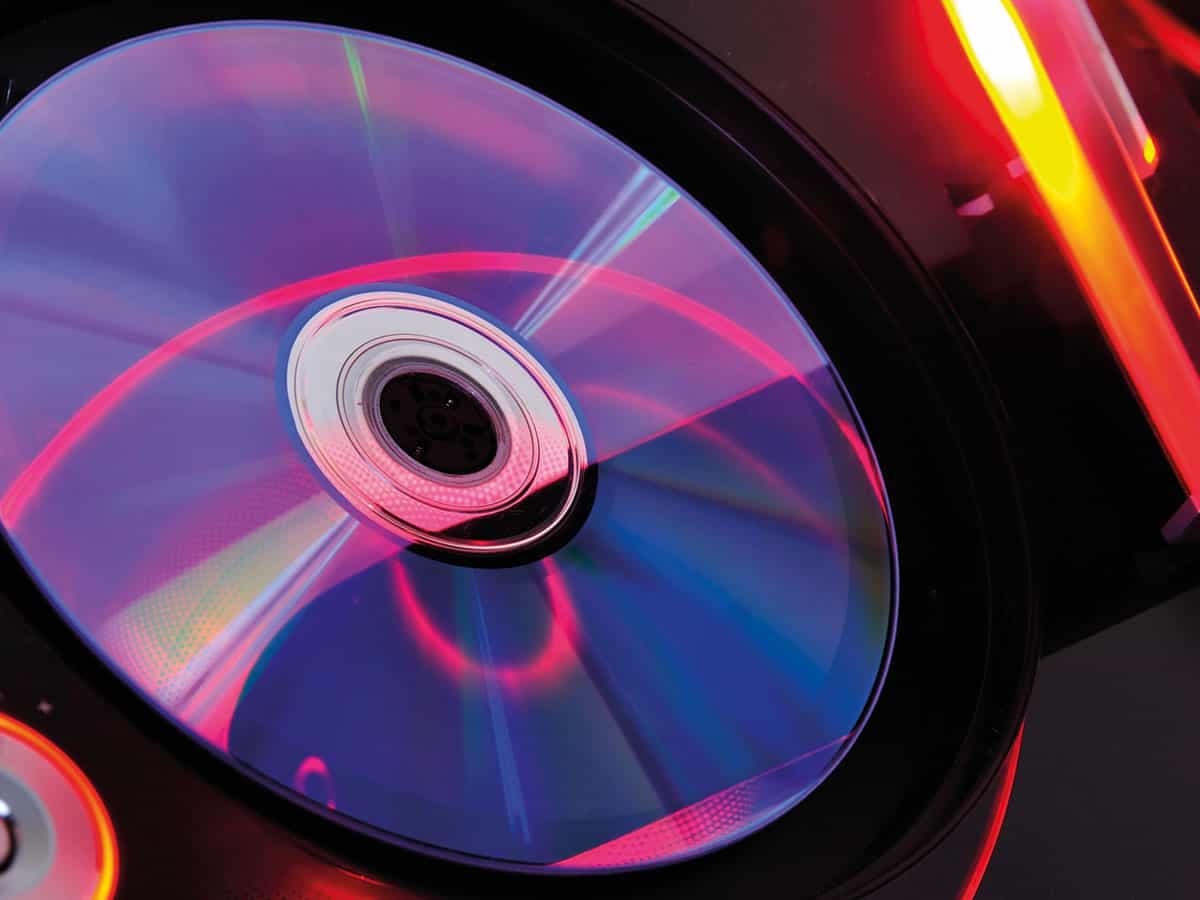
Blu-ray disc

Optics and the web

This dramatic advancement was perfectly in phase with the explosive growth of the World Wide Web. Hi-tech firms saw share prices peak in 2000 as the dot-com boom hit crazy heights. The likes of solitons and squeezed states got lost along the way, but other optical approaches to information technology got plenty of attention as developers worked on “all-optical networks” with optical logic and switching.

One of those was Andy Walker of Heriot-Watt University in the UK. “Following the successful replacement of electrical cables in telecommunications networks by fibre-optic links,” he wrote in the April 1989 issue of Physics World, “more and more people are wondering whether it may be possible to extend such optical techniques into the realm of information processing.” Optics offered the possibility of ultrafast serial processing of femtosecond pulses, or massive parallel processing by huge arrays of optical devices. Early research focused on nonlinear optics, but in late 1999 Lucent Technologies in the US made headlines with its Lambda Router – an array of 256 microscopic optical mirrors on an inch-square chip that could serve as an optical cross-connect, routing signals direct from fibre to fibre.

Both the Lambda Router and Lucent Technologies were, however, casualties of the collapse of the IT bubble in the early 2000s, which was to take a heavy toll on the optics industry. Fibre-optic communications suffered a decade-long hangover from the overbuilding of telecommunication network capacity during this time. However, network traffic continued its rapid growth, with increasing volumes of video and cloud computing, and parts of the network required more capacity. That led to a new generation of fibre-optic systems, which began emerging in around 2010.

Instead of detecting signal amplitudes, like earlier fibre-optic systems, the new set-ups detected the phase of a signal by using coherent systems. Coherent transmission had been proposed in the 1980s, but optical technology at that time could not meet system requirements. By 2010 digital signal processing electronics had been developed that could detect and decode the phase of incoming optical signals. That allowed receivers to compensate for the dispersion of light signals that pass through long optical fibres, thereby increasing data rates for each single-wavelength signal from 10 GB/s to 100 GB/s using the same fibres installed in the 1990s.

The question now is whether it would be cheaper and easier to lay more fibres rather than squeezing so many separate optical paths into each

Further advances in coherent transmission mean we are now approaching the fundamental limits of how fast data can be sent with a single wavelength down a single fibre. The cutting edge has therefore moved to a new approach called “spatial-division multiplexing”, the goal of which is to develop new optical fibres that offer multiple routes for optical signals. One way of doing this is to create optical fibres containing many parallel light-guiding cores. Another is to couple light signals into separate modes so they can travel independently through a single fibre core. Laboratory tests have demonstrated both approaches, and even shown that each core in a multi-core cable can transmit signals on multiple modes. The question now is if this can be done practically, or whether it would be cheaper and easier to lay more fibres rather than squeezing so many separate optical paths into each.

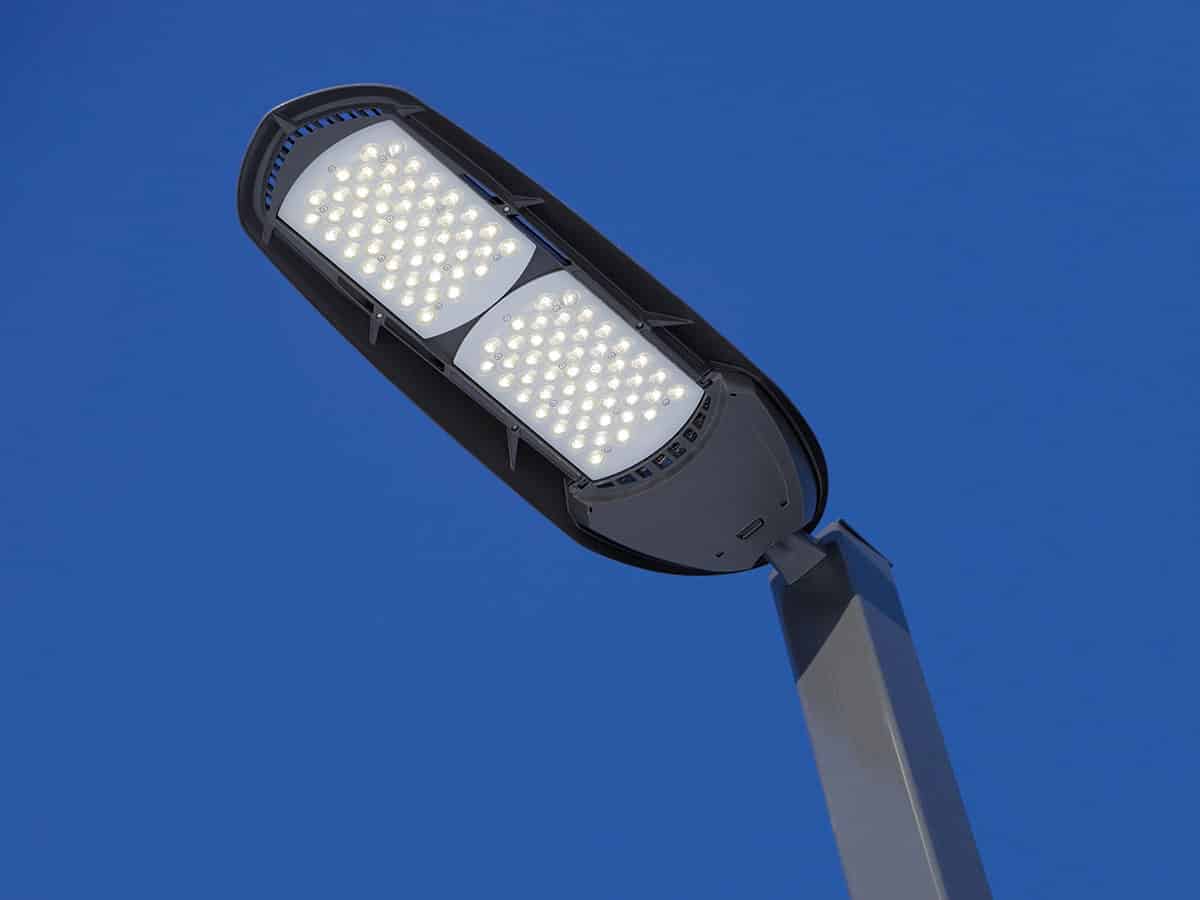
LED streetlight

From CDs to lighting

The 1980s also saw the first mass-market consumer product based on laser technology – the audio compact disc (CD). In the January 1989 edition of Physics World, Anders Rehnberg from Philips and Du Pont Optical in the UK described what looked to be an important new advancement in optical data storage. This was the first erasable optical discs based on magneto-optic recording, in which lasers heated the disc surface to about 200 °C in tens of nanoseconds, allowing an external magnet to record data on the heated region. Plans were also under way for a new generation of optical storage that would use light from recently introduced red-diode lasers to store a full two-hour movie on a CD-sized disc. That technology would become the DVD, playing standard-definition video.

Meanwhile, a surprise was in the works. A friend collared me at the fall 1991 Materials Research Society meeting and said I had to see what a quiet Japanese gentleman had in his pocket. Isamu Akasaki, then at Nagoya University, pulled out what looked like a diode-laser pointer and showed me the first bright blue light-emitting diode (LED). That soon led to the blue-diode laser, which was eagerly sought after by the consumer electronics industry for use in high-definition video players. In the end, that gold rush fizzled. By the time that high-definition TV reached the market and industry settled on the Blu-ray format, consumers were more interested in getting their video over the Internet than on discs. Ironically, it was the fibre-optic revolution that had made video downloads and streaming possible.

However, the blue LED found a much bigger application in solid-state lighting. When coupled with yellow phosphors, blue LEDs could convert electricity into visible light far more efficiently than an incandescent bulb. That came at an opportune time for energy efficiency, and Akasaki, his colleague Hiroshi Amano, and blue-diode-laser inventor Shuji Nakamura shared the 2014 Nobel Prize for Physics for their work.

Like any new technology, however, solid-state lighting has a few bugs to be resolved. LED street lights were rushed to market with little thought of how the light they emit might affect the night-time environment, so more work is needed on reducing sky brightness, improving colour and cutting light intrusion into homes. That’s going to take some time. But in the long run, LED lighting – like most new optical technologies – should be a big improvement on what went before.

All in all, it’s been a very successful 30 years for optics-based technologies. It’s a field that really demonstrates how research can massively benefit everyday life, and it will be interesting to see where the work takes us next.

Copyright © 2026 by IOP Publishing Ltd and individual contributors