Large family of quantum spin liquids revealed

The general crystal structure of rare-earth chalcogenides. Credit Chinese Physics Letters

“Quantum spin liquids are the exception,” says Gang Chen, Professor of Physics at Fudan University in China. He is describing the theory Soviet theoretical physicist Lev Landau developed to characterize the ferromagnetic or antiferromagnetic ordering adopted by spins in a magnet when they get too cold to keep fluctuating thermally. Quantum spin liquids shirk this theory. “The spins in quantum spin liquids do not order even down to absolute zero temperature. It is a very exotic quantum phase of matter and cannot be understood in the framework by Landau.”

First proposed in the 1970s, interest in these materials was further piqued in the 1980s at the suggestion that they were the “mother state” for the high-temperature superconductivity in cuprates. More recent reports of a possible quantum spin liquid state in YbMgGaO4 that is robust against weak disorder has rekindled interest. Now in Chinese Physics Letters Chen, alongside Hechang Lei, Qingming Zhang, Xiaoqun Wang and colleagues in China report a whole diverse family of previously unknown potential quantum spin liquids, opening up a range of opportunities, such as the possibility of tuneable charge gaps and variable exchange coupling, as well as settling some of the confusion around the origin of these exotic states.

Disorder and disagreement

Although gauge theory now explains some of the behaviour of quantum spin liquids, a number of aspects of these materials are still not understood. The recent report of stable quantum liquid spin characteristics in YbMgGaO4 roused conflicting theories over the cause of this state. Many experts in the field concluded that the stability of the disordered spin or quantum spin liquid state results from disorder in the magnesium and gallium atoms, while others believed it to be intrinsic to the material. Despite the availability of large single crystal YbMgGaO4 samples, which allowed neutron scattering, muon spin relaxation, and electron spin resonance investigations, extensive characterizations failed to dispel the contention. The existence of quantum spin liquid states in the large family of rare-earth chalcogenides as reported by Chen, Lei and Zhang would seem to settle this debate.

“These [rare-earth chalcogenide] materials do not have the Ga/Mg charge disorder,” explains Chen. “Since the spin liquid phenomena are now believed to be present in these new systems, it is thus thought that the quantum spin liquid physics in YbMgGaO4 may be intrinsic and have little to do with the Ga/Mg charge disorder.”

Quantum spin liquid triangulation

Philip Warren Anderson first introduced the idea of quantum spin liquids in the 1970s as the result of geometrically “frustrated spins” unable to find a way to align in a triangular lattice. It was also Anderson who suggested the link with high-temperature superconducting cuprates in the 1980s. “Although we understand now that the spins on a triangle could find a way out, the triangular geometry remains to be a good place to search for quantum spin liquids due to the frustrated nature of the geometry,” Chen tells Physics World.

The researchers further narrowed their search to rare-earth chalcogenides – which have the formula AReCh2, where A is for alkali or monovalent ions, Re is rare earth, and Ch is O, S, Se – on account of the spin-orbit coupling properties in rare earth elements. “The effective interaction is anisotropic in effective spin space and also depends on the bond orientation,” says Chen. “Such a special and novel interaction is almost impossible for 3d transition metal ions, and thus provides new mechanisms for the physical realization of spin liquids.”

Rare-earth chalcogenide qantum spin liquid researchers

Digging out family traits

Lei in the Department of Physics and Beijing Key Laboratory of Opto-electronic Functional Materials & Micro-nano Devices at Renmin University and Zhang at the Chinese Academy of Sciences and Lanzhou University are both experimental physicists. Following their discovery of the spin liquid candidate YbMgGaO4, Zhang’s group began to explore other rare-earth based magnetic triangular materials. Here the researchers systematically synthesized different rare earth chalcogenides and then characterized them according to their thermodynamic properties. They measured the temperature dependence of the magnetic susceptibility with a superconducting quantum interference device (SQUID) magnetometer, and the heat capacity using PPMS (Quantum Design Physical Property Measurement System). Chen and Wang as theoretical physicists applied their expertise to providing the physical understanding of the data and theoretical support.

Michael Baenitz and researchers in Germany, UK and Switzerland have highlighted the putative spin liquid properties of  NaYbS2, but as Chen points out, all the rare-earth atoms have similar chemical properties, allowing substitution of one with the other. “Thus one could obtain a wide range of new models and model parameters,” explains Chen. “The charge gaps in these materials are smaller than the one in YbMgGaO4, hence one may vary the charge gap and may eventually access the metallic side by applying pressures. This could be an interesting direction to understand the quantum phase transition from Mott insulating spin liquid to the metallic phases.”

The researchers also highlight the availability of single-crystal samples as a “major milestone in materials science since it allows elastic and inelastic neutron scattering measurements. “These are data-rich experiments, and would provide a lot more useful information for us to identify the actual ground states for these materials” says Chen. “We are looking forward to these potentially exciting outcomes.”

Full details are reported in Chinese Physics Letters.

  • This article was edited 22nd October 2018.
  • This article was further edited 24th October 2018.
Quentin Blake illustrates characters from science and technology, Breakthrough Prize’s all-male selection committee

Quentin Blake must surely be one of the UK’s best loved illustrators and he is most famous for his drawings that appeared in the stories of Roald Dahl. Blake has just produced a new set of artwork for the Science Museum in London. Gracing the walls outside the museum’s family-friendly Wonderlab, the illustrations depict 20 figures from the history of science and technology including the software pioneer Ada Lovelace and the polymath Jagadis Chandra Bose.

Fresh from his role in Mama Mia: Here We Go Again the Irish actor Pierce Brosnan will be hosting the Breakthrough Prize ceremony on 4 November. It will be televised live on the National Geographic channel, but I’m not sure what the attraction will be because the winners have already been announced.

The 2019 Breakthrough Prize in Fundamental Physics has been awarded to Charles Kane and Eugene Mele. Both are at the University of Pennsylvania and will share $3m for their ground-breaking work on the topological states of matter. Let’s hope they are so delighted on the evening that they belt out a version of ABBA’s “The winner takes it all” with Brosnan – or maybe “Take a charge on me”.

This year’s prize has not been without controversy. The awards’ backers – which include the billionaires Sergey Brin, Mark Zuckerberg and Yuri Milner – have been criticized for creating what must be the mother of all (or perhaps father of all) all-male selection committees for the physics prizes. It has 26 members, but not a woman in sight.

Gluons account for much more pion momentum than previously thought

Gluons contribute around 30% to the total momentum of energetic pions, which is about three times more than previously estimated. The research was done by a team led by Chueng-Ryong Ji at North Carolina State University in the US. They deduced the fraction by combining data gathered by two previous studies that took different approaches to exploring the interior structures the particles.

Pions are the lightest members of the meson family. An individual pion comprises a quark and an antiquark, one of which has up flavour and the other down flavour. Yet this description is overly simplistic because the quark-antiquark pairs are embedded in a sea of “virtual” quarks and antiquarks which appear and disappear instantaneously. The quarks and antiquarks also interact with each other through the strong force by continuously exchanging gluons. However, calculating the precise internal properties of pions and other hadrons is extremely difficult and so physicists have not had a good understanding of the contributions of gluons to pion momenta.

In the 1980s, researchers first explored the interiors of pions by observing how pairs of leptons are created when the mesons are scattered by atomic nuclei at high energies. These studies suggested that gluons contributed around 10% to total pion momenta, but the lack of available data for low-momentum pions meant this value was highly uncertain.

Low momenta

Later studies in the 2000s used data from the now defunct HERA particle accelerator at DESY in Hamburg, Germany to study pion compositions at lower momenta. This involved colliding together protons and electrons to form neutrons – a process which involves exchanges of low-momentum pions at certain collision energies and neutron production angles.

In their new study, Ji’s team combined the results gathered by both approaches to obtain a value for the gluon momentum contribution over a wide range of pion momenta. To do this, the researchers first constructed distribution functions which approximated the probabilities of finding gluons of certain momenta within a pion; incorporating the mathematics underlying both previous approaches into their probability curves. Next, Ji and colleagues performed analyses on random samples of these distribution functions, allowing them to estimate gluon momentum contributions for both low- and high-momentum pions.

The team found that with both approaches incorporated into their analysis, gluons carry a fraction of around 30% of total pion momentum – around three times higher than previously thought. At the same time, they concluded that the seas of virtual quarks surrounding quark-antiquark pairs carry around 15% of the momentum – a slightly lower percentage than thought previously. In the future, Ji’s team hope that new data on pion compositions will allow them to further constrain their analytical methods, allowing them to explore the internal structure of pions in yet more detail.

The study is described in Physical Review Letters.

Resonance photorheology technique sheds more light on 3D polymerization

Materials that polymerize when exposed to light can be used in additive manufacturing (3D printing), an up and coming technique to fabricate structures for use in applications as diverse as low-cost rapid prototyping and tissue engineering. The problem is that it is difficult to measure how the mechanical and rheological properties of these materials change during polymerization, especially at the extremely short time- and length scales at which they take place. These changes affect the properties of the finished printed structure. A team of researchers at the National Institute of Standards and Technology (NIST) in the US has now developed a new atomic force microscope technique dubbed sample-coupled-resonance photorheology (SCRPR) that could do just this.

“We can sense rapid, local changes in material properties at length scales of 10 nm over time scales less than 100 microseconds, which were previously impossible to study in situ,” explains lead author of this study Callie Fiedler-Higgins of the Applied Chemicals and Materials Division at NIST. “Our technique allows us to investigate fundamental processes that require this kind of spatiotemporal resolution to accurately probe.”

Micro-heterogeneities

To build a structure using additive manufacturing (AM), 2D “slices” of the final desired 3D structure are sequentially built up using software. During fabrication the layered process introduces microscale anisotropic heterogeneities in the chemical, thermal and mechanical properties of the material. These changes are inherent to the printing process and can even result in the catastrophic failure of an as-printed material, says Fiedler-Higgins.

The techniques usually employed to characterize as-printed AM objects, such as tensile and compressive stress testing, are not ideal since they inaccurately assume that the 3D structure has uniform properties throughout, she explains. What is more, techniques such as oscillating rheometry work on timescales of seconds, whereas polymerization during AM takes place in just milliseconds or less.

SCRPR senses local changes at process-relevant length and time-scales

The new SCRPR technique overcomes these problems since it can measure rheological changes during photopolymerization with millisecond temporal resolution and at subvoxel length scales, where a voxel is the smallest AM printing unit. This is thousands of times smaller-scale and faster than bulk measurement techniques.

“SCRPR is the first technique of its kind to truly sense the local changes at process-relevant length and time scales,” Fiedler-Higgins tells Physics World. “Other techniques must sacrifice either spatial or temporal resolution to maximize their sensing capabilities.”

Atomic force microscopy is a routinely-used ultrahigh-resolution technique that can image extremely small objects, even down to single atoms. It works by sensing the topography of a sample as it scans across it thanks to a sharp-tipped probe (the cantilever) that touches the surface of the sample.

Fiedler-Higgins and colleagues adapted a commercial AFM so that they could use its exciting (UV) laser to initiate photopolymerization at or near the contact between the tip and sample. This built-in laser also allows them to precisely synchronize when polymerization starts and when AFM read out begins. They combined AFM with stereolithography, which is the use of light to pattern photoreactive materials.

The researchers measured two values, the resonance frequency (the frequency of maximum vibration amplitude) and quality factor (an indicator of energy dissipation) of the AFM probe at one location in space during a fixed time period. They tracked changes in these values throughout the polymerization process and then analysed this data with mathematical models to determine material properties such as stiffness and damping.

They tested their technique first on a sequential cure polymer (SCP) that goes from being a rubber to a glass when irradiated with 405 nm light. This material was used as a proof-of-concept since it does not undergo a liquid-to-solid transition, but its rheological properties still change quickly. They then measured the photopolymerization response for the SCP by applying four different laser exposure powers during different times. The response time of the cantilever is faster than 50 microseconds during all measurements.

The team then tested the technique on a commercial SLA resin and found that it could successfully characterize the photorheology of the liquid-to-solid cure of this polymer, which takes place in just 12 milliseconds.

Towards commercial collaborations

“We hope our technique will help resin manufacturers to develop new classes of fast polymerizing resins and help 3D printer manufactures to design optimized print patterns for improved part performance,” says project leader and co-author Jason Killgore also of the Applied Chemicals and Materials Division at NIST. “After presenting our research at both technical and industry focused conferences, we’ve come to realize the utility of SCRPR to study a variety of fast-polymerizing materials ranging from those for dentistry to those for large-scale manufacturing.”

The researchers, reporting their work in Small Methods 10.1002/smtd.201800275, say that they would now like to develop a new system in which they have more control over exposure patterns, and employ light sources that better mimic typical stereolithography printing. “There is also a huge modelling component that we need to address to ensure we can measure accurate and precise materials properties, such as viscosity and storage modulus, within the dynamically changing material,” adds Killgore.

PETRUS hybrid device acquires multimodal images in vivo

A research team in France has evaluated the PETRUS hybrid imaging instrument both in vitro and in vivo in small animals. The researchers demonstrated the capability of the device, which simultaneously performs PET/CT and ultrafast ultrasound, to acquire multimodal images in vivo without significant degradation of image quality (Phys. Med. Biol. 63 19NT01).

The researchers — based at Inserm, the Université Paris Descartes and ESPCI Paris — explored the effect of using a PETRUS system on image quality, finding deviations of below 10% between images acquired with and without ultrasound probes.

Image quality

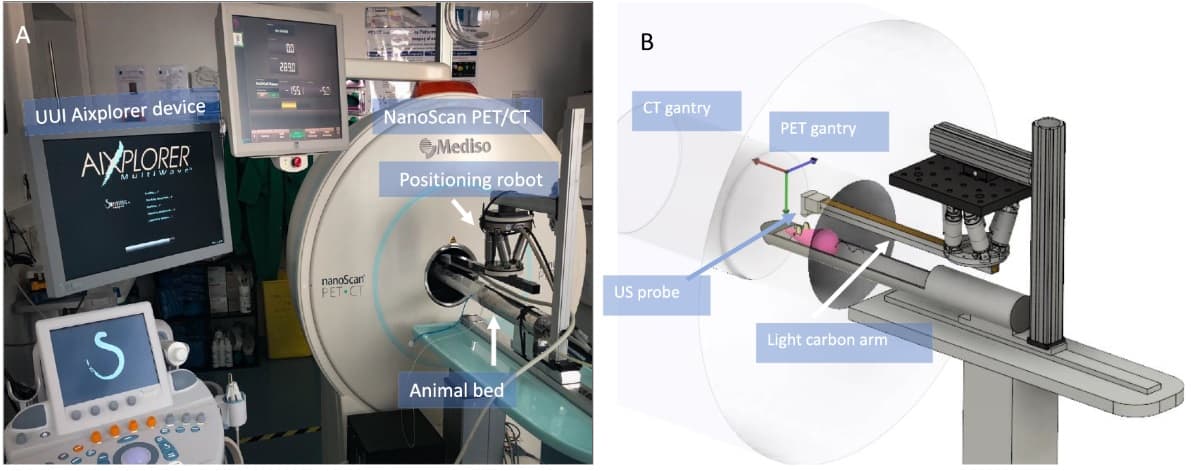
As Mailyn Pérez-Liva, a post-doctoral researcher at Inserm, explains, the PETRUS (PET registered ultrafast sonography) device combines PET, X-ray CT and ultrafast ultrasound imaging (UUI) into a single device by operating ultrasound probes in the field-of-view of a nanoScan small-animal PET/CT scanner.

PETRUS imaging instrument

Although previous work has demonstrated that the device yields “unprecedented multiparametric information for preclinical oncology and cardiology studies”, Pérez-Liva highlights the well-known fact that the presence of objects attenuating the 511 keV annihilation gamma rays inside a PET gantry may degrade image quality and create artefacts in the reconstructed images.

In view of the fact that the exact compositions of ultrasound probes are not provided by manufacturers, Pérez-Liva notes that the effects of their presence in the PET field-of-view cannot be reliably estimated using models. This motivated the researchers to investigate the effect on image quality experimentally and, since PET is a quantitative molecular imaging modality, to “appreciate their influence on measurements of tissue radioactivity concentrations”.

FDG uptake

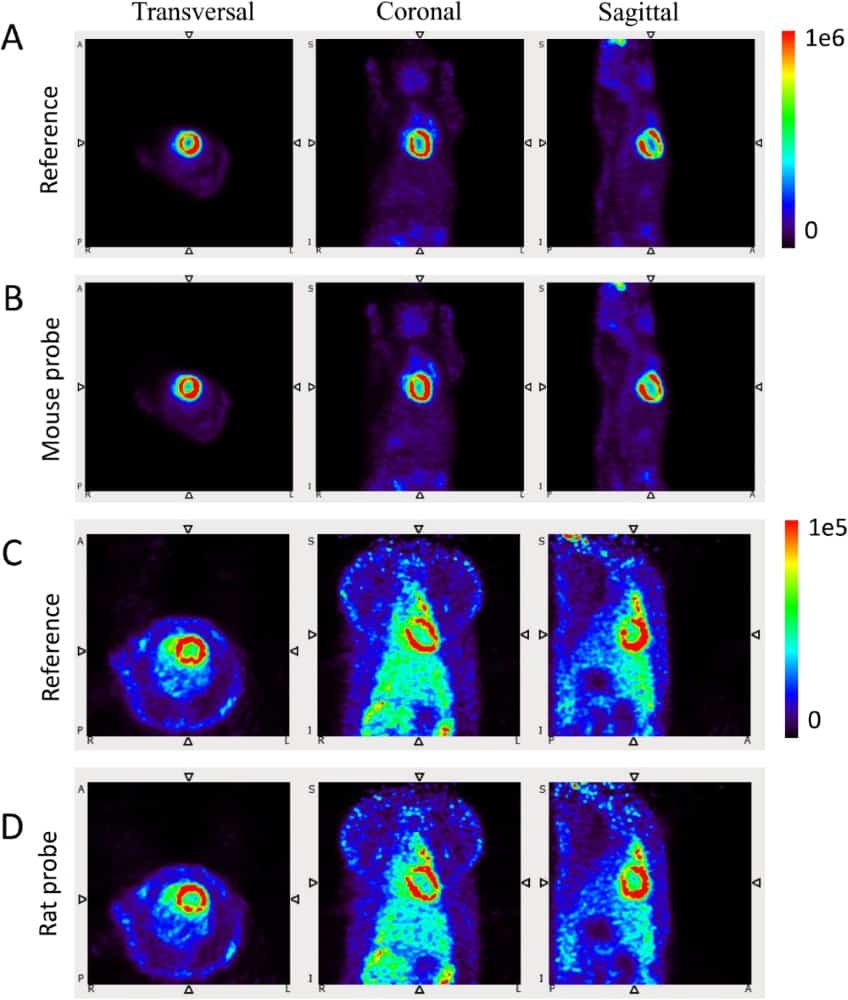
To achieve this, the team examined the effects of ultrasound probes inside the PET gantry on the quality of PET images and performed tests under the conditions described by the NEMA NU 4-2008 standard protocol for small-animal PET systems. They also investigated the effects of ultrasound probes on the quantification of in vivo dynamic studies of 18F-FDG uptake in beating mouse and rat hearts.

“We observed that the presence of a UUI probe inside the field-of-view of the nanoScan PET/CT has a minor effect on the radioactivity concentration measurements in PET images, and does not degrade significantly the quantitative and qualitative PET data derived from the images — with discrepancies below 10%,” says Pérez-Liva.

Miniaturized probes

According to Pérez-Liva, it is particularly noteworthy that custom-made ultralight probes (used to image the microvascular network in mice) had a smaller effect on image quality than commercial ones. She suggested that “careful design of next-generation miniaturized probes will render them even more stealthy”.

“With the significant advantages of simultaneous UUI and PET acquisitions, which offer the unique possibility of co-registering metabolism, vascularization, tissue elasticity and anatomy with a low-cost add-on, the PET/CT–UUI device is a remarkable means to increase the range of services offered by molecular imaging with PET,” she adds.

The PET/CT–UUI instrument was assembled from existing, commercially available devices using what Pérez-Liva describes as lightweight and portable UUI instrumentation for which dedicated, customized sequences were developed.

“Remarkably, PET/CT–UUI can produce multi-parametric information that is currently unobtainable with any other non-invasive imaging method,” she says. “PET/CT devices have been integrated in the clinic for many years, and UUI is also highly translational, since imaging modes developed for small animals can be readily applied clinically using adapted ultrasound probes. Nevertheless, UUI is a modality for which clinical applications are still in early phases of development.”

In this light, Pérez-Liva stresses that the specific clinical applications for PET/CT–UUI remain naturally speculative at this stage. But she points out that they are likely to involve a large array of organs, because UUI can be applied to any organs that are accessible with conventional ultrasound imaging.

“Typically, the deeper the organ is situated, the lower the ultrasound frequency used, and the lower the frequency, the worse the spatial resolution,” she explains. “In the worst case, the upper limit of resolution is typically in the order of 500 μm, corresponding to a 3 MHz centre frequency. This is better than the inherent resolution of PET and comparable to CT and MRI spatial resolutions.”

Beer flow threatened by warming climate

Beer will be in short supply and double in price because of the difficulty of growing one of its key ingredients, barley, in a warming world.

Recurrent droughts and increased heat will cause severe reductions in barley yields across the world, forcing a “dramatic” fall in beer consumption, according to a study by the UK’s University of East Anglia (UEA).

Since beer is the world’s most popular drink by volume, this will have significant social and economic effects, according to the scientists.

“It may be argued that consuming less beer is not in itself disastrous, and may even have health benefits. Nevertheless, there is little doubt that, for millions of people around the world, the climate impacts on beer availability and price will add insult to injury.”

Dabo Guan

While barley is used in food, and particularly in animal and chicken feed, around 17% of the highest quality grain is used for malting and making beer. In some countries, barley is grown almost exclusively for beer − for example, 83% in Brazil is used for malting.

It is the various consuming industries competing for the remaining barley that will drive up the cost of grain, and therefore the beer – in some cases, doubling the price of a litre and substantially reducing demand.

Drop in consumption

The study, published in Nature Plants journal, estimates that extreme weather worldwide will reduce the volume of beer drunk by 16% − which equates to 29 billion litres. The drop in beer consumption would be sharpest in countries that currently drink the most, including China, the US and the UK.

While previous climate studies have focused on staple crops such as wheatmaizesoybeans and rice, and consumer goods such as wine and coffee, this is the first to look at the effect of reduced barley yields on beer.

As countries seek to adapt to climate change, governments may decide the priority for crops like barley is to produce food rather than beer. Even without this policy decision, the price of barley will increase as it becomes in short supply.

Dabo Guan, professor of climate change economics at UEA’s School of International Development and co-ordinator of this latest research, says: “While the effects on beer may seem modest in comparison to many of the other − some life-threatening − impacts of climate change, there is nonetheless something fundamental in the cross-cultural appreciation of beer.

“It may be argued that consuming less beer is not in itself disastrous, and may even have health benefits. Nevertheless, there is little doubt that, for millions of people around the world, the climate impacts on beer availability and price will add insult to injury.”

He argues that a sufficient beer supply might help with “the stability of entertainment and communication in society”.

Beer supply and price

The international study, involving researchers from the UK, China, Mexico and the US, identified extreme climate events and modelled the impacts of these on barley yields in 34 world regions. They then examined the effects of the resulting barley crop reduction on the supply and price of beer in each region, under a range of future climate scenarios.

Their findings show that global and country-level barley supply would decline progressively in more severe extreme event years, with the largest mean supply decreasing by 27-38% in some European countries, such as Belgium, the Czech Republic and Germany.

It is countries with smaller total beer consumption that face the largest percentage reductions in the amount drunk.

The volume of beer consumed in Argentina would fall by 0.53 billion litres − equivalent to a 32% reduction − during more severe climate events. Even in the least severe climate events, total beer consumption in Argentina and Canada would decrease by 0.27 billion litres (16%) and 0.22 billion litres (11%) respectively.

Talking Hawking – his new book and ‘last’ scientific paper

In this episode of the Physics World Weekly podcast we’re discussing the life and work of Stephen Hawking. Earlier this week, Physics World’s  Anna Demming was at the Science Museum in London for the launch of Hawking’s new book Answers to the Big Questions. Published posthumously through the collaboration of family, friends and the Stephen Hawking Estate, the book brings together Hawking’s thoughts to the big questions he was asked most regularly.

Demming is joined by Physics World editor Matin Durrani, who recently reviewed Answers to the Big Questions. Completing the podcast trio is Physics World’s general physics editor Hamish Johnston who last week reported on what is being dubbed Hawking’s “last” scientific paper. Johnston sheds light on that study – currently on the arXiv preprint server ­– which contains calculations that aim to help solve the “information paradox” that arises when stuff is sucked into a black hole.

If you enjoy the podcast, then you can subscribe via the Apple podcast app or your chosen podcast host.


Awards honour physics start-ups

Six young companies from across the UK received an official physics stamp of approval earlier this week after the Institute of Physics (IOP) rejigged its annual business awards to recognize recent start-ups alongside established businesses. Representatives from all six start-ups – including the medical-diagnostics firms Causeway Sensors, Creavo Medical Technologies, Stream Bio and York Instruments, as well as Lynkeos, a muon-imaging company, and super-resolution microscope makers ONI – came to London on 16 October for a ceremony in the House of Commons, where they showed off their business ideas to a crowd of science industry notables and a smattering of MPs. In addition to the six start-ups, six older firms received Business Innovation Awards, which recognize companies that have “delivered significant economic and/or societal impact through the application of physics.”

The IOP, which publishes Physics World, established the Business Innovation Awards in 2012 to recognize UK companies that have developed products based on creative applications of physics. Until this year, however, the award criteria strongly favoured products that had already demonstrated significant commercial success.

“The awards committee would look at early-stage companies and say, ‘Yes, the physics is great, but the sales numbers aren’t there yet,’” Anne Crean, the IOP’s head of science and innovation, told me on the way to the ceremony. “It seemed a bit strange not to be recognizing their potential.” External recognition can be particularly valuable to new companies, Crean added, because it shows potential investors that the science behind their work is sound.

Once I got through the lengthy security queue (among other events, the Palace of Westminster was also hosting a BBC media ethics lecture, a Christian “pray for the nation” evening and a knees-up for the Society of Conservative Lawyers – clearly a busy night), I had the pleasure of speaking to several of the winners.

I was particularly interested to see EndoMag on the list of Business Innovation Award recipients. Although this Cambridge, UK-based medical devices firm was only founded in the late 2000s, this year’s IOP award is already its second: the company’s Sentimag surgical guidance system, which is used primarily in patients with early-stage breast cancer, was also “commended” at the 2016 Business Innovation Awards. In the wake of that award, one of the company’s co-founders, Simon Hattersley, gave me a remarkably candid account of EndoMag’s origins. We published his story earlier this year as part of Physics World’s “start-up stories” series, and I hope that a few of the 2018 Business Start-up Award winners will follow in his footsteps. (Watch this space.)

In contrast to EndoMag, PepsiCo‘s IOP Business Innovation Award is not only its first, but also the first for any company involved in food manufacturing. According to PepsiCo physicist John Bows (who gave Physics World‘s then-features editor a memorable tour of the world’s largest crisp factory a few years ago), an understanding of soft-matter physics proved essential in developing new snacks for customers in the developing world. After conducting studies of cell-wall thickness and air-pore distribution in cooked potato crisps, Bows and his colleagues were able to create snacks that mimic the texture and feel of potato-based products, but use cheaper, locally-available ingredients such as maize or rice.

The remaining winners also showed up some interesting contrasts. Leonardo, a multinational aerospace contractor, won its award for a laser-based system that protects aircraft from heat-seeking surface-to-air missiles. According to project engineering lead John Mclean, a key challenge was to create a device that is small enough to fit on a helicopter (the entire unit has a mass of around 15 kg, compared to 50–60 kg for previous iterations), yet still able to project a laser beam in any direction, from a moving platform, onto a moving target.

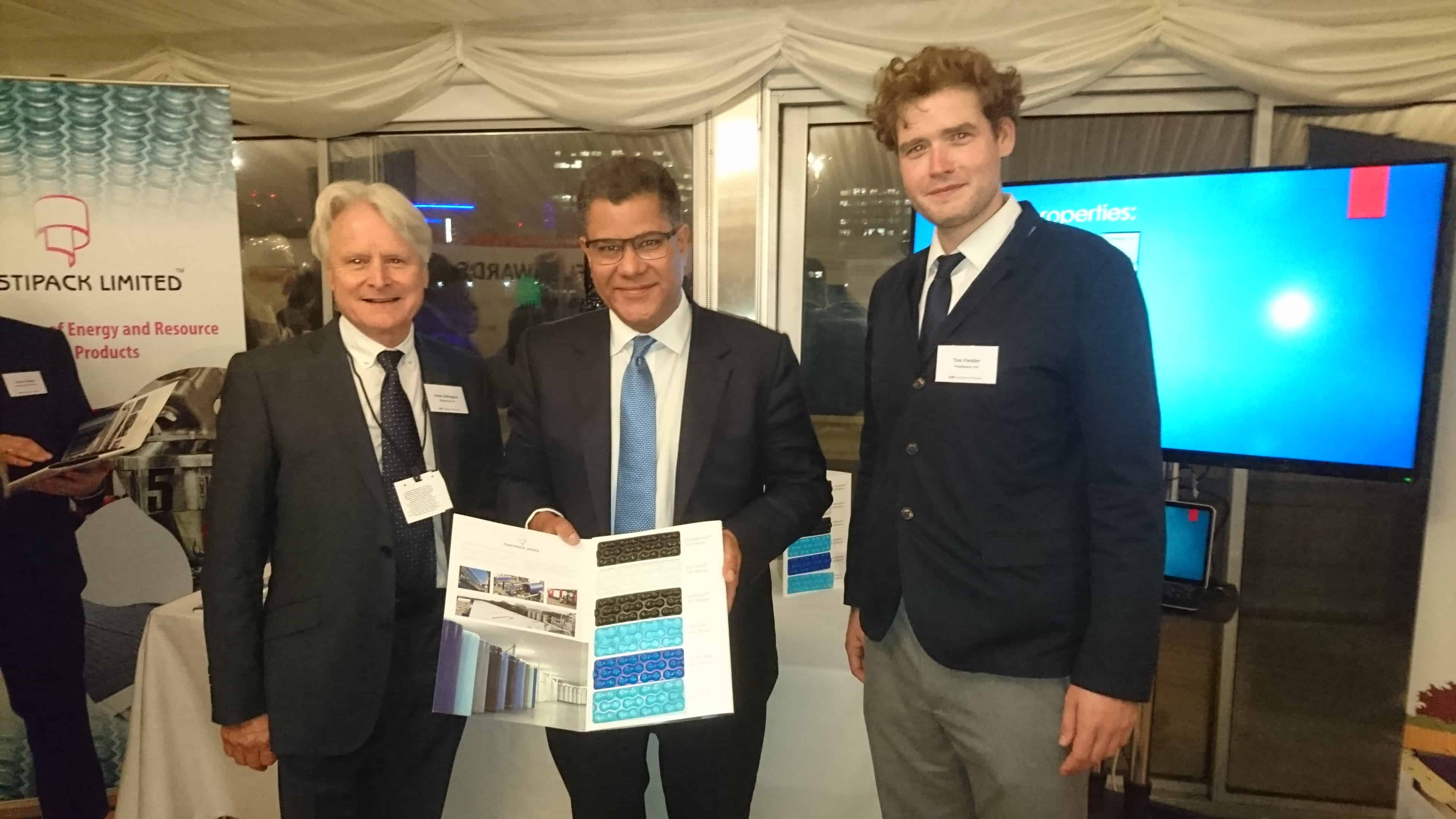
Photo of Plastipack managing director Peter Adlington, Alok Sharma MP, and Plastipack product designer Tim Fielder holding samples of Plastipack's award-winning swimming pool cover material.

Compared to that, Plastipack’s winning product – a swimming-pool cover that admits infrared light for heating, while blocking wavelengths that promote algae growth – sounds relatively low-tech. However, as product designer Tim Fielder explained, Plastipack operates in a low-innovation industry where cost is king. Convincing customers to pay slightly more for a product with a longer lifespan, lower heating costs and reduced chemical use was a significant challenge. To overcome it, the Plastipack team worked closely with physicists at the University of Surrey to develop the covers’ patented mixture of pigments, and then to conduct simulations and tests of the product’s effectiveness.

An acoustic noise-control firm, Sonobex, and a radiation-detection specialist, Innovative Physics, rounded out the group of winners. Like EndoMag, Sonobex was founded relatively recently; like Plastipack, it experienced some early difficulties in persuading customers that innovation could be a good thing. Instead of absorbing or reflecting the sound of industrial machinery, Sonobex uses acoustic metamaterials to cancel out specific low-frequency vibrations, such as the 100 Hz “hum” of transformers in power substations. “We call our product ‘the scientific approach to reducing noise’,” chief technology officer Daniel Elford told me. For some potential customers, though, this scientific approach sounded scary and expensive. Elford and his colleagues quickly learned that instead of emphasizing the science, they needed to tell customers that Sonobex’s product worked just as well as conventional solutions (such as concrete barriers) while taking up much less space.

Innovative Physics (IPL) had no such difficulties. As the company’s name implies, cutting-edge science is part of its brand, and its winning product was developed in response to a decidedly hi-tech challenge: decontaminating the area around Japan’s Fukushima Daiichi nuclear power station. According to CEO Mike Anderson, IPL’s hand-held “hot spot locators” help radiation workers to quickly identify and characterize areas of high contamination, providing information on both the location of the radiation and the specific isotopes producing it.

Towards the end of the awards ceremony, employment minister Alok Sharma MP – an applied physics graduate who has sponsored the awards for several years and previously served on the prize committee – paid tribute to both categories of winners. “The trouble with physicists is that we’re too shy,” he quipped, adding that he hoped the awards will raise the profile of physics within the wider UK business community.

Smaller limit on electron’s electric dipole moment puts supersymmetry in doubt

The most precise measurement yet of the electron’s electric dipole moment (EDM) casts doubt on “split supersymmetry” and some other theories of physics beyond the Standard Model of particle physics. The measurement, which was made by physicists working on the ACME experiment in the US, suggests that the EDM is less than 1.1×10⁻²⁹ cm, compared to the previous best measurement of just under 10−28 cm. The result has implications for physicists working at CERN’s Large Hadron Collider (LHC) because it suggests that sought-after new particles may be beyond the energy limit of the collider.

It is well known that the electron has a magnetic dipole moment, which is a result of the particle’s “spin”, or intrinsic angular momentum. However, time reversal symmetry – the requirement that physics is the same for time running forwards and backwards – forbids the electron from also having an EDM. The magnetic dipole moment is defined by the rotation of charge and therefore its direction reverses if time runs backwards. But because the EDM is defined by the distribution of charge within the electron, which does not change under time reversal, the electron cannot have both an EDM and a magnetic dipole moment.

Time reversal symmetry is a tenet of the simplest version of the Standard Model, so any measurement of the EDM would point to new physics. Some versions of the Standard Model do allow some violation of time reversal, but this would result in an EDM smaller than about 10−39 cm. This would be extremely difficult to measure experimentally. However, some models that attempt to describe physics beyond the Standard Model predict much larger EDMs for the electron, and these predictions can be tested in the lab.

Lower limit

Over the past decade or so, several experiments have lowered the upper limit on the EDM. The previous record of just under 10−28 cm was set in 2013 by physicists working in the ACME collaboration, which is led by David DeMille of Yale University, Gerald Gabrielse of Northwestern University and John Doyle at Harvard University.

The ACME experiment involves sending a relatively slow-moving pulse of very cold thorium-oxide (ThO) molecules through a region where parallel electric and magnetic fields run perpendicular to the beam. Laser pulses put the molecules into specific states in which the spin magnetic moment of an excited electron (and its EDM, if it has one) is perpendicular to the applied fields.

The molecules then travel about 22 cm through the parallel fields, causing the spins (and EDMs) to wobble about the field direction. This wobble (or precession) angle is then measured precisely using a spectroscopic technique.

Clever trick

If the electron has an EDM, it will contribute to the precession angle by an amount proportional to the electric field in the region of the electron. This is where ACME uses a clever trick. The ThO molecule has an extremely large electric dipole moment, which creates a huge electric field near the electron. The molecules are prepared such that this huge molecular electric field is either parallel or antiparallel to the applied fields. These configurations shift the precession angle in opposite directions. So by measuring the difference in the precession angle between both of these configurations, the team can determine the EDM.

By fine tuning about 36 different parameters controlling the experiment, the ACME team has lowered the upper limit on the electron EDM to just 1.1×10⁻²⁹ cm.

This effectively rules out split supersymmetry (split SUSY), which introduces new particles beyond the Standard Model such as the gluino and wino in an attempt to resolve current mysteries in particle physics. The measurement also appears to give a thumbs-down to the “spin-10 grand unified theory” (SO(10)  GUT), which also goes beyond the Standard Model.

Bad news for CERN?

This latest measurement of the electron EDM also makes it much less likely that particles not described by the Standard Model will turn-up in collisions at the Large Hadron Collider.

“The Standard Model makes predictions that differ radically from its alternatives and ACME can distinguish those,” says DeMille. “Our result tells the scientific community that we need to seriously rethink those alternative theories.”

The team is now working to achieve a further 10-fold improvement in the measurement technique.

The research is described in Nature.

America’s Top Young Scientist uses AI to improve pancreatic radiotherapy

Thirteen-year-old Rishab Jain has been named as America’s Top Young Scientist in the 2018 Young Scientist Challenge, for his work in improving pancreatic cancer treatment. Jain created an algorithm that uses artificial intelligence to accurately locate and track the pancreas in real-time during MRI-guided radiotherapy.

“Pancreatic cancer is a highly lethal and difficult to treat disease, so I created an invention to improve one of the treatment options, which is radiotherapy,” says Jain, from Stoller Middle School in Portland, OR. “My tool PCDLS [pancreatic cancer deep learning system] uses artificial intelligence to help track the pancreas and improve some of the treatment options.”

An inherent challenge of radiation treatment for pancreatic cancer is accurately targeting the pancreas, which is often obscured by the stomach or other nearby organs, making it difficult to locate. In addition, breathing and other anatomical changes may cause the pancreas to move around in the abdominal area. As a result, radiotherapy can inadvertently target healthy tissue.

“I’ve developed a tool that uses semantic segmentation and convolutional neural networks to accurately locate where the pancreas is,” Jain explains. He developed and tested his PCDLS algorithm using images of the human digestive system, and found that it could correctly detect the pancreas with 98.9% sensitivity.

“When I run the tool, the segmented pancreas is output instantaneously. I used various statistical techniques, such as the confusion matrix, ROC curve and box-and-whisker plots, to ensure my innovation gives highly accurate results,” says Jain. “With PCDLS, radiation doses for patients can be decreased, and with accurate treatments many lives can be saved. I’m really excited with the results.”

Competition day

Jain competed alongside nine other finalists during a live competition at the 3M Innovation Center in St. Paul, MN. During the summer, the finalists worked with 3M scientists to develop their innovations as part of a unique mentorship program. Jain was paired with Döne Demirgöz, a product development and research expert who takes the products developed in 3M labs and brings them to the marketplace.

Rishab Jain with his mentor

The finalists presented their inventions to an esteemed panel of scientists and leaders from Discovery Education and 3M. They also competed in two other challenges that combined multiple 3M technologies to solve a real-world problem.

“Inspiring millions of students over the past decade to develop new innovations and solutions that solve real-world problems, the Discovery Education 3M Young Scientist Challenge has encouraged kids to gain valuable critical-thinking and solution-seeking skills for life,” says Lori McFarling from Discovery Education. “Congratulations on our newest Top Young Scientist Rishab and all 2018 finalists on their incredible efforts.”


Copyright © 2026 by IOP Publishing Ltd and individual contributors