Human immunodeficiency virus (HIV) is no longer a terminal disease thanks to recent advances. However, it is still incurable. In a paper recently reported in Advanced Materials 10.1002/adma.201802233, a team led by Liangfang Zhang and Stephen Spector has come up with a creative solution to combat HIV: using nanoparticles as decoys for cells targeted by the virus.
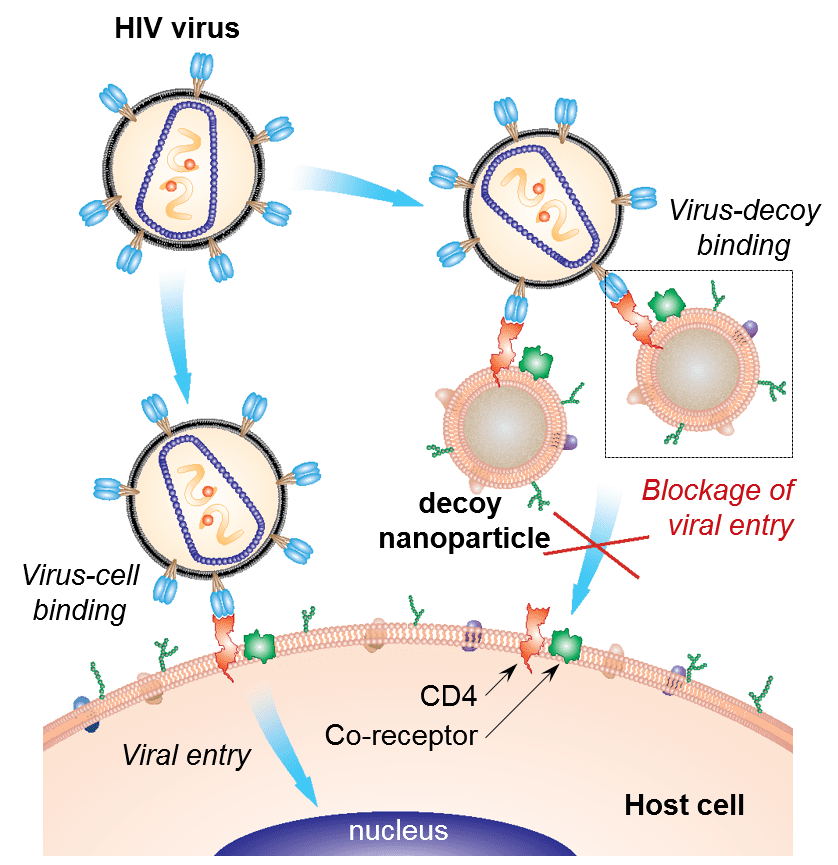
HIV normally infects T cells and macrophages, part of the body’s immune cells that attack invaders. This kills the cells and lowers the body’s defences to attack by other pathogens. After infection, the virus persists inside host T cells, lying dormant. In Zhang and Spector’s treatment, nanoparticles are introduced that look like the host’s T cells. This tricks the HIV virus into binding to the nanoparticles rather than the real cells, preventing the infection.
With existing treatments, the virus reactivates and starts replicating again if medication is stopped. Used in conjunction with these treatments, decoy particles provide an additional mechanism to combat viral relapse, as well as the low levels of virus in the bloodstream that exist even on antiviral drugs. The particles could also be used as a preventative measure against HIV, to neutralize the virus before the infection takes hold.
Decoy nanoparticles: How to trick a virus
These nanoparticles are made of poly(lactic-co-glycolic acid) (PLGA). Zhang and Spector’s team turned them into T cell mimics by removing T cell membranes from live cells and coating them onto the nanoparticles. This gives the particle a “living skin” that makes it look just like a T cell. The scientists found that these decoy particles would successfully bind to HIV viral proteins while particles coated with red blood cell membranes or a neutral polymer would not bind to the virus. Thus, the membrane on the particle surface is enough to confuse the HIV into binding to it.
Zhang and Spector’s team also showed that the HIV virus was less infective after being incubated with their decoy particles. Furthermore, the team found that the decoy particles protected macrophages against HIV infection as well. These cells are known to act as reservoirs of HIV in the body. If they are protected from infection early on, it could keep the virus from entrenching itself inside the patient, making it easier to remove, leading to a permanent cure.
As a new treatment, decoy nanoparticles are unique in that they do not depend on targeting viral proteins that quickly mutate. They work by tricking the virus into binding to a dummy target, effectively neutralizing it. Thus, the virus cannot as easily escape a decoy as it can other medications, due to the necessity of target binding for productive infection.
The team’s strategy of using the natural membranes of host cells on synthetic particles to make decoys is much more cost effective and less challenging when compared with other strategies. Although coating particles with a membrane is an established technique, The researchers envisage that this method should provide an example for treatments that can neutralize other viruses as well.
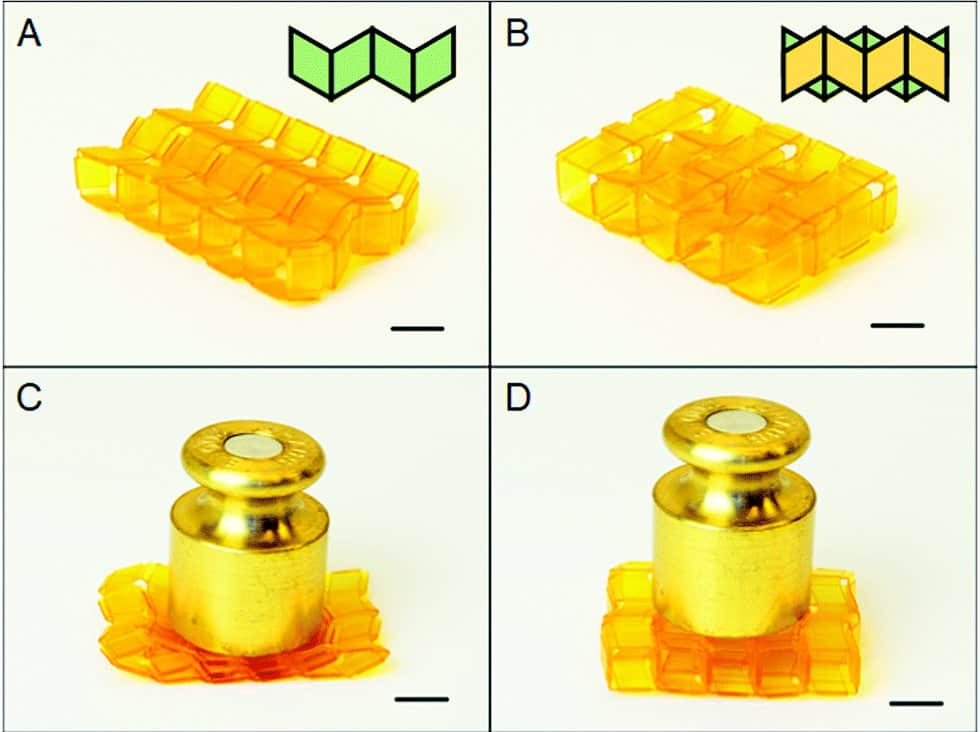
Re-arranging the same units can change a structure from one that can support a load 100 times its weight to one that will fold flat under the same load. Credit: Soft Matter
Origami has inspired the design of structures with unique properties, finding a huge range of potential uses, including soft robots and stretchable electronics. Now researchers from Georgia Institute of Technology and Peking University have found a way of directly building reconfigurable origami assemblages using 3D printing technology. The structures can fold and expand, while also having the strength and load-bearing capability required for engineering applications.
Typically, origami structures require the tedious joining together of thin sheets, which can also require additional binding elements. For example, assemblies of multiple paper structures need to be held together with glue. However, with the development of a new polymer and careful geometrical design Zeang Zhao and his team avoid the need to connect smaller parts by devising a way to fabricate a range of 3D assemblies in a single step (Soft Matter). By attempting this, the group are taking the next step towards the implementation of origami for engineering structures.
Origami into engineering
Zhao and his co-workers used a 3D printing technique to fabricate structures comprised of combinations of individual origami units, without the need for any additional assembly step. The analogous paper structure would require sticking together multiple sheets, and a lengthy and tedious step-by-step construction.
The team could design these structures to have different load-bearing capabilities by altering the way the individual origami units are connected. This is crucial for engineering applications. One structure was capable of supporting a load 100 times the weight of the structure itself. However, by simply arranging the same individual units in a different way the researchers built a bridge that will fold flat under the same load.
To construct the origami the group also developed a new “elastomer” – a type of polymer with rubber-like elasticity. By developing this novel material the scientists ensure that the whole structure can be created from a single component. The elastomer could be printed at room temperature and then set using UV light. This formed a soft, foldable material, capable of being stretched up to 100%, which they used for the entire 3D assembly in their structures.
Special hinges
The researchers designed the structures to consist of thick panels, separated by hinges that mimic the creases in paper. The thickness of the hinges is crucial to the mechanical properties: too thin and it may not support the whole structure, too thick and it will limit how well it can fold. Their hinges allowed the angle between the panels to vary between 0° and 90°. The team were also able to ensure that the high stress and strain experienced during folding is localized to the hinges. This means the panels do not become deformed with use.
3D printing
While still an emerging technology, 3D printing has proved useful for creating a huge range of complex geometries. However, the traditional method is generally only suitable for producing solid structures. In order to print structures with hollow features, the team used a different 3D printing technique called digital light processing. This requires much less support material, allowing hollow features to be created. It also permits printing of the softer materials, needed for flexible structures.
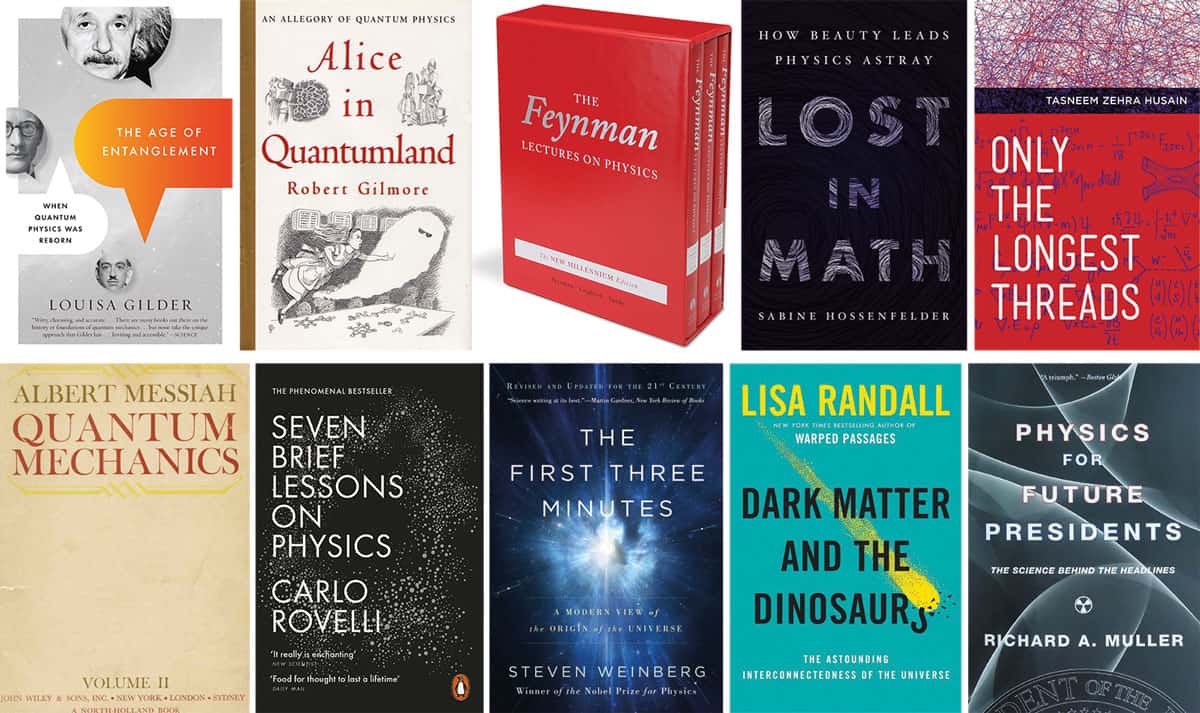
Long shelf-life: a selection of the favourite popular-science books named in our survey.
“What an astonishing thing a book is. It’s a flat object made from a tree with flexible parts on which are imprinted lots of funny dark squiggles. But one glance at it and you’re inside the mind of another person, maybe somebody dead for thousands of years. Across the millennia, an author is speaking clearly and silently inside your head, directly to you.”
Astronomer, science communicator and author Carl Sagan always had a way with words, and it’s no surprise that he sums up so well the magic of books and writing. From the very first issue of Physics World, this magazine has featured a vibrant reviews section, in which we look at some of the most interesting physics literature being published.
That first edition saw a particle-physics “primer”, published by Los Alamos, and reviewed for us by the renowned theorist John Bell, just two years before he died. Indeed, the reviews section of Physics World has featured its fair share of physics celebrity – I was ecstatic to discover that in 1990 the Isaac Asimov penned a delightful review of Malcolm E Lines’ Think of a Number. Over the last three decades, the popular-science book market has exploded and, during that time, our reviews each month have focused mainly on such writing, as compared to the textbooks and primers we took to task in our early years. The section these days has also expanded to include reviews of films, plays and more.
I decided to settle the matter once and for all by asking 15 of today’s top physicists and authors the following three questions, in the hope of putting together the definitive Physics World reading list:
What popular-science book, published in the last 30 years, have you most enjoyed reading and why?
What one book is a must-read for anyone with an interest in physics. This could be a textbook, a reference book or popular title.
What book are you reading now that you’re most enjoying?
While there are some usual suspects (Richard Feynman is still a firm favourite), there are plenty of unexpected, but very well-deserved, choices – not to mention a few books that I had never come across before. Take a look below at why these much-loved tomes on science were picked out. And why not start making your own list?
I had a disgracefully narrow education, so most of what little I know about biology – from molecular genetics to ecology – comes from popular writings. It’s hard to single out one author but if I had to it would probably be Tim Birkhead. We can surely be grateful that so many biologists have helped to fill the knowledge deficit that I suspect many physicists share.
Must read for physicists
This is maybe a hackneyed choice, but I’d pick The Feynman Lectures on Physics. These were famously unsuccessful as straight textbooks, even for bright Caltech students. But they are insightful, inspirational and repay browsing even by those who think they’re experts.
Current read
I’ve just discovered the brilliant essays of Jim Holt. He trained as a philosopher, and writes for the New Yorker and elsewhere. I’m reading his new book When Einstein Walked with Gödel: Excursions to the Edge of Thought, which offers lucid and entertaining accounts of deep problems in physics, maths and philosophy. And then I’ll read his earlier book Why Does the World Exist?, even though I doubt he has the answer.
This is easy: The Feynman Lectures on Physics. Still unbeaten in freshness, depth and insight.
Current read
A text by Nagarjuna, the ancient Indian philosopher – the Sanskrit title is Mūlamadhyamakakārikā, which loosely translates to Fundamental Verses on the Middle Way. In spite of the great cultural distance, I feel there is something useful for us to learn in this book. It may perhaps even be useful to emerge from some of the current confusion in theoretical physics.
Roger Penrose’s Emperor’s New Mind: Concerning Computers, Minds and the Laws of Physics was a book that inspired me. I was in the last year of my PhD and looking for anything to read that would distract me from writing my thesis. The central idea in the book was the non-computability of the brain and consciousness – Penrose therefore argued that computers could never replicate consciousness. While I didn’t, and still don’t, agree with him on this, the book itself was a treasure trove of insights into everything from cosmology and black holes, to quantum mechanics, thermodynamics and the Turing test.
Must read for physicists
This is a tough one – there are many books that are vital for a physicist, but of course it depends on what level you are at. If I had to pick one I would cheat and pick a three-volume set. In fact, any physicist reading this will already probably have guessed I am referring to the classic The Feynman Lectures on Physics.
Current read
What is Real: the Unfinished Quest for the Meaning of Quantum Physics by Adam Becker. I’m a sucker for books on the foundations of quantum mechanics, and this one is particularly good. The book is very clear and thought-provoking, and contains some well-researched stories about the struggle of the early pioneers to understand quantum mechanics, such as the famous Bohr–Einstein debates of the late 1920s.
Science blogger, author, senior reporter at Ars Technica
Favourite pop-sci book
A Madman Dreams of Turing Machines by Janna Levin. Part novel and part history of science, the book intertwines the stories of two seemingly very different men – Kurt Gödel, with his “incompleteness theorems”, and Alan Turing, with his work on code-breaking and AI. The book explores the sometimes tragic nature of genius, and how their ideas defined their era.
Must read for physicists
Alice in Quantumland: an Allegory of Quantum Physicsand Scrooge’s Cryptic Carol: Visions of Energy, Time, and Quantum Nature, both by Robert Gilmore. These were among the first popular-physics books I ever read, and as someone who started out in the humanities, I loved the charming reworking of two classics of children’s literature. The first introduces the general reader to the basic principles of quantum mechanics via Alice’s Adventures in Wonderland by Lewis Carroll. The second riffs on Charles Dickens’ A Christmas Carol, wherein Scrooge is visited by the ghosts of science past, present and future.
Current read
How Behaviour Spreads: the Science of Complex Contagions by Damon Centola. Forget The Tipping Point – this is the book you should read to understand how sweeping social changes occur. Centola applies the lessons learned in epidemiology, on how viral epidemics spread, to understanding how social networks can broadly alter human behaviour, and includes some pointers for how we might harness these insights to produce positive change.
Any good quantum mechanics textbook. I first learned a lot from Quantum Mechanics by Albert Messiah, and Lectures on Quantum Mechanics by Gordon Baym. More modern ones are Principles of Quantum Mechanics by Ramamurti Shankar and the Quantum Mechanics volumes by Claude Cohen-Tannoudji, Bernard Diu and Frank Laloe. For the more mathematically inclined readers, I also wrote a text myself – Quantum Theory, Groups and Representations: an Introduction.
Richard Holmes’ The Age of Wonder: How the Romantic Generation Discovered the Beauty and Terror of Science. I read this first as a judge for the Royal Society Aventis Science Book Prize (which it won), and found it not only fascinating and beautifully written but also positively exciting. Holmes is not a science writer, but primarily a biographer with a deep knowledge of the Romantic poets. Perhaps that’s why his descriptions of the interactions between poets, writers and scientists in the Romantic era of the early 19th century, such as Samuel Taylor Coleridge and Humphry Davy, feels so fresh and spirited. But the book is more than a history: it argues a passionate and important case for seeing science as a central strand of human culture, interwoven with others, and not some kind of isolated fortress of dry rationalism.
Must read for physicists
Carlo Rovelli has emerged as physics’ current poet laureate, and for good reason: he has a light, humble touch, an elegant style, and a genuine regard for and understanding of art and philosophy. His Seven Brief Lessons on Physics can be enjoyed by anyone; but I’d wholeheartedly recommend also his more recent The Order of Time.
Current read
In science, The Immortalists by David Friedman is a great account of the crazy collaboration between tissue-culture pioneer Alexis Carrel and aviator (and Nazi sympathizer) Charles Lindbergh. I’ve also finally got around to reading David Mitchell’s early novel number9dream, which is as fun and wildly inventive as all Mitchell’s books. It’s not an essential criterion in a writer, but knowing that he is a lovely chap adds to the pleasure.
One of the most enjoyable pop-sci reads, for me, was Amanda Gefter’s Trespassing on Einstein’s Lawn, which is nominally about understanding the physics of everything, but mostly about the decades-long fascination the author and her father had with the work of John Archibald Wheeler. I wouldn’t say it’s the best book on physics – Wheeler was a complicated figure, and to my mind a lot of his ideas don’t really hold up – but there’s an infectious enthusiasm to the writing that made this a really fun book to read.
Must read for physicists
The defining characteristic of physicists, to me, is less about the factual content of our areas of study than about a mindset, a sort of reductionist approach that tries to break the world down into the smallest possible number of fundamental principles, and use them to explain as much as possible. In terms of capturing that mindset, there’s not much better than Richard Muller’s Physics for Future Presidents, which takes a very physicist-y approach to a lot of policy questions. He caught some flak for his political views a few years back, so this is not without controversy, but the book is a great demonstration of the physics mindset in action.
Current read
I’ve recently finished writing my own next book, so most of my recent reading has been relatively light fiction, to give myself a bit of a break. I did start reading Totally Random by Tanya and Jeffrey Bub, though, which is a non-fiction comic about quantum physics. I haven’t got very far, yet, but the different medium makes this a refreshing approach to the subject.
Journalist, author, broadcaster, co-host of the BookLab podcast
Favourite pop-sci book
The last 30 years have brought a flood of popular-science books, many of them very good. In the case of physics, the floodgates were opened with the publication of Stephen Hawking’s A Brief History of Time in 1988. But the popular-science book that I found most engrossing wasn’t on physics at all; rather, it was Steven Pinker’s The Better Angels of Our Nature, about the long-term decline of violence across human cultures. Pinker is a brilliant, clear, and persuasive writer, and every page of this book is simply crammed with fascinating information that forces the reader to rethink deeply-entrenched assumptions. But allow me to nominate a runner-up: Timothy Ferris’s Coming of Age in the Milky Way is a masterpiece. It’s the story of how we’ve come to know what we know about the structure of the cosmos, and even 30 years after publication, it’s a rewarding read.
Must read for physicists
People often ask me if there’s one popular-physics book that they ought to read, and for years, I had no one answer. I love the books that Brian Greene and Roger Penrose have written, but they’re too technical for me to recommend them to a beginner. Even Hawking can be a tough slog for the uninitiated. But thanks to Carlo Rovelli, I think I know where to point them. His book Seven Brief Lessons on Physics is a wonderful introduction not just to physics but to the question of why we do physics – and it almost fits in your pocket.
Current read
I recently read Sabine Hossenfelder’s Lost in Math. For more than a decade now, we’ve been inundated with books touting the merits of string theory and the multiverse. Hossenfelder is asking for a reality check. Her book, with its mix of science and humour, comes as a breath of fresh air. It’s a frank assessment of where modern physics – and especially some of its bolder claims – stands today.
All the pillars of modern physics – relativity, quantum mechanics, thermodynamics – meet in paradox at the edge of a black hole. The Black Hole War by Leonard Susskind takes you right to the horizon. Susskind’s book recounts his decades-long battle with Stephen Hawking over the fate of information that falls into a black hole. It’s both a primer on black-hole physics and a gateway into the battles defining fundamental physics today – like the firewall paradox and the intriguing links between space–time and computational complexity – where Susskind is still leading the charge.
Must read for physicists
“The relationship between scientists and their ideas is intense, emotional, obsessive, demanding,” writes physicist Tasneem Zehra Husain in Only the Longest Threads. “Ideas are not commodities, they are living things.” Her book brings those ideas to life through a fictional reconstruction of the great discoveries of physics. It’s fantastically inventive and gorgeously written. It serves as an important reminder that physics is a very human ordeal, and that science books can be works of literature, too.
Current read
I’m currently reading Through Two Doors at Once by Anil Ananthaswamy, a history and exploration of the infamous double-slit experiment. By focusing on this one maddening experiment, Ananthaswamy is able to delve deep into the meaning of quantum mechanics, and even to touch on some exciting new ideas – QBism, for example – that haven’t gotten their due in many popular science books yet.
There are a few, but the one that comes to mind immediately is Siddhartha Mukherjee’s The Emperor of All Maladies: a Biography of Cancer. At 550+ pages, it’s a formidable book. It’s hard to imagine a book on cancer being a page-turner, but Mukherjee manages to make it into one, combining medicine, science and human-interest stories into a compelling narrative.
Must read for physicists
It’d have to be Steven Weinberg’s The First Three Minutes: a Modern View of the Origin of the Universe. It’s a masterclass in how to write about physics for the intelligent lay reader. The Guardian’s Tim Radford said in his manifesto for the simple scribe: “The classic error in journalism is to overestimate what the reader knows and underestimate the reader’s intelligence.” Weinberg walks this fine line beautifully. Plus, I think it has one of the best lines I have ever read in a popular-science book: “The effort to understand the universe is one of the very few things that lifts human life a little above the level of farce and gives it some of the grace of tragedy.”
Mother Nature by Sarah Blaffer Hrdy is a brilliant, rigorous, tender exploration of motherhood and its role in human evolution. I firmly believe that the mother–child relationship will turn out to be crucial in understanding the development of human intellectual and emotional capacity, and Hrdy’s work explains why.
Must read for physicists
Dark Matter and the Dinosaurs by Lisa Randall. I had the pleasure of meeting her earlier this year, and seeing her speak, and she was incredible. Witty, accessible and at the cutting edge of physics, her books put complex concepts within reach for those of us who can find theoretical physics impenetrable.
The agony of choice! There are so many pop-sci books I’ve enjoyed that I’m going to have to cheat just a little and choose an author instead. Philip Ball has consistently written engaging and entertaining science books that combine deep analysis with punchy prose. He manages to pull off the difficult trick of clearly explaining complex science concepts while never dumbing down or patronizing the reader. If I were forced to choose just one book of Ball’s to bring with me to a desert island, it’d be The Music Instinct, a comprehensive overview of “how music works and why we can’t do without it” (although if I could smuggle another one along I’d take Curiosity: How Science Became Interested In Everything.)
Must read for physicists
I’ve just finished reading Sabine Hossenfelder’s Lost In Math. This is a must-read for anyone with even a passing interest in physics and should be on the shelves of every physicist. Hossenfelder highlights some of the key issues with the state of the art in 21st-century theoretical physics and dissects the pathological reliance of some on mathematical beauty as the foremost guiding principle in science. I’m a dyed-in-the-wool experimentalist so this book resonated strongly with me. Beauty is, after all, always in the eye of the beholder.
Current read
Cordelia Fine’s Testosterone Rex: Unmaking the Myths of our Gendered Minds. I’m a big fan of Angela Saini’s Inferior: How Science Got Women Wrong and the New Research That’s Rewriting the Story (the thoroughly deserved winner of Physics World’s Book of the Year 2017) and Fine’s book explores similar themes in a page-turning blend of well-honed snark and science. She lays bare the type of teeth-grindingly over-simplistic “scientific” thinking that plagues so much of the discussion of gender differences.
Contributing editor for Scientific American magazine, author
Favourite pop-sci book
What an unfair question! The greatest books are, by their very nature, incomparable; I can’t say I enjoyed one the most. Forced to choose, I’ll go with Daniel Dennett’s Consciousness Explained. Even now, it strikes me as the most plausible physicalist account of the mind. Dennett’s argument is rich with insights that provoke you to think regardless of whether you share his conclusion.
Must read for physicists
Anyone with any interest in quantum mechanics and its chequered history has got to read Louisa Gilder’s The Age of Entanglement. She reconstructs the dialogue of its founders, based on their actual words from letters and papers, spoken in imagined but entirely plausible contexts. No other book shows them so vividly as human beings.
Current read
I’m wrapping up Eric Schlosser’s Command and Controland don’t know what to be more amazed by: the author’s mastery of the history of nuclear weapons and nuclear-weapons accidents, or the fact that we humans got out of Cold War alive. I knew we came close a few times, but not that many times.
This is not easy. My reply would be James Watson’s The Double Helix, but that I fear was published over 30 years ago. I cite it because (unlike most books) it shows the reality of scientific research, including the personal conflicts and emotional challenges. Within the last 30 years, it would be Bill Bryson’s A Short History of Nearly Everything. When I read its first few pages, I thought there is no point in my writing a popular book on physics ever again, as he has said it all perfectly. Reading his opening description, of atoms existing for billions of years and coming together for about a century in a form that thinks it is you, was one of those singular moments when one is hit by a thought that is so obvious, and yet has never been said so sharply before.
Must read for physicists
Preferably some of mine! A more serious answer to this would be Richard Feynman’s QED: the Strange Story of Light and Matter. The book is beautifully written, with Feynman at his pedagogic best. You’re left with a feeling of understanding, and also of the author’s profound knowledge of the universe and recognition of the beauty in the working of the natural world.
Current read
The manuscript of my next book Trinity (about Klaus Fuchs, Rudi Peierls and MI5). It is taking so much time to check everything and chase all the files at Kew, FBI, KGB and Stasi, that I only have time for pulp fiction – though Robert Harris’ An Officer and a Spy is the one I should cite. My most recent “serious” reading is Freeman Dyson’s Maker of Patterns: an Autobiography Through Letters.
The KMCM mobile monitoring device records a cardiac rhythm strip using a smartphone app. (Courtesy: AliveCor)
A new artificial intelligence algorithm could soon enable patients to automatically diagnose and monitor a common and potentially fatal heart disorder at home, using a small device that plugs into a smartphone (Heart Rhythm 10.1016/j.hrthm.2018.06.037).
Atrial fibrillation (AF) is a heart rhythm disorder that significantly increases a person’s risk of stroke. It is thought to affect around 1 million people in the UK, but often remains undiagnosed. To diagnose and monitor the condition, and inform treatment options, patients usually undergo regular 12-lead electrocardiograms (ECGs), performed using bulky equipment at hospitals or doctors’ surgeries, which are analysed by the patient’s physician.
ECG results, however, can be unreliable at diagnosing patients with AF, as attacks are often transient and may not be present at the time of the procedure. As such, subjective descriptions of symptoms are also important in making a diagnosis.
The Kardia Mobile Cardiac Monitor (KMCM) is a small, simple device that allows AF patients to regularly monitor their condition themselves at home. It contains two electrodes, which record a 30 second ECG trace from the patient’s fingers that can be analysed using a smartphone app. The device is already in use for patients to collect ECG data at home and transmit these for review by their doctor. Used in this way, the device has been successful in monitoring patients who are undergoing or have recently received treatment.
A new algorithm has been developed that allows the device to automatically categorize the patient’s data as either a normal rhythm or AF, without the need for direct involvement from their doctor. The algorithm uses machine learning to analyse 50 different parameters extracted from the ECG trace, and was trained on data previously acquired and classified by doctors.
Researchers at the Cleveland Clinic and Marshall University have now investigated the effectiveness of the KMCM paired with the new algorithm. The study included 52 AF patients, who used the KMCM themselves to obtain an ECG trace. Immediately before this, each patient underwent a conventional 12-lead ECG. This was analysed by physicians to provide a baseline with which to evaluate the automated system. Because the condition is variable, only some of the patients were experiencing AF at the time of the ECG.
The KMCM was able to identify 71.2% of AF cases given to it (the sensitivity). It had very high specificity: 94.1% of those categorized as AF were correctly labelled. The lower sensitivity was because many traces could not be categorized, usually because the heart rate was too high or too low, or because of excessive noise. When these unclassified traces were excluded, sensitivity rose to 96.6%.
While the high proportion of unclassified readings means the system still requires oversight from experienced doctors, group leader Khaldoun Tarakji sees value in the device as a useful tool alongside current monitoring techniques.
“Patients can use an automated atrial fibrillation detection as a basis for pursuing additional medical follow-up, and clinicians may use it to develop treatment plans supported by more objective data rather than relying only on symptoms,” he comments. “As physicians, we should not view these products as threats, but rather as an opportunity to provide better and more effective care for our patients.”
Biological control – the use of non-native species to control invasive pests – rings alarm bells for many. The release of cane toads in Australia in the 1930s to control pests devouring the sugar cane crop became infamous, with native wildlife suffering serious declines and the pests largely carrying on strong.
Yet high-profile failures like this are outweighed by more than 250 success stories such as the 1889 introduction of the vedalia ladybird beetle into California’s citrus groves that brought the “cottony-cushion scale” pest under control, or the release of plant-feeding weevils to clean up the invasive water hyacinth choking Africa’s Great Lakes. Analysis of a recent success story has revealed how valuable biological control can be, both financially and through its hidden environmental and human-health benefits.
Back in 2008, the cassava mealybug Phenacoccus manihoti, an aphid-like pest that feeds on sap, arrived in Thailand. Over the next two years, the nation’s cassava crop yields plummeted by more than one quarter. The export price of cassava-derived commodities such as starch surged by 162% and the global cassava trade saw a drastic restructuring, with markets importing cassava-derived products from other countries and substituting different crops.
“Local farmers resorted to insecticides – including products that have recently been banned in Europe,” says Kris Wyckhuys of China Academy of Agricultural Sciences and the University of Queensland, Australia.
In 2009 the Thai Royal Government authorised the release of a South American parasitic wasp, a biological pest control already proven successful across Africa during the 1980s. Around a millimetre long, Anagyrus lopezi solely attacks cassava mealybug, and does not cause any undesirable environmental impacts.
The wasp rapidly brought the cassava mealybug under control and restored crop yields to their pre-invasion levels by 2012.
“It is an entirely cost-free pest control service which naturally propagates from field to field and does not require any intervention on behalf of individual growers, except for refraining from using pesticides,” says Wyckhuys, who published his findings in Environmental Research Letters, Journal of Pest Science and PeerJ. “In many countries, chemically-synthesised pesticides continue to be the first line of defence when addressing invasive pests. For decades those pesticides have been shown to inflict damage on human health and the environment, but with effective biological control in place we simply no longer need them.”
Wyckhuys and colleagues estimate that the introduction of the insect saved Thai farmers as much as $700 per hectare as well as bringing stability to global cassava (starch) markets. Cassava is used for human food, animal feed and biofuel, as starch and to make the artificial sweetener sorbitol and the flavour enhancer mono-sodium glutamate. Thailand is the world’s largest starch exporter, the researchers showed, with 36% of global trade volume. The country is also the biggest supplier of cassava-derived commodities to China.
Awareness of biological control methods is growing; many of Europe’s organic farmers and greenhouse growers rely on the parasitic wasp Encarsia formosa to suppress the greenhouse whitefly and protect valuable tomato and cucumber crops. As history has taught us, we need to exercise caution when using exotic biological pest control organisms, but Wyckhuys and his colleagues believe that with current safeguards, those benefits shouldn’t be underestimated.
The fluid inside a cell’s nucleus is 300 times more viscous than honey, according to Alexandra Zidovska and colleagues at New York University in the US who have confirmed the results of previous measurements using a new non-invasive technique. The team monitored the tiny motions of structures inside cellular nuclei to learn more about the mechanics of the nucleus. Their research could lead to a better understanding of the changes that occur in the cells of people with conditions such as cancer and Alzheimer’s disease.
As well as containing DNA, cellular nuclei are home to strands of RNA molecules the carry information between the nucleus and protein manufacturing sites, enabling important processes inside the cell to run smoothly. To understand how this system works, biologists need to know the viscosity of the medium through which RNA strands travel.
Previous studies have measured this viscosity by injecting small beads into nuclei using needles and then manipulating their movements with magnetic fields. This technique is damaging to cells, which makes it unclear whether its results would be the same in healthy, undamaged cells.
Red and green markers
Zidovska’s team overcame this problem by observing the movements of nucleoli, which are ball-shaped structures of entangled RNA and protein molecules that occur naturally inside nuclei and behave like liquid droplets. To observe their motions accurately, the researchers genetically modified cells so that their nucleoli carried red fluorescent markers, while the rest of the nucleus carried a green marker. Under a microscope, the clear contrast between structures enabled them to observe tiny oscillations on the surfaces of nucleoli. They also saw the nucleoli collide and fuse, which is a process that had not been seen directly before.
By measuring the amplitudes of the surface oscillations, Zidovska and colleagues calculated the surface tension of the nucleoli. This yielded an extremely low value – around 50,000 times smaller than the surface tension of an airborne water droplet.
Slow process
The team also measured how the shape of two merging nucleoli changed over time, finding that they generally took around 15 min to fuse entirely. This, they note, is a slow process on cellular timescales. From principles of surface tension-driven coalescence, the team concluded that the medium surrounding the nucleoli an viscosity of around 3000 pascal-seconds. This is extremely high being around 30 million times more viscous that than water, and 300 times more viscous that than honey. The team’s results are in line with data gathered using more invasive techniques and knowing this reduces uncertainties in our understanding of the mechanics of fluid inside cellular nuclei.
Alzheimer’s disease and some cancers are associated with changes in the size and shape of nucleoli and therefore the new technique could have medical applications. “We think that further development of this approach can have potentially large implications for both disease diagnosis and therapy,” says Zidovska.
Zidovska and her colleagues are now studying the possible relationships between the mechanical properties of cell components and how genetic information is processed.
The Maryland Proton Treatment Center (MPTC) is now offering deep-tissue external thermal therapy in combination with proton therapy, in an attempt to boost survival chances for patients with abdominal and pelvic cancers. MPTC is the only centre in the world to offer these two treatments at the same facility.
External thermal therapy — heating in the range of 40 to 43.3 °C — sensitizes tumour cells to chemotherapy and radiation treatment. Studies have found that adding hyperthermia to these treatments can significantly shrink tumours and improve survival for some patients. Heat has also been shown to enhance anti-tumour immune response.
“We are very pleased to be able to offer deep-tissue thermal therapy, which can be combined with standard radiation therapy as well as proton-beam therapy to enhance the cancer-killing effects of the radiation,” says Zeljko Vujaskovic, a professor of radiation oncology at the University of Maryland School of Medicine.
Radiation oncologists at UMGCCC, the University of Maryland’s cancer centre, already use external thermal therapy to treat a range of cancers, but don’t currently use it for cancers deep in the body. Now, new deep-tissue thermal therapy equipment will be employed to treat tumours including cancers of the bladder, rectum, cervix, ovaries, pancreas and connective tissue.
Patients will typically receive the thermal therapy twice a week for an hour, before or after receiving (photon-based) radiotherapy or proton therapy. The system heats the tumour tissue to 42 °C, with internal and external probes enabling continuous temperature monitoring. A water-filled applicator is placed over the area to be treated, and non-invasive radio frequency energy is directed at the tumour. The heat causes tumour blood vessels to dilate, bringing more oxygen into the tumour, and making cancer cells more vulnerable to radiation therapy.
“Early research suggests that adding thermal therapy to proton-beam therapy may be associated with an even greater benefit than when combined with standard radiation therapy, and we are excited to be at the forefront of making this combination therapy available to cancer patients,” says Vujaskovic.
A new “remote epitaxy” technique developed by researchers at the Massachusetts Institute of Technology (MIT) that exploits the “transparency” of graphene to atomic interactions could be used to fabricate ultrathin flexible films of a variety of semiconducting materials on non-silicon wafers. These films could be used to make functional components for use in a host of electronics devices, including wearable sensors and flexible solar cells.
Modern electronics is largely based on silicon, which is the most abundant – although certainly not the best – semiconducting material on Earth. Although other substrates, such as gallium arsenide (GaAs) and gallium nitride (GaN) are much better, they are a lot more expensive.
Although a routinely employed technique to fabricate electronics devices, epitaxial growth is far from straightforward. Growing different crystalline materials on top of each other is no easy task since their lattice parameters need to be carefully matched as do the surface energies across the interfaces between the epilayer and the bulk substrate. Another difficulty is that the films cannot be easily removed from the growth substrate, so this wafer cannot be reused.
Two teams of researchers led by Jeffrey Grossman and Jeehwan Kim are now saying that they have developed a new way to grow ultrathin and flexible films of a variety of semiconductors on substrates other than silicon – that can then be reused.
The invisibility of graphene
Last year, Kim and colleagues discovered that stacking graphene on top of a GaAs wafer and then flowing atoms of Ga and As over the stack resulted in the atoms assembling into a pattern that “copied” that of the single-crystalline pattern of the underlying GaAs wafer. It was as if the graphene was transparent, or invisible, they say. What is more, they found that they could easily peel the resulting epitaxially-grown film away from the graphene layer, leaving the GaAs wafer untouched and ready to be used again.
Repeating their experiments with wafers made from other semiconducting materials, such as silicon (Si) and germanium (Ge) did not produce the same results, however. Flowing atoms of Si and Ge did not interact with the underlying wafers and the graphene acted as a “barrier” between the wafer and the atoms in this case.
Polarity matters
“This is because the polarity of the 2D materials plays a crucial role in determining the transparency of these materials to remote atomic interactions,” explains Kim. Indeed, the atoms can only interact with each other and “ignore” the intermediate graphene layer if they have different ionic charges. This is not the case for Si and Ge, which have the same ionic charge because they both belong to the same group (IV) of the periodic table. They thus do not interact with each other. Ga and As, on the other hand, are positively and negatively charged, respectively, and thus do.
“The greater the degree of polarity, the stronger the atomic interaction,” says Kim.
The polarity of the substrate itself also matters, he adds. Hexagonal boron nitride (hBN), for example, which is similar in crystalline structure to graphene, contains oppositely charged boron and nitrogen atoms. Any atoms flowing over this substrate, even if they are highly polarized themselves, cannot interact with the underlying hBN wafer.
The new technique, which is detailed in Nature Materials 10.1038/s41563-018-0176-4, could thus be used fabricate ultrathin flexible thin films from a variety of semiconducting compounds as long as they contain oppositely charged atoms, he explains. These films could be stacked on top of each other to produce functional devices, such as wearable sensors and flexible solar cells. “Indeed, we will now be looking at stacking freestanding single crystalline semiconductors made using our remote epitaxy technique to make unique heterostructures for IoT applications or medical devices,” he tells Physics World.
Brain–computer interfaces (BCIs) use cognitive activity to control an external device, enabling individuals with severe motor impairment to communicate. One BCI approach employs near-infrared spectroscopy (NIRS) to detect oxygen levels in the cerebral cortex, known as the haemodynamic signal, which is indicative of neuronal activity. The temporal resolution of this signal, however, is a few seconds, limiting the information transfer rate in NIRS-BCIs.
Another possibility may be to use NIRS to measure the fast optical signal (FOS) that arises from changes in optical scattering through cerebral tissue during neuronal activation. As the FOS response relates directly to neuronal activation (rather than the slow haemodynamic response that follows), its latency is around 100 ms. But despite this higher temporal resolution, the FOS has a low signal-to-noise ratio (SNR) and its reliability has been disputed. A team from Bloorview Research Institute has now investigated the use of the FOS to control a NIRS-BCI (Biomed. Phys. Eng. Express4 065010).
“As it is believed that the FOS signal is related to neuronal firing, there is potential that evoked responses similar to those measured with electroencephalography [EEG] could be harnessed through optical measurements,” says senior author Tom Chau. “In theory, this could accelerate the response time of optical BCIs. A major limitation, however, is the need for trial averaging, which slows down the effective response time.”
Spotting Einstein
Fifteen study participants took part in three offline data collection sessions, during which they performed a visual oddball task. Each session included three runs of 10 task blocks, with 100 trials per block. In each trial, an image was presented on a screen for 512 ms, with oddball images (a photo of Einstein) interspersed randomly between frequent images of letters (A, B, C, D); 20% of images were oddballs. Fourteen subjects also attended two online sessions composed of one offline run, and two online runs during which they received classification feedback.
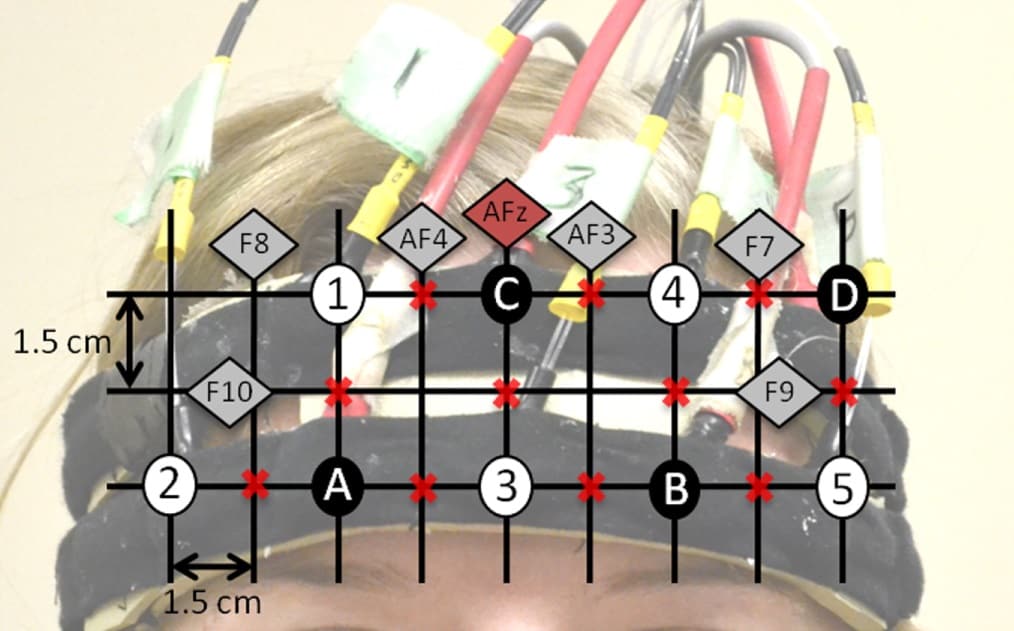
NIRS and EEG channel configuration. White circles: paired 690 and 830 nm NIR sources; black circles: detectors; red crosses: measurement channels; grey diamonds: EEG electrodes; red diamond: the ground electrode location.
Chau and colleagues recorded NIRS measurements over the prefrontal cortex, using laser diode sources and detectors placed in a custom headband on the participant’s forehead. They used five paired 690 nm and 830 nm sources and four detectors, enabling 11 measurement channels of each wavelength. To validate FOS responses, they performed simultaneous EEG measurements of event-related potentials in two sessions, using electrodes on the NIRS headband.
“As there has been some debate about whether optical measurements can detect evoked responses, we used EEG to confirm that indeed we were eliciting an evoked response,” explains Chau. “Also, the EEG signals provided a reference against which we could compare the FOS data.”
Automation algorithm
The team then examined the feasibility of automatically classifying the FOS response in the online sessions, using a classification algorithm trained on data from the four offline sessions. They used temporal and spectral features extracted from DC intensity and phase delay data, at 690 and 830 nm, to classify the FOS response, using a weighted majority vote of support vector machine and linear discriminant analysis classifiers.
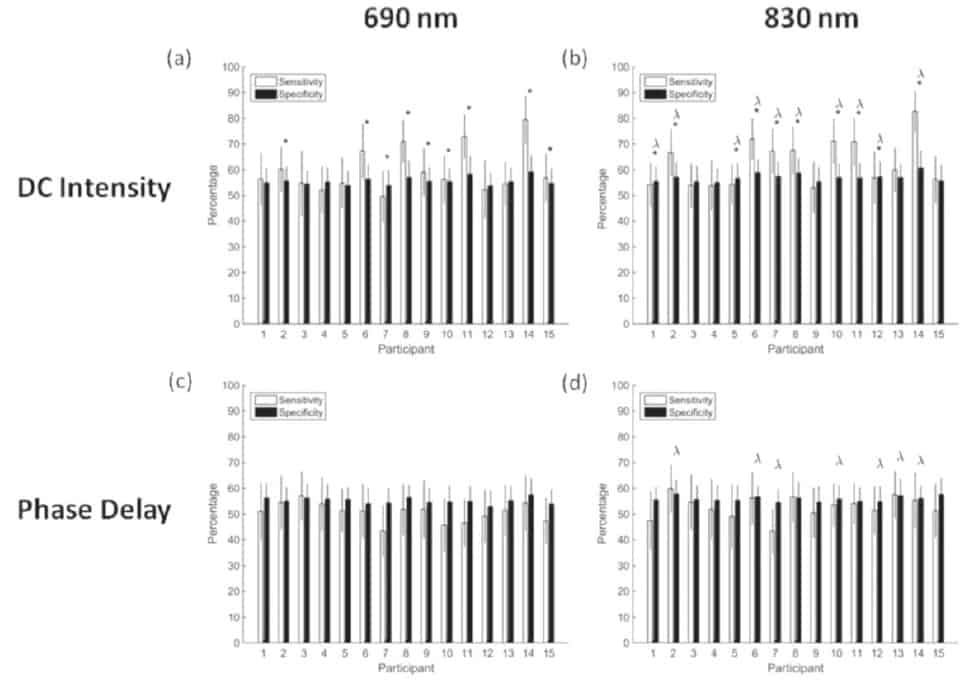
Examining averaged responses from 15 trials offline, the researchers found that FOS response could differentiate oddball and frequent images with an average sensitivity, specificity and balanced accuracy (average of sensitivity and specificity) of 63%, 60% and 62%, respectively. They note that these offline FOS classification results were significantly above chance for each participant, confirming that automatic detection of the FOS is possible at above-chance levels.
Individual classifier results were significantly higher for DC intensity feature sets than for phase delay feature sets for nine and 10 participants, at 690 and 830 nm, respectively. Classifiers of 830 nm feature sets also had significantly better results than 690 nm sets for half of the participants. The authors propose that FOS sensitivity is higher at 830 nm because increased absorption at 690 nm reduces the SNR.
Individual offline classifier results per participant for each FOS feature set: DC intensity at 690 nm (a) and 830 nm (b); phase delay at 690 nm (c) and 830 nm (d).
The EEG-measured event-related potentials were classified using a similar algorithm, and seen to differentiate images with an average sensitivity, specificity and balanced accuracy of 82%, 72% and 77%, respectively. This confirmed that the prefrontal neuronal response to a visual oddball task could be classified above the level required for effective BCI communication (70%).
Chau and colleagues also classified the FOS 15-trial averages online during the two online sessions. Here, the FOS exhibited an average sensitivity, specificity and balanced accuracy of 64%, 63% and 63%, respectively. The online classification results were also significantly better than chance in both online sessions for seven participants and in one session for five.
For this first reported attempt to automatically classify the FOS online, the average online balanced accuracy across all participants was 63±6%. While this accuracy does not meet the required 70% level, the authors suggest that adding measurement channels across the fronto-central and parietal areas of the brain, where a larger FOS response may be found, should improve the SNR.
“Future work will look for ways to improve the strength of the response and thereby reduce the number of trials that need to be averaged,” Chau tells Physics World. “For now, the FOS is not yet ready for deployment in a practical BCI.”
I am old enough to remember the first issue of Physics World; it was published the year I graduated from Cardiff University in physics and computing. But for the benefit of younger readers out there, one of the most interesting articles in that inaugural edition covered the rise of the solid-state laser. Written by Bridget Marx from the laser-technology supplier Coherent, the article asked if gas lasers should be considered the cumbersome dinosaurs of the laser industry – and whether they might be replaced by “mammals” like the diode laser or diode-pumped solid-state laser. I’d summarize the article’s conclusion as a rather nervous, “Er, no, not yet in the high-power applications, but new applications will become possible.”
Re-reading the article recently, I could see why Marx was so tentative. Three decades ago, it would have been hard to predict the solid-state laser’s impact. That’s because the device itself was in its infancy, and it had only just begun to find its first major application: compact discs. When Sony introduced the CD player in 1982, with a red laser diode at its heart, it cost $730 and required some very sophisticated electronics to make it all work.
But by 1988 costs were falling due to the scalability advantages of semiconductors, both in the laser and the electronics. At the same time, the product’s incredible sound reproduction quality led to huge demand; CD sales overtook vinyl that same year, and cassettes three years later. Soon, the 12 cm optical disc was the biggest money spinner the music industry had ever seen, as the CDs themselves were so cheap to produce.
A grain of sugar
Laser diodes differ from gas lasers in many ways. Made on a wafer scale using semiconductor techniques, they are as small as a grain of sugar and cheap to make in volume. Most importantly, however, they can be directly modulated at high speeds, using cheap electronics. These differences opened up applications that would have been almost impossible to predict in 1988. That was because of other things happening in micro-computing, communications and materials science that may have seemed incidental to laser diodes at the time, but wound up changing everything.
The 1988 article talked about using blue light obtained via frequency doubling (from 840 nm to 420 nm) to increase data-storage densities. Others, however, were working on a direct semiconductor approach. At the time, this looked improbable, but in 1992 the Japanese inventor and later physics Nobel laureate Shuji Nakamura made the first efficient blue light-emitting diode (LED). Four years later he followed it with the first blue laser.
The first digital video disc (DVD) players, using red diode lasers, had appeared in Japan in 1996, and in the US in 1997. Allowing consumers to watch movie – length videos on a small disc, they were a roaring success, with the price plummeting from $600 to less than $50 by 2003. And thanks to the shorter wavelength blue light (405 nm), we were now offered Blu-ray discs containing yet more information. The laser diode had done it again. By 2008, DVD had replaced magnetic video cassette tapes as the preferred method of distributing consumer video content.
The second revolution
There was another major innovation in the late 1980s that was also to drive laser-diode applications, even if it eventually heralded the end for both the CD and DVD. This, of course, was the Internet, and specifically the combination of fibre broadband in the home and mobile data anywhere else. The World Wide Web was created by Tim Berners-Lee at CERN in 1989, and the subsequent explosion in demand for data led to new applications and markets for the solid-state laser/laser diode.
Today, there are so many places where the solid-state laser is used in optical communications that it is hard to count them all. Key examples include narrow-linewidth, high-speed distributed feedback laser diodes, which transmit data over optical fibres, as well as the various optical amplifiers that facilitate the process. The latter include erbium-doped fibre amplifiers (EDFAs), which use 980 nm and/or 1480 nm pump laser diodes to boost multiple optical signals in the fibre, so that they don’t need to be converted back to the electrical domain and then retransmitted (a particularly tricky thing to do in the middle of an ocean).
Invented in 1997 at the University of Southampton by a team led by David Payne, the EFDA became a crucial component in the rapid growth of the Internet, through its ability to transmit and amplify lots of data. Increasing demand for data means that optical fibre is now being deployed closer and closer to our homes. This is only possible thanks to optical transceivers with laser diodes at their heart.
What comes next
Of course, it is easy to evaluate predictions with the benefit of hindsight. But what will the next 30 years bring for the solid-state laser?
I cannot see the laser diode being replaced in 30 years
Many new uses have been touted, including all-optical data centres, digital laser projection displays, holographic displays, LIDAR for autonomous vehicles and many laser-based medical applications. But I am going to be bold and say that I cannot see the laser diode being replaced by anything else in this timescale. Instead, it will continue to be adapted to new applications. That is how fundamental a technology the diode laser is.
And what about gas lasers? Did they die out like the dinosaurs? In short, no. Although some applications have, as predicted, been taken over by diode-pumped solid-state lasers, gas lasers are still used in many applications and are even sold in greater volume today than they were in 1988. Sometimes even “dinosaurs” live on.