Ever since the Fukushima Daiichi nuclear power plant accident that caused the discharge of radionuclides from the power plant into the ocean, operators at the Tokyo Electric Power Company (TEPCO) have been implementing measures to reduce groundwater inflow into the damaged reactor buildings. TEPCO has also been pumping water into the reactors since the accident to cool them.
The cooled water is then treated using the Advanced Liquid Processing System (ALPS), which removes all radioactive materials from the water except for tritium – which is very difficult to remove and has a half-life of 12.32 ±0.02 years. This treated water ended up being accumulated and stored at the site, with limited space to store it.
To combat this storage issue, the Japanese government implemented a new policy in 2021 focused on discharging the ALPS-treated water into the ocean using a 1 km long tunnel. The release of the treated water (containing tritium) began on 24th August 2023, and the plan is to continue releasing it until 2050. The government set a threshold for tritium suspension levels of 700 Bq/L in the discharge outlet vicinity and 30 Bq/L in the ocean. If the concentrations exceed these thresholds, then the discharging must stop immediately.
Researchers at the University of Tokyo have now collaborated with Fukushima University to investigate the effects of discharging tritium into the local ocean environment, and whether the discharging of this treated water is actually having an adverse impact. The study used an ocean general circulation model known as COCO4.9 to look at the influence of climate conditions – such as long-term global warming – on the discharge scenarios of tritium from the power plant. The researchers examined multiple discharge scenarios (based on the amount of tritium released) up until 2099.
Previously, no modelling had been performed looking at long-term impacts relating to the changing environmental conditions of the planet. In a press release from the University of Tokyo, lead author Alexandre Cauqouin states that: “In our global ocean simulations, we could investigate how ocean circulation changes due to the global warming and representation of fine-scale ocean eddies influence the temporal and spatial distribution of tritium originating from these treated-water releases”.
It is important to find out how fast and far the tritium discharge spreads because both climate change and eddies in water currents can speed up the movement of tritium through the ocean.
The study revealed that in all but one of the modelled scenarios (and at the release location, which has a much higher concentration because the treated water hasn’t dissipated yet), the tritium concentration in the ocean remained almost the same, and at a very low concentration. This was true for both long- and short-term scenarios – showing that the discharge from the Fukushima Daiichi nuclear power plant has an almost negligible impact on the ocean.
Other than the worst-case scenario, the model discovered that the increase in tritium from the treated water is 0.1% or less of the tritium background concentration of 0.03–0.2 Bq/L within 25 km of the discharge site in the Pacific Ocean. This is well below detection limits – such a small amount that the presence of the added tritium from the treated water cannot be measured directly in the seawater. The results are also far below the safety standards of 10,000 Bq/L set by the World Health Organization and consistent with physical seawater monitoring being performed today.
Even in the worst-case scenario, the levels of tritium still fell well below the detection limits, but the model did find that in such a high-CO2 emission scenario, there would be an increased concentration of tritium in the south of Japan due to the Kuroshio current – which could theoretically reach the western coast of the US, but in insufficient concentrations to have any adverse effects throughout the Pacific Ocean.
Overall, the study showed that the long-term safety threshold won’t be exceeded under the current treated water release plans. The study could also help with building future models to better understand how tritium moves through both water vapour and ocean water – as tritium could be used in the future as a chemical tracer to track atmospheric and oceanic circulation, precipitation patterns, river catchments, moisture sources and groundwater flow.
Glioblastoma is the most aggressive brain cancer and the hardest to treat, as it spreads and invades healthy brain tissue in a diffuse, microscopic way. Surgical treatment calls for a fine balance between excising all cancerous tissues and removing as little healthy brain tissue as possible. To help neurosurgeons more accurately remove glioblastoma, an international research collaboration has developed an optical imaging probe that identifies microscopic cancer cells in the margins of tumour-resected cavities in the brain.
The imaging probe works by exploiting the significantly increased fatty acid (FA) metabolism exhibited by glioblastoma cells. FA metabolism plays a key role in tumour progression and proliferation and is central to cancer immunity. To enable real-time, non-invasive imaging of FA absorption, the researchers – from Erasmus University Medical Center (Erasmus MC) in The Netherlands and the University of Missouri in the US – covalently linked a long-chain saturated FA with the clinically approved near-infrared (NIR) dye indocyanine green (ICG).
ICG has intrinsic low autofluorescence, enables deep tissue imaging and exhibits a high signal-to-noise ratio compared with visible fluorophores. The team hypothesized that a probe combining ICG with a FA might specifically accumulate in tumours and enable efficient intraoperative visualization of tumour margins. Importantly, the spectral characteristics of ICG make it compatible with many existing intraoperative cameras and surgical microscopes.
The researchers initially investigated the uptake of the FA-ICG probe in living cells, confirming that the dye’s physiological uptake resembles that of natural FAs. They then used fluorescence imaging to assess FA-ICG uptake in mice with implanted glioblastoma, observing high accumulation in the brain tumours.
Comparing the fluorescence signal from mice administered with equivalent doses of FA-ICG and ICG revealed that the average radiance from FA-ICG was approximately 2.2 times higher than that from IGC. At 12 and 24 h post-injection, retention of the probe in the brain was approximately two to three times higher in the tumour-bearing than the non-tumour-bearing hemisphere.
Next, lead authors Meedie Ali and Pavlo Khodakivskyi and their colleagues investigated the application of FA-ICG as a preclinical imaging agent in a patient-derived model of glioblastoma. They showed that the probe could successfully image tumour growth at different time points in several mice.
“This finding is of importance for preclinical research since patient-derived xenograph models of glioblastoma are characterized by an unpredictable growth pattern and low tumour implantation rates,” explains principal investigator Elena Goun from the University of Missouri. “Thus, monitoring of tumour status by sensitive, non-invasive in vivo fluorescence imaging would be of high value as the introduction of optical imaging of reporter genes [an alternative monitoring approach] is known to result in tumour phenotypic alterations.”
Fluorescence-guided surgery
The researchers also demonstrated the feasibility of FA-ICG as a contrast agent for NIR image-guided cancer surgery, performing surgery on tumour-bearing mice using a standard NIR camera approved for use in surgical suites. Not only did the FA-ICG probe successfully image glioblastoma in the animals’ brains, but the brains also exhibited a considerably higher fluorescence signal than seen from similar mice injected with an ICG-only dye.
Subsequently, the team employed the probe during surgical resection of veterinarian-diagnosed symptomatic canine mastocytoma (a skin cancer) in a pet dog. Ten hours after injection with FA-ICG, the dog underwent surgery, with image-guided surgery performed successfully using an open-air NIR surgical camera.
If the probe transitions to routine clinical use, it could prove be of great benefit to neurosurgeons. If they can identify cancer cells, which are microscopic and resemble healthy brain tissue, outside the surgical margins, follow-up chemotherapy and radiation treatments should be more effective and cancer recurrence may be delayed. The probe also offers the practical features of a workable surgical procedure, an appropriate half-life and fluorescence that can be seen under normal operating room lights.
“Our results demonstrate that FA metabolism represents an excellent target for tumour imaging, leading to significantly enhanced uptake of the FA-ICG probe in tumours,” the researchers write. “[The probe] represents a promising candidate for a wide range of applications in the fields of metabolic imaging, drug development and most notably for translation in image-guided surgery.”
The researchers are now planning a Phase I clinical trial to examine the safety and efficacy of the probe. Specifically, they aim to determine how well patients tolerate the probe, what side effects may occur at an effective dose, and how the probe’s performance compares to existing optical imaging surgical tools.
“The upside of fluorescence-guided surgery is that you can make little remnants much more visible using the light emitting properties of these tumour cells when you give them a dye,” says Rutger Balvers, a neurosurgeon at Erasmus MC who is expected to lead the human clinical trials, in a press statement. “And we think that the upside of FA-ICG compared to what we have now is that it’s more select in targeting tumour cells. The visual properties of the probe are better than what we’ve used before.”
As a mother of two, I’ve read a lot of children’s books. While there are some so good that even parents don’t mind reading them again and again, it’s also very easy for them to miss the mark and end up “accidentally” hidden behind other books. They’ve not only got to have an exciting story, but also easy wording, a rhythmic pace, flowing language and captivating pictures.
Great non-fiction kids’ books are especially hard to find as they need to add in yet another ingredient: facts. As a result, they can often struggle to portray educational topics in an accessible and engaging way without being boring. So when I saw the ever impressive Jess Wade had published her second children’s book about physics, Light: the Extraordinary Energy That Illuminates Our World, I was intrigued.
And now, with the help of beautiful illustrations by Argentinian artist Ana Sanfelippo, Wade has created a clear, concise explanation of light, how it behaves and how we use it. The book starts by describing where light comes from and why we need it, and goes on to more complex topics like reflection, scattering and dispersion, the electromagnetic spectrum, and technologies that use light.
The language is clear, the sentences are simple, and there is a flow to the narrative that makes up for the lack of a story. Wade makes the science relatable for children by bringing in real-world examples – such as how your shadow changes length during the day, and how apples reflect red light so look red. And throughout, Sanfelippo’s gorgeous illustrations fill the pages with colourful images of a girl and her dog exploring the concepts discussed, keeping the content bright and cheerful.
Cats and secrets
Now obviously I am not the target audience for Light. So, as my own children are too young (the age range listed is 7–12 years), I asked my eight-year-old niece, Katie, to take a look.
Instantly, Katie loved the illustrations, which helped keep her engaged with the content as she read – her favourite was one of a cat using a desk lamp to create a shadow. She was intrigued by how fast light is – “you’d have to run seven and a half times around Planet Earth in a single second” – and liked being “let in on a secret” when Wade explains that white light actually contains a rainbow.
But as the book went on, she found some bits confusing, like the section on the electromagnetic spectrum. “It’s definitely a book someone Katie’s age should read with a grown up, and maybe in two sittings, because it’s very information heavy (in a good way),” said her mum, Nicci. Indeed, there are a couple of page spreads that stand out as being particularly busy and wordy, and these dense parts somewhat interrupt the book’s flow. “But overall, she found the topic very interesting, and it provoked a lot of questions,” Nicci continued. “I enjoyed sharing it with her!”
I think it’s safe to say that Wade can add another success to her list of many accomplishments. Light is beautiful and educational, and personally, I wouldn’t hesitate to give it as a gift or keep it at the front of the bookshelf.
Superconductors are materials that, below a certain critical temperature, exhibit zero electrical resistance and completely expel magnetic fields, a phenomenon known as the Meissner effect. They can be categorized into two types.
Type-I superconductors are what we typically think of as conventional superconductors. They entirely repel magnetic fields and abruptly lose their superconducting properties when the magnetic field exceeds a certain threshold, known as the critical field, which depends on both magnetic field strength and temperature.
In contrast, Type-II superconductors have two critical field values. As the magnetic field increases, the material transitions through different states. At low magnetic fields below the first critical field, magnetic flux is completely excluded. Between the first and second critical fields, some magnetic flux enters the material. Above the second critical field, superconductivity is destroyed.
In Type-II superconductors, when magnetic flux enters the material, it does so at discrete points, forming quantized vortices. These vortices repel each other and self-organize into a regular pattern known as the Abrikosov lattice. This effect has also been observed in Bose-Einstein condensates (bosons at extremely low temperatures) and chiral magnets (magnetic materials with spirally aligned magnetic moments). Interestingly, similar vortex self-organization is seen in liquid crystals, offering deeper insights into the underlying physics.
In this study, the researchers investigate vortex behaviour within a liquid crystal droplet, revealing a novel phenomenon termed Abrikosov clusters, which parallels the structures seen in Type-II superconductors. They examine the transition from an isotropic liquid phase to a chiral liquid phase upon cooling. Through a combination of experimental observations and theoretical modelling, the study demonstrates how chiral domains, in other words topological defects, cluster due to the interplay between vortex repulsion and the spatial confinement imposed by the droplet.
To model this behaviour, the researchers use a mathematical framework originally developed for superconductivity called the Ginzburg-Landau equation, which helps identify how certain vortex patterns emerge by minimizing the system’s energy. An interesting observation is that light passing through the chiral domains of the droplet can resultingly obtain chirality. This suggests that the research may offer innovative ways to steer and shape light, making it valuable for both data communication and astronomical imaging.
The quantum tangent kernel method is a mathematical approach used to understand how fast and how well quantum neural networks can learn. A quantum neural network is a machine learning model that runs on a quantum computer. Quantum tangent kernels help predict how the model will behave, particularly as it becomes very large – this is known as the infinite-width limit. This allows researchers to assess a model’s potential before training it, helping them design more efficient quantum circuits tailored to specific learning tasks.
A major challenge in quantum machine learning is the barren plateau problem, where the optimization landscape becomes flat, hiding the location of the minimum energy state. Imagine hiking in the mountains, searching for the lowest valley, but standing on a huge, flat plain. You wouldn’t know which direction to go. This is similar to trying to find the optimal solution in a quantum model when the learning signal disappears.
To address this, the researchers introduce the concept of quantum expressibility, which describes how well a quantum circuit can explore the space of possible quantum states. In the hiking analogy, quantum expressibility is like the detail level of your map. If expressibility is too low, the map lacks enough detail to guide you. If it’s too high, the map becomes overly complex and confusing.
The researchers investigate how quantum expressibility influences the value concentration of quantum tangent kernels. Value concentration refers to the tendency of kernel values to cluster around zero, which contributes to barren plateaus. Through numerical simulations, the authors validate their theory and show that quantum expressibility can help predict and understand the learning dynamics of quantum models.
In machine learning, loss functions measure the difference between predicted outputs and actual target values. These can relate to a global optimum (the best possible value across the entire system) or a local optimum (the best value within a small region or subset of qubits). The study shows that high expressibility can drastically reduce quantum tangent kernel values for global tasks, though this effect can be partially mitigated for local tasks.
The study establishes the first rigorous analytical link between the expressibility of quantum encodings and the behaviour of quantum neural tangent kernels. It offers valuable insights for improving quantum learning algorithms and supports the design of better quantum models, especially large, powerful quantum circuits, by showing how to balance expressiveness and learnability.
Physicists have taken a major step toward unlocking the mysteries of antimatter by being the first to perform coherent spin spectroscopy on a single antiproton. Done by researchers on CERN’s BASE collaboration, the experiment measures the magnetic properties of antimatter with record-breaking precision. As a result, it could help us understand why there is much more matter than antimatter in the universe,
“The level of control the authors have achieved over an individual antimatter particle is unprecedented,” says Dmitry Budker, a physicist at the University of California, Berkeley, who was not involved in the study. “This opens the path to much more precise tests of fundamental symmetries of nature.”
In theory, the universe should have been born with equal amounts of matter and antimatter. Yet all the visible structures we see today – including stars, galaxies, planets and people – are made almost entirely of matter. This cosmic imbalance remains one of the biggest open questions in physics and is known as the baryon asymmetry problem.
“The general motivation for studying antiprotons is to test fundamental symmetries and our understanding of them,” says Stefan Ulmer, a senior member of BASE and head of the Ulmer Fundamental Symmetries Laboratory at RIKEN in Japan. “What we know about antimatter is that it appears as a symmetric solution to quantum mechanical equations – there’s no obvious reason why the universe should not contain equal amounts of matter and antimatter.”
This mystery can be probed by doing very precise comparisons of properties of matter and antimatter particles – in this case, the proton and the antiproton. For example, the Standard Model says that protons and antiprotons should have identical masses but equal and opposite electrical charges. Any deviations from the Standard Model description could shed light on baryon asymmetry.
Leap in precision
Now, the BASE (Baryon Antibaryon Symmetry Experiment) team has focused on coherent spectroscopy, which is a quantum technique that uses microwave pulses to manipulate the spin states of a single antiproton.
“We were doing spectroscopy on the spin of a single trapped antiproton, stored in a cryogenic Penning trap system,” Ulmer explains. “It is significant because this is of highest importance in studying the fundamental properties of the particle.”
By applying microwave radiation at just the right frequency, the team induced Rabi oscillations –periodic flipping of the antiproton’s spin – and observed the resulting resonances. The key result was a resonance peak 16 times narrower than in any previous antiproton measurements, meaning the team could pinpoint the transition frequency with much greater accuracy. Combined with a 1.5-fold improvement in signal-to-noise ratio, the measurement paves the way for at least a tenfold increase in the precision of antiproton magnetic moment measurements.“In principle, we could reduce the linewidth by another factor of ten if additional technology is developed,” says Ulmer.
Budker described the measurement as unprecedented, adding, “This is a key to future precise tests of CPT invariance and other fundamental-physics experiments”.
Deeply held principle
CPT symmetry – the idea that the laws of physics remain unchanged if charge, parity, and time are simultaneously reversed – is one of the most deeply held principles in physics. Testing it to higher and higher precision is essential for identifying any cracks in the Standard Model.
Ulmer says the team observed antiproton spin coherence times of up to 50 s. Coherence here refers to the ability of the antiproton’s quantum spin state to remain stable and unperturbed over time, which is essential for achieving high-precision measurements.
Measuring magnetic moments of nuclear particles is already notoriously difficult, but doing so for antimatter pushes the limits of experimental physics.
“These measurements require the development of experiments that are about three orders of magnitude more sensitive than any other apparatus developed before,” says Ulmer. “You need to build the world’s most sensitive detectors for single particles, the smallest Penning traps, and superimpose ultra-extreme magnetic gradients.”
The BASE team started development in 2005 and had early successes in proton measurements by 2011. Antiproton studies began in earnest in 2017, but achieving coherent spin control – as in the current work – required further innovations including ultra-homogeneous magnetic fields, cryogenic temperatures, and the exquisite control of noise.
Toward a deeper understanding
These improvements could also make other experiments possible. “This will also allow more precise measurements of other nuclear magnetic moments, and paves a path to better measurements in proton–antiproton mass comparisons,” Ulmer notes.
There may even be distant connections to quantum computing. “If coherence times for matter and antimatter are identical – something we aim to test – then the antimatter qubit might have applications in quantum information,” he says. “But honestly, operating an antimatter quantum computer, if you could do the same with matter, would be inefficient.”
More realistically, the team hopes to use their transportable trap system, BASE STEP, to bring antiprotons to a dedicated offline laboratory for even higher-resolution studies.
“The BASE collaboration keeps a steady course on increasing the precision of fundamental symmetry tests,” says Budker. “This is an important step in that direction.”
In this work, Al and W are compared as individual dopants as well as co-dopants to arrive to an optimal cathode active material design. The objective is to improve the energy density of the materials without compromising cycle life; a feat which was previously thought unattainable for Ni-rich, Co-free layered oxide materials.
The findings emphasize the importance of understanding the effect of chemical composition and synthesis conditions on the morphology of the material particles. In turn, this morphology plays a determinant role in the cycling performance of the electrode.
In addition to conventional material characterization methods (such as x-ray diffraction, scanning electron microscopy, incremental capacity analysis, etc.), measurements of the particles’ strength were also analyzed to provide better insight on how the material will perform in an expanding-contracting electrode. Mechanical resilience if often overlook when studying and designing cathode materials, however, particularly in materials that are prone to microcracking, this information provides an important piece of the puzzle to understand the degradation mechanisms of the electrode.
This led to the development of a Co-free cathode material which can provide a capacity of 260 mAh/g on the first cycle while retaining 95% capacity after 50 cycles in half cells cycled to 4.3 V. At a lower upper-cutoff voltage of 4.06 V, this material delivers 220 mAh/g with no observable capacity loss after 100 cycles.
InesHamam has obtained her PhD in materials engineering (in 2024) and her MSc in physics (in 2020) from the University of Dalhousie under the supervision of world-renowned battery expert Dr Jeff Dahn. She is now a technologist at BMW furthering the world effort of transport electrification.
To paraphrase Jane Austen, it is a truth universally acknowledged that a research project in possession of large datasets must be in want of artificial intelligence (AI).
The first time I really became aware of AI’s potential was in the early 2000s. I was one of many particle physicists working at the Collider Detector at Fermilab (CDF) – one of two experiments at the Tevatron, which was the world’s largest and highest energy particle collider at the time. I spent my days laboriously sifting through data looking for signs of new particles and gossiping about all things particle physics.
CDF was a large international collaboration, involving around 60 institutions from 15 countries. One of the groups involved was at the University of Karlsruhe (now the Karlsruhe Institute of Technology) in Germany, and they were trying to identify the matter and antimatter versions of a beauty quark from the collider’s data. This was notoriously difficult – backgrounds were high, signals were small, and data volumes were massive. It was also the sort of dataset where for many variables, there was only a small difference between signal and background.
In the face of such data, Michael Feindt, a professor in the group, developed a neural-network algorithm to tackle the problem. This type of algorithm is modelled on the way the brain learns by combining information from many neurons, and it can be trained to recognize patterns in data. Feindt’s neural network, trained on suitable samples of signal and background, was able to more easily distinguish between the two for the data’s variables, and combine them in the most effective way to identify matter and antimatter beauty quarks.
At the time, this work was interesting simply because it was a new way of trying to extract a small signal from a very large background. But the neural network turned out to be a key development that underpinned many of CDF’s physics results, including the landmark observation of a Bs meson (a particle formed of an antimatter beauty quark and a strange quark) oscillating between its matter and antimatter forms.
Versions of the algorithm have since been used elsewhere, including by physicists on three of the four main experiments at CERN’s Large Hadron Collider (LHC). In every case, the approach allowed researchers to extract more information from less data, and in doing so, accelerated the pace of scientific advancement.
What was even more interesting is that the neural-network approach didn’t just benefit particle physics. There was a brief foray applying the network to hedge fund management and predicting car insurance rates. A company Phi-T (later renamed Blue Yonder) was spun out from the University of Karlsruhe and applied the algorithm to optimizing supply-chain logistics. After a few acquisitions, the company is now award-winning and global. The neural network, however, remained free for particle physicists to use.
From lab to living room
Many types of neural networks and other AI approaches are now routinely used to acquire and analyse particle physics data. In fact, our datasets are so large that we absolutely need their computational help, and their deployment has moved from novelty to necessity.
To give you a sense of just how much information we are talking about, during the next run period of the LHC, its experiments are expected to produce about 2000 petabytes (2 × 1018 bytes) of real and simulated data per year that researchers will need to analyse. This dataset is almost 10 times larger than a year’s worth of videos uploaded to YouTube, 30 times larger than Google’s annual webpage datasets, and over a third as big as a year’s worth of Outlook e-mail traffic. These are dataset sizes very much in want of AI to analyse.
Particle physics may have been an early adopter, but AI has now spread throughout physics. This shouldn’t be too surprising. Physics is data-heavy and computationally intensive, so it benefits from the step up in speed and computational complexity to analyse datasets, simulate physical systems, and automate the control of complicated experiments.
For example, AI has been used to classify gravitational-lensing images in astronomical surveys. It has helped researchers interpret the resulting distributions of matter they infer to be there in terms of different models of dark energy. Indeed, in 2024 it improved Dark Energy Survey results equivalent to quadrupling their data sample (see box “An AI universe”).
AI has even helped design new materials. In 2023 Google DeepMind discovered millions of new crystals that could power future technologies, a feat estimated to be equivalent to 800 years of research. And there are many other advances – AI is a formidable tool for accelerating scientific progress.
But AI is not limited to complex experiments. In fact, we all use it every day. AI powers our Internet searches, helps us understand concepts, and even leads us to misunderstand things by feeding us false facts. Nowadays, AI pervades every aspect of our lives and presents us with challenges and opportunities whenever it appears.
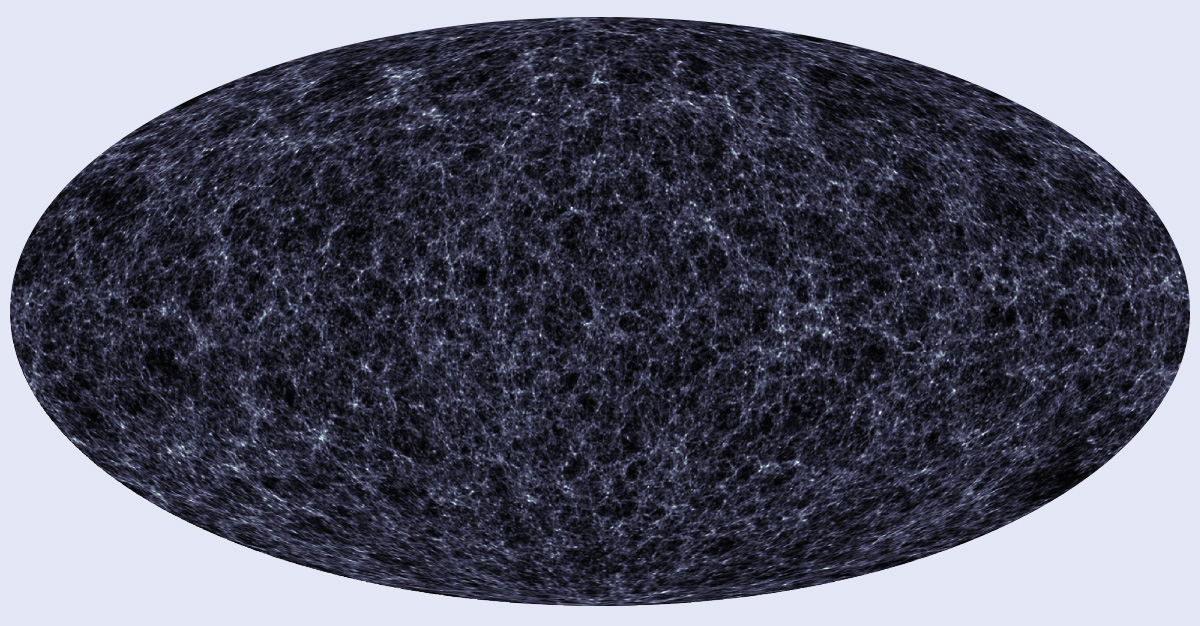
AI approaches have been used by the Dark Energy Survey (DES) collaboration to investigate dark energy, the mysterious phenomenon thought to drive the expansion of the universe.
DES researchers had previously mapped the distribution of matter in the universe by relating distortions in light from galaxies to the gravitational attraction of matter the light passes through before being measured. The distribution depends on visible and dark matter (which draws galaxies closer), and dark energy (which drives galaxies apart).
In a 2024 study researchers used AI techniques to simulate a series of matter distributions – each based on a different value for variables describing dark matter, dark energy and other cosmological parameters that describe the universe. They then compared these simulated findings with the real matter distribution. By determining which simulated distributions were consistent with the data, values for the corresponding dark energy parameters could be extracted. Because the AI techniques allowed more information to be used to make the comparison than would otherwise be possible, the results are more precise. Researchers were able to improve the precision by a factor of two, a feat equivalent to using four times as much data with previous methods.
Physicists have their say
It’s this mix of challenge and opportunity that makes now the right time to examine the relationship between physics and AI, and what each can do for the other. In fact, the Institute of Physics (IOP) has recently published a “pathfinder” study on this very subject, on which I acted as an adviser. Pathfinder studies explore the landscape of a topic, identifying the directions that a subsequent, deeper and more detailed “impact” study should explore.
This current pathfinder study – Physics and AI: a Physics Community Perspective – is based on an IOP member survey that examined attitudes towards AI and its uses, and an expert workshop that discussed future potential for innovation. The resulting report, which came out in April 2025, revealed just how widespread the use of AI is in physics.
About two thirds of the 700 people who replied to the survey said they had used AI to some degree, and every physics area contained a good fraction of respondents who had at least some level of familiarity with it. Most often this experience involved different machine-learning approaches or generative AI, but respondents had also worked with AI ethics and policy, computer vision and natural language processing. This is a testament to the many uses we can find for AI, from very specific pattern recognition and image classification tasks, to understanding its wider implications and regulatory needs.
Proceed with caution
Although it is clear that AI can really accelerate our research, we have to be careful. As many respondents to the survey pointed out, AI is a powerful aid, but simply using it as a black box and imagining it does the right thing is dangerous. AI tools and the challenges we put them to are complex – we need to ensure we understand what they are doing and how well they are doing it to have confidence in their answers.
Cause for caution AI-based facial-recognition technology works less well with Black women than any other demographic group. This can have real-world negative consequences. The cause is training datasets heavily skewed to white men. (Courtesy: Shutterstock/Fractal Pictures)
There are any number of cautionary tales about the consequences of using AI badly and obtaining a distorted outcome. A 2017 master’s thesis by Joy Adowaa Buolamwini from Massachusetts Institute of Technology (MIT) famously analysed three commercially available facial-recognition technologies, and uncovered gender and racial bias by the algorithms due to incomplete training sets. The programmes had been trained on images predominantly consisting of white men, which led to women of colour being misidentified nearly 35% of the time, while white men were correctly classified 99% of the time. Buolamwini’s findings prompted IBM and Microsoft to revise and correct their algorithms.
Even estimating the uncertainty associated with the use of machine learning is fraught with complication. Training data are never perfect. For instance, simulated data may not perfectly describe equipment response in an experiment, or – as with the example above – crucial processes occurring in real data may be missed if the training dataset is incomplete. And the performance of an algorithm is never perfect; there may be uncertainties associated with the way the algorithm was trained and its parameters chosen.
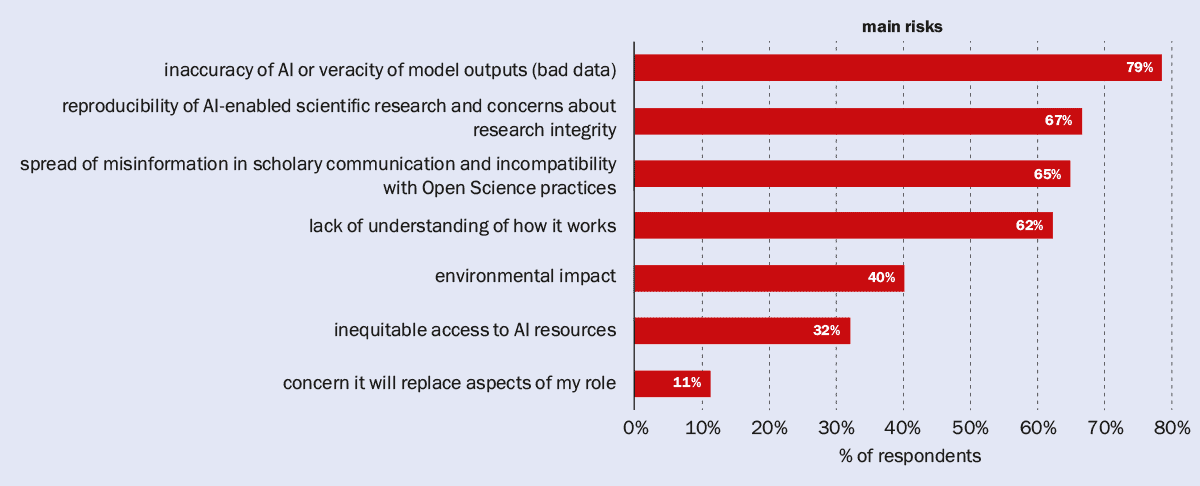
Indeed, 69% of respondents to the pathfinder survey felt that AI poses multiple risks to physics, and one of the main concerns was inaccuracy due to poor or bad training data (figure 1). It’s bad enough getting a physics result wrong and discovering a particle that isn’t really there, or missing a new particle that is. Imagine the risks if poorly understood AI approaches are applied to healthcare decisions when interpreting medical images, or in finance where investments are made on the back of AI-driven model suggestions. Yet despite the potential consequences, the AI approaches in these real-world cases are not always well calibrated and can have ill-defined uncertainties.
The Institute of Physics pathfinder survey asked its members, “Which are your potential greatest concerns regarding AI in physics research and innovation?” Respondents were allowed to select multiple answers, and the prevailing worry was about the inaccuracy of AI.
New approaches are being considered in physics that try to separate out the uncertainties associated with simulated training data from those related to the performance of the algorithm. However, even this is not straightforward. A 2022 paper by Aishik Ghosh and Benjamin Nachman from Lawrence Berkeley National Laboratory in the US (Eur. Phys. J. C82 46) notes that devising a procedure to be insensitive to the uncertainties you think are present in training data is not the same as having a procedure that is insensitive to the actual uncertainties that are really there. If that’s true, not only is measurement uncertainty underestimated but, depending on the differences between training data and reality, false results can be obtained.
The moral is that AI can and does advance physics, but we need to invest the time to use it well so that our results are robust. And if we do that, others can benefit from our work too.
How physics can help AI
Physics is a field where accuracy is crucial, and we are as rigorous as we can be about understanding bias and uncertainty in our results. In fact, the pathfinder report highlights that our methodologies to quantify uncertainty can be used to advance and strengthen AI methods too. This is critical for future innovation and to improve trust in AI use.
Advances are already under way. One development, first introduced in 2017, is physics-informed neural networks. These impose consistency with physical laws in addition to using training data relevant to their particular applications. Imposing physical laws can help compensate for limited training data and prevents unphysical solutions, which in turn improves accuracy. Although relatively new, it’s a rapidly developing field, finding applications in sectors as diverse as computational fluid dynamics, heat transfer, structural mechanics, option pricing and blood pressure estimation.
Another development is in the use of Bayesian neural networks, which incorporate uncertainty estimates into their predictions to make results more robust and meaningful. The approach is being trialled in decision-critical fields such as medical diagnosis and stock market prediction.
But this is not new to physics. The neural network developed at CDF in the 2000s was an early Bayesian neural network, developed to be robust against outliers in data, avoid issues in training caused by statistical fluctuations, and to have a sound probabilistic basis to interpret results. All the features, in fact, that make the approach invaluable for analysing many other systems outside physics.
So physics benefits from AI and can drive advances in it too. This is a unique relationship that needs wider recognition, and this is a good moment to bring it to the fore. The UK government has said it sees AI as “the defining opportunity of our generation”, driving growth and innovation, and that it wants the UK to become a global AI superpower. Action plans and strategies are already being implemented. Physics has a unique perspective to offer help and make this happen. It’s time for us to include it in the conversation.
In the words of the pathfinder report, we need to articulate and showcase what AI can do for physics and what physics can do for AI. Let’s make this the start of putting physics on the AI map for everyone.
AI terms and conditions
Artificial intelligence (AI)
Intelligent behaviour exhibited by machines. But the definition of intelligence is controversial so a more general description of AI that would satisfy most is: the behaviour of a system that adapts its actions in response to its environment and prior experience.
Machine learning
As a group of approaches to endow a machine with artificial intelligence, machine learning is itself a broad category. In essence, it is the process by which a system learns from a training set so that it can deliver autonomously an appropriate response to new data.
Artificial neural networks
A subset of machine learning in which the learning mechanism is modelled on the behaviour of a biological brain. Input signals are modified as they pass through networked layers of neurons before emerging as an output. Experience is encoded by varying the strength of interactions between neurons in the network.
Training data
A set of real or simulated data used to train a machine-learning algorithm to recognize patterns in data indicative of signal or background.
Generative AI
A type of machine-learning algorithm that creates new content, such as images or text, based on the data the algorithm was trained on.
Computer vision
A branch of AI that analyses, interprets and extracts meaningful data from images to identify and classify objects and patterns.
Natural language processing
A branch of AI that analyses, interprets and generates human language.
A new photodetector made up of vertically stacked perovskite-based light absorbers can produce real photographic images, potentially challenging the dominance of silicon-based technologies in this sector. The detector is the first to exploit the concept of active optical filtering, and its developers at ETH Zurich and Empa in Switzerland say it could be used to produce highly sensitive, artefact-free images with much improved colour fidelity compared to conventional sensors.
The human eye uses individual cone cells in the retina to distinguish between red, green and blue (RGB) colours. Imaging devices such as those found in smartphones and digital cameras are designed to mimic this capability. However, because their silicon-based sensors absorb light over the entire visible spectrum, they must split the light into its RGB components. Usually, they do this using colour-filter arrays (CFAs) positioned on top of a monochrome light sensor. Then, once the device has collected the raw data, complex algorithms are used to reconstruct a colour image.
Although this approach is generally effective, it is far from ideal. One drawback is the presence of “de-mosaicing” artefacts from the reconstruction process. Another is large optical losses, as pixels for red light contain filters that block green and blue light, while those for green block red and blue, and so on. This means that each pixel in the image sensor only receives about a third of the incident light spectrum, greatly reducing the efficacy of light capture.
No need for filters
A team led by ETH Zurich materials scientist Maksym Kovalenko has now developed an alternative image sensor based on lead halide perovskites. These crystalline semiconductor materials have the chemical formula APbX3, where A is a formamidinium, methylammonium or caesium cation and X is a halide such as chlorine, bromine or iodine.
Crucially, the composition of these materials determines which wavelengths of light they will absorb. For example, when they contain more iodide ions, they absorb red light, while materials containing more bromide or chloride ions absorb green or blue light, respectively. Stacks of these materials can thus be used to absorb these wavelengths selectively without the need for filters, since each material layer remains transparent to the other colours.
Silicon vs perovskite: Perovskite image sensors can, in theory, capture three times as much light as conventional silicon image sensors of the same surface area while also providing three times higher spatial resolution. This is because their chemical composition determines how much they absorb or transmit different colours. (Courtesy: Sergii Yakunin / ETH Zurich and Empa)
The idea of vertically stacked detectors that filter each other optically has been discussed since at least 2017, including in early work from the ETH-Empa group, says team member Sergey Tsarev. “The benefits of doing this were clear, but the technical complexity discouraged many researchers,” Tsarev says.
To build their sensor, the ETH-Empa researchers had to fabricate around 30 functional thin-film layers on top of each other, without damaging prior layers. “It’s a long and often unrewarding process, especially in today’s fast-paced research environment where quicker results are often prioritized,” Tsarev explains. “This project took us nearly three years to complete, but we chose to pursue it because we believe challenging problems with long-term potential deserve our attention. They can push boundaries and bring meaningful innovation to society.”
The team’s measurements show that the new, stacked sensors reproduce RGB colours more precisely than conventional silicon technologies. The sensors also boast high external quantum efficiencies (defined as the number of photons produced per electron used) of 50%, 47% and 53% for the red, green and blue channels respectively.
Machine vision and hyperspectral imaging
Kovalenko says that in purely technical terms, the most obvious application for this sensor would be in consumer-grade colour cameras. However, he says that this path to commercialization would be very difficult due to competition from highly optimized and cost-effective conventional technologies already on the market. “A more likely and exciting direction,” he tells Physics World, “is in machine vision and in so-called hyperspectral imaging – that is, imaging at wavelengths other than red, green and blue.”
Thin-film technology: One of the two perovskite-based sensor prototypes that the researchers made to demonstrate that the technology can be successfully miniaturized. (Courtesy: Empa / ETH Zurich)
Perovskite sensors are particularly interesting in this context, explains team member Sergi Yakunin, because the wavelength range they absorb over can be precisely controlled by defining a larger number of colour channels that are clearly separated from other. In contrast, silicon’s broad absorption spectrum means that silicon-based hyperspectral imaging devices require numerous filters and complex computer algorithms.
“This is very impractical even with a relatively small number of colours,” Kovalenko says. “Hyperspectral image sensors based on perovskite could be used in medical analysis or in automated monitoring of agriculture and the environment, for example, or in other specialized imaging systems that can isolate and enhance particular wavelengths with high colour fidelity.”
The researchers now aim to devise a strategy for making their sensor compatible with standard CMOS technology. “This might include vertical interconnects and miniaturized detector pixels,” says Tsarev, “and would enable seamless transfer of our multilayer detector concept onto commercial silicon readout chips, bringing the technology closer to real-world applications and large-scale deployment.”
In atom-based quantum technologies, motion is seen as a nuisance. The tiniest atomic jiggle or vibration can scramble the delicate quantum information stored in internal states such as the atom’s electronic or nuclear spin, especially during operations when those states get read out or changed.
Now, however, Manuel Endres and colleagues at the California Institute of Technology (Caltech), US, have found a way to turn this long-standing nuisance into a useful feature. Writing in Science, they describe a technique called erasure correction cooling (ECC) that detects and corrects motional errors without disturbing atoms that are already in their ground state (the ideal state for many quantum applications). This technique not only cools atoms; it does so better than some of the best conventional methods. Further, by controlling motion deliberately, the Caltech team turned it into a carrier of quantum information and even created hyper-entangled states that link the atoms’ motion with their internal spin states.
“Our goal was to turn atomic motion from a source of error into a useful feature,” says the paper’s lead author Adam Shaw, who is now a postdoctoral researcher at Stanford University. “First, we developed new cooling methods to remove unwanted motion, like building an enclosure around a swing to block a chaotic wind. Once the motion is stable, we can start injecting it programmatically, like gently pushing the swing ourselves. This controlled motion can then carry quantum information and perform computational tasks.”
Keeping it cool
Atoms confined in optical traps – the basic building blocks of atom-based quantum platforms – behave like quantum oscillators, occupying different vibrational energy levels depending on their temperature. Atoms in the lowest vibrational level, the motional ground state, are especially desirable because they exhibit minimal thermal motion, enabling long coherence times and high-fidelity control over quantum states.
Over the past few decades, scientists have developed various methods, including Sisyphus cooling and Raman sideband cooling, to persuade atoms into this state. However, these techniques face limitations, especially in shallow traps where motional states are harder to resolve, or in large-scale systems where uniform and precise cooling is required.
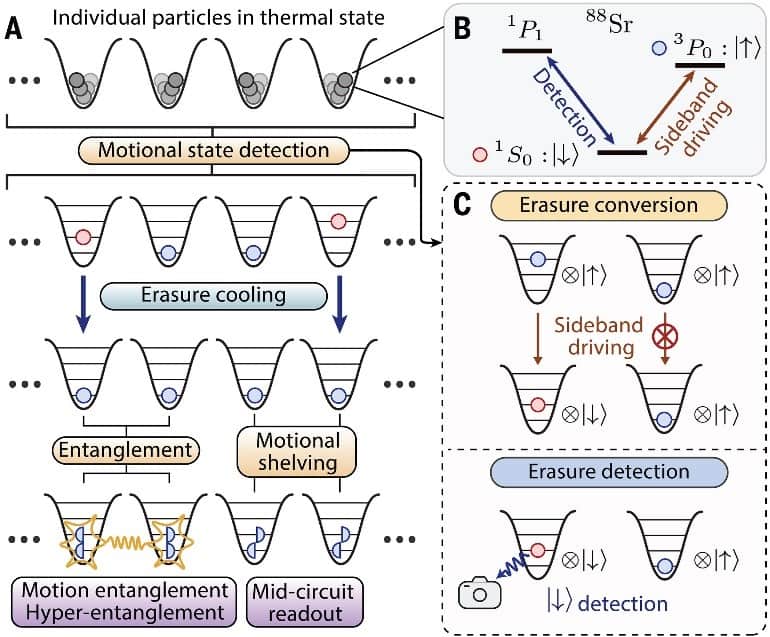
ECC builds on standard cooling methods to overcome these challenges. After an initial round of Sisyphus cooling, the researchers use spin-motion coupling and selective fluorescence imaging to pinpoint atoms still in excited motional states without disturbing the atoms already in the motional ground state. They do this by linking an atom’s motion to its internal electronic spin state, then shining a laser that only causes the “hot” (motionally excited) atoms to change the spin state and light up, while the “cold” ones in the motional ground state remain dark. The “hot” atoms are then either re-cooled or replaced with ones already in the motional ground state.
Cool idea: Schematic of the erasure correction cooling (ECC) approach for controlling atomic motion and using it as a quantum information carrier. a) Motional state detection identifies hot atoms in thermal ensembles. ECC then selectively removes or re-cools these atoms, leaving behind cold atoms in the motional ground state. b) Energy level diagram of strontium-88 showing transitions used for sideband driving and fluorescence detection. c) Erasure conversion protocol using sideband driving and state-dependent detection to identify and correct motional errors. The resulting ground-state atoms are used for quantum operations such as motion-based entanglement, hyperentanglement, and mid-circuit readout. (Courtesy: Image adapted from Shaw et al., Science388 845-849 DOI: 10.1126/science.adn261)
This approach pushed the fraction of atoms in the ground motional state from 77% (after Sisyphus cooling alone) to over 98% and up to 99.5% when only the error-free atoms were selected for further use. Thanks to this high-fidelity preparation, the Caltech physicists further demonstrated their control over motion at the quantum level by creating a motional qubit consisting of atoms in a superposition of the ground and first excited motional states.
Cool operations
Unlike electronic superpositions, these motional qubits are insensitive to laser phase noise, highlighting their robustness for quantum information processing. Further, the researchers used the motional superposition to implement mid-circuit readout, showing that quantum information can be temporarily stored in motion, protected during measurement, and recovered afterwards. This paves the way for advanced quantum error correction, and potentially other applications as well.
“Whenever you find ways to better control a physical system, it opens up new opportunities,” Shaw observes. Motional qubits, he adds, are already being explored as a means of simulating systems in high-energy physics.
A further highlight of this work is the demonstration of hyperentanglement, or entanglement across both internal (electronic) and external (motional) degrees of freedom. While most quantum systems rely on a single type of entanglement, this work shows that motion and internal states in neutral atoms can be coherently linked, paving the way for more versatile quantum architectures.