Single-atom magnets show stability needed for data storage

Individual holmium atoms adsorbed on magnesium oxide films can form highly stable magnets, according to a study done by Fabian Natterer at Switzerland’s Federal Institute of Technology in Lausanne (EPFL) and colleagues. The team showed that the single-atom magnets can endure relatively high temperatures and strong external magnetic fields. The work could lead to the development of extremely high-density data storage devices.

Increasingly, data centres are coming under strain as we produce more and more information. One potential solution could lie in single-atom magnets, on which bits of data could be stored as long-lived magnetic quantum states. Previous studies have shown that these states can be easily manipulated, allowing data to be easily written and read out from the atoms. Furthermore, densely packing many atoms onto a surface would allow for vast amounts of data to be stored.

“Single-atom magnets offer an interesting perspective because quantum mechanics may offer shortcuts across their stability barriers that we could exploit in the future,” says Natterer. “This would be the last piece of the puzzle to atomic data recording.”

Significant challenges

Single-atom magnets are still in the early stages of development, and the technology faces significant challenges relating to the thermal stability of the atoms’ magnetic quantum states. The coercivity of the magnets –  their ability to resist demagnetization in external magnetic fields – is also low, which is not appropriate for data storage.

In their study, Natterer’s team used a scanning tunneling microscope to observe individual holmium atoms adsorbed to a film of magnesium oxide. This system that had previously been identified as collection of highly stable, single-atom magnets.

To test the atoms’ ability to withstand demagnetization, the team first subjected them to external magnetic fields up to 8 T – which is about 100,000 times the strength of Earth’s magnetic field. Remarkably, the atoms retained their magnetization for many minutes – the highest coercivity yet observed in individual atoms.

Hot and cold

Next, the atoms were exposed to temperatures of over 45 K. Their magnetic states remained stable up to 35::K and began to align with an external field at above 45 K. Although this is about 260 degrees below room temperature, it is very hot for single-atom magnets and reveals an ability to resist thermal perturbations.

While the holmium atoms adsorbed on magnesium oxide are remarkably stable for a system of single magnets, Natterer and colleagues acknowledge that further studies are needed before the system can be implemented in commercial data storage. “We have demonstrated that the smallest bits can indeed be extremely stable,” Natterer continues.  “Next, we need to learn how to write information to those bits more effectively to overcome the magnetic ‘trilemma’ of magnetic recording: stability, writability, and signal-to-noise ratio.”

The team also included scientists at Korea’s Institute for Basic Science and Ewha Womans University. The research is described in Physical Review Letters.

The physicists in the comedy club

Before starting the review, I should come clean – I like facts. It began when I was a child, sitting in the back of a car during long journeys to North Wales, and matured in a shared PhD office in the skies above South Kensington. At one stage my friend and I invented a game called “fact or schmact”, where, during particularly long afternoons of data analysis, we’d come up with fake facts and try to convince each other they were real.

The Element in the Room: Science-y Stuff Staring You in the Face, by Helen Arney and Steve Mould, is a turbo-charged trivia tome, aimed at scientifically minded readers with a sense of humour. It is not just a regular book, either – from recipes for cocktails to instructions on fire vortexes, it encourages you not to take what you are reading for granted, but to have a try yourself. Arney and Mould are two of the three stars of Festival of the Spoken Nerd (FOTSN) – a science-comedy performing trio. Both are physicists who are more familiar with comedy clubs than lecture theatres – they are now professional science communicators. Matt Parker, the “third nerd”, contributes in the preface and blurb – but only to promote his own book. FOTSN has taken live science shows to tens of thousands of people across the UK, gained hundreds of thousands of followers on YouTube and contributed to television and print media. I’ve never actually seen a show, but the writing is so enchanting that after a few chapters, I was searching for when they are next in town.

For those who may shun popular-science and think of themselves as “above” social media – this isn’t all fun, games and festivals. In 2013 Mould asked on YouTube why chains of beads leap out of jars in arcs before falling to the floor, and the video went viral (at the time of writing it has been viewed almost two million times). The video was picked up by two professors at Cambridge, who went on to help Mould explain the “self-siphoning beads effect”, and published their discovery in the Proceedings of the Royal Society A (it also made its way into Nature, Science and  the Daily Mail). The journey from observation to result is detailed in a section that makes the case for the mantra of the majority of science communication and suggests that anyone curious can and should contribute to our understanding of the world. You don’t need a fancy research lab or PhD, you just need to question the world around you.

While I may be reading too much into it, The Element in the Room feels like science communication by stealth. The facts may be loosely collected into chapters such as “Food stuff” and “Body stuff”, but physics is at the heart of most of the “stuff” they cover. Arney and Mould are excellent storytellers, whose accidental discoveries and anecdotes read like science experiments. They show that physics is at the heart of the majority of everyday phenomena. In “Brain stuff”, Arney perfectly describes impostor syndrome with an internal dialogue between three Helens. Arney debunks popular neuroscience myths (left brain/right brain, men’s and women’s hobbies) – perhaps thanks to her physics training – but is so non-judgemental you find yourself laughing with her rather than being angry at how ridiculous society’s biases are to begin with. She’s an incredibly empathetic writer (or a mind-reader) – in the only section I began to find a bit trying, a list of how chemical elements got their names, Arney interjects with “I hope you’re memorizing this, there will be a test at the end.”

Arney and Mould recognize that in an age of social media and globalization their readers won’t all be in the UK, and seem to enjoy translating observations for a trans-Atlantic audience. When describing the science behind instant coffee they take the time to explain what instant coffee is, then use American tea as a proxy for just how awful instant coffee can taste. The Element in the Room is timely, too. A do-it-yourself experiment includes creating smoke-rings from a friend who is vaping. They are aware we live in a time of “alternative facts” and they include a “Trip Advisor for exoplanets”. Despite coming out pre-Cambridge Analytica scandal, there is even a section on the pseudo-science behind personality tests.

This book has been beautifully put together – the illustrations by Richard Wilkinson are technical without being textbook-like and the layout feels like it has been created by people who not only care about what they have to say but how they communicate it. Perhaps not unsurprisingly given their extensive experience, the writing is accessible and light without being patronizing or preachy. Even without seeing the live show, the chemistry between Mould and Arney is perfect – sections are written by either one or the other and you can only tell which if you hunt for Wilkinson’s small symbols in the margin. Of course, as an almanac for nerds, the book comes with instructions. While there is no doubt that this book would make an excellent gift for enthusiastic teenagers or early-career researchers, The Element in the Room isn’t only millennial material, so don’t let them have all the fun.

  • 2017 Octopus Publishing Group £16.99hb 224pp

Balancing ecosystem services brings trade-offs

Using the Amazon as a case study, researchers have explored the tradeoffs between four ecosystem services – agricultural production, carbon storage, biophysical climate regulation, and biodiversity. Their results highlight the difficulty of managing landscapes for multiple environmental goals, but could also help guide complex decisions and balance priorities.

“Protecting eastern Amazonia is most important if the conservation priority is regulating regional climate, but protecting western Amazonia is most important if the priority is maintaining biodiversity,” writes the team in Environmental Research Letters (ERL). “There are limited opportunities to simultaneously protect both regional climate and biodiversity in the same location.”

Because the top-performing areas for the delivery of each non-agricultural service don’t align geographically, policy-makers are unlikely to succeed with a “one-size-fits-all” approach. Instead, a portfolio of solutions that strategically targets different regions to achieve different environmental outcomes may be more effective, according to the group’s analysis.

The land use simulations showed that slight shifts in preference precipitate significant differences in the Earth system impacts of agricultural expansion. To generate the results, the scientists experimentally doubled Amazonia’s agricultural footprint while varying the priority given to carbon storage, habitat provision, and regional climate regulation.

“Small increases in priority for one ecosystem service can lead to reductions in other services by as much as 140%,” says the team.

Overall, prioritizing carbon stocks appears to provide more opportunity for simultaneously protecting two or more ecosystem services. Locations that store vegetative and soil carbon intersect with areas of high relative biodiversity in the west and portions of high-performing climate regulation zones in the northeast. But the considerations don’t stop there.

“Conservation strategies and priorities are not determined by a single actor, and instead competing interests — including those of farmers, ranchers, corporations, environmentalists, indigenous peoples, and regional and national government agencies — all influence the pattern and rate of agricultural expansion and have different priorities that operate at different scales,” note the researchers in their paper.

Creavo launches largest ever US magnetocardiography study

UK medtech company Creavo Medical Technologies has launched a trial of its mobile magnetocardiography (MCG) device at five US research facilities: Mayo Clinic, Baylor University, Vanderbilt University, University of Cincinnati and Wake Forest University. The trial will enrol approximately 720 patients, making it the largest MCG trial to take place in the United States, and is scheduled to be completed by mid-2019.

Creavo’s cardiac diagnostic device is designed to help physicians rule out active ischemia in patients presenting to the emergency department (ED) with chest pain. It can be used at a patient’s bedside to measure and report electromagnetic fluctuations caused by heart activity.

Each year, eight to 10 million patients complaining of chest pain present to an ED in the USA. “The ability to quickly risk stratify and safely discharge ED patients presenting with symptoms consistent with chest pain of cardiac origin is critically important to the overall flow of patients through crowded EDs,” explains Gregory J Fermann from the University of Cincinnati. “This device has the potential to become an essential tool in the rapid evaluation of these patients.”

“On behalf of the entire MAGNET ACS-US investigative team, I am excited to report that we are open to recruitment of ED patients,” adds Fermann, who serves as the US Chief Investigator for the MAGNET ACS-US trial.

“Our device has the potential to tackle a global unmet need,” says Creavo’s CEO Steve Parker. “Non-ischemic chest pain patients place a huge strain on EDs, as the current rule-out triage process of electrocardiograms and blood biomarker tests can take a number of hours. Our device is designed to rapidly aid physicians with the decision to rule out acute coronary syndrome by performing a non-invasive five-minute scan, freeing up resources and bed space.”

Following extensive research into the use of MCG in UK emergency departments, Parker says that the company is pleased to be taking this research further afield into the US.

“MCG technology has been used in medical research since the 1960s, but historically it has been restricted to larger immobile SQUID devices which aren’t practical for emergency medical settings,” explains Ben Varcoe, chief scientific officer at Creavo. “Our device can be deployed directly at the patient’s bedside and uses MCG to detect abnormal patterns in the magnetic fields of the heart.”

Creavo’s MCG device received CE mark registration in Europe in November 2016 and secured 510(k) clearance as a device that measures and displays magnetic signals generated by the heart from the US FDA in October 2017.

Cardiac hybrid imaging predicts adverse cardiac events

© AuntMinnieEurope.com

A cardiac hybrid imaging technique that fuses SPECT myocardial perfusion imaging (MPI) with coronary CT angiography (CCTA) scans can help predict major adverse cardiac events in patients suspected of having coronary artery disease, according to a study published in Radiology.

In a retrospective study, researchers from Switzerland used software-based cardiac hybrid image fusion to analyse patients who underwent CCTA and SPECT MPI exams. They discovered that patients with abnormal findings on cardiac hybrid imaging had a significantly greater risk of experiencing a major adverse cardiac event, including death (Radiology 10.1148/radiol.2018171303).

The comprehensive assessment of coronary artery disease offered by cardiac hybrid imaging may optimize treatment decision-making and minimize unnecessary invasive intervention, senior author Philipp Kaufmann, chair of nuclear medicine and director of cardiac imaging at University Hospital Zurich, told AuntMinnie.com.

“For risk stratification, a hybrid image confers more information than any other modality, particularly in those with a pathologic finding,” he said. “The most important implication for evaluation of known or suspected stable coronary artery disease is that [cardiac hybrid imaging] allows patients to be evaluated non-invasively.”

Two modalities are better than one

Although recent research has confirmed the high diagnostic yield of CCTA for obstructive coronary artery disease, its use as a first-line test is long in coming. A drawback of CCTA is its limited ability to provide insight into haemodynamically relevant stenoses, which may play a part in its considerably lower usage rate compared with MPI. On the other hand, nuclear stress testing via SPECT MPI or PET MPI is specifically geared toward identifying ischemia, but it often overestimates the need for invasive procedures.

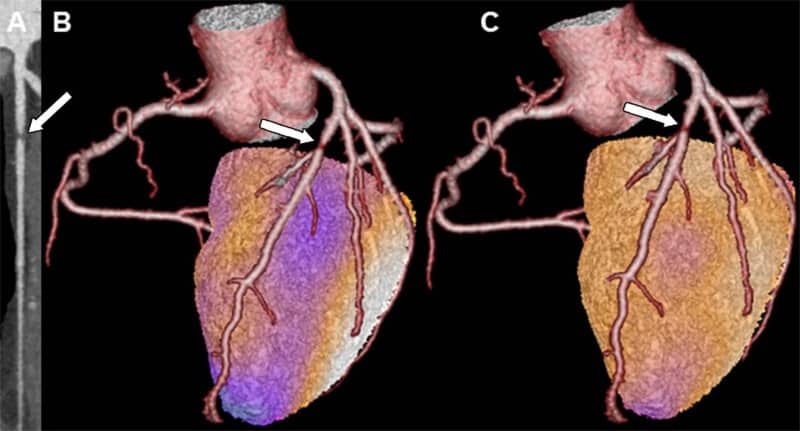
One method that may compensate for the shortcomings of each individual imaging modality is cardiac hybrid imaging, which fuses images from CCTA and MPI and provides the anatomic and functional information of both at once, Kaufmann noted. Several studies have demonstrated the technique’s increased diagnostic value over examining images from each modality alone or side by side.

Hybrid imaging

“Particularly in patients with multiple lesions or complex coronary anatomy, it is, in many cases, very difficult to correctly identify the culprit lesion,” he said. “Only a comprehensive assessment of both pieces of information with hybrid imaging allows [physicians] to correctly assign a coronary artery with a lesion to the ischemic territory.”

Exploring the prognostic potential of cardiac hybrid imaging, Kaufmann and colleagues evaluated patients who underwent both CCTA and SPECT MPI at their institution between May 2005 and December 2008. To fuse the MPI and CCTA datasets, they used cardiac imaging fusion software running on a postprocessing workstation (CardIQ Fusion; Advantage Workstation 4.3, GE Healthcare).

They separated the resulting hybrid imaging data into three distinct categories:

  • Cases with both 50% or greater stenosis on CCTA and evidence of ischemia on MPI suggesting coronary artery disease
  • Cases with either stenosis on CCTA or ischemia on MPI
  • Cases with normal findings on CCTA and MPI

The researchers compared the effectiveness of each scenario for predicting major adverse cardiac events, including death, heart attack, unstable chest pain and coronary revascularization. In all, there were 160 cardiac events recorded in the study population within the 10-year follow-up period.

Long-term prognostic value

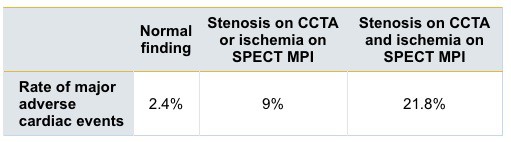
Among 375 patients, cardiac hybrid imaging showed that 46 had both 50% or greater stenosis and ischemia, 113 had only one or the other finding, and 216 had entirely normal findings.

The group found that a matched finding, i.e., indicating both stenosis and ischemia, was associated with more than five times the risk of a major adverse cardiac event compared with normal findings. The presence of only one of the abnormal findings was associated with over three times the risk of a cardiac event compared with normal findings.

Predicting adverse events

The results consistently demonstrated that patients whose cardiac hybrid imaging data identified both stenosis and ischemia had a considerably worse outcome than patients with either one of the signs alone or neither of the abnormal signs. Patients with altogether normal imaging test results had a very favourable long-term prognosis.

These findings confirm the excellent risk stratification ability of cardiac hybrid imaging in patients who are suspected of having coronary artery disease, Kaufmann said. They also support the use of CCTA as an initial, non-invasive evaluation of such patients, followed by MPI only for patients with abnormal CCTA results.

“We should start with a coronary CT angiography exam and, if normal, we can stop testing there,” he said. “But if there is a lesion, we should assess ischemia with a nuclear scan (SPECT or PET MPI), and if there is an ischemia, we should take full advantage of both modalities by fusing the results together to make a hybrid image.”

Radiologists may be key

Ultimately, the extensive assessment of coronary artery disease provided by cardiac hybrid imaging optimizes treatment decision-making and minimizes unnecessary invasive angiographies, according to the authors. What’s more, using this technique could potentially improve the low yield of diagnostic invasive coronary angiography and facilitate evidence-based coronary interventions.

A conspicuous limitation of cardiac hybrid imaging is that it requires an increase in effective radiation dose (roughly 10 mSv in all) because it involves two contrast-enhanced imaging exams rather than just one, the authors noted. However, clinicians may be able to lower this elevated radiation dose by applying reconstruction algorithms.

Another major barrier seems to be the limited knowledge of guidelines and proper implementation of methods for evaluating patients with stable coronary artery disease, Kaufmann said.

“Unfortunately, structures of hospitals do not always facilitate hybrid imaging, because CT is ‘owned’ by one department and SPECT or PET by another, which may be an obstacle for the combination of datasets from different modalities,” he said. “Radiologists may be key in helping clinicians to refer to the best non-invasive test by knowing the technical and clinical guidelines in general (and not only our own for radiology), and by being involved in the multidisciplinary boards.”

In the near future, the researchers hope to conduct a trial demonstrating the positive impact hybrid imaging can have on patient outcomes. They also plan on developing a “triple hybrid” imaging technique that combines CCTA and SPECT MPI scans with information concerning coronary artery shear stress. They believe that adding information about shear stress to hybrid imaging could help identify lesions that do not yet affect ischemia but may in the future.

  • This article was originally published on AuntMinnieEurope.com © 2018 by AuntMinnieEurope.com. Any copying, republication or redistribution of AuntMinnieEurope.com content is expressly prohibited without the prior written consent of AuntMinnieEurope.com.

‘Heartbeat’ detected in drop of gallium held in a graphite corral

A drop of liquid gallium will oscillate like a beating heart when placed inside a ring-shaped electrode. The frequency of motion can be adjusted from 2-10 Hz by changing the voltage that is applied to the system. The effect was discovered by physicists in Australia and China, who say that it could be used to create new types of fluid-based timers and actuators.

It is well known that a drop of mercury will repeatedly flatten and then become spherical when exposed to iron –  a process driven by chemical changes to the drop’s surface tension. This heartbeat effect, however, is difficult to control and is not practical for use in fluidic devices.

Now, Xiaolin Wang and colleagues at the University of Wollongong and the Chinese Academy of Sciences have shown that a similar effect can occur in gallium, which is a liquid at temperatures above about 30° C. The team studied drops that were 50-150 µL in volume and placed in a sodium hydroxide electrolyte at 34° C.

Graphite corral

In their experiment, a drop is corralled within a graphite ring of inner diameter 11 mm in a petri dish containing the electrolyte. To create the oscillations, a positive electric potential is applied to the ring and the dish is tilted slightly so that the denser gallium falls to the lower edge of the ring. When the drop touches the positive ring, the surface of the gallium becomes oxidized and this causes the surface tension of the drop to fall to nearly zero.

The low surface tension allows the gallium to pancake on the surface of the petri dish in a process called electrowetting. This shifts the centre of mass of the gallium drop away from the edge of the ring and towards the centre of the dish. This shift causes the gallium to break contact with the ring and when this happens electrostatic repulsion pushes the drop towards the centre of the dish. Once away from the ring, hydroxyl ions etch the oxide from the surface of the drop and the surface tension increases. The result is a spherical drop that once again moves under gravity to the lower edge of the ring – where the process repeats itself.

The team found that the frequency of the oscillation can be fine-tuned by adjusting the voltage on the ring. They also found that smaller drops oscillated more rapidly than larger drops and that the frequencies of smaller drops are more sensitive to voltage changes. Increasing the angle of inclination of the petri dish also boosted the frequency. Oscillations were also observed using a hydrochloric acid electrolyte, but at frequencies below 2 Hz.

Writing in Physical Review Letters, the team says that the effect could be put to work in a range of applications including reconfigurable electronics, actuators, artificial muscles, soft robotics and lab-on-a-chip microfluidic devices.


Newcastle’s new generation

Physics has played an integral part at Newcastle University ever since the institution was founded in 1963 via an act of parliament. The university itself can trace its roots back to the early 1870s, when the demands of the north-east industrial sector led to the creation of the College of Physical Sciences. It was merged with the School of Medicine and Surgery in 1937 to become Kings College of Durham University, which then evolved into Newcastle University.

The present institution and its forerunners have been especially renowned for their research into geophysics. In 1926, for example, Sir Harold Jeffreys discovered that the Earth’s planetary core was liquid, while in the 1960s Keith Runcorn used the most precise magnetometers at that time to make pioneering measurements of magnetism in rock to confirm the existence of continental drift and plate tectonics.

Physics in decline

In 2004, however, Newcastle University hit the headlines for all the wrong reasons. Back then, the numbers of students taking physics had been falling for a decade, with a third of UK physics departments having closed. On top of this came the 2001 Research Assessment Exercise, which judged research in UK university departments on a scale from 1 to 5*. Physics at Newcastle had scored four, an average rather than a terrible mark, but when the government chose to direct most of the funding into the powerhouses ranked 5* and 5, it proved the final blow. Various rescue options were floated such as a massive investment in physics or moving Newcastle physicists down the road to Durham. However, when those options fell through, the decision was made to close the physics department.

Newcastle was not alone. University departments in physics or related physical-science subjects closed or merged with other departments at Dundee, Exeter, Keele, Kings College London, Queen Mary, Reading, Sussex and Swansea. In Scotland, physics departments joined forces to form the Scottish Universities Physics Alliance to tackle such pressures. The shock waves sent through the sector then led to calls to protect core science disciplines, and the government soon placed physics on a list of subjects of “national strategic importance”. But for Newcastle and these other institutions, the initiative came too late.

Thankfully, the start of the next decade saw a surge in popular interest in physics due in part to prominent media coverage, and physics appeared to be emerging from the doldrums and getting back on track. It had re-entered the top 10 most popular subjects for 16- to 18-year-olds in the UK and undergraduate numbers started to climb back up. The increase in tuition fees of up to £9250 per year also helped by leading students to choose courses that were more likely to get them a good job. The motivation to restart physics at Newcastle was clear and met with great excitement from physicists around the university.

The department was thus reopened in 2015 by theoretical physicist and best-selling author Paul Davies, who himself had worked at the university from 1980 before moving to Australia in 1990. The first cohort comprised 39 students, exceeding all expectations, and over the past three years the intake has grown to 55 per year.

Of the 39 students in that first physics cohort, 17 will leave this month with a bachelor’s degree while the remaining students will continue on a four-year MPhys course. For the graduating students, this momentous occasion marks the culmination of their three-year journey of intellectual discovery and personal achievement, and the start of a variety of new adventures.

For example, Victoria Atkinson, who started her physics studies at Newcastle following a degree in French, has secured a place at the Diamond Science and Technology Centre for Doctoral Training at Warwick University. After completing her Master’s there, she will return to Newcastle to start a PhD. Meanwhile, Josh Larue (pictured), won a government scholarship from his home country of the Seychelles to study physics at Newcastle. After a period back home, he hopes to return to Newcastle one day for further study.

Starting a physics programme and department is no easy task. The previous infrastructure had long since been mothballed and many of the personnel had moved on. The exile from student and research league tables, which continues to date, posed challenges for recruitment and funding. Undaunted by these issues, the university pushed ahead with a sizeable initial investment of four academic positions and £2m for teaching laboratories and study space.

While the physics PhD programme had continued even when the department itself had shut, it had only a handful of students. The aim is to grow this cohort to around 60 graduate students over the coming decade.  It is also expected that the number of staff teaching physics, which is currently around 20, will more than double.

Starting from scratch

The restart also created a unique opportunity to design a modern, progressive and robust department. A culture of diversity and widening participation has been embedded from the start, with outreach and recruitment targeting underrepresented groups of students and the academic staff who act as their role models. A designer portfolio of research areas is being created, balancing fundamental and traditional subjects such as astronomy and cosmology, with emerging areas such as photonics and biophysics. This not only provides students with a disciplinary core but also the potential to tackle current and future challenges.

Learning lessons from the past, the investment in academic staff and research infrastructure will continue over the next decade to ensure the critical mass to weather any future storms that may arise.

Super-resolution imaging provides insight into Alzheimer’s disease

Alzheimer’s disease begins to develop 10 to 20 years before memory problems manifest, but currently, we are not able to clearly see why the disease starts. The earliest detectable evidence of pathological change leading to Alzheimer’s disease is the accumulation of waxy deposits called amyloid plaques in the brain.

Researchers at Purdue University have developed a super-resolution nanoscope that provides a 3D view of brain molecules with 10 times greater detail than conventional microscopes. Indiana University researchers have now used this new instrument to investigate the structure of amyloid plaques (Nature Methods 10.1038/s41592-018-0053-8).

“While strictly a research tool for the foreseeable future, this technology has allowed us to see how the plaques are assembled and remodelled during the disease process,” says Gary Landreth from the Stark Neurosciences Research Institute. “It gives insight into the biological causes of the disease, so that we can see if we can stop the formation of these damaging structures in the brain.”

Brain tissue is challenging to image because it is packed with extracellular and intracellular constituents that distort and scatter light. The super-resolution nanoscope, developed by Fang Huang‘s research team at Purdue, uses adaptive optics – deformable mirrors that change shape – to compensate for aberration that occurs when light signals from single molecules travel through cells or tissue structures at different speeds.

To image brain tissue, the researchers developed techniques that adjust the mirrors in response to sample depths to compensate for aberration introduced by the tissue. At the same time, they intentionally introduce extra aberration to maintain the position information carried by a single molecule.

The researchers used the nanoscope to image mice genetically engineered to develop Alzheimer’s plaques. The system reconstructs the all the tissue’s cells and cell constituents at a resolution six to 10 times higher than conventional microscopes, allowing a clear view through 30 µm thick brain sections of a mouse’s frontal cortex. The reconstructed images revealed that amyloid plaques are like hairballs, entangling surrounding tissue via small fibres that branch off waxy deposits.

“We can see now that this is where the damage to the brain occurs. The mouse gives us validation that we can apply this imaging technique to human tissue,” Landreth explains.

The collaboration is now using the nanoscope to observe amyloid plaques in human brain samples, and to study how the plaques interact with other cells and get remodelled over time.

“This development is particularly important for us as it had been quite challenging to achieve high-resolution in tissues,” says Huang. “We hope this technique will help further our understanding of other disease-related questions, such as those for Parkinson’s disease, multiple sclerosis and other neurological diseases.”

Researchers discuss how super-resolution imaging could reveal why Alzheimer’s disease starts. (Courtesy: Purdue University/Erin Easterling)

Forward energy thinking on renewables and nuclear

There have been blasts of sense on UK energy policy from the National Infrastructure Commission (NIC), the government’s advisory body, and also from its advisory Committee on Climate Change (CCC), in relation to the relative prospects for nuclear and renewables.

In its new National Infrastructure Assessment, the NIC said the government “should not agree support for more than one nuclear power station beyond Hinkley Point C before 2025”, since their cost seemed unlikely to fall, while renewables were getting cheaper and could prove a safer investment. The CCC, in an annual progress report, although more circumspect on nuclear, said, while Hinkley was going ahead, “limited progress has been made with other new nuclear projects”, and concluded that “if new nuclear projects were not to come forward, it is likely that renewables would be able to be deployed on shorter timescales and at lower cost”.

There does seem to have been a shift in view. Whereas a decade ago few thought that renewables could be affordable and play a major role in electricity generation, the NIC said that the sector had undergone a “quiet revolution” as costs have fallen. It suggests that by 2030 a minimum of 50% of power should come from renewables, up from about 30% now, and calculates that the average costs for a 2030-50 scenario with 90% renewables and less than 10% nuclear would be slightly less than for a scenario with 40% renewables and around 40% nuclear. It adds “the higher cost of managing the variable nature of many renewables (‘balancing’) is offset by the lower capital cost, which translates into lower costs in the wholesale market”.

 The NIC looks to wind and solar PV playing leading roles, both being “allowed to compete to deliver the overwhelming majority of the extra renewable electricity needed as overall demand increases, with measures to move them to the front of the queue for Government support”. The CCC, however, complains that, given the block on access to the Contract for Difference (CfD) support system, at present “there is no route to market for cheap onshore wind”. It’s the same for large-scale PV solar. The fact that these options are now cheaper seems to have been used as an excuse to remove access to the CfD market, without which, even if they get zero subsidies, they are finding it hard to expand.

The NIC wants a revamp of the CfD system, with “technologies that have recently become cost competitive, such as offshore wind”, moved to the “Pot 1” category of “developed” options, from the Pot 2 category of “still developing” options, following the next CfD auction, which is set for the spring of 2019. It says “Pot 1 should be used for the overwhelming majority of the increase in renewable capacity required”. It seems to suggest that onshore wind should be re-included: it is in Pot 1, but is being treated as an outsider. The NIC doesn’t look much at Pot 2 options, which include wave and tidal power, except to say that some support should be offered especially where they are likely to be able to contribute to the reduction of system costs in future”. However, it suggests that tidal lagoons are unlikely to be cost-effective or a significant option (see my next post), but nevertheless says tidal power “should be allowed to compete on an equal basis with other technologies for Contracts for Difference”.

One of the NIC’s main concerns, however, seems to be to slow down nuclear aspirations. Sir John Armitt, NIC’s chair, said: “We’re suggesting it’s not necessary to rush ahead with nuclear. Because during the next 10 years we should get a lot more certainty about just how far we can rely on renewables. One thing we’ve all learnt is these big nuclear programmes can be pretty challenging, quite risky – they will be to some degree on the government’s balance sheet. I don’t think anybody’s pretending you can take forward a new nuclear power station without some form of government underwriting or support. Whereas the amount required to subsidize renewables is continually coming down. We’ve seen how long it took to negotiate Hinkley – does the government really want to have to keep going through those sort of negotiations?” By contrast, he says, renewables offered us a “golden opportunity” to make the UK greener and make energy affordable.

That applied to heat as well as electricity. The NIC says the government needs to make progress towards zero carbon heat by establishing the safety case for using hydrogen as a replacement for natural gas, followed by trialling hydrogen at community scale by 2021 and then, if all is well, a trial to supply hydrogen to at least 10,000 homes by 2023, including hydrogen production with carbon capture and storage (CCS). In parallel the NIC says, by 2021, the government should establish an up-to-date evidence base on heat pumps performance within the UK building stock and the scope for future reductions in the cost of installation.

So the UK government is backing both main horses in the green heat race – green gas, in the form of hydrogen, and electrification, via heat pumps. Though oddly there was no mention of the third possible option, local green heat networks, something the government is beginning to take seriously, at long last starting up its £320m heat net support programme. That, admittedly, is small, but the Department for Business, Energy and Industrial Strategy (BEIS) has claimed that heat nets could expand from only supplying 1% of building heat demand now, to meet 17% of heat demand in homes and up to 24% of heat demand in industrial and public-sector buildings by 2050. So it’s an odd infrastructure omission by NIC. Maybe since it is only relevant to urban/industrial areas, whereas gas and electricity reach all consumers.

The NIC also wants the government to move more on what is done with this energy once it’s delivered – cutting energy waste. It wants the rate of installations of energy efficiency measures in the building stock to rise to 21,000 measures a week by 2020, “maintained at this level until a decision on future heat infrastructure is taken”. It says that policies to deliver this should include allocating £3.8 billion between now and 2030 to deliver energy efficiency improvements in social housing.

That’s a quite ambitious series of proposals. But, as the CCC makes clear, the UK does need to get moving on the heat side, as well as on power and transport, if it is to meet its climate targets. The NIC says “highly renewable, clean, and low-cost energy and waste systems increasingly appear to be achievable”. It notes that its modelling “has shown that a highly renewable generation mix is a low-cost option for the energy system. The cost would be comparable to building further nuclear power plants after Hinkley Point C, and cheaper than implementing CCS with the existing system. The electricity system should be running off 50% renewable generation by 2030, as part of a transition to a highly renewable generation mix”.

That’s a pretty good package, at least for starters. Though Richard Black, from the Energy and Climate Intelligence Unit, claimed that, if the nuclear programme is slowed as NIC suggests, even with a 50% renewable contribution by 2030, the UK will miss its non-fossil energy target. So it would need more than 50% renewables. That depends on what happens to power demand. If the “decarbonisation by electrification” programme is slowed (not so many heat pumps), then power demand would no doubt continue to fall, as it has been over recent years. So there would be less need for new nuclear or extra renewables. But there would then be a need for green gas or green heat networks, or both. Biogas from farm and home waste anaerobic digestion is one obvious source in either case, but may be limited, so a bit of solar heat and geothermal heat fed into heat networks would also be useful. As well as biomass used in combined heat and power (CHP) plants.

Interestingly, a new study for the CCC from Imperial College looks at hydrogen gas grids and also domestic electric heat pumps and says that a hybrid mix may be the least cost option, with the “hydrogen alone” route being the most costly. Oddly, as with the NIC study, and also the new set of fascinating scenarios from National Grid in its Future Energy Scenarios series, there’s not much on heat grids or CHP. And one version of the hydrogen route they all look at relies on CCS to limit emissions, since the feedstock source is fossil fuel. They also look at the alternative carbon-free route, “power to gas” conversion of surplus renewable electricity to hydrogen, via electrolysis. It’s more expensive than the fossil route, but it avoids costly and as yet unproven CCS. With 50% of variable renewables on the grid (or 75% in one of National Grid’s scenarios) there would certainly often be plenty of surplus output.  Though some of that would perhaps be better used for (later) power generation to balance lulls in renewables. But there may be enough for both uses – heat and power. Lots of possible paths ahead then, and maybe a bit of a squeeze – though that could perhaps be avoided if the blocks on PV solar and onshore wind were removed.

This post replaces one promised on oil company views. That will follow, but after another intervening post – on the tidal lagoon decision.


Integrated electronics at 50 – projecting the future of the field

The development of the integrated circuit in the 1950s raised the bar of what electronics could achieve, setting the path towards the ubiquitous electronic devices of today. For several decades the number of transistors per chip has doubled every two years, as devices become simultaneously smaller, cheaper and more functional. This persistent increase in chip density was first recognised by Gordon Moore and has since been termed “Moore’s Law”.

A key milestone in establishing integrated electronics as an integral part of day to day living was the founding of Intel by Moore and cofounder Robert Noyce on 18th July 1968. Fifty years on, as Moore’s Law seems to be reaching its limits, we speak to researchers in academia and industry about some of the developments on the horizon that they are most excited about.

Interviewees include specialists in bioelectronics, flexible electronics, energy harvesters and sensors, as well as the Managing Director of the Organic and Printed Electronics Association, a global network for flexible electronics.

Copyright © 2026 by IOP Publishing Ltd and individual contributors