CNT membranes go industrial

The first-ever studies of industrially produced membranes made from small-diameter carbon nanotubes have revealed that these materials are as good in terms of characteristics and performance as small-scale laboratory prototypes. The experiments also bring to light some important phenomena that could be put to good use in applications such as water desalination, air purification and separating industrial gases, to name but three.

“Our work is the first to test carbon nanotube (CNT) membranes made on the large scale by a start-up company, which is quite different to previous studies that looked at CNT membranes made in small batches exclusively for laboratory work,” explains team leader Benny Freeman of the University of Texas at Austin. “Having access to such materials in such large quantities, and at so low a cost, is an exciting development.”

Freeman and colleagues at the University of Connecticut and Mattershift, a New York City-based start-up, decided to study how gas and water transports through these membranes to find out if their characteristics and performance in this respect matched those of previously studied lab-scale prototypes. “We indeed found that they did, but we were also able to observe some important phenomena that had only been predicted for small-sized CNTs before now, but were not very often observed in experiments.”

Surface diffusion along the CNT inner wall

The inner diameters of the tubes, which are so-called arc discharge CNTs, were between just 0.67 and 1.27 nm. At such a small scale, researchers predict that there should be certain transport mechanisms at play, including surface diffusion along the nanotube inner wall. “The type of transport here is quite different to conventional Knudsen diffusion or viscous flow,” says Freeman. “In particular, it is much faster than Knudsen because absorption phenomena begin to become important here.

“For example, we found that propane diffuses through these membranes as fast as helium, even though propane is 11 times heavier and would normally be expected to flow through much more slowly. We believe that the fast transport rate comes from the affinity of hydrocarbons for the inner CNT wall.”

Absorption effects are important

The researchers also observed that water flows through the membranes 1000 times higher than predicted by Hagen-Poiseuille flow, a result that is in agreement with previous studies on lab-quality materials. Another important finding is that CO2 diffuses through the tiny tubes quicker than nitrogen gas in a mixed transport experiment. Once again, this behaviour is likely due to absorption effects, says Freeman.

“These are the phenomena that Mattershift would like to exploit to separate fuels and biofuels from dilute sources, such as water, using very little energy,” he tells nanotechweb.org. “Removing CO2 from air using these membranes and catalytically reducing it to ethanol and other liquid transportation fuels might also be a possibility.”

Indeed, Rob McGinnis, Mattershift founder and CEO says that this has already been done using conventional technologies but that it has been too expensive to be practical until now. “Using our tech, I think we’ll be able to produce carbon-zero gasoline, diesel and jet fuels that are cheaper than fossils,” he writes in a company press release.

Towards real-world applications

Mattershift also says that it is working on using these membranes to extract ethanol fuel from sources like corn, sugar cane and cellulosic fermentation broths in a way that will reduce fossil fuel use for such renewable fuels by as much as 90% – by replacing distillation with a technique called pervaporation.

“We are looking forward to finding out what this new class of membranes can do in such industrial gas and energy applications,” adds Freeman. “Our lab is a leader in these fields and having access to these commercial CNT membranes will hopefully lead to new real-world applications.”

The commercial CNT membrane characterization study is detailed in Science Advances DOI: 10.1126/sciadv.1700938.

Thin Film Electronics brings brands to consumers

The rise of the smartphone brings brands challenges as well as solutions. Davor Sutija explained to attendees at innoLAE2018 how near-field communication technologies provide a secure and simple connection between brands and consumers that advanced electronics fabrication units, like Thin Film Electronics in Silicon Valley, can now roll out at the scale of billion-unit volumes – a “perfect storm” of contributing factors that may bring ubiquitous near-field communication technologies to the marketplace.

About Davor Sutija

Davor Sutija is CEO of Thin Film Electronics ASA, and has worked with the company since January 2010. He graduated from the Jerome Fisher Management and Technology program at the Wharton School, before obtaining his PhD from the University of California, Berkeley, in Chemical Engineering, and was a Hertz Fellow at Lawrence Berkeley Labs. Since then, previous positions include Senior Vice President, Product Marketing, at FAST, a Microsoft subsidiary, and founding CEO at SiNOR AS, a producer of electronic and PV-grade silicon ingots. Currently a member of the Advisory Board for Orbotech, he has also served on the board for the Organic Electronics Association (OE-A) from 2012 through 2015, as well as on the Board of Directors for a number of technology firms including SensoNor, Birdstep and Owera.

About Thin Film Electronics

Thin Film Electronics ASA (“Thinfilm”) provides both the hardware and cloud-based reporting and analytics for mobile marketing smart-packaging solutions based on near-field communications. Hardware components include printed tags, labels and systems that include sensors and wireless communication, with competitive costs-per-function for all products.

Publicly listed as a Norwegian company, Thin Film Electronics ASA (“Thinfilm”) has global headquarters in Oslo, Norway; US headquarters in San Jose, California; and offices in Linköping, Sweden; San Francisco; London; and Shanghai. More details at Thin Film Electronics

Kidney chip targets more efficient drug development

Progress in organ-on-a-chip technology could enhance the screening of new pharmaceutical drugs, potentially reducing the number of expensive failures as new formulations move beyond early-stage development. One key problem is that drug behaviour is affected by differences in kidney performance between animals and humans, which makes it difficult to translate test results from one species to another. At the most extreme, drugs that are safe and efficacious in animal studies may be toxic to humans if given in the same amounts.

A kidney-on-a-chip

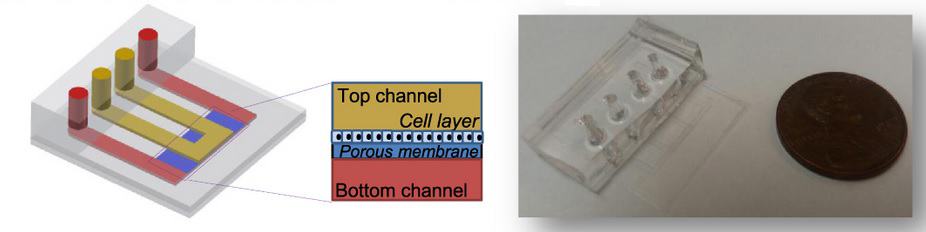
To show how microfluidic devices containing immobilized animal or human cells can help to bridge this gap, researchers based in the US and Korea have used a so-called “perfused kidney-on-a-chip” to compare the toxic impact of a broad-spectrum antibiotic called gentamicin when administered at the same dose, but in two different ways.

The team – led by Shuichi Takayama, now at Georgia Tech, and including Se Joong Kim on sabbatical from Seoul National University – mimicked the drug clearance profile for a single injection by starting the cell exposure at 19.2 mM (millimolar) of gentamicin and reducing the dosage by half every two hours over a 24-hour period. In the second regimen, the researchers continuously infused the kidney cell-containing chip with 3 mM of gentamicin, again for a period of 24 hours.

“The ease with which you can temporally modulate drug exposure is one of the strengths of microfluidics over conventional static cultures such as dishes or microwells,” says Takayama.

Microfluidic techniques such as the set-up used by Takayama and his team can generate physiological microenvironments for a variety of tissues and organs, making them applicable for evaluating a wide range of treatments. The device developed for this study consists of a top channel and a bottom channel separated by a porous membrane, which accommodates the cell layer.

In the study, published in the journal Biofabrication, the researchers illustrated that different pharmacokinetic profiles can be readily recreated in a kidney-on-a-chip system. Also, by using physiologically and clinically relevant sub-lethal cell-injury markers, the group was able to show how different drug administration regimens can affect the kidney.

Looking at the data, the injection mimicking regimen led to lower cytotoxicity compared with continuous infusion, which the team attributes to less disruption of cell–cell junctions.

“We are encouraged by the ability to resolve sub-lethal cell injury responses to different pharmacokinetic profiles imposed on the kidney cells,” comments Takayama. “Our next steps are to scale up the method and make it more accessible and user friendly.”

Full details on the work can be found in the journal Biofabrication.

  • This article is one of a series of reports reviewing progress on high-impact research originally published in the IOP Publishing journal Biofabrication.

Science in a changing world

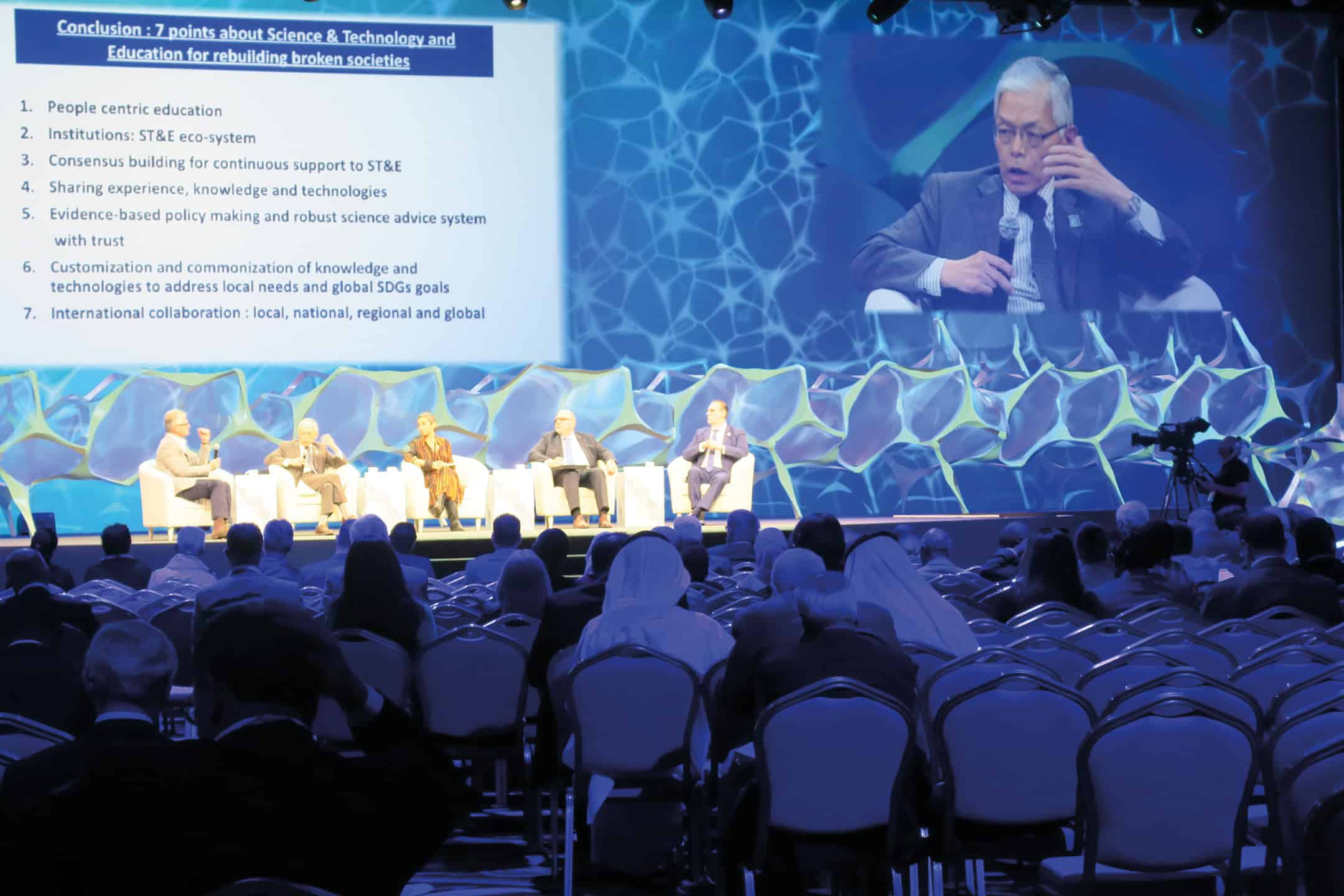
“The Internet has many benefits for society but also the potential to destroy the authenticity of modern society and modern science.” Those remarks were made by the renowned electrical engineer Hiroshi Inose from the University of Tokyo some 25 years ago as Internet services were starting to be introduced in Japan. This warning is also relevant today and I still recall it when discussing science and technology policy that is related to issues such as artificial intelligence and big data.

Digital technologies are crucial for knowledge creation and transfer, not only for business and lifestyle but also for education and science. However, Japan’s traditional education and research system must be reformed to meet society’s growing demands as well as the changing global landscape of science. In the past decade, the Japanese government – as well as the country’s science and education communities – have made considerable efforts to make education more flexible and multidisciplinary from elementary to tertiary level. While institutional reform has been happening, the way we evaluate students has not yet developed and spread into classrooms and laboratories.

Science and technology policy in Japan has also been changing from a traditional focus on research and development to innovation. The highest science and technology advisory board to the Japanese prime minister – the Council for Science, Technology and Innovation – recently added innovation to its name, while the government’s research budget has swiftly changed priority from basic to applied research and innovation. Many Japanese Nobel-prize winners – the numbers of whom have been increasing in recent years – are growing concerned with such trends. They claim that Japan’s focus on science is gradually declining, and the motivation and spirit of young students and researchers is being discouraged.

Building bridges

During the earthquake and tsunami that hit north-east Japan in March 2011 resulting in the Fukushima nuclear accident, most of Japan’s scientific societies, government advisers and academics could not take timely and effective action. They lacked an emergency advice system as well as sufficient data collection methods and expertise. Japan’s science and technology community therefore lost trust among the public, politicians and administrators. Before Fukushima, around 80% of respondents to a poll carried out by Japan’s National Institute of Science and Technology Policy trusted science, but that percentage halved following Fukushima. Those sentiments have still not yet recovered after seven years.

After Fukushima, the Science Council of Japan completely revised its 2013 code of conduct for scientists and in 2015 Japan’s foreign ministry appointed a chief science and technology adviser to advise over global issues such as the United Nations Sustainable Development Goals. This appointment raised the recognition and importance of science diplomacy with policymakers.

Another issue facing Japan’s science activities is that they are declining relative to other countries. The country needs to prioritize education and basic science in parallel with reforming education and ­science to be more open, flexible, inclusive and to better support promising younger generations.

Around six years ago, the National Graduate Institute for Policy Studies, along with the universities of Tokyo, Hitotsubashi, Kyoto, Osaka and Kyushu, began a programme to make policy more evidence-based and to train students, researchers and mid-career government officials to have a more open and multidisciplinary mindset. As one of the people behind the project, I believe it has worked to build bridges between science and policymakers. Indeed, our programme has been recognized as being effective and trustworthy, but we still have more progress to make.

In recent years, some universities have tried to add liberal arts curricula such as philosophy, history, social science and communication, to the traditional education courses for graduate students in physics, chemistry, biology and engineering. I have been involved in teaching and debating at several classes. According to many of these students, they appreciate discovering new ways of thinking and taking part in discussions beyond the boundaries of their own discipline, organization, gender, generation or nation. In doing so, they appreciate how their research can make an original contribution to knowledge and society from a diverse perspective.

Two leading international science councils – the International Council for Science and the International Social Science Council – made the historic decision last year to merge and form a single global entity called the International Science Council (ISC). The new body will strengthen international, interdisciplinary collaboration and support scientists to advance science and address global issues for the greater good. The International Union of Pure and Applied Physics subscribes to the following core values of the ISC: excellence and professionalism; inclusivity and diversity; transparency and integrity; innovation and sustainability; scientific education; and capacity development.

The country needs to prioritize education and basic science in parallel with reforming education and science to be more open, flexible, inclusive and to better support promising younger generations

According to my experience discussing sustainable development and science and technology with people in developing countries, Japan is an important role model for those nations’ own futures. They see Japan’s long-term focus on education, science and technology, knowing that the modernization of this non-western country over the last 150 years has been tough but worthwhile in the end.

We now need to build a global platform for sharing knowledge, data, expertise and experiences for sustainable development. It is high time, both in Japan and across the world, to rethink what science is, who a scientist is and why science is so important in the changing world.

  • For more about Japan, check out the latest Physics World Special Report Japan

The curious case of the porpoises and the Dutch wind farm

“Life uh… finds a way” is one of Jeff Goldblum’s many great lines in playing chaos theory mathematician Ian Malcolm in Jurassic Park. In his wry style, Malcolm is pointing out nature’s cunning habit of thriving, even when humans interfere with natural habitats. Or put another way, you can place a giant fence around a T. Rex but it’ll still find of way of eating you in the end.

What’s that you say – Jurassic Park’s not a nature documentary? You’ve just ruined my childhood. Anyway, this week I’ve been in the Netherlands investigating a more modest “life finds a way” scenario, involving the humble harbour porpoise (Phocoena phocoena). I’ve been working with US filmmaker Saskia Madlener to shoot a film about how marine wildlife responded to the creation of Windpark Egmond aan Zee (OWEZ), the first offshore wind farm built off the Dutch North Sea coast. Perhaps surprisingly, a study published in 2011 found that the porpoise population in this zone – 10–18 km from the coastal town of Egmond aan Zee – is larger now than it was just before the windfarm existed.

Reef effect

Obviously, it’s great news for the porpoises. But the presence of mammals so high up the food chain is also an indicator of a thriving ecosystem. The study led to the intriguing suggestion that the underwater infrastructure of offshore windfarms can create sheltered reef environments, with better foraging opportunities than an otherwise homogenous sea floor. Hard substrates can host small organisms, which become prey for fish, which in turn become prey for porpoises. So on the face of it, offshore windfarms might be a win–win situation – a renewable-energy source whose very existence can allow marine wildlife to flourish.

Windpark Egmond aan Zee

Now come the many caveats, of which I’ll just name a couple. First up, a separate study published in 2013 of the Nysted windfarm in the Danish western Baltic sea found the opposite result. The harbour porpoise population dramatically reduced during the construction of that windfarm and had barely recovered 10 years after the construction was complete. Secondly, it needs to be noted that fishing is now prohibited at the Egmond aan Zee windfarm, which has led to a significant reduction in shipping traffic in the area. So is the thriving marine life just a product of the area becoming a protected zone? Presumably, many of those fishing boats are still active – so has it simply shifted the environmental impact elsewhere?

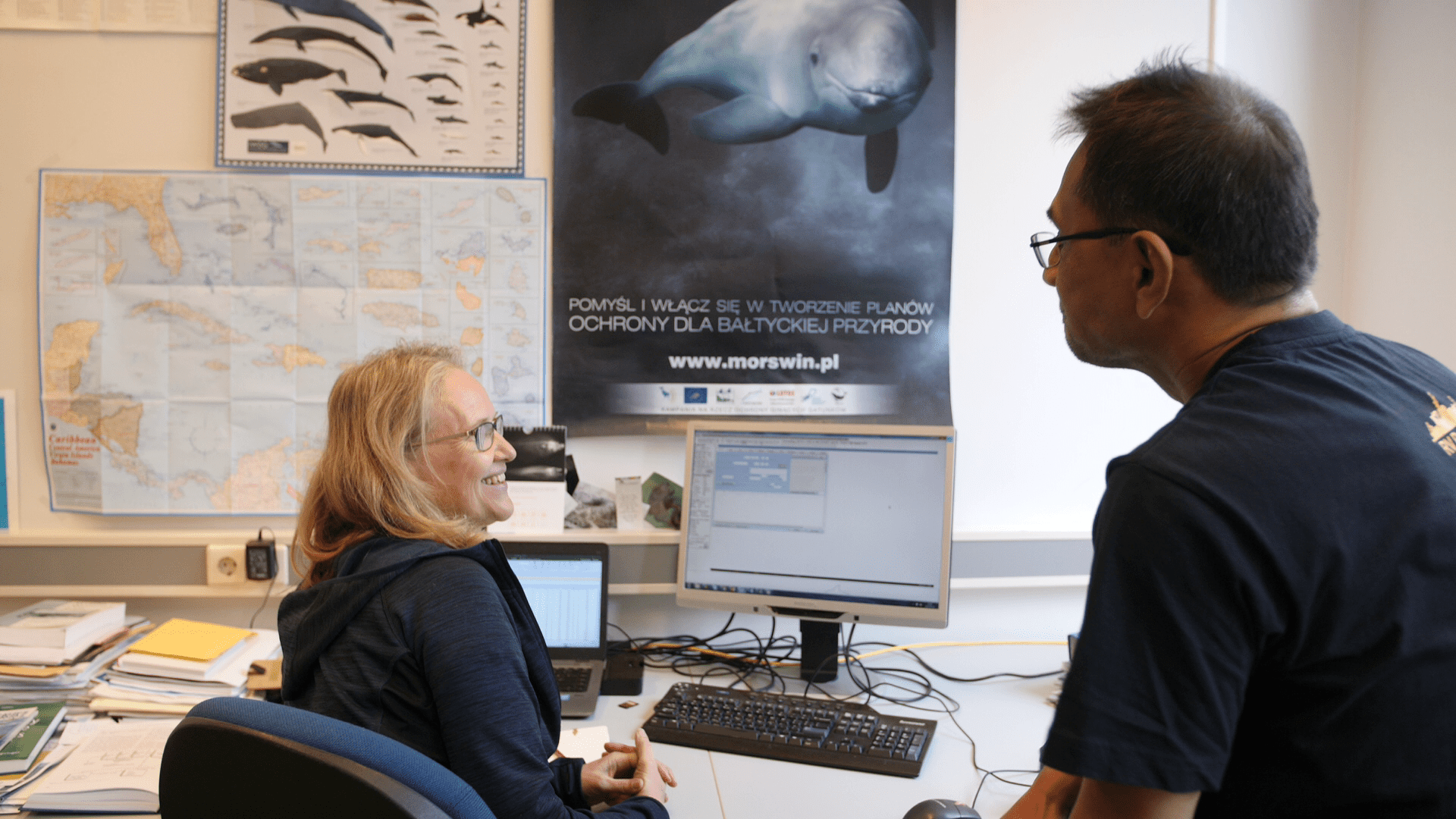
These are some of questions we will explore in the film, which will be published on this site in the next few weeks. We visited the small port city of IJmuiden where we interviewed Meike Scheidat, a marine researcher from Wageningen University who led the 2011 study. We wanted to discover the strengths and limitations of the study, which involved tracking the echolocation click-activity of porpoises by suspending hydrophones from buoys. Scheidat’s office contained a menagerie of marine wildlife posters, books and decorations – exactly what you might expect from a researcher immersed in her field.

Meike Scheidat (left) in her office in IJmuiden

But not everyone was happy with the arrival of the OWEZ wind farm. Some in the local fishing community were unhappy with the shipping ban, especially with the speed at which it came into effect and the lack of consultation. So we next headed to the Hague where we interviewed the fisherman Rems Cramer on a boat in Scheveningen harbour. Cramer identifies strongly as “a hunter” of fish, but realizes that the fishing industry must adapt its methods to survive. He is investigating more sustainable fishing practices with a group called Vissen voor de wind (“fishing for the wind”) with support of the Dutch Ministry of Economic Affairs and the European Fishery Fund. Cramer believes fishing could resume at OWEZ if trawling is replaced with lighter touch methods, such breeding of mussels on floating solar panels.

The winds of change

Also on our tour was downtown Amsterdam, where we visited the HQ of Dutch utility company NUON, which constructed the windfarm in partnership with Shell. One of the lead engineers Henk Kouwenhoven spoke about the lessons learned from OWEZ as well as the current state of the wind energy sector in the Netherlands. At present just 6% of the Netherlands’ energy comes from renewable sources but the nation is committed to hitting its EU target of 14% by 2020, rising to 16% by 2023. Meanwhile, the Dutch government has set a target to lower the cost of offshore wind power by 40% in 2024 compared to 2014. Coupled with the decision to reduce the nation’s historic reliance on natural gas, it all suggests that the Dutch government is very keen for the rapid expansion of offshore wind.

That is why it will be so important to consider the potential environmental impacts of construction, operation and decommissioning of these sites. Kouwenhoven believes that a vital part of that process will be to learn lessons from the OWEZ example and to minimise environmental impacts through technologies such as developing drilling equipment with reduced acoustic noise.

This film will be part of our new series of films exploring environmental challenges and their potential solutions. The issues in these films are often messy, complicated and involve competing interest groups. That is precisely why the issues are so interesting! Also, rather than focussing purely on grave environmental threats, these films will identify ways in which science and engineering can help us to adapt to meet these challenges. The first film in the series looked at Mexico City’s struggle to provide its citizens with drinking water. Another film to appear on this site soon will look at efforts in the US city of New Orleans to adapt to live with increasing flood risk in the face of climate changes.

I can’t promise these films will gross as much at the box office as Jurassic Park. But what I can guarantee is that you’ll have plenty of meaty environmental challenges to sink your teeth into. All available right here, free of charge, on the new look Physics World website.

Falcon Heavy and Humanity Star: trailblazers or space junk?

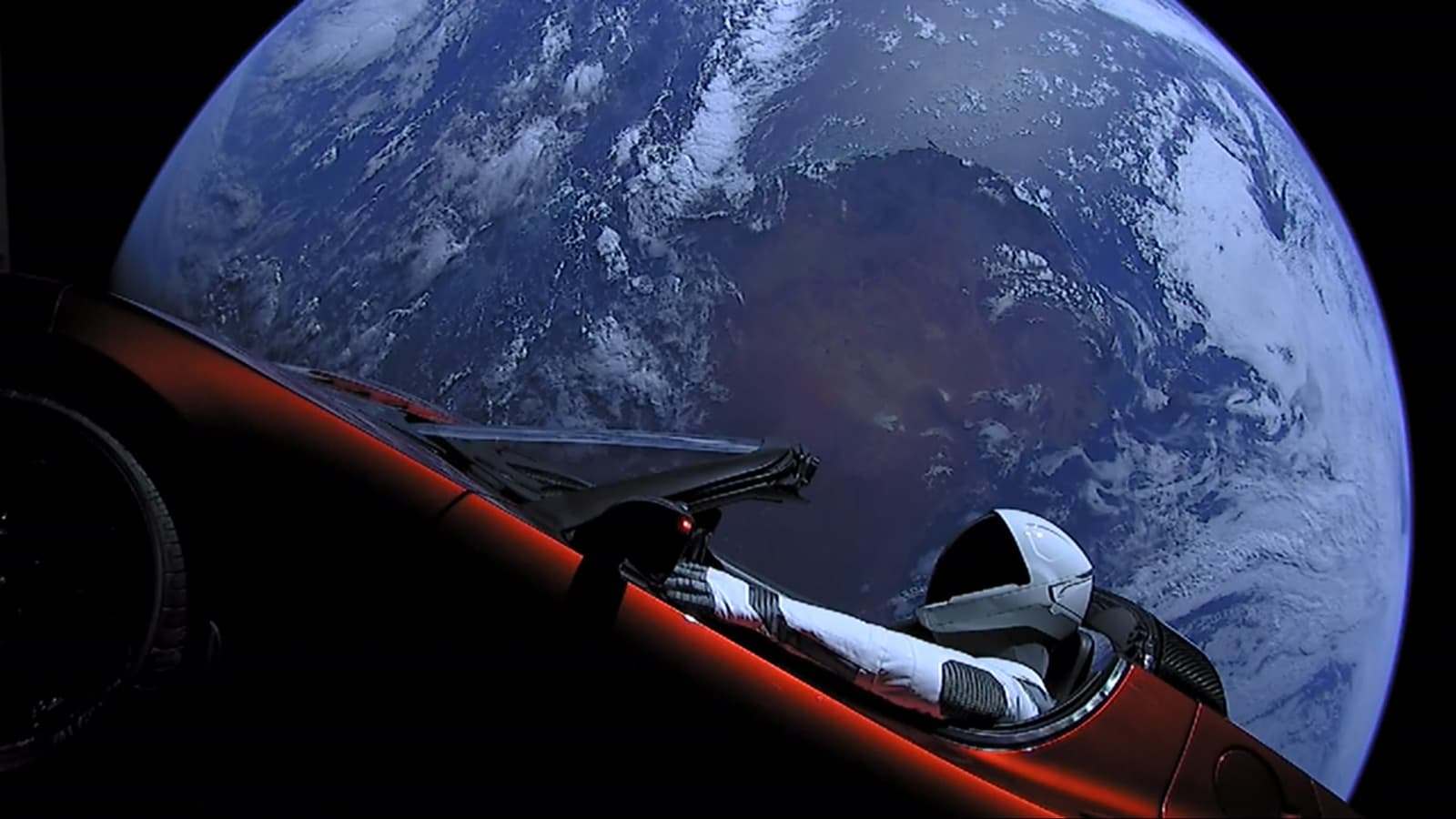
When the SpaceX Falcon Heavy made its maiden launch on 6 February, the overwhelming reaction was one of awe. Its widely reported payload – Elon Musk’s personal cherry red Tesla Roadster sportscar – added to the audaciousness of the mission and reaffirmed Musk’s rock-star status. No doubt, vast numbers of students around the globe will have had their imaginations lit up, some may even have started thinking about the exciting opportunities of a career in engineering.

However, there have been a few voices of dissent. Some critics have suggested that the rocket payload is merely adding to the growing problem of space junk. Perhaps an even stronger criticism is that firing a flashy sportscar into space is a symbol of the distain the super-rich have for the many people on Earth who live in poverty. The controversy around the Falcon Heavy launch is the subject of the Physics World monthly podcast, which is presented as always by Andrew Glester. Joining Andrew in the busy café at Physics World HQ is Physics World careers editor Tushna Commissariat and special guest Tim Gregory who recently appeared on the BBC show Astronauts: Do You Have What It Takes?

Elon Musk's personal Tesla roadster and mannequin

Andrew and crew also discuss the recently launched Humanity Star, which has also generated some controversy in the astronomical community. Launched in January by the private company Rocket Lab, the mission’s payload is described as “a highly reflective satellite that blinks brightly across the night sky to create a shared experience for everyone on the planet.” However, some astronauts fear that this “giant disco ball” is frivolous and might even interfere with their view of the night sky. Andrew puts some of these concerns to Rocket Lab founder and CEO Peter Beck and debates the issue at length with Tushna and Tim, asking whether they see a fundamental difference in the ethos and impact of these two high-profile private launches.

Snowpack declines in western US

The average snowpack in western states of the US has declined by 15–30%, Philip Mote of Oregon State University, US, and colleagues found, losing an amount of water comparable in volume to Lake Mead, the largest manmade reservoir in the region.

“It is a bigger decline than we had expected,” said Mote . “In many lower-elevation sites, what used to fall as snow is now rain. Upper elevations have not been affected nearly as much, but most states don’t have that much area at 7,000-plus feet.”

The snowpack decline is due to warming rather than a lack of precipitation, the researchers believe. Higher temperatures earlier in the spring mean water will not be stored as long in the mountains, potentially causing lower river and reservoir levels in the late summer and early autumn.

Mote and colleagues used data from 1,766 sites in the western US, focusing on measurements on 1 April, historically the high point for snowpack in most areas. They also looked at data from 1 Jan, 1 Feb, 1 March and 1 May, which gave the decline a range of 15–30%. Their physically based computer model of the hydrologic cycle incorporated daily weather observations and computed the snow accumulation, melting and runoff to estimate the total snowpack in the western US.

“We found declining trends in all months, states and climates,” said Mote, “but the impacts are the largest in the spring, in Pacific states, and in locations with mild winter climates.”

The Pacific states – California, Oregon and Washington – receive more precipitation because of the influence of the Pacific Ocean, and more of the snow falls at temperatures near freezing. The Cascade Mountains, which transect the region, are not as steep as the Rocky Mountains so they have more area that is affected by changes in temperature. “When you raise the snow zone level 300 feet, it covers a much broader swath than it would in the inland states,” said Mote.

Eastern Oregon and northern Nevada showed the most significant decrease in snowpack, though snowpack decreases of more than 70% also occurred in California, Montana, Washington, Idaho and Arizona.

Mote believes that the solution isn’t infrastructure as new reservoirs could not be built fast enough to offset the loss of snow storage and there’s not much capacity left for that kind of storage. Instead the answer is to manage what the region has in the best possible ways.

“The amount of water in the snowpack of the western United States is roughly equivalent to all of the stored water in the largest reservoirs of those states,” Mote said. “We’ve pretty much spent a century building up those water supplies, and at the same time the natural supply of snowpack is dwindling. On smaller reservoirs, the water supply can be replenished after one bad year. But a reservoir like Lake Mead takes four years of normal flows to fill; it still hasn’t recovered from the drought of the early 2000s.”

So far in 2017–2018, snowpack levels in most of the western US are lower than average, according to Mote, a function of continued warming temperatures and the presence of a La Niña event, which typically results in warmer and drier conditions in most southwestern states.

Magnon transistors could give spintronics a boost

Three independent teams of physicists have unveiled devices that could lead to practical spintronics components of the future. Researchers in the Netherlands have created what they call a “magnon transistor”, whereas a group in China has unveiled their “magnon valve”. Meanwhile in Germany, a team has also demonstrated their own version of a magnon valve. All three devices represent important work towards creating practical spintronics devices that use electron spin to transfer and store information.

Spintronics is attractive as a potential technology because it could solve several important problems facing electronics designers as they try to create ever smaller and more powerful devices. Using the spin of the electron (in addition to its electrical charge) to carry information provides an extra degree of freedom that could lead to smaller devices. At the same time, spin-based devices could be designed to consume much less energy than conventional electronics – making miniaturization easier.

However, creating spintronics based around the electron as the information carrier has its own challenges, so some physicists are keen on exploring alternatives. One possibility is the magnon, which is a collective excitation in a magnetic material. Magnons propagate as waves – flipping spins as they go. They also have particle-like properties, which is why they are called quasiparticles.

Simple designs

Circuits based on magnons have the potential to be much simpler in design than comparable conventional electronics – while at the same time consuming much less energy. But as Andrii Chumak of Germany’s University of Kaiserslautern, who was not involved in the research, explains: “We are still quite far away from realizing this potential”.

In this latest drive to create magnonic devices, a team led by Mathias Kläui of Johannes Gutenberg University of Mainz in Germany and a team led by Xiufeng Han of the Chinese Academy of Sciences in Beijing have showed that a magnon current can be controlled by changing the relative magnetization orientation of two magnetic layers.

Although made from different materials, both devices comprise a sandwich of two magnets separated by a non-magnetic spacer. By aligning the magnetic moments of the “bread” of the sandwich parallel or antiparallel, the researchers managed to increase and decrease the magnon current flowed through their devices – so the devices operated as valves.

“Both [devices] show typical spin valve behavior, and the effects are large so they could in future be used as a non-volatile low-power logic component,” explains Kläui. “But we now need to quantify the modulation of the magnonic spin current transmission in an ideal spin valve geometry.”

Different spin

Taking a different approach, but still aiming to control magnon current,  Bart van Wees of the University of Groningen, the Netherlands, and colleagues altered magnon current using an electrode to change chemical potential in a device they have called a “magnon transistor”. The device consists of a thin rectangle of platinum on top of a larger square of magnetic material. Magnons are generated at one end of the magnet and detected at the other. Then more magnons are pumped into or absorbed from the square depending on the spin polarization of electrons flowing in the platinum strip. By aligning and then oppositely aligning these electron spins with the magnons in the square, the researchers managed to increase and then decrease the magnon current.

This magnon transistor offers two potential benefits compared to the magnon valves: it operates faster than the valves and it should be more useful for creating complex circuits. However, the change in magnon current is much smaller than in the magnon valves. Also, because a spin current is used to modulate the magnon current, the transistor does not offer a low-power advantage over conventional electronics.

The devices could be key steps towards realizing full magnonic devices, but Chumak urges caution for those believing the research signals that magnonic circuits are just around the corner: “My personal feeling is that these papers represent an important step forward, but in fundamental physics only,” he says. “The magnonic signal has to be converted into electric current (in the Dutch device) or to magnetization orientation (in the two other cases) – a serious problem which requires in-depth investigations.”

Kläui describe their device in Nature Communications, whereas the van Wees and Han groups have published separate papers in Physical Review Letters.

Measurements of AR holograms match gold standard

AuntMinnie logoResearchers at the University of California, San Francisco (UCSF) created holograms that have comparable dimensions to corresponding CT scans using proprietary augmented reality (AR) software. They plan to present their work at the upcoming American Roentgen Ray Society (ARRS) meeting in Washington, DC.
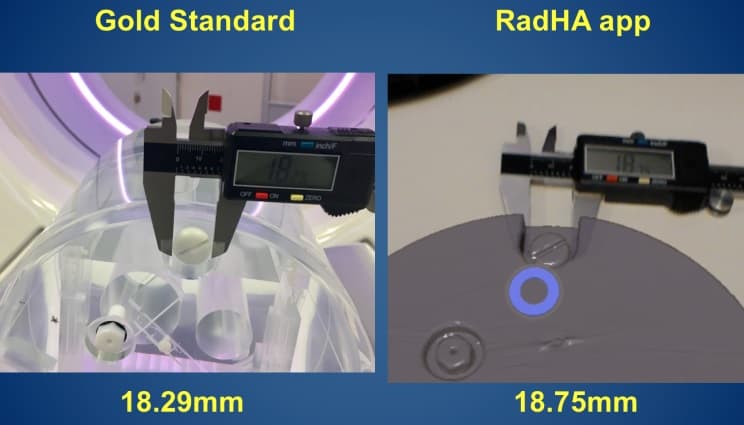
In the pilot study, the group led by Jesse Courtier performed a series of measurements on five augmented reality holographic models based on CT phantoms. The resulting measurements of their holograms were as accurate and precise as manual and PACS measurements of the same CT phantoms.

“Our findings lay the groundwork for developing accurate holograms, which will help establish a foundation for their clinical use,” Courtier told AuntMinnie.com. “By overcoming hurdles like this, we can begin considering the future use [of augmented reality] live in the operating room, where distances within a few tenths of a millimetre are important.”

Lifelike holograms

Courtier and colleagues have been exploring the clinical application of augmented reality through their proprietary Radiology with Holographic Augmentation (RadHA) software, which works in conjunction with the Microsoft HoloLens wireless headset to display CT scans and MR images in 3D on any real-world background.

“Our prototype augmented reality software allowed for the visualization of medical images in a more natural way,” he said. “So, we wanted to know how accurate these projections could be, and if they could be even more lifelike.”

To determine the fidelity of their models to real-life measurements, they collected CT scans of five distinct quality control phantoms and converted these scans into 3D models through the RadHA software. They were then able to visualize holographic replicates of these models by wearing the HoloLens headset. With the headset on, they manually measured several preselected sections of each of the models in three planes (x, y and z) using calipers.

When they compared this information with manually collected standard measurements, they found there was no statistically significant difference between these gold standard numbers and those they took of the projected AR hologram models. The holography measurements were also nearly identical to the automated PACS measurements of corresponding CT scans.

These initial findings demonstrate that current AR technology is capable of producing reliable holograms from CT scans and could be used for educational, training, or research purposes, according to the investigators.

The results further highlight the potential of augmented reality as an “alternative to virtual reality – where users are digitally blindfolded – as well as 3D printing, which typically has a long turnaround time and a high cost,” Courtier said. “I can make these [holographic] models within 25 minutes and include new iterations in less than two hours, and even change the colours of the models on the fly.”

“I was impressed by how accurate measurements of the holograms were,” said presenter Jesus Uribe, a third-year medical student at UCSF. “To be able to participate in that [research] was really inspiring for me as a medical student and as someone interested in a career in radiology.”

‘Starting point’

What are some of the possible clinical applications of augmented reality holograms?

The researchers have already begun incorporating their AR technology into presurgical planning, especially to support communication during presurgical planning conferences.

“The augmented reality device is another tool for radiologists to use to relay information that we have in our minds – to take 3D reconstructions of 2D images and display them in a way that’s more natural to what the surgeon sees in the operating room,” Courtier said. “We’ve had a lot of positive feedback from surgeons. Being able to see things in a new way is exciting for them.”

Measurements of augmented reality holograms match up

Though only one person at a time can wear the headset, the holograms visible to the user can also be displayed simultaneously on a separate screen, allowing everyone to virtually walk through the case together, he said. This enables a seamless integration into the current workflow: The surgeons can look at the medical images alone first and then examine the holograms with radiologists and the rest of the team in a multidisciplinary conference.

With the holographic models now proving to have highly accurate measurements, physicians might even be able to rely on the measurements of tumours or vessels collected before surgery to help guide the operation, he noted.

“This study is a starting point showing that we have the ability to use [augmented reality holographic models] intraoperatively,” he said. “Our next plan is to obtain measurements of holograms based on MR images. We’ve already received a grant for this research.”

  • This article was originally published on AuntMinnie.com.
    © 2018 by AuntMinnie.com. Any copying, republication or redistribution of AuntMinnie.com content is expressly prohibited without the prior written consent of AuntMinnie.com.

Diamond quantum sensor breaks new record

Thanks to a new measurement scheme that makes use of quantum sensors in diamond, the spectral resolution of nuclear magnetic resonance (NMR) spectroscopy has been increased by 100-fold in microscopic volumes. The breakthrough allows researchers to perform NMR chemical analysis at the scale of single biological cells for the first time.

“This work reports the first experimental demonstration of NMR spectroscopy with full chemical specificity at the scale of a single biological cell, which has been a major scientific goal for the last 50 years,” says Ronald Walsworth of Harvard University, who led this research effort. “We use a new measurement scheme employing quantum sensors in diamond to realize a 100X improvement in NMR spectral resolution under ambient conditions for a sample volume comparable to that of a single cell – about 10 trillionths of a litre.”

The quantum sensors used by Walsworth and colleagues are nitrogen vacancy (NV) colour centres in diamond. These defects occur when two neighbouring carbon atoms in diamond are replaced by a nitrogen atom and an empty lattice site.

NV centres act like tiny quantum magnets that are isolated from their surroundings and can be manipulated using laser pulses. They are ideal as biological probes because they are non-toxic, photostable and can easily be inserted into or placed adjacent to living cells and tissues. NV centres are capable of detecting the very weak magnetic fields from a single cell, molecule, or organism, as the intensity of the light they emit changes with the local magnetic field. They can thus be used as highly sensitive magnetic probes that can monitor local spin changes in a material over microscopic distances.

Broad NMR spectral lines

“Over the last few years, we and other research groups have been able to apply NV sensors to NMR of nanometre and micrometre volumes,” explains Walsworth. “But until now the measurement techniques produced broad NMR spectral lines (typically greater than 100 Hz), due to both the short spin state lifetime of the NV centre (around 3 ms) and the fluctuating statistical spin polarization of the sample. This spectral resolution is too coarse to resolve molecular structure fingerprints important in chemistry, structural biology and materials research.”

Micro-NMR spectral resolution reaches 1Hz

Walworth’s team says that it has now overcome these problems by using an ensemble of NV centres combined with thermal spin polarization of the sample and a narrowband synchronized readout measurement that can sense NMR signals for as long as 103 seconds. The new technique produces an NMR spectral resolution of about 1Hz in the sample volume of a typical cell (about 10 trillionths of a litre), which allows observation of the key spectral features needed for chemical analysis.

According to the researchers, with further improvements in sensitivity, it might even allow for NMR spectroscopy of small molecules and proteins at the single-cell level.

Potential applications

Dirk Englund of the Massachusetts Institute of Technology, who was not involved in this work says that the new study is an “amazing advance” in the field of quantum sensing. “It takes magnetic field sensing to a new extreme that now allows for resolution of chemical shift spectra at the micron-scale, which matches the lengths of interest in cells. Just a few years ago, this still seemed far off and progress has been tremendous.”

Potential applications include NMR studies of single-cell metabolomics and NMR fingerprinting of protein expression in tumour cells, for example, say Walsworth and colleagues. “It may even help in the development of new drugs through the study of very small, hard-to-manufacture samples.”

The research is detailed in Nature doi:10.1038/nature25781.

Copyright © 2026 by IOP Publishing Ltd and individual contributors