Intel has announced the design and fabrication of a 49-qubit superconducting quantum-processor chip at the Consumer Electronics Show in Las Vegas. Speaking at the conference, Intel chief executive Brian Krzanich introduced “Tangle Lake”; a quantum-processor chip that operates at extremely low temperatures. The device takes its name from the Tangle Lakes, a frigid chain of lakes in Alaska, and is a nod to quantum entanglement.
Tangle Lake is designed to store and process quantum information in qubits that are superconducting circuits. Krzanich said that the chip is an important step towards developing quantum computers that could quickly solve mathematical problems involved in some of society’s most pressing issues – from drug development to climate forecasting.
Large-scale integration
He also announced progress in Intel’s research on spin qubits, which have qubits based on the spin states of single electrons. While superconducting chips tend to be relatively large, the spin-qubits could be miniaturized using well-established silicon-chip fabrication processes. This means that it may be possible to manufacture quantum processors containing large numbers of spin qubits. This large-scale integration would be could be more difficult for superconducting qubits.
However, there is some scepticism in the physics community regarding Intel’s silence about the performance and quality specifications of Tangle Lake and their spin qubit chips. Intel is also facing fierce competition. IBM has itself announced quantum computers with 20 and 50 superconducting qubits in recent months, and companies including Google and Rigetti are also securing footholds in the nascent market.
Commercial quest
“In the quest to deliver a commercially viable quantum computing system, it’s anyone’s game,” confesses Mike Mayberry, managing director at Intel Labs. “We expect it will be five to seven years before the industry gets to tackling engineering-scale problems, and it will likely require one million or more qubits to achieve commercial relevance.”
A GPS-like navigation system for spacecraft that uses X-ray signals from pulsars could soon be a reality because of an experiment done on the International Space Station (ISS). NASA engineers have shown that the ISS-based SEXTANT system can use signals from four pulsars to determine the location of the ISS to within 15 km. A pulsar-based navigation system would make it much easier for spacecraft to travel throughout the solar system, and beyond – according to NASA.
SEXTANT makes use of the NICER X-ray telescope. NICER was installed on the ISS in June 2017 and is designed to probe the interior of X-ray pulsars, which are spinning neutron stars that emit X-rays. This is done by making very precise measurements of the energy of the X-rays as well as the frequency of the pulses – which typically fall between 1 and 800 Hz.
Concentrating X-rays
NICER is an array of 52 X-ray concentrators – each a set of concentric cylindrical mirrors – that focus incoming X-rays on to silicon-drift detectors. These detectors record the energy and arrival times of individual X-ray photons from distant neutron stars.
The SEXTANT measurement was done over the course of two days using four pulsars with millisecond periods. The arrival times of the pulses are measured to within 300 ns and by comparing the arrival times of pulses from the four different sources, Sextant was able to track the position of the ISS as it travelled around Earth at nearly 28,000 km/h. The spatial resolution of the system is about 15 km, but NASA’s Jason Mitchell says this could be reduced to about 100 m in deep space.
Beyond the solar system
According to NASA, a future spacecraft could use pulsars to navigate deep space autonomously without having to communicate with Earth to workout its position. “This successful demonstration firmly establishes the viability of X-ray pulsar navigation as a new autonomous navigation capability,” says Mitchell. We have shown that a mature version of this technology could enhance deep-space exploration anywhere within the solar system and beyond.”
Following on from this early success, the SEXTANT team is updating on-board and ground-based software for a second test later this year.
Researchers in Singapore have investigated the use of mesenchymal stem cell (MSC) exosomes to improve cartilage regeneration. They observed an increase in cartilage cell proliferation and infiltration, enhanced matrix synthesis, and an immunologic response matching with an appropriate healing mechanism (Biomaterials156 16).
Cartilage repair is a challenging issue due to the poor intrinsic regenerative capacity of cartilage and the fibrous tissue formation (fibroblast proliferation) that results from injury. MSC therapy has shown great promise in addressing both of these problems. However, several papers have reported that the beneficial effects of MSC rely on a paracrine secretion mechanism (in which cells synthesize molecules that they then secrete), rather than MSC differentiation into cartilage cells (chondrocytes), as first hypothesized.
Among these secreted paracrine factors, increasing attention has been given to extracellular vesicles, particularly the exosomes. Endogenously formed by almost every cell, exosomes are a type of extracellular vesicle that play an important role in cell-to-cell communication. Exosomes contain complex cargo components including proteins, RNA, microRNA, DNA and lipids. MSC exosomes are postulated to be the mediator of MSCs in tissue repair as they deliver biomolecules with immunomodulatory and regenerative capacity.
Wei Seong Toh and his team at the National University of Singapore reported the mechanism underlying exosome-mediated cartilage regeneration of a damaged femur in rats with functional immune systems. The regeneration process is composed of multiple aspects, each of which was studied by the researchers. They reported encouraging results for both the gross appearance and histological analysis using this treatment compared with the control, phosphate buffered saline solution.
Chondrocyte proliferation
Following injection of the MSC exosomes, the chondrocytes rapidly transported the exosomes into the cell, where they localized in the cytoplasm. Chondrocyte proliferation, metabolism and migration were enhanced in a dose-dependent manner.
Experiment design and exosomes uptake (click to zoom)
Exosome treatment also increased cartilage extracellular matrix (ECM) components: collagen type II and sulphated glycosaminoglycan (s-GAG), indicating an enhanced matrix synthesis. This finding, combined with the increased expression of mRNA levels of cartilage matrix protein (COMP) and chondrogenic factor TGF-β1, confirms the capacity of those exosomes to maintain the chondrocyte phenotype, for an optimal cartilage healing.
Favourable immune response
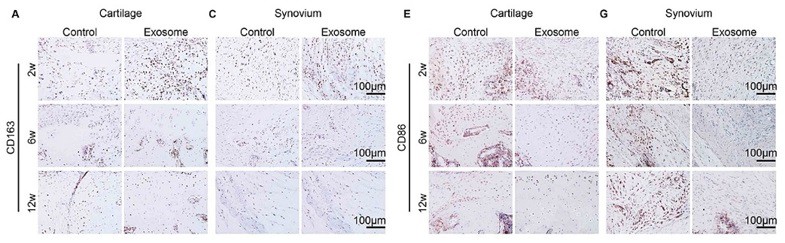
Immune response is an important aspect in the regeneration process. Macrophages (white blood cells) play key roles in healing. M1 macrophages exhibit an inflammatory response, which jeopardizes the healing process, while M2 macrophages are associated to anti-inflammatory response. In this study, the team observed an increase of M2 macrophages and a decrease of M1 macrophages in both cartilage and synovial tissues (connective tissue between the cartilage and tendon), suggesting that healing is promoted by restraining inflammation.
M1 and M2 macrophages in cartilage and synovium
This multi-parameter study confirms the potential of MSC exosomes for cartilage regeneration and suggests great promise for this clinical application, which is also under consideration for treatment of other disorders.
New generation semiconductor-based vacuum-ultraviolet (VUV) detectors that replace traditional heavy and energy-hungry microchannel detection systems could be used to better study how stars form and evolve. Making such detectors is proving to be no easy task, but a novel heterojunction device based on highly-crystalline, multi-step epitaxially-grown aluminium nitride (AlN) and p-type graphene shows promise here. The new detector has an encouraging VUV photoresponse and high external quantum efficiency (EQE). It is also extremely fast with a response time of just 80 nm, which makes it 104 to 106 times faster than current VUV photoconductive devices.
VUV photodetectors work in the 10–200 nm wavelength range and are widely employed in cosmic chemistry and space science – for example, to study how nebulas expand and to monitor solar storms. Today, satellites and spacecraft mainly carry violet chromatographs and microchannel plates. These are not only heavy, and so contribute to increased launch costs, but they are also power-hungry and require thousands of volts to operate.
Researchers have made much progress in developing photoconductive-type VUV photodetectors in recent years, but photovoltaic-type ones would be better, since they require zero power. Their charge signals also linearly increase with light intensity and they are fast and highly sensitive. The problem here, however, is that good transparent electrode materials for use in such detectors that allow VUV light to pass through unheeded are still lacking.
A new heterojunction device based on p-type graphene, which, according to new work by researchers in China, transmits up to 96% of VUV light, represents a breakthrough for this type of detector. It consists of a highly-crystalline AlN film, which acts as the VUV absorbing layer for photogenerated charge carriers, covered with p-type graphene as the transport electrode that collects excited holes.
Studying ultrafast dynamic celestial processes
The team, led by Feng Huang of the School of Materials at Sun Yat-Sen University in Guangzhou found that when illuminated with 180 nm VUV light, the device forms a 1.7 V open-circuit voltage and (in the absence of bias) produces a photocurrent with a high EQE of over 42%. This high value comes thanks to graphene’s high charge mobility and the fact that it collects holes with high efficiency, say the researchers. And that is not all: under nanosecond VUV pulse irradiation its response time is only 80 ns, which is 104 to 106 times faster than that of existing photoconductive-type VUV devices. Such high speed could come in useful for studying ultrafast dynamic celestial processes – for example, to determine the chemical composition of coronal jets in a solar storm, says Huang.
“The new VUV-light-detecting device, being much lighter than existing detectors, could also help lower launch costs of the spacecraft carrying it,” he tells nanotechweb.org.
Researchers at the University of California, Davis (UC Davis) report continued progress on their development of a total-body PET/CT scanner designed to image patients in less than one minute, in an article in the January issue of the Journal of Nuclear Medicine (J. Nucl. Med. 59 3).
The key component of the work-in-progress Explorer is the half-million PET detectors that line the entire PET camera bore. That additional capacity is designed to result in much less radiation dose for a patient because the device would capture almost all available signal from a radiotracer. The CT scan is acquired as the patient moves into the PET scanner.
Explorer will have “the ability to detect throughout the whole body the location of focal pathologies, including cancer, infection, and inflammation at considerably lower levels of disease activity than is currently possible,” said study co-author and co-developer Terry Jones, a clinical professor of diagnostic radiology at UC Davis, in a press statement.
The journey to create Explorer was buoyed in October 2015 by a five-year, $15.5 million grant from the US National Institutes of Health (NIH). In addition, United Imaging Healthcare America, a North American subsidiary of Shanghai United Imaging Healthcare, and SensL Technologies of Cork, Ireland, joined the Explorer project in January 2017.
By reducing total-body scan time to less than one minute, the PET/CT device would be particularly beneficial for imaging paediatric patients without anaesthesia or sedation, as well as adult patients who cannot withstand prolonged scanning. Explorer is also expected to help with the development of new therapeutic agents.
“The applications of nuclear medicine will expand considerably across internal medicine … and will become more evenly distributed across the age spectrum,” Jones said. “There will be a considerable stimulus/investment to develop new imaging biomarkers especially within immunology and endocrinology.”
The Explorer team is expected to test the technology soon with a scaled-down prototype to perform total-body PET imaging on nonhuman primates.
It is essential that scientists closely track ongoing changes in Earth’s cryosphere, including the surface area covered by ice, which is both affected by climate change and contributes to it. Two previous satellite observation missions will be succeeded and significantly upgraded in 2018, NASA reported at the American Geophysical Union (AGU) meeting in New Orleans in December.
NASA plans to launch ICESat-2 (Ice, Cloud, and Land Elevation Satellite-2) into polar orbit in September 2018. Its multibeam micro pulse laser will fire 5000 times every half second, taking 30,000 measurements over a surface distance of around three kilometres.
Its predecessor, ICESat, was launched in 2003 and operated until early 2010 with but one objective: to quantify contributions to sea-level change by melting from the Antarctic and Greenland ice sheets. It discovered that most of “the action” is on the sloped glaciers around the margins of those ice sheets, said Thorsten Markus of NASA’s Goddard Space Flight Center. Markus is the new mission’s project scientist.
“We need to do better than what ICESat-1 was able to do,” Markus said at the AGU meeting. ICESat-2 will also quantify regional signatures of ice-sheet changes, to help improve predictive ice-sheet models.
ICESat-2 has an additional new objective – to estimate the thickness of Arctic sea-ice, which has been declining. Thirty years of satellite data have provided a good understanding of the decreasing surface area of the ice, Markus said, but we do not have an adequate understanding of its thickness.
The second 2018 mission is the GRACE-FO, scheduled for launch in the spring, with first data release in June. GRACE-FO (Gravity Recovery and Climate Experiment Follow-On) is a pair of satellites produced jointly by NASA’s Jet Propulsion Laboratory (JPL), and the German Research Centre for Geosciences (GFZ), with participation by Deutsches Zentrum für Luft und Raumfahrt (DLR), the German Aerospace Center.
The original GRACE satellites functioned from 2002 to 2017, flying in tandem polar orbit 220 km apart and racking up scores of discoveries about Earth’s water cycle. The new version, crammed with more sophisticated equipment, will, like its predecessor, measure gravity changes alone to determine such factors as aquifer depletion, the impact of seismic activity, and changes in deep ocean currents, as well as water storage globally.
There is no direct measurement to the ground, only between the satellites. A microwave ranging instrument will constantly assess variations in their distance of just a few nanometres—the size of a large virus—said Felix Landerer of JPL, GRACE-FO deputy project scientist, at AGU.
“We’re very excited about these missions,” Landerer said. “I think the great thing is also that these are going to fly together concurrently and it’s really the combination of these multiple observations, these multiple angles that we have on the ice sheets, on our water cycle, that will enable us to track the health, the status of Earth’s ice…and Earth’s water cycle as it evolves and quite dramatically changes in these decades.”
As a practising computer scientist, I thought I had a fairly good grasp of Alan Turing’s many contributions to the field. But The Turing Guide, by Jack Copeland, Jonathan Bowen, Mark Sprevak and Robin Wilson, has opened up a universe of Turing’s other pursuits I knew nothing about, inflating my admiration for him and his work by several orders of magnitude. I doubt that there exists a more complete book about Turing’s life and work – 33 contributing authors explore every biographical, historical, theoretical and practical aspect one could possibly wish for, in a thorough rendering and analysis of one man’s extraordinary life. Weighing in at a mere 1.24 kg, this tome does justice not only to Turing’s impact on the evolution of computing and the defeat of the Axis powers in the Second World War, but also to the wide-ranging and deep thought that characterized Turing’s approach to pretty much everything.
The writing of this book is a story in itself – the scale of the project and its reach are testament to the zeal of its authors and their determination to leave no aspect unaccounted for. But reading this eight-part book is a project as well, as you work your way through 42 chapters. (I couldn’t help but immediately think of Douglas Adams’ The Hitchhiker’s Guide to the Galaxy, where the number 42 is “the answer to the ultimate question of life, the universe and everything”, as calculated by the ultimate supercomputer, called Deep Thought.) In fact, it is not surprising that Turing’s life and influence could not be captured in anything less than that.
For readers daunted by the size of this book, the first chapter on “Life and work” contains an extraordinarily detailed timeline of key milestones in Turing’s life, which is a real eye-opener. In a few pages, we learn of Turing’s early accomplishments; his wide-ranging intellectual contributions including the concepts of the universal computing machine (“Turing machine”) and artificial intelligence, mechanical code-breaking strategies and tactics; complexity theory; practical computer design; computational biology and even artificial life. Turing also developed innovative computational mathematics – such as computing the Riemann zeta function, Mersenne primes and L/U (Lower/Upper) methods for solving matrix equations. In addition, he explored ideas for using software to check other software (verification methods) and evolutionary algorithms.
The book details as well the many giants of computing and mathematics whom Turing worked with over the course of his career, including Claude Shannon, John von Neumann, Alonzo Church, Ludwig Wittgenstein and Maxwell Newman among many others. The diversity of these interactions serves to underscore the remarkable range of Turing’s interests and, more importantly, his capacity to make (sometimes truly seminal) contributions in so many areas.
British philosopher Jack Copeland – who has written seven other books on Turing, and is the primary author of this one – offers an important summary of Turing’s work on the theoretical universal computing machine. Copeland also describes Turing’s time at Bletchley Park, where he wrestled with the decryption of German and Japanese encryption algorithms and devices. A strong case is made that Turing’s work on universal computing and stored-program concepts predates the work done by other giants in the field, including Konrad Zuse and Von Neumann. Copeland also explores the details of how Turing’s pursuit of his universal computing machine emerged from his attack on German mathematician David Hilbert’s Entscheidungsproblem or the “decision problem”. In a later chapter, titled “Decidability and the Entscheidungsproblem”, computer scientist Robin Whitty from Queen Mary University of London, provides a fully accessible explanation of the Turing Machine and its function.
Brian Randell, emeritus professor of computing science at Newcastle University, takes us on a journey of discovery in his chapter on “Turing and the origins of digital computers”. Randell takes us back in time to 1873, as he discusses the earliest foundations of “automatic calculating engines” with the work done by Charles Babbage and Ada Lovelace, before moving forward to the period of the 1940s, as he talks about the development of early computing systems such as ENIAC, EDVAC and the Manchester “Baby” machine. In subsequent chapters, we learn more of the details of the work Turing and others undertook at Bletchley and the breaking of German cryptographic codes.
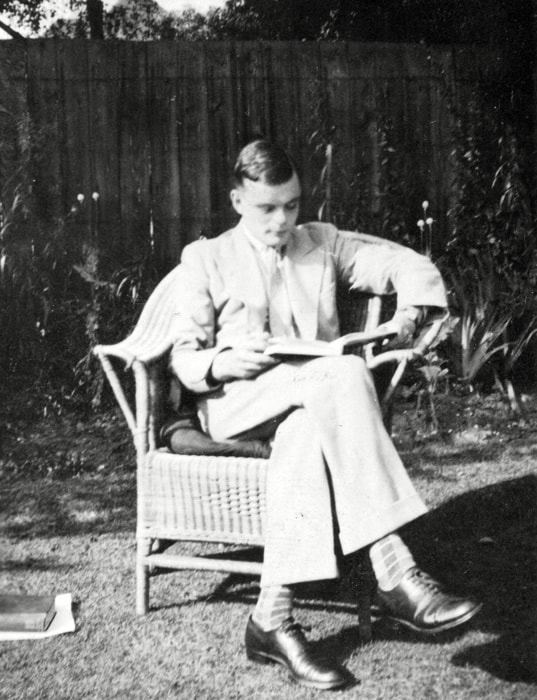
Along with the many chapters on his research, the book also presents a comprehensive view of Turing as a human being, and not only an icon of brilliance. This is particularly well illustrated in two chapters: one is penned by his nephew John Dermot Turing, titled “The man with the terrible trousers”, and the other – “Meeting a genius” – by his Bletchley Park colleague Peter Hilton. Turing is portrayed as a warm and approachable person, far less concerned with sartorial appearances and far more interested in diverse intellectual concepts. He was also eager to help others understand his ideas. In Hilton’s words “he was a fundamentally serious person, but never unduly severe”. One thing characteristic of Turing’s approach to new areas was to start from first principles and not with the assumptions made by or conclusions reached by others. This tactic surely contributed to the originality of so much of his work.
The Turing Guide does not shy away from the painful consequences of his sexual orientation – Turing was gay and in the mid-20th century this was a crime in the UK. Copeland elaborates on the sequence of events leading up to Turing’s conviction and sentence to be “treated” chemically for his “condition”. Turing died of cyanide poisoning and his death was officially ruled to be suicide, but Copeland makes a very strong case that Turing’s state of mind in the weeks prior to his death was not consistent with such a conclusion. I now believe, despite the conventional wisdom and official pronouncement, that Turing’s death was in fact accidental.
It is nearly impossible to do justice to the monumental content of this book in a short review. Turing’s ideas for artificial intelligence, neural networks, computer music, computer chess and morphogenesis all receive attention. There is an unexpected chapter on Turing’s interest and belief in parapsychology and extrasensory perception. Turing evidently believed that there was clear statistical evidence of the ability of one person to receive information from another purely through the mind. My reaction to this is that perhaps someone as brilliant as Turing should have the freedom to hold some quirky views!
The book continues with an exploration of the proposition that the universe is computing itself and finishes with “Turing’s legacy” by Jonathan Bowen, who is emeritus professor of computing at London Southbank University, and Copeland. The duo present a succinct summary of the hundreds of pages that precede this section, detailing the many ways in which Turing has touched our society, in what is a well-researched and catalogued final section. A towering figure in the history of computing, but also in history itself, we come to know Turing with a completeness unattained by any preceding work.
Jack Copeland, Jonathan Bowen, Mark Sprevak and Robin Wilson The Turing Guide 2017 Oxford University Press 576pp £19.99pb
The first “quadrupole topological insulator” has been created in a mechanical metamaterial by physicists in Switzerland. The experiment confirms a theoretical prediction made in 2017 that the concepts behind traditional dipole topological insulators can be extended to create higher multipole versions. The researchers believe the work could lead to one-way waveguides that are immune to scattering.
Unlike most topological insulators – which involve the conduction of electrical charge – the topological properties of the metamaterial arise from its vibrational modes. Work done recently by two other teams of physicists suggest that quadrupole topological insulators can also be made from systems based on electrons and photons.
In traditional electrical topological insulators, electric dipole moments sit head-to-tail in the bulk of the crystal, effectively cancelling each other. At the surfaces, however, electrical charges can build up, leading to edge modes that conduct charge in one direction with no scattering. In 2017, Taylor Hughes of the University of Illinois at Urbana Champaign and colleagues calculated that, if higher-order charge polarization occurred within a crystal, more complex phenomena could be seen at the edges. For example, if the bulk contained quadrupolar moments, each edge should become a 1D version of a traditional dipole topological insulator, giving rise to “corner modes” where they met.
Mathematical link
Topological insulators analogous to the electrical dipole type have been created in systems where electromagnetic radiation or mechanical oscillations play the role of electrical charge. “The link is really on the mathematical level,” explains Sebastian Huber of ETH Zurich. “The existence or absence of surface states is independent of these degrees of freedom being charged or not.” In the new research, Huber and colleagues produced a mechanical metamaterial that achieves the first experimental demonstration of a quadrupole topological insulator.
The team used the mathematical principles outlined by Hughes’ team to calculate the resonant frequencies of the various modes in a topological mechanical metamaterial made from 5 mm silicon plates connected together by beams. They then fabricated the metamaterial and measured its response to induced vibrations at various frequencies. “There is a whole frequency range where you can’t excite any vibrations in the system either in the bulk or in the edge,” says Huber. “However, at the four corners, right in the middle of this frequency band, you can excite vibrations: these are the four corner states.”
At present, the system is two dimensional, so the corner modes have nowhere to go. However, Huber and colleagues aim to develop a stacked, three-dimensional set-up. It should be possible, says Huber, to develop a cubic architecture in which some corners will only allow propagation in one direction and some will only allow it the opposite way. This, he says, would be “the dream” for producing things like topologically protected, scatter-proof waveguides.
“One of the significant things here is that I think this is the first example in which a concept from topological matter has been realized first in a mechanical system,” says Martin van Hecke of the Institute for Atomic and Molecular Physics in Amsterdam, who was not involved with the research.
Rapid realization
“We were excited to see that our predictions could be realized so quickly,” says Hughes, “It shows that the field of topological metamaterials is a very capable avenue for realizing these interesting topological phases in experiments.”
Next year has been designated the International Year of the Periodic Table of Chemical Elements (IYPT) by the United Nations Educational, Scientific and Cultural Organization (UNESCO). The celebrations in 2019 will mark 150 years since the iconic chart – which contributed greatly to the development of modern chemistry and atomic and nuclear physics – was devised by the Russian chemist Dmitri Mendeleev. IYPT will also pay tribute to the recent discovery of four new elements: nihonium-113; moscovium-115; tennessine-117; and oganesson-118, which UNESCO says resulted from “close international scientific cooperation”.
The IYPT is supported by the International Union of Pure and Applied Chemistry (IUPAC), the International Union of Pure and Applied Physics, the European Association for Chemical and Molecular Sciences, the International Astronomical Union and the International Union of History and Philosophy of Science and Technology.
Educational experiments
The IYPT will be used by UNESCO’s International Basic Sciences Programme to promote international co-operation in the basic sciences for sustainable development. A UNESCO Global Microscience Experiments Project will also be dedicated to the periodic table. Microscience is an educational initiative that provides low-cost experimental equipment to primary and secondary school pupils – and university students in some countries.
Other related anniversaries in 2019 include the discovery of phosphorus 350 years ago by the alchemist Hennig Brand. In 1789, Antione Lavoisier grouped 33 elements into gases, metals non-metals and earths. Next year is also the 190th anniversary of Johann Wolfgang Döbereiner’s work on “triads”, which was another attempt at making sense of the chemical elements. More recently, the element francium was discovered in 1939 by Marguerite Perey.
100th anniversary of IUPAC
The IYPT also coincides with the 100th anniversary of the founding of IUPAC – which along with IUPAP confirms the discovery of new elements and gives them their official names. Eager to start the festivities, IUPAC will be releasing monthly bulletins in 2018 that highlight the activities of the organization over the past century.
Physics World: What do people in industry tell you they need to see on a CV?
Andrew Hirst: Writing a good CV for any job requires you to present strong evidence that you can do the job or – if you haven’t finished your degree yet – that you have the potential to do so. One mistake students often make is to believe their CV will land them the job they’ve applied for. A CV is the beginning and not the end of the recruitment process. It’s a door opener to the next step, be it a telephone interview, an assessment or a face-to-face interview. Your CV is a marketing tool that highlights to the recruiter your relevance to the job requirements, which will depend on the role, sector and seniority of the position.
So presumably it’s vital to tailor your CV to the role?
Yes, you need to emphasize the most relevant skills and experiences for the job. One common mistake that students make is to submit a generic CV to multiple employers. When your CV arrives at its destination, its content will either appeal or it won’t. Your job is to take the excellent work you’ve done and feature it in a way that opens the doors you want opened. Remember that companies have different needs depending on the sector they’re in – be it aerospace, food manufacturing, automotive or optics – and the type of role you are applying for.
If your degree’s purely academic, how can you show you’re suited to a job in industry?
Employers do want to see a track record of academic attainment but crucially they also want to see you can apply your physics knowledge beyond the lecture theatre, to solve real technical problems. They want evidence that you have a range of aptitudes that you’ll need in a business setting.
And what exactly are those aptitudes?
Having spoken to many employers about the skills they associate with excellent undergraduates and graduate students, they are after people who are commercially aware, who can provide solutions to business needs, and who enjoy applying knowledge to real and incomplete problems. They want people who can deliver results in different team environments and cultures, who understand themselves, and who are team players who can adapt to new situations.
So your CV shouldn’t just flag academic attainment?
Yes, employers are interested in a range of skills and behaviours beyond just the ability to solve equations or learn from a textbook. When writing your CV, think about examples from your time at university that show you’ve applied these competencies, whether it’s in the lab or in an extra-curricular activity – such as when you volunteered or worked in an office.
What practical advice do you have for writing a CV?
Only include information from your career that’s relevant to the job application. Concentrate on specific examples and write a maximum of two A4 pages – there’s no need to write a novel. Highlight what you’ve achieved – not just what you’ve done. Don’t just list the modules you’ve studied, people you’ve worked for or extra-curricular activities you’ve taken part in. They’re important, but also state what you did, how you did it and what were the results.
What’s the best way of marshalling all relevant information on a CV?
To make clear to employers how your academic knowledge, technical skills and extra-curricular activities are relevant to the job in hand, it’s useful to write a “competency-based” CV. This includes similar information to the more traditional “reverse-chronological” CV, where you list everything you’ve done starting from now and working backwards. A competency-based CV instead organizes the content into a sequence of competencies and skills that match the requirements in the job specification. This kind of CV lets employers see more easily how your experience and skills match the requirements of the job.
That sounds great, but how do you do that in practice?
A simple tactic is to use the “challenge-approach-results” (or CAR) method. First, think about a problem or obstacle you have faced (the challenge). Then consider the action you took to resolve the problem (the approach). Finally, note down what was the outcome (the result).
Can you can give some examples of this from someone who’s done a physics degree?
To show evidence for teamwork, you could say something like: “I worked in a group of five students to conduct a four-week project to investigate the linear expansion of metals through interferometry. My role was to assign and prioritize tasks to team members and to contribute to the data analysis and verbal presentation. This assignment gave me experience of project management, communicating results within a team and completing tasks to meet a set deadline.” Or, to give evidence of lab skills, you could say: “I have designed, implemented and run weekly experiments, with little supervisory guidance, in atomic physics, solid state and optics. For example, I conducted an experiment that investigated the moment of inertia of different bodies, making use of rotary motion and force sensors. I would calculate theoretical parameters and compare to experimental values found from manipulating data. This required me to problem-solve throughout the experiment in terms of fault-finding and error analysis.”
Any practical tips about the style and appearance of the CV?
Don’t go mad. Don’t use fancy borders, fonts or background colours – no-one wants to read a CV in pink, 18-point Comic Sans. Just use clear, well-spaced text that can be read quickly and easily. It’s also vital to avoid clichés – I’ve lost count of the number of times I’ve read on a CV something like “I am an enthusiastic individual with excellent communication skills.” Clichés will not allow you to stand out from the crowd – instead give concrete examples of when you’ve learnt or enhanced these particular skills.
So what kind of things should you say?
If you want to flag your communications skills, you might write: “As part of my professional-skills module I have given several presentations, including one on the application of photomultiplier tubes. This gave me the experience to communicate ideas and results to both students and staff. I also wrote a formal report that investigated the temperature variation of electrical resistance within metals and semiconductors. I discussed the theory I applied to the experiments; mentioned the method I used to gather suitable data, for example, by calibrating a thermocouple and using data-acquisition interfaces; and analysed my results in terms of errors and the importance and implications of my results.”
Any final advice to help bag that top industry job?
Research the job and company you’re interested in before you start writing. Understand how your interests, academic knowledge and extra-curricular activities fit the role and the organization you hope to work for. Mirror the structure of the CV to the job’s specification or competencies and include relevant modules from your degree. Articulate relevant skills and experience – and give examples. And finally, proofread the document. There’s no excuse for spelling mistakes.