CRISPR/Cas9 shows potential to reverse disease

In a proof-of-concept study, American researchers have used CRISPR/Cas9 genome editing to reverse diseases such as diabetes and muscular dystrophy in mice. For the first time in an animal model of a human disease, this approach has been used to activate genes instead of breaking the DNA structure, alleviating a previous cause of major concern for researchers (Cell 171 1495).

Over the past few years, researchers have intensively explored the potential of the CRISPR/Cas9 method to modify DNA by deleting faulty sequences. In short, the scissor-like enzyme Cas9 is coupled with a guide RNA molecule that binds it to a specific location on the DNA structure. Once attached to the DNA, the Cas9 enzyme breaks the two strands of the DNA helix, which causes deletion of the targeted sequence. Recently, however, concerns were expressed over the possibility that the enzyme may eliminate other parts of the DNA strands, creating unwanted damage.

Boosting gene expression…

A team led by Juan Carlos Izpisua Belmonte from the Salk Institute in the US decided to use an alternative approach. They focussed on influencing the gene activity without altering the DNA sequence: instead of cutting out faulty genes, they tried to counterbalance the genes’ effects by activating antagonist ones.

To achieve their aim, the researchers designed a novel technique that combines the Cas9 enzyme with a shorter guide DNA – 14 to 15 nucleotides rather than the 20 used in most CRISPR/Cas9 techniques – thereby preventing Cas9 from cutting. The enzyme is coupled with a transcriptional activation domain that turns on targeted genes and boosts their activity.

The Cas9/RNA complex is usually carried to the DNA site-of-interest by an adeno-associated virus (AAV), but the protein created by fusing Cas9 and the activation domain proved too large for such a vehicle. The load was consequently divided and charged into two separate AAVs: one carrying the Cas9 enzyme and the other transporting the activator and shorted RNA.

…To restore impaired abilities

To prove the efficiency of their new method, the researchers tried to boost the expression of specific genes linked to impaired functions in diseased mice.

For example, they targeted the genes responsible for the production of insulin in a group of 16 diabetic mice to restore the animals’ ability to control blood sugar. When compared with a control group of 12 non-treated diabetic mice, the level of blood glucose was significantly lower in treated mice.

Similarly, Belmonte and his team also demonstrated that their technique could activate previously impaired or silenced genes to restore normal kidney function in acute kidney injuries, or recover muscle growth in a mouse model of muscular dystrophy.

In practice soon?

This original approach differentiates itself from alternatives by leaving the gene mutation unaltered, but instead recovering the expression of other genes in the same pathway. Preliminary data suggest that the technique is safe and does not trigger any unwanted genetic mutation, but further studies are required to ensure that it can be safely brought in clinical practice.

Can Bose–Einstein condensates simulate cosmic inflation?

Cosmological inflation, first proposed by Alan Guth in 1979, describes a hypothetical period when the early Universe expanded faster than the speed of light. The model, which answers fundamental questions about the formation of the Universe we know today, has become central to modern cosmology, but many details remain uncertain. Now atomic physicists in the US have developed a laboratory analogue by shaking a Bose–Einstein condensate (BEC). The team’s initial results suggest that the Universe may have remained quantum coherent throughout inflation and beyond. The researchers hope their condensate model may provide further insights into inflation in a more accessible system, however not everyone agrees on its usefulness.

Dynamical instability occurs in all sorts of physical systems that are out of equilibrium. A ball perched at the top of a hill, for example, may stay put for short time. But the tiniest perturbation will send the ball falling towards a lower-energy state at the bottom of the hill. Guth realized that a very short, very rapid period of expansion could occur if the Universe got stuck out of equilibrium around 10–35 s after the Big Bang, causing it to expand by a factor of around 1026 in a tiny fraction of a second. The details of the inflationary model have been revised many times, and numerous questions remain. “This is where I can contribute, even though I’m not a cosmologist,” says Cheng Chin of the University of Chicago in Illinois: “We have only one Universe, so it becomes very hard to say whether our theories really capture the whole physics as we can’t repeat the experiment.”

Shake it up

Chin and colleagues created their model system by cooling 30,000 atoms in an optical trap into a BEC, in which all the atoms occupy a single quantum state. Initially, this BEC was sitting still in the centre of the trap. The researchers then began to shake the condensate by moving the trapping potential from side to side with increasing amplitude. This raised the energy of the state in which the condensate was stationary relative to the trapping potential. When the shaking amplitude was increased past a critical value, the energy of this “stationary” state became higher than the energy of two other states with the condensate oscillating in opposite directions inside the trap. The condensate therefore underwent a dynamical phase transition, splitting into two parts that each entered one of these two momentum states.

Between 20-30 ms after the phase transition, the researchers saw a clear interference pattern in the density of the condensate. This shows, says Chin, that the condensate had undergone a quantum coherent separation, with each atom entering a superposition of both momentum states. After this, the clear interference pattern died out. This later period corresponds, says Chin, to the period of cosmological relaxation in which, after inflation had finished, different parts of the Universe relaxed to their new ground states. More detailed analysis of the condensate in this phase showed that, although its quantum dynamics were more complicated – with higher harmonics of the oscillation frequencies becoming more prominent – the researchers’ observations could not be described classically.

Chin says that cosmologists may find this observation interesting. Although “in principle, everything is quantum mechanical,” he explains, the practical impossibility of performing a full quantum simulation of the Universe as its complexity grows leads cosmologists to fall back on classical models. “The value of our research is to try and point out that we shouldn’t give up [on quantum simulation] that early,” he says. “Even in inflation and the subsequent relaxation process, we have one concrete example to show that quantum mechanics and coherence still play a very essential role.”

Inflated claims?

James Anglin of the University of Kaiserslautern in Germany is impressed by the research. “Understanding what happens to small initial quantum fluctuations after a big instability has saturated is an important and basic question in physics, and it really is an especially relevant question for cosmology,” he explains. “The big difference, of course, is that the cosmic inflation scenario includes gravity as curved spacetime in general relativity, such that space expands enormously while the inflaton field [the field thought to drive inflation] finds its true ground state. A malicious critic might say that this experiment is a perfect analogue for cosmological inflation, except for the inflation part.”

“This is indeed nice work,” he concludes: “The language is simply a little bit inflated!”

The research is described in Nature Physics.

The 10 quirkiest physics stories of 2017

By Michael Banks

From the law of defecation to CERN emojis, physics has had its fair share of quirky stories this year. Here is our pick of the 10 best, not in any particular order.

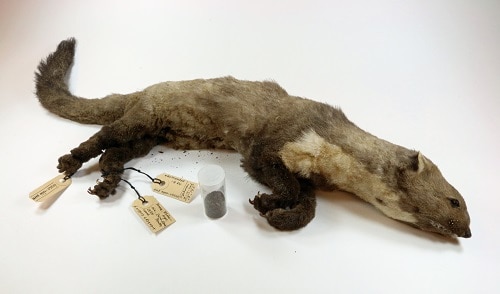
Marten on display

pine marten

You may remember the strange story last year of a marten that entered an electrical outbuilding at CERN and gnawed through a 66 kV transformer. The move ended up frying the weasel-like creature and triggering a wide power outage at the Large Hadron Collider (LHC). But when another marten met its doom in November 2016 by chewing on an 18 kV transformer, the animal was kept for posterity, rather than being disposed of like its chum. The 18 kV marten was stuffed and earlier this year went on display at the Rotterdam Natural History Museum’s Dead Animal Tales exhibition. “With a growing human population size and ongoing habitat destruction and urbanization, man and animal more often share the same environment. We have to be prepared for more collisions,” museum director Kees Moeliker told Physics World. “This tiny creature shutting down the LHC is, in a way, poetic, and as such deserves a place of honour in our exhibit.”

(more…)

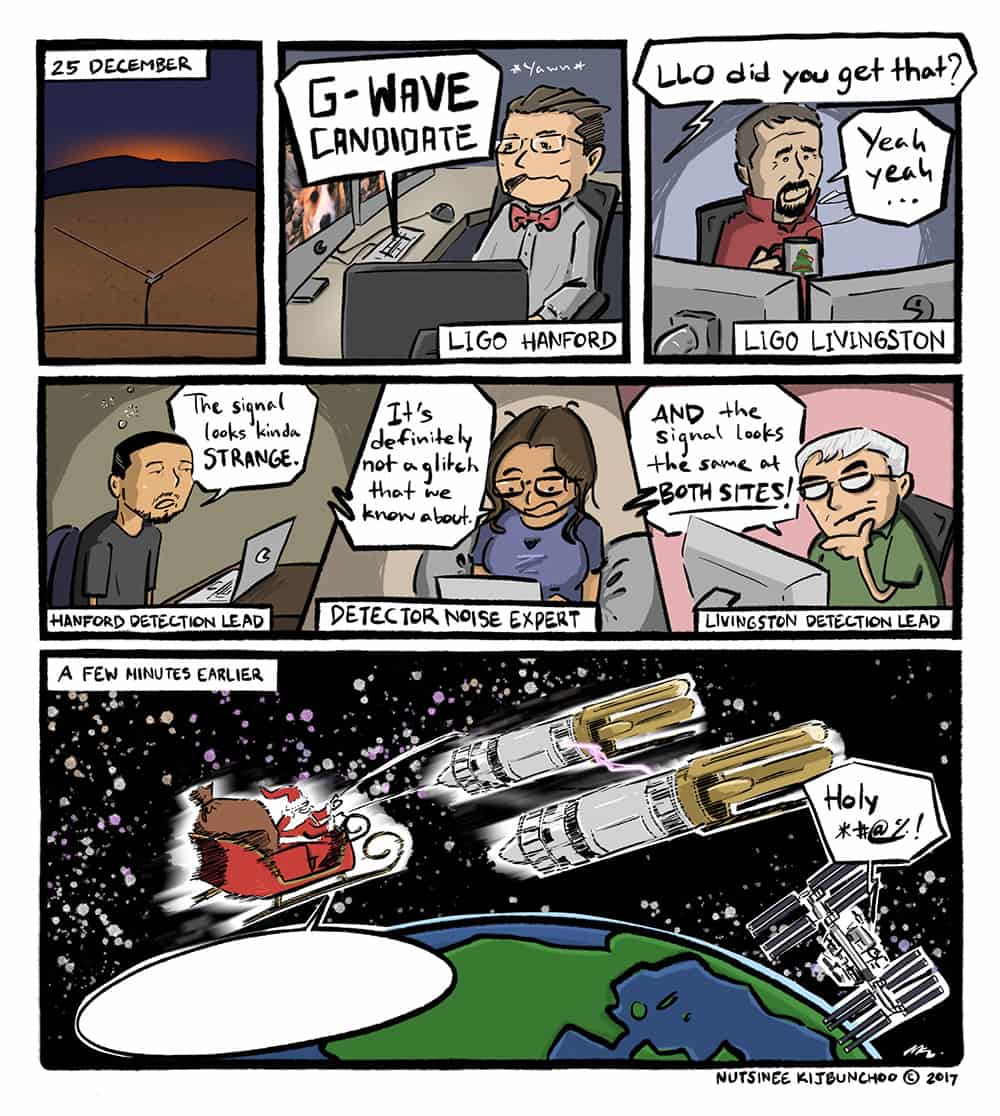
A very LIGO Christmas

By Tushna Commissariat

Every December, we like to do something special for you, dear readers, as the year draws to an end. As you are undoubtedly aware, some of the most exciting news in physics this year came from the world of gravitational-wave research and multimessenger astronomy, in the first ever observation of a neutron-star merger. Indeed, this global discovery bagged our 2017 Breakthrough of the Year award, while the pioneers of gravitational-wave astronomy won this year’s Nobel prize in physics.

(more…)

The world of physics in 2018

As a new year approaches, it is time for me to predict the events of 2018 that will most affect the physics community. It’s a challenge I set myself each year but some predictions are, thankfully, easy because they centre on events already in the calendar.

So I can declare with reasonable confidence that the European Space Agency will launch the BepiColombo mission to Mercury in October and that China intends to send the first-ever spacecraft (Chang’e 4) to the far side of the Moon. In July NASA will send a craft – the Parker Solar Probe – closer to the Sun than any that’s gone before. And barring any disasters, two asteroid-sampling missions – Japan’s Hayabusa 2 and NASA’s OSIRIS-Rex – will reach their targets in July and August respectively.

Multiple messages

Astronomers will make further exciting findings from the LIGO and Virgo detectors, which last year revealed gravitational waves from colliding neutron stars and bagged the Physics World Breakthrough of the Year award. The neutron-star observation heralded a new era in multimessenger astronomy in which gravitational-wave, electromagnetic and cosmic-ray observations will open new windows into the cosmos. LIGO and Virgo are now offline, but will switch back on in October after upgrades and – who knows? – may even see signals from a supernova. Meanwhile, data from the Event Horizon Telescope may yield the first direct image of a black hole.

In more mainstream physics, I see research into quantum technologies surging ahead with yet more money being channelled into quantum-computing start-ups. The debate about metallic hydrogen will rumble on. CERN will turn its Large Hadron Collider back on in May, while China will continue planning its own particle collider. And there will be a myriad of advances in the rest of physics, from atoms and optics to plasmas and biophysics.

Brand new website

Here at Physics World we’ll be busy too. In early 2018, we’ll be relaunching our website physicsworld.com as well as our latest careers guide We’ve got special issues lined up on plant physics, time and SI units. We’ll be boosting our industry coverage through Focus Issues on the likes of computing, energy technologies and optics and photonics. And there’ll be two special reports on Japan and China, plus more Physics World Discovery mini-ebooks .

Sadly, I also foresee a few non-events. Donald Trump, foolishly, still won’t have appointed a presidential science adviser by year end. The Nobel Prize for Physics – yet again – won’t be given to a woman (only two female physicists have ever won the prize). And physicists in the UK and EU will still be worried about the impact of Brexit, with Britain’s role in the Horizon research programme remaining frustratingly unclear.

Moving on up

But I don’t want to end on a dud note so let’s look forward to the Institute of Physics, which publishes Physics World, moving this year to new – and very different – headquarters in London’s “knowledge quarter” at King’s Cross. Stay tuned for developments

Reviewing a year in industry

By Margaret Harris

Normally when someone talks about their “year in industry”, they’re referring to a period spent working for a company. My own “year in industry” has been rather different: instead of spending 2017 working in a physics-based industry, I’ve been reporting on half a dozen different ones. From nuclear energy and nanotechnology to optics and instrumentation, I’ve heard from physicists who’ve founded new firms, developed new products and navigated their way through tricky waters with financial backers. Here are a few highlights.


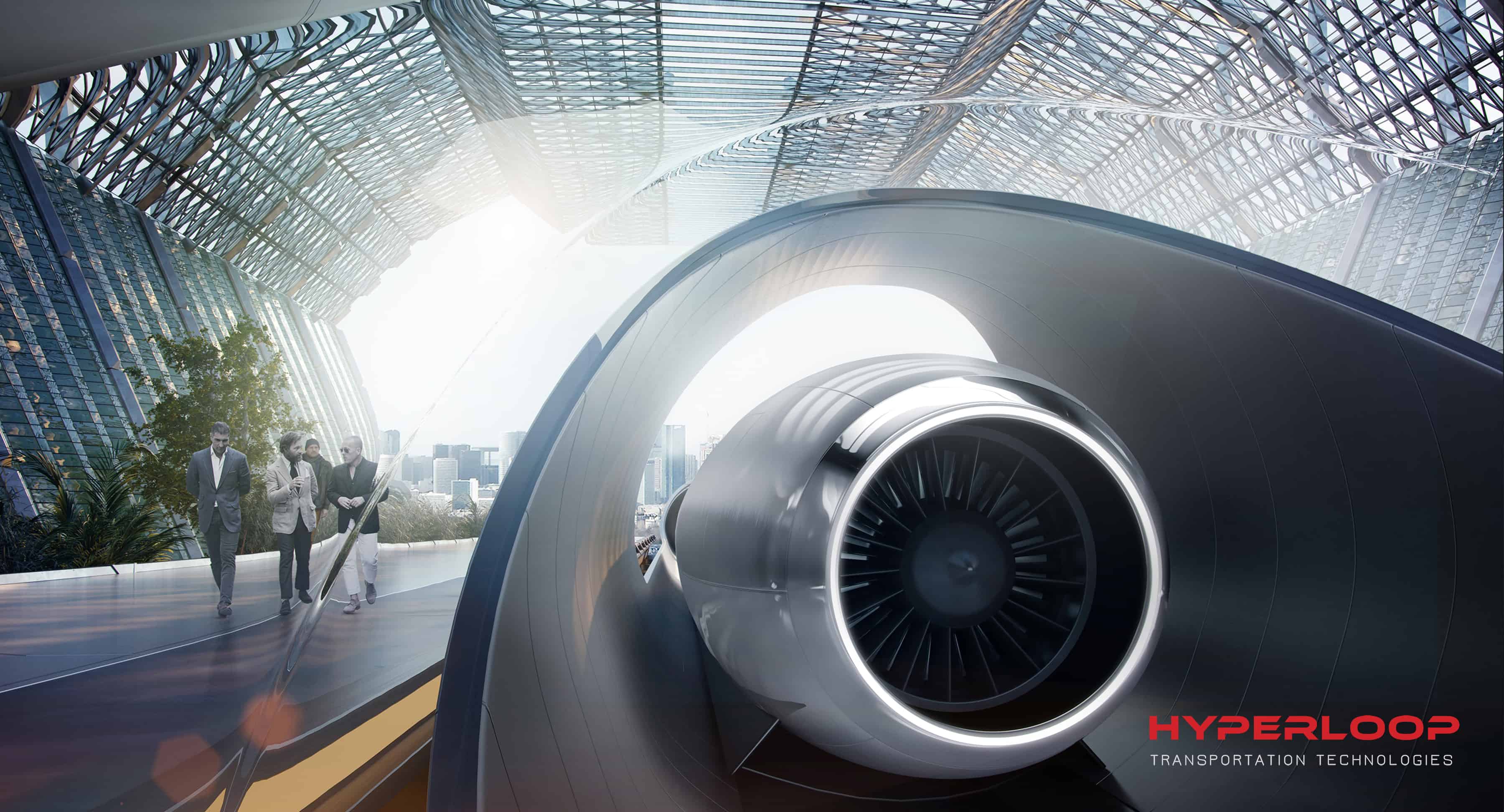
From hype to hyperloopPress02_HyperloopTT_highres

2017 was another high-profile year for physicist and entrepreneur Elon Musk, with his company SpaceX landing a re-used Falcon 9 rocket back in March and his other firm, Tesla Motors, starting to deliver its much-anticipated Model 3 to mere mortals just this week. But in between, there was also a little bit of hype about Musk and hyperloops: vacuum-based systems that could, according to proponents, transport passengers cheaply at more than half the speed of sound. It sounds far-fetched, but as Jon Cartwright revealed in this feature article for August’s Physics World Focus on Vacuum and Instruments, it’s an idea with a long history.

(more…)

World’s smallest Christmas card and a fusion Christmas number one


By Hamish Johnston

We are winding down for Christmas here at Physics World and taking a well-deserved break before we launch into 2018.

Over the next week or so, stay tuned for festive content including a comic caption competition on Christmas Day that is inspired by this year’s Nobel prize.

(more…)

Non-fullerene organic solar cells show speedy charge separation

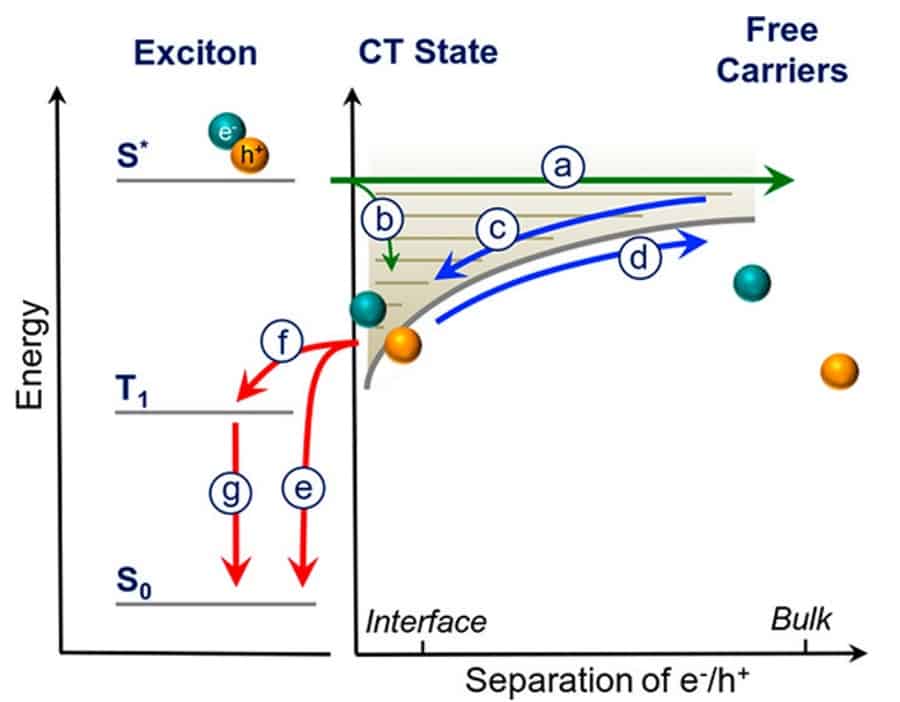
When a photon is absorbed by a solar cell, the first step to producing electricity is to separate the electron and hole pair (exciton) it creates, so that these opposite charges can travel to opposite electrodes. In an organic solar cell (OSC), the charges are physically separated between two materials – one to collect the positively charged holes (the donor) and one to collect the electrons (the acceptor). Optimising charge transport in this material blend is the key to OSC efficiency. In an article published in ACS Nano last month, Yasunari Tamai and coworkers at the University of Cambridge(UK) and the Georgia Institute of Technology (USA) showed that charge separation with a new small-molecule acceptor material (based on perylene diimide, PDI) occurs on the same ultrafast (< 1 ps) timescale as in a state-of-the-art fullerene-derived acceptor, disproving the conventional wisdom that smaller molecules had an efficiency-limiting disadvantage at this initial step.

Breaking the electron-hole pair is only the start of the journey for charge separation in a solar cell: charges have a bumpy ride once separated and can still recombine and decay before they can be captured at their electrodes. Ultrafast spectroscopy enabled the researchers to resolve this journey, identifying the benefits and bottlenecks for charge transport within different OSC materials, and illuminating new pathways to efficient OSC design.

Last year, a different team found that a similar PDI-based small molecule acceptor could achieve fast charge separation, creating a non-fullerene OSC with 9.5% efficiency (reported in Nature Energy). Now Tamai and coworkers have blended either their PDI acceptor or the state-of-the-art fullerene acceptor (PCBM) with a common donor polymer. Despite sacrificing some efficiency, these blends allowed them to directly compare the two acceptor materials, and to confirm that the spread-out electron states of the larger fullerene molecules were not crucial to quickly pull apart the initial exciton pair.

Tracking charge transport

To track the journey of electrons and holes to sub-picosecond resolution, the team used a technique called transient absorption spectroscopy. The technique maps the energy landscape of the polymers by creating excitons with an initial ‘pump’ laser pulse, and then measuring how the absorption has changed with a second pulse at different delay times. Tracking absorption changes across multiple wavelengths, they can extract what electronic states are evolving, over femtosecond to microsecond timescales.

The researchers found the PDI dimer still lagged behind the fullerene-based acceptor on ‘longer’ (nanosecond) timescales. From 1 ns after excitation, the evolution of its absorption suggested electrons in the PDI blend were more likely to meet holes from different exciton pairs and recombine. Electrons also travel 1-2 orders of magnitude more slowly in the PDI blend than in the fullerene acceptor, giving them more time to recombine with holes before extraction.

Tamai and coworkers have signposted ‘later-stage’ recombination and slow electrons, not initial charge separation, as roadblocks for non-fullerene OSCs. This shows the way for scientists to optimize these new small-molecule acceptors, with blends that improve on the 5.9 % efficiency reported here. Their next step is to beat the > 10 % efficiency of the more mature fullerene OSC materials, and eventually to compete with the 20 % efficiency ballpark of commercial silicon technology, as a cheaper, more flexible option for scalable, sustainable solar energy harvesting.

Sorting T-cells using biomolecular tension

T-cells, which recognize pathogens such as viruses and bacteria, play a crucial role in the immune system. The affinity (or stickiness) with which T-cells bind to pathogen-based biomolecules determines how effective they will be in mounting an immune response.

Some emerging cancer treatments employ T-cells trained to recognize cancer cells and, for such therapies, the ability to sort T-cells based on affinity could potentially improve clinical outcomes. Unfortunately, existing techniques for testing affinity are low-throughput and not suitable for clinical use. Now, a team of researchers at Massachusetts Institute of Technologyhas used microfluidic technology to take the first step towards high-throughput affinity-based T-cell sorting (Biomicrofluidics11 064103).

As T-cells move throughout the body, they scan for foreign invaders using a biomolecular sensor called the T-cell receptor (TCR). The T-cell has TCRs on its surface, and as the T-cell crawls, these TCRs stick to pMHCs, signalling molecules that can indicate the presence of pathogens. Some TCR-pMHC bonds are stronger than others, and if the two bind with sufficient affinity then the T-cell will initiate an immune response.

To test the affinity of an individual TCR-pMHC pair, the T-cell physically pulls on the TCR to try to break the two apart. The longer the TCR-pMHC pair can stay bonded under tension, the more likely the T-cell is to initiate an immune response. Single-molecule testing techniques can mimic this mechanical test by applying tension to a single TCR-pMHC bond, but such approaches can only test one cell every few minutes. That is far too slow to sort through the millions of cells needed for T-cell-based therapies. As such, the team, led by Scott Manalis, is exploring new approaches for increasing throughput by using microfluidics.

Microfluidics uses micrometre-scale fluid-flow channels for applications where very small volumes of liquid must be moved around (for example, small-volume chemistry or single-cell manipulation). The technology is often used in conjunction with a microscope to sort cells based on visible cues such as size, shape and colour. In this study, the team used a clever trick to estimate the strength of TCR-pMHC interactions in single cells flowing through a microfluidic device.

Manalis and colleagues designed a long, zig-zagging “serpentine” microfluidic channel through which they flow individual T-cells. They also embedded pMHC-coated beads in the channel. As the T-cells move through the channel, they sometimes brush up against the pMHC-coated beads. The T-cells’ TCRs then interact with the pMHC on the beads.

Importantly, the force of fluid flow is transmitted to the TCR-pMHC bonds, mimicking the mechanical test used naturally by T-cells and ultimately leading to bond rupture. The T-cells continue to flow through the channel, but their flow velocity decreases with increased affinity of TCR-pMHC interactions. The researchers measured this reduction in flow velocity using a standard microscope, observing a significant reduction compared with T-cells flowing past non-pMHC-coated beads.

By using a microfluidic device to mimic the mechanical biomolecular test used by T-cells, the team observed a modest increase in testing throughput, to 4-5 cells per minute. “Our future efforts will be geared towards further increasing throughput,” says first-author Max Stockslager. He noted that unlike previous techniques, this sorting method is scalable as several microfluidic channels can be imaged at once. Looking forward, the researchers also hope to translate this technique into a clinical tool for improving T-cell-based therapies.

2017 in sights and sounds

It’s fair to say, 2017 has been another colourful year online, where visual memes continue to stir strong emotions against increasingly divisive political backdrops. Science is not some remote activity completely detached from society, so our videos and podcasts this year reflect the increasingly politicized nature of science. But don’t worry, it’s not all a complete misery-fest. We also celebrate science’s unwaning ability to evoke awe and wonder, as well as profiling some of the next generation of scientists in the US.

How politicians misuse and mangle science

How politicians misuse and mangle science

At the start of 2017 we relaunched our monthly podcast by bringing in a new regular host. Andrew Glester is a science communicator and produces his own popular-science podcast The Cosmic Shed. In the June episode of the Physics World podcast, Glester spoke with Dave Levitan, author of the book Not a Scientist: How Politicians Mistake, Misrepresent, and Utterly Mangle Science. Levitan grapples with the populist politics that rejects the claims of specialists and pitches itself against what it perceives as the intellectual and political elite. The podcast features scientists and commentators from both sides of the Atlantic.

Marching for science

On Saturday 22 April thousands of people took to the streets of Washington, DC to voice their support for science. Endorsed by more than 200 scientific organizations including the American Physical Society, the “March for Science” sought to promote the value of science – and scientists – to society. Physicists were among those marching and they explain their reasons in this video report from the day, which also features some of the most memorable outfits and signs. On the same day, there were there were almost 600 sister events across the globe, including a rally in Bristol where Physics World is produced.

How science gets women wrong

How science gets women wrong

Those who have already listened to the December episode of the Physics World podcast will know that our book of the year 2017 award has gone to Angela Saini for Inferior. The much-discussed thesis re-examines some of the science underpinning long-standing gender stereotypes. Saini, a UK-based science journalist, also shines a light on some of the contemporary research revealing that gender differences are not as straightforward as we might think. In our September podcast, Glester discussed the issues with Saini and travels to Birmingham for the International Conference on Women in Physics 2017.

Human organs on a chip

This year also saw the last films from our “Faces of Physics” series. This collection of short films profiles the lives of people working in physics, exploring their motivations and the impacts of their work. The concluding film in the 5-part series features Samira Musah, a researcher with an intriguing goal – to recreate a human kidney on a chip. A bioscientist by training, Musah is now part of an interdisciplinary team of researchers at the Wyss Institute for Biologically Inspired Engineering in Boston. Human Organs on Chips takes you inside the lab to find out more about this futuristic technology, which could lead to personalized drug development. You can find out more about the Wyss Institute’s philosophy and spirit of enterprise in this Q&A with its founding director Don Inger, taken from our 2017 special report on physics in the US.

Exploring the cosmos with gravitational waves

Exploring the cosmos with gravitational waves

Having pretty much broken the internet last year with the announcement of the first ever detection of gravitational waves, LIGO researchers refused to lay low 2017. On 3 October, LIGO pioneers Rainer Weiss, Barry Barish and Kip Thorne were awarded the 2017 Nobel Prize for Physics. Less than two weeks later, astronomers gathered at the Royal Society for the announcement of arguably the most significant breakthrough of all. A so-called “kilonova” – the merger of two neutron stars – had been detected by the LIGO–Virgo collaboration as well as being observed by dozens of other telescopes, across the electromagnetic spectrum. These combined observations represent the first example of “multimessenger astronomy” involving gravitational waves, opening up a new way of looking at the heavens. In the November podcast, Glester reported from the Royal Society meeting met a range of researchers who provide a broad background to this burgeoning field. For a more in-depth look at the significance of these latest discoveries, take a look at Multimessenger Astronomy by Imre Bartos and Marek Kowalski, a free-to-read ebook from the Physics World Discovery series.

Cassini’s Grand Finale

Since entering orbit around Saturn in 2004, NASA’s Cassini mission has transformed our understanding of the famous ringed planet and its moons. But on 15 September this year the mission came to an abrupt ending when the spacecraft plunged into Saturn’s atmosphere, burning up on entry. This death dive marked the end of Cassini’s so-called “Grand Finale” tour, which saw it take 22 plunges into the space between Saturn and its rings between April and September. This video provided a guide to the Cassini’s dramatic swansong while reflecting on the mission’s key achievements. To learn more about Cassini’s Grand Finale tour, check out this article from the September 2017 issue of Physics World, written by mission scientist Joshua Colwell. Colwell has also written an illustrated ebook, which documents the key discoveries of Cassini’s 13-year mission.

Rising stars of US science communication

Finally, in November we published interviews with 10 early-career scientists based in the US, who discuss their career ambitions and the challenges they face in achieving those dreams. These scientists were invited delegates at ComSciCon 2017, a national workshop for promising science communicators. This interview is with Chani Nava, an astrophysics PhD student who has just finished her first year at Harvard University. Having originally started an undergraduate degree in medicine, Chani switched to a physics programme after coming to understand all the career opportunities that would be open to her. You can see all the other interviews on our multimedia pages.

So the curtain draws on another lively year of audiovisual journalism. Make sure you return in 2018 when we will be pressing the green button on our new look website, which will be packed with thought-provoking podcasts and videos. Look out early in the year for a new video series exploring global environmental challenges and innovative solutions. For now though, that’s a wrap.


Copyright © 2026 by IOP Publishing Ltd and individual contributors