

Uncertainty and punk physicists

Heisenberg: the Uncertainty Principle, written by Simon Stephens, is currently showing at Wyndham’s Theatre in London until 6 January 2018. It stars Anne-Marie Duff as Georgie and Kenneth Cranham as Alex and tells the tale of their chance meeting at a crowded train station and their ensuing relationship, which changes both their lives forever.

How did you first come across Werner Heisenberg’s uncertainty principle and what made you base your play on it?

The idea of the uncertainty principle is something that I came across in a conversation with a very good friend of mine, a computer scientist called Jon Sedmak, who is a significant figure in American computer engineering. He worked with Dell and Apple in the 1990s, and he’s key to the team that invented the notebook computer. In recent years he has become a big champion of British theatre and we’ve become friends. In fact, we met because there was a reference to Paul Dirac in my play Punk Rock. Jon was very excited that a playwright was referencing Dirac, so he took me out for lunch. We now meet every time he’s in London and we have lengthy conversations, during which he’ll go on an aria for 10 minutes about some scientific thought he’s had that astonishes me completely.

One of the many things that Jon said that blew my mind was his very simple definition of the uncertainty principle. This notion, as much as I understood it, means that observation and prediction render each other impossible, such that the precise observation of the whereabouts of a given particle means that the prediction of its momentum is impossible, or that a precise measurement of the momentum renders the actual observation of the particle impossible. I thought this was thrilling, not because I understand anything about physics, but because it struck me that was what life was like. If you watch people, if you know and study and think about people, the people you know best are the people who are most likely to do something or go somewhere that will completely take you by surprise. And if you have an understanding of where somebody’s going or what they’re about to do, it probably means you’re not looking at them properly. I was so excited by that, the way in which the scientific principle works as a metaphor for human behaviour, that I built the play around it.

Have you always had an interest in quantum mechanics or science in general?

I’m 46 and I come from a time when the delineation between sciences and the arts was really binary. Growing up, I defined myself as definitely into the arts, definitely into literature, definitely into music, and definitely not into maths or science. It’s a ludicrous position to take, but one I took very vehemently. It’s only through my son Oscar, who has just gone to the University of Oxford to study maths, and through my friendship with people like Jon Sedmak that I’ve come to realize that science and mathematics are as creative and vital and exciting as any kind of music I’ve grown up listening to or films I saw or plays I read or novels I read or any of that.

So did you research Heisenberg’s uncertainty principle any more than those conversations with your friend?

No, I really didn’t, which on the one hand is shaming, and on the other hand is shaming! We had a friend of the director, a scientist, come in to talk to the cast on the first day of rehearsal, and he tried to explain to us some of the implications of the thinking. I think there’s something very interesting about the emotional consequences of quantum thinking…I find, weirdly, there’s something reassuring about it. It is good to be able to accept uncertainty, unpredictability, chaos, as being a fundamental element of what it is to be alive. We don’t know what’s going to happen. We have an impulse to try to impose a narrative on the chaotic. But if we can live without doing that, if we can accept the chaotic, if we can accept the wildly unpredictable, then maybe we’ll live with a certain level of grace, and that’s a good thing, isn’t it?

Is Heisenberg the most scientifically themed script you have written?

I’d be really loathe to say that it has a scientific theme. But just as a human being, my relationship with my son Oscar has been so illuminating, especially as he became increasingly excited by pure mathematics. The notion that the scientific terrain excited and inspired somebody who was so important to me made me reconsider that world. And that reconsideration is actually found in lots of the plays that I’ve written since he’s become a cognitive adult. There’s a quiet nod to it in my stage adaptation of The Curious Incident of the Dog in the Night-Time. It’s not that I’ve written other plays inspired by scientific theories, but I’ve re-accommodated scientific thinking into my thinking.

One of the things Oscar always says to me is that the essence of science for him isn’t necessarily the rudiments of the history of scientific thought, so much as the essence of scientific approach. The idea that things can be tested and proven, and the Galilean notion that we assume things not to be the case until we test and test and test them, until we’re forced to conclude that they are the case. And that type of scientific thinking, that quite secular scientific thinking, has been something that has inspired and galvanized me as an artist.

What do you feel about the perceived boundary between arts and sciences today?

I don’t spend enough time with teenagers now to know whether it’s still as paralysing a concept as it was when I was a kid. All I can say from my own experience is that when I started to get my head around characters like Dirac or Heisenberg, when I found out about how radical their thinking was, it reminded me of the kind of radicalism of the great artists and great musicians that I grew up with. There was something as beautifully punk about Heisenberg as anything Lou Reed or Iggy Pop ever did. They might have done it differently, but the ferocity of their intellectual thinking in defiance of all received wisdom is common to them all.

The function of the artist is to be a great truth-teller, even when it defies convention, and that’s what the great scientists do as well as the great artists. They ought to be mutually dependent upon one another. How we do that is through our teachers, through the way we talk about science, through the way we talk about arts. I think it’s happening more now. I think there are more and more artists who are excited by scientists. And the scientists I’ve spent time with, they’re much more excited about the unprovable, and that seems to me to be completely the terrain of the arts, as well. I was sceptical about maths and science when I was a kid, because I thought there was a wrong answer. But the more I’ve come to learn about science, the more I’ve realized that it’s a constant, evolving, communal exploration and experiment. And to me, that is exactly like making art.
Opening up the physics closet

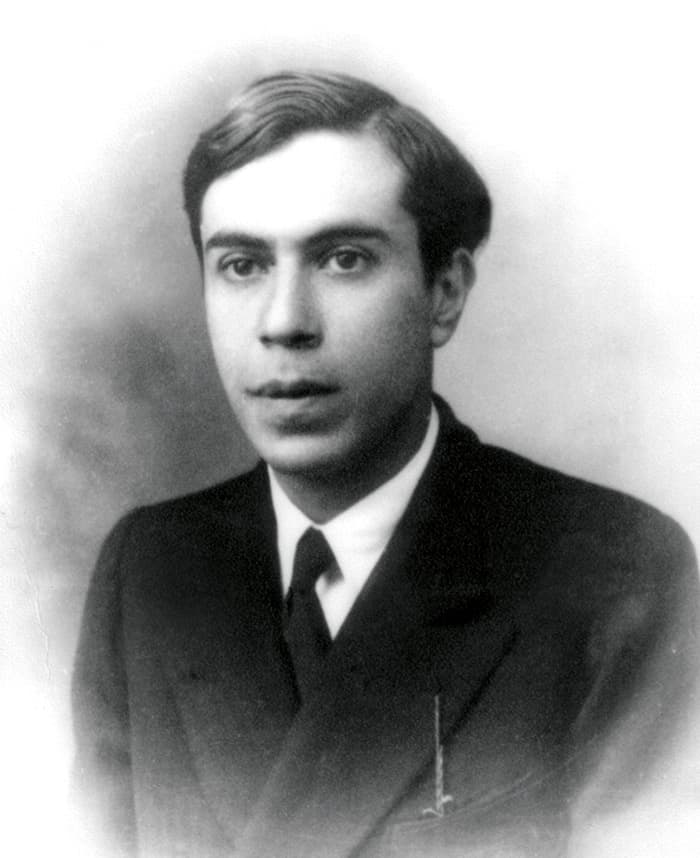
Image of the physicist Ettore Majorana

There are many hypotheses regarding the mysterious disappearance of the Italian physicist Ettore Majorana in March 1938 aged just 32 while on a boat trip from Sicily to Naples. Was he depressed and committed suicide? Did he become a spy, join a monastery or relocate to Latin America? Yet there is one other possible explanation behind his disappearance, which is that Majorana’s sexuality may have played a role.

In the 2013 book Ettore Majorana, lo scomparso e la decisione irrevocabile, Stefano Roncoroni, who was a great nephew of Majorana, writes that family lore supports this view. It is also backed by evidence that police searched for Majorana in parts of Naples typically associated with men who engaged in sex with men.

I have no incontrovertible evidence to support or refute these claims, but as a gay man and a physicist myself, this suggestion felt like hearing the first whispers of a painfully revealing family secret. Finding out that Majorana may have tried to navigate the myriad of barriers maintained by families, institutions, colleagues and society, while hiding his sexuality, elicits a combined sense of awe and deep sadness.

Even if this assertion is highly speculative, other gay scientists have suffered similar troubles. The computer scientist Alan Turing, for example, was sentenced to chemical castration despite his major contributions in the Second World War. Then there was the Prussian naturalist Alexander von Humboldt, whose love life remains a secret despite accounts that he left most of his estate to his valet and purported lover.

Out gay men and lesbians – as well as trans and gender non-conforming people – remain rare in physics, as are women and people from minorities who have been subjected to systematic racial discrimination. Indeed, some of us inhabit multiple excluded identities and if we share anything, it is a common loss of history. We mourn those who could have contributed to science but were either unable to navigate the pitfalls or unwilling to achieve the level of “self-erasure” that could have made them more “acceptable” to the scientific community.

Many of the factors that cause such people to feel excluded are attributes of the broader society in which physics is embedded. These include inequitable access to education, the risk of ostracism from unsupportive families and the weight of discrimination harming one’s mental health. Even so, the physics community must examine how to eliminate or mitigate these barriers or, at the very least, support those who must surmount them. To not engage in this work is to impoverish our field.

While the situation has improved in recent years, exclusion still persists. We live in a time when it is common in physics to deny that there are such barriers. The dominant paradigm that I and many others sense in our profession is: “I don’t want to hear about your personal life, your gender, your race; let’s just stick to physics.” Trans, gay, lesbian and bisexual people are familiar with this rhetorical device – it is “the closet” that creates a maze of awkwardness and concealment.

In a study undertaken by the American Physical Society in 2016, which I chaired, we surveyed and interviewed LGBT physicists about their experiences in their learning and work environments. The study found that isolation and closeted behaviour remain common in physics, with high levels of harassment leading many to consider leaving the field. Even in environments that might otherwise seem supportive, LGBT physicists often choose closeted behaviour for fear of the repercussions of being open, which they find hard to gauge. Many respondents also reported not knowing who around them may be supportive, knowledge that could have helped them to feel comfortable in their university or workplace.

Physics also has a pervasive gender problem. From our surveys and interviews, we heard that discrimination is disproportionately borne by women and those who self-identify as gender non-conforming. Transgender physicists face the most toxic environments, having to deal with, for example, harassment, exclusion from career-enhancing opportunities and mis-gendering – being routinely referred to by the gender and/or name with which they do not identify.

But some of the worst workplace environments are faced by LGBT physicists subject to racial discrimination, who have to deal with an attitude of assumed incompetence that is both demoralizing and demeaning. They reported being uncertain which aspect of their identity makes colleagues so dismissive. Blindness of those around them to broader societal injustices faced by minority communities undermines their sense of collegiality with other physicists.

When our report was published, some online comments exhibited negative stereotyping and closeting behaviour by contributors who claimed to be physicists, inadvertently paying testament to the need for the report. Physics can do better. Working on a committee of physicists from a spectrum of sexual identities and gender expressions was an inspiration for all involved. Particularly notable was the strong leadership of trans women, who have served as a grassroots vanguard working on these issues.

While we were working on the report, Science published an interview with MacArthur fellow and astrophysicist Nergis Mavalvala from the Massachusetts Institute of Technology in which she proudly noted her existence as an “out, queer person of colour”. This interview was a tonic for those of us on the committee who had heard so many negative, first-hand accounts. Humanizing the queer physicist doing physics is essential if we are to inspire future generations not to be relegated to the physics closet.

Quantum Circuits bags $18m in first-round financing

The start-up company Quantum Circuits Inc (QCI) has attracted $18m in first-round financing. The firm is based in New Haven, Connecticut and was founded in 2015 by Michel Deverot, Luigi Frunzio and Robert Schoelkopf – all physicists at Yale University – who pioneered the transmon superconducting quantum bit and associated circuitry and quantum algorithms.

QCI aims to develop universal quantum computers that can be used to solve a wide range of problems. The firm says that early applications could include drug design, improving chemical processes, finance and machine learning.

Now hiring

The firm currently has seven employees in management, scientific and engineering roles. Some of the new money will be used to hire engineers and software designers to transform QCI’s prototype quantum technology into practical hardware and algorithms.

Schoelkopf will take a leave of absence from Yale starting in January 2018 to become chief executive officer of QCI. “We are at a tipping point in quantum technology where we understand how to build machines to tackle problems that are otherwise uncomputable,” he says.


Meteoroid seen from space, Nobel laureates speak their minds on group awards and keeping up with technology


By Hamish Johnston

Fix your eyes on the upper-right portion of the above video and pay particular attention about seven seconds into the footage. You will see a fireball falling through Earth’s atmosphere. The video was taken from the International Space Station by the Italian astronaut and prolific photographer Paolo Nespoli.

Was the fireball a piece of space junk, or perhaps a tiny piece of asteroid? And how fast was it moving? For an analysis of what Nespoli may have seen, go to: “The backstory: Paolo spots a meteoroid from the ISS”. There you will also find a fantastic gallery of photographs taken by Nespoli.

Winning a Nobel prize is a sure-fire way of getting people to listen to you. While some laureates have been known to espouse some rather loopy ideas, most speak with humility and grace – and try to use their platform to make the world a better place.

It’s definitely the latter for two of this year’s newly-minted physics laureates, Kip Thorne and Barry Barish. Thorne tells the Los Angeles Times that he would rather share his Nobel prize with the entire LIGO collaboration, something that he has suggested unsuccessfully to the Nobel Foundation. Thorne also laments that the American people seem to have lost their enthusiasm for science and technology and tells the Times that he is currently working on a volume of poetry.

Meanwhile over at Symmetry, Barish explains how the relationship between physics and technology has changed in his lifetime. Gone are the days when physicists were at the forefront of technological development, which he argues is now the domain of industry. “I think we need to become really aware and understand the developments of technology and how to apply those to the most basic physics questions that we have and do it in a forward-looking way,” says Barish.

Arecibo Observatory lives on, but with less money

The US National Science Foundation (NSF) has announced that it will continue to support the Arecibo Observatory in Puerto Rico, which was hit by a hurricane on 20 September. In a statement, the NSF says that it will keep the radio telescope working, but will reduce annual funding for the observatory from $8m to $2m within the next five years. The US-government agency is now looking for another partner to take on the bulk of Arecibo’s funding.

New facilities

The decision to reduce funding in Arecibo comes as the NSF faces tight budget constraints, related to the construction of new facilities, such as the Large Synoptic Survey Telescope that is being built in Chile.

“This plan will allow important research to continue, while accommodating the agency’s budgetary constraints and its core mission to support cutting-edge science and education,” says a statement from the NSF.

Built in the 1960s, Arecibo is a 305 m-diameter antenna that is built into a natural sinkhole in Puerto Rico’s limestone landscape. It is one of the world’s largest radio telescopes and astronomers have used Arecibo to discover the first binary pulsar and the first extrasolar planets.

Hope fades for axion-like dark matter

Results from an experiment designed to test the limits of charge–parity (CP) symmetry have been used to restrict the possible mass range of a candidate dark-matter particle. Writing in Physical Review X, researchers with the international Neutron Electric Dipole Moment (nEDM) collaboration report that the absence of oscillations in the electric dipole moment of ultracold neutrons and mercury-199 atoms rules out axion-like dark-matter particles with masses between 10-24 and 10-17 eV.

Axions were first proposed to explain the lack of CP symmetry-breaking in strong-force interactions, although they have not yet been observed. Their existence could also account for some proportion of dark matter, which is the invisible mass component of the universe.

Evidence for CP symmetry-breaking was the goal of the nEDM group’s experiments at the Paul Scherrer Institute in Switzerland. Their apparatus was designed to detect signs of a finite electric dipole moment (EDM) in the spin precession of neutrons and mercury nuclei. The researchers realized, however, that the same data might also reveal the presence of axions.

Suffused with axions

The small mass predicted for axions means that they must permeate the galaxy if they are to contribute significantly to the universe’s dark matter. Interactions between this axion field and gluons and nucleons should produce oscillations in the EDM of the neutrons and atoms in the experiment. No such effect was detected; nor was there any sign of the axion “wind” caused by the solar system’s passage through the galaxy’s dark matter halo.

As a result, the researchers were able to put limits on the axion–gluon coupling strength, and to exclude a wide range of masses for the particle. Longer and more sensitive measurements in the future should make even lighter axion masses accessible to observation.

LIGO bags another black-hole merger

By Hamish Johnston

They have done it again. Physicists working on the LIGO gravitational-wave detectors in the US have announced the observation of another black-hole merger.

This event was spotted on 8 June 2017 and involved two black holes combining to form a black hole 18 times more massive than the Sun. The Virgo detector in Italy did not see the event because it was not switched on. This is the fifth observation of gravitational waves from merging black holes seen by LIGO, which along with Virgo also detected a signal in August from the merger of two neutron stars. Unlike the neutron-star event, no electromagnetic radiation was seen from the merger.

The event involved black holes with masses seven and 12 times that of the Sun, making it the first time that LIGO has seen black holes of a similar size to those previously detected by X-ray astronomy.

The detection is described in a preprint on arXiv and a paper has been submitted to The Astrophysical Journal Letters.

There is much more about how LIGO and Virgo have revolutionized our view of the cosmos in Multimessenger Astronomy.

Discover why the philosophy of physics is vital

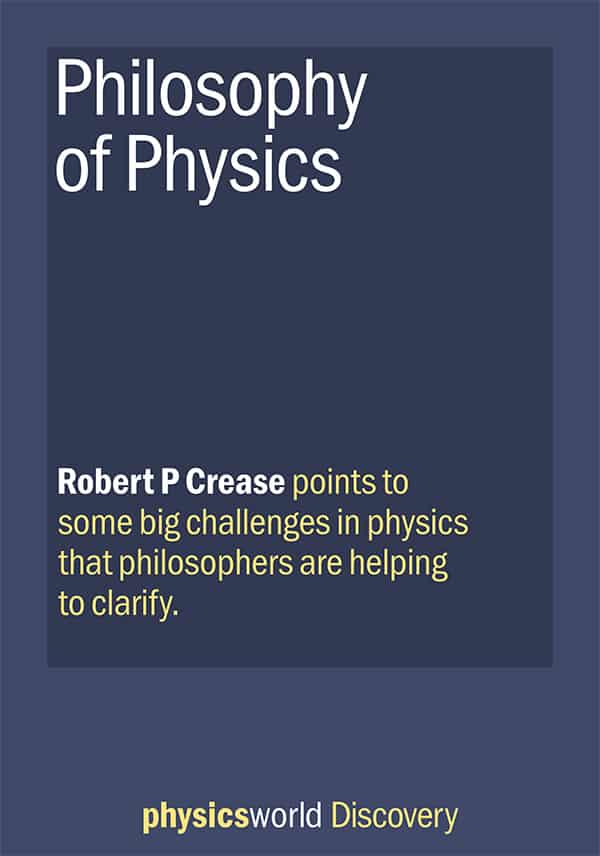
Philosophy of Physics

By Matin Durrani

Avid readers of Physics World will know that we have for many years published a monthly column called “Critical Point” written by Robert P Crease, a historian and philosopher of science from Stony Brook University in New York, in which he examines the interface between physics and the wider culture.

I’ve always felt Crease’s work is interesting but I’m aware that many physicists scoff at the notion of philosophers trying to understand how science works. It’s a waste of time, right?

Following a meal at a vegetarian restaurant round the corner from his apartment in Manhattan earlier this year, I managed to persuade Crease to write one of our new, short-form ebooks that go under the the Physics World Discovery banner. My challenge was for him to explain to physicists just what it is philosophers of physics do – and why their work is important.

You can read Crease’s book Philosophy of Physics, which has just been published, for free in either epub, Kindle or PDF formats via this link. To whet your appetite, Crease has answered some questions about his approach to philosophy and why the book is worth reading. Don’t forget there are plenty of other books in the Physics World Discovery series, ranging from multimessenger astronomy to quantitative finance.

Robert P Crease

1. What first attracted you into studying the philosophy of physics?

I was in graduate school at Columbia University when a former college roommate – then a budding science journalist – coaxed me to collaborate on stories about physics. These included an article about an accelerator under construction at Brookhaven National Laboratory, which we wrote for the New York Times, and a profile of Sheldon Glashow – who had just then received the Nobel Prize –which we wrote for the Atlantic. While writing these stories I was shocked by the difference between philosophy textbooks’ picture of physics and physics in the field, so to speak. I began to seek a “truer” – OK, loaded term alert – philosophy of physics. What motivated me was the same thing that motivates physicists: the gap between theory and what you see.

2. So what sort of research have you specialized in?

I began by tackling experimentation, because I saw a vast difference between my textbooks’ picture of experiment as something automatic and unproblematic – and the kind of constant tweaking and improvising that I saw watching scientists at work. I tried to understand experiment as like a performance, involving the conception, production, and witnessing of events that give back something more than what’s put into them. How come physicists can thoroughly understand all the elements that go into an experiment – the materials, the instruments, the theories or programming – and yet, when the performance takes place, get back something new? I found that performance is not a suggestive metaphor carried over from the performing arts into scientific inquiry but a true descriptive term. More recently I’ve become interested in what’s called the “New Big Science”, or the research ecology at large materials science facilities.

3. How does your approach differ from those of other philosophers?

Most philosophy of physics is dominated by the language of analytic philosophy, which is interested in epistemology – on the conceptual and methodological difficulties of physics, on how evidence is produced and evaluated, on the logic of scientific inquiry, and on the conceptual structure of its findings.  I’m more interested in continental philosophy, which is interested in ontology – on how we know things, and the way of being of what we know. What kind of a thing is the wave function? That’s something solved by description, not simply logic. Continental philosophers are fascinated, too, by controversies, because they are a sign of philosophical issues. Controversies about things like priority or interpretation or whether string theory is scientific indicate that philosophical issues are in play.  Such controversies signal that the antagonists each understand something about physics that they cannot yet articulate to everyone’s satisfaction – meaning that exploring these controversies may be deeply revealing about physics itself.

4. How do physicists mostly react to your work?

For the most part, very positive. Once I explain to suspicious physicists that there are different philosophical traditions with diverging interests, styles, and methods – in approaching the topic of time, for instance – it finally seems to click what philosop

5. So what do you say to those physicists who think philosophy of science is a waste of time?

Declaring philosophy a waste of time means declaring physics a waste of time. Interesting, isn’t it, that not two pages after Stephen Hawking declares that “Philosophy is dead” in The Grand Design, he then outlines his own (rather crude) philosophical theory called “model-dependent realism”. That kind of thing always happens when physicists try to escape philosophy; they can’t, they jump right back in. But if I were impatient and not my normal tolerant and helpful self I’d simply hand them this ebook.

6. Why did you write the book? 

Because you asked me. I wouldn’t have done it otherwise. I refused at first, remember? But repeated encounters with sceptical physicists convinced me that it was worth writing something that outlined the necessity of doing philosophy of physics.

7. Did you run into any surprises while writing? 

Yes. I realized the importance of explaining the differences between philosophical traditions. Not understanding the differences is one reason why many physicists do not understand philosophy. These traditions are stylistically and methodologically divergent, and to outsiders must seem like political parties squabbling over ideologies, or sports journalists arguing about what footballers should have done on the field. But these traditions have distinct perspectives on science in somewhat the way chemists, physicists, and engineers have distinct perspectives on atoms.

8. What do philosophers do again?

They seek to understand, not what physicists know, but how they know it. Physicists are constantly discovering new ways to know things, so philosophers of physics will always have plenty to do.

You can read Crease’s Physics World Discovery book Philosophy of Physics for free via this link. For all titles in the series, please go here.

Substrate exfoliation carves an opening for kesterite photovoltaics

The voltage of Cu2ZnSn(SxSe1−x)4 (CZTSSe) kesterite solar cells has so far limited their efficiency. But by carefully tweaking the composition of CZTSSe, Priscilla Antunez along with her co-workers at IBM’s TJ Watson Research Centre, have shown that the voltage output of these solar cells can be dramatically increased. This result has roused a great deal of excitement at IBM as these cells are ideal for powering the autonomous appliances that will constitute the Internet of Things.

Sulphurization boosts voltage

When solar cells are illuminated, a potential difference builds up as electrons and holes are separated across the semiconductor band-gap. By widening this gap, scientists can increase the voltage available to power a given appliance.

This principle has been manipulated by researchers working on CZTSSe for some time now, as increasing the ratio of S/Se shrinks the crystal lattice and widens the band-gap. Nevertheless, though scientists observe an increase in voltage using this method, it is accompanied by a deterioration of the device electronics, resulting in up to 3% lower efficiency.

The problem stems from the vigorous 600 °C “hot-bake” method used to add extra S into the system. The extreme temperatures facilitate the formation of Mo(S,Se)2 at the interface between the kesterite and the molybdenum substrate. Mo(S,Se)2 impedes the movement of charge-carriers to the electrode and is the key cause of power loss.

Exfoliation improves electronics

But now, researchers at IBM have developed an ingenious exfoliation process in which the essential “hot-bake” proceeds as normal and the undesirable Mo(S,Se)2 layer is simply cleaved off along with the substrate. The device is then completed by adding a more appropriate back contact to the exposed CZTSSe surface.

The implications of this development for kesterite device performance are massive. Firstly, by increasing the S/Se ratio the researchers managed to drastically improve the cell voltage by roughly 30%. But most importantly, they could do this without tarnishing the integrity of the kesterite crystal structure. Indeed, the removal of Mo(S,Se)2 from the film meant that overall device efficiency dropped by only 1%, as opposed to the 3% observed in previous studies.

Powering the Internet of Things

But it is not just this result that has piqued the interest of those at IBM. A large barrier to the full-scale implementation of the autonomous, and importantly, wireless appliances that will make up the Internet of Things, is how to power them. Individual devices will need to harness energy from their environment and so photovoltaics will undoubtedly play a key role here.

Crucially, many of these devices will operate inside at low light levels. Most commercial solar-cell technologies typically exhibit a 2–3 times reduction in efficiency upon moving from direct sunlight (1 sun) to indoor lighting (< 0.01 suns). But the IBM researchers have shown that CZTSSe exhibits only a marginal drop in efficiency at these light levels, while maintaining a reasonable voltage. Critically, the voltage of a monolithic nine-cell series connected device was found to be 2 V under office-lighting conditions – more than enough to power a typical microprocessor used for autonomous applications. This staying power could make kesterite photovoltaics the ideal candidate for powering the trillions of connected appliances that will make up the Internet of Things.

Further details can be found in Nature Energy.

Excess positrons could come from dark matter after all

The mysterious excess of high-energy positrons detected by the PAMELA satellite does not come from the two nearby pulsars, according to an international team of physicists using the High Altitude Water Cherenkov Gamma-Ray Observatory (HAWC) in Mexico. The finding opens the door to alternative explanations of the origins of the particles – including the possibility that they are created by the annihilation or decay of dark-matter particles.

The mystery started back in 2008, when scientists at PAMELA – the first satellite detector orbiting in space searching for antimatter – reported detecting an unexpectedly high number of high-energy positrons.

Since then, two plausible explanations for these observations have been debated by physicists. One possibility is that the positrons come from nearby pulsar wind nebulae, which are fast-spinning neutron stars that act as cosmic ray accelerators and produce streams of electrons and positrons. The other possibility is that the positrons are produced by hitherto unobserved processes involving nearby dark matter.

Murky cloud

The two best pulsars candidates are Geminga and PSR B0656+14, because of their age and proximity. However, by looking at gamma rays from the regions around these two pulsars, the HAWC team concluded that both pulsars are surrounded by extended and murky clouds, which positrons cannot pass through to reach Earth. While this appears to rule out the pulsars, it does not prove that the positrons have dark-matter origins.

“[The new result] constrains the pulsar explanation, which was the best… until now,” says Piergiorgio Picozza of the University of Rome Tor Vergata, who was part of the PAMELA team.

“The simplest explanation has disappeared and dark matter remains on the table, maybe gaining some extra points,” adds Picozza. “The community will now have to enter into a big discussion, which for us, is a good thing.”

Andrés Sandoval of the National Autonomous University of Mexico is HAWC’s Mexico spokesperson, and was involved in the research. He did not expect to rule out the pulsars when HAWC started its measurements. “I was very surprised at first, since we really thought they were [the sources],” he tells Physics World.

Questions remain

However, Sandoval says he would not put his money on the dark matter explanation just yet – even though, admittedly, it would be more exciting. “As a conservative physicist, I’d say the sources have to be pulsars, because that’s what we know more about. There are still so many questions left up in the air,” he says.

Besides the annihilation or decay of dark matter particles, the HAWC team believes the positrons could come from other pulsars, although there are no better candidates than the two just ruled out. Other types of cosmic accelerators, such as micro-quasars and supernova remnants, could be sources, or the positrons could be the result of secondary particle production.

Sandoval says that even though this is the most important discovery coming from the HAWC collaboration so far, they still have more to come, and he expects to announce new findings from previously unexpected sources by spring 2018.

Still not convinced

Not everyone has discarded the Geminga and PSR B0656+14 pulsars as the high-energy positron sources, including Dan Hooper of the University of Chicago, who is still not convinced.

Hooper and his team have a different interpretation for HAWC’s data and they propose the exact opposite of what the HAWC team suggests. In a paper submitted for publication earlier this year, they argue why the two pulsars can take credit for the positron excess.

“I’m pretty sure we’re right,” says Hooper. He says it all boils down to a problem of interpretation, on how the particles travel through the interstellar medium. “We looked at the same facts, but we have different interpretations of how the particles diffuse,” he says.

Riding the winds

Hooper and his team argue there are convective winds (the winds of electrons and positrons these pulsars produce that are further accelerated by the shock with the surrounding interstellar medium) strong enough for the positrons to make their way to Earth.

The HAWC team have addressed the conflict between their findings and Hooper’s, and they argue their new measurements support a model in which the particles travel simply by diffusion, rather than by convective winds. They add that they have found no energy sources that would be able to power strong winds.

“I think that the new data from HAWC is super exciting and we have every reason to believe this is just the tip of the iceberg of what’s next,” says Hooper.

The HAWC observations are described in Science.

Physics World’s Matin Durrani and James Dacey visited HAWC and you can watch their tour of the facility in this video: “ On top of the volcano – part two”. You can also watch a film about HAWC astronomers in “ Faces of Physics: a HAWC eye on the sky“.

Copyright © 2026 by IOP Publishing Ltd and individual contributors