Transforming electricity into movement is a challenge at the root of technologies from robotics to drug delivery, and is performed by a device called an actuator. Researchers in the US have presented an electrochemical actuator made from nanosheets of molybdenum disulphide (MoS2) capable of lifting 150 times its weight consistently over hundreds of cycles. The device can be cycled at up to 1 Hz, which is much faster than the rate achieved until now by similar devices.
MoS2 has a structure similar to that of graphite, with layers of strongly bonded atoms, but weak bonds between the layers. This means it can be exfoliated to form nanosheets, which are then restacked to form thin films with high surface-to-volume ratios. Large amounts of electrochemical charge can be stored in the material as ions by a process known as ion intercalation, which is the same mechanism used in the electrodes of rechargeable batteries. Writing in Nature, Manish Chhowalla and colleagues at Rutgers University describe how the material can harness the movement of these ions to drive an actuator over useful length scales.
Ion intercalation makes movement
The principle underlying the researchers’ device is the mechanical strain exerted from ion intercalation. Positive ions intercalate into MoS2 when it is placed into an appropriate ionic solution. The ions act to pull the negatively charged nanosheets closer together, which makes the material contract in the out-of-plane direction. This results in expansion in a perpendicular plane, causing the structure to become longer and thinner.
The extent of the size change depends on the concentration of intercalated ions, which Chhowalla and his team varied by applying a voltage between the MoS2 film and a reference electrode also in the solution. When the voltage of the film is negative with respect to the solution, more positive ions are intercalated within the material and it lengthens. A positive voltage repels the cations and shortens the film.
To translate this effect into motion, the researchers used a flexible Kapton beam as a substrate for the MoS2 film. By applying a voltage across the system, the change in length induced a strain in the substrate, causing it to bend and serve as an actuator.
Chhowalla and his team found that a voltage that alternated between -0.3 V and 0.3 V was enough to force a useful degree of movement from the plastic beam. The cycle frequency of the driving voltage was varied, and achieved a maximum beam oscillation of around 1 Hz. Although the magnitude of induced curvature begins to reduce at speeds faster than about 0.8 Hz, this is still a much greater rate than that demonstrated by similar devices, which typically operate at only 0.00025 Hz.
The researchers measured the curvature over more than 8000 cycles at 0.2 Hz, and found no signs of degradation. This is a promising indication that the device is robust to both electrochemical and mechanical fatigue. The team also demonstrated that a lifting device using the coated strips was able to lift 150 times its own weight.
The technique that the research team at Rutgers University has presented is clearly an impressive proof of concept. What remains to be seen is how an actuator within an ionic solution can be developed into a useful device, and whether it can be scaled up.
Sounds tasty: the Rock Music Milkshake Mixer uses sound waves to create a milkshake.
Film fans will well remember the opening scene from Back to the Future, in which Marty McFly (played by Michael J Fox) is thrown across a room by a massive sound wave from an enormous guitar amp. It’s more science fiction than science fact, but to illustrate the impact that sound can have on everyday life, staff at EngineeringUK have come up with something really rather clever. To drum up interest in next year’s science-careers show The Big Bang Fair, which is to be held in March in Birmingham, UK, they’ve built what they dub a “Rock Music Milkshake Mixer”.
Yummy scrummy: a milk shake being whipped up.
The device uses sound waves from an electric guitar to vibrate a milkshake and “whip it into a delicious drink”. All you have to do is put milkshake powder and milk into the device, screw the lid on, and then whack out a few riffs from the guitar. The RM3, as it’s known for short, will be on display for guests to try out at next year’s event. “It’s sure to be another popular interactive exhibit at the show,” says Beth Elgood, EngineeringUK’s communications boss. Year 7 students at Westminster Academy in London were the first to try the revolutionary new prototype earlier this week, where it was officially launched by The Blowfish (aka Tom Hird), who claims to be the world’s only heavy metal marine biologist. You can watch a video here.
World class vision: the Lovell Telescope. (Courtesy: Jodrell Bank Observatory)
No-one would argue that Stonehenge and the Taj Mahal deserve to be UNESCO World Heritage Sites, but what about a radio telescope deep in the verdant countryside south of Manchester? Folks at the Jodrell Bank Observatory in Cheshire seem to think so and they have put forth the observatory with its spectacular Lovell Telescope as the UK’s latest candidate to join the exclusive list of sites.
Built in 1957, the telescope is younger than most sites on the list. It was there in 1967 that Jocelyn Bell Burnell observed the first ever pulsar. Anyone who has travelled past Jodrell Bank on the train will be familiar with its iconic appearance, so maybe it’s in with a chance.
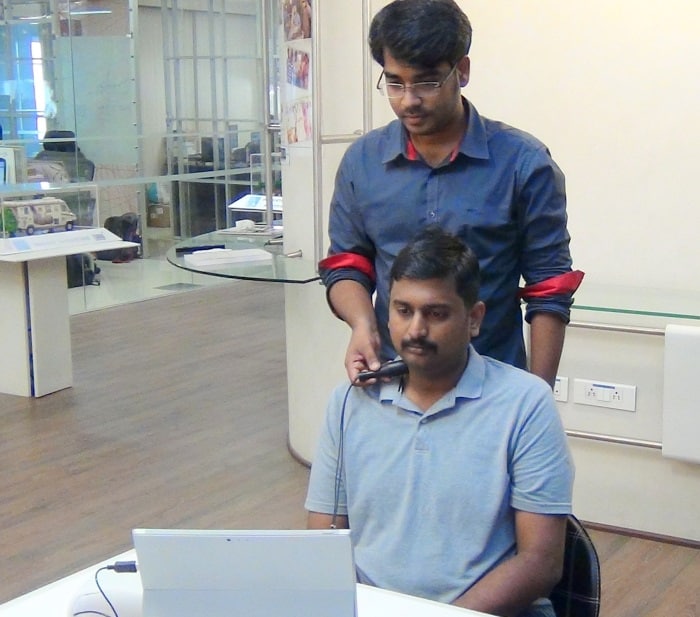
Researchers from the Indian Institute of Technology Madrashave proposed a magnet-based sensor that would allow scientists to measure the velocity of blood pulse waves within the carotid artery. Each heart beat pumps blood at a high pressure through the arteries, and parameters such as the pulse speed provide useful pathophysiological information (IEEE Trans. Biomed. Circuits Syst. 11 1065).
Pulse wave velocity (PWV) – the velocity of blood propagating through the arterial tree – is a strong indicator of cardiovascular events. Calculation of blood pressure using PWV, based on the fundamental biomechanical equations, holds true only for smaller sections of an artery. But existing cuffless blood pressure monitoring technologies measure PWV across a large arterial section. Current techniques for measuring local PWV, such as Doppler ultrasound and MRI, are expensive and operator dependant.
Magnet-based sensor
To determine PWV from small arterial sections, the electrical and biomedical engineering researchers propose a magnetic plethysmograph (MPG) transducer, based on the modulated magnetic signature of blood (MMSB) principle, to measure blood pulse velocity across small sections of arteries. This consists of a permanent magnet producing an ambient field and a Hall-effect sensor that provides a voltage measurement corresponding to volumetric change in the artery.
When the transducer is placed on the skin above an artery, the magnetic sensor measures magnetic fluctuations due to skin surface motion caused by the pulsatile blood flow. Analysis of the arterial blood pulse is possible because the output voltage of the sensor is directly proportional to the amplitude of the pulse. After the acquisition and digitization process, the data are analysed by custom designed algorithms to identify characteristic points in each waveform and calculate the local PWV.
Local PWV measurement using a dual MPG probe
Transducer validation
The researchers performed in vitro studies using the MPG transducer with an arterial flow phantom. The phantom represented an arm, allowing the researchers to validate the system by obtaining measurements over the radial artery. The phantom experiments demonstrated that the new MPG prototype could obtain measurements that determined the PWV of small arterial segments.
The team also performed in vivo measurements under two physical conditions (physically relaxed and post-exercise) on a group of 20 healthy volunteers. They obtained blood pressure and local PWV measurements from the left carotid artery by placing the MPG probe on the neck.
The study demonstrated the ability to obtain continuous arterial MPG data with a signal-to-noise ratio of approximately 28 dB. The study results, of carotid pulse detection and local PWV measurement, proved the efficiency of the proposed technique, which provides a promising approach for cuffless blood pressure measurements.
Researchers from the Universities of Nottingham and Oxford have developed a new method to investigate membrane proteins, which are important drug targets but difficult to study. The approach allows scientists to map those protein interaction sites that are located in membranes. Neil Oldham and his colleagues developed a probe that is mixed with solubilized membrane proteins and, upon exposure to UV light, labels the accessible surface area of said proteins. From this accessible surface area, the inaccessible surfaces involved in interaction with other membrane proteins can be inferred.
Membrane proteins make up 20 to 30% of our genes and are important drug targets. However, they are particularly difficult to study because they have large hydrophobic surfaces that facilitate aggregation in water and other aqueous solutions, similar to the process by which milk curdles. To solubilize membrane proteins without observing aggregation, detergents are needed to cover the hydrophobic surfaces with their hydrophobic tails, while the hydrophilic heads mediate the interaction with water. The resulting structures are called micelles.
The missing puzzle piece
Co-author Carol Robinson pioneered the investigation of membrane proteins by mass spectrometry in her research group. While the methods she developed opened up many possibilities to study membrane proteins, the question of how proteins interact with each other in membranes remained intangible.
In this latest study, the team tackled the problem by using a probe that incorporates into micelles and can therefore label even the hydrophobic areas of proteins (Angew. Chem. Int. Ed.doi: 10.1002/anie.201708254). The membrane protein that Oldham and his team used to prove that this probe works was OmpF. This protein assembles into trimers in bacterial membranes, where it acts as a pore for nutrient uptake.
As the OmpF trimer is one of the few membrane protein complexes that can be successfully crystallized, the researchers could compare the interaction surfaces determined using the new probe with the interaction surfaces known from the crystal structure. These were found to be identical.
How does the probe get to the membrane?
Once the probe has labelled the accessible surface by binding to it, the researchers used mass spectrometry to determine which parts of the protein were labelled. The study showed that only the parts of the protein’s surface that are found in the membrane were labelled. This is despite the successful use of this probe to label soluble proteins in previous studies.
Oldham and his co-workers hypothesized that the probe might preferentially incorporate in micelles because it has – like the detergent molecules – a hydrophobic and a hydrophilic part. The authors were able to show that this was indeed the case and that in the presence of a detergent that forms micelles, soluble proteins could not be cross-linked.
Future promise
The new method, termed carbene footprinting, will fill in a methodological gap, allowing scientists to study interactions between proteins in membranes. This way, researchers will be able to learn more about the important class of membrane proteins involved in so many critical functions, such as cell signalling, transport, reception and metabolism. Hopefully, a better understanding of membrane proteins will help to expand the repertoire of drugs that can successfully target them.
Long-lived, ultracold molecules with both magnetic and electric dipoles have been produced for the first time by researchers in the US. The sodium-lithium molecules have much longer lifetimes than ultracold molecules created previously, allowing the researchers to study them more easily. The system also provides fundamental insights into molecular collisions.
In the past 20–30 years, scientists have become extremely adept at cooling clouds of atoms to nanokelvin temperatures and observing the strange and wonderful physics that occurs. Molecules, however, are trickier to cool as energy has to be removed from many more degrees of freedom such as rotation, vibration and bending. An alternative approach called magnetoassociation has proved more successful. A mixture of the molecule’s constituent atoms is cooled with laser beams before an applied magnetic field is reduced to make the atoms stick together into weakly bound large molecules called Feshbach molecules. These are then further manipulated to make smaller, strongly bound molecules.
Weakly bound
Feshbach molecules are created in the so-called triplet state, which has spin angular momentum and therefore a magnetic-dipole moment. When the technique was used in 2008 to produce the triplet ground state of potassium-rubidium, however, it was so weakly bound that it broke apart within about 170 μs. The researchers therefore redesigned their protocol to produce the lower-energy, zero-angular momentum singlet state. “They said, ‘OK, we transferred to the triplet state, it died immediately: let’s go to the singlet state, which should be much more stable,'” explains Timur Rvachov of the Massachusetts Institute of Technology, who was involved in the new work: “That’s essentially what people have been doing since then, and in most cases their expectations have been correct.”
One exception to the quest for the singlet state was the production of diatomic rubidium molecules in the triplet state by researchers at the University of Innsbruck in Austria, also in 2008. However, as the two atoms were the same, they necessarily had the same electronegativity. The molecule therefore had no electric dipole – although it did have a magnetic dipole. Moreover, the molecules’s lifetime was just over 200 ms.
Bad collisions
The singlet states, being the absolute ground states of the molecules, were originally predicted to have extremely long lifetimes, but recent research has suggested this is not true. Physicists therefore postulate new decay channels dependent not on spin state but on mass: “Heavier molecules tend to undergo bad collisions more often and die more quickly, basically,” says Rvachov.
To study this relationship further, Rvachov and colleagues led by Wolfgang Ketterle – who shared the 2001 Nobel Prize for Physics for the production of a Bose–Einstein condensate using ultracold atoms – produced the triplet state of the lightest possible alkali metal compound with different atoms. They cooled a mixture of sodium-23 and lithium-6 atoms in an optical trap in a magnetic field. When the magnetic field was reduced slightly, it became energetically favourable for the two atoms to form Feshbach molecules. These were then further manipulated by two lasers of precisely defined frequencies in a scheme analogous to those used by the American and Austrian researchers, although the frequencies required are different for each molecule. The researchers measured lifetimes for the molecules of up to 4.6 s. “People are still trying to figure it out but it seems mass is a more important predictor [than spin state] of whether you’ll have a stable sample of molecules,” says Rvachov.
Electron spin resonance spectroscopy
In addition to theoretical insights, the combination of long lifetime and magnetic-dipole moment allowed the researchers to perform electron spin resonance spectroscopy on the molecule. They applied a radio-frequency magnetic field and measured the frequency at which the electron spin flipped. From this, the researchers could infer the hyperfine interaction – the magnetic coupling between the electrons and the nuclei of the sodium and lithium atoms – for the first time.
Florian Schreck of the University of Amsterdam describes the paper as “a great step” towards the larger endeavour of producing a molecular quantum gas, in which all the molecules pile up in the lowest possible energy levels of their trap. He notes that this would require considerable further increases in density and reductions in temperature. Simon Cornish of Durham University in the UK says the most surprising aspect of the research is the long lifetimes of the molecules: “We’ve worked on atomic gases for…well, too long now, and we have a really good understanding of how atoms collide,” he says. “But molecules are much more complicated.”
Being an academic researcher and studying the natural world is a rewarding and unpredictably productive quest. But, as is true with most things, it can be difficult to sculpt a fruitful career if you are unclear of the research landscape or of your own motivations. If you are considering becoming a professional researcher, then it’s vital to know what the scientific pursuit involves, what it means to be an academic today and, most importantly, what field of study you are most inclined towards.
As a newly qualified academic, picking your first major project can be a daunting task. Are you to simply accept the wisdom of a potential adviser? Most of us do precisely that. But make no mistake, the first research project you pick will often determine the trajectory of your career. Much is at stake and the choice is never easy. Indeed, this is more true today than in the past. As is the case with many other vocations, scientific research is changing in response to powerful external influences. From societal pressure to deliver something “useful”, to public scrutiny and scepticism fuelled by social media; from the denial of facts in favour of opinion, to funding agencies that demand “deliverables” – it can be a balancing act as you try to pursue your scientific goals while also measuring up to various standards. Indeed, picking the right field, and then finding a meaningful project, is no mean feat.
Every researcher hopes for a career that is based on sound foundations, but also includes a chance of making genuinely new discoveries. In its purest form, scientific study has the simply articulated goal of seeking a better understanding of nature. Nothing else is necessary, unlike technological research, whose goal is to develop better technology. What, then, makes something “scientific”? The ability to experimentally test a potential idea is paramount. Whether it is a physical experiment that you carry out, or a gedanken (thought) experiment that you propose, these are imperative to identify an acceptable theory. So, something counts as “science” when an idea is tested via experiment, pitting it against the real world. Your theories must also be refutable; for if they are not, they are often considered as unscientific (though some believe this “Popperian” view to be too stringent.)
As a researcher today, it’s also highly likely that your experiments will use computational methods. Some numerical experiments, which involve testing hypotheses against computer-generated data, have led to major discoveries (for example, in the field of nonlinear dynamics). Other numerical approaches seek to simulate data for comparison with real data. Computer-generated data have obvious limitations, but so do experimental data. Real experiments are limited by circumstance – we do not live long enough to witness a galaxy merger, or watch the lifecycle of a star or, for that matter, even the natural evolution of large animal species. On the other hand, numerical data are not on the same footing as actual data, if only because current computers always return deterministic solutions. Before quantum computers arrive, we can in principle never simulate reality.
As history has shown, many exciting discoveries – from penicillin to dynamite – have been made through mistakes and blunders. A good research environment will implicitly give permission to fail, at least some of the time. Mere curiosity has led to discoveries of semiconductors, the laser and nuclear magnetic resonance, all of which have revolutionized the modern world. Curiosity-driven research without foreseeable outcomes must remain an imperative. Nobel prizes have been awarded across the spectrum of both curiosity-driven and goal-oriented work.
Another lesson comes from Thomas Kuhn who, in his 1962 book The Structure of Scientific Revolutions, argues that advances occur mostly through “incremental science” or modest changes to existing ideas; until a discovery is made. Such a discovery will eventually overthrow a previously accepted framework, creating a “paradigm shift”. Very few professional scientists get to change paradigms, but you should strive to do just that. Unfortunately, though, this idealistic viewpoint is certainly naive, as very few organizations would fund research that plainly states this as a goal.
Funding organizations naturally tend to promote research that makes use of facilities (experimental and computational) and tools previously developed at great expense. So, potential scientists should be aware that the motivation behind their project might be more tool-driven than question-driven. Today’s entire academic environment is optimized to make incremental advances. Risk-averse work attracts funding, and publishing such work is easier than publishing genuinely new ideas, which receive harsher scrutiny. Both accolades and tenure are awarded for having a large number of publications under your belt, a metric that is used to attract further funding…and so the cycle continues. Rarely does a scientist with just one paradigm-changing paper compete in this environment.
But to make research stand out among peers, young researchers should ensure their choice of project allows for some genuinely new work. An element of risk is necessary in all research, to make genuinely new discoveries, and to avoid a disappointing start to your career. Work that fails to produce testable ideas or new questions, or leads to little advancement of knowledge, might be considered as such.
So, before you pick your next research project, ask yourself, and perhaps your supervisor, these questions:
Are you mostly interested in natural science, or technology, or both?
Is the proposed project driven by a basic question or by the tools at hand?
What in the project is genuinely new, or what is unknown in the field?
How much does the research programme allow for truly unexpected outcomes?
How much risk does the project entail?
How will numerical calculations connect with reality, and how will a numerical experiment be judged to be successful?
If you can come up with satisfactory responses to most of those questions, you should have an interesting and fruitful project to hand. For those starting out on a research career, do get some experience as an intern at a lab or university where you may be interested in working. Make sure to pick a research area that you find compelling, as tenacity is a great virtue in research. Beware of advisers who seem to treat graduate school as a revolving door – they are often focused on quantity of results, publications, the number of students graduating and other “metrics”. Grant yourself licence to take risks, to fail and learn from your mistakes. Lastly, don’t forget to enjoy the excitement of new discoveries.
Scientists aren’t immune to the allure of rare metals. Isaac Newton’s interest in alchemy is well documented: when the natural philosopher wasn’t laying the groundwork for much of modern physics he was often secretively, obsessively, attempting to turn lead into gold. These days, physicists are hoping to turn a humble element into something yet more precious.
Hydrogen is the lightest of all atoms, not to mention the most abundant, accounting for three-quarters of all the universe’s normal matter. As we commonly know it, hydrogen is a molecular gas – colourless, odourless, mostly harmless and, some might say, rather dull. But under extreme pressure, hydrogen will supposedly turn into one of the rarest metals in the universe, one that is naturally non-existent here on Earth and perhaps only present in the underworlds of gas giants, such as Jupiter. The metal is coveted not just for its rarity, but also because it could turn out to be a stable room-temperature superconductor, and therefore go a great way to solving the world’s energy problems.
For over a century physicists have sought metallic hydrogen. Within the past year, however, physicists Isaac Silvera and Ranga Dias (pictured above) at Harvard University in Massachusetts, US, claim they have finally made it, by squeezing hydrogen inside a diamond anvil cell to pressures of nearly five million atmospheres. Is it for real? “If it is true, it is a great achievement, fulfilling a long search for the atomic phase of hydrogen,” says David Ceperley, a theorist at the University of Illinois Urbana–Champaign in the US. “However, there is deep scepticism in the community about their experiment.”
Early searches
Subjecting hydrogen to extreme conditions is certainly nothing new. It was on the cusp of the 20th century that the British scientist James Dewar first cooled hydrogen until it turned solid, at temperatures of less than 14 K. Around this time, chemists were also mulling over the element’s position in the periodic table. Situated at the top of a column of alkali metals, hydrogen ought to form a metal itself, given the right conditions. Those conditions were first calculated in 1935 by the Hungarian-born physicist Eugene Wigner and the US physicist Hillard Bell Huntington, who predicted that at temperatures close to absolute zero, and at pressures of about 250,000 atmospheres (25 GPa), hydrogen atoms ought to become so closely packed that their electron clouds overlap, as in a metal.
Wigner and Huntington had fired the starting pistol in the search for metallic hydrogen, but their prediction was optimistic. With the invention of the diamond anvil cell at the National Bureau of Standards (now the National Institute of Standards and Technology, or NIST) in the late 1950s, high pressures suddenly became routinely accessible; and by the 1970s, they were topping 100 GPa – yet for hydrogen, there was no sign of a metal transition.
Still, hydrogen’s phase diagram could be mapped with ever greater clarity (figure 1). The element is always a solid at high pressure and at moderate temperatures, but takes on distinct phases depending on just how high the pressure is. Phase I is a close-packed structure in which the molecular angles are disordered. Phase II is a similar structure but with some degree of orientational order. Phase III is believed to be a structure in which the strength of the hydrogen–hydrogen bonds turns so weak that the hydrogen can be considered partly atomic, not molecular. In phase IV, some evidence suggests a portion of the hydrogen molecules form planar, graphene-esque sheets. Beyond those phases? Metallic hydrogen – possibly.
1 Going through a phase Hydrogen is a gas under ordinary atmospheric conditions, which on this chart is too small a region to be resolved. Under high pressures, the element forms a liquid when very hot, or a non-metallic solid at moderate temperatures. The non-metallic solid region has four phases, described in the main article, in which hydrogen is arranged in various close-packed structures. Since 1935 theory has predicted that hydrogen can also form a metallic solid under very high pressures, which experimentalists have been striving to produce ever since. (Source: I F Silvera/Harvard University)
While all this phase-mapping has been taking place, theorists have been coming up with rewards for isolating the elusive metal. In the late 1960s, physicist Neil Ashcroft at Cornell University in New York, US, predicted that solid metallic hydrogen could be a high-temperature superconductor; and in the past decade, other theorists have suggested that the critical temperature for such a superconductor could be above room temperature, unlike any other known to date.
Another use that Silvera and others have recently speculated is that the substance could serve as a rocket fuel. According to their calculations, solid metallic hydrogen’s specific impulse – the standard measure of a propellant – would be more than three and a half times greater than the mix of liquid hydrogen and oxygen traditionally used to fuel rockets, allowing far more ambitious space travel. Granted, creating the conditions for solid metallic hydrogen in a fuel tank would not be easy, but calculations in the early 1970s by physicists at the Soviet Union’s I V Kurchatov Institute of Atomic Energy in Moscow suggested that solid metallic hydrogen could actually be metastable at room temperature and pressure: once created, it would stay a metal even when the pressure is released.
Not that such applications have driven Silvera in his quest for the metal. “I’ve always been interested in very challenging problems,” he says. “And in the high-pressure research community, metallic hydrogen was always considered to be one of the greatest challenges that existed.” He began his search in the 1970s while a professor at the University of Amsterdam in the Netherlands, and though other topics have occasionally diverted him – in 1979, for example, he and his Amsterdam colleague Jook Walraven made hydrogen into the first quantum gas, the precursor to a Bose–Einstein condensate – metallic hydrogen has always been at the forefront of his mind.
For most scientists in the field there is little doubt that the state exists. Indeed, it is believed that hydrogen in the highly compressed cores of the larger gas giants, such as Jupiter, must be metallic – albeit probably liquid rather than solid in form – in order to generate their observed magnetic fields. “Everyone believed that if you got hydrogen to a high enough density, which means a high enough pressure,” says Silvera, “that it would become metallic.” Quite where the transition lay, however, no-one was sure, and ramping up the pressure to find out has not been easy.
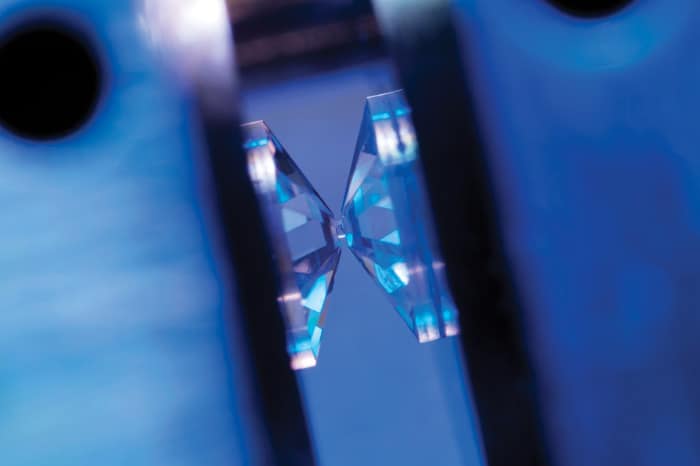
Diamond anvil cells consist of a pair of diamonds that have had their points polished down to a small flat tip known as a culet. The hydrogen sample is compressed between the two culets within a containing gasket, having been loaded in gas or liquid form. But if you turn the pressure up too high, the diamonds themselves are liable to fail.
About a decade ago, however, several experimental groups found ways of boosting the pressures of hydrogen within diamond anvil cells from the long-held maximum of about 200 GPa to nearly 400 GPa – higher than the centre of the Earth – but this appeared to be another plateau. Unfortunately, attaining these pressures is an art as much as a science, as it is not always clear what causes the diamonds to break.
Lab elation
In recent years, Silvera and Dias, his postgraduate student, have been developing ways to deliver yet higher pressures. Figuring that defects are one of the causes of premature diamond failure, they etch away the surface of their synthetic diamonds with an ion gun, to remove any layers of carbon atoms that have been accidentally gouged during the culet-polishing process. They have also got into the habit of coating their diamonds with alumina – otherwise known as sapphire when it is a gemstone – which should prevent any hydrogen diffusing into and embrittling them. Finally, they avoid any continuous illumination with laser light to study the experiments in progress, as it is believed to be a trigger for failure. “That turned out to be important,” Silvera recalls.
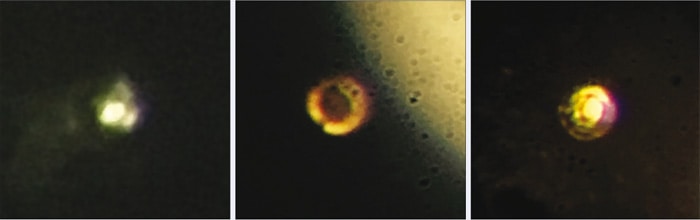
2 Lens-eye view Taken using a smartphone camera, these photographs show the view down a microscope of Ranga Dias and Isaac Silvera’s sample, under increasing pressure from left to right. Dias and Silvera describe these images as showing (left) transparent H2, (middle) opaque H2 and (right) reflective H. The duo believe that the far-right image shows the first lab-created metallic solid hydrogen. However, this claim is at present controversial among the research community. (Courtesy: Ranga Dias and Isaac Silvera)
So it was that in October last year, working in his office, Silvera was interrupted by an excited Dias at his door, and the pair rushed back to the lab where the postdoc had been stepping up the pressure in their latest cell, at temperatures lower than 83 K. Seen through an optical microscope, the hydrogen sample was no longer matt black, but had a metallic lustre. Both Silvera and Dias knew what this meant and, having nothing better to hand, took pictures of the sample with an iPhone. “People often asked me, how are you going to know if you’ve got metallic hydrogen?” says Silvera. “And I would say: by all the yelling and screaming coming out of the laboratory. My whole group was very excited.”
According to Silvera, there are two ways to demonstrate that a substance is metallic. The first is to show that its DC conductivity stays finite as its temperature is brought to absolute zero – a measurement that requires four electrical leads to remain in contact with the microscopic sample inside the cell as, with rising pressure, its volume diminishes 15-fold. Having no apparatus to do that, the researchers instead opted for the second method: AC conductivity, which manifests as reflectance and can be measured via the CMOS camera on a suitable microscope. Fitting these measurements at several wavelengths to the well-established Drude model of electrical conduction, the researchers found that there was the same density of electron carriers as the density of atoms in the system, a hallmark of a metal (Science 10.1126/science.aal1579).
The celebration was perhaps shorter lived than Silvera and Dias would have liked. Minus a laser, they were only able to roughly estimate the pressure on their hydrogen indirectly via strain gauges on the cell: 495 GPa, give or take 5–10%. Others, they knew, would want a more reliable reading, particularly given the fact that it was substantially greater than most groups report. Tentatively, then, the Harvard pair set up a weak, half-milliwatt laser to take a reading. “We turned the laser on: one of the diamonds broke,” says Silvera. “Catastrophically – there was nothing left but powder, like flour.” The precious metal had apparently slipped away.
Sceptical response
Many other experimentalists, however, believe it was not there in the first place. Eugene Gregoryanz of the University of Edinburgh in the UK has been one of the most vocal critics: on a scale of 1 to 10, where 10 is the most sceptical, he places himself at 11. He says Silvera and Dias’ paper, in which they report their findings, is inexcusably short on data, and believes that the hydrogen in Silvera and Dias’s cell might well have escaped before the highest pressures were reached – if indeed such pressures were reached, as he doubts the tips of the diamonds used were small enough to generate them. The apparent lustre in the photos is, he says, the rhenium gasket itself after the hydrogen has left – a phenomenon he has witnessed in his own experiments. “The so-called paper is so bad, there’s not a single point you can discuss,” he adds.
Under pressure: diamond anvil cells can create extremely high pressures in the lab. (Courtesy: Max Alexander/Science Photo Library)
Aside from Gregoryanz and colleagues’, there are three other comments on arXiv by other experimental groups in the field criticizing various aspects of Silvera and Dias’ report. The comments claim variously that the Harvard group’s optical measurements are not definitive proof of a metallic transition; that the hydrogen observed may be contaminated by leaked rhenium; and that the pressure estimations are primitive. In a written response, Silvera and Dias reject each of the claims in turn. “I haven’t yet heard a good physical objection to our experiment,” Silvera says, now. “Basically [the sceptics] are competitors, and some of them are really good scientists, and have been trying to make metallic hydrogen for a number of years. They are not so happy to see someone else do it.”
“Look,” he continues. “If you had made metallic hydrogen, would you wait another year to show the world that you can make it? Or would you publish it straight away, as soon as you had made it the first time? We decided to publish right away, and continue with the studies.”
From a historical point of view, Silvera’s decision might be seen as a gamble. His and Dias’ claim is not the first for metallic hydrogen: in 2011, Mikhail Eremets and Ivan Troyan of the Max-Planck Institute for Chemistry in Mainz, Germany, believed they had isolated the state at a pressure of 220 GPa (Nature Mater. 10.1038/nmat3175). Then, as now, others were doubtful, and the following year Eremets reportedly admitted that he wished their paper had not made such a definitive announcement. (Eremets did not respond to questions about the claim when contacted by Physics World.) Even as this issue went to press, a paper by Russell Hemley at the George Washington University in Washington DC, US, and colleagues, accepted for publication in the journal Physical Review Letters, cautiously reports evidence for metallic hydrogen at modest temperatures and at a pressure near 300 GPa. Ceperley, Gregoryanz and indeed Silvera too are unconvinced.
Repetition is key
The one point on which everyone agrees is that the reproduction of results is the only way forward. “To my knowledge the single experiment reported by Dias and Silvera has yet to be reproduced,” says Bill Nellis, another Harvard experimentalist. He believes it is conceivable that, even at the low temperatures of Silvera and Dias’ experiment, there are chemical reactions between the hydrogen in the sample and the carbon in the diamond anvil cell. “In this case the observed reflectance might be caused by the formation of a new hydrogen–carbon phase, rather than the closure of an electronic band gap in monatomic hydrogen,” he explains.
Silvera accepts the need for more results. But while far from Newton’s alchemy, the experiment is still not as straightforward to reproduce as it might at first seem, even with a recipe that has been honed over years of experience. In one recent attempt the diamonds, which were not of optimum size, achieved a pressure just under 400 GPa before failing, Silvera says. Meanwhile, another batch of 10 diamonds turned black during a usual annealing process – suggesting air had leaked into the annealing chamber – and had to be discarded. “These diamonds cost $1000–1500 each,” Silvera points out. At the time of writing this article, another batch of diamonds had arrived and were being prepared. If those work, the results could be available in a matter of weeks; if not, it will be several months.
Needless to say, Silvera is as eager to have them as anyone else. “I’m running the experiment whenever I’m not on the telephone,” he says.
The mystery of why hot water seems to freeze before cold water is one that has long puzzled physicists, who have proposed various mechanisms that could allow for the so-called “Mpemba effect”, even though some scientists dismiss it as a myth. Now, however, a viable theoretical framework is emerging for this counter-intuitive phenomenon. In a new paper in Physical Review Letters, a team of physicists from Spain reports observing a similar effect in models of a granular fluid.
The effect is named after a young Tanzanian boy called Ernesto Mpemba, who first noticed while making homemade ice cream that it froze faster if he did not cool the milk first before placing it in the freezer. But there are references to similar phenomena in writings dating all the way back to Aristotle. No consensus has emerged on what kind of mechanism might be involved, but convection currents, supercooling, or the unusual nature of hydrogen bonding in water have all been proposed as possibilities.
Earlier this year, Oren Raz, now at the Weizmann Institute in Israel, and Zhiyue Lu from the University of Chicago took a key step toward such a universal theory, with the first truly quantitative study showing that it is theoretically possible for hot things to freeze faster than colder things. Their model also predicted an inverse effect, namely that a colder system can heat up faster than a warmer one.
Antonio Lasanta-Becerra of the Universidad de Extremadura in Badajoz, Spain, read their paper and was intrigued. He corralled two colleagues, Antonio Prados and Francisco Vega Reyes from the Universidad de Extremadura, to build on that work and devise their own model for the Mpemba effect in a granular fluid. Key to their model is that their granular fluid contains hard inelastic spheres. So when they collide, the particles lose energy through mechanisms other than thermal loss, speeding up the cooling process.
The main criticism of Raz and Lu’s analysis was that they used very simple models, and water is much more complicated. That makes the Spanish physicists’ follow-up so significant because it finds the same behaviour in a 3D granular fluid.
Water is more complex than even their model, but Greg Gbur, a physicist at the University of North Carolina, Charlotte, who was not involved with either study, points out that Mpemba’s original experiments were with milk, a very different kind of fluid with many larger particles suspended in water. “It may be a close model for what Mpemba actually did,” he says. And it could prove relevant for water too: if the sample is not pure and has similar larger solute particles in it, those impurities could be a contributing factor to the Mpemba effect.
Zurich is one of my favourite cities. Located in the north of Switzerland, it sits at the tip of a glistening, clear lake, with snow-topped mountains in the distance. The buildings are beautiful, the people are friendly and public transport is incredibly efficient. It is also home to multiple world-class science and technology institutes.
So when Physics World was invited to visit two of these facilities, I jumped at the chance to go. Our hosts for the trip were the international organization IBM Research, and ETH Zurich, a STEM-focused university, and the event was a showcase for some of their medical, computer science and quantum-computing research.
With a day at each institution, I and about 25 other journalists from around the world were treated to a packed schedule of talks, lab tours and demonstrations, as well as an almost endless supply of incredibly interesting science. Topics ranged from diagnosing breast cancer with artificial intelligence and treating diseases with nano-robots, to using blockchain to automatically pay for parking and applying machine learning to see how galaxies evolve.
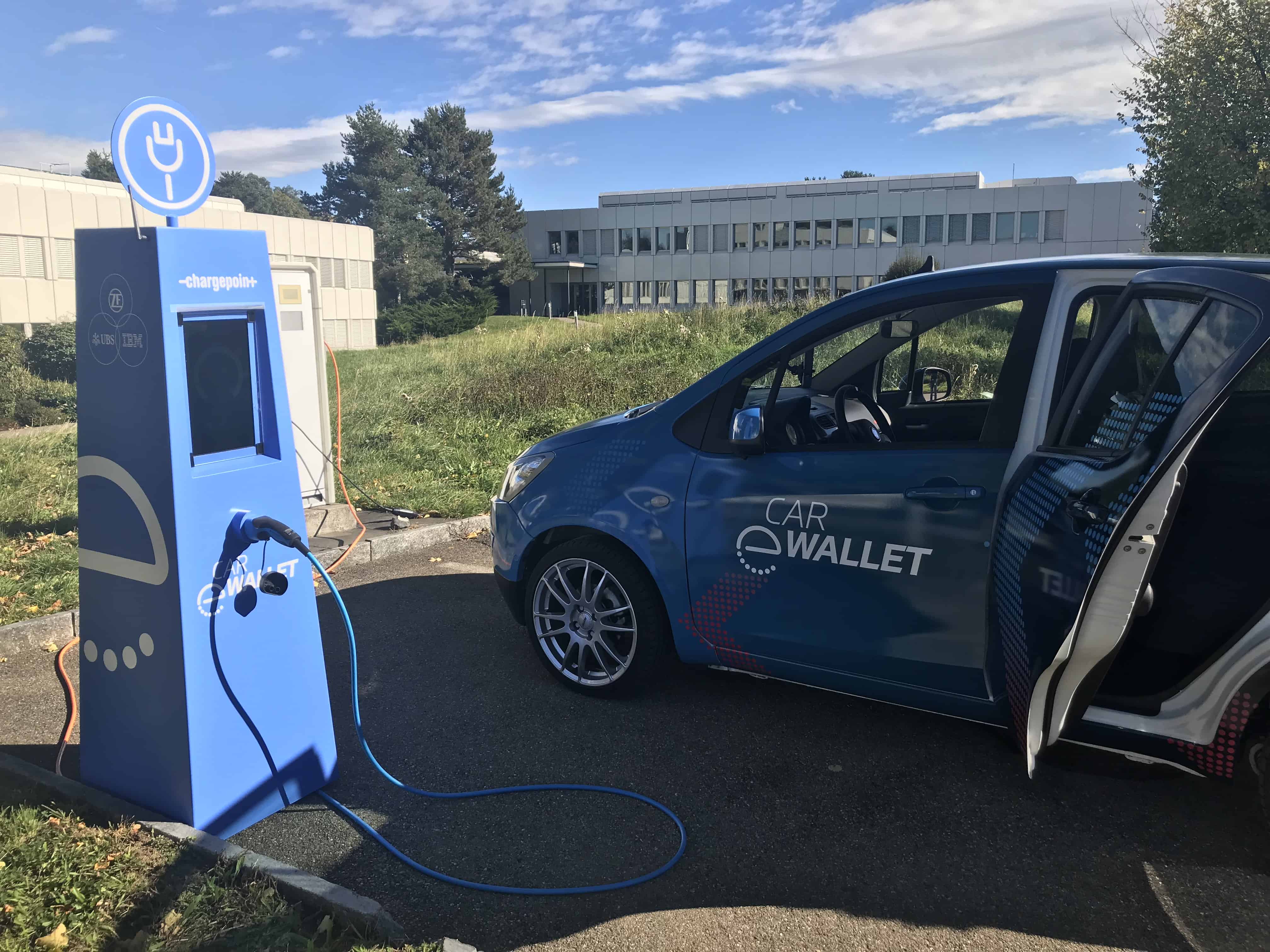
Clever little car: A prototype electric car that uses blockchain technology to securely pay for tolls and parking. (Courtesy: Sarah Tesh)
In among the fast-paced timetable, we got to venture into the depths of the ETH Zurich’s historical main building. After following a maze of passages that I’m pretty sure I would not have been able to escape from, we ended up in a surprisingly bright, white and modern reading room, connected to the university’s archives. And on the table in front of us were treasures from perhaps the most famous ETH alumnus, Albert Einstein.
The incredible artefacts included photographs of Einstein with his family, postcards between him and his friends and his university exercise book. Among the selection, two pieces stood out. One was a report book listing Einstein’s grades from when he was a student at ETH, which was then the Swiss Polytechnic Institute. Marks were given from 1 to 6 and among Einstein’s 4s and 5s, there were, as expected, 6s. But there was also a dark, bold 1. This was for “Physics practical course for beginners”. Obviously, it wasn’t that Einstein was bad at physics, he just didn’t go to class and consequently got reprimanded. Indeed, it turns out that Einstein often missed lectures, preferring to study at home, and instead relied upon his friends’ notes in the build-up to exams.
The dark one: The famous scientist failed physics for beginners because he didn’t attend it. (Courtesy: Sarah Tesh)
My other favourite document was a letter Einstein wrote to Conrad Habicht in 1905. This year is often referred to as his annus mirabilis or wonder year. In 1905, while working at the patent office, Einstein wrote five significant works on photons, special relativity and the reality and size of the atom. And in this letter, in rather illegible handwriting, he discussed four of his five momentous ideas. During two days filled with state-of-the-art research and technology, it was fascinating also to see these artefacts that relate to key moments in the history of physics.
Big ideas: Einstein’s letter to Habicht covers four of his five significant breakthroughs of 1905.
Today, turbulence accounts for 64% of weather-related accidents in the aviation industry and is the leading cause of serious injuries to flight attendants.
Luke Storer of the University of Reading, UK, and collaborators compared computer simulations of turbulence under pre-industrial conditions and for a possible future climate of 2050–2080 if present-day emissions continue. If that’s the case, the team found, the frequency of severe turbulence is set to increase by 110% over North America and 160% over Europe, some of the world’s busiest international airspace.
This global approach builds on previous work that suggested a worsening of turbulence in specific places or times of year. The new study not only corroborates these findings, but demonstrates the much broader scope of the effect. All severity categories of turbulence are set to increase in volume, meaning aeroplanes will encounter them more frequently. What is now considered severe turbulence is predicted to become as common as today’s moderate turbulence, placing airline staff and passengers at greater risk.
Clear-air turbulence, the type studied here, is invisible and cannot be detected by onboard radar. Currently it’s tackled primarily with predictive forecasting, a process that’s skilled but has significant room for improvement. Storer and colleagues’ results emphasize the importance of improving this system to reduce the risk of injury to passengers and crew.
The study also indicates that designers working on the next generation of commercial airliners must prepare for a more turbulent flying environment. The worst-case emissions scenario this study uses may not come to pass if the world acts on greenhouse-gas emissions, but it could be wise to prepare for a bumpy ride.
Using the HadGEM2–ES atmospheric model developed by the UK’s Met Office, the researchers compared the turbulence present in two simulated atmospheres. One had pre-industrial greenhouse-gas levels. The other assumed greenhouse-gas emissions followed Representative Concentration Pathway 8.5 of the Intergovernmental Panel on Climate Change (IPCC). This implies total greenhouse-gas concentrations (including carbon dioxide and other gases such as methane) equivalent to 1370 ppm of carbon dioxide by 2050, and global warming of around 2 °C over pre-industrial temperatures.