Physicist John Hill takes the helm at Brookhaven National Laboratory
Hill will manage the lab’s $900m annual budget
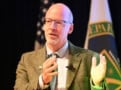 Read article: Physicist John Hill takes the helm at Brookhaven National Laboratory
Hill will manage the lab’s $900m annual budget
Read article: Physicist John Hill takes the helm at Brookhaven National Laboratory
University plans to cut almost 30% staff in the physics department
 Read article: Nottingham physics redundancies ‘an act of academic sabotage’, warn scientists
When complete in 2031, DUNE-LBNF will study the properties of neutrinos
 Read article: Officials hail ‘major milestone’ for US Deep Underground Neutrino Experiment
Community perspective report from the Institute of Physics examines ways to overcome the barriers to translating physics research into the medical market
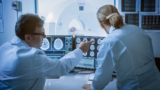 Read article: Report highlights challenges and opportunities for UK medical physics
Almost 1400 people have signed an open letter calling on the international community to “defend academic life”
 Read article: Researchers express ‘grave concern’ over attacks on Iranian institutions and science
The work involved mapping more than 47 million galaxies and quasars over a five-year period
 Read article: Dark energy survey unveils the largest 3D map of the universe
New class of biocompatible quantum nanosensor unveiled in Japan
 Read article: Molecular spin sensor takes the temperature of cancer cells
A new technique that combines millimetre-wave radar with machine learning holds promise for scalable and sustainable monitoring of insect biodiversity
 Read article: Radar identifies insect species via reflections from wingbeats
Quark–gluon plasma could be created by light nuclei
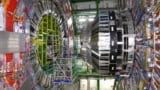 Read article: Tiny droplets of primordial soup appear in oxygen collisions
Superconducting device could be used in quantum computers
 Read article: New bolometer achieves sub-zeptojoule resolution
The use of quantum entanglement to enable selective image transmission through complex media can enhance applications from imaging to secure communication
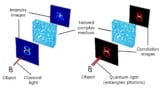 Read article: Entangled photons open up potential applications of anti-scattering optics
Whether you’re still working out your career pathway or have a specific role in mind, we’re here to help. Bringing a diverse range of opportunities for jobseekers at all career stages, we’ll help you take the next step in your career and find your perfect job.

Colorado School of Mines’ Frédéric Sarazin on a new undergraduate route into quantum engineering
 Read article: Building up the quantum workforce: an undergraduate route into industry
Artemis II has returned humanity to the Moon, gripping the whole world. Keith Cooper follows the mission’s journey and looks at what comes next for humans in space
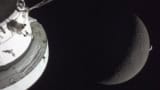 Read article: One giant leap: Artemis II returns humanity to the Moon
With climate change impacting the world’s coffee supplies, can physics help you reduce waste by brewing smarter? Michael Allen investigates
 Read article: Coffee with a splash of physics: how to make the most out of your brew
From academia to algorithms, physicists in quantitative finance explain how their careers evolved
 Read article: Trading places: meet the physicists-turned-analysts who are driving the frontiers of finance
Find out what it’s like working for options trading firm Susquehanna
 Read article: STEM stock rising in quantitative finance
An excerpt from art historian and author Lynn Gamwell’s book Conjuring the Void: the Art of Black Holes
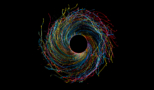 Read article: Lure of the black hole: from science to art
The team says it is the first demonstration of 'Voronoi patterns' in plants
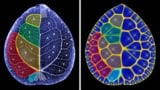 Read article: Striking mathematical pattern uncovered in Chinese money plant leaves
Mićo Tatalović vists the former site of Cambridge University’s physics department before it is demolished
 Read article: Final look inside the Cavendish lab’s 50-year home before demolition
The fibre robot could find applications in agriculture and reforestation
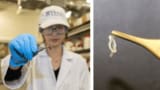 Read article: Tiny knotted fibre leaps into the air like a springtail bug
Find out more about plans for the next major particle collider as well as careers in the nuclear industry
 Read article: The Physics World 2026 Particle and Nuclear Briefing is out now
Mechanical wear thought to be behind the shape of tips, rather than an evolutionary mechanism
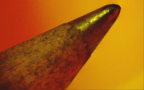 Read article: Study reveals the physics behind nature’s pointed tips
Victoria Merriman reports back from a Global Physics Summit satellite event in Dschang, Cameroon
 Read article: Shining a light on central African physics
Problems that defeated human mathematicians for decades are now solved, but for whose benefit?
 Read article: AI-led solutions of Erdős problems spark debate over the future of mathematics
Two recent papers suggest that quantum computers may crack modern cryptography sooner than expected
 Read article: New findings shorten the road to cryptographically relevant quantum computers
A lively debate at the ESTRO 2026 meeting concluded with nearly 70% of the audience backing upright proton therapy as a mainstream treatment option by 2035
 Read article: ESTRO debate reveals rising confidence in upright proton therapy
Sign up for our optics newsletter! Sent twice a year, we will collate the recent highlights in optics research, industry news and long reads and bring them straight to your inbox. Simply sign in to your account and tick the “Optics – biannual” box to register.