Join the audience for a live webinar at 6 p.m. GMT/1 p.m. EST on 02 December 2026
Discover how novel electrolytes can be tuned to enable highly efficient metal deposition
Want to take part in this webinar?
Want to take part in this webinar?
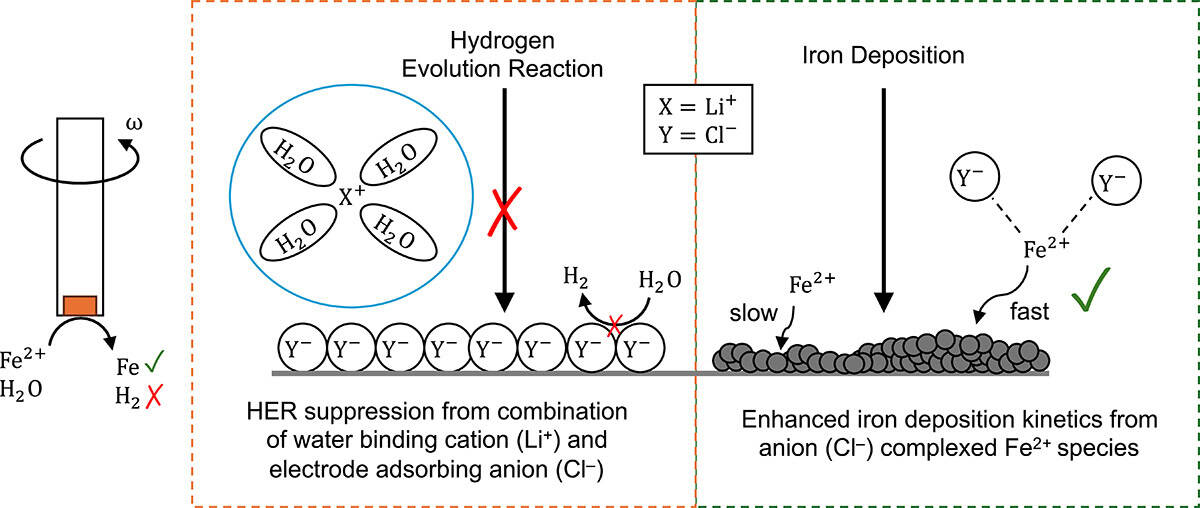
This webinar will explore how chloride-based electrolytes can enable energy-efficient, scalable metal production through the direct electrochemical reduction of metal ions into metal. Using electricity as the driving force, these systems provide a practical pathway for electrosynthesis. Particularly, the focus will be on concentrated aqueous LiCl electrolytes and their ability to enhance iron electrodeposition from both Fe³⁺ and Fe²⁺ species while suppressing parasitic reactions. Lastly, high-temperature chloride-based molten salt systems used for the electrodeposition of metals such as neodymium and iron will be introduced.
The discussion will center on the ability of concentrated aqueous electrolytes to selectively suppress parasitic side reactions, which leads to an enhancement of the desired metal deposition reaction. Comparisons will be made to high temperature molten salt electrolytes, particularly on how to achieve efficient metal deposition through electrolyte design and electrochemical modeling. Ultimately, this work demonstrates how electrolyte engineering can address fundamental challenges in metal electrosynthesis and provides design principles for scalable, modular electrochemical metal production.

William Lvovich is a PhD candidate in the department of chemical and biomolecular engineering at Case Western Reserve University. Under the advisement of Professor Rohan Akolkar, Lvovich is developing fundamental understanding of aqueous iron electrodeposition as part of DOE’s Center for Steel Electrification by Electrosynthesis (C-STEEL). He currently serves as the vice president of the CWRU ECS student chapter. Before coming to Case, Lvovich obtained his bachelor’s in chemical engineering from Ohio State University in 2024.