Join the audience for a live webinar at 3 p.m. BST/10 a.m. EDT on 15 April 2026
Tracking Co²⁺ leaching from PtₓCo/C catalysts and recovering cation‑induced performance losses in PEM fuel cells
Want to take part in this webinar?
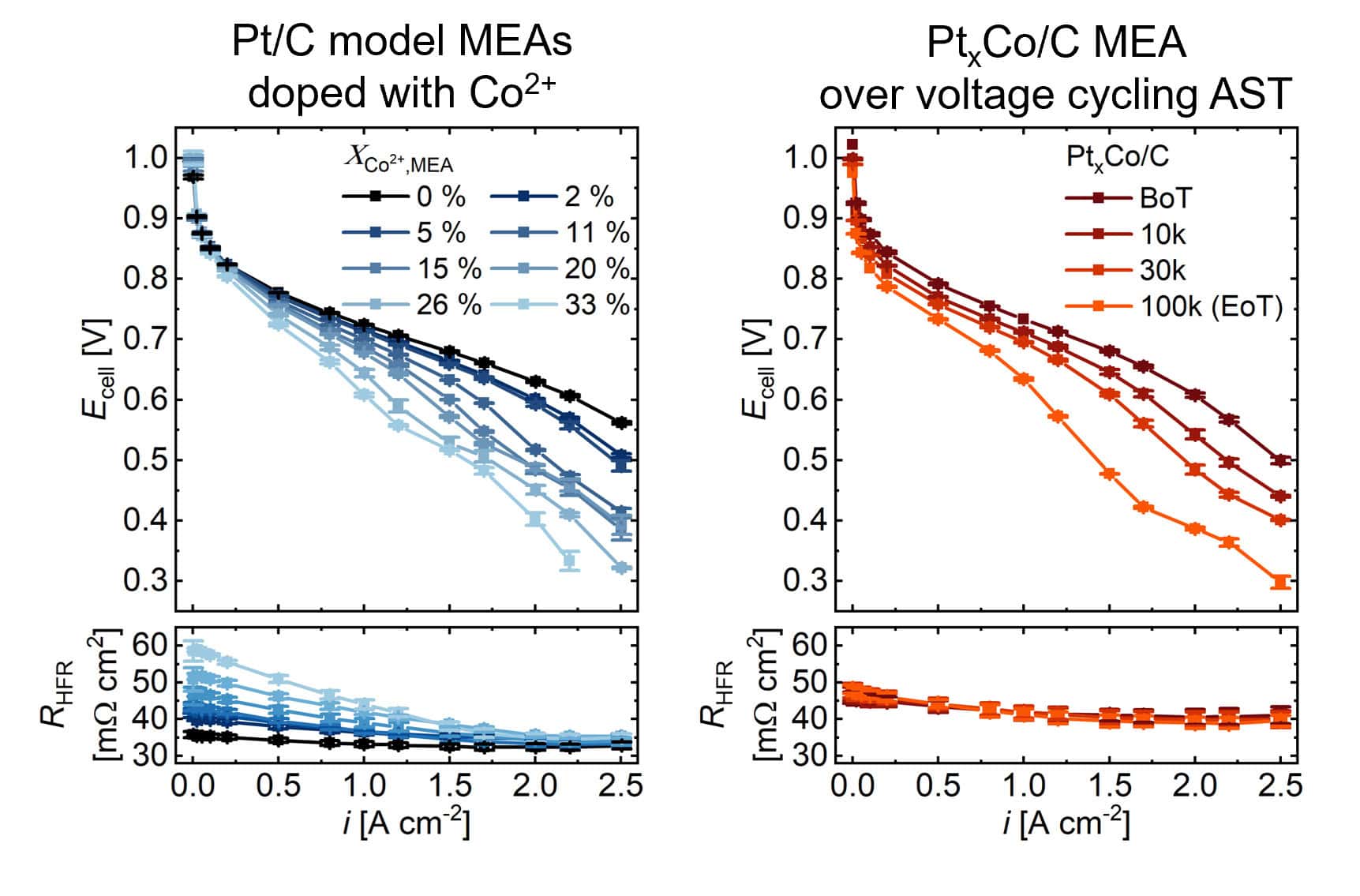
Pt-alloy/C catalysts, such as PtxCo/C, are used as cathode catalysts in proton-exchange membrane (PEM) fuel cells due to their exceptionally high kinetic activity for the oxygen reduction reaction (ORR). However, the performance and durability of membrane electrode assemblies (MEAs) with a PtxCo/C cathode catalyst are impaired by the dissolution of Co2+ cations in the ionomer phase of the MEA.
In the first part of this webinar, an in situ method to quantify the amount of Co2+ contamination in an MEA via electrochemical impedance spectroscopy (EIS) is presented. Pt/C model MEAs doped with different amounts of Co2+ ions are used to analyze the effects of Co2+ contamination on the H2/air performance and on ionic resistances under various conditions, highlighting the role of the inactive membrane area. Based on these model MEAs, a calibration curve is established that correlates the high-frequency resistance (HFR) under dry conditions to the amount of Co2+ in the MEA. Due to the high sensitivity of the dry HFR to metal cations, this method enables the tracking of Co2+ leaching from a Pt2.5Co/C MEA in voltage cycling accelerated stress tests.
In the second part, a recovery method to remove cationic contaminants from an MEA using CO2–O2 cathode gas feeds is presented. With this method, cation-induced performance losses of aged PtxCo/C MEAs can be largely recovered. The mechanism of cation removal and opportunities for the durability of Pt-alloy/C MEAs are discussed.
Want to take part in this webinar?
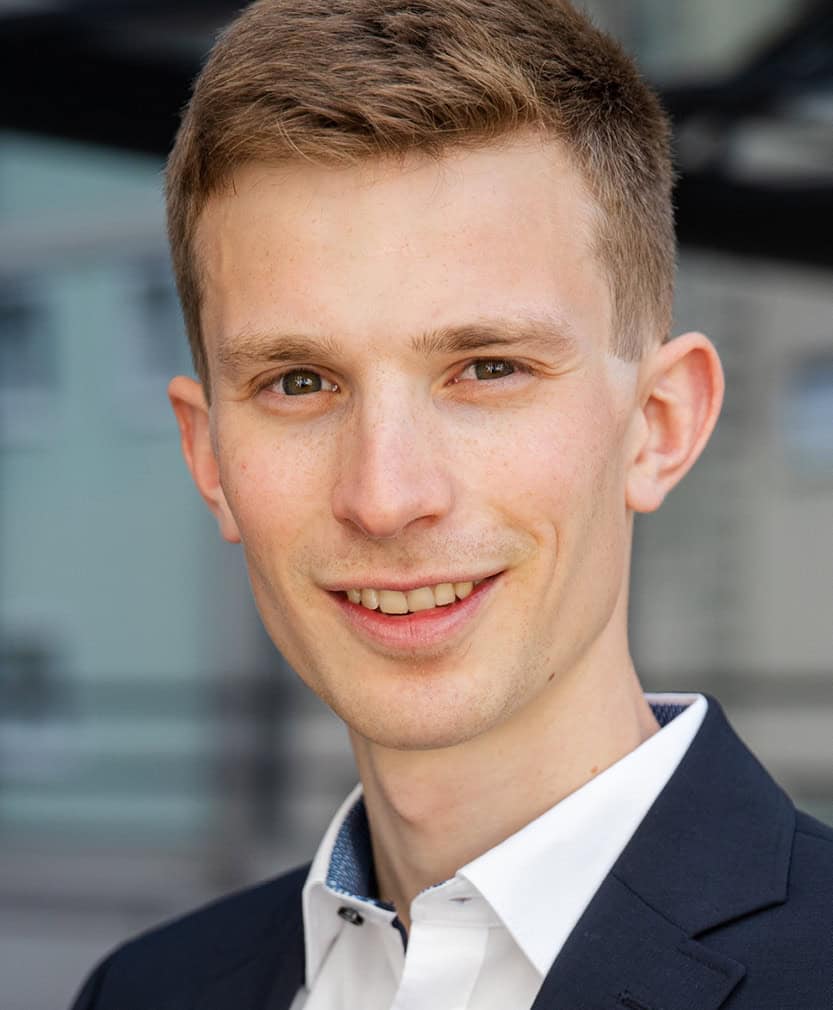
Markus Schilling is a PhD student at the chair of technical electrochemistry under the supervision of Prof Hubert A Gasteiger at the Technische Universität München. In his research, he investigates the degradation of Pt-alloy on carbon cathode catalysts (e.g., PtCo/C) for PEM fuel cells, with the aim of deepening the understanding of aging mechanisms and identifying strategies to increase durability. Current works include catalyst pre-treatments, development of diagnostic methods on the cell level, voltage cycling accelerated stress testing, and recovery methods.
Schilling received his BSc in 2019 from the Universität Konstanz and his MSc in 2022 from the Technische Universität München, where he investigated PEM fuel cell catalyst inks in his thesis, supervised by Prof Gasteiger.