Three successful women physicists in India – Kaveri Hukku, Asima Pradhan and Urbasi Sinha – talk to Shobha Shukla and Matin Durrani about their triumphs, the challenges they’ve faced and their attempts to build a more equitable future

India has produced some exceptional women physicists over the years. From Bibha Chowdhuri, who co-discovered the meson and became the first Indian woman to receive a PhD in physics, to Ritu Karidhal, who played a pivotal role in making India the fourth country in the world to reach Mars, the country boasts a large pool of talented women.
But despite women accounting for more than 40% of Indian science graduates, they still only make up about 16% of all physics faculty at universities in India, close to the disappointing global average of roughly 17%. As in many other parts of the world, there are myriad reasons for the low numbers, ranging from social pressure to prioritize families over research careers to a lack of visible role models and even sexual misconduct.
IOP Publishing, which publishes Physics World, recently held a webinar to celebrate the contributions of female physicists in India and explore the challenges they face. It featured Kaveri Hukku, chief executive of ATOS Instruments Marketing Services, Asima Pradhan from SOA University, who recently retired from the Indian Institute of Technology in Kanpur, and Urbasi Sinha from the Raman Research Institute in Bangalore.
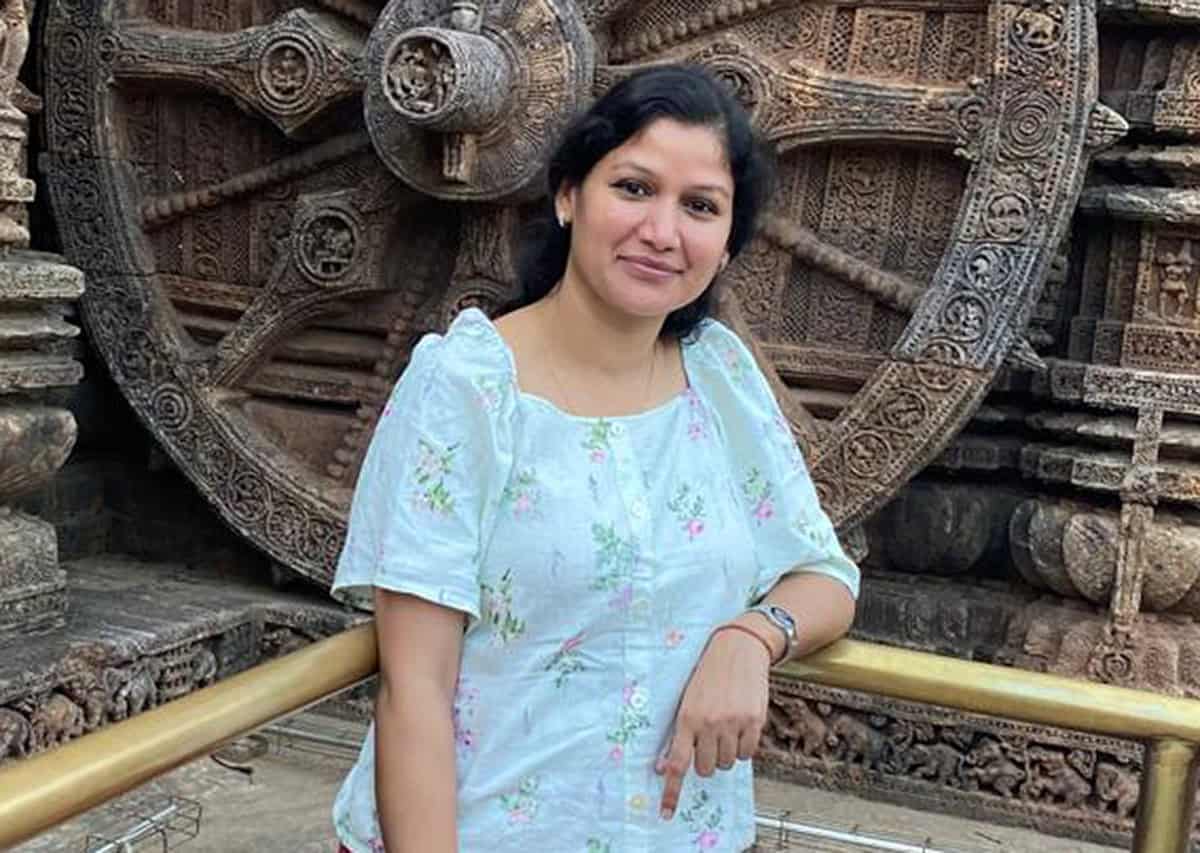
The webinar was organized by Shobha Shukla from the Indian Institute of Technology Bombay in northern Mumbai, who co-chaired the event with Physics World editor-in-chief Matin Durrani. One of India’s leading researchers in nanophotonics and materials science, Shukla is also a member of the editorial board of IOP Publishing’s Journal of Physics: Photonics.
“We are celebrating the women who are writing history in labs, industry and lecture halls right now,” said Shukla in her opening remarks. “This celebration is not a luxury. It is a necessity. It is how we build a culture of equity and innovation.” The following is an edited summary of the webinar, which you can watch in full on the IOP Publishing website.
Expert views
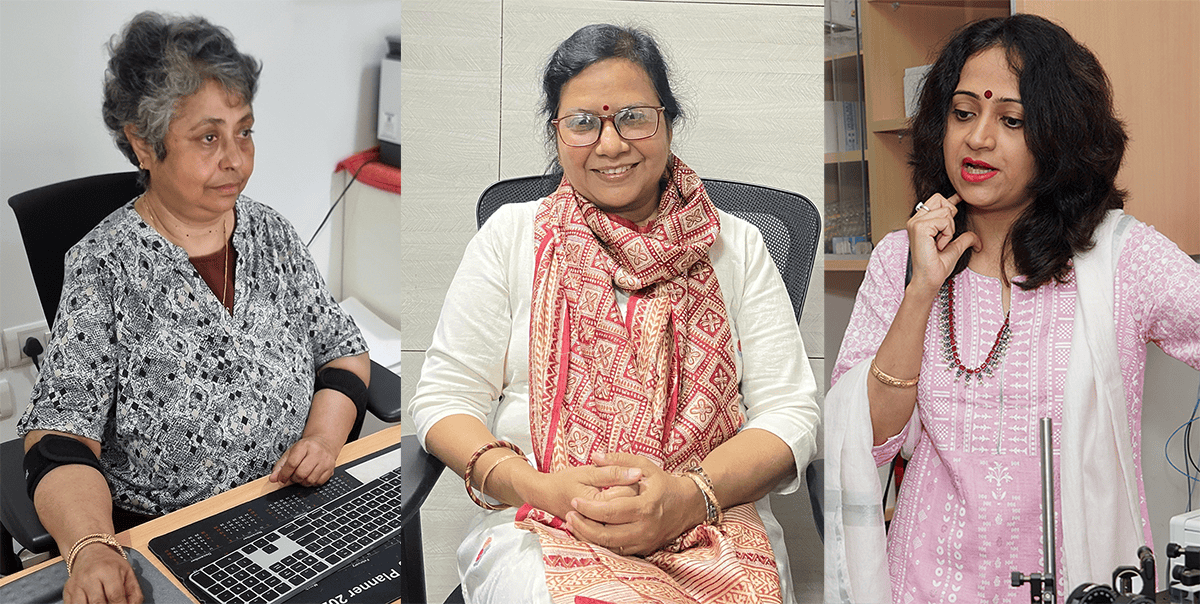
Kaveri Hukku did a bachelor’s and master’s degree in physics before going into industry, where she is now chief executive of the Bangalore‑based firm ATOS Instruments Marketing Services. Founded in 2013, it supplies research institutions and companies in India with advanced scientific instrument and equipment developed by third-party manufacturers from across the world.
Asima Pradhan is a laser physicist whose main interest lies in biomedical optics. With a PhD from City University of New York, Pradhan was based at the Indian Institute of Technology (IIT) in Kanpur for more than 30 years. After formally retiring in 2024, she is now an adjunct professor at SOA University in Bhubaneswar, where she also works for her start-up firm PhotoSpimedix, which is developing portable optical devices for clinical applications.
Urbasi Sinha, who studied physics at Jadavpur University and has both an MSci in natural sciences and a PhD from the University of Cambridge, UK, is head of the quantum information and computing (QuIC) lab at the Raman Research Institute in Bangalore. It is one of the first labs in India to use entangled and “heralded” single-photon sources for quantum science and technology applications – including India’s first project on satellite-based quantum communication.
How has your career developed and what kind of research are you currently involved in?
Kaveri Hukku: My story is actually very simple. Growing up, I was only interested in sports and games. There was no time for studies in my life. But when adulthood came knocking on my door, my parents sat me down and said “You need to support yourself – you’re not going to do it with your table tennis”.
So with some knowledge in maths and physics, I did a BSc in physics and then a master’s. After that, I found myself at the Indian Institute of Technology Bombay, where I managed to do some physics research at a serious level for a couple of years. But due to many circumstances outside my control, a PhD never happened.
Just as I was trying to decide on a future course for my life, our lab bought an ellipsometer [a device that measures changes in the polarization of light after it interacts with a sample], but the firm who sold us that system couldn’t set it up. It took me a few nights, but I managed to set it up, and from that I also got a job offer with the company. That started my career with instrumentation.
Urbasi Sinha: What excited me about physics from a very early age was how it combined clarity of thought with a sense of wonder, and this is what has driven me throughout my career. I’m an experimental quantum physicist, and I have worked extensively on different aspects, whether it is quantum optics, interferometry, quantum communication, randomness, and so on.
The rise of women in quantum science in India and the legacy of Satyendra Nath Bose

Essentially, I have used single photons and entangled photons both for making foundational insights and for developing emerging technologies. What is so exciting about my research is that it allows one to ask very deep questions about the nature of quantum mechanics, while also building systems that may have real technological value.
A recurring theme has been to connect fundamental aspects of quantum mechanics with practical questions of trust, validation and performance. A large part of my research currently is focused on quantum communication networks; the challenge of connecting photon sources with quantum memories, entanglement swapping, building these entanglement distribution-based quantum networks as part of India’s national quantum mission.
Asima Pradhan: After completing my master’s degree in physics in India, I moved to the US to do a PhD in experimental biophotonics under the supervision of Robert Alfano at the City University of New York. Coming from a family of doctors and engineers, I’d been keen on working in biophysics and, during my PhD, I did the first fluorescent spectroscopy experiments on human tissue. I’m very proud to have been part of that pioneering work.
When I came back to India and joined IIT Kanpur, I was based in the physics department, where an interdisciplinary research culture simply did not exist
Asima Pradhan
Then I did a postdoctoral stint at the University of Montreal, Canada, where I conducted some work on photodynamic therapy, collaborating with the physics, chemistry and pathology departments. I had a really good time working in such an interdisciplinary area, but when I came back to India and joined IIT Kanpur, the scenario was very different. I was based in the physics department, where an interdisciplinary research culture simply did not exist back then.
I worked around that and started collaborations with hospitals. We conducted experiments on light-tissue interactions with polarized light. From there, we went into translational research where we actually made a device for use in hospitals. So having begun my professional journey studying particle physics and field theory, I’m now trying to be an entrepreneur. I took voluntary retirement from IIT Kanpur two years ago, but I’m still doing research as an adjunct professor at SOA University in Bhubaneswar.
What skills do you use every day in your role?
Kaveri Hukku: Our profession can be made as simple or as demanding as you want it to be. I try to maintain high technical and analytical skills because the scientists I deal with do a lot of very involved science. But they don’t always come and ask for, say, a specific camera. Instead, they will just tell me what research goal they want to achieve.
So to keep up with them, even on a very simple level, you have to know a little bit of science. You also need to be pragmatic and say if a particular instrument is not right for the experiment, and which devices would be better for their aims. Moreover, it’s a people-facing job, so you have to be able to communicate, and have integrity and honesty such that people feel in safe hands.
Urbasi Sinha: Beyond having a textbook knowledge of physics and maths, precision is very important, as are good human skills. Patience is another vital attribute to have, whether we know it or not, as is the ability to persist when progress is slow. As I’ve grown older, I’ve also realized that communicating research in a way that excites people is vital, because we want to ensure that our field thrives.
Asima Pradhan: Technical skills, such as precision optical alignment, electronics and Monte Carlo simulations, are essential. But soft skills are vital too. For example, if you want to secure funding, you need to understand the psychology of the people sitting on the other side. The same goes for conducting interdisciplinary research: it can be very difficult to convey things using terminology everybody understands.
What do you like best and least about your job?
Kaveri Hukku: What I like most is keeping in touch with physics and physicists because they still let me potter about their labs and look over the shoulders of their students to make some comment here and there. And I get to work with a lot of young people, which always keeps you young yourself. It’s very satisfying seeing young scientists now building their own labs and wanting to buy instruments from me. That part gives me great joy: in my very small way to be part of their science journey, especially women.
The thing that I really don’t like, and never have, is travelling. My job involves a lot of travelling, packing bags, airports, hotels – but it’s not my cup of tea.
Urbasi Sinha: What I enjoy most is hearing about the everyday problems of younger people in the lab and helping them troubleshoot. I also enjoy translating fundamental quantum mechanics into technology. We do a lot of that sort of work in our in the lab – in fact, we have launched a start-up company called QuSyn Tech, where we are actually building a product.
What I don’t enjoy is avoidable friction. In any academic system, there’s inevitably some friction because research can be challenging. But when there are obstacles that are institutional, administrative or bureaucratic – or when things get petty, especially with our gender – that’s what I don’t enjoy very much.
Asima Pradhan: What I enjoy most is the fact that tissue fluoresces. I always say that when you shine light on someone and if you have the right camera, we all glow. The diffuse scattering itself is, for me, still very exciting. Playing with light and tissue gives me a lot of satisfaction, especially seeing the colours on tissue due to elastic scattering and fluorescence. Now I have a device that I’m testing in hospitals, and so it gives me pure joy just to see that we can get fluorescence from a patient.
What I do not enjoy is the fact that funding is always a little limited. There are restrictions, there are over-regulations, when there should be a certain amount of freedom. Even now, after retirement, I still feel the same.
What difficulties have you faced in your career and how did you overcome those barriers?
Kaveri Hukku: I actually faced huge challenges because, when I started my career, I was pretty much the only woman who was in this field. People would wonder why a woman had come to give this product presentation and she doesn’t even have a pretty face? What is she going to get out of this?
So it was hard getting acceptance, and then there was travelling and the expectation that you would not take time off for family. It was a very warped work–life balance that I had to take on as a challenge back then, because the commercial world was – and is – cut-throat.
If you just keep at it and you believe in yourself, I think you can overcome any gender bias
Kaveri Hukku
Even now, I can still be the only woman at a meeting, but I just keep going. If you just keep at it and you believe in yourself, I think you can overcome any gender bias.
Urbasi Sinha: So far as my personal family and extended family is concerned, I have been very privileged. I don’t think I’ve had any barriers in terms of what I wanted to do. But there can be less dramatic barriers, such as being underestimated as a woman or being held to different standards, just because you are a different gender from the rest. It could even be that important decisions are shaped in informal spaces where not everyone may be included.
In the sitcom Friends, there’s this beautiful episode in which Rachel wants to be part of her office culture, but all the decisions are made out on the balcony where everyone is smoking. Rachel doesn’t smoke, but she decides to pick up smoking just to be part of the group. It’s hilarious because it’s a sitcom, but it captures the sentiment very well. Decisions are often taken in surroundings that some of us do not naturally belong to, for whatever reason.
I have definitely encountered challenges of those kinds, the underplayed ones, over the years. What has helped me most has been to stay very anchored in the science, build a very clear intellectual identity, and to remain focused on depth and originality. I also think it’s important to be well prepared, have good documentation and be willing to speak up when needed.
What has helped me most has been to stay anchored in the science, build a clear intellectual identity, and remain focused on depth and originality
Urbasi Sinha
So I think one develops both resilience and perspective that not every obstacle reflects your worth. That is very important for us to realize as women. And we should not internalize low expectations or limiting assumptions. In the long run, strong work and consistency matter a great deal.
Asima Pradhan: My father was a well-known physicist, which inspired me to study physics. But when I was doing my undergraduate degree 50 years ago, we had a class full of boys and there were only a few girls there. This is true in IIT today; you still see fewer girls.
The boys came from boys’ schools, and had not seen many girls, so they caused some disturbances. Because of this, we had to stand outside, wait for the teacher to come in and then sit in the front, and we hated it. That actually affected us to some extent, but we took it all in our stride. In contrast, during my pre-doctoral studies, we had seven girls and three boys, so that was a privilege – and, interestingly, all of us stayed in physics.
What do you know today, that you wish you knew when you were starting out in your career? And what advice do you have for other women physicists at the start of their career?
Kaveri Hukku: I wish I had known that handling money is extremely important. Whenever money is involved – whether it is in your professional life, with your siblings or with your friends – always keep finances very clear and very well-documented and then you will maintain your relationships well. Money can be like poison, but if you handle it well, you can do a hell of a lot with it. You should neither be scared of it nor give it enough power, but give it the respect it needs and figure out how you want it to be part your life.
Urbasi Sinha: We often talk about working hard, which is very important, but it’s also about what you choose to spend your time on. I have realized, as I have matured, that the choices of problems, collaborators and environment matter just as much as how hard I work.
It’s also important to build depth in your subject and not just say yes to everything. Sometimes we, as women, have a tendency not to say no. Maybe we find it a little more difficult to say no. But if we don’t, then we end up being a Jack of all trades or, in our case, a Jill of all trades, and master of none. That is something I’ve learned as I’ve grown older.
Another thing – and it’s interesting because I didn’t think this in the beginning – is that visibility does matter. The phrase “good work speaks for itself” is something we say, but then at some point it is good to communicate work as well. And Physics World, of course, is the perfect forum for this. Confidence and communication early on as a scientist are important.
My advice to young women physicists would be to invest in real expertise, to cultivate a scientific voice of your own, and not to underestimate your capacity for leadership, because you can seek out mentors, but also those who will really advocate your case.
And finally, sometimes we say: “Only when I’m completely ready, will I step forward”. But you’re never completely ready. So, step forward. Confidence will follow.
Asima Pradhan: When I came back to India from the US, I didn’t realize certain things. For example, I got a job at one place and my husband, who happens to be a physicist too, got a job somewhere else. We were very clear that, once we got back to India, we would somehow be together at some place, but that did not happen. It did not happen due to many reasons that I feel should change.
There are unwritten rules about couples not being in the same department. Some people work around such things, but it did not happen for us. We ended up working for 30 years at two different places, and only now are we together after our retirement. So the younger women need to figure out what their priorities are.
If your priorities are both family and your profession, then do not compromise too much. The next generation loses out by that. So one has to negotiate before committing. The system should also work around it. The times were different when I joined and I see change. However, it is still not enough.
- You can rewatch the IOP Publishing webinar on which this article is based at tinyurl.com/2w79m3cs.