Assessing the impact of radiation exposure is crucial for protecting the health of workers, but limited data, imperfect models and variations in methodology demands expert judgement to interpret the results
Radioactive materials have become a vital tool in our modern society, enabling the delivery of powerful medical treatments, the detection of toxic substances, and the generation of energy on a massive scale. But they also pose significant risks to human health, which means that organizations handling radioactive isotopes must have robust procedures in place to manage and monitor the dose received by their workforce and the wider public.
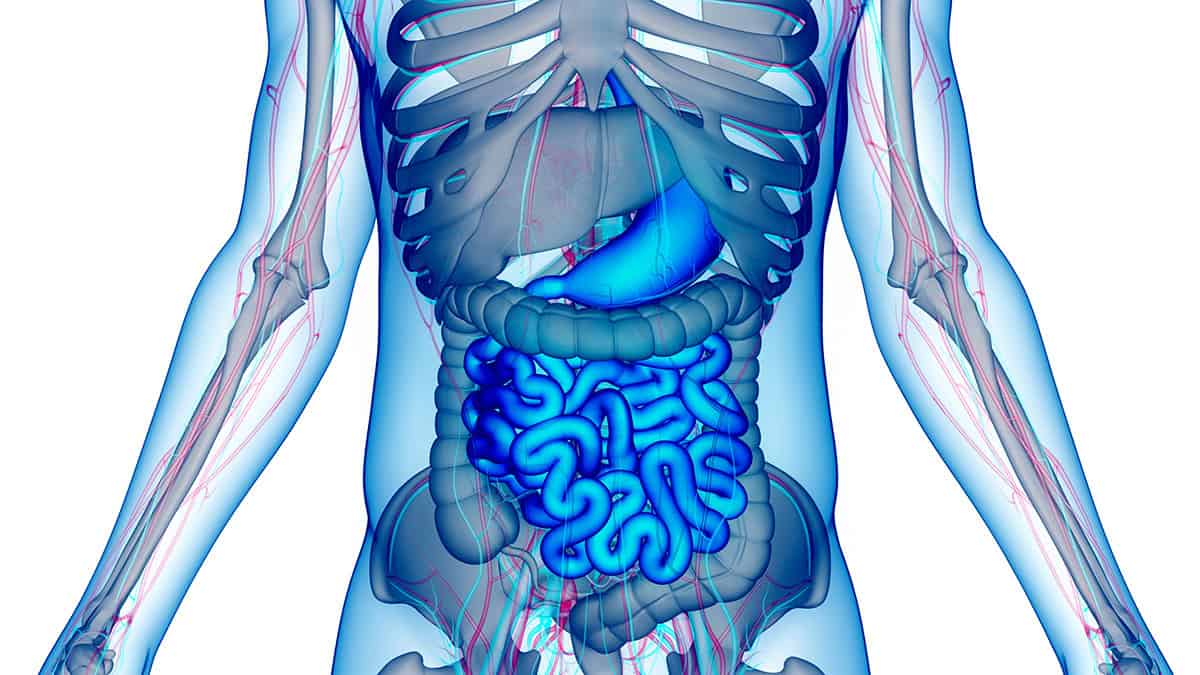
Dosimetry badges provide a visible and straightforward way to measure external exposure to radiation, but they are unable to determine the amount of radioactive particulates that have entered the body. Quantifying these intakes requires internal dosimetry, which typically uses measurements of urine or faecal samples – or less commonly in vivo radiological counts – to estimate the intake of specific radioisotopes. While the internal dose cannot be measured directly, monitoring data from these bioassays can be combined with biokinetic models to assess the likely impact of an individual inhaling, ingesting or being injected with a radioactive substance.
But internal dosimetry is not an exact science, and organizations with limited experience of radiation safety can struggle to translate regulatory requirements and the associated guidance into monitoring programmes that provide appropriate protection for their employees. Luckily, help is at hand. Dade Moeller & Associates, a wholly owned subsidiary of NV5, is a consultancy company specializing in radiation safety and dosimetry monitoring. Dade Moeller’s team of senior and certified health physicists can help organizations to balance worker protection with regulatory compliance.
Fit for purpose
“We encourage people to think about what they are monitoring for,” says Dr Brett Rosenberg, a certified health physicist at Dade Moeller with expertise in internal dosimetry. “The dosimetry programme must be tailored to the activity and half-life of the materials being handled, how those particular radionuclides interact with the body, and the maximum dose that an individual is likely to receive.” All of these considerations are important for prescribing a monitoring programme that does not become too onerous in costs and implementation while still providing an accurate assessment of occupational exposures.
In low-dose environments, for example, Rosenberg would advise organizations to run a confirmatory programme, in which samples from a subset of the workforce are used to check for any unexpected intake that would warrant further investigation. In contrast, routine internal dosimetry becomes a necessary requirement when there is a greater risk of workers receiving doses that exceed monitoring criteria – or even limits – set by the regulations.
Such situations are likely to arise, for example, in facilities that develop and manufacture medical radioisotopes, such as highly volatile iodine-131 for treating thyroid conditions. Radionuclides with the potential to generate higher doses are also produced throughout the fuel cycle for nuclear power generation, from extracting and refining the uranium – which creates radioactive dust that is easily inhaled – through to the management of nuclear waste.
In the US, such commercial operations are overseen by the Nuclear Regulatory Commission (NRC), which sets maximum limits both for the total radiation dose and the intake that a worker can receive. Companies must demonstrate compliance with these limits, but the NRC does not dictate the methodologies that are used for internal monitoring, or for estimating the intake from lab-based measurements. “Programme development and design is not based on regulation, it’s based on guidance,” says Rosenberg.
Flexibility leads to variability
That leaves organizations with significant flexibility in how they design their monitoring strategies, which allows programmes to be tailored to operational realities rather than forced into a rigid template. However, it also leads to variability in monitoring approaches and in the interpretation of results. Annual audits required by the NRC offer an opportunity for experts like Rosenberg not just to verify compliance, but also to identify opportunities for improvement. “I look for technical shortfalls in internal dosimetry, and check that the measures in place are effective and appropriate,” he says.
Many companies value the input they receive through these regular evaluations. Dan Sowers, for example, is the Global Radiation Protection Manager for Westinghouse, a nuclear services company that, among other things, fabricates uranium fuel and maintains the inner workings of nuclear reactors when they are not being operated. “My priority is the health of our workers,” he says. “Ultimately, we want our internal dosimetry programme to demonstrate that workplace controls are effective.”
Regular input from external advisors helps Sowers to ensure that robust procedures are in place for contamination control, and for assigning a dose to an employee when there is an intake of radioactivity. “The experts at Dade Moeller have enough real-world experience to know what’s right, which can go beyond the guidance we get from the regulators,” says Sowers. “They bring a fresh set of eyes to our operation and share best practice from other sites.”
The team at Dade Moeller also provides expert input to the US Department of Energy (DOE), which runs the national labs as well as facilities for nuclear security. Unlike the NRC, the DOE prescribes structured programmes for internal dosimetry that are tailored to the radioactive materials being handled at each site. It mandates lower dose thresholds than specified by the NRC for workers to undergo routine internal dosimetry checks, and uses a newer set of recommendations for assessing intake and estimating the dose received by different parts of the body. (However, notes Rosenberg, neither the NRC nor DOE use the latest set of recommendations, which are being adopted internationally.)
Creating consistency
Many of those recommendations come from the International Commission on Radiological Protection (ICRP), an independent body that provides guidance on dose limits and monitoring methodologies. The ICRP also develops and publishes the biokinetic models that are used by dosimetrists to translate the radiation counts from bioassays into estimates of intake and effective dose. Specific models have been developed to assess the impact of inhaling or ingesting different radioactive species, but the results are open to interpretation and depend on the version of the model being used.
To avoid these ambiguities, national regulators in Europe have combined forces to create a unified framework for internal dosimetry. Based on the outcomes from a co-ordinated research project in the early 2000s, this framework defines a standard set of methods and assumptions to ensure that different organizations calculate similar dose estimates from the same monitoring data. However, no such consistency exists in the US, where the NRC does not specify the details of the monitoring programme or the modelling methods a company should use, or between regulators in other parts of the world.
That lack of consistency can create difficulties for international companies like Westinghouse, which operates across 21 countries in different geographic regions. “Our internal dosimetry programmes are slightly different in each location,” says Sowers. “Those differences don’t affect the fundamentals of how we protect the health and safety of the worker, but the fine print of the regulations often requires us to do things slightly differently to make sure we are compliant.”
Dealing with uncertainty
To improve consistency, Rosenberg is involved in both national and international standards initiatives that aim to define best practice. However, he says, even the most carefully designed monitoring programme cannot eliminate the inherent uncertainty in estimating the effective dose from lab-based measurements of excreted samples.
“Even the most up-to-date models may not be very accurate,” says Rosenberg. “While the bioassay results are taken from a real individual, the model assigns the dose to a reference person who weighs 70 kg, excretes 135 g of faeces per day, and has both ovaries and a prostate.” As a result, the effective dose calculations based on excreted samples can carry errors of 300% when considering the anatomy and physiology of an “average worker”, and the practical limitations around counting statistics and sampling. “For practitioners, the challenge is not to remove uncertainty, but to understand and manage it,” says Rosenberg.
Given these intrinsic uncertainties, Rosenberg’s mission is to help regulators and commercial organizations to deploy the most effective methodologies for improving the standard of care. As part of these efforts, he has developed a week-long training course that aims to demystify the process of internal dosimetry for managers and regulators who need to understand the guidance from regulatory and international bodies like the ICRP.
“We do see uncertainty associated with inappropriate dosimetry practices, and to advance the field both the regulators and the practitioners need to stay current with the latest recommendations and models,” he says. “It’s easy to follow NRC regulations, but putting structured monitoring programmes in place and using the most appropriate models will help companies to produce more accurate evaluations and improve the safety of their workers.”