In a lively debate at QADS15, the speakers agreed that patient-specific quality assurance must adapt to a new era of adaptive treatments, AI and automation
Patient-specific quality assurance (PSQA) plays an essential role in the safe and effective delivery of radiotherapy to cancer patients. Enabling a “dry run” in which the treatment plan is delivered to a physical device before the patient enters the room, PSQA provides a final safety net before treatment. The aim: to ensure that the correct dose is delivered to the correct location for every patient and every single fraction.
That said, measurement-based PSQA is not sensitive enough to catch all errors – some still slip through. What’s more, pre-treatment measurements are not feasible in online adaptive radiotherapy, where treatment is re-planned and delivered within minutes. There’s simply no time to deliver the new plan to a phantom while the patient waits on the couch
And as clinics increasingly adopt adaptive workflows, incorporate artificial intelligence (AI) into the treatment chain and deliver more complex, more automated and faster radiotherapy than ever before – is it time to rethink radiotherapy QA? Could properly commissioned delivery techniques render routine measurement-based PSQA obsolete?
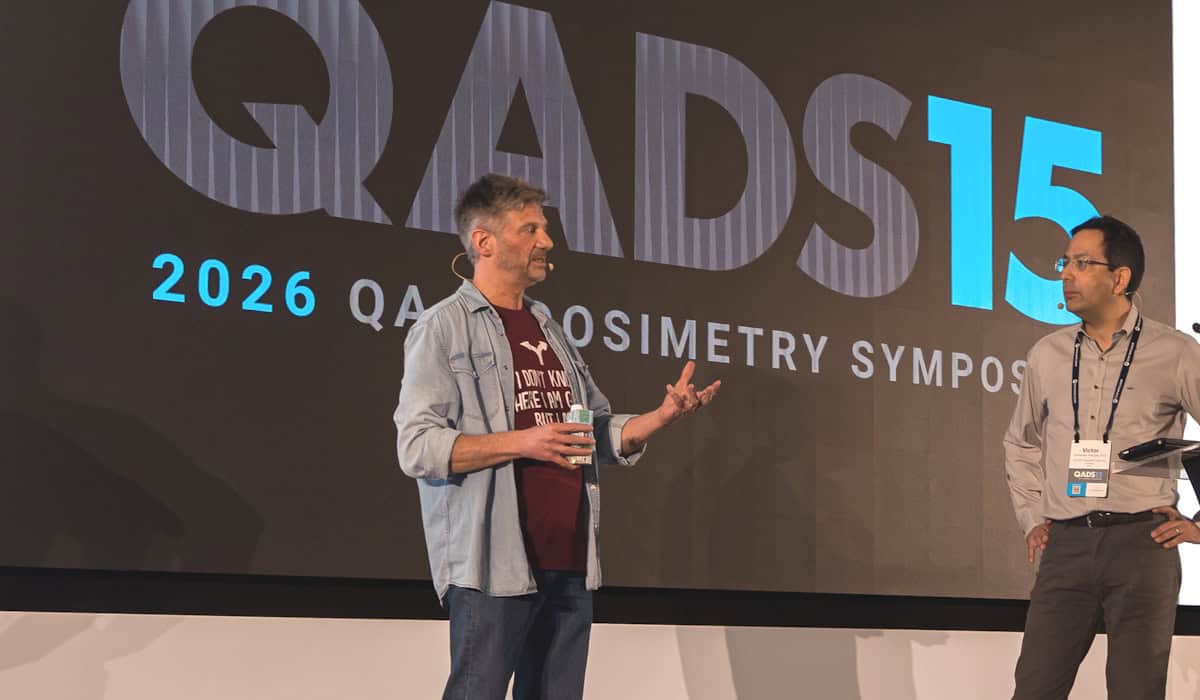
This was the question discussed at the QA & Dosimetry Symposium (QADS) hosted earlier this year by Sun Nuclear. In an animated debate, Victor Hernandez of Hospital Universitari Sant Joan de Reus in Spain and Dirk Verellen of the University of Antwerp and Iridium Netwerk in Belgium, considered the options.
Far fewer PSQA measurements
“We are debating today because we have a problem,” said Hernandez. “Measurement-based PSQA is not sensitive, not efficient and just not working.” The good news, however, is that a simple independent dose calculation – as provided by software-based PSQA – is an order of magnitude better at detecting failures than measurements.
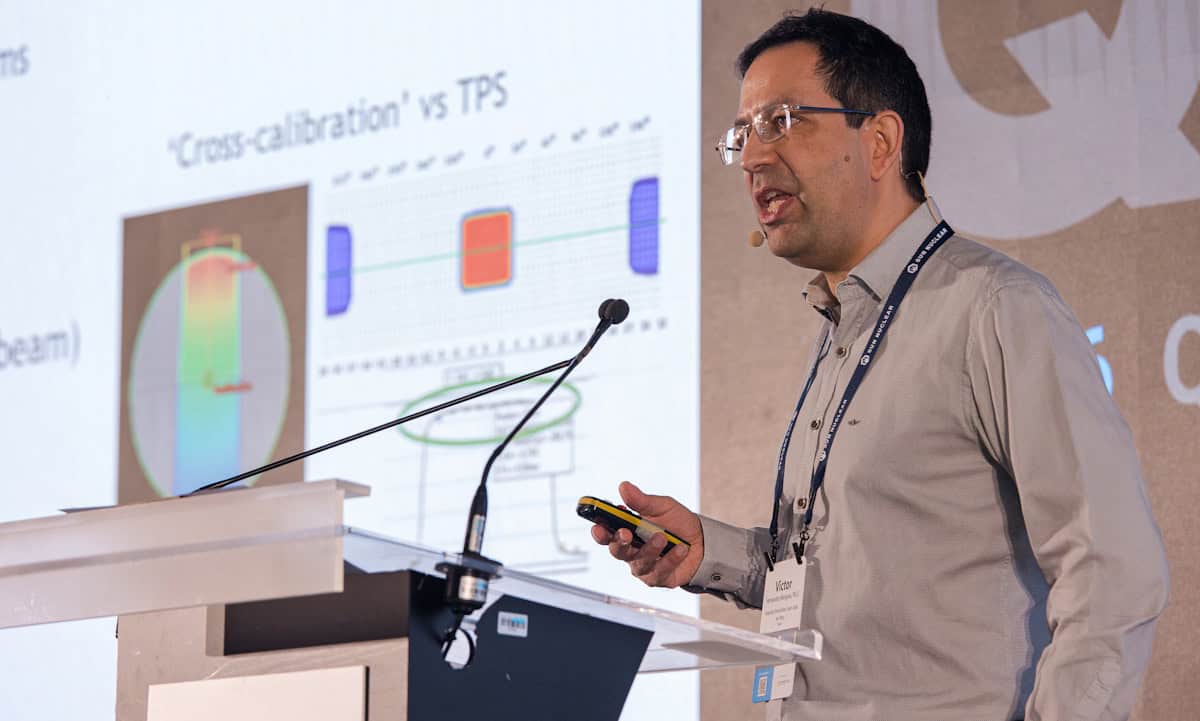
Hernandez emphasized that to make this shift, it’s essential to commission and standardize the whole radiotherapy process, including not just the linac and treatment planning system (TPS) but the PSQA system itself, to optimize how it is used and understand its limitations. Perhaps the most important step is commissioning the treatment planning process – or “QAing” the plan characteristics. “Less complex plans tend to be more accurate and more robust to uncertainties,” Hernandez explained. “So you need to evaluate and minimize plan complexity during treatment planning.”
He proposed a simple process for QA of treatment planning, based on class solutions (pre-defined dosimetric objectives and geometric parameters) that incorporate complexity metrics in their definition. These class solutions are validated using measurements and used to standardize treatment planning. If a final plan falls outside of the class solution, it will require verification using both measurements and software. But most clinical plans will be within a class solution, where software-based verification will suffice.
Hernandez noted that if you’re performing less PSQA, then machine QA becomes more important and must be reinforced. This could, for example, involve measurements of a fixed set of complex plans every few weeks to make sure that the linac is stable. “But that’s no longer PSQA – it’s part of your machine QA programme,” he emphasized.
“You can perform treatment planning without controlling or evaluating the plan parameters, but then there’s no consistency in your plans and you need pre-treatment measurements of all plans because you’re not in control,” he explained. “Or you can control the plan parameters. Then you reduce variability, improve robustness and quality, and you don’t really need PSQA measurements anymore because that’s part of QA, which is of course, much more efficient.”
“That’s my vision for enhancing safety and advancing QA,” Hernandez concluded.
The unknown errors
Verellen was less convinced that measurement-based PSQA is obsolete. Contemplating Hernandez’s arguments, he agreed that phantom-based pre-treatment PSQA is “just recommissioning over and over again”, noting that “you won’t see any errors in your PSQA unless you have done your commissioning wrong.”
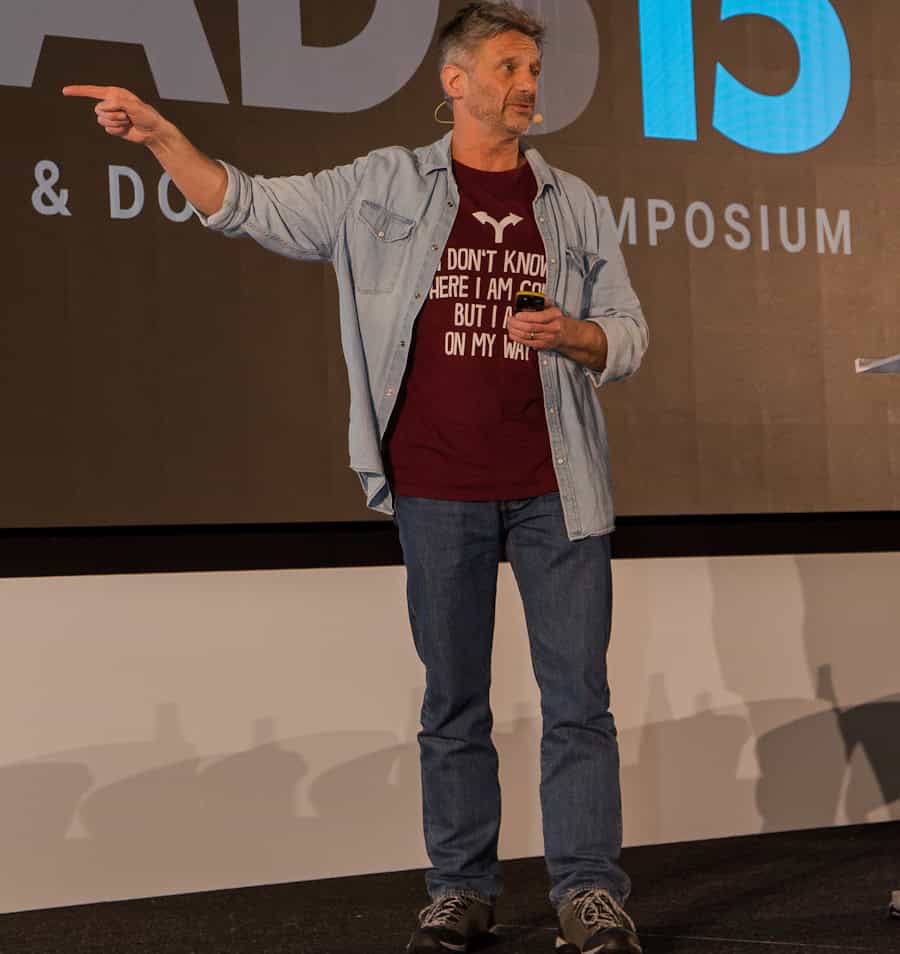
He concurred that accurate commissioning should pick up any mechanical or dosimetric errors, dose tracking can account for anatomical variations, and surface- and image-guided radiotherapy can address positioning errors. “And we also have in vivo dosimetry,” he added. “So in principle, we are covered.”
But sometimes, the things that go wrong are the things nobody thought to look for. “You might have a very good plan, but are you really sure that everything is covered?” he said.
One obstacle is knowing which metrics to use to define a complex plan. Another problem lies in the onslaught of new technologies such as online adaptive that create and deliver a plan in minutes. Verellen pointed out that companies are selling complex adaptive systems as a plug-and-play option that can be commissioned and treating patients in just a few weeks. “Your department is not ready for that. You don’t have the procedures. People are not trained for that,” he emphasized.
And as software is updated, hardware is upgraded and AI is rapidly becoming inherent in ever more stages of the radiotherapy workflow, it becomes challenging to rely on existing procedures. “With this large-scale introduction of AI and automation, we really start to rethink our role as humans in monitoring that process,” said Verellen.
The big challenge is to anticipate each and every kind of error that could possibly occur. And as Verellen pointed out, radiotherapy is much more than just the treatment machine. “There are a lot of people [involved] and they may make mistakes,” he said. “The interactions of the different system components make things so complicated that it’s very difficult to really anticipate all the things that might go wrong.”
What’s needed is a way to evaluate, validate and monitor the entire treatment chain, and a way to detect and avoid catastrophic events. Currently, pre-treatment PSQA is still an important safety barrier in this respect, he emphasized, by detecting the small, unexpected errors that could add up to create a catastrophic event. Moreover, in vivo dosimetry (IVD) will become even more important as a final safeguard of quality that, in the case of online adaptive radiotherapy, will need to evolve into real-time IVD.
“We need rigorous commissioning, but we need to realise that this cannot predict every situation,” said Verellen. “That’s my main point: as my father used to say, ‘don’t throw away your old shoes before you have the new pair’ – this is why we still need pre-treatment patient-specific QA at this stage … until we’ve figured out how to deal with the new developments.”
Near agreement
Remarkably for a conference debate, Hernandez and Verellen agreed on many points – in particular, that the field requires a redefinition of radiotherapy QA. “AI and automation are like a tsunami coming over us and we are not prepared for it,” said Verellen. “We have to step back and rethink the QA of the process.”
Where they differed, however, was on whether it is safe to abandon current PSQA measurement practices right now. “We know where we want to go, but we’re not there yet,” said Verellen.
“I agree with Dirk about many things,” said Hernandez. “But pre-treatment verification to a phantom is not patient safety. That’s why we need to make sure that our plans are accurate and robust, then you can verify it in every single fraction.”
“That works if the flow goes according to plan,” Verellen countered. “But unpredictable things happen.” He likened the risk to that of skydiving, where sky divers spend much time meticulously folding the parachute to guarantee that it will open. “But I’ve never seen a sky diver jumping without a reserve parachute,” he said. “For me, pre-treatment PSQA is my backup, until we have a solution that’s more or less watertight. And at this moment, it is not.”
Both agreed that the way forward is to focus, not just on the machine or the plan, but on understanding and verifying the entire treatment process – particularly the treatment planning and delivery processes. Treatment verifications such as real-time beam monitoring systems and IVD are also crucial for patient safety. “We need to think about how to better monitor all these processes to really advance QA and improve safety for patients,” said Hernandez.
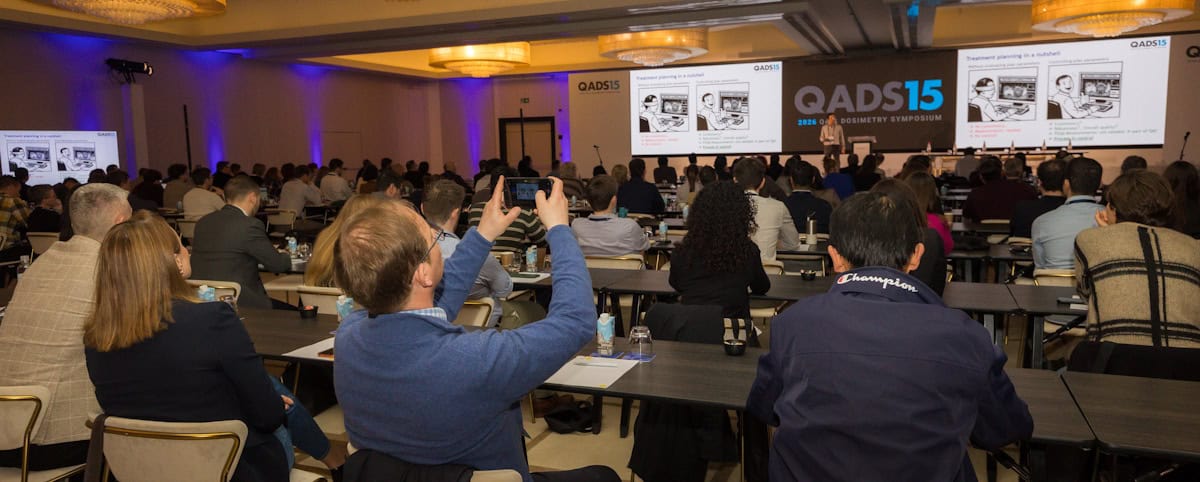
The next frontier
While the QADS debate was framed as “measurement versus calculation”, Greg Robinson from Sun Nuclear reiterates that the real evolution is the shift from checking a device to monitoring the entire process, driven by the introduction of automation and AI.
“The debate was interesting because they were arguing for both extremes, but I think the field is going to land somewhere in the middle,” Robinson tells Physics World. “It’s not that physical measurements are going away, but the frequency by which clinics are doing these measurements is dropping.”
Verellen pointed out that to enable the uptake of software-only PSQA, “we need QA tools that monitor the process”. One option for completely virtual pre-treatment QA is the DoseCHECK secondary 3D dose calculation algorithm and PerFRACTION, both part of SunCHECK from Sun Nuclear.
“SunCHECK brings machine and patient QA together in a single platform,” explains Robinson. “[This] lets a clinic see relationships that isolated tools miss; for instance, when a change in machine performance begins to show up in patient results.” Meanwhile, for adaptive online radiotherapy, AdaptCHECK provides an independent secondary check of the adapted plan within the session time frame.
Looking further ahead, Robinson predicts that the next frontier will be “turning connected QA data into understanding”. In other words, ensuring that errors are not just detected, but can be understood and prevented. “It isn’t enough to tell a physicist that a result passed or failed – the value is in the why: what’s trending, what’s related, what’s likely to drift next,” he explains. “Sun Nuclear is developing new solutions to help physicists untangle the meaning behind all of this data, and make connections across machine and patient data much more seamless.”
Robinson concludes that measurement-based PSQA is not obsolete, but can no longer stand alone. “The future is an independent, connected, insight-driven QA layer that spans machine and patient, works where measurement can’t, and explains the results it produces,” he says. “Quality first, delivered by automation and intelligence rather than replaced by them. That’s exactly where Sun Nuclear is investing.”