Using incidental data collected by the BepiColombo mission, an international research team has made the first detailed measurements of how coronal mass ejections (CMEs) reduce cosmic-ray intensity at varying distances from the Sun. Led by Gaku Kinoshita at the University of Tokyo, the team hopes that their approach could help improve the accuracy of space weather forecasts following CMEs.
CMEs are dramatic bursts of plasma originating from the Sun’s outer atmosphere. In particularly violent events, this plasma can travel through interplanetary space, sometimes interacting with Earth’s magnetic field to produce powerful geomagnetic storms. These storms result in vivid aurorae in Earth’s polar regions and can also damage electronics on satellites and spacecraft. Extreme storms can even affect electrical grids on Earth.
To prevent such damage, astronomers aim to predict the path and intensity of CME plasma as accurately as possible – allowing endangered systems to be temporarily shut down with minimal disruption. According to Kinoshita’s team, one source of information has so far been largely unexplored.
Pushing back cosmic rays
Within interplanetary space, CME plasma interacts with cosmic rays, which are energetic charged particles of extrasolar origin that permeate the solar system with a roughly steady flux. When an interplanetary CME (ICME) passes by, it temporarily pushes back these cosmic rays, creating a local decrease in their intensity.
“This phenomenon is known as the Forbush decrease effect,” Kinoshita explains. “It can be detected even with relatively simple particle detectors, and reflects the properties and structure of the passing ICME.”
In principle, cosmic-ray observations can provide detailed insights into the physical profile of a passing ICME. But despite their relative ease of detection, Forbush decreases had not yet been observed simultaneously by detectors at multiple distances from the Sun, leaving astronomers unclear on how propagation distance affects their severity.
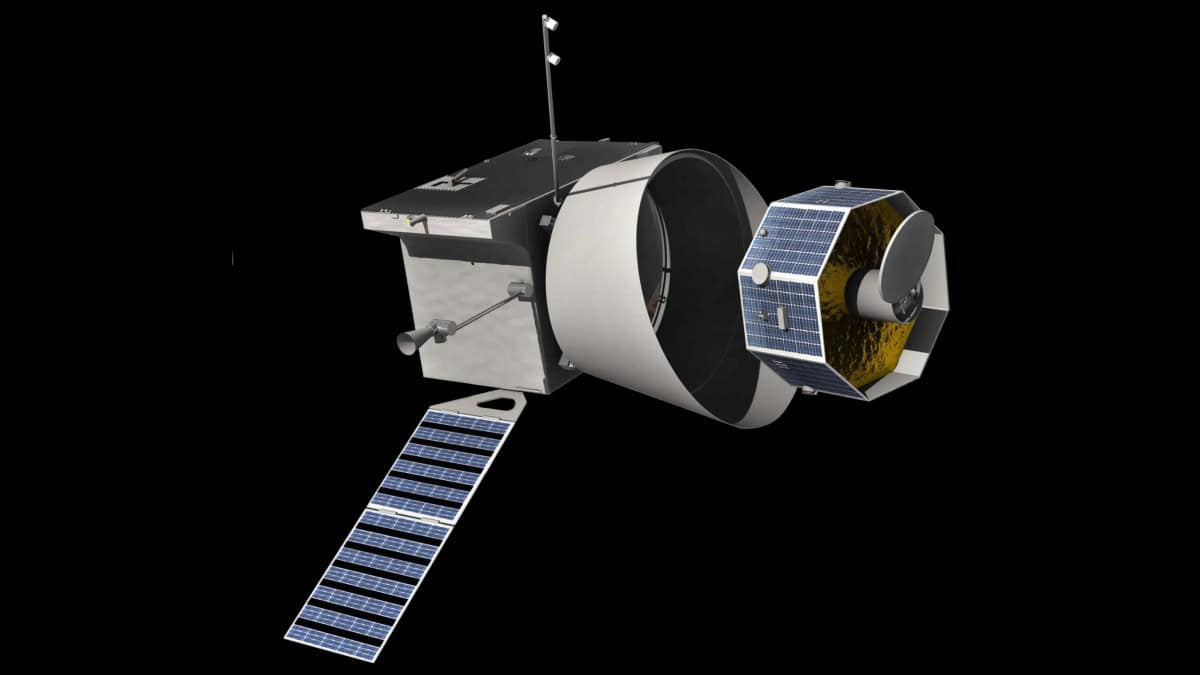
Now, Kinoshita’s team have explored this spatial relationship using BepiColombo, a European and Japanese mission that will begin orbiting Mercury in November 2026. While the mission focuses on Mercury’s surface, interior, and magnetosphere, it also carries non-scientific equipment capable of monitoring cosmic rays and solar plasma in its surrounding environment.
“Such radiation monitoring instruments are commonly installed on many spacecraft for engineering purposes,” Kinoshita explains. “We developed a method to observe Forbush decreases using a non-scientific radiation monitor onboard BepiColombo.”
Multiple missions
The team combined these measurements with data from specialized radiation-monitoring missions, including ESA’s Solar Orbiter, which is currently probing the inner heliosphere from inside Mercury’s orbit, as well as a network of near-Earth spacecraft. Together, these instruments allowed the researchers to build a detailed, distance-dependent profile of a week-long ICME that occurred in March 2022.
Just as predicted, the measurements revealed a clear relationship between the Forbush decrease effect and distance from the Sun.
Astronomers observe a coronal mass ejection from a distant star
“As the ICME evolved, the depth and gradient of its associated cosmic-ray decrease changed accordingly,” Kinoshita says.
With this method now established, the team hopes it can be applied to non-scientific radiation monitors on other missions throughout the solar system, enabling a more complete picture of the distance dependence of ICME effects.
“An improved understanding of ICME propagation processes could contribute to better forecasting of disturbances such as geomagnetic storms, leading to further advances in space weather prediction,” Kinoshita says. In particular, this approach could help astronomers model the paths and intensities of solar plasma as soon as a CME erupts, improving preparedness for potentially damaging events.
The research is described in The Astrophysical Journal.