It is one of the most extraordinary feats of military history – how the Carthaginian general Hannibal managed to cross the Alps with an army of 46,000 men, 7000 horses and 37 war elephants in 218 BCE.
Hannibal’s method was to catch the Romans by surprise by starting from what is present-day France and crossing the Alps into what is now northern Italy.
Yet the exact route that Hannibal’s army took remains a mystery and has been debated for decades given that no records by contemporary historians have survived.
Now theoretical ecologist Emilio Berti from the German Centre for Integrative Biodiversity Research Halle-Jena-Leipzig and Fritz Vollrath at the University of Oxford, UK, have calculated the metabolic cost that the army would have incurred via several possible mountain passes.
The route crossing Col du Clapier – passing first through Grenoble and Aiton before descending into the Po Valley – appeared to be the likely candidate, but recent analysis has suggested an alternative southerly route via the Col de la Traversette.
Using route modelling and elevation data, the team found that the Col du Clapier route would have required 6.28 × 10¹² joules of energy, while Col de la Traversette, however, would have needed 5.42 × 10¹² J.
Yet even on that route, the 15-day crossing would have required 230 tonnes of food and supplies.
The authors calculate that the army would still have lost about a fifth of their body fat reserves during the crossing, which explains the high mortality rate among men.
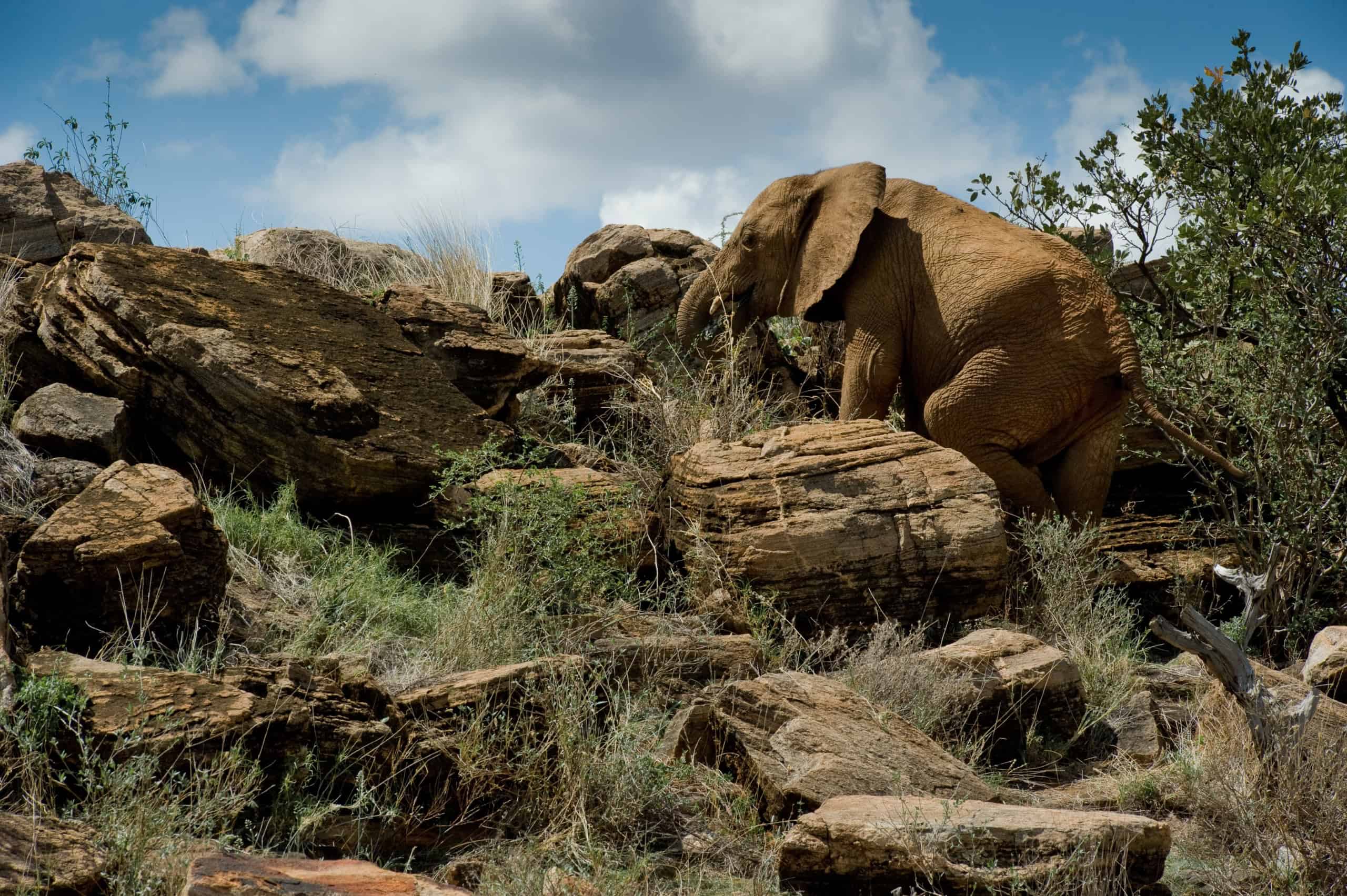
Yet on the Col de la Traversette route, the war elephants would have fared better, losing just 4% of their reserves. This may explain why some 30 elephants are estimated to have made it through to fight in the Battle of the Trebia – the first major battle of the Second Punic War.
“The new analysis does not eliminate all ambiguity, but it does strengthen the case for the Traversette route by demonstrating that it would better accommodate the demands of moving a large army that included elephants through extremely difficult alpine terrain,” notes Berti.