

New ‘telescope-microscope’ detects extremely low levels of light
Quantum image sensor-based device could be used to observe living cells
 Read article: New ‘telescope-microscope’ detects extremely low levels of light

Quantum image sensor-based device could be used to observe living cells
Read article: New ‘telescope-microscope’ detects extremely low levels of light
A phase change in post-perovskite materials at the so-called D” discontinuity is also evidence for long-predicted slow, convective flows in the mantle itself
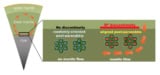 Read article: Mysterious seismic wave speed-up deep within Earth’s mantle explained at last
"Remarkable" new model of quantum double-exchange ferromagnets could produce fresh insights into these technologically-important materials
 Read article: New mechanism explains behaviour of materials exhibiting giant magnetoresistance
Counterintuitive discovery could help develop new technologies that control light
 Read article: Symmetric crystals can absorb light asymmetrically
New work could help in the development of materials that host exotic coherent quantum states under ambient conditions
 Read article: Soliton structure protects superfluorescence
New statistical physics analysis of the French labour market could improve the efficiency of employment markets and help workers adapt to shocks like technological change or economic crises
 Read article: Statistical physics reveals how ‘condenser’ occupations limit worker mobility
Researchers characterize the structure of liquid carbon for the first time, thanks to experiments at the European XFEL
 Read article: Liquid carbon reveals its secrets
Rare sighting could allow astronomers to test theories of binary star systems
 Read article: Short-lived eclipsing binary pulsar spotted in Milky Way
Portable biomarker detector could also be used in non-contact diagnostics
 Read article: Handheld device captures airborne signs of disease
Previously unknown protein-based feature in slime allows it to transform from liquid to fibre and back again
 Read article: Worm slime could inspire recyclable polymer design