

Quantum dots for highly efficient solar cells
Current efficiency limits of 30% could be vastly improved by capturing 'hot electrons'
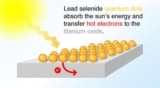 Read article: Quantum dots for highly efficient solar cells

Current efficiency limits of 30% could be vastly improved by capturing 'hot electrons'
Read article: Quantum dots for highly efficient solar cells
Improving the effectiveness of electrodes
 Read article: Nanotubes boost battery performance
New technique could make flexible electronic circuits
 Read article: AFM tip ‘writes’ graphene nanowires
'Entangled' LED could help make quantum computer
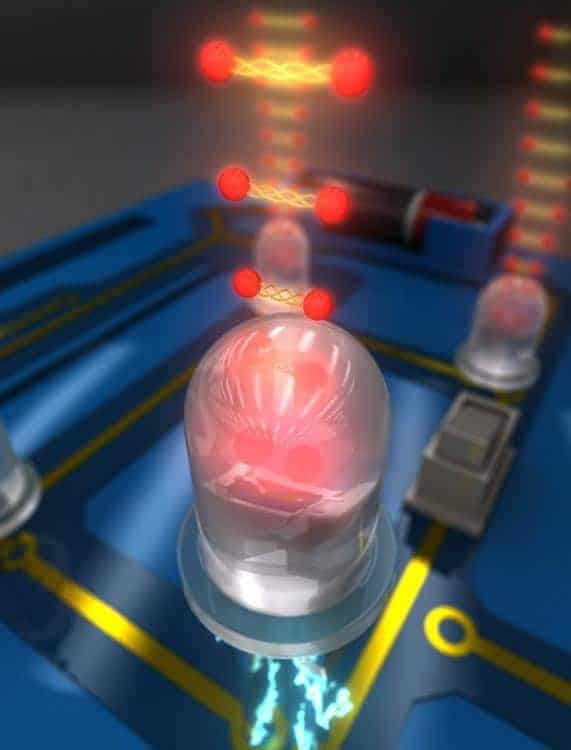 Read article: Entangling photons with electricity
Technique for patterning graphane with quantum dots
 Read article: A liberal sprinkling of quantum dots
Force measurements could lead to better nanowires
 Read article: ‘Pushy’ electrons move atoms
Carbon multi-layers could chill chips
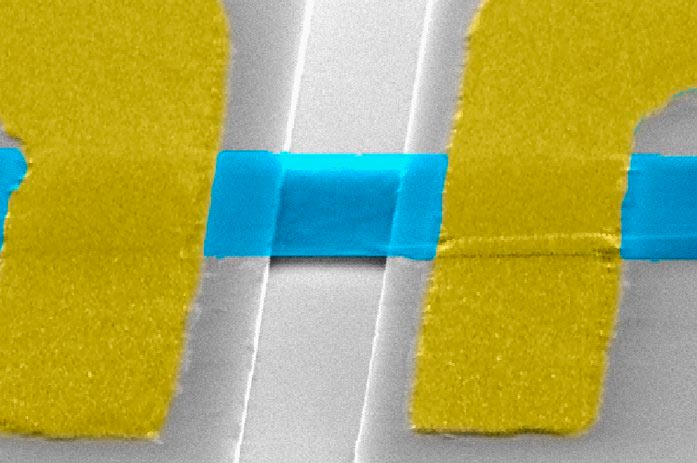 Read article: ‘Few-layer’ graphene keeps its cool
Carbon and gold join forces in photonic metamaterial
 Read article: Nanotube ‘fuzz’ boosts optical performance
New lithography technique could lead to smaller circuits
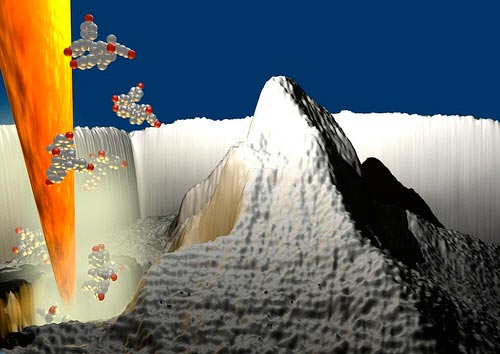 Read article: Scanning probe makes ‘nano Matterhorn’
Graphene could conduct waste heat from computer chips more than twice as fast as copper
 Read article: Carbon sheets offer cool solution for computers