

Colder, slower, better
Physicists have measured the velocity of cold anti-atoms for the first time
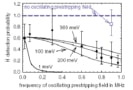 Read article: Colder, slower, better

Physicists have measured the velocity of cold anti-atoms for the first time
Read article: Colder, slower, better
Sharpest ever image of a dusk disk could reveal how new planets are formed
 Read article: Closing in on planet formation
Material scientists make ultrahard glass from alumina
 Read article: Glass breakthrough
Holographic approach reveals tiny differences in handwriting
 Read article: Physicists stop forgers in their tracks
Biophysicists have made the smallest ever ultrasound probe
 Read article: New tools for blocked arteries
New results show that almost all dust particles in the Martian atmosphere are magnetic
 Read article: Rover reveals magnetic Mars
Astronomers may have discovered a new class of gamma-ray bursts
 Read article: Faint gamma-ray bursts on the horizon
BaBar scientists see direct CP violation for first time in B mesons

Geologists have pinpointed the exact origin of a meteorite for the first time
 Read article: Lunar rock sheds new light on the Moon
A new method to separate out liquids
 Read article: Liquid separation goes electric