

Chiral orbit currents create new quantum state
Discovery could be a boon for quantum sensors and memory storage devices for quantum computers
 Read article: Chiral orbit currents create new quantum state

Discovery could be a boon for quantum sensors and memory storage devices for quantum computers
Read article: Chiral orbit currents create new quantum state
High-precision electron holography technique identifies single electron charges of platinum particles on a metal oxide surface
 Read article: Counting individual electron charges could improve nanoparticle catalysts
New work could be important for basic physics studies while helping set higher standards for metrology, navigation and positioning
 Read article: Time-frequency dissemination breaks distance record
New mechanical annealing experiments will be important for improving the design of foams and emulsions commonly employed in the food and pharmaceutical industries
 Read article: Material memories can be erased
New work could help in the design and development of drugs to fight coronaviruses
 Read article: Physicists simulate how SARS-CoV-2 forms
The exciton-polariton might be important for lasers or for digital data storage
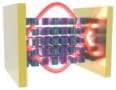 Read article: Half-light, half-matter quasiparticle appears in a van der Waals magnet
Two new protection strategies overcome the air-instability of these technologically important nanostructures
 Read article: Making graphene nanoribbons stable
Replacing the normal conducting tip in these instruments with superconducting ones boosts sensitivity by up to a factor of 50
 Read article: Superconductors strengthen signals in scanning-tunnelling microscopy
Cooper pairs in cuprates may form thanks to a "superexchange" mechanism
 Read article: Quantum microscopy sheds light on high-temperature superconductivity
Measurements could help advance light-based quantum computers
 Read article: How indistinguishable are indistinguishable photons? New optical interferometer puts a number on it