

Flat bands appear in buckled graphene superlattices
Result offers a new way of creating correlated states in 2D carbon, physicists say
 Read article: Flat bands appear in buckled graphene superlattices

Result offers a new way of creating correlated states in 2D carbon, physicists say
Read article: Flat bands appear in buckled graphene superlattices
New bioinspired material could protect surfaces such as aircraft wings and wind turbines
 Read article: Moth-eye nanostructures make good anti-icing coatings
Findings could lead to a new class of sensitive IR detectors based on carbon sheets
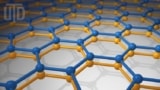 Read article: Twisted bilayer graphene responds strongly to infrared light
Surface tension, not gravity, is responsible, say researchers
 Read article: Why bubbles burst in viscous liquids
Researchers image nanoscale magnetic field fluctuations in 2D carbon at room temperature
 Read article: Diamond defects reveal viscous currents in graphene
New computation model of "strange" metals could shed light on high-temperature superconductors and black holes
 Read article: ‘Reluctant’ metals make a new state of matter
Most precise measurement to date of the proton-electron mass ratio is compatible with recent, smaller values of proton mass
 Read article: Protons could be lighter than we thought
New work could have applications in ultrasound imaging, sonar and low-power electronic devices that can operate in harsh or hazardous environments
 Read article: Time-varying signals control sound waves in topological metamaterials
Shells, grapefruit and piranha-proof fish motivate design of "Proteus" material that resists power drills and water jets
 Read article: Bioinspired material can’t be cut
Computations suggest that supercooled water exists in two distinct liquid phases
 Read article: Second critical point appears in two models of water