Author
Array
(
[0] => linkedin
[1] => facebook
[2] => twitter
[3] => google-plus
[4] => youtube
)
Array
(
[0] => linkedin
[1] => facebook
[2] => twitter
[3] => google-plus
[4] => youtube
)
Array
(
[0] => linkedin
[1] => facebook
[2] => twitter
[3] => google-plus
[4] => youtube
)
Array
(
[0] => linkedin
[1] => facebook
[2] => twitter
[3] => google-plus
[4] => youtube
)
Array
(
[0] => linkedin
[1] => facebook
[2] => twitter
[3] => google-plus
[4] => youtube
)
No Author
Author archive
The unique mechanical and electronic properties of multiwall nanotubes are proving to be a rich source of new physics and could also lead to new applications in materials and devices
 Read article: Multiwall carbon nanotubes
The new Buyer’s Guide contains information on a wide range of physics equipment: cryogenics, lab electronics, lasers, magnets, microscopy, power supplies, test & measurement and vacuum are just some of the categories included in the Buyer’s Guide. More than 2000 companies are listed in the guide, and a sophisticated search facility makes it easy to […]

In 1960 von Bekesy published the results of his classic measurements on the cochlea, which suggested that the ear was essentially a linear device. However, von Bekesy conducted his experiments on cadavers, and more recent experiments on live cochleas suggest that hearing is essentially nonlinear. The nonlinearity is thought to arise from a biological power […]
The remarkable properties of carbon nanotubes may allow them to play a crucial role in the relentless drive towards miniaturization at the nanometre scale
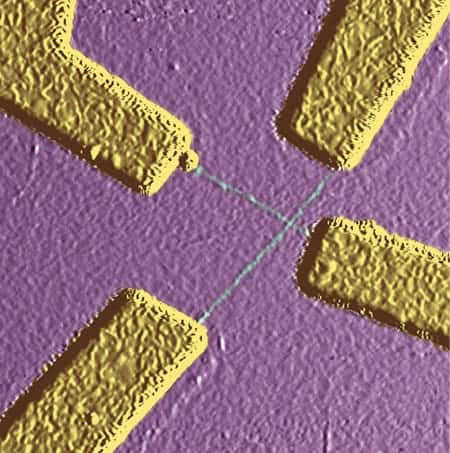 Read article: Carbon nanotubes roll on
Interdisciplinary research is currently in fashion, and no interface is more in vogue than that between physics and biology. But whereas the subject matter of, say, chemical physics or materials physics is relatively well defined, there is no such agreement on what constitutes biological physics, and no broad research programme to follow. Even the name […]
 Read article: Biological lessons for physicists
There is no doubt that quantum theory has been remarkably successful and has passed every experimental test it has been subject to. But the interpretation of quantum theory – in particular the meaning of the wavefunction, the role of observers, and the question of what happens to the state of a system during a measurement […]
Berndt and co-workers prepared gold, silver and copper surfaces with standard techniques and then used a scanning tunnelling microscope with a specially prepared tungsten tip to identify regions on the surface that were free from defects. The advantage of this technique over others, such as photoelectron spectroscopy, is that the same instrument that is used […]
Smaller clusters tend to have elongated shapes, and the energy of formation is essentially independent of the number of atoms in the cluster. Larger clusters are spherical and the formation energy is inversely proportional to the cube root of the number of atoms. Such detailed knowledge of the energetics of cluster formation is needed to […]
The institute has been established for 10 years in the first instance, with the Particle Physics and Astronomy Research Council (PPARC) investing £7m and the University of Durham investing £5m. Durham already has a strong track record in phenomenology lead by James Stirling, who is director-designate of the new institute. To begin with the institute […]
Mark Huyse from the University of Leuven in Belgium and co-workers in Germany, Slovakia, the UK, Finland, Russia, Sweden and Belgium studied lead-186, which contains 82 protons and 104 neutrons. 82 is a “magic number” in nuclear physics, which confers special properties on nuclei with this number of neutrons or protons. Moreover, 104 is mid-way […]
Copyright © 2026 by IOP Publishing Ltd and individual contributors


