

Optical receiver for space communications has ‘unprecedented’ sensitivity
New technology could benefit space missions and LIDAR
 Read article: Optical receiver for space communications has ‘unprecedented’ sensitivity

New technology could benefit space missions and LIDAR
Read article: Optical receiver for space communications has ‘unprecedented’ sensitivity
Outflow at 10,000 km/s created extremely bright flare
 Read article: Accretion, not colliding spaghetti, flares up as star is devoured by black hole
Prototype “B-TENG” device powers 100 LEDs
 Read article: Fluttering polymer ribbons harvest electrical energy
Event Horizon Telescope image tests theory in the strongest gravitational field yet
 Read article: Black hole’s shadow boosts Einstein’s general theory of relativity
Chip-based device images structures smaller than living cells
 Read article: Tiny ultrasound detector achieves super-resolution imaging
Independent spectroscopy studies give equivocal results
 Read article: Have dark bosons been spotted in ytterbium isotopes?
Asymmetry found in 1D simulations of trapped tiny objects
 Read article: Nanoparticles warm up faster than they cool down
Piezoelectric-OLED hybrid needs no electronic signal processing
 Read article: Ultrasound signals are converted directly to visible images by new device
Biological polymer could be farmed on the Red Planet
 Read article: Martian buildings could be made of chitin-based material
Simulation suggests a smooth transition to a metal at high pressure
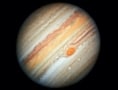 Read article: Machine-learning study of metallic hydrogen provides clues about Jupiter’s interior