Machine learning for tomographic imaging
New book provides the first comprehensive overview of neural networks and tomographic reconstruction methods
Read article: Machine learning for tomographic imaging
Thank you for registering with Physics World
If you'd like to change your details at any time, please visit My account
I am an online editor for Physics World. I write and commission articles for the medical physics, and biophysics and bioengineering sections of the website. I did a PhD in molecular physics at Leeds University, followed by a postdoc in the medical physics department. I joined IOP Publishing in 1999, and in 2008 I became editor of the website medicalphysicsweb. Outside of work, I enjoy travelling, as well as singing and dancing in musical theatre productions.

New book provides the first comprehensive overview of neural networks and tomographic reconstruction methods
Read article: Machine learning for tomographic imaging
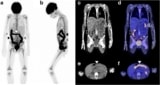
Combining the uEXPLORER total-body PET/CT scanner with advanced image reconstruction enables real-time capture of blood flow and heart function
Read article: Ultrasensitive PET enables sub-second total-body imaging
In this week's podcast, we take a look at solar cookers, hear from an ultrasound start-up and chat about some bad business models
Read article: Solar cooking, an ultrasound success story, and why some business models just don’t work out
High-dose rate FLASH radiotherapy using protons decreases damage to normal tissue without reducing anti-tumour activity
Read article: FLASH radiotherapy with protons protects normal tissue while killing cancer
Scientists receive funding to develop advanced imaging tools for assessing drug delivery to the skin
Read article: Collaboration receives $1.25m to accelerate development of effective topical drugs
Concurrent chemoradiotherapy using protons rather than photons reduces side effects without impacting treatment efficacy
Read article: Proton therapy lowers side effects in treatment of locally advanced cancers
In this short video with XECAN, filmed at ASTRO 2019, CEO and founder Bin Yang presents the company's advanced facial recognition system
Read article: ASTRO showcase: XECAN presents advanced facial recognition
An end-to-end dosimetry protocol uses polymer gel phantoms to assess the entire MR-linac workflow, including treatment plan adaptation
Read article: Gel dosimetry provides end-to-end QA for the Unity MR-linac
Modelling of clinical data suggests the existence of a variable RBE for a clinically relevant endpoint after proton therapy
Read article: Radiation response model sheds light on proton RBE
Physics technologies play a vital role in the development of particle therapy systems and techniques
Read article: Physics drives ongoing developments in proton therapy