

Spins hop between quantum dots in new quantum processor
Hopping-based logic achieved at high fidelity
 Read article: Spins hop between quantum dots in new quantum processor

Hopping-based logic achieved at high fidelity
Read article: Spins hop between quantum dots in new quantum processor
Discovery has puzzled some physicists
 Read article: Structured electrons have chiral mass and charge
Energy efficient and integrated device is pumped by an LED
 Read article: New titanium:sapphire laser is tiny, low-cost and tuneable
Technique gives greater control and flexibility over entanglement
 Read article: Liquid crystals generate entangled photon pairs
Collisions at the CMS detector provide insights into lattice QCD and neutron stars
 Read article: Speed of sound in quark–gluon plasma is measured at CERN
System charts the evolution of complex quantum states
 Read article: Boson sampler uses atoms rather than photons
Independent demonstrations by teams in China, Europe and the US bring a quantum Internet closer
 Read article: Quantum entanglement expands to city-sized networks
System could be used to simulate superconducting bilayer graphene
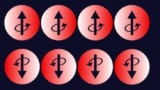 Read article: Bilayer of ultracold atoms has just a 50 nm gap
Fidelity could be further improved by using a graphene-based device
 Read article: Bolometer measures state of superconducting qubit
Sagittarius A* and Messier 87 black holes are similar, Event Horizon Telescope reveals
 Read article: Milky Way’s supermassive black hole has a surprising magnetic personality