Cyborg roses become transistors and logic gates
Conductive polymer turns living plants into electronic devices
 Read article: Cyborg roses become transistors and logic gates

Conductive polymer turns living plants into electronic devices
Read article: Cyborg roses become transistors and logic gates
Lorna Dougan explains how physicists are helping to unravel the properties of organisms in Earth's least hospitable places
 Read article: Surviving at the extremes: the physics of ‘extremophiles’
New research delves into the mechanics of aggregated fire ants
 Read article: Swarming fire ants show solid and liquid properties
Viral scaffolding allows excitons to travel faster and further
 Read article: Genetic engineering boosts energy transport in artificial photosynthesis
Physicists explain how to bring a famous thought experiment to life
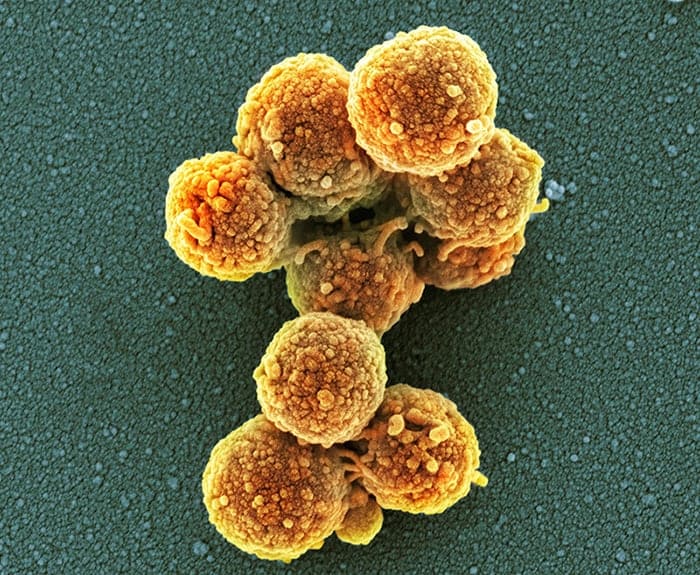 Read article: Could ‘Schrödinger’s bacterium’ be placed in a quantum superposition?
Model suggests tiny change in communication could have large effect on neuron interaction
 Read article: Do general anaesthetics trigger a phase transition in the brain?
Atomic-force-microscopy study could help in the development of protein-inspired machines
 Read article: Protein pulling reveals a new way that molecules resist external forces
Horizontal pupils keep grazers safe, vertical pupils help predators to ambush prey
 Read article: Eye shape reveals whether animal is predator or prey
Collective motion of bacterial swimming could power tiny motors
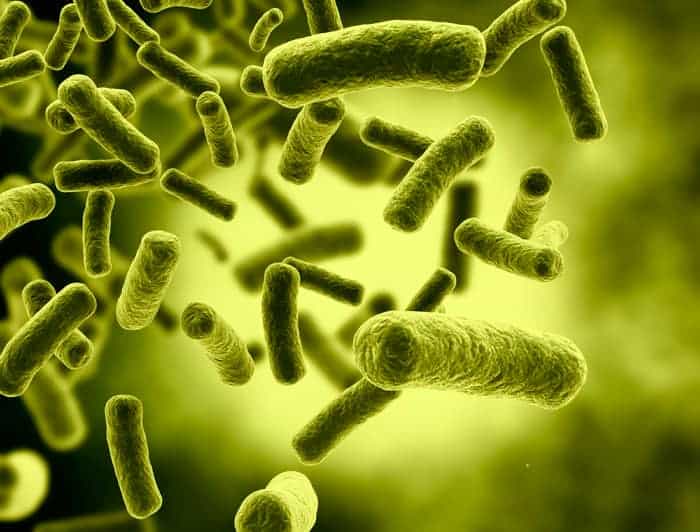 Read article: Pushy bacteria create their own superfluids
Copying patterns found on snakes and lizards could reduce friction in tiny machines
 Read article: Reptile skin inspires super-slippery steel surfaces