Mathematical physics Research update ‘Back to the future’ messages are more efficient Closed time-like curves allow greater information capacity when sending messages backwards in time Read article: ‘Back to the future’ messages are more efficient
Quantum mechanics Research update Physicists identify unexpected quantum advantage in a permutation parity task The list of things that quantum features enable us to do just got a little longer Read article: Physicists identify unexpected quantum advantage in a permutation parity task
Mathematical physics Blog The physics of an unethical daycare model that uses illness to maximize profits The arXiv paper is "not intended as a recipe for unethical daycare centre" Read article: The physics of an unethical daycare model that uses illness to maximize profits
Mathematical physics Blog Chess960 still results in white having an advantage, finds study Research suggests that the standard game, and other permutations, can be unfair to players who go second Read article: Chess960 still results in white having an advantage, finds study
Quantum mechanics Research update Quantum-scale thermodynamics offers a tighter definition of entropy New formulation sheds light on the three-level maser Read article: Quantum-scale thermodynamics offers a tighter definition of entropy
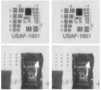
Imaging Research update Motion blur brings a counterintuitive advantage for high-resolution imaging New algorithm turns structured motion into sharper images Read article: Motion blur brings a counterintuitive advantage for high-resolution imaging
Mathematical physics Research update Bayes’ rule goes quantum New work could help improve quantum machine learning and quantum error correction Read article: Bayes’ rule goes quantum
Gravity Research update Reformulation of general relativity brings it closer to Newtonian physics Calculations reveal inverse square law behaviour in binary black holes Read article: Reformulation of general relativity brings it closer to Newtonian physics
Mathematical physics Research update Predicted quasiparticles called ‘neglectons’ hold promise for robust, universal quantum computing Discovery could lift theoretical constraints on calculations achievable with certain types of topological quantum computers Read article: Predicted quasiparticles called ‘neglectons’ hold promise for robust, universal quantum computing
Atomic and molecular Research update Five-body recombination could cause significant loss from atom traps Efimov states could be used to build molecules and achieve nuclear fusion Read article: Five-body recombination could cause significant loss from atom traps
IOP Publishing and Tsinghua University Presents A Century of Excellence at Tsinghua University – Shaping the Future of Scientific Discovery with IOP Publishing. Find out more.