The search is on for elusive particle decay

A US experiment to search for neutrinoless double-beta decay has got the green light to start operations. The Majorana Demonstrator, located at the Sanford Underground Research Facility in South Dakota, received “Critical Decision 4” from the Department of Energy (DOE) in March. The decision certifies that the experiment met its “performance parameters”, including the need for ultra-low background measurements.

“The DOE held us to the line and made sure we built something that we can use to do good science,” says Lawrence Berkeley National Laboratory physicist Alan Poon, the Majorana Demonstrator’s detector group leader. “Because we know we have met all these basic requirements, now we start doing physics and trying to improve on the instruments and try to discover new signs.”

The Majorana Demonstrator has been gathering data with one operating module since June 2015 and presented data on background levels last year at the Neutrino 2016 conference in London. However, with the experiment’s second module having been installed late last year together with the detectors’ final and outermost polyethylene layer added to the copper-lead shielding in March, the construction of the experiment is now fully complete.

Annihilating neutrinos

To search for neutrinoless double-beta decay signals, the experiment will use 30 kg of enriched germanium-76 detectors. The decay process involves two neutrons simultaneously decaying into two protons, emitting two electrons and two antineutrinos. If the neutrino is a Majorana particle – its own antiparticle – then the two antineutrinos would annihilate each other before leaving the nucleus – hence neutrinoless double-beta decay.

Poon and colleagues have also teamed up with the GERDA experiment at the Gran Sasso National Laboratory in Italy to create the Large Enriched Germanium Experiment for Neutrinoless ββ Decay (LEGEND) alliance. Members from GERDA were involved with the Majorana Demonstrator’s design and construction and LEGEND will co-ordinate efforts to search for neutrinoless double-beta decay.

Bernhard Schwingenheuer from the Max Planck Institute for Nuclear Physics in Heidelberg, who is co-spokesperson for the GERDA experiment, says that the different shields on the two experiments will help them establish critically low background levels for detecting neutrinoless double-beta decay. GERDA’s liquid-argon shield sends clear flash signals of interference while the Majorana shield’s inner copper layer has a high purity, which is critical for precluding misleading signals. Schwingenheuer and Poon are confident that LEGEND will help usher in a new stage of collaboration, which includes raising the amount of enriched germanium from 65 kg to 100 kg by 2019, with a goal of reaching 200 kg by that date.

Bigger than Higgs

If the LEGEND team does manage to discover neutrinoless double-beta decay, it would indicate lepton-number violation – where the number of leptons minus the number of antileptons is not conserved – which some theorists believe it could explain why there is more matter than antimatter in the universe. “If the lepton number is violated in this neutrinoless double-beta decay, that would be a major breakthrough, bigger than the Higgs boson discovery,” says Schwingenheuer. “If you find this decay you will have only a handful of events [and] you want to have an extremely low background so you want to be extremely sure that it is not something else.”

Writing in Physical Review Letters, Poon and colleagues have analysed data from the first module and have been able to exclude four proposals of exotic physics beyond the Standard Model at a confidence level of 90%. These are the existence of bosonic dark matter; the coupling of solar axions to matter; electronic transitions that violate the Pauli exclusion principle; and the decay of the electron.

Between the lines

Vermin of the sky

Mention the word asteroid and thoughts of doom and destruction seem to spring to mind. Whether you are commiserating with the now-extinct dinosaurs or thinking of an explosive Bruce Willis in Armageddon, these “vermin of the sky” (as they were once described by astronomer Edmund Weiss) seem to scare many of us. But California Institute of Technology scientist and author Carrie Nugent claims to be “obsessed” with these rocks, according to her new book Asteroid Hunters. Part of the TED book series, this concise volume is pretty high impact, pun intended. Written informally (much in the style of a TED talk) and from a rather personal point of view, Nugent swiftly takes the reader across the solar system, talking about where most asteroids are found, what they are made of, the chance of being hit by one (she briefly tells the tale of Ann Hodges, the only person in recent memory to be hit by a meteorite), the various times large impacts have occurred and, finally, the science behind asteroid hunting today, in an effort to be aware of any potential large intruders. Nugent is part of NASA’s NEOWISE mission – its telescope has tracked more than 158,000 near-Earth asteroids and discovered more than 30,000. The book also contains some wonderful illustrations by Mike Lemanski in the form of stylized infographics. Pick up Asteroid Hunters to get a crash course in asteroid tracking and planetary defence.

  • 2017 Oxford University Press 144pp £7.99pb

An atmospheric tale

Regular readers of Between the Lines will recall last month’s review of a book on gravity, part of the Very Short Introductions book series, written by experts in a field but aimed at a general audience and covering a large range of topics. The latest science addition to the series is The Atmosphere, written by atmospheric scientist Paul Palmer from the University of Edinburgh. This book covers most of the topics that one would expect it to – from our planet’s complex atmosphere to how it interacts with the planetary surface and the Sun. Palmer does a good job of contextualizing the subject with advances in science. For example, he talks about the different kinds of exoplanetary atmospheres that could be found and also deals with modern estimates of air pollution and ozone loss, and ends with future challenges facing atmospheric scientists. While the figures in the book are more suited to a journal article and Palmer’s writing is occasionally dry, the book is a useful resource and provides a good overview of the topic.

  • 2017 Oxford University Press 152pp £7.99pb

So you want to know about the dark universe?

Photo of Catherine Heymans, University of Edinburgh

By Matin Durrani

It never ceases to amaze me that we know almost nothing about 95% of the universe. Sure, the consensus is that 25% is dark matter and the rest is something dubbed “dark energy”, but beyond that our knowledge is wafer thin.

The flip side, though, is that there’s plenty for physicists to get stuck into. And if you want to get up to speed with the field and find out more about some of its challenges, do check out a new free-to-read Physics World Discovery ebook by Catherine Heymans from the Royal Observatory, University of Edinburgh, UK.

Available in ePub, Kindle and PDF formats, The Dark Universe explains the dark enigma and examines “the cosmologist’s toolkit of observations and techniques that allow us to confront different theories on the dark universe”. And to get you in the mood for all things dark, I asked Heymans some questions about her life as a research scientist. Here’s what she had to say.

(more…)

Flash Physics: LISA Pathfinder beats static electricity, nanodiamonds enhance MRI, quantum pioneer bags prize

LISA Pathfinder overcomes electrostatic forces

Researchers have successfully minimized the electrostatic forces affecting test masses on the LISA Pathfinder spacecraft. The LISA Pathfinder mission aims to demonstrate technology for the Laser Interferometer Space Antenna (LISA) – a space-based gravitational-wave observatory that will comprise three spacecraft. As part of a huge detector, each spacecraft will contain test masses located at a “Lagrangian point” between the Sun and Earth. It is important that the masses are completely isolated from any external influences because LISA will use lasers to very precisely measure the distances between them. Any passing gravitational waves will then be detected as they cause tiny displacements of the masses. In June 2016, the European Space Agency (ESA) announced that a 2 kg test mass had been successfully isolated within the shell-like spacecraft of LISA Pathfinder. A second mass, located 33 cm away, monitors the test-mass motion and the spacecraft uses thrusters to make sure that the test mass does not bang into the wall of its surrounding shell. Now, researchers have developed methods to reduce the charge-induced electrostatic forces exerted on the test masses. These forces originate from high-energy cosmic rays and solar energetic particles penetrating the spacecraft and shielding, depositing charge on the test mass via secondary emission or by stopping directly. The methods and technology, presented in Physical Review Letters, overcome a major milestone in the development of LISA and the next generation of gravitational-wave experiments.

Nanodiamonds enhance magnetic resonance imaging

MRI scans of vials containing nanodiamonds

A new technique using tiny diamonds and magnetic resonance imaging (MRI) could ensure that cancer drugs and other pharmaceuticals reach the right parts of the body. That’s the claim of a team of researchers including David Waddington at the University of Sydney in Australia and Matthew Rosen and Ronald Walsworth of Harvard University in the US. The group used the “Overhauser effect” to boost the MRI signal from pieces of diamond just 18 nm in size. This involves firing radio-frequency pulses at nanodiamonds mixed with water. This causes the transfer of electron spin polarization from impurities on the surface of the diamond to the nuclear spins of hydrogen in surrounding water molecules. This greatly enhances the MRI signal from the hydrogen nuclei, which should reveal the location of nanodiamonds as they move through the body. A cancer drug could be tagged with nanodiamonds, for example, and then MRI could be used to confirm that it reaches a tumour. Other applications include studying how drugs are transported across the blood–brain barrier and also detecting cancer by using nanodiamonds to tag a pharmaceutical that tends to accumulate in specific types of tumour. Unlike conventional MRI scans, which require strong magnetic fields created by expensive room-sized superconducting magnets, the new technique employs low magnetic fields. This, says Rosen, “opens up a number of new opportunities” beyond the current nanodiamond imaging application. The research is described in Nature Communications.

Quantum-computing pioneer bags mathematical-physics prize


Raymond Laflamme has won the 2017 CAP-CRM Prize for Theoretical and Mathematical Physics, “for his groundbreaking contributions on quantum information”. Awarded jointly by the Canadian Association of Physicists (CAP) and Canada’s Centre de Recherches Mathématiques, the prize will be presented on 1 June at a ceremony at CAP’s annual congress in Kingston, Ontario. Laflamme began his career in cosmology, completing a PhD in 1988 with Stephen Hawking at the University of Cambridge. In the mid-1990s he shifted his attention to quantum information and helped develop linear optical quantum computing and other important concepts of quantum-information processing. In 2001 Laflamme joined the University of Waterloo as the founding director of the Institute for Quantum Computing (IQC). He is also a founding member of the Perimeter Institute for Theoretical Physics in Waterloo, Ontario, where Laflamme co-founded the quantum-technology company Universal Quantum Devices in 2011.


  • You can find all our daily Flash Physics posts in the website’s news section, as well as on Twitter and Facebook using #FlashPhysics. Tune in to physicsworld.com later today to read today’s extensive news story on the latest in the search for neutrinoless double beta decay.

Web life: Backyard Worlds: Planet 9

So what is the site about?

Much as its name suggests, Backyard Worlds: Planet 9 focuses on the hunt for a ninth planet in our solar system, along with other possible “rogue” planets that astronomers now believe may abound in the galaxy. The idea is to look though data from NASA’s Wide-field Infrared Survey Explorer (WISE) mission and distinguish certain features – following in the vein of a number of other celestial citizen-science projects. The data in this case are in the form of animated images of the sky, taken at different times. As a participant, your job is to pick out moving celestial bodies – mainly ultracool brown dwarfs and other rogue planets – from artefacts in the data. As the site suggests “There are too many images for us to search through by ourselves. So come join the search, and you might find a rogue world that’s nearer to the Sun than Proxima Centauri – or even the elusive Planet Nine.”

Who is behind it?

It should come as no surprise that Backyard Worlds is part of the Zooniverse family. In case you haven’t come across it before, Zooniverse claims to be the “world’s largest and most popular platform for people-powered research”. Its science programmes involve everything from spotting distant galaxies to counting animals in the wild. The idea is to tap into people’s interest in science, whether or not they have a science degree and use their help to pick out details in large data-sets – a task that computers are still much slower at than the average person.

The Backyard Worlds team is made up of researchers from the American Museum of Natural History, the Space Telescope Science Institute, NASA, the University of California, Berkeley and Arizona State University.

Can I get involved?

Yes of course – that is the aim of the game. At the time of writing, the site had 26,383 registered volunteers who had completed 2,314,451 classifications, but that isn’t even halfway to the goal so there is plenty more help you can offer. Your main task as a volunteer is to look through sets of false-colour images, taken at four different times. You use a marking tool to point out artefacts that are moving through these images, either hopping and jumping across the set of images (“mover”) or appearing as pairs of varying bright and dark spots (a “dipole”). If you think you have spotted a possible dipole or mover, you report it via the chat function by providing the object’s celestial coordinates (simply called Talk, this section also allows you to chat with other users as well as the scientists involved, making it a great open discussion platform).

The next step is to cross-reference your discovery against a database of known astronomical objects. Dubbed the “Set of Identifications, Measurements, and Bibliography for Astronomical Data” or SIMBAD, this database is used by professional astronomers. If your coordinates do not align with an existing object, you get to fill out an exciting “Think you’ve got one?” form with details of your find. At this point, the professionals take over as they first research the object to see what we already know about it, before following up with observations of the most promising candidates. “We need to apply for telescope time to follow up the most interesting objects to take their spectra,” explains the site, adding that “The spectra will allow us to figure out their spectral types and their temperatures, and find out if what we’re looking at really is a new brown dwarf or planet. That whole process will take several months.”

Who is it aimed at?

To some extent, the site is aimed at anyone who would like to hunt for new planets. But Backyard Worlds needs a bit more time and attention than some of the other Zooniverse projects. While looking through the data and marking artefacts is simple, some users may be thrown by having to determine the celestial coordinates and then use the somewhat complicated SIMBAD database to find more data on their discoveries. That said, there are detailed “how to” guides and blog posts on each of these topics and the Talk feature allows you to ask for help if you need it. Ultimately, the hard work will pay off for all volunteers as everyone will be credited with any potential discoveries. And really, how many people can say they helped to find a planet?

The universe through a glass darkly

Browse through the Hubble Space Telescope’s “Top 100 Images” catalogue and you will undoubtedly be amazed by pictures of stellar clusters. Each image shows vast swathes of inky black embedded with hundreds upon thousands of stars, varying in size and brightness from a tiny pinprick to a dazzling splash. Many, if not most, of these celestial objects are logged and classified in online databases such as the Set of Identifications, Measurements, and Bibliography for Astronomical Data (SIMBAD). As of this year, 9,099,070 objects beyond our solar system are logged in SIMBAD. In this age of big data and fast computing, these numbers do not seem that unwieldy.

But imagine that such online resources or even a mechanical computer were not available. This was the conundrum faced by astronomers in the mid-19th century, as modern astrophysics took off thanks to the advent of photographic techniques and devices such as large refractor telescopes. US astronomer and director of Harvard College Observatory (from 1877) Edward Charles Pickering decided to hire women as “human calculators” to process the ever-growing amounts of astronomical data.

Pickering employed up to 80 women during his 42-year stint as director, at a time when women still did not even have the right to vote. This team of gifted and talented women went on to make huge contributions to astronomy as we know it today, and author Dava Sobel tells their untold tale in her latest book – The Glass Universe: How the Ladies of the Harvard Observatory Took the Measure of the Stars.

Sobel is a seasoned science writer and a former New York Times science reporter. Her 1995 book Longitude was a bestseller and won numerous awards. She followed it up with a variety of historical-science books including Galileo’s Daughter and, most recently, A More Perfect Heaven. The Glass Universe opens in 1882 at a glitzy dinner party hosted by American doctor and amateur astronomer Henry Draper (a pioneer of astrophotography) and his wife Anna. The inside of the Drapers’ Madison Avenue mansion was lit by incandescent lamps – something that not even the White House could boast at the time. Thomas Edison (a personal friend of the Drapers) was himself in attendance along with a bevy of science luminaries, who were all in town for a meeting of the National Academy of Sciences. This opening description sets the scene for the Drapers’ love of science, though to call Henry Draper an amateur astronomer is somewhat of a misnomer. He was a doctor who quit his medical practice in 1873 to pursue astronomy and had taken one of the early images of a stellar spectrum that showed absorption lines.

Anna used to assist her husband in his observations – from calling out the exact 165 seconds of totality during the 1878 solar eclipse to spending nights helping him with the photographic plates that captured stellar spectra. Five days after their celebrity-studded party, however, Henry Draper died from double pleurisy at the age of 45. Anna resolved to carry on with Henry’s work herself, more specifically his spectral imaging of some of the brightest stars in the night sky. It was this research that led Pickering to Anna, as he offered to analyse the spectral patterns using specialized equipment at Harvard.

Upon a visit to Harvard to hand over Henry’s plates, she was surprised to find that six of the computers at Harvard were women. Some of these were the wives, sisters and daughters of resident astronomers, but they also included recent graduates from new women’s colleges such as Vassar and Wellesley, whereas others simply showed mathematical promise.

Pickering always struggled to keep the observatory financially afloat and one way of doing this was to hire women as computers, as he could hire many more women at the same budget. But this was not the only reason – according to Sobel, Pickering advocated for women’s rights and felt that hiring women who had just graduated from the new colleges was a good way to silence naysayers who felt that higher education for women was a waste.

In 1886, two years after her first visit, Anna Draper decided to fund Pickering’s project of creating a photographic stellar spectra catalogue at Harvard, setting up the Henry Draper Memorial. Her funding enabled the work of many female computers and scientists, and would lead to the Henry Draper Catalogue (published between 1918 and 1924), which spectroscopically classified 225 300 stars and helped build the observatory’s collection of half a million glass photographic plates that remain until today.

An early talent noticed by Pickering was a Scottish woman by the name of Williamina Fleming, who was originally hired as his maid in 1879. The story goes that Pickering was often frustrated with the abilities of his all-male computing group and would complain that his “Scottish maid could do better”. This turned out to be a bit of an understatement as Fleming began as a part-time computer at Harvard and ultimately went on to identify 10 novae and more than 300 variable stars, discovered the Horsehead nebula in 1888 and classified most of the stars in the Draper catalogue.

Fleming also developed an early stellar classification system based on a star’s hydrogen content. This was later improved upon by Annie Jump Cannon, another female computer who became part of Pickering’s group – or “Pickering’s harem” as it was being referred to – in 1886. Cannon developed the basic version of the temperature-dependent stellar classification system still in use today. It is clear from the book that Cannon was a particular favourite of Sobel, who said as much in an interview with the Atlantic – Sobel delved into the archive of diaries that Cannon meticulously maintained throughout her life, which reveal Cannon’s unpretentiousness and wit.

Many other stalwarts in the field were to become a part of the “Harvard Computers”. They range from Antonia Murray – best known for her spectroscopic analysis of the binary star Beta Lyrae – to Henrietta Swan Leavitt, who discovered the relationship between the luminosity and the period of Cepheid variable stars. This link in turn helped astronomers to measure the distance between Earth and distant galaxies, and eventually allowed Edwin Hubble to determine that our universe is expanding. It also enabled Cecilia Helena Payne-Gaposchkin to become one of the first women to receive a PhD in astronomy (for studying stellar atmospheres). She also became the first ever woman professor of astronomy at Harvard in 1956 and, eventually, the university’s first female department chair.

Sobel is an extremely adept historical writer and researcher, and has scoured through vast amounts of letters, diaries, memoirs and all of the archival material that Harvard had to offer in penning this book, which spans from the mid-1800s to just after the Second World War. She has woven in many details about the lives, loves, fears, frustrations and achievements of each of the main characters, as well as describing life at the observatory at that time. But the book focuses squarely on the people working at or with the Harvard Observatory, and although it follows its characters as they travel to exotic destinations such as Peru, you may be left wondering about the state of women in astronomy elsewhere in the US and beyond. Another gripe is that Sobel introduces many people in each chapter, but most get only a fleeting mention. As someone who struggles to remember names, I did find myself flipping back and forth to discern a particular individual if they were not one of the main characters.

Nevertheless, The Glass Universe is a fascinating story and Sobel an admirable writer. The book does an excellent job of setting the stage for two other recent books along a similar vein – Nathalia Holt’s Rise of the Rocket Girls and Margot Lee Shetterly’s Hidden Figures, which has also been adapted into an Oscar-winning film and tells the story of the women computers at NASA in the mid-1900s.

As more and more stories of overlooked contributions of women in science come to light, I can’t help but wonder how many such tales will never get told. I also can’t help but hope that today’s female researchers get their due and never need to be postscripted into history.

  • 2017 Fourth Estate 336pp £16.99hb

Competing claims over cause of cosmic cold spot

A survey of more than 7000 galaxies has concluded that a mysterious cold spot in the cosmic microwave background (CMB) is not caused by a giant void in space, potentially opening the door for more exotic explanations.

Ruari Mackenzie and Tom Shanks at Durham University in the UK led astronomers in building a 3D map of galaxies in the direction of the cold spot. Although they found several large voids, these were deemed insufficient to explain the cold spot’s comparatively huge drop in temperature.

The CMB is the 13.8 billion-year-old heat from the Big Bang, now cooled by the expansion of space to just 2.7 degrees above absolute zero. The CMB is generally characterized by slight temperature variations of just a millionth of a degree or so, in accordance with a Gaussian distribution where small temperature variations are expected but large variations are not. However, the cold spot is 150 μK below the mean CMB temperature, far in excess of that expected from a Gaussian distribution.

One theory proposes that the cold spot is caused by the presence of a “super-void” that is able to chill CMB photons via a process called the Integrated Sachs-Wolfe (ISW) effect. In 2015 a team led by István Szapudi of the University of Hawaii claimed to have discovered a giant void spanning 1.8 billion light-years in the direction of the spot.

The word “void” is a misnomer – galaxies still exist within voids, but their density is less than in other regions of the universe. If dense areas of matter are considered to be gravitational wells, then less-dense regions are gravitational “hills”. CMB photons lose energy as they enter a void and climb up the hill, but regain the energy as they move down the hill and leave the void. However, the expansion of the universe enlarges the void while the CMB photons are passing through it. The result is the ISW effect, whereby photons depart the void with less energy and consequently that region of the CMB appears cooler than it really is.

Finding the voids

To test this, Mackenzie and Shanks’ team compiled spectroscopic redshifts of galaxies – more accurate than the photometric (colour-based) redshifts that Szapudi initially used – from the 2dF-VST ATLAS Cold Spot Redshift (2CSz) survey at the Anglo-Australian Telescope in New South Wales. They found three definite voids out to a distance of three billion light-years and a possible fourth void beyond that. Although none were as large as Szapudi’s super-void, combined they provided a greater ISW effect than that measured by Szapudi. However, it was still only enough to account for 31 μK of the cold spot – and that’s including the dubious fourth void.

The team also performed the same measurements along a different line of sight that acted as a control, and found a similar density of voids in that direction as in the direction of the cold spot. “[The control] clinched it for us that voids cannot be to blame, since there is no cold spot in the CMB behind our control field,” says Shanks.

Szapudi, who was actually part of the team alongside Mackenzie and Shanks, disagrees with their conclusion – “If I had to bet on the cause of the cold spot, I’d bet on the super-void.” He interprets the individual voids detected in the 2CSz survey as being part of the substructure of the super-void. His confidence comes from a statistical analysis suggesting that the likelihood of the alignment between the void and the cold spot being coincidental is very slim.

Mackenzie isn’t won over by that line of argument, saying that the fact the control field doesn’t have a cold spot “shows fairly robustly that the claim that the alignment is significant doesn’t hold”. Szapudi counters this by pointing out that the control field is qualitatively different, including the presence of a large galaxy cluster that would offset the ISW effect.

Nevertheless, the presence of such a huge void is difficult to explain in the standard cold-dark-matter model of cosmology, plus there is the extra 120 μK that needs to be accounted for. Szapudi says that making his hypothesis work requires tweaking the Standard Model in some way.

Exotic physics

If Shanks and Mackenzie are correct then an alternative explanation for the cold spot must now be found. Simulations have shown that a random, non-Gaussian quantum fluctuation in the CMB has a 1 in 50 chance of creating the cold spot, but other, more exotic possibilities may also come into play. Among them is the idea that the cold spot is where our universe is bumping into another universe created by eternal inflation. This would produce an identifiable polarization signal in the cold spot. Data from the European Space Agency’s Planck spacecraft that might prove or disprove this have yet to be fully analysed. If the polarization signal is there, however, then a collision with another universe would “become the most plausible explanation, believe it or not”, according to Shanks.

The research will be published in Monthly Notices of the Royal Astronomical Society and can be found in full on the arXiv.

Graphene nanoribbons enable ultra-sensitive mass detection

Using a graphene nanoribbon suspended over a trench, a team of researchers at the University of Science and Technology of China has discovered a link between the nanomechanical motion and conductance through a single-electron transistor (SET). This nano-electromechanical system (NEMS) exploits a gold gating contact in the bottom of the trench that is used to actuate, or trigger, the nanoribbon and to explore its energy landscape.

NEMS devices made from two-dimensional (2D) materials are rapidly becoming a key area of focus for the research community. Simply put, they are devices that combine electrical and mechanical phenomena at the nanoscale. The potential capabilities are almost endless, and graphene is a prime candidate because it has the second highest Young’s modulus ever observed. Moreover, graphene has an intrinsic strength five times that of steel, all the while being a fraction of the density.

The small width of the graphene ribbon means there is a reduced number of states available for electron conduction, and so it acts as a quantum dot when a voltage is applied between its ends. Typically, quantum dots exhibit sharp peaks and troughs in current–voltage measurements, which correspond to the in and out flow of electrons. An electron enters the dot, exhibiting a peak, and has to exit before another can take its place – in other words, it is a one-in and one-out arrangement. This is important because it means the ribbon can be used to detect the effects a single electron has on the system.

A voltage applied to the gate contact in the bottom of the trench results in a force acting on the ribbon due to the electrostatic interaction. The magnitude of the voltage, and therefore the force, controls the tension, mechanical oscillation frequency and electrochemical potential of the ribbon.

It was when Guo-Ping Guo and his team measured the current through the ribbon that they made some truly remarkable discoveries. As they tuned the frequency of an alternating gate voltage applied to the ends of the ribbon, they tracked the resonant mechanical oscillation frequency and compared this to the current flow through the ribbon. Incredibly, they found that the mechanical motion was coupled to the flow of a single electron in and out of the ribbon (Nanoscale 2017, Advance Article).

By driving the ribbon at higher powers, the system enters a non-linear regime that is useful for mass sensing at higher sensitivities, and their calculations reveal some truly astonishing numbers. The mass and force sensitivities are of the orders 10–21 g and 10–19 N Hz–0.5, respectively. Putting this into perspective, haemoglobin and other typical proteins have masses on this scale.

The unique applications of these devices could provide a reliable method for cooling the mechanical modes of resonators to the ground state as well as ultra-high force/mass sensors. They also provide a route to exploring nanoscale phenomena that is beyond the resolution of current technology and could shed light on problems in a range of fields. The full report can be found in Nanoscale.

Flash Physics: Self-gravitating midges, ALICE sees ‘enhanced strangeness’, single photon links quantum dots

Swarms of midges are self-gravitating

Swarms of midges may behave as self-gravitating systems held together by velocity-dependent forces – according to scientists in the UK and US. Many animals display collective group behaviour. In flocks of birds and schools of fish, local interactions between individuals appear to play a key role but swarms of flying insects, such as midges, behave differently. Although midges form cohesive groups and are tightly bound, the coupling inside the swarm is weak. Instead, Andrew Reynolds at Rothamsted Research in the UK and colleagues claim that the midges are bound to the centre of a swarm by forces that increase with flight speed. The researchers constructed models based on density profiles and velocity measurements taken from high-speed video recordings of midge swarms. These models demonstrated that attractive force increases with distance from the centre of the swarm – and that the force increases with an individual’s flight speed. The findings, presented in The European Physical Journal E, confirm a theory proposed last year by team member Nicholas Ouellette of Stanford University in the US. In the current study, the researchers also found that the speed-dependent forces may be governed by acoustic sensing – as previously proposed by Ouellette and team – and visual cues. Reynolds and colleagues add that the biophysical explanation for the swarm dynamics needs further examination.

ALICE spots “enhanced strangeness” in proton collisions

Photograph of the Alice detector at CERN

An abundance of particles containing strange quarks are produced when protons smash into each other in the Large Hadron Collider (LHC) at CERN. That is the surprising conclusion of physicists working on the ALICE experiment at the LHC, who have studied the quark–gluon plasma that is believed to form when protons collide at 7 TeV. The collision drives apart the quarks within the protons to create the quark–gluon plasma – a hot, dense “soup” of quarks, antiquarks and gluons that is thought to resemble the state of the universe just a few millionths of a second after the Big Bang. Over the past two decades, physicists have made quark–gluon plasmas by smashing heavy-nuclei together. More recently, evidence has emerged that quark–gluon plasmas can be created when protons collide at the LHC – something that was not expected. Now, ALICE physicists have detected kaon, lambda, xi and omega particles emerging from these collisions. All of these particles contain one strange quark, and this “enhanced strangeness” has been seen in quark–gluon plasmas created in heavy-nuclei collisions. The physicists believe that this enhanced strangeness is further evidence that proton–proton collisions can indeed produce quark–gluon plasmas. “We are very excited about this discovery,” says ALICE spokesperson Federico Antinori. “Being able to isolate the quark–gluon-plasma-like phenomena in a smaller and simpler system, such as the collision between two protons, opens up an entirely new dimension for the study of the properties of the fundamental state that our universe emerged from.” The measurements are described in Nature Physics.

Quantum dots linked with single photons

A single photon has been used to transfer quantum information a distance of 5 m between two quantum dots. The feat was performed by Atac Imamoğlu and colleagues at the Swiss Federal Institute of Technology in Zurich and could be an important step towards the creation of practical quantum computers in which quantum information stored in stationary quantum bits (qubits) is transferred via “flying” qubits. A quantum dot is a tiny piece of semiconductor that has well-defined electronic states much like an atom. These states can be used to store quantum information, making quantum dots potentially useful as stationary qubits. In this latest work, Imamoğlu’s team created a quantum dot that can emit a single photon that is in a coherent quantum superposition of two infrared wavelengths. This photon is then sent 5 m along an optical fibre to a second quantum dot that can absorb the photon – putting the second quantum dot into a superposition of two quantum states. As a result, quantum information held in the photon (the nature of the quantum superposition) is transferred to the second quantum dot – with the photon acting a flying qubit. The team is now working on extending its system so that different types of quantum information can be transferred. The research is described in Physical Review Letters.


  • You can find all our daily Flash Physics posts in the website’s news section, as well as on Twitter and Facebook using #FlashPhysics. Tune in to physicsworld.com later today to read today’s extensive news story on the cosmic-microwave-background’s cold spot.

Flash Physics: Sun’s magnetic reach revised, committee gender quotas analysed, CERN gears up for restart

Cassini reveals new shape to Sun’s magnetic influence

As NASA’s Cassini spacecraft begins its final series of orbits around Saturn, scientists report that it has helped identify an alternate view of the Sun’s magnetic fields. To date, it was thought that the Sun’s heliosphere – the bubble of the Sun’s magnetic influence – had a comet-like shape because of the solar system’s movement through interstellar space. Now, however, Kostas Dialynas of the Academy of Athens in Greece and team suggest a different picture based on data from Cassini, Voyager and the Interstellar Boundary Explorer – the heliosphere may have rounded ends, making it almost spherical. Although Cassini’s main role over the last decade has been to explore Saturn’s system, it has measured fast-moving neutral atoms related to the heliosphere. As charged particles from the inner solar system travel through the heliosphere boundary, some exchange electrons with neutral gas atoms from the interstellar medium. Some of these are then bounced back into the inner solar system as fast-moving neutral atoms. Cassini’s measurements have revealed that particles coming from the heliosphere’s supposed comet-like tail behave almost exactly as those coming from the nose, suggesting it is much more rounded and symmetrical than a comet’s shape. The researchers hope the data, presented in Nature Astronomy, will provide an insight into the interstellar boundary that helps shield Earth from cosmic rays. Meanwhile, after over a decade of investigating Saturn and its moons, Cassini has completed its final close approach of Titan. On 26 April the spacecraft will begin a series of 22 dives between Saturn’s rings before its “Grand Finale”, where it will plunge into the planet’s atmosphere.

Committee gender quotas under the spotlight in new study

Photograph of people evaluating CVs

Introducing gender quotas to scientific search committees could have a detrimental effect for female candidates, according to a new study by economists at Aalto University in Finland. By looking at 100,000 applications to associate and full professorship positions in 16 academic fields in Italy and Spain, the researchers found that a woman’s chances of being hired decreased when a female researcher sat on the scientific hiring committee. Led by Manuel Bagues at Aalto University, the study discovered that male evaluators become less favourable towards female candidates as soon as a female evaluator joins the committee. They also found that female evaluators are also not significantly more favourable towards female candidates. According to Bagues, one explanation for this effect could be that in all-male committees evaluators may feel that they have a “moral obligation to worry about sexism and therefore seek to overcome it by expressing more positive – and perhaps less discriminatory – views about female candidates”. “When there are women on a committee, men may feel licensed to express more honest opinions about female candidate,” he adds. The study is presented in American Economic Review.

CERN gears up for LHC restart

Photograph of the Super Proton Synchrotron (SPS)

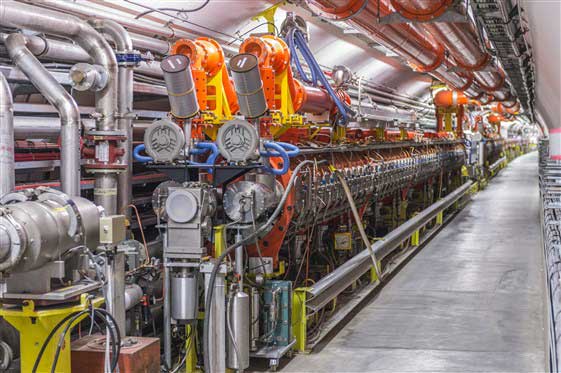
CERN’s Super Proton Synchrotron (SPS) has begun circulating proton beams for the first time this year as the lab gears up to restart the Large Hadron Collider (LHC) following the winter shutdown. The start-up of the 7 km-circumference SPS, which feeds the LHC with high-energy protons, means that all four parts of CERN’s accelerator chain – Linear Accelerator 2, the Proton Synchrotron Booster, the Proton Synchrotron and the SPS – are now in operation. The SPS was also upgraded during the shutdown, which involved the installation of a new beam dump. The LHC is now expecting to begin proton–proton collisions within the next few weeks.


  • You can find all our daily Flash Physics posts in the website’s news section, as well as on Twitter and Facebook using #FlashPhysics.
Copyright © 2026 by IOP Publishing Ltd and individual contributors