

Flash Physics: Metallic space fabric, Standard Model deviation at LHCb, accelerator milestone at European XFEL

Metallic “space fabric” is made by 3D printing

NASA scientists have developed a chainmail-like “space fabric” using 3D printing. Raul Polit-Casillas at NASA’s Jet Propulsion Laboratory (JPL) in the US and colleagues design advanced metallic woven textiles for applications in space, such as spacecraft shielding or astronaut suits. The latest prototype comprises small silver squares strung together, creating a flexible fabric reminiscent of chain mail. To create it, Polit-Casillas and team used additive manufacturing – more commonly known as 3D printing. The technique involves depositing layers of material to build up the desired object. Yet rather than just creating the fabric’s shape, the researchers were able to also incorporate function during printing. “We call it ‘4D printing’,” explains Polit-Casillas. “If 20th century manufacturing was driven by mass production, then this is the mass production of functions.” Consequently, the fabric is reflective on one side but absorbs light on the other, providing a means of passive heat management. It also remains strong despite being flexible and foldable. As well as using such fabrics in space, the researchers hope astronauts in the future will be able to manufacture a range of functional materials while in space. “Astronauts might be able to print materials as they’re needed – and even recycle old materials, breaking them down and reusing them,” says Polit-Casillas. “Conservation is critical when you’re trapped in space with just the resources you take with you.”

Has LHCb spotted a deviation from the Standard Model?
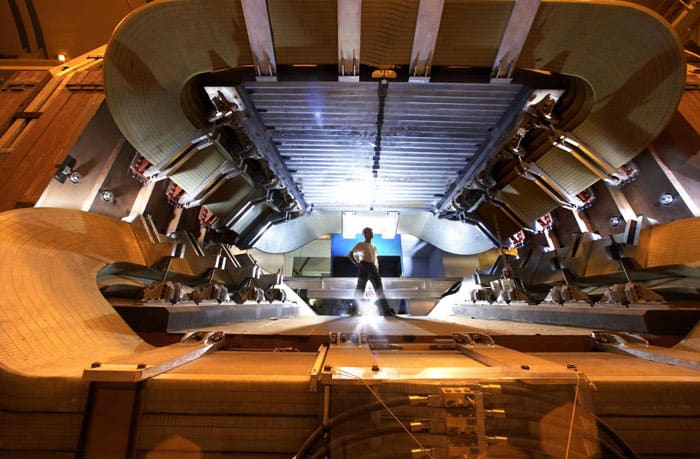
Photograph of LHCb

A possible deviation from the Standard Model of particle physics has been seen in a study of how B0 mesons decay in the LHCb experiment on the Large Hadron Collider (LHC) at CERN. LHCb physicists looked at how the B0 decays to a K* meson via two different processes – one involving the production of a muon and an antimuon, and the other the production of an electron and a positron. The Standard Model – specifically, the concept of lepton universality – predicts that both of these processes should occur with roughly equal frequencies. However, new analysis of data acquired by LHCb during the first run of the LHC in 2011–2012 suggests that muon/antimuon production is less likely to occur than electron/positron production – with a statistical confidence of 2.5σ. In 2014, LHCb physicists published a similar test of lepton universality in the decay of the B+ meson. They also found that muon/antimuon production is less likely to occur than electron/positron production – with a statistical confidence of 2.6σ. While these observations are far off the 5σ required for a “discovery” in particle physics, LHCb researchers hope that analysis of data taken in the second run of the LHC will push the result above the discovery threshold. The findings were presented yesterday at CERN by Simone Bifani of the University of Birmingham, and the slides and a video are available. “We have the potential to make the first observation of physics beyond the Standard Model at the LHC,” says Bifani. Tim Gershon of the University of Warwick adds: “The mood is one of cautious excitement – no one is popping any champagne corks yet.”

Accelerator milestone for European X-ray Free Electron Laser
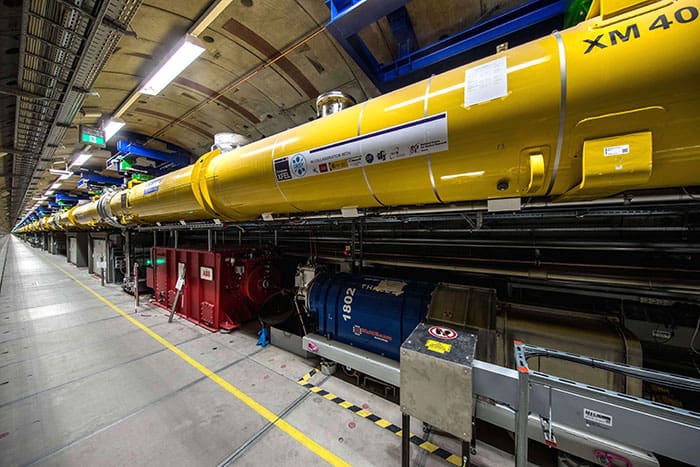
Photograph of the European XFEL beam line

Engineers working on the European X-ray Free Electron Laser (European XFEL) in Hamburg, Germany, have managed to send electrons down the facility’s 2.1 km-long superconducting linear accelerator. The commissioning of the superconducting linear accelerator, which is the world’s largest, is a major step towards the completion of the facility. Engineers will now spend the next month increasing the energy of the electron beam before passing them through “undulators” where they produce coherent X-ray beams. When fully complete later this year, the European XFEL will generate pulses of X-rays 27,000 times per second with each pulse lasting less than 100 fs (10–13 s), allowing researchers to create “movies” of processes such as chemical bonding and vibrational energy flow across materials.


  • You can find all our daily Flash Physics posts in the website’s news section, as well as on Twitter and Facebook using #FlashPhysics. Tune in to physicsworld.com later today to read today’s extensive news story on a nearby exoplanet.
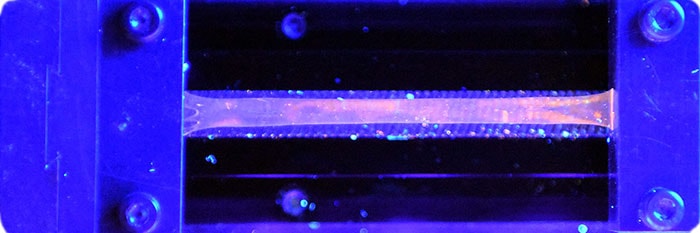
On-chip nanowire laser delivers on data

Semiconductor nanowire lasers are promising ultracompact light sources for miniaturized optical processing and sensing, but their efficiency is limited by the difficulty of confining light in a structure much smaller than its wavelength. By using a silicon photonic crystal to trap light in a semiconductor nanowire, researchers at NTT Basic Research Laboratories in Japan have now turned the chip itself to their advantage. They have shown that a photonic crystal/nanowire hybrid can sustain telecom-band lasing stable enough to transmit a high-frequency data signal (APL Photonics 2 46106), and believe that the platform’s advantages for component integration could enable them to build an on-chip photonic network.

Light confinement, which is crucial to laser oscillation, becomes less effective when the nanowire diameter is smaller than half the light wavelength. Masato Takiguchi and colleagues needed lasing at infrared wavelengths (here 1342 nm), but wanted to keep the nanowire diameter less than a tenth of that for compact integration (around 100 nm). In most nanowire lasers to date, which have operated around the sub-micron visible wavelength range (400–700 nm), the confinement challenge has not been so extreme.

The researchers tackled the problem using the hybrid cavity they first presented in 2014 (Nat. Mater. 13 279), in which a single InAsP/InP nanowire is carefully placed in a groove on a silicon photonic crystal. Such photonic crystals contain periodic holes that slow down and trap light, guiding it into the nanowire and enabling lasing in the infrared. This is only possible because these longer wavelengths match the transparency window of silicon – which also explains why the 1260–1625 nm band is the mainstay of current silica optical fibre communications.

To achieve high-frequency data transmission, the NTT researchers needed to show that they could sustain stable continuous-wave lasing, which is crucial for subsequent modulation to represent binary information. When pumped with another laser in a pseudorandom bit sequence, tests showed that the team’s nanolaser responds fast enough to transmit 1s and 0s that could be distinguished at 10 billion bits per second, a typical fibre-optic communication speed.

Unlike the pulsed lasing demonstrated by the NTT research group earlier this year (ACS Photonics 4 355), continuous-wave lasing requires relentless dumping of power into the small nanowire volume, worsening the effects of problematic heating. To minimize this, they kept measurements at temperatures as low as 4 K. They also employed single-photon sensitive techniques from their earlier work, instead of conventional telecom signal detection, to combat low signal amplitude. Future work will improve laser gain and heat management by the photonic chip, with first author Takiguchi commenting to AIP News that they’ll “aim for room-temperature current-driven lasing as well”.

The photonic crystal platform offers exciting advantages for coupling other components to the nanolaser. Having proven its data-transmission capabilities, the next target is connecting the nanowire to input/output waveguides, en route to an on-chip photonic network. “We want to demonstrate that we’re able to integrate a number of photonic devices by having different functionalities on a single chip,” concludes Takiguchi.

How hurricanes replenish their vast supply of rainwater

The mystery of how tropical cyclones deliver colossal amounts of rainwater over long periods of time may have been solved by an international team of atmospheric physicists. The team suggests that – rather than relying on ongoing evaporation to replenish rainwater – these powerful storm systems suck pre-existing moisture out of the air through which they travel.

Tropical cyclones – or hurricanes, as they are called in the northern hemisphere – are capable of delivering huge amounts of rain that can do more damage than the high winds associated with the storms. The mean precipitation from a typical Atlantic hurricane, for example, lies at around 2 mm/h – and this rate can be sustained for days on end. What is puzzling about this, however, is that it is considerably faster than the typical rate of tropical oceanic evaporation. This means that a hurricane’s moisture stocks must be replenished from something other than ongoing evaporation, otherwise a typical storm would run dry within a day.

Imported moisture

Traditionally, studies of the water budget of tropical cyclones have been focused only on the area within 400 km of the storm’s centre – the part of a cyclone thought to receive the majority of the ocean-derived heat that powers it. In this region, the local evaporation of water from the sea can only account for around 10–20% of the total rainfall. So, it has been supposed, the additional moisture must be being imported from further out, up to 2000 km from the eye of the storm – and well beyond the area of the storm in which rain falls. The exact mechanism that could import water vapour like this has not been clear. Pressure gradients more than a few hundred kilometres from the storm’s centre, for example, are inadequate to drive outlying moist air towards the centre.

To investigate further, physicist Anastassia Makarieva of the Petersburg Nuclear Physics Institute in Russia and colleagues looked at the moisture dynamics of north Atlantic hurricanes out to 3000 km from their centre. First, the researchers considered the radial pressure distribution, relative humidity and temperature of the hurricane boundary layer, and calculated that – even at their wider scale of interest – the storm’s rainfall cannot be supported by evaporation alone.

Dry footprint

Next, the team examined North Atlantic atmospheric moisture and rainfall data from 1998 to 2015 recorded by the Tropical Rainfall Measuring Mission satellite and NASA’s Modern Era Retrospective Re-Analysis for Research and Applications programme. By comparing conditions during hurricanes with the surrounding hurricane-free periods, the researchers were able to show that hurricanes leave in their wake a “dry footprint”, in which rainfall is suppressed by up to 40%.

Given this – and the failure of evaporation to adequately explain how hurricanes refuel – the researchers propose instead that hurricanes gobble up pre-existing moisture stocks from the atmosphere as they move, with the rain potential of the hurricane being directly proportional to the storm’s velocity relative to the surrounding air flow.

“Hurricanes must move to sustain themselves,” Makarieva says, concluding: “Hence, how they move and consume the pre-existing atmospheric water vapour is key to predicting their intensity.” The researchers propose that – rather than being driven by heat extracted from the ocean – hurricanes are instead powered by releasing the potential energy of the water vapour previously accumulated in the atmosphere that they pass through.

Moisture-robbing winds

They suggest this could explain why tropical cyclones do not occur in regions like the Brazilian coast where there are persistent, landward winds that remove water vapour from over the ocean – thereby robbing the potential storms of their drive and fuel source.

Patrick Fitzpatrick, a geoscientist from the Mississippi State University who was not involved in this study, comments: “Quantitative precipitation forecasting of tropical cyclones still lacks skill, and is worthy of research since these storms’ inland flash flooding is a major cause of casualties and property damage”. He believes that further investigation of these new climate budget implications – considering the local upstream conditions and storm motion – are needed.

Kevin Trenberth – a meteorologist at the US National Center for Atmospheric Research – is sceptical, however, suggesting the researchers are too idealistic in their view of hurricanes, treating them as symmetrical and two dimensional, and overlooking their size variability and spiral arm bands that bring moisture into the storm from about four times the radius of the rainfall area. The mismatch between evaporation and precipitation rates for anything greater than light rain has already been established, he says, adding: “It is correct that the moisture has to come from somewhere, and movement of the storm helps, but that does not help storms that move slowly or not at all.”

With their initial study complete, the researchers are now working to describe how hurricanes might develop over time by the condensation of water vapour.

The research is described in the journal Atmospheric Research.

Squashed quantum dots solve a multi-faceted problem

Quantum dots have revolutionized the field of optoelectronics due to their atom-like electronic structure. However, the prospect of colloidal quantum-dot lasers has long been deemed impractical due to the high energies required to induce optical gain. But recent work published in Nature and led by Ted Sargent of the University of Toronto shows that the lasing threshold in cadmium selenide (CdSe)/cadmium sulphide (CdS) core-shell colloidal quantum dots can be lowered by squashing the CdSe core via a clever ligand exchange process.

To instigate optical gain in a semiconductor laser, the difference between the lowest electron level and the highest hole level must be wider than the band gap so that the light emitted when they recombine can stimulate emission in neighbouring nanocrystals. Colloidal quantum dots (CQDs) then, should make ideal candidates for lasing applications, as their atom-like electronic structure means that the electron and hole energy levels are easier to separate.

In practice, however, the energies required to trigger optical gain in CQDs are so high that they can heat up to the point of burning. While electrons tend to occupy one energy state upon excitation, the hole that they leave behind in the valence band can populate one of eight closely spaced states. This degeneracy pushes the hole Fermi level into the band gap and increases the amount of energy required to instigate optical gain.

To overcome this issue, the researchers took advantage of the fact that CdS imposes a strain on CdSe due to a slight lattice mismatch of 3.9%. By growing an asymmetric CdS shell around a “squashed” oblate CdSe core, they were able to induce a biaxial strain that affected the heavy and light holes of the valence band to different extents, thus lifting the degeneracy.

To produce these asymmetric CQDs the group invented a technique called facet-selective epitaxy, making use of ligands that interact differently with the surfaces of CdSe. One of these ligands, trioctylphosphine sulphide, or TOPS, binds weakly to the (0001) facet of CdSe and not at all to the (0001), while octanethiol interacts similarly with all CdSe surfaces. Therefore, by growing CdS on the (0001) facet with TOPS and then replacing with octanethiol to stimulate epitaxial growth, oblate-shaped CQDs could be made throughout the entire particle ensemble with remarkable uniformity.

The resulting lasers had an unprecedentedly high performance, exhibiting a low lasing threshold of 6.4–8.4 kW cm–2, a seven-fold reduction compared with previous attempts. They also emitted light over a narrow energy range of just 36 meV. Both of these properties can be attributed to the enhanced splitting of the valence band levels that arises due to the oblate CQD shape.

The international team of researchers has certainly proved that continuous-wave CQD lasers are possible, yet there are still some obstacles to be overcome before they are seen on the market. Most importantly, the next step will be exciting the CQDs via electrical rather than optical means, as in standard commercial lasers. Nevertheless, facet-selective epitaxy opens up a whole host of other CQD materials for lasing applications and beyond.

Flash Physics: Drawing water from dry air, material glows under stress, physicist bags economics award

Using the Sun to extract water from dry air

A new solar-powered system that can extract water from air in arid regions of the world has been unveiled by researchers in the US and Saudi Arabia. Led by Omar Yaghi of the University of California, Berkeley, and Evelyn Wang of the Massachusetts Institute of Technology, the team created the device using a metal-organic framework (MOF). The device is powered by heat from sunlight. It can harvest 2.8 litres of liquid water per kilogram of MOF per day at relative humidity levels of 20–30% – which are common in arid regions of the world. MOFs combine metals with organic molecules to create rigid, porous structures that are ideal for storing gases and liquids. The system comprises a kilogram of compressed MOF crystals that sits below a solar absorber and above a condenser plate. Ambient air diffuses through the porous MOF, where water molecules preferentially attach to the interior surfaces. Sunlight heats up the MOF and drives the bound water toward the condenser, where the vapour condenses and drips into a collector. “This work offers a new way to harvest water from air that does not require high relative humidity conditions and is much more energy efficient than other existing technologies,” says Wang. Yaghi adds: “There is a lot of potential for scaling up the amount of water that is being harvested. It is just a matter of further engineering now.” The system is described in Science.

Material glows in response to stress

Photograph of mechanophore-containing polymer under UV light as it is stretched

A material that repeatedly lights up in response to mechanical forces has been developed by researchers at Okinawa Institute of Science and Technology Graduate University in Japan. To create the material, Georgy Filonenko and Julia Khusnutdinova incorporated stress-sensing molecules called photoluminescent mechanophores into the common polymer, polyurethane. While mechanophores are not new, they are typically one-use only. They emit light when a strong force breaks a specific chemical bond between atoms or pulls apart two molecular patterns. The radical change in structure causes a shift in the wavelength of light emitted (the glow), but it is difficult to return the molecule to its original, “off” state. Therefore, Filonenko and Khusnutdinova developed a molecule that relies upon dynamic rather than structural changes. Their phosphorescent copper complexes move rapidly when the host polymer is in a relaxed state, and the motion suppresses light emission. Yet when a mechanical force is applied, the movement of the polymer chains, and hence the mechanophores, slows, and consequently the complexes are able to luminesce. The light emitted is visible to the naked eye when the material is bathed in UV light and becomes brighter with increasing force. However, unlike previous stress-reacting materials, Filonenko and Khusnutdinova’s can revert to its original, non-luminescent state as no chemical bonds have been broken. The new mechanophores are described in Advanced Materials and could be used to assess stress and dynamics in soft materials.

Physicist bags prestigious economics award

The physicist-turned-economist Dave Donaldson has won the John Bates Clark Medal of the American Economic Association (AEA). The medal is given to “economist under the age of 40 who is judged to have made the most significant contribution to economic thought and knowledge”. Described by the AEA as “the most exciting economist in the area of empirical trade,” Donaldson has studied topics as diverse as the economic impact of railways in 19th century India and the consequences of climate change on agricultural markets. Donaldson, 38, is associate professor of Economics at Stanford University in California and is a dual citizen of Canada and the UK. He studied physics at the University of Oxford before doing an MSc and PhD in economics at the London School of Economics.


  • You can find all our daily Flash Physics posts in the website’s news section, as well as on Twitter and Facebook using #FlashPhysics. Tune in to physicsworld.com later today to read today’s extensive news story on rainfall during tropical storms.

Nanomedicine enables all-in-one cancer treatment

Cancer is a complex disease to treat, and yet the operating principle of many current treatments is to simply kill healthy cells a little slower than cancerous ones. In response, scientists at The University of Electronic Science and Technology of China have developed a sophisticated nanoparticle-based treatment. Their theranostic nanoparticles carry an anti-cancer drug cargo, and showcase multiple cutting-edge nanomedicine technologies to enhance the drug’s efficacy, including selective drug delivery, photoactive agents, and even signal-jamming genetic material.

The researchers have designed each individual nanoparticle to be a toolbox for cancer therapy, able to passively and actively target tumours (Biomater. Sci. 2017 Advance Article). The nanoparticles can act as contrast agents for both magnetic resonance imaging and X-ray, they deliver a concentrated dose of anti-cancer drugs, and they also thwart the cancer’s attempts at developing immunity to the drug. They even deliver a photosensitizer that can be used to specifically weaken cancerous tissue by photodynamic treatment.

Yiyao Liu and colleagues demonstrated the efficacy of their nanodevices in vitro and in vivo on a range of cell lines and on tumours in living mice. They found that their nanoparticle drug-delivery technique effectively stopped tumour growth, whereas tumours in mice treated with the drug alone grew at a rate half that of a control group that had not been treated.

The nanoparticles are complex, many layered spheres. Protected by a jacket of natural polymer is a nugget of silica, holey like a sponge and soaked in doxorubicin, a common anti-cancer drug, along with the photosensitizer. The polymer jacket is pH sensitive so that it falls off in the acidic microenvironment of the tumour, only then releasing the active cargo.

Doxorubicin has two flaws. Firstly, it works by slotting in-between DNA base pairs to stop the replication process needed for cells to divide. This kills cells that need to duplicate quickly, such as cancerous cells, but harms many healthy cell types too. Secondly, it triggers the body’s natural defences, causing cells to over express p-glycoprotein, a microscale pump that removes toxic molecules like doxorubicin from cells, and making the drug less and less effective against cancer.

The scientists at The University of Electronic Science and Technology of China countered both of these flaws. Healthy cell exposure is reduced by the polymer jacket, which makes sure the drug is only released under the conditions expected in a tumour. The jacket itself is covered in signal-jamming RNA to inhibit the expression of the cellular pumps, keeping the doxorubicin trapped inside the cells to allow the drug to work for longer. This impressive display of multifunctional nanoparticle design and synthesis demonstrates the power of nanomedicine for producing synergistic effects, offering new solutions to previously unsurmountable problems.

Science in the Trump era: Rush Holt talks about the prospects for science with Donald Trump as president

What’s your overall feeling of the Donald Trump administration?

I wish I could answer your question. It’s mostly uncertainty in the science community. There have been troubling signs for years about the role of science in society and policy-making – whether opinion is crowding out evidence in public debate. And that kind of concern has risen to a very high level right now: whether people understand evidence and facts or even want to distinguish between opinion and scientifically validated evidence.

What do you think Trump thinks about science?

He has not said very much about science at all. During the campaign he touched on a few politically difficult issues, questioning the safety of vaccination, challenging climate science [which] he went so far as to say was a Chinese hoax. So that has made people very suspicious of whether he appreciates science. In past years, when scientists said they were uneasy about things, they meant funding for research. But now it’s a deeper unease about whether people understand the value, nature and importance of science. That’s the overall concern right now.

How do you think funding will fare under Trump?

Congress still [controls] that – not the president – and the Congress has not changed as dramatically as the presidential administration has changed. So I think we will be – and Congress has been pretty clear about this – on a very austere budget for all non-defence discretionary activities. Even though in recent times science and research have done a little bit better than their share, there is no guarantee that will continue. And even if it does, it will be tightly constrained.

What would you say if you were in a one-to-one meeting with the president?

[I would say] we would like him to get a science adviser for himself and for each of his agencies and make sure all agencies and cabinet departments are well salted with people who understand science. I would say to the president: “You’ll have a crisis next month and the month after that. I can’t tell you what it will be. It might be an oil-well blowout. It might be an emerging disease. It might be a radiation leak. And you don’t want to get up to speed then.” I would [also] try to dispel the idea, that I believe he has, that a science adviser is simply a “plant” of the science community who is there to represent the interests of people who wear lab coasts. Rather, that person is his best defence against erroneous policies that just won’t hold up under the tests of reality.

What do you think about Rick Perry – the new head of the Department of Energy (DOE)?

The DOE is one of the largest funders of physics research in the US. A lot of people think it only deals with oil wells and wind turbines. And yes it does a little bit of that, but it also supports high-energy physics and even some biological sciences. When he was running for president [in 2012], Perry said he wanted to abolish the DOE, but in his confirmation testimony before the senate he said he’s learnt a lot about the good work done in and by the DOE. So that’s a promising sign. Of course, he does not control his own budget – that is imposed on each cabinet department. Nevertheless, it shows that some of the doubts that scientists had about the incoming administration are subject to correction. And also that maybe Perry now has a much better understanding of what it takes to maintain a good high-energy physics programme or plasma-science programme and so forth.

So might some areas of physics benefit from the new administration?

The other thing I would say [to Trump] if I received the requested audience – we’ve asked but so far heard nothing – is to get him to understand that investment in infrastructure, something he says he wants to do, can and should also include investment in human infrastructure as well as research and development. When President Barack Obama came into office and the economy was failing badly, he proposed an economic stimulus plan in which science was initially nowhere. After we made the case to Obama, there were tens of billions of new money for R&D. So maybe this president can be convinced that infrastructure also includes laboratories and equipment and grad students.

What do you think about Trump’s attempt to ban people from certain nations from travelling to the US?

What scientists are most concerned about is not funding levels, though they should be concerned about them, but the climate in which science can be practised. The ban on travel for people from designated countries [Iran, Libya, Somalia, Sudan, Syria and Yemen], has humanitarian, political, diplomatic and security concerns. Constraints on communication and on travel by scientists – so you can have the freedom to choose collaborations and build teams that are diverse – [can hamper] the progress of science. The confidence of scientists that science will be allowed to thrive has been shaken by the immigration ban and has caused a very large reaction in the science community. Other constraints on communication by government scientists – or threatened constraints – have added to [those concerns].

What might those constraints be?

When the transition team came to the DOE, someone in that team asked for information about any DOE employee who had visited a climate-change conference. The only reason they would ask for that would be to give them a hard time. So that seemed to be a constraint on the practice of good science.

What future do you foresee for the national labs under Trump?

The new president appears to be influenced by reports that have come out of one of the conservative think tanks [the Heritage Foundation] that have included calls for the privatization of the national labs. So it’s possible that this administration will make some big changes, or try to make some big changes. But I don’t think Congress would implement a call for turning national labs into corporate subsidiaries. It wouldn’t work since a lot of their work is defence-related and classified and quite varied. I’m not sure a corporation would want to undertake that – they’d have trouble seeing how they’d make a profit from running a national lab.

Who do you think’s in the running for presidential science adviser?

There have been rumours that someone who has actually met President Trump is [77-year-old Princeton University atomic and optical physicist] Will Happer. He is a well-known physicist and he has idiosyncratic ideas about climate change.

Would you be happy with him in that role?

Happer is a friend. He is a very smart person. I’d be surprised if he took it. I haven’t talked to him about it. I think he is so far from the mainstream on climate change, which is one of the big issues in science and policy-making today, that it would be difficult for him. It would be difficult for anyone who had ideas that far out of the mainstream.

Would you fancy the job?

There’s no reasonable chance that I would be selected. But if the president asks you to do a job for the sake of the country, most people would say yes. It would be hard to turn down. But I left Congress two years ago and then got this terrific job heading up the AAAS. It is important and satisfying work and because of my political record in Congress, this president would not choose me and probably would not want me at his right hand on science issues. The AAAS has offered the president help vetting candidates to look at their science accomplishments and stature. But for an adviser, he needs to choose someone who’s relatively close to his way of thinking and who he could trust.

So how do you see science panning out under Trump?

There are potential big changes but a lot of uncertainty. Meanwhile, science and physics in America are going along quite well. There is great research coming out of the universities and laboratories. In some ways we’ve never seen a better time for science. But in other ways, I guess like Charles Dickens said, we live in the best of times and the worst of times.

Three-photon interference measured at long last

Quantum interference involving three photons has been measured by two independent teams of physicists. Seeing the effect requires the ability to deliver three indistinguishable photons to the same place at the same time and also to ensure that much more common single-photon and two-photon interference effects are eliminated from the measurements. As well as providing deep insights into the fundamentals of quantum mechanics, three-photon interference could also be used in quantum cryptography and quantum simulators.

When a stream of single photons travel through a double slit they will build up an interference pattern on a detector behind the slits – an example of single-photon interference. An example of two-photon interference is the Hong–Ou–Mandel (HOM) effect, which involves two photons entering a beam splitter with two exit ports. If the photons are identical and arrive at the same time, they will interfere and will always exit the same port of beam splitter. If these two criteria are not met, there is a 50% chance of each photon exiting either port.

Trio in a tritter

Now, a three-photon version of the HOM effect has been created by team led by Ian Walmsley of the University of Oxford in the UK. Their experiment begins with the creation of three independent photons in three different sources. These are sent to a fibre-optic based interferometer called a tritter, which has three inputs and three outputs. The team looked at the probability that all three photons exited the same output portal. To isolate the effects of single- and two-photon interference, they control something called the “triad phase” of the three photons. This is non-zero only if the photons are partially distinguishable – but not fully distinguishable. They were able to show that the probability for three photons emerging from one port varied with the triad phase, just as expected for three-photon interference. And crucially, single- and two-photon effects remained constant.

Meanwhile at the University of Waterloo in Canada, Thomas Jennewein and colleagues did their experiment using a photon source that emits three photons in an entangled quantum state. The trios are created by firing a single photon into a series of nonlinear crystals, each of which is able to convert one photon into a pair of entangled photons. Very occasionally an entangled trio emerges and is then sent into an interferometer that has two output ports. By changing the relative phases of the three photons, Jennewein’s team saw the probability of three photons emerging from one port vary as expected from three-photon interference. The probability of two photons emerging from the same port remained the same, however, suggesting that the team was observing genuine three-photon interference.

One possible application of the three-photon interference created in the experiments is three-photon sharing. This involves a secret quantum key that is shared by three parties, but can only be used by all three parties together. Three-photon interferometry could find use in quantum-sensing applications and also in a quantum-computing technique called boson sampling.

The measurements are described in two papers in Physical Review Letters.

NanoCars race on gold, sketchers invade Fermilab, physics of Thor versus the Hulk

Science has taken motor racing to a whole new, extremely small level with the NanoCar Race. The competition on 28 April will see nanoscale molecular machines “speed” around a gold racetrack for 38 hours. As the tiny-molecule cars are not visible to the naked eye, the race will take place inside a scanning tunnelling microscope (STM) at the Center for the Development of Materials and Structural Studies (CEMES), part of the National Center for Scientific Research (CNRS) in France. The teams behind the NanoCars control their vehicles using electric pulses but are not allowed to push them mechanically. Details about the cars and their teams can be found on this website, where you will also be able to watch the race later this month. There is more about the competition in the above video.

(more…)

Ten superconducting qubits entangled by physicists in China

A group of physicists in China has taken the lead in the race to couple together increasing numbers of superconducting qubits. The researchers have shown that they can entangle 10 qubits connected to one another via a central resonator – so beating the previous record by one qubit – and say that their result paves the way to quantum simulators that can calculate the behaviour of small molecules and other quantum-mechanical systems much more efficiently than even the most powerful conventional computers.

Superconducting circuits create qubits by superimposing two electrical currents, and hold the promise of being able to fabricate many qubits on a single chip through the exploitation of silicon-based manufacturing technology. In the latest work, a multi-institutional group led by Jian-Wei Pan of the University of Science and Technology of China in Hefei, built a circuit consisting of 10 qubits, each half a millimetre across and made from slivers of aluminium laid on to a sapphire substrate. The qubits, which act as non-linear LC oscillators, are arranged in a circle around a component known as a bus resonator.

Initially, the qubits are put into a superposition state of two oscillating currents with different amplitudes by supplying each of them with a very low-energy microwave pulse. To avoid interference at this stage, each qubit is set to a different oscillation frequency. However, for the qubits to interact with one another, they need to have the same frequency. This is where the bus comes in. It allows qubits to transfer energy from one another, but does not absorb any of that energy itself.

“Magical interaction”

The end result of this process, says team member Haohua Wang of Zhejiang University, is entanglement, or, as he puts it, “some kind of magical interaction”. To establish just how entangled their qubits were, the researchers used what is known as quantum tomography to find out the probability of detecting each of the thousands of possible states that this entanglement could generate. The outcome: their measured probability distribution yielded the correct state on average about two thirds of the time. The fact that this “fidelity” was above 50%, says Wang, meant that their qubits were “entangled for sure”.

According to Shibiao Zheng of Fuzhou University, who designed the entangling protocol, the key ingredient in this set-up is the bus. This, he says, allows them to generate entanglement “very quickly”.

The previous record of nine for the number of entangled qubits in a superconducting circuit was held by John Martinis and colleagues at the University of California, Santa Barbara and Google. That group uses a different architecture for their system; rather than linking qubits via a central hub they instead lay them out in a row and connect each to its nearest neighbour. Doing so allows them to use an error-correction scheme that they developed known as surface code.

High fidelity

Error correction will be vital for the functioning of any large-scale quantum computer in order to overcome decoherence – the destruction of delicate quantum states by outside interference. Involving the addition of qubits to provide cross-checking, error correction relies on each gate operation introducing very little error. Otherwise, errors would simply spiral out of control. In 2015, Martinis and co-workers showed that superconducting quantum computers could in principle be scaled up, when they built two-qubit gates with a fidelity above that required by surface code – introducing errors less than 1% of the time.

Martinis praises Pan and colleagues for their “nicely done experiment”, in particular for their speedy entangling and “good single-qubit operation”. But it is hard to know how much of an advance they have really made, he argues, until they fully measure the fidelity of their single-qubit gates or their entangling gate. “The hard thing is to scale up with good gate fidelity,” he says.

Wang says that the Chinese collaboration is working on an error-correction scheme for their bus-centred architecture. But he argues that in addition to exceeding the error thresholds for individual gates, it is also important to demonstrate the precise operation of many highly entangled qubits. “We have a global coupling between qubits,” he says. “And that turns out to be very useful.”

Quantum simulator

Wang acknowledges that construction of a universal quantum computer – one that would perform any quantum algorithm far quicker than conventional computers could – is not realistic for the foreseeable future given the many millions of qubits such a device is likely to need. For the moment, Wang and his colleagues have a more modest aim in mind: the development of a “quantum simulator” consisting of perhaps 50 qubits, which could outperform classical computers when it comes to simulating the behaviour of small molecules and other quantum systems.

Xiaobo Zhu of the University of Science and Technology of China, who was in charge of fabricating the 10-qubit device, says that the collaboration aims to build the simulator within the next “5–10 years”, noting that this is similar to the timescale quoted by other groups including the one of Martinis. “We are trying to catch up with the best groups in the world,” he says.

The research is reported on the arXiv server.

Copyright © 2026 by IOP Publishing Ltd and individual contributors