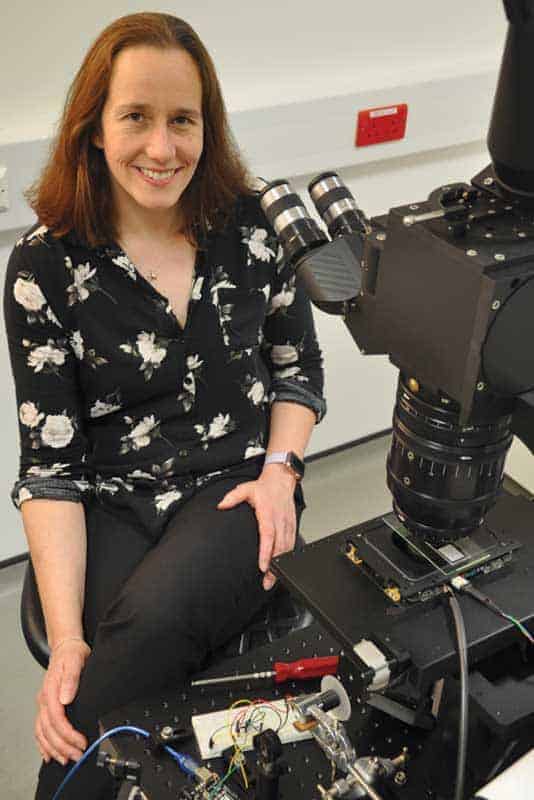
The first direct observations of how “molecules of light” can vibrate have been made by researchers in France, who have characterized the motions of soliton laser pulses that interact with each other in an optical fibre. Such optical molecules could someday boost the amount of data that can be transmitted along an optical fibre by allowing information to be encoded in the vibrational modes.
A soliton is a pulsed wave that retains its shape as it travels through a medium. Solitons can be created in many situations from laser pulses in an optical fibre to water waves in the ocean. Solitons in optical fibres usually involve extremely bright pulses of light, which modify the surrounding fibre so that the pulse is prevented from spreading out in time, as a weaker pulse would do.
This modification means that two solitons in the same region of a fibre will “feel” each other’s presence in the form of an interaction between them. Over the past few decades, physicists have shown that these interactions can sometimes lead to states of two or more soliton structures that resemble molecules.
Vibrational spectra
Previous studies had offered indirect evidence that these soliton molecules can vibrate much like atomic molecules, but it had proven difficult to measure the motions of individual solitons. Now, however, Katarzyna Krupa, Philippe Grelu and colleagues at the University of Burgundy have overcome this problem by tracking the motions of individual solitons in a molecule using a technique called dispersive Fourier-transform (DFT).
The technique involves sending the solitons through an optical fibre that adds a frequency-dependent delay to the signal. This converts the pulse into a waveform that is extended in time. Information about the motion of the solitons can then be extracted from the nature of this waveform.
The team found that pairs of solitons travelling back and forth through the optical cavity of a fibre laser behave much like a diatomic molecule. Specifically, they found that the separation in time between the pulses oscillates with an amplitude of about 1 ps. They also found that the relative phase of the two solitons also oscillates. The team was also able to make significant changes to the internal dynamics of soliton molecules by fine-tuning the cavity.
Gravitational-wave detections are not correlated noise, says LIGO physicist
A physicist working on the LIGO gravitational-wave detectors has responded to a claim by physicists in Denmark that LIGO’s first-ever detection of a gravitational wave in September 2015 may not have actually occurred. Last week, James Creswell, Sebastian von Hausegger, Andrew Jackson, Hao Liu, and Pavel Naselsky of the Niels Bohr Institute in Copenhagen posted their own analysis of LIGO data on the arXiv preprint server. Their work suggests that the noise in LIGO’s two detectors is correlated. Furthermore, they point out that the time delay associated with the correlation is the same as the time it should take for a gravitational wave to propagate between the detectors, which are more than 3000 km apart. Detecting the same wave in two detectors with the appropriate time delay plays a crucial role in identifying gravitational waves from background noise. As a result, Creswell and colleagues suggest that the September detection (and two subsequent detections) could simply be correlated noise. Not so, says LIGO member Ian Harry of the Max Planck Institute for Gravitational Physics in Potsdam-Golm, who has responded in a blog. Harry says that the noise correlations seen by the Danish team are related to an error in how they analysed the data and that the noise correlations reported by Creswell and colleagues do not exist.
Optical stretching deactivates white blood cells
Cell yoga: optical stretching calms activated cell (left) to relaxed state (right). Mechanical deformation of neutrophils can deactivate them within 60 seconds. (Courtesy: Andrew Ekpenyong)
Immune cells can be deactivated by optically stretching them, according to physicists and medics. Andrew Ekpenyong of Creighton University in the US and colleagues were studying the stiffness of neutrophils – a type of white blood cell – when they accidentally discovered the unusual property. In the body, neutrophils are the first to respond when a foreign object invades. The alien presence activates the cells, causing them to change from smooth and round to rough and irregular. It can then take between 40–120 min for the cells to return to their resting state. Although designed to fight illness, neutrophils can cause life-threatening problems. For example, in acute lung injury (ALI) and acute respiratory distress syndrome (ARDS), activated neutrophils can become stuck in the lungs’ tiny capillaries. To study the cells, Ekpenyong and team used an optical stretcher – a dual-beam laser that transfers photon momentum to an object’s surface to trap and deform it without the need for direct contact. “Just for a bit of fun,” Ekpenyong stretched an activated cell and discovered that the mechanical deformation triggered deactivation. Indeed, the team found repeated stretching can return an activated cell to its resting state within 60 seconds – two orders of magnitude faster than natural deactivation. The researchers confirmed the mechanical effect using a microfluidic microcirculation mimetic (MMM) that mimics capillary constrictions in the body. The team hopes to translate the findings, presented in Science Advances, into a clinical application.
India joins European synchrotron as 22nd partner nation
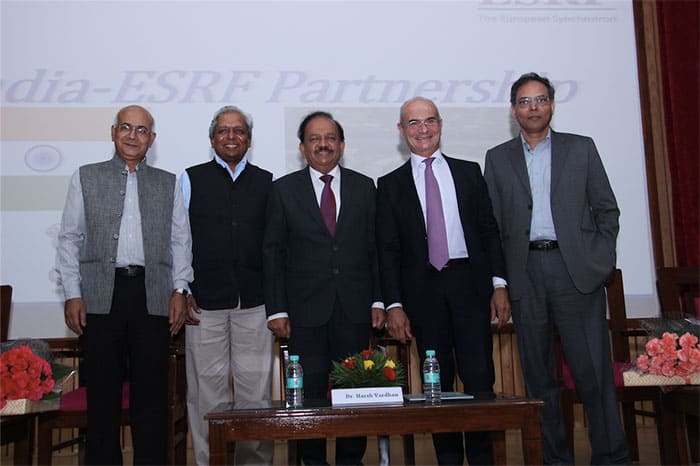
New partners: India joins ESRF. (From left) Dinakar Salunke, Krishnaswamy VijayRaghavan, Harsh Vardhan, Francesco Sette and Sudhanshu Vrati at the signing ceremony in New Delhi. (Courtesy: ESRF)
India has become the 22nd country to be a partner in the European Synchrotron Radiation Facility (ESRF) in Grenoble, France. India will contribute 0.66% of the ESRF budget and its scientists will have access to the facility for “non-proprietary research” with a focus on structural biology. At a signing ceremony today in New Delhi, ESRF Director General Francesco Sette says: “I’m very pleased and honoured by the decision of India to join the ESRF, and in particular, its forefront structural biology programme.” He added: “The ESRF community will greatly benefit from the collaboration with the vibrant Indian scientific community.” Sudhanshu Vrati of the Regional Centre for Biotechology in Faridabad signed on behalf of India and says: “I’m confident that this new agreement will lead to exciting new discoveries and nucleate other scientific collaborations between India and Europe.” Indian scientists had used a beamline at ESRF in 2009–2016 under a memorandum of understanding that has resulted in the publication of more than 400 scientific papers on macromolecular crystallography.
If you could put anything on a high-altitude balloon, what would it be? World View Enterprises has opted for a spicy chicken sandwich. The company plans to run balloon excursions to the stratosphere and on 21 June it will make its debut voyage carrying a Zinger sandwich from Kentucky Fried Chicken (KFC) – but with no-one on board to eat it. According to the New York Times the flight is tied in with KFC’s current space-based advertising campaign and the sandwich will spend at least four days in the stratosphere. As well as planning to charge tourists $75,000 per person for a ride, World View Enterprises says that its balloons could also be used to create an early warning system for tornadoes.
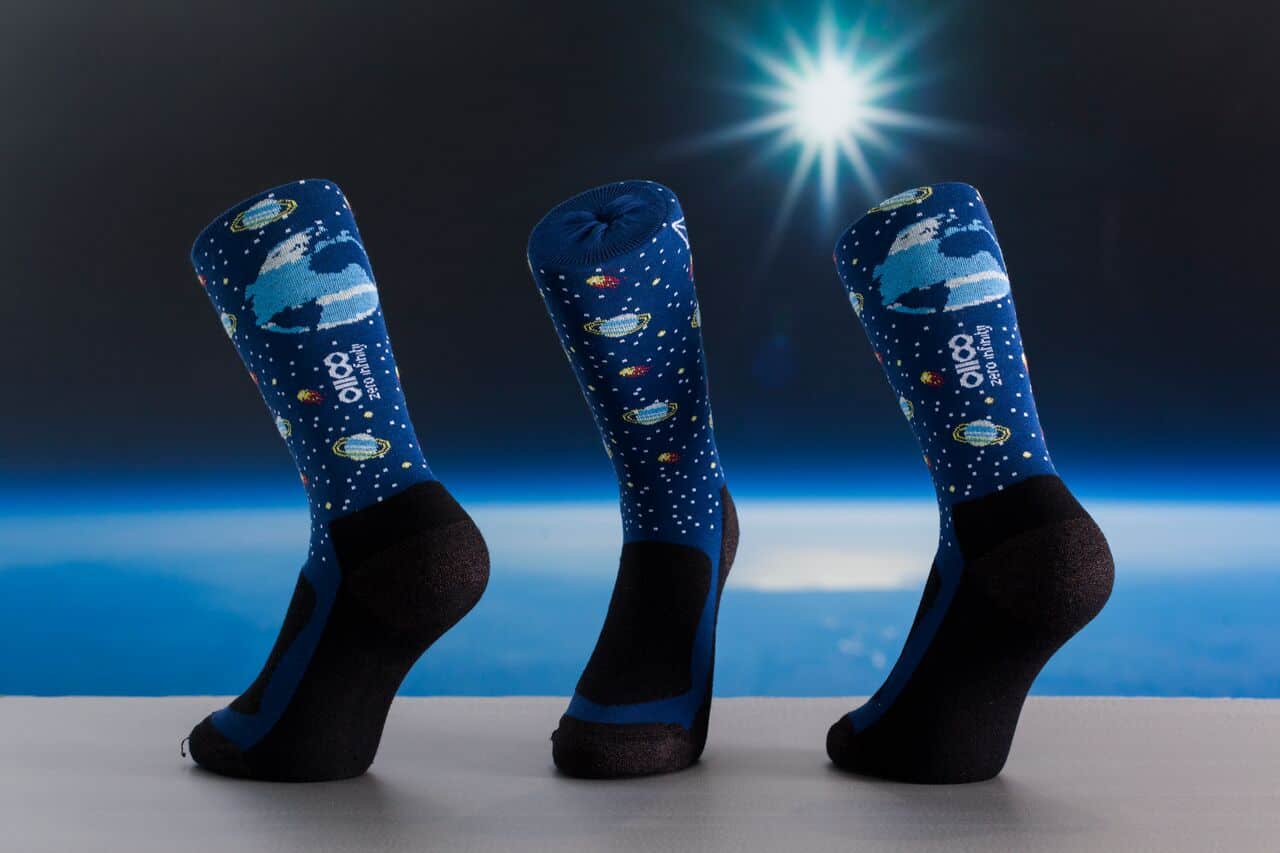
Sock hop: fashion that’s out of this world. (Courtesy: Sock’M)
When tourists do begin venturing into space, they won’t have to worry about having unfashionable socks. Why? Because Spanish company Sock’M has created SpaceSocks. Sock’M is a designer sock brand and was created after its founders got lost in the mountains and started dancing naked with creatures wearing knee-high socks (yes, that’s what they say). Hoping to help make space travel more accessible, Sock’M teamed up with Zero 2 Infinity to create socks scientifically designed to meet the challenges of space. The socks are made with fire-proof cotton and are reinforced with silver and copper thread to inhibit the electrostatic charging that occurs in synthetic fabric in zero gravity. As most of us are still grounded however, Sock’M has also made limited edition socks to fill our space fashion needs.
Moving from one meeting of science and fashion to another, a team at the University of California, Berkley, has concluded that dressmakers have impressive 3D, or “stereoscopic”, vision. This means their brains are particularly good at translating the 2D viewpoints of each eye into one 3D image, which is important for threading a needle, catching a ball or parking a car (based on these I would be an awful dressmaker). Published in Scientific Reports, the researchers showed that dressmakers are 80% more accurate than non-dressmakers at calculating the distance between themselves and the objects they’re looking at. They are also 43% better at guessing the distance between two objects. Whether dressmakers gain this needle-sharp vision with experience or are drawn into the profession because of it, remains a mystery.
Yesterday in Washington DC NASA showcased its latest technology investments. The event took place just few steps away from Capitol Hill, where the US Congress will decide on the current administration’s proposed budget cuts for the agency.
“The technologies displayed here today illustrate how sustained investments made by NASA, industry and academia directly benefit our nation’s innovation economy,” reads the event’s brochure. “These technologies help America maintain its global leadership in aerospace and enable NASA’s current and future missions of exploration and discovery,” it continues.
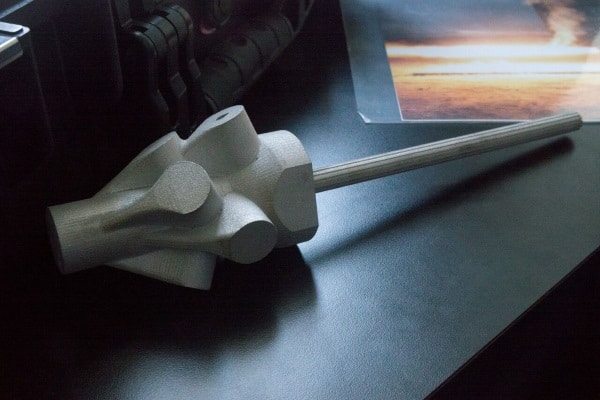
Hot stuff: a 3D-printed rocket igniter. (Courtesy: Lucina Melesio)
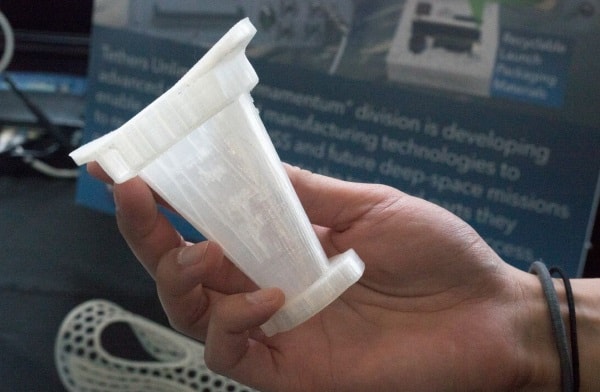
The exhibits I viewed include 3D-printed rocket injectors and igniters that promise to be safer than current with no assembled parts, drone operation systems that would enable real-time drone management through airspace, new NASA X-planes that would also revolutionize the commercial flight market improving fuel efficiency by over 40%, and an onboard 3D printer that recycles waste plastic from space missions to print tools for astronauts – designed for the International Space Station and the future mission to Mars.
Feelings about budget cut threats were mixed among exhibitors. While some said it would halt projects like the X-Plane programme that is strongly dependent on NASA funding, others like the drone operations system said budget cuts wouldn’t immediately affect their projects since they are developed independently by the industry for NASA.
Wee innovation: NASA’s 3D-printed urine cup (Courtesy: Lucina Melesio)
Other NASA showcased projects included the Vascular Tissue Challenge – one of NASA’s Centennial Challenges – which offers a $500,000 prize for creators of metabolically functional human organ tissue in a controlled laboratory environment. While this project was thought as a step towards enabling organ transplants for astronauts in Mars, it would also advance this research field for the benefit of Earthly humankind.
“NASA is innovating, developing, testing and flying technology for use in NASA’s future missions that have real benefits here on Earth, today,” reads the final paragraph of the brochure.
Entangled photon pairs have been separated and sent to cities in China more than 1200 km apart. This is about 10 times further than had been achieved previously. The feat was performed using pairs produced on board a Chinese satellite and could lead to the development of long-distance quantum cryptography.
In August 2016, China launched the world’s first satellite dedicated to testing the fundamentals of quantum communication in space. On board the $100m Quantum Experiments at Space Scale (QUESS) spacecraft is a “Sagnac” interferometer that is used to generate two entangled infrared photons by shining an ultraviolet laser on a nonlinear optical crystal. Now, a team led by Jian-Wei Pan of the University of Science and Technology of China in Hefei has used the photon source to distribute entangled photons to pairs of three ground stations in China – each up to 1200 km apart.
Increasing distances
Entanglement is a purely quantum-mechanical phenomenon whereby two or more particles can have a closer relationship than is allowed by classical physics. Entanglement plays an important role in quantum technologies such as quantum cryptography, quantum teleportation and networks for distributing quantum information. Over the past decade, physicists have been able to transmit pairs of entangled photons over increasing distances, both in the air and along optical fibres.
The distance record in both media had been about 100 km. Photon loss increases exponentially with distance travelled, so linking distant cities using fibre would be extremely difficult. While quantum repeaters could be used to boost the transmission distances, practical devices are proving difficult to create. Satellite distribution is an attractive solution because much of the photon’s journey is through parts of the atmosphere with very low air pressure – and therefore low photon loss.
Polarization entangled
The source on board QUESS produces nearly six million entangled photon pairs per second. Each pair is entangled in terms of the horizontal and vertical components of the photons’ polarization. The pairs are split and individual photons are directed at two different receiving stations – covering distances of 500–2000 km. To minimize the angular spread of the photons over long distances, Cassegrain telescopes are used to focus the light into a beam with a divergence of about 10 μrad.
The photons are received on Earth using telescopes with diameters of 1.2–1.8 m and their polarizations are measured to verify entanglement. This is done by doing a “Bell test”, which determines whether correlations between the photons are stronger than that allowed by classical physics. The test confirmed entanglement at a statistical confidence of four standard deviations.
High fidelity
The team was able to detect entangled photons at a rate of about one pair every second. The quality of the entanglement – the state fidelity – was about 0.87, with perfect fidelity being 1. This represents an efficiency that is 1012 greater than is possible using special optical fibres and 1017 greater than possible using commercial fibres.
The researchers say that satellite-based entanglement distribution could be used to implement quantum key distribution (QKD) on a global scale. QKD uses the laws of quantum mechanics to ensure that two parties can securely exchange cryptography keys and is already being used over short distances by banks.
Today, in our “post-truth” era, these sorts of statements have become commonplace. A type of politics has entered the mainstream that rejects the claims of “experts” and pitches itself against what it perceives as the intellectual and political elite. This sometimes includes scientists and the scientific consensus on issues such as climate change. One factor in the rise of this brand of populist politics is a perceived failure of professionals to predict significant events such as the global economic crash and high-profile election results. Levitan – who used to write for FactCheck.org – discusses the types of tactics deployed by populist politicians in relation to science, and he emphasizes that his book is not exclusively an attack on the Republican Party.
Of course, these issues don’t just affect the US. The podcast also features the British scientists Tara Shears and Alice Roberts, who share their concerns about the current lack of evidence-based debate in the UK. This was particularly apparent during the campaign ahead of the 2016 referendum on the UK’s membership status in the European Union, in which spurious claims were made on both sides of the argument. One of the defining statements of the campaign came from vote-leave campaigner Michael Gove who said “The people of this country have had enough of experts from organizations with acronyms saying they know what is best and getting it consistently wrong.” In the Physics World podcast, Glester and his contributors explore how and why this sort of sentiment can hold such wide appeal among voters.
Music lovers will remember 1967 as the year the Beatles released Sgt. Pepper’s Lonely Hearts Club Band. For sports fans it was the year when Celtic became the first British team to win football’s European Cup. As for scientists, 1967 will go down in history as the year in which the first human heart transplant took place and the first radio pulsars were detected by Jocelyn Bell Burnell, Antony Hewish and others at the University of Cambridge, UK.
There was, though, another scientific event, which went under the radar at the time. On Thursday 15 June 1967 physicists moved into an office west of Chicago to begin work on a new scientific facility. Their goal was to build a proton–antiproton collider 30 miles away on rural prairieland as the centrepiece of America’s new National Accelerator Laboratory. The Tevatron eventually opened in 1983 in what by then had been renamed Fermilab in honour of Enrico Fermi, who had created in Chicago the first controlled, self-sustained nuclear chain reaction.
Cathedral of physics: Fermilab’s main building is named after Robert Wilson. (Courtesy: Fermilab)
Fermilab went on to become one of the most iconic and famous physics labs in the world, not least because of its cathedral-like main building that rises above the flat Illinois prairie. Its researchers’ successes include discovering the bottom quark in 1977, the top quark in 1995 and the tau neutrino in 2000. These and other feats are being celebrated all year by Fermilab. Although the Tevatron stopped running in 2011, the lab is busy reinventing itself as a world-class facility for neutrino physics – so who knows what breakthroughs are yet to come from Fermilab?
China has launched the country’s first dedicated X-ray telescope to study the radiation produced by black holes and neutron stars as well as detect gamma-ray bursts. The 1bn RMB Hard X-ray Modulation Telescope (HXMT) was launched today at 11:00 local time from the Jiuquan Satellite Launch Center in north-western China’s Gobi Desert. It will now be put into low-Earth orbit with an altitude of around 550 km.
First proposed in 1994 and approved in March 2011, HXMT has been developed jointly by the China Academy of Space Technology, Tsinghua University and the Institute of High Energy Physics (IHEP) of the Chinese Academy of Sciences. The 2700 kg probe carries three instruments that will detect X-rays between 1–250 keV. The high-energy X-ray instrument has a total collecting area of 5000 cm2 and will work between 20–250 keV. The instrument will also be able to detect gamma-ray bursts at energies 3 MeV. “We expect to monitor about 200 gamma-ray bursts every year,” says IHEP physicist Shuangnan Zhang, who is the principal investigator of the satellite. The medium-energy X-ray instrument will operate between 5–30 keV while the low-energy X-ray instrument will work from 1–15 keV.
Due to atmospheric absorption, cosmic X-rays can only be seen from space with black holes and neutron stars being the two main sources in the universe. By combining sky-survey data with single-point observations, HXMT will develop a high-precision, hard X-ray sky map, looking for new sources and studying in greater detail the temporal properties of known sources to significantly improve our knowledge of the X-ray sky.
Modulation detection
Dedicated X-ray astronomy began in 1970 with the launch of NASA’s Uhuru and since then there have been more than 50 missions, including NASA’s Chandra and the European Space Agency’s XMM-Newton. But instead of using focusing optics to identify X-ray sources, HXMT adopts a unique “modulation” technique to detect X-rays. “We use collimators to filter the incoming light so that only radiation travelling in a specific direction is allowed through,” says Zhang. By swinging the detector in various directions, astronomers can then reconstruct a specific source and eventually render a map of the entire X-ray sky.
Paolo Giommi, an astronomer at the Italian Space Agency, says that the modulation technique is “clever” because it does not require “complex and costly X-ray mirrors”. That view is backed by astronomer Jonathan Grindlay from Harvard University, who says that the strength of the modulation technique is its simplicity. “With HXMT’s broad energy band coverage for wide-field imaging, it should obtain better spectral energy distribution than what is now being done with [NASA’s Monitor of All-sky X-ray Image],” he adds.
Joint observations
However, HXMT’s sensitivity will be limited by using this approach, so Zhang’s team is planning to carry out joint observations with other missions such as NASA’s NuSTAR, which was launched in 2012.
Data from the HXMT will also be shared with international collaborators including those at the University of Tübingen’s Institute of Astronomy and Astrophysics. Zhang and colleagues from Tübingen are also working on the proposal for a successor to HXMT – the enhanced X-ray Timing and Polarimetry mission. If approved, it will be an international project involving more than 20 nations and led by China with a launch date as early as 2024/2025.
After I did my first degree and my PhD in the physics department here at the University of Strathclyde, UK, I had an industry job lined up that had nothing to do with biology whatsoever. But this was around the time of the September 11th terrorist attacks, and the company panicked and rescinded its job offer, leaving me high and dry. At that point my PhD supervisor said, “Well, I’ve got three months’ worth of post-doc salary for work in this newly created ‘Centre for Biophotonics’ – would that interest you?” During my PhD I had spent a lot of time developing lasers using nonlinear optics, and when we wrote papers we’d always include a paragraph mentioning possible biomedical optics applications. But we never actually did any of that future application work, so I thought it might be nice to try.
That three-month post opened my eyes to the possibilities, and then I took a two-year appointment where, as well as engaging in technology development, I was also working with some of the biologists. They would bring their specimen preparations – biological cells and tissue – and I would help them to do some confocal imaging or wide-field epifluorescence imaging. This was a baptism of fire for me because I had never done any biology – I’d never really even done any chemistry, and I had never looked down a microscope until very late in my doctoral studies. But it was also a kind of gateway to another world, and I started to appreciate both what was driving biological and biomedical research, and some of the limitations of commercial imaging technologies. That gave me a sense of how I could use my knowledge in physics to develop better technology for biomedical imaging.
Although I come from a laser development background, as time has progressed I’ve started to appreciate that the laser is potentially just one component within an optical imaging system, and there are other technologies that also need to be developed. This could be optical technologies, addressing questions such as “Can we redesign the microscope objective lens to give more information about the specimen?” But there are also questions like “How can we prepare the biological tissue or specimen in a way that gives more meaningful or revealing information about biological function?” As a consequence, in the last five years we have really developed into more of a biophysics group rather than a physics group who happen to be working in the life sciences.
What are some of the major challenges imaging biological samples?
That very much depends on the biological question that you are trying to answer. This is an extreme example, but behavioural scientists working at the border between biology and neuroscience are interested in animal behaviour, perhaps in response to a reward or some pharmacological intervention. What they need is a video or camera-based system that can track the movement of the whole animal, and that would obviously require quite a different type of optical imaging solution from the type of systems we develop, which are more about understanding sub-cellular activity or structural morphology within individual cells. Biology and biomedical challenges are so diverse that it’s not a case where one solution fits all. That’s why physicists are constantly developing new types of imaging systems. As biologists are using more advanced instruments they are learning more, and as soon as they reach a technological threshold they want to image deeper, they want to collect images more rapidly, they want to see more spatial detail and they want to use the latest fluorophores and photoproteins. At the same time, increases in computational power are making storage and analysis of big data sets possible – it’s a cyclical process that drives the technology development.
Could you give us an example of how this has worked in one of your projects?
The development of the so-called “Mesolens” is a good example. This project was initiated in the mid-1980s by Brad Amos, one of the developers of the point-scanning confocal microscope. Although this instrument can produce 3D images of cells with sub-cellular resolution, and without needing to section the tissue mechanically, he noticed that whenever biologists gave him a large volume of tissue, they were inevitably disappointed with the resolution. So he set about trying to find an optical solution to this problem – how could we accommodate large volumes of tissue without compromising the spatial resolution? I started working on the project around 2009–2010. A prototype of what we now call the Mesolens had been funded by the Medical Research Council (MRC), and Brad had done some preliminary tests, but he was approaching retirement and the MRC rules are that when you retire, you no longer have lab space. After some negotiations, we were able to move the whole project to Strathclyde, and since then we have developed a confocal version of the Mesolens that makes it possible to image up to 120 mm3 of tissue with sub-cellular detail throughout.
This has taken us in directions that we never expected because it’s such a departure from a standard confocal microscope. Initially we thought that the Mouse Atlas community (which is developing a 3D computer model of successive stages of mouse embryo development) would be a key user, and that drove some of the lens design parameters. For example, a mouse embryo at day 12.5 is around 6 mm long and that is why the Mesolens has a 6 mm image field. But while the Mouse Atlas community is engaging with us, we are also seeing applications emerging that we did not expect.
I understand there’s now a Mesolens spin-out company.
Yes, but I have made a conscious decision to not become a part of the company at this time. This is partly because I don’t want to compromise the prospect of academic funding routes, but mostly because I want to focus on the scientific development rather than get diverted into financial management and other technical aspects of the business. I’m a bit of a card-carrying academic, and because my basic training is in physics, I also have a remaining curiosity around what new physics can emerge while we are studying these biomedical processes.
What’s the most frustrating problem in developing the Mesolens?
One of the difficulties we had to overcome was mirror jitter, which wasn’t something we expected to be a show-stopper.
If you take an image with your mobile phone you have maybe 10 megapixels, but for full Nyquist sampling – using the Mesolens to obtain all the available information – we need a 400 megapixel camera. At the moment we have the next best thing, which is a 260 megapixel effective camera where we obtain images by moving the sensor within the body of the camera. But what we really want is to scan a laser beam across 20,000 by 20,000 pixels, and that means we need to accurately sweep the laser spot across many points within our 6 mm image field. At Photonics West we met a company called Nutfield Technology that sells scanning mirrors to the digital video industry (particularly Pixar) so they can project digital images onto a large cinema screen while ensuring there are no gaps.
We were able to work with them and now we have mirrors that can scan our laser spot as accurately as we need to get reproducible data.
Where do you see the field going in the future?
Biomedical research is generating vast data sets. We have excellent microscopes and the biologists are desperately keen to use them to see ever more detail. This might mean using super-resolution techniques to resolve very fine spatial detail, or making very fast recordings of physiological behaviour or intact organs. Either way, it inevitably leads to giant data volumes. So we can generate the data, but are we adequately placed to analyse it? Can we retrieve meaningful measurements and perform appropriate statistical analysis of these data sets that we can now generate? I see a great drive towards every biomedical imaging centre needing a computational biology expert around to help unpack these data volumes so they can provide the biomedical research community with the information that they actually want, rather than what the physicists think they want.
In some ways this is a “luxury” problem because we have these fabulous new tools, and we just need to make sure we are using them to the best of our ability. For example, we were using the Mesolens to image some mouse lung tissue recently, and that generated a 200 GB data file. We can reconstruct that dataset in 3D, but if, for example, we want to count the number of cells within the tissue, that takes quite a lot of computational power. We are starting to become smarter as a community about using computational methods to retrieve meaningful information from these very large datasets, but the datasets are only going to get bigger. I also think that biologists are becoming more keen on quantitative information. Rather than just generating a pretty image, they now want numerical values, and they want to make measurements from within their datasets. This is great for physicists. We can help, through collaboration and interdisciplinary research, to push it along.
Politicians have long misused, misquoted and misinterpreted science to suit their agenda. From Ronald Reagan, the 40th president of the US, first uttering the infamous words “I’m not a scientist and I don’t know the figures, but I have a suspicion…” in the 1980s, to today’s catchphrase of “alternative facts”, scientific results are often used and abused. In the current political climate, you may find that author and science journalist Dave Levitan’s Not A Scientist: How Politicians Mistake, Misrepresent and Utterly Mangle Science, attracts you with the same compulsion that pulls moths towards flames.
The book’s friendly yellow cover promises “an eye-opening tour of the political tricks that subvert scientific progress”. Although Levitan mostly focuses on politics in the US, you will find the ploys he describes are universal. Some will horrify you with their familiarity and relevance – Reagan’s quote above, taken from a speech that concerned acid rain, is a case in point. His suspicion that “one little mountain out there [Mount St Helens] has probably released more sulphur dioxide into the atmosphere of the world than has been released in the last 10 years of automobile driving” disregarded facts and scientific research in one cavalier swoop. As Levitan points out, “simply saying you’re not an expert is not an introduction for trying to act like one”. When a president rates gut feeling higher than evidence, confidence in science is eroded, scientists are marginalized and populism grows. At this point you may be uncomfortably reminded of then UK secretary of state for justice Michael Gove’s infamous comment that “people in this country have had enough of experts”, in the run-up to last year’s referendum on the UK’s membership of the European Union.
Levitan begins by categorizing the many rhetorical tricks that politicians use to spread misinformation about science. Some are subtle – oversimplifying a concept and getting it wrong, cherry-picking a fact and ignoring the bigger picture, or even ignoring more recent data and findings. Some tricks are more insidious: sourcing blogs or reports of dubious provenance instead of peer-reviewed science; ridiculing, dismissing or ignoring scientific research; wilfully misinterpreting the notion of uncertainty. Global warming seems a particular target. We read about a US senator producing snowballs in the Senate, claiming their mere existence as proof that global warming can’t exist. Another senator deliberately interprets climate data out of context to tell “global warming alarmists…the satellite data show it ain’t happening”. Another deploys their own version of statistics to argue against measures to combat climate change.
But certain other tricks are outrageous. In an “impressive example of fearmongering”, Levitan describes how Alabama congressman Mo Brooks declared that “our kids just aren’t prepared for a lot of the diseases that come in and are borne by illegal aliens”. Most countries in central and southern America have higher vaccination rates than the US, but that didn’t stop Brooks spotting the potential political capital to be gained by criticizing immigrants. Levitan draws a link between misrepresentation of scientific evidence, a fear of immigrants and the diseases they carry, and policies that exploit this fear such as current US president Donald Trump’s proposed border wall.
If you’re not somewhat depressed by this point in the book, you haven’t met the trick of straight-up fabrication and “the unverifiable story” that crops up in anti-vaccination debates in order to sway public opinion. You might dismiss Trump as an uninformed source (“a beautiful child went to have the vaccine, and came back, and a week later got a tremendous fever. Got very, very sick, now is autistic”), but it’s more troubling to read of Senator Rand Paul (“an actual doctor”) stating “I have heard of many tragic cases of walking, talking, normal children who wound up with profound mental disorders after vaccines.” There is no scientific basis for these statements.
With fake news and alternative facts seemingly everywhere, it is vital that this type of political manipulation be recognized. Luckily, Levitan is on hand to help identify and combat these tricks. Each illustration of shady political practice is accompanied by the relevant science to place it in context. Each chapter ends with advice on how to recognize a rhetorical technique and combat it. You might think this isn’t rocket science, but some techniques are remarkably sly and subtle, and require homework to prepare for them, and a good overview of the relevant literature to refute them.
You may read much of this book with your head in your hands, praying for the future of humanity, but don’t worry. Levitan is an entertaining guide whose language is lively (“if this isn’t enough wrongness for you, it gets worse”), liberally sprinkled with italics for even more emphasis, and often a little leading (“let’s claim a new term – climate TOADS – Those who Oppose Action/Deniers/Skeptics”). There are limitations to his treatment however. Levitan does not analyse political motivations to misuse science or examine the wider use of these techniques in debate. He also does not consider the depressing idea that there may be deeper anti-science trends in society.
There is also not enough space for Levitan to fully describe some of the complex areas of scientific research used as examples (although he backs up his statements with an extensive set of notes) – it’s just not that sort of book. Instead, it is a snappy catalogue of a selection of ways in which science is misused for political gain. Levitan states at the start that this is the “unfortunate reality” of American political life, rather than a political bias. Whether it is or not, the lessons are valid everywhere and it won’t take you long to think of examples in UK political life.
If it amazes you that Levitan manages to remain so upbeat and positive through the book, read his more measured and urgent foreword. Trump’s election, after the book was written, is a “terrifying state of affairs”, and his misuses of science would form part of the collection “if only he were better at making them”. Levitan writes that our best antidote to “misinformation, deception and backwardness” is vigilance. Read this book. It’s not just timely, it could save your future.