Nanoparticles give super-resolution microscopy a boost

A new way of beating the diffraction limit in optical microscopy has been unveiled by physicists in Australia and China. The technique makes use of nanoparticles to improve the efficiency of stimulated emission depletion (STED) microscopy, allowing it to be used with lower levels of illumination than previously possible.

STED microscopy was developed by the Germany-based physicist Stefan Hell, who won one third of the 2014 Nobel Prize for Chemistry for his work on the technique. The technique allows features much smaller than the wavelength of light to be observed with a microscope – something that is impossible with conventional microscopes.

Doughnut’s hole

STED involves tagging regions of interest in a sample with fluorescent molecules and using a beam of light to cause the molecules to emit light. A second “depletion” beam of light is focused to a doughnut shape in the sample and suppresses the fluorescence everywhere in the focal region – except at the doughnut’s central hole. By scanning the beams jointly over the sample, the spatial distribution of the fluorescent molecules can be determined at resolutions much smaller than the wavelength of the light used.

The resolution of STED improves as the intensity of the depletion beam increases. However, if the depletion beam is too powerful it will heat up the sample and destroy it – and this puts a practical limit on the resolution that can be achieved.

Now, Peng Xi, Dayong Jin and colleagues at Macquarie University and several other institutes in Australia and China have got around this problem by using lanthanide-doped upconversion nanoparticles (UCNPs) in place of fluorescent molecules. UCNPs are tiny crystals – as small as 13 nm across in this particular study – that absorb two or more long-wavelength optical photons and then emit one shorter wavelength photon.

Blue light

When illuminated with near-infrared light at 980 nm, the team’s UCNPs emit blue light at 455 nm. However, when a near-infrared depletion beam at 808 nm is also fired at the nanocrystals, a stimulated emission process causes the UCNPs to stop emitting blue light and emit near-infrared light instead.

To see if the UCNPs are appropriate for STED, the nanocrystals were dispersed in a medium that was specifically formulated for fluorescence microscopy. The team then used STED to image the UCNPs at a spatial resolution of about 28 nm, which is much shorter than the wavelengths of the light used by the microscope. To achieve similar resolution using traditional STED techniques would require a much more intense depletion beam, say the researchers. Another benefit of using the UCNPs is that the near-infrared light can be supplied by two simple diode lasers.

However, the technique does have some downsides. The intensity of blue light given off by the UCNPs is much lower than the light produced in conventional STED, which means that it takes about 10 times longer to acquire an image. Further work must also be done to ensure that the nanoparticles will only tag specific regions of a sample. The researchers must also ensure that the UCNPs do not stick together when dispersed in a sample.

The technique is described in Nature.

Flash Physics: Frozen droplets explode, biophysicist wins Emmy Noether prize, galaxy glows with gamma rays

Frozen droplets explode on camera

Exploding frozen water droplets have been filmed at high speed. As a droplet of water freezes from the outside in, it can explode in a shower of ice shards. Although the phenomenon is known to be caused by the self-confinement of the initial ice shell and expansion of the water inside as it solidifies, the mechanisms leading to the explosion are mostly unknown. A team from the University of Twente in the Netherlands has used high-speed cameras and computer modelling to study the event from the formation of the first ice crystals to the moment the droplet bursts. To do so, they supercooled millimetre-size droplets in a specially designed chamber. This meant that the water was below freezing point but free from ice crystals – which ensured a reproducible starting point for the experiments. Sander Wildeman and colleagues then triggered the freezing process by touching the droplet with a small tip. This caused a shell of ice to encapsulate the drop within microseconds. As the liquid water within the centre becomes compressed by the shell expanding inwards, the shell itself undergoes intermediate fracturing and healing. Furthermore, the scientists observed that some of the pressure is released as an “arm” of ice that extends from the droplet. Within about 2 s, the droplet shatters and sprays ice shards at a velocity in the order of 1 m/s. Using computer modelling, the team concluded that the droplets only explode if their diameter is larger than 50 μm. Below this, the surface tension of the ice shell is strong enough to balance the internal pressure and keep the droplet intact. The study, described in Physical Review Letters, could help in understanding how hail and other precipitation form.

Patricia Bassereau wins Emmy Noether physics prize

Photograph of Patricia Bassereau

The Autumn-Winter 2016 Emmy Noether Distinction for Women in Physics prize has been given to Patricia Bassereau of the Institute Curie Research Centre in Paris, France. Awarded by the European Physical Society, the prize was given to Bassereau for “her important and innovative work on the studies of soft matter and in vitro biological systems at the forefront of biophysics. Her rich and fruitful career is an inspiration for young women researchers.” Bassereau leads the Membrane and Cell Functions research group at the Institute Curie, where she is currently working on the physics of biological membranes including non-equilibrium systems, molecular motors and biomimetic systems. Describing the importance of mentorship for women embarking on careers in science she says: “I have been lucky to meet great scientists who gave me advice, helped me gain self-confidence and also believed I could perform interesting science.”

Bright gamma-ray sources spotted at centre of Andromeda

The centre of the Andromeda galaxy as seen by the Fermi Gamma-ray Space Telescope

Most gamma rays emanating from the Andromeda galaxy come from its centre, rather than throughout the galaxy, as previously expected. That is the conclusion of astronomers who have used NASA’s Fermi Gamma-ray Space Telescope to study Andromeda, which at 2.5 million light-years distance is the nearest major galaxy to Earth. The result is reminiscent of the previous – and unexpected – observation by Fermi that there is an excess of gamma rays coming from the centre of the Milky Way. The astronomers have proposed several explanations for the Andromeda observation. One is that the gamma rays are produced by the decay of hypothetical dark-matter particles, which are expected to concentrate at galactic centres. Another is that there may be an unexpectedly high concentration of pulsars at the centre. These are spinning neutron stars that emit copious gamma rays. The next step for the team is to look at X-ray and radio emissions, which could help scientists work out if the gamma rays are indeed produced by pulsars. The observations are described in The Astrophysical Journal.


  • You can find all our daily Flash Physics posts in the website’s news section, as well as on Twitter and Facebook using #FlashPhysics. Tune in to physicsworld.com later today to read today’s extensive news story on a new fluorescence microscopy technique.

Nuclear energy may come from the sea

Uranium has been extracted from seawater using electrochemical methods. A team at Stanford University in California has removed the radioactive material from seawater by using a polymer–carbon electrode and applying a pulsed electric field.

Uranium is a key component of nuclear fuel. On land, there are about 7.6 million tonnes of identified uranium deposits around the world. This ore is mined, processed and used for nuclear energy. In contrast, there is 4.5 billion tonnes of the heavy metal in seawater as a result of the natural weathering of undersea deposits. If uranium could be extracted from seawater, it could be used to fuel nuclear power stations for hundreds of years. As well as taking advantage of an untapped energy resource, seawater extraction would also avoid the negative environmental impacts of mining processes.

Tiny concentrations

Scientists are therefore working on methods to remove and recover uranium from the sea. However, the oceans are vast, and the concentration of uranium is only 3 μg/l, making the development of practical extraction techniques a significant challenge. “Concentrations are tiny, on the order of a single grain of salt dissolved in a litre of water,” says team member Yi Cui. Furthermore, the high salt content of seawater limits traditional extraction methods.

In water, uranium typically exists as a positively charged uranium oxide, or uranyl, ion (UO2+2). Most methods for extraction involve an adsorbent material where the uranyl ion attaches to the surface but does not chemically react with it. The current leading materials are amidoxime polymers. The performance of adsorbents is, however, limited by their surface area. As there are only a certain number of adsorption sites, and the concentration of uranium is extremely low compared with other positive ions like sodium and calcium, the uranium-adsorbent interaction is slow and sites are quickly taken up by other ions. Furthermore, the adsorbed ions still carry a positive charge and therefore repel other uranyl ions away from the material.

Electrochemical answer

Cui and his team turned to electrochemistry and deposition for a solution to this problem. In a basic electrochemical cell, there is an electrolyte solution and two submerged electrodes connected to a power supply. By providing the electrodes with opposite charges, an electrical current is driven through the liquid, forcing positive ions to the negative electrode, and electrons and negative ions to the positive electrode. At the negative electrode, called the anode, the positive ions are reduced, meaning they gain electrons. For most metallic ions, this causes the precipitation of the solid metal and is often deposited on the electrode surface.

In their electrochemical cell, the team used an anode made of carbon coated with amidoxime polymer, and an inert partner electrode. The electrolyte was seawater, which for some tests contained added uranium. By applying a short pulse of current, the positive uranyl, calcium and sodium ions were drawn to the carbon–polymer electrode. The amidoxime film encouraged the uranyl ions to be preferentially adsorbed over the other ions. The adsorbed uranyl ions were reduced to solid, charge-neutral uranium oxide (UO2) and once the current was switched off, the unwanted ions returned to the bulk of the electrolyte. By repeating the pulsed process, the researchers were able to build up the deposited uranium oxide on the electrode surface, no matter what the initial concentration of the solution was.

Removal and recovery

In tests comparing the new method to plain adsorptive amidoxime, the electrochemical cell significantly outperformed the more traditional material. Within the time it took the amidoxime surface to become saturated, the carbon–polymer electrode had extracted nine times the amount of uranium. Furthermore, the team demonstrated that 96.6% of the metal could be recovered from the surface by applying a reverse current and an acidic electrolyte. For an adsorption material, only 76.0% can be recovered with acid elution.

Despite the researchers’ success, there is a long way to go before large-scale application. To be commercially viable, the benefits of the extracted uranium must outweigh the cost and power demands of the process. Furthermore, the process needs to be streamlined to treat large quantities of water. “We have a lot of work to do still but these are big steps toward practicality,” Cui concludes.

The extraction method is described in Nature Energy.

Flash Physics: Rhodium breaks up carbon dioxide, UK invests £229m in new institutes, ions sense rotation

Illuminated rhodium breaks up carbon dioxide

Simulation of rhodium nanocubes breaking down carbon dioxide into mainly methane when illuminated with ultraviolet light

Carbon dioxide has been converted to methane by illuminating rhodium nanoparticles with ultraviolet light. Using light to break down carbon dioxide (CO2) in the atmosphere is a long-sought-after mechanism. Not only could it start reducing the environmental impact of human CO2 emissions, the methane could be used as a renewable source of energy. Scientists at Duke University in the US have broken apart CO2 using tiny, cubic rhodium particles and ultraviolet light. Rhodium is a rare, inert metal that is already used in small amounts to speed up chemical processes in industry. To catalyse such reactions, an extra energy input is required and heat is typically used. Using rhodium nanoparticles, Jie Liu and team compared the breakdown of CO2 using heat and ultraviolet light. They found that not only is the reaction more efficient when using light, it almost exclusively produced methane rather than a mix with carbon monoxide. The group suggests that the light generates energetic electrons that activate the necessary intermediates for methane production, while barely affecting chemical bonds involved in carbon-monoxide production. Next, the team hopes that tweaking the size of the nanoparticles will mean that sunlight can power the reaction. The work is presented in Nature Communications.

UK invests £229m in new research institutes

Artist's impression of the Sir Henry Royce Institute for Advanced Materials

The UK government has announced it will provide £129m for a new materials centre located at the University of Manchester. Once open in 2019, the £150m Sir Henry Royce Institute for Advanced Materials will perform research in a range of areas from 2D materials to advanced metals processing, nuclear materials and energy storage. The institute was first mooted in 2014 by former UK Chancellor George Osborne and in late 2015 it was revealed that Julia King, a former chief executive of the Institute of Physics, which publishes Physics World, will chair the new centre. Meanwhile, the UK government has also announced that it will invest £103m in the Rosalind Franklin Institute – a new hub for life and physical sciences. Based at Harwell in Oxfordshire, it will be led by optical physicist Ian Walmsley from the University of Oxford. The institute, together with seven other partner sites, will aim to develop new technologies to tackle major challenges in health and life sciences, such as developing new treatments for chronic diseases.

Rotation sensor could be made from interfering ions

A proposal for a compact yet highly sensitive device that detects rotation using ions has been unveiled by physicists in the US. The sensor, which has yet to be built in the lab, is based on a Sagnac interferometer. This involves splitting a wave into two signals and sending the signals in opposite directions around a ring before recombining the signals at a detector. A change in how the interferometer is rotating will affect how the two signals interfere at the detector. This Sagnac effect is already used in optical gyroscopes in which light is sent in opposite directions around a coil of optical fibre. Now, Wes Campbell and Paul Hamilton of the University of California, Los Angeles, have proposed a scheme that uses ions to make an accelerometer that should combine high sensitivity with very small size. The wave–particle duality of quantum mechanics means that the ions behave like waves as they travel through the interferometer – which is based on an ion trap. Crucial to the success of the design, according to Campbell, is that the matter waves complete many circuits of the interferometer – much like light in a fibre coil. This would allow a practical device to be made much smaller than existing matter-wave gyroscopes, which are based on beams of atoms. If built, their device is expected to be as sensitive as existing commercial optical gyroscopes. However, writing in Journal of Physics B: Atomic, Molecular and Optical Physics, Campbell and Hamilton say that the performance could be improved. Although the device is only sensitive to changes in rotation, Campbell says it could be possible to use an ion trap to create a linear accelerometer. This could be paired with a rotation sensor to create GPS-free navigation systems that could be used on spacecraft and other vehicles used in locations where GPS is not available.


  • You can find all our daily Flash Physics posts in the website’s news section, as well as on Twitter and Facebook using #FlashPhysics. Tune in to physicsworld.com later today to read today’s extensive news story on extracting uranium from seawater.

A tour de force of the cosmos

There is something rather strange about how physicists, both young and old, perceive science. I am sometimes confronted with the realization that I too am susceptible to a host of strange, if not pathological, notions: that science is pure and logical; that it is distant from the apparent caprice of more human-centred realms such as art or politics or sociology; and that this difference somehow makes science clean and ideal. However, the more I engage with the infrastructures of science – its reliance on both individuals and groups; its continuous need for advancing technologies; and the indelible effects of human rivalries, camaraderie and oversights – the more my notions of scientific idealism give way to a better understanding of scientific realism.

It is through this lens that I find Priyamvada Natarajan’s book, Mapping the Heavens: the Radical Scientific Ideas that Reveal the Cosmos, to be an instructive and thought-provoking exploration of the connections, tensions and mishaps that so often accompany scientific venture. The book delves into some of the most important and influential discoveries in cosmology – from exoplanets to dark energy and other universes. Through the stories of individuals and collaborations that have transformed cosmology, Natarajan – an astrophysicist at Yale University – attempts to blur the lines between the products of science and its human creators.

In doing so, she effectively renders modern physics and cosmology as an inherently anthropological search for answers to deep, fundamental questions. What is the Earth’s place in the universe? Is there a beginning and an end to all things? Is there more to our universe than we currently know? Indeed, Natarajan’s contemplations on various historical parables serve as a useful reference for today’s early-career scientists, who may find themselves in a state of uncertainty as they navigate the realms of “big science”, with its large collaborations and complex social structures.

On starting my first postdoctoral position at Cardiff University in the UK as part of the Laser Interferometric Gravitational-Wave Observatory (LIGO) collaboration, on 1 September 2015, I could not have predicted the historical observation we were to make a mere 13 days later. A gravitational wave, resulting from the collision of two black holes some 1.3 billion light-years away, rippled through the Earth and caused LIGO’s twin interferometers – in Livingston, Louisiana and Hanford, Washington – to squeeze and stretch by an infinitesimal but measurable amount.

It is expected that LIGO’s future observations will empower us to make novel contributions to many of the topics in astronomy and cosmology that the book explores. However, just as Natarajan traces the historical passage of astronomy and cosmology from fringe topics to venerated research fields, LIGO and its supporting communities are currently undergoing the process of mapping out an entirely new scientific subfield: gravitational-wave astronomy.

As LIGO scientists seek to define gravitational-wave astronomy with the insights gained from new observations, the field’s inherent ties to cosmology make Natarajan’s exploration valuable for any gravitational-wave enthusiast. This is perhaps not the most surprising claim, as gravitational physics – founded by Isaac Newton, and then reprised and strengthened by Albert Einstein – is the nexus for many stories in astronomy and cosmology. From the existence of black holes, to dark matter and dark energy, the impact of Einstein’s theory of gravity cannot easily be downplayed.

However, scientists may also often forget (either in exuberance over Einstein’s legacy or due to the seemingly deterministic nature of scientific progress) what Natarajan goes through a mildly repetitive exercise to reinforce: that not only do human biases impact the execution of science, but also they often impede and even obscure its progress as a whole.

Indeed, bias affects even the best of scientists, as Natarajan points out – Einstein’s long-held, incorrect belief in a static universe perfectly elucidates this point. The initial stubbornness of the astronomy community to accept the idea of dark matter, despite considerable observational evidence, shows how bias can affect entire groups. At the same time, Natarajan also describes how academic tensions and scientific scepticism go hand in hand with theory and evidence, to give way to and powerful consensus. Such agreement is the precursor to crucial, paradigm-changing discoveries that inevitably impact a scientific field, as well as the lives of every individual scientist.

Indeed, during my time at Cardiff, I have witnessed first-hand the changing trajectory of belief in a theory that results when heavy scepticism meets robust evidence. Looking back at an early staff meeting, a particular individual doubted the detectability of gravitational-wave signals and openly mocked the decades-long efforts of the group. It was quite interesting to see both heckler and advocate toast with champagne a few months later, after all arguments had been put to rest. Although I am certainly biased by my experiences as a gravitational-wave astronomer, I would recommend Mapping the Heavens to readers from middle-school level onwards and from a wide range of backgrounds. Any minor wrinkles in the text’s construction and style are outweighed by insights gained into modern physics’ history via Natarajan’s skilful writing.

  • Yale University Press 288pp £16.99hb

Web life: ParticleBites

So what is the site about?

As you may guess from its name and strapline, ParticleBites – “The high-energy physics reader’s digest” – presents the latest research updates in high-energy particle physics. The blog, which serves as an online particle-physics journal club, covers both experimental and theoretical research, with each post based on a recently published research paper that is available on the arXiv preprint server. ParticleBites’ main aim, much like its sister website AstroBites, is to make research more accessible to those starting out in academia, by simplifying research papers and making the science more accessible to undergraduate students. “For most people, it takes years for scientific papers to become meaningful. Our goal is to solve this problem, one paper at a time,” claim the creators. Each post is written such that not only is the new research explained, but its importance in the field at large is also provided, giving some much-needed context to current research, especially for those who are new to particle physics. The website has about six to eight posts a month and topics range from dark matter and supersymmetry to neutrinos and nuclear physics. There is also the odd post about outreach, science policy and rumours, all with a particle-physics twist.

Who is behind it?

By particle physicists and for particle physicists, the posts are written and edited by a team of graduate students and postdoctoral researchers, including 10 regular authors and the occasional guest author. ParticleBites was founded in 2013 by Flip Tanedo, the website’s editor, following the Communicating Science 2013 workshop, which was organized by Harvard University’s Nathan Sanders, who co-founded AstroBites. Tanedo – an assistant professor in theoretical physics at the University of California, Irvine – also serves as director, together with Julia Gonski – a PhD student in the high-energy experimental group at Harvard. Tanedo also created the ParticleBites logo, which depicts a gauge boson (a force carrier) “eating” a Goldstone boson (spinless particles associated with the spontaneous symmetry) and becoming longitudinally polarized. According to Tanedo, the cartoon “represents the part of the phenomenon of electroweak symmetry breaking, which plays a central role in the Standard Model of particle physics.”

Can I get involved?

Yes – if you are a PhD student or postdoc in particle physics. The website has a “Write for us” section, which says that “if you’re a particle physicist (broadly defined) with a passion for writing and science outreach, feel free to contact us about writing opportunities with ParticleBites”. Potential authors are expected to have a solid background in particle physics and are selected on the basis of a sample blog post. Authors are expected to write a new post every two to four weeks, as well as edit fellow writers’ posts. The team is also looking for undergraduate and graduate students who can get involved in editing and proofreading posts.

Can you give me a sample quote?

From a post published in September 2016, titled “Horton hears a sterile neutrino?”: “Neutrinos, like the beloved Whos in Dr Seuss’ Horton Hears a Who!, are light and elusive, yet have a large impact on the universe we live in. While neutrinos only interact with matter through the weak nuclear force and gravity, they played a critical role in the formation of the early universe. Neutrino physics is now an exciting line of research pursued by the Hortons of particle physics, cosmology and astrophysics alike. While most of what we currently know about neutrinos is well described by a three-flavour neutrino model, a few inconsistent experimental results such as those from the Liquid Scintillator Neutrino Detector (LSND) and the Mini Booster Neutrino Experiment (MiniBooNE) hint at the presence of a new kind of neutrino that only interacts with matter through gravity. If this ‘sterile’ kind of neutrino does in fact exist, it might also have played an important role in the evolution of our universe.”

Seven Earth-like exoplanets orbit nearby star

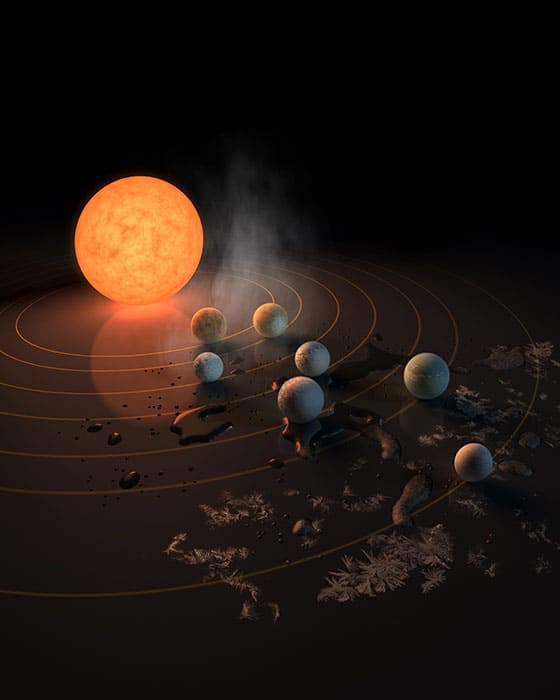
Artist's impression of TRAPPIST-1

The largest known system of Earth-like exoplanets has been found orbiting a dwarf star in the Milky Way. At least three of the seven rocky exoplanets could have oceans of water, making it possible that the system could harbour life. The discovery lends weight to the growing belief among some astronomers that our galaxy could be teeming with Earth-like worlds.

The first exoplanet – a planet orbiting a star other than the Sun – was discovered 25 years ago, and since then, astronomers have identified thousands of such objects. Most are Jupiter-like gas giants because huge exoplanets are much easier to detect than smaller Earth-like worlds. However, improved techniques and new telescopes have led to the discovery of Earth-like exoplanets with the potential to harbour life.

In 2010, an international team of astronomers began using the TRAPPIST telescope in Chile to search for Earth-like exoplanets orbiting small stars nearby in the Milky Way. They were looking for tiny drops in the intensity of a star that occur when an exoplanet’s orbit takes it between the star and Earth. Such “transits” of small exoplanets are much easier to see with dwarf stars because the change in intensity is large.

Rocky compositions

Just 40 light-years from Earth, they spotted a star they called TRAPPIST-1 that appeared to be transited by several exoplanets. Now, further observations – including 20 days of continuous monitoring using NASA’s Spitzer Space Telescope – have revealed seven exoplanets in the TRAPPIST-1 system. The exoplanets have orbital periods ranging from 1.5–20 days. All seven objects appear to be similar in size to Earth, with radii ranging from 0.77–1.13 Earth radii. The team was able to determine the mass and density of six of the exoplanets, which suggests that they have rocky compositions.

TRAPPIST-1 is about 80 times more massive than Jupiter. So instead of resembling the Sun and its planets, the system is similar to Jupiter and its four Galilean moons – according to team member Michaël Gillon of the University of Liege in Belgium. Gillon says that three of the planets orbit within the habitable zone of the star, which means that they could have liquid water and even life.

TRAPPIST-1’s nearness to Earth combined with the fact that the exoplanets are relatively large compared with the star means that it should be possible to study the exoplanet atmospheres. This would provide important information about chemical composition and the possibility of life.

Climate studies

According to Amaury Triaud of the University of Cambridge in the UK, the team is now trying to work out if the exoplanets are shrouded in envelopes of hydrogen – which would suggest that they are not Earth-like. The James Webb Space Telescope – to be launched in 2018 – will have the capability to study the composition of the exoplanet’s atmospheres and even their climates. “We could know if there is life in TRAPPIST-1 within a decade,” says Triaud.

TRAPPIST-1 is described in Nature. Hear Sara Seager explain how astronomers are searching for life on exoplanets in this podcast: Searching for life on other planets.

Flash Physics: ‘Queen of Carbon’ dies, LHCb spots rare B-meson decay, antineutrino detector is portable

“Queen of Carbon” Mildred Dresselhaus dies

The solid-state physicist Mildred Dresselhaus from the Massachusetts Institute of Technology (MIT) has died at the age of 86. Dresselhaus was born in 1930 in New York City and completed a bachelor degree in physics from Hunter College in New York in 1951. Following an MA from Radcliffe College in 1953, Dresselhaus was awarded a PhD in physics in 1958 from the University of Chicago, where she studied under the Nobel laureate Enrico Fermi. After a couple of years at Cornell University, she headed to MIT in 1960 where she remained for the rest of her career. Known as the “Queen of Carbon”, Dresselhaus made fundamental discoveries in solid-state physics, in particular studying the electronic structure of materials, including carbon, and was noted for her work on graphite, graphite intercalation compounds, fullerenes and carbon nanotubes. In 1985, she was the first woman to become a full-tenured professor at MIT, and Dresselhaus continued to promote gender equality in science and engineering throughout her career, co-organizing the first Women’s Forum at MIT in 1971. Dresselhaus won many awards including the National Medal of Science in 1990 and the Presidential Medal of Freedom in 2014 – the highest award bestowed by the US government on US civilians. In 2014, Dresselhaus spoke to Physics World about her career in science.

LHCb observes rare B-meson decay

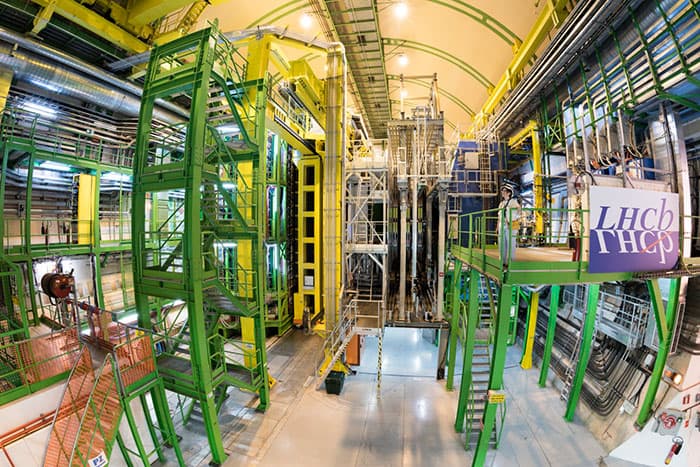
Photograph at LHCb at CERN

The rare decay of a neutral B meson to two oppositely charged kaons has been observed for the first time by physicists working on the LHCb experiment at CERN. B mesons are created when protons collide in the Large Hadron Collider and the observed decay happens to fewer than one in 10 million B mesons. This is the rarest decay ever observed that involves just hadrons. Particle physicists study the decays of heavy-quark hadrons such as B mesons because these events could reveal new particles and interactions that are not described in the Standard Model of particle physics. In this case, however, the decay appears to proceed as predicted by several different schemes for performing quantum chromodynamics (QCD) calculations. The decay was measured with a statistical significance greater than 5σ and is reported in Physical Review Letters. In the same paper, the LHCb team also reports observing the decay of a strange B meson to two oppositely charged pions. This measurement differs somewhat from that predicted by some QCD calculations.

Mobile antineutrino detector could monitor nuclear reactors

Photograph of MiniCHANDLER being assembled

An 80 kg antineutrino detector called MiniCHANDLER will hit the road in April, when it will become the world’s second mobile antineutrino detector, after a similar device was unveiled in Japan in 2014. Built by Jon Link and colleagues at Virginia Tech in the US, The detector uses a solid scintillator that allows it to detect about 100 antineutrinos per day. Antineutrinos are discriminated from much more common background radiation by looking for both the proton and neutron that are produced when an antineutrino interacts with an atom in the detector. MiniCHANDLER is deployed in a trailer that could be parked next to a nuclear facility, where it would monitor the huge flux of antineutrinos created by nuclear fission within the reactor. Such measurements could, in principle, be used to determine what type of nuclear fuel is being used. This information could be used to ensure that a reactor is not being used clandestinely to create weapons-grade material. If MiniCHANDLER is successful, the team plans to build much larger portable neutrino detectors that could weigh as much as 1 tonne.


  • You can find all our daily Flash Physics posts in the website’s news section, as well as on Twitter and Facebook using #FlashPhysics. Tune in to physicsworld.com later today to read today’s extensive news story on exoplanets.

Brooklyn’s pioneering approach to art and science

After spending four days in Boston at the annual meeting of the American Association for the Advancement of Science, I travelled down by train to New York (gotta love those comfy Amtrak seats and free WiFi). I first hooked up with mathematical physicist Peter Woit at Columbia University and then with science philosopher Bob Crease from Stony Brook University, who’s been a long-time columnist for Physics World.

I was keen to find out if they’d be interested in writing for the new Physics World Discovery series of ebooks and, while at Columbia, I had also hoped to put the same question to astrophysicist and author Janna Levin, who’s based in the physics department. Turns out, however, that Levin is on sabbatical, spending a year as “director of sciences” at Pioneer Works in Brooklyn’s Red Hook district. Curious to find out more about a centre that seeks to “make culture accessible to all”, I accepted her invitation to pay a visit.

(more…)

Parents’ enthusiasm for science boosts teens’ exam scores

Teenagers with parents who conveyed the importance of science, technology, engineering and mathematics (STEM) had higher scores in mathematics and science-college preparatory examinations, a long-term US study has found. Talking to teenagers about the benefits of science boosted their exam results by as much as 12%, which in turn increased the number pursuing STEM-based careers.

The research was part of a longitudinal study that recruited families in the state of Wisconsin in 1990 and 1991 when mothers were pregnant. The STEM part of the analysis, led by psychologist Judith Harackiewicz from the University of Wisconsin–Madison, looked at 181 families from that cohort with students attending 108 different high schools.

Utility and relevance

These families were randomly assigned to either an “intervention” group or a control group. Parents in the intervention group were sent information about the utility and relevance of mathematics and science for high-school students. They received a brochure in the 10th grade – when students are 15–16 years old – and another brochure and access to a website in the 11th grade. Families in the control group received no material.

Previously, Harackiewicz and colleagues found that students in the intervention group took nearly an extra semester – half a school year – of mathematics or science classes in the last two years of high school, compared with the control group.

Parents are an untapped resource for promoting STEM motivation
Judith Harackiewicz, University of Wisconsin–Madison

In their latest study, the researchers found that the intervention increased mathematics and science scores in a standardized test for high-school achievement and college applications by 12%. They also found that at 20 years old, the students in the intervention group were more likely to take STEM classes in college, major in a STEM subject, desire a STEM career and value STEM, compared with the control group.

The researchers argue that the intervention improved STEM preparation, which influenced post-high-school choices. “Parents are an untapped resource for promoting STEM motivation – they know their teens and can help them connect course material to their lives,” says Harackiewicz, adding that parents “can have a major impact on their teens’ academic trajectories by helping them understand the importance of taking math and science courses in high school”.

The study is described in Proceedings of the National Academy of Sciences.

Copyright © 2026 by IOP Publishing Ltd and individual contributors