Flash Physics: New THz wave source, galaxies push galaxies, bevelled edges confound, societies call on Trump

Terahertz waves from a flexible source

A new low-cost terahertz wave source could lead to the development of portable, non-invasive screening devices. A team of engineers led by Yang Hyunsoo of the National University of Singapore (NUS) has developed a new flexible device that emits terahertz (THz) electromagnetic radiation. THz waves lie in between infrared and microwaves on the electromagnetic spectrum. As non-ionizing and non-destructive radiation, the waves can travel through materials including semiconductor wafers, woods and clothes. This makes them ideal for screening processes such as cancer diagnosis, detecting explosives and safety surveillance. However, current devices producing THz waves are bulky, multi-component systems. In contrast, the NUS team has developed a thin, flexible source. The device is made of non-magnetic and ferromagnetic metallic films that are 12 nm in thickness. The THz emission is driven by a laser beam. The laser excites spin currents, causing the inverse spin Hall effect to generate transient charge currents. This results in THz emission. The waves can be produced by a low-power laser and the system has higher power output than standard THz devices. The group has also demonstrated a low-cost fabrication method and hopes the finding could lead to new portable and low-cost scanning devices. The work is presented in Advanced Materials.

The push and pull of galaxy voids and groups

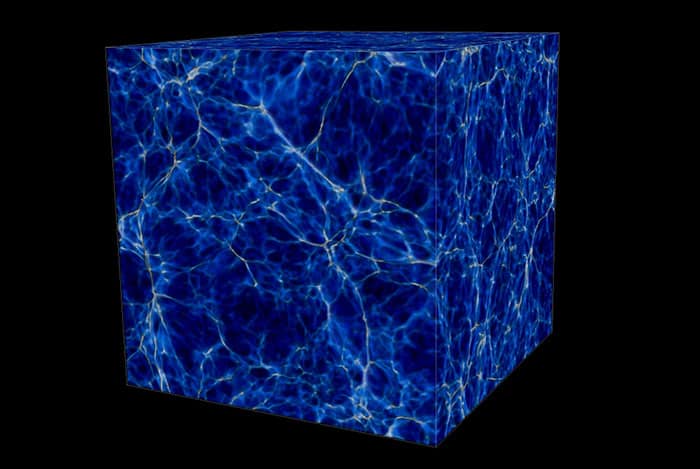
The Milky Way is being repelled by an extragalactic region nearly devoid of galaxies. A team of scientists led by Yehuda Hoffman of the Hebrew University of Jerusalem in Israel has confirmed that the motion of the Local Group of galaxies – which includes the Milky Way – is partly determined by the concentration of galaxies in other regions. The Milky Way and neighbouring galaxies have a peculiar velocity, which is not explained by the universe’s rate of expansion. In the past it has been suggested that this velocity is due to areas of space having different densities of galaxies. A high-density region is thought to attract galaxies, while a low-density region repels. Previously, studies of the Shapley concentration – a nearby region with a high galaxy density – have confirmed an attractive force on the Local Group. However, confirming whether a galaxy deficiency is repulsive has proved challenging because such voids are dark and difficult to study. Now, Hoffman’s team has been able to create a 3D model of galaxy flow using data from various powerful telescopes, including the Hubble Space Telescope. They were specifically interested in a void on the opposite side of the Local Group to the Shapley concentration. The research confirmed that the Local Group and other neighbouring galaxy clusters are flowing away from the void. The combination of this so-called dipole repeller and the Shapley attractor explains the direction and value of the peculiar velocities exhibited by Milky Way and neighbouring galaxies. The finding is presented in Nature Astronomy.

Bevelled edges confound topological protection

Illustration of electron flow in topological insulators with ideal and bevelled edges

The much vaunted protection from backscattering afforded by topological materials could be diminished by the real-world effects. That is the conclusion of Jianhui Wang and Yigal Meir of Ben-Gurion University and Yuval Gefen of the Weizmann Institute of Science in Israel, who have calculated how bevelled edges affect the flow of electrons in a quantum spin-Hall phase 2D topological insulator. Electrons in one spin state will only flow clockwise around the edges of such a material, while electrons in the opposite spin state will only flow anticlockwise. For an electron to backscatter from a defect in its path and flow in the opposite direction, it must flip the direction of its spin. However, spin flips are forbidden by symmetry considerations and therefore electrical currents flowing around the edge of the material are “topologically protected” from backscattering. This protection means that such materials have very high electron mobility and could be used to create high-speed electronic devices. In practice, however, 2D topological insulators have a finite thickness and this means that the edges could be bevelled rather than abrupt. Wang, Meir and Gefen looked at what happens when the electrical potential of the atomic lattice drops off at the edge of a topological insulator. When the drop-off is gradual, they found that electrons in a specific spin state can flow in both directions – which means that backscattering is possible. Writing in Physical Review Letters, the researchers say: “This calculation underpins the fragility of the topological protection in realistic systems, which is of crucial importance in proposed applications.”

Societies call on Trump to rescind visa ban

More than 150 scientific societies and institutions, including the American Physical Society and the American Institute of Physics, have published an open letter calling on US president Donald Trump to reverse his 27 January executive order on visas and immigration. Last week, Trump signed an order that suspends the US Refugee Admissions Programme by 120 days with anyone arriving in the US from seven Muslim-majority countries – Iraq, Syria, Iran, Libya, Somalia, Sudan and Yemen – facing a 90 day visa ban. Drafted by the American Association for the Advancement of Science, the letter says that the order will “have a negative impact on the ability of scientists and engineers in industry and academia to enter, leave from and return to, the United States”, adding that the move will “discourage many of the best and brightest international students, scholars, engineers and scientists from studying and working in the United States”. The societies add that they are ready to assist the administration with formulating an immigration and visa policy.


  • You can find all our daily Flash Physics posts in the website’s news section, as well as on Twitter and Facebook using #FlashPhysics.

US immigration and trade policies provoke debate at Photonics West

Photo of the Golden Gate Bridge against a clear blue sky

By Margaret Harris at Photonics West in San Francisco

“I’m an immigrant. I stole one American job. I helped create hundreds of thousands of others.”

Deepak Kamra’s words caused a stir among listeners at Photonics West, the massive industry trade show and scientific conference that descends on San Francisco, California each winter. Speaking at a panel discussion on “Brexit, US Policy, EU and China,” the Delhi-born veteran of the Silicon Valley venture capital scene said that he expected the new US administration – which recently imposed a travel ban on visitors from seven majority-Muslim countries – to target Asian and South Asian technology workers next. Restrictions on the number of foreign-born students studying science, technology, engineering or mathematics (STEM) at US universities could follow. Ultimately, Kamra concluded, “We are going to lose a lot of qualified people.”

(more…)

Magnetic skyrmions could help make low-energy artificial ‘brains’

Simulations suggest that magnetic skyrmions could form the basis of ultra-low-power-consumption devices that mimic the memory and learning functions of neural synapses.

Despite advances in computer power, there are still tasks that are best done by biological brains. Efforts to emulate the way the brain is wired have led to work on “artificial synapses” as connections for use in “neuromorphic” computers that try to emulate the functionality of a biological brain. Researchers in China have now demonstrated that the skyrmion – a type of magnetic quasiparticle – could be used to create energy-efficient synaptic devices.

New challenges are not always best met with old tools, and as challenges go, emulating synaptic connections in a scalable system – the human brain contains hundreds of trillions of synapses – is no mean feat. Synapses do more than connect neurons, they weigh how well neurons are connected through signal spiking and modulation processes that are thought to be the basis of human learning and cognition. While some progress in the development of synaptic devices has been made using phase-change memories, Ag-Si memories and resistive memories, studies of magnetic skyrmions suggest they may be a promising alternative.

Collective excitations

Skyrmions are particle-like regions within a field where all of the field vectors point either towards or away from a single point in space. They were originally proposed in the 1950s by British physicist Tony Skyrme to explain aspects of particle physics. Researchers have since discovered that some collective excitations of electron spins in solids behave much like skyrmions, and the first observation of a magnetic skyrmion lattice was reported in 2009. These solid-state skyrmions could be potentially useful in next-generation electronics and spintronics.

“My supervisor Weisheng Zhao told me to investigate applications of skyrmions,” says Yangqi Huang, a researcher at Beihang University in China. He came upon the idea of using skyrmions in synaptic devices through discussions with members of his research group, which includes spintronics theorists – people who design devices and specialists in fabrication and circuit design – as well as people working in neuromorphic computing. “A skyrmion is a particle-like structure, so I thought it’s very similar to a neurotransmitter.”

Huang and his colleagues at Beihang University and the Chinese University of Hong Kong, Shenzhen, simulated their skyrmions as 2D discs 50–60 nm in diameter. The circumferential edge and centre of the discs are opposite magnetic poles separated by a chiral domain wall. The skyrmions are incorporated within a device comprising a ferromagnetic layer that has perpendicular magnetic anisotropy, modelled as cobalt, and a heavy-metal layer modelled as platinum. Together, the two components comprise a “racetrack” that magnetic skyrmions can move along.

Energy barrier

Skyrmion racetracks have been studied before as possible electronic memory components. However, by adding an energy barrier at the centre of the racetrack, the researchers simulated the presynaptic and postsynaptic regions where neurons connect to a synapse. Current flow through the heavy-metal layer from one end of the device to the other injects a vertical spin current into the ferromagnetic layer, which drives skyrmions between the pre and post-synaptic regions.

In a biological synapse, prior signal activity causes changes in the number of neurotransmitter receptors, leading to “depression” or “potentiation” – which is the weakening or strengthening of the synaptic connection. In the proposed skyrmion synaptic device, the change in magnetoresistive properties that occurs as skyrmions move either side of the energy barrier mimics this depression and potentiation. Huang and colleagues showed that their system has both short-term plasticity and long-term potentiation. These are synapse-like behaviours that are linked to long- and short-term memory.

The simulations suggest that the skyrmion synaptic devices operate with very low energy dissipation, explains Huang. In addition, the electrical current density needed to drive the skyrmions is very low, as has already been shown for skyrmions in previous theoretical and experimental studies. The result is a power consumption of just 1 pJ per synaptic event, making it a contender for making practical synaptic devices.

“Only a simulation”

“But it is only a simulation,” adds Huang, emphasising that most other synaptic devices have already been built and demonstrated. While the racetrack can be readily fabricated from metals with a capping layer to produce the energy barrier, an effective way of detecting skyrmions based on electrical signals is still a challenge. So far, other groups have used the Kerr effect – an optical phenomenon – to observe skyrmions. Huang has also begun experimental work on skyrmions in germanium thin films using Lorentz transmission electron microscopy, but this is limited to very thin films and work in this area is ongoing.

“Skyrmions have unusual topological properties,” says James Gimzewski, director of the UCLA CNSI Nano & Pico Characterization Core Facility, who was not involved with the current research. As one of the pioneers in artificial synapses based on nanostructures he adds: “It is interesting to see that they can now be used to mimic synaptic excitation and depression opening a new avenue for neuromorphic devices.”

The research is described in Nanotechnology.

Flash Physics: Artificial skin feels heat, Earth’s footprint on the Moon, baryon decay glimpses CP violation

Artificial skin has snake-like feelings

A new artificial skin can sense temperature changes like a pit viper senses its prey. Researchers from Caltech in the US and ETH Zürich in Switzerland have developed a flexible skin-like material out of pectin and water. The film generates an electrical response to temperature changes in a manner similar to the way pit vipers sense warm prey. The snakes’ pit organs contain ion channels in the cell membrane of its sensory nerve fibres. These expand with temperature increase, allowing the flow of calcium ions and therefore triggering electrical impulses. In comparison, the artificial skin releases calcium ions that are within the weakly bonded structure of pectin molecules. Chiara Daraio and colleagues suggest that the combination of increased ion concentration and increased ion mobility causes a decrease in electrical resistance. By testing over a range of 5–50 °C, the researchers found the skin could sense temperature changes of a mere 0.01 °C – almost 10 times more sensitive than existing electronic skins. The new skin can be as little as 20 μm thick and has many potential applications. It could be used on prosthetic limbs allowing amputees to sense temperature changes and, if included in first aid bandages, it could alert health professionals to temperature changes caused by wound infections. The team also plans to increase the functional temperature range so the skin can have industrial applications such as robotic skins and thermal sensors. However, this requires a new fabrication process because the water within the material bubbles and evaporates at high temperatures. The research will be published in Science Robotics on 1 February.

Earth’s footprint on the Moon

Oxygen from Earth reaches the Moon's surface when it protects the Moon from solar winds

Oxygen from Earth’s atmosphere has been detected on the Moon’s surface. Scientists in Japan have analysed data from the lunar orbiter Kaguya taken when the spacecraft and the Moon were sheltered from solar winds by the Earth’s magnetosphere. For all but five days of the lunar orbit, the Moon is bombarded by solar wind. For those other five days, when the Earth lies between the Moon and Sun, the Earth’s magnetic field deflects the solar wind away from the Moon and ions from the Earth are able to reach the lunar surface. Previous studies analysing the Moon’s soils have shown the presence of terrestrial nitrogen and noble gases. Now, Kentaro Terada and colleagues have found evidence that oxygen from Earth’s biosphere also reaches the Moon. The orbiter Kaguya measured the mass and energy of oxygen ions reaching the Moon while it was sheltered from solar wind. It measured a significant number of oxygen ions when the Moon was within the Earth’s plasma sheet (the region of reduced magnetic field between the north and south lobes). The energy of the ions combined with the depth of oxygen in the lunar soil implies that the gas from Earth’s lower atmosphere has been depositing on the Moon since oxygen became abundant on Earth about 2.5 billion years ago. The findings, reported in Nature Astronomy, suggest that the lunar soil could provide a footprint of our planet’s ancient atmosphere, although Kentaro Terada and team stress that differentiating between solar and Earth winds will complicate the investigations.

Matter–antimatter asymmetry glimpsed in baryon decay

Photograph of physicists on the LHCb collaboration

The first sighting of matter–antimatter asymmetry in the decay of a baryon has been reported by physicists working on the LHCb experiment at the Large Hadron Collider (LHC) at CERN. The finding is the first potential observation of the violation of charge-parity (CP) symmetry in a particle comprising three quarks and, if verified, could provide important clues about why there is much more matter than antimatter in the universe. The study looked at how bottom lambda baryons (comprising up, down and bottom quarks) and their antimatter counterparts decay after being created by collisions in the LHC. The team looked at about 6600 events in which the baryons (or antibaryons) decayed to create a proton and three pions (or corresponding antiparticles). It found that the spatial distribution of the matter and antimatter decay products was different at a statistical significance of 3.3σ. A similar measurement of about 1000 baryon (or antibaryon) decays that created a proton, pion and two kaons (or corresponding antiparticles) found no evidence for a matter–antimatter asymmetry. While 3.3σ is smaller than the 5σ required for a discovery in particle physics, this is the first measurement of these two decays and the statistics will improve as more data are collected – making it clearer with time if the asymmetry exists or not. CP violation was first seen in the decay of kaons in 1964 and more recently in B-meson decays – with both particles containing two quarks. In the Standard Model of particle physics, CP violation is explained by the Cabibbo–Kobayashi–Maskawa (CKM) mechanism. However, the CKM is not able to explain why there is more matter than antimatter, and therefore studies of CP violation in baryons could provide important clues towards solving this mystery. The study is described in Nature Physics.


  • You can find all our daily Flash Physics posts in the website’s news section, as well as on Twitter and Facebook using #FlashPhysics. Tune in to physicsworld.com later today to read today’s extensive news story on later today to read today’s extensive news story on how skyrmions can be used to create artificial synapses.

A fusion fly-over


By Michael Banks

To the critics, a working fusion power plant is always 30 years away.

But in the past decade, progress has been made at the construction site of the ITER fusion reactor in Saint-Paul-lez-Durance, France.

Ten years ago – on 29 January 2007 – preparation work began on ITER’s home in the large stretch of national forest. Within two years, more than three million cubic metres of rocks and soil had been removed to level the site ready for the behemoth.

(more…)

Analogue black hole could be made from plasma mirror

An analogue to the creation of Hawking radiation at the event horizon of a black hole could be made by firing an intense laser pulse at specially designed targets. That’s the conclusion of physicists in Taiwan and France, who say that the “plasma mirror” created in the proposed experiment could be used to study the relationship between quantum particles inside and outside a black hole. The researchers have calculated that the experiment could be done using existing technology and that it could shed important light on the black-hole information-loss paradox.

The idea of Hawking radiation has been around since the 1970s when Stephen Hawking considered what would happen to pairs of “virtual particles” created near the event horizon of a black hole – the region beyond which not even light can escape the tug of gravity. Quantum mechanics dictates that pairs of such particles can pop into and out of existence within a vacuum, and Hawking reasoned that one particle from each pair would be swallowed up by the black hole, while the other would be emitted to form “Hawking radiation”. This process would remove energy from the black hole, making it evaporate and eventually disappear in the absence of any other nearby sources of matter.

Because the emitted radiation is generated at the edge of a black hole, it tells us no more than an external observer can learn about the black hole – its mass, charge and angular momentum. All other information regarding individual objects that have been sucked into the black hole would be lost forever. The problem with this loss of information is that it violates a principle of quantum mechanics that says that the complete information about a physical system at one point in time will dictate its quantum state at any point of time in the future.

Thought experiments

Research into the information-loss paradox has been mostly theoretical as it is hard to make the appropriate measurements on real black holes. Physicists are therefore keen to create systems in the lab that are analogous to black holes, with the Hawking-like radiation associated with these analogues potentially providing important clues to resolving the information paradox.

Now, Pisin Chen of National Taiwan University and Gerard Mourou of Ecole Polytechnique in Paris have proposed a way of using a plasma mirror to create a black-hole-like system. Plasma mirrors are created when an intense pulse of radiation strikes a solid material, such as glass, and separates electrons from the atoms to make a plasma. When this occurs, the material changes from being transparent to being highly reflective.

To mimic Hawking radiation at the event horizon of a black hole, Chen and Mourou propose creating a plasma mirror that accelerates rapidly and then stops abruptly. This, they say, could be done by firing an intense laser pulse at a solid target to create an intense pulse of X-rays. This X-ray pulse would then be directed at a second solid target that has a density varying on the nanometre scale. A plasma would be created in this second target and the density gradient would make the plasma accelerate in the direction of the X-ray pulse.

Imperfect mirror

The plasma acts as an imperfect mirror, reflecting one half of a virtual photon pair created at its surface and allowing the other photon to pass through. These reflected photons are analogous to Hawking radiation. The un-reflected photons become trapped in the plasma and are analogous to photons within a black hole.

According to Chen and Mourou, the trapped photons should be released when the mirror stops as it reaches the end of the second target. The reflected and trapped photons would then be detected and physicists could look for correlations between the photons to determine if the photons are quantum-mechanically entangled. The virtual pairs are entangled when they are created, and a measurement of entanglement between the reflected and trapped photons could provide important information about the information-loss paradox.

Chen and Mourou say it should not only be possible using advanced laser and nanofabrication techniques to do the experiment but also measure correlations between the photons of interest, despite the presence of a large background of other photons created in the experiment.

The research is described in Physical Review Letters.

Physics in the US: no longer business as usual

By Matin Durrani

Over the last couple of years here at Physics World, we’ve been publishing special reports examining the state of physics in different nations around the world, including Brazil, China, Japan, India, Korea and Mexico.

When we decided in September last year to publish our next special report in 2017 on the US, it seemed reasonable to expect that Hillary Clinton was going to be elected president. For science, a Clinton presidency would pretty much have been “business as usual” and so, probably, would have been the tone of our special report.

But now that Donald Trump is in the White House, it looks as if we’re entering a period where the US is as far removed from “business as usual” as you could imagine.

(more…)

Flash Physics: Detecting life’s signature, UK to pull out of Euratom, nuclear-clock lifetime measured

Detecting the signature of life on other planets

A new chemical test could determine whether life has existed on other planets. Scientists at NASA’s Jet Propulsion Laboratory, California, have developed a quick and simple method for analysing amino acids using capillary electrophoresis (CE). Amino acids are the building blocks of life as we know it. Made predominantly of oxygen and carbon, the organic molecules exhibit chirality. This involves two molecules having the same composition, but being mirror images of each other – like human hands. The amino acids related to life forms on Earth are left-handed. If we assume this applies to other planets, their presence could be seen as a signature of life. However, amino acids are also present because of non-life sources such as meteorites. These sources have equal amounts of left- and right-handed molecules. Therefore a test to identify the different amino acids is needed to determine the source. Peter Willis and colleagues have developed a simple, automated “mix and analyse process” using CE. In CE, molecules are identified based on their movement under an electric field. Using a laser detection system, the molecules can be seen moving at different speeds. The method, described in Analytical Chemistry has been used to test samples from Mono Lake in California. The lake’s high salt content and high alkalinity make it an excellent substitute for the waters believed to be on Mars, Saturn’s moon Enceladus and Jupiter’s moon Europa. Tests have shown that the method is 10,000 times more sensitive than that used by the Mars Curiosity rover and can detect very low concentrations of amino acids. If deployed during explorations of other planets, the method could help in the search for extra-terrestrial life.

UK to pull out of EU nuclear agency

Photograph of the interior of JET

The UK has confirmed that it intends to pull out of the European Atomic Energy Community (Euratom), the international organization that develops nuclear power in Europe. The intention was set out in explanatory notes that accompanied a bill the UK government published on Thursday to start the process for the country leaving the European Union (EU) by triggering the Article 50 exit clause. If the UK does go ahead and leave Euratom then it could threaten the UK’s participation in two major fusion facilities. Experiments on the Joint European Torus (JET), which is based at the Culham Centre for Fusion Energy in Oxfordshire, are funded by the EUROfusion consortium until 2018. Discussions are currently under way to extend this to 2020. JET receives funding of €69m, 87.5% of which comes from the European Commission and 12.5% from the UK. The EU is providing half the cost of ITER, which is currently being built in Cadarache, France, and is seen as a successor to JET. If the UK pulls out of Euratom then it could follow Switzerland’s lead by becoming an “associate” member. This will allow the UK to participate in ITER and it may be enough for Euratom to continue to support JET.

“Nuclear-clock” lifetime is measured

The lifetime of the first excited state of the thorium-229 nucleus has been measured for the first time. The measurement provides important information to physicists who hope to use an optical transition from this excited state to create a “nuclear clock” that could outperform existing atomic clocks. The work was done by Benedict Seiferle, Lars von der Wense and Peter Thirolf at Ludwig Maximilian University of Munich, who have measured the half-life of the state as it undergoes an internal conversion process, which involves the decay energy being transferred to an atomic electron. The team found the half-life to be about 7 μs, which confirms calculations that internal conversion dominates the decay of thorium-229 nuclei. This measurement also confirms that the emission of light only occurs in about one in a billion decays. Making a clock from thorium-229 requires a decay resulting in the emission of light, not internal conversion. It is likely, therefore, that a practical nuclear clock based on thorium-229 will have to employ a scheme to suppress internal conversion in favour of an optical transition. The measurement is described in Physical Review Letters. Last year, Seiferle, von der Wense, Thirolf and colleagues made the first direct detection of this transition.


  • You can find all our daily Flash Physics posts in the website’s news section, as well as on Twitter and Facebook using #FlashPhysics. Tune in to physicsworld.com later today to read today’s extensive news story on a new black-hole analogue.
Great wagers in physics, CERN’s pine marten gets stuffed, Doomsday Clock moves closer to midnight

Flat out: Wallace saw him coming (Courtesy: PI)

By Hamish Johnston

I bet you can’t resist clicking on “Great wagers in physics history” – which has been compiled by Colin Hunter at the Perimeter Institute for Theoretical Physics in Canada. A surprising number involve Stephen Hawking, whose record on winning is quite abysmal according to Hunter. Hawking’s fellow Cantabrigian Isaac Newton also enjoyed a flutter and accepted Christopher Wren’s offer of 40 shillings to anyone who could – in two months – derive a force law that explained Keplers laws of planetary motion. Newton succeeded, but ran overtime so he didn’t collect the cash. In the image above you can read about another wager involving a “flat-Earth theorist”.

(more…)

Light recorded mimicking a sonic boom

The optical equivalent of a sonic boom has been filmed for the first time. The feat involved two important breakthroughs, slowing the light to create the effect and developing an ultrafast imaging technique to record the phenomenon.

When a jet aircraft travels faster than the speed of sound (343 m/s), it produces an immensely loud sonic boom that can smash windows and set off car alarms. This phenomenon is related to pressure waves. As an object, such as an aircraft, pushes air out of the way, it creates pressure waves that move at the speed of sound. If the object also reaches the speed of sound, known as Mach 1.0, the waves build up and create a shock wave, or sonic boom. Continuing at or above Mach 1.0 means the sonic boom trails behind the object in a conical shape – called a Mach cone.

A Mach cone is created whenever a wave emitter travels faster than the waves it creates and therefore the event is not limited to sound. However, while the speed of sound is achievable by modern aircraft, bullets and even bullwhips, the same cannot be said for light. It is a fundamental law of physics that nothing travels faster than the speed of light in a vacuum (299,792,458 m/s). So how could an emitter travel faster? Lihong Wang and Jinyang Liang of Washington University in St Louis, the lead researchers on the current study, get around this problem by taking advantage of the fact that light will travel significantly slower when in a medium rather than a vacuum.

Appears faster than light

To create their Mach cone, the team made two display panels of silicone rubber doped with aluminium oxide powder. These flanked a thin channel containing air and dry-ice fog. A green laser pulse lasting 7 ps is fired down the channel. As the short laser pulse travels through the channel, the dry ice fog scatters some of the light into the panels. The speed of light in the display panels is slower than in the channel. Therefore the light is slowed as it travels through the panels above and below the channel, making it appear that the pulse is travelling faster than the scattered light. As the scattered wavelets of light superimpose in the panels, they create a wave front, analogous to the sonic boom shock wave, and a Mach cone of light is seen trailing behind.

Yet, even with this reduced speed, it is still difficult to record the propagation of the light in real time. “Capturing a photonic Mach cone’s movement in real time to produce an intuitive movie has been a long-standing challenge owing to the lack of single-shot light-speed 2D imaging,” say Wang and Liang. The feat of freezing light’s motion requires an imaging speed of a billion frames per second, but most cameras can only achieve 1000 frames per second. Furthermore, most ultrafast technologies are pump-probe devices. They take thousands of measurements that then need to be stitched together. These require the events to be accurately repeated, something that is not achievable for many physical events.

Ultrafast solution

To overcome these challenges, Wang, Liang and colleagues developed a single-shot ultrafast imaging technique to record the real-time propagation of a laser pulse travelling through a scattering medium.

For the imaging set-up, the group used lossless-encoding compressed ultrafast photography (LLE-CUP). The LLE-CUP system is a step on from past devices because it is ultrafast and takes only one snapshot. The set-up Liang and team used was a complex arrangement of optical devices that captured the event through three different cameras. The first camera recorded a direct image of the scene while the second two recorded temporal information. The combination allowed the scientists to reconstruct the scene frame by frame. The result is the first ever recording of a photonic Mach cone in real time.

The LLE-CUP system provides a new approach for recording complex, unique events in real time. It has particular potential in the field of biomedical imaging. “Our camera is fast enough to watch neurons fire and image the “live traffic” in the brain. We hope we can use our system to study neural networks to understand how the brain works,” say Wang and Liang.

The photonic light cone and LLE-CUP system are described in Science Advances.

Copyright © 2026 by IOP Publishing Ltd and individual contributors