Thinking big thoughts

Everybody loves coincidences, so here is one: a few months ago, I began writing a popular-science book about how to bridge the gap in our understanding of the microscopic (quantum) world and the macroscopic one. If we could do this, and thus explain large-scale phenomena (such as weather) using the underlying microdynamics of molecules, we could transform both science and technology (though we might, unfortunately, also eliminate the UK’s commonest conversation starter). But would it be spiritually uplifting? Could this coherent and phenomenally powerful picture of the universe fulfil us in the same way that believing in God has traditionally done?

Just as I was grappling with this topic in my book’s final chapter, I received a request to review a book by Sean Carroll that asks similar questions, albeit from a completely different perspective. The short synopsis of The Big Picture is that it explores the question of whether science can explain everything in the world, and analyses the emerging picture of reality that such an explanation entails.

Coincidence? Well, yes and no. Yes, because Physics World did not know I was writing a book on a broadly similar topic. But also no, because in many ways the time is now ripe for this kind of discussion to happen. First, scientists are engaging more and more in interdisciplinary research, which is all about bridging gaps between different disciplines; behavioural economics, for example, applies psychology to the way we do financial transactions. Second, many parts of the world, Europe in particular, are becoming more and more secular. As a result, many people feel there is a void that used to be filled by religion, but which science is incapable of replacing.

Or is it? Carroll, in the best tradition of his California Institute of Technology predecessor Richard Feynman, argues that science can indeed provide a spiritually fulfilling picture of the universe. He calls this picture “poetic naturalism”. The naturalism part is self-explanatory. What you see is what you get: there is no supernatural spoon bending or talking to the dead (or rather, you can talk to the dead, but they don’t talk back), and Carroll presents convincing arguments (based on quantum field theory, our most accurate scientific explanation of the micro world) as to why such phenomena cannot be real.

Naturalism thus stated might sound boring. Not so, Carroll argues skilfully: the fact that there is no magic, doesn’t mean that there is no “magic”. That’s where the “poetic” part comes in. Like Feynman before him, Carroll firmly believes that having a scientific understanding of nature only adds to the beauty of what we see around us, and in some sense makes the whole coherent scaffolding of our understanding even more remarkable and awe-inspiring. The stories we’ve constructed through science about the universe, our origins and fate are, Carroll argues, just as magical as anything we see in religion, art and philosophy – if not more so.

As its name suggests, The Big Picture is broad. The range of subjects is breathtaking, with some pure science, some philosophy and even some passages that read almost like extracts from a self-help book. I enjoyed Carroll’s discussions of the difference between notions of complexity (loosely, something that has many interwoven parts highly mutually dependent) and entropy (a measure of disorder, which is frequently confused with complexity). I appreciated his explanation of how complex phenomena such as consciousness might emerge naturally even though they are not seen in microscopic neurological behaviour (which does not make consciousness any less real). And I learnt many historical facts, for instance about the contributions of Princess Elisabeth of Bohemia to the philosophy of René Descartes (Elisabeth, like Carroll, argued against the Cartesian dualism that manifested itself in the separation between the body and the soul).

Although an exciting read, the book is, of course, far from perfect. I have some minor technical quibbles about a few aspects. One is that Carroll avoids getting into a proper discussion of how one might attempt to reconcile the “many worlds” picture of the universe he promotes (I also subscribe to it – that’s not my issue) with the fact that the universe’s entropy was, in the past, very low. The subsequent increase in entropy is something we can understand only statistically and is hard to argue in a closed system. These are problems that go back to Ludwig Boltzmann’s clashes with his contemporaries in the late 19th century, and the low entropy of the past remains a profound mystery to us, but it does not come across as such here.

Another problem is that Carroll is not a natural writer. He occasionally misjudges the level of detail he needs to go into, and so some parts feel quite “textbookish”. I particularly felt this in his discussion of Bayes’ treatment of probabilistic inference, although it does contain a good explanation of coincidences, such as thinking of someone when the phone rings and it’s them (or indeed being asked to review a book when you’re writing one on the same subject). He tells many stories in-between the more detailed passages, to keep us entertained, but I think he is a much better science communicator than storyteller. Some stories feel unnaturally added on to break the monotony, and the transitions are not done as smoothly as, for instance, in the tremendously successful Freakonomics (a reference for science popularizers).

Despite these minor imperfections, this is no doubt a great book. I like its honest and direct style. It’s passionately written by a physicist who has clearly thought deeply not only about his own research interests, but also about how they fit into the bigger picture. And not only that: Carroll also shows us that science and spirituality do not necessarily come into conflict, something that most scientists feel is true (that’s why almost all of us physicists would choose the same profession if we were born again) but refrain from discussing openly, perhaps for fear of being called “irrational” and “mystical”. Carroll’s “big picture”, beautifully exposed and illustrated, is the closest I’ve seen to a scientific explanation of the meaning of it all. It’s science as magic at its best.

  • 2016 Dutton Books £20.00/$28.00hb 480pp
Proton radius mystery deepens as deuterium measurement comes up short

The “proton radius puzzle” has been reinforced by a precise measurement of an atomic transition in muonic deuterium, which suggests the radius of the deuterium nucleus is much smaller than expected. This latest result tallies with a similar experiment on muonic hydrogen, which found that the radius of the proton is also smaller than expected. The discrepancy could mean that theory describing how muons and electrons interact with the proton is incorrect, or that there is an error in how the radius is calculated. Another possibility is that the Rydberg constant – which defines the energy scale for atomic transitions in hydrogen – requires a slight correction.

In the decades after the proton was discovered in 1917, physicists began to realize that it has a finite size, unlike the electron, which is essentially a point particle. The internationally recognized proton radius is about 0.8751(61) fm, where the figure in brackets is the uncertainty. This has been measured using two methods that give similar results: electron scattering and atomic spectroscopy.

In 2010, however, an international team led by Randolf Pohl at the Max Planck Institute for Quantum Optics in Garching, Germany, carried out spectroscopic measurements of muonic hydrogen. This comprises a proton bound to a negative muon, which is a much heavier cousin of the electron. These studies suggested that the radius of the proton is only about 0.84087(39) fm – about 4% less than the currently accepted value and with a much smaller uncertainty.

Lamb shift

Spectroscopic measurements of proton radius come courtesy of the Lamb shift in hydrogen’s atomic-energy levels. This is a result of the electron (or muon) interacting with the quarks inside a proton as described by quantum electrodynamics (QED). These interactions are slightly different for electrons in the 2S and 2P energy levels, with the resulting energy shift depending partly on the radius of the proton. Measurements made on muonic hydrogen give a much more precise value for the proton radius because the muon, which is much heavier than an electron, spends more time very near to – and often within – the proton than does an electron.

In this latest experiment, Pohl and colleagues looked at the Lamb shift in muonic deuterium, which has a nucleus consisting of not just a proton, but a neutron too. Instead of giving the radius of the proton, this measurement provides a measure of the “deuteron charge radius”, which is a measure of the size of the deuterium nucleus.

The measurements were done at the Paul Scherrer Institute in Switzerland by firing a muon beam at deuterium gas, which makes some of the deuterium molecules break apart to create atoms of muonic hydrogen. About 1% of the time the muon finds itself in the 2S state, where it can be excited to the 2P state by absorbing a photon from a laser pulse. The 2P state then decays by emitting an X-ray. Counting the number of such X-rays, while scanning the frequency of the laser pulse, gives a very precise measurement of the photon energy required to drive the 2S–2P transition. A complicated QED calculation is then done to obtain the deuteron charge radius.

Still smaller

The team found the deuteron charge radius to be about 2.12562(78) fm, which is smaller than the currently accepted value of 2.1424(21) fm. They could also use the deuteron charge radius to calculate the proton radius. This was found to be about 0.8356(20) fm – much closer to the muonic hydrogen value than to the currently accepted radius.

One striking aspect of the proton radius puzzle is that measurements made using electrons – both via scattering and from spectroscopy – give one set of values for the proton radius and for the deuteron charge radius, while measurements made using muons give different answers.

According to Pohl and colleagues, these discrepancies are not easy to reconcile within the Standard Model of particle physics. One possible explanation is that the Rydberg constant that is used to calculate the radii is incorrect. There could also be an error in how QED is used to calculate the radii. Beyond the Standard Model, the team points out that the discrepancy could be caused by a new force between muons and protons. While this seems far-fetched, it could also explain why the measured value of the muon’s dipole magnetic moment differs from the value predicted by the Standard Model.

The research is described in Science.

Cracking water drops caught on camera

By Tushna Commissariat

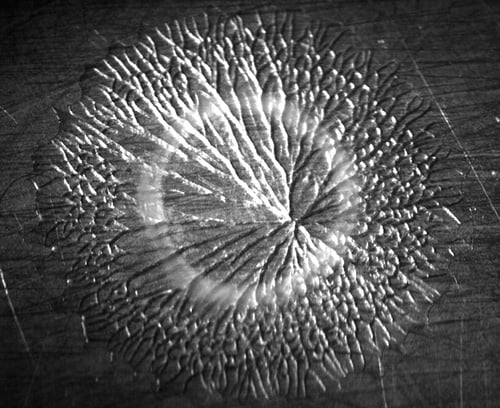
Drops of water normally tend to splash when they strike a surface. But what happens if they hit something very cold? It turns out they first freeze and then crack, forming intricate fracture patterns, one of which you can see in the image above.

It was taken using a high-speed camera by Christophe Josserand, Thomas Séon and colleagues at the Jean Le Rond d’Alembert Institute in France. They watched water solidifying as it dripped onto a stainless-steel surface cooled to various temperatures between 0 and −60 °C (Phys. Rev. Lett. 117 074501). Due to the contact between the drop and the surface, the water’s ability to freeze is limited and mechanical stress makes it fracture in a few milliseconds.

(more…)

China launches world’s first quantum science satellite

China has launched the world’s first satellite dedicated to testing the fundamentals of quantum communication in space. The $100m Quantum Experiments at Space Scale (QUESS) mission was launched today from the Jiuquan Satellite Launch Center in northern China at 01:40 local time. For the next two years, the craft – also named “Micius” after the ancient Chinese philosopher – will demonstrate the feasibility of quantum communication between Earth and space, and test quantum entanglement over unprecedented distances.

Work on QUESS – a collaborative endeavour between the Chinese Academy of Sciences and the Austrian Academy of Sciences – began in 2011 and the assembly was completed earlier this year. The 600 kg satellite will now be put into Earth orbit around 500 km above ground. The craft’s main instrument is a “Sagnac” interferometer that is used to generate two entangled infrared photons by shining an ultraviolet laser on a non-linear optical crystal.

Physicists have previously managed to separate entangled photons by distances up to 300 km on Earth. But because photons scatter when they travel down optical fibres or encounter atmospheric turbulence when sent between telescopes, it is hard to send entangled photons longer distances unless the experiments are performed in space.

Quantum encryption

The main goals of QUESS will be to demonstrate quantum key distribution (QKD) between the satellite and two stations on the ground – the Nanshan 25 m telescope at the Xinjiang Astronomical Observatory in western China and the Xinglong Observatory in Yanshan, around 200 km south of Beijing. A quantum key is a string of ones and zeros, representing the quantum states of particles. These can be used to encode and decode messages, which would be secure from eavesdroppers.

QUESS will perform a test of Bell’s inequality at a separation of over 1200 km – the greatest distance to date – to prove that entanglement can exist between particles separated by such a large distance. QUESS will also quantum teleport a photon state from the Ali observatory on the Tibetan Plateau to the satellite. “These goals will be performed solely by the Chinese team,” says Jianwei Pan from the University of the Science and Technology of China, who is QUESS’s chief scientist.

Pan adds that, once these targets have been met, the Chinese team will then collaborate with Anton Zeilinger and colleagues at the University of Vienna to create an “intercontinental” QKD channel between Beijing and Vienna, with the option of including stations in Italy and Germany. “QUESS will be the first test of quantum communication with a satellite,” says Zeilinger. “It can also be seen as a very significant step towards a future worldwide quantum internet.” Indeed, China is planning to launch a number of similar satellites to create a quantum communications network by 2030.

Challenges ahead

QUESS first faces a number of technical challenges in orbit, especially to make sure that the receiving telescopes on the ground can precisely track the satellite, which will be travelling at 8 km/s. “It’s very challenging to create a perfect quantum channel between the satellite and the ground station,” says Pan. “We have developed a high-frequency and high-accuracy acquiring, pointing and tracking technique to do that.”

Quantum physicist Alexander Ling, from the National University of Singapore, who is not part of the QUESS team, says he is looking forward to the data that will emerge from QUESS adding that there are now about a dozen groups worldwide working on space-based quantum experiments. Last January, his group launched and demonstrated a quantum entanglement source inside a cube-sat – a type of miniaturized satellite for space research weighing no more than 1.5 kg and with each side being around 10 cm long. “Since the access to space is becoming more easily available with the emergence of new satellite technologies such as nanosatellites, we should be able to see more quantum experiments in space,” he adds.

Thomas Jennewein at the University of Waterloo in Canada and colleagues are working on a quantum payload prototype that could fit onto a small satellite. They have already performed several feasibility experiments, such as sending quantum signals to a payload on a moving truck. Later this year, meanwhile, the European Space Agency is expected to carry out a detailed study into the possibility of using the International Space Station for quantum communication experiments.

QUESS is one of four missions belonging to the National Space Science Center’s strategic priority programme in space science. The others are the Dark Matter Particle Explorer, which took off in December 2015, Shijian-10, launched in April, and the Hard X-ray Modulation Telescope, which is set to take off in November.

What are the potential applications of topological insulators?

Topological insulators are a hot topic in condensed-matter physics on account of their special properties. Electrical insulators in the bulk, these materials have surface states that conduct electrons extremely well. In this video, Zahid Hasan of Princeton University in the US describes why topological insulators could lead to high-performance electronics and applications in quantum computing.

This video is part of our 100 Second Science series, in which researchers give concise presentations covering the spectrum of physics.

Entangled Hawking radiation spotted in analogue black hole

Entangled Hawking radiation emitted by an analogue black hole has been observed by a physicist in Israel. The experiment simulates the event horizon of a black hole using sound propagation in a Bose–Einstein condensate (BEC). The measurement shows that, if Einstein’s general theory of relativity holds at the boundary of a black hole, then black holes must emit radiation. Some physicists disagree, however, about whether the experiment fully validates the assumptions used to predict Hawking radiation.

In 1974 Stephen Hawking showed that general relativity and quantum field theory together suggested that photon pairs should be created at the event horizon of a black hole. One photon, carrying “negative energy”, would fall into the black hole; the other, carrying positive energy, would be emitted as radiation, giving the black hole a well-defined temperature. The theoretical implications of this are revolutionary, as it is unclear how the statistical thermodynamic definitions of temperature and entropy could apply to a black hole.

Physicists have not been able to study Hawking radiation because the temperatures of all known black holes are lower than that of the cosmic microwave background radiation. This makes their Hawking radiation effectively undetectable. However, in 1981 William Unruh of the University of British Columbia pointed out that the production of quantized sound waves – or phonons – in a BEC could be made mathematically equivalent to the predicted photon production at the event horizon of a black hole. Since then, various researchers have used this to build analogue black holes in the laboratory.

Bouncing light

In 2014 atomic physicist Jeff Steinhauer of the Israel Institute of Technology (Technion) in Haifa replicated a particular type of hypothetical black hole with two horizons in a BEC. He showed that, if radiation was excited, it would bounce between the two horizons, amplifying itself continuously to produce a type of laser. It was by no means certain that such a phenomenon could occur in a real black hole, however, as this would require radiation to travel faster than the speed of light between the horizons.

In the new research, Steinhauer has extended his model to cover the general case of a black hole. He swept a potential-energy step along a flowing BEC of rubidium-87 atoms. On one side, the flow was slower than the speed of sound in the condensate – allowing phonons to flow against the condensate. As the condensate travelled over the potential step, however, its speed became supersonic thus preventing phonons from travelling against the flow.

Steinhauer measured the spectrum of phonons in the condensate that are created by quantum density fluctuations at near-zero temperature. These are analogous to the photons created by fluctuations in the quantum vacuum (i.e. Hawking radiation) in a real black hole. The spectrum matched Hawking’s prediction. “The measurement reported here verifies Hawking’s calculation, which is viewed as a milestone in the quest for quantum gravity,” explains Steinhauer.

Fragile entanglement

Steinhauer also looked at the correlation between phonons on either side of the potential step. He found that, for all but the lowest frequencies, the correlation was too large to be due to chance. Therefore, he concluded, the phonons on either side of the step were entangled quantum mechanically. However, the degree of entanglement was less than predicted by quantum theory for most frequencies: “Entanglement is a fragile thing,” says Steinhauer, “There are several possibilities about what could destroy entanglement.” The fact that particles falling into black holes are apparently entangled with particles emitted from the surface is crucial to black hole thermodynamics, says Steinhauer, as it suggests they cannot then be entangled with each other. This rules out one possible way information could escape a black hole.

Renaud Parentani of Paris-Sud University is an expert on black hole analogues and is impressed with Steinhauer’s work: “The microscopic, detailed properties of the Hawking prediction of 1974 have now been observed in an analogue experiment,” he says. However, he is more sceptical than Steinhauer about the applicability to quantum gravity. “Sound waves in the condensate obey the same equations that Hawking used, having assumed that gravity could be treated as a passive arena,” he explains. “Therefore, by observing the phonons one indeed confirms the predictions made by Hawking, but one does not validate the assumptions used by Hawking. In fact, many physicists, in particular those working in string theory, consider that these assumptions are illegitimate because they apparently lead to the loss of information [in black holes],” he says.

The research is published in Nature Physics.

Plush toys launched into space, interplanetary mining missions and more

https://youtu.be/P05f2wQYGf4&rel=0


By Tushna Commissariat

The European Space Agency’s (ESA) Rosetta spacecraft has, as of this week, spent two full years in orbit around comet 67P/Churyumov–Gerasimenko, since it reached its destination in August 2014. While Rosetta was the mothership, it also deposited its “baby” lander called Philae onto the comet’s surface in November that year. Sadly Philae was switched off in July this year. If you feel like you want to relive the excitement of the initial launch, take a look at the video above. The folks over at Design and Data, who created Rosetta’s iconic cartoons and memorabilia for ESA, launched a plush-toy version of the spacecraft into space, to see how it would fare. Watch the video to see how their “mission” played out.

(more…)

Uroš Cvelbar: why bioscientists are inspired by plasma processing

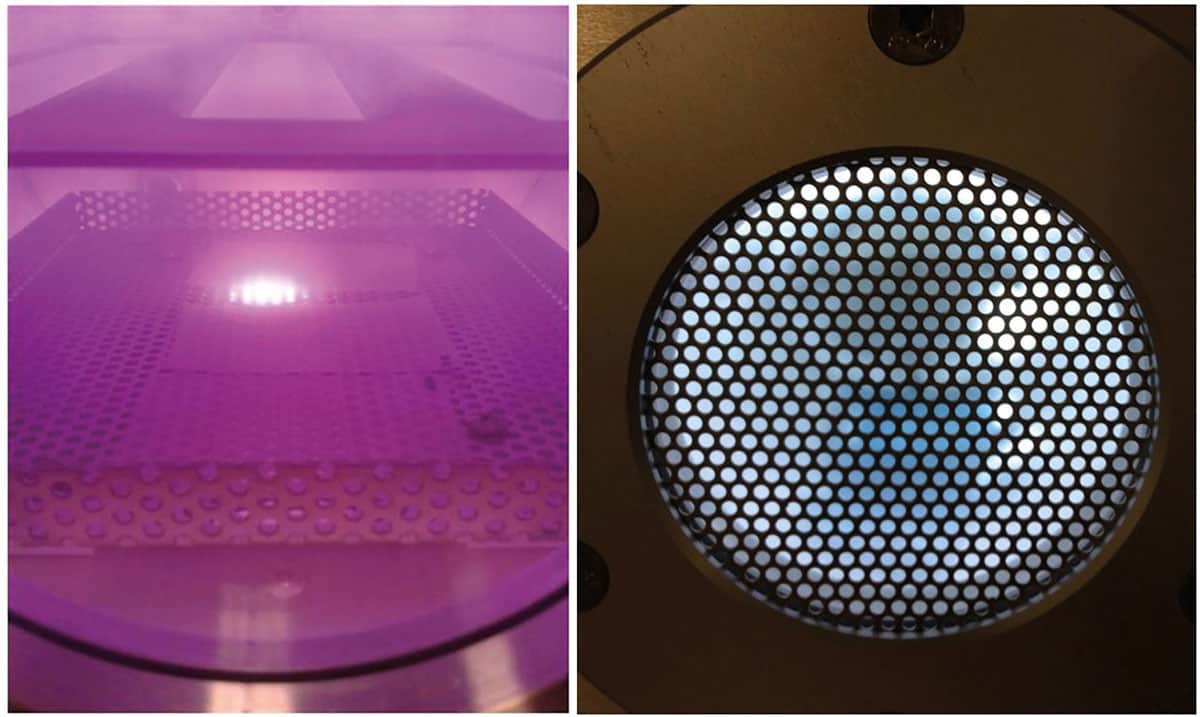
Plasma processing of polymeric medical meshes and bioceramics

Plasmas – ionized gases – generated in vacuum have long played an important role in the surface processing of wafers in the electronics industry. Device makers rely on plasma methods to clean, etch and coat the various layers of a material that will form the computer chips driving our smartphones, laptops and other electronic goods. The popularity of plasma processing in the semiconductor industry has led to a boom in tools and equipment, but it is not just the electronics industry that benefits.

“Over the past 20 years, the success of plasma techniques in the semiconductor sector has given a tremendous boost to other fields, especially in the area of low-pressure systems,” says Uroš Cvelbar of the surface-engineering team at the Jožef Stefan Institute in Ljubljana, Slovenia. Researchers are now applying these methods across a wide range of emerging applications, with one of the fastest growing areas being the use of plasma processing in medical applications and in the development of biomaterials.

Versatile technology

“It has become a very broad field as there are just so many things that you can do with plasma and biomaterials,” says Cvelbar. “Here at the institute, we can deposit films, we can modify existing surfaces and add functionality – it’s a versatile technology.”

Cvelbar first became interested in the area through his background in plasma physics and materials science, and enjoys the interdisciplinary environment needed to take ideas forward. “Today, my group includes chemists, microbiologists, biotechnologists, as well as physicists,” he explains. “The team also collaborates with medical researchers and doctors through different institutes and clinical centres, as they are the end-users of the materials we’re developing.”

One of the most popular methods for processing biomaterials and polymer surfaces is to use low-temperature plasmas generated either by a radio frequency, microwave or DC source or by applying very fast pulses of electricity. “High voltages are normally used to create the cold plasma in the presence of a carrier gas at atmospheric pressures, whereas a vacuum has been applied mostly to clean and deposit materials,” says Cvelbar. “For cold plasma processing in a vacuum environment, the use of sources operated at microwave or radio frequencies is typical.”

Plasma processing offers a very clean environment and even the means for sterile processing, which makes it well suited to many medical uses. Another benefit is that the feedstock is typically made up of only a few substances, which helps to minimize – and even avoid altogether – residues that could otherwise cause problems later on in the application. What is more, ionized gas and plasma radicals – loose ions, neutral atoms and excited atoms or molecules – can kill, inactivate or completely destroy microbiological organisms, such as bacteria, viruses and fungi, after prolonged exposures.

You can perform in vivo treatment of wounds with plasmas generated at atmospheric pressure

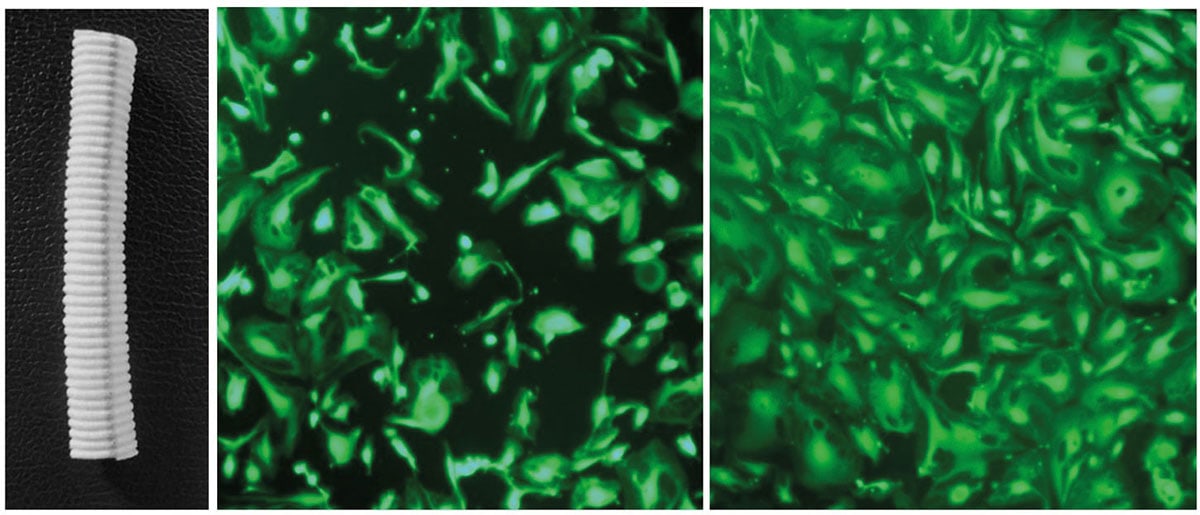
For Cvelbar and other researchers, plasma-processing technology gives them lots of different avenues to explore. “With plasma, you are working with ions or other reactive species that modify or functionalize a surface in such a way to obtain better attachment of molecules for cell growth, or to enable biosensing of different chemical species,” he says. “You can also perform in vivo treatment of wounds with plasmas generated at atmospheric pressure.”

Medical efforts

Two strategies are currently being pursued. “One approach is to use the plasma to decontaminate the wound and kill unwanted bacteria on the surface [but] at the same time adding radicals that boost cell growth to accelerate the healing process,” Cvelbar explains. “The second strategy involves depositing activated collagen to coat the wound, which again could speed up the patient’s recovery compared with simply exposing the wound to the open air.”

In both cases, treating a wound would require a device that can be placed over the patient, which means that smaller, more portable atmospheric systems are set to play an increasingly important role as the technology matures.

So where are the sweet spots for vacuum? “Low-pressure systems are used mostly to treat and prepare materials that can be processed away from the body, such as artificial hips,” Cvelbar says. “Examples include coating implants with a bio-compatible material to encourage cells to grow around them by providing a scaffold, which helps to keep the devices in place once inside the body.”

Being bigger in size, low-pressure processing set-ups can be well suited for larger operations but there is a downside too: the construction of bigger chambers, the requirement for vacuum pumps, and the need for a range of measurement systems make such schemes more expensive. “Price is a factor, but if you want to do atom-by-atom manipulation where you need extremely high levels of process control, then low-pressure systems offer considerable value,” says Cvelbar.

There are other issues to think about too before deciding on which system is needed for a particular application. “If you are working on tissues or soft biological matter subject to potential evaporation, these cannot subsist in a low-pressure environment, and this needs to be managed,” Cvelbar adds.

Atmospheric challenges

Atmospheric systems present challenges as well – humidity, for example, can influence the treatment and add to the number of parameters that need to be controlled. Under ambient conditions, plasma species react with the surrounding air as well as with the target sample, which can make the desired outcome more complicated to achieve. “The advantage of a vacuum system is that it provides a very clean and well-known environment, which helps in controlling your process and delivering consistent results,” says Cvelbar. “With atmospheric systems you can have more unknowns and may have to rely more on post-processing analysis.”

As for Cvelbar’s own work, his team’s projects fall into several different categories. One is the plasma deposition of antibacterial coatings where the group – together with Anton Nikiforov and Christophe Leys at Gent University in Belgium – is using the technique to add polymers to the surface of target materials. The researchers then go down two routes. One is to apply classical wet-chemical processing to add nanomaterial, followed by a further coating to sandwich the tiny structures between the substrate and this top layer. The other is to dope the plasma with nanoparticles so that the additives become secured within the matrix upon impact with the substrate.

The team is also carrying out plasma processing of surfaces for improved drug loading, which allows more of the active substance to be adsorbed onto the sample – in this case, a textile material. “We are using this method to develop medical dressings and patches with more controlled and longer lasting drug-release characteristics,” says Cvelbar. “The drug is much more tightly bonded to the surface in the case of plasma-processed material.”

A knitted polyethylene terephthalate (PET) vascular graft

The effect can be dramatic. As Cvelbar explains, when you take conventional oral antibiotics, the drug reaches peak concentration in the body relatively quickly, so that after barely eight hours you often need to take a new dose. A plasma-engineered patch or bone implant, however, not only requires patients to take fewer drugs orally, which can otherwise overload the body, but also releases the drugs much more slowly and directly at an infected area, thereby reducing the burden for the patient.

Other projects include the use of plasma-grown nanomaterials as a building block for sensors, which warn against the presence of carcinogenic or toxic molecules in the surrounding environment. Thanks to the plasma treatment, the researchers can engineer nanostructures that enable sensing devices with much faster response rates than existing solutions. Typically, the sensor consists of an array of active sites, each of which may be tailored to respond to a different molecular species. Comparing the signal response of these structures against a reference provides the team with the inner workings of a device.

“Medicine is major driver for the application of biomaterials and for research into this scientific field,” says Cvelbar, who advises anyone thinking of moving into this field to attend relevant meetings, which this year include the International Conference on Plasma Medicine (ICPM) being held in Bratislava, Slovakia, in September. Another relevant conference this year is the American Vacuum Society meeting in Tennesse, US, in November, while further ahead is the World Biomaterials Congress scheduled to take place in Glasgow, UK, in 2020.

From bench to bedside

For researchers targeting medical applications, one advantage of working with biomaterials is that this can often be the most straightforward way of introducing plasma medicine into clinical practice. Examples include modified materials that are implanted within the body or are used as surface patches. Gaining approval for the plasma processing of wounds and related treatments or applying plasma methods to kill cancer is – in contrast – typically a much longer journey.

“When you are dealing with living bodies, approval of a new therapy needs time to be evaluated,” Cvelbar warns. “However, for biomaterials, you will often have some standard cases and references that can be included to help with the evaluation process.”

Special issue

To highlight the latest developments in plasma-inspired biomaterials, Uroš Cvelbar has teamed up with Cristina Canal from the Technical University of Catalonia, Barcelona, Spain, and Masaru Hori of the University of Nagoya, Japan, to guest-edit a special issue of Journal of Physics D: Applied Physics from IOP Publishing, which also publishes Physics World. The article collection, which is now open for submission, covers all aspects of research connecting plasma and biomaterials – ranging from plasma preparation of biomaterials for different applications (including both soft and hard tissue, such as teeth and bone), as well as drug-delivery applications and antibacterial coatings. The special issue also focuses on biological interactions of the novel plasma-prepared surfaces with bacteria, cells and tissues. Novel developments for diagnostics and sensing will be showcased too.

More information on the special issue of Journal of Physics D on plasma-inspired biomaterials is available at this link, guest-edited by Uroš Cvelbar (e-mail uros.cvelbar@ijs.si)

Brittle quasicrystals become ductile at the nanoscale

When shrunk to the nanoscale, quasicrystals become plastic. That is the finding of an international team of researchers, which says that its results could potentially widen the material’s applications. Quasicrystals – materials in which the atoms show long-range order but have no finite, periodically repeated unit cell – have fascinated materials scientists ever since their Nobel-prize-winning discovery in 1984. Their practical use, however, has been limited by their brittleness.

Conventional crystals plastically deform through dislocations in their lattice that can allow individual unit cells to swap places relatively easily. This makes some crystals, such as pure metals like copper and gold, highly ductile. In quasicrystals, however, there are no unit cells, so it takes more energy to move dislocations. “Normally, the dislocations in quasicrystals are quite mobile at high temperatures,” says materials-scientist Yu Zou of Massachusetts Institute of Technology in the US. “However, below 500 °C, the dislocations are not that mobile, so this can make the quasicrystal very brittle.”

Doing the “dislocation climb”

The materials often break before they deform, making them hard to form into specific shapes and severely limiting their usefulness. At high temperatures, quasicrystals deform by a process called dislocation climb, in which dislocations move perpendicularly to the actual atomic movement or slip; it remained uncertain, however, whether plastic deformation of quasicrystals was even possible at room temperature without destroying the crystal lattice, and if so what the dislocation mechanism would be.

In 1921 Alan Griffith showed that the fracture strength of materials should increase as samples become smaller, as they can more effectively dissipate strain energy. This phenomenon has since been observed in other materials like ceramics that are brittle at macroscopic scales. Zou, previously at ETH Zurich in Switzerland, and colleagues used this property to increase the stress on a common quasicrystal called i-Al–Pd–Mn until it plastically deformed. A computer simulation suggested that, above sizes of around 500 nm, plastic deformation would preferentially occur by cracking, and the material would therefore quickly fail. At smaller sizes, however, dislocations in the lattice would be able to move without the material cracking.

Catastrophic failure

To test this, the researchers performed two experiments. First, they compressed single-crystalline pillars of i-Al–Pd–Mn ranging from 1.8 μm to 140 nm in diameter until they failed, and observed them using an electron microscope. As predicted, the larger pillars were brittle, with the 1.8 μm pillar failing catastrophically after being compressed by just 3% of its height. However, below 500 nm, the pillars became much more ductile, being compressible by more than 50% without any cracking.

They then tried bending the pillars – the results were qualitatively similar, although the pillars had to be even smaller before they became bendable – a 300 nm pillar snapped rather than bending, for example. This is not surprising, Zou explains, because bending a material stretches one side, and materials are often more brittle in tension than in compression. “If there’s a crack in a sample, compressive stress can make it very difficult for this crack to open and propagate,” he says, “However, if you have a tensile stress, it’s very easy.” Intriguingly, when the researchers examined the micropillars, they appeared to have deformed not by deformation climb but by deformation glide, in which the dislocations move in the same plane as the atomic slip.

“Real breakthrough”

The researchers have subsequently repeated the experiment with another quasicrystal with a different structure and found similar results, so they are confident the results apply to all quasicrystals. Zou suggests the results should lead to studies of quasicrystals at different temperatures. The data also suggest tiny quasicrystals could be useful: they deform elastically at lower stress levels than required to cause plastic deformation, and their high elastic modulus could make them useful for energy storage. In addition, quasicrystals have interesting photonic and electronic properties, so the small-scale plasticity could help engineers to exploit these.

“I think it’s a real breakthrough” says materials-scientist Jean-Marie Dubois of the University of Lorraine in France, who was not involved in the research. “There’s beautiful images of nanorods being deformed by increasing the load – to me, this is the most important part. They also prove that the material remains quasicrystalline during the deformation. The detail of the deformation mechanism is not entirely established, as this requires in situ diffraction studies and things like that rather than post mortem analysis, but at this stage I think it’s quite good.”

The research is published in Nature Communications.

X-ray pulsars plot the way for deep-space GPS

An interstellar navigation technique that taps into the highly periodic signals from X-ray pulsars is being developed by a team of scientists from the National Physical Laboratory (NPL) and the University of Leicester. Using a small X-ray telescope on board a craft, it should be possible to determine its position in deep space to an accuracy of 2 km, according to the researchers.

Referred to as XNAV, the system would use careful timing of pulsars – which are highly magnetized spinning neutron stars – to triangulate a spacecraft’s position relative to a standardized location, such as the centre-of-mass in the solar system, which lies within the Sun’s corona. As pulsars spin, they emit beams of electromagnetic radiation, including strong radio emission, from their magnetic poles. If these beams point towards Earth, they appear to “pulse” with each rapid rotation.

Some pulsars in binary systems also accrete gas from their companion star, which can gather over the pulsar’s poles and grow hot enough to emit X-rays. It is these X-ray pulsars that can be used for stellar navigation – radio antennas are big and bulky, whereas X-ray detectors are smaller, often armed with just a single-pixel sensor, and are easier to include within a spacecraft’s payload.

X-ray payload

By 2013, theoretical work describing XNAV techniques had developed to the point where the European Space Agency commissioned a team, led by Setnam Shemar at NPL, to conduct a feasibility study, with an eye to one day using it on their spacecraft.

Shemar’s team analysed two techniques. The simplest is called “delta correction”, and works by timing incoming X-ray pulses – from a single pulsar – using an on-board atomic clock and comparing them to their expected time-of-arrival at the standardized location. The offset between these two timings, taken together with an initial estimated spacecraft position from ground tracking, can be used to obtain a more precise spacecraft position. This method is designed to be used in conjunction with ground-based tracking by NASA’s Deep Space Network or the European Space Tracking Network to provide more positional accuracy. Simulations indicated an accuracy of 2 km when locked onto a pulsar for 10 hours, or 5 km with just one hour of observation.

The benefits of this method would be most apparent in missions to the outer solar system, says Shemar, where the distance means that ground tracking is less accurate than within the inner solar system, where the XNAV system could be calibrated. However, Werner Becker of the Max Planck Institute for Extraterrestrial Physics, who was not involved in the current work, points out that such a system would not be automated and would still rely on communication with Earth.

Shemar agrees, which is why his team also considered a second technique, known as “absolute navigation”. To determine a location in 3D space, one must have the x, y and z co-ordinates, plus a time co-ordinate. If a spacecraft has an atomic clock on board, then this could be achieved by monitoring a minimum of three pulsars – if there is no atomic clock, a fourth pulsar would be required. The team’s simulations indicate that at the distance of Neptune, a spacecraft could autonomously measure its position to within 30 km in 3D space using the four-pulsar system.

Limits to technology

The downside to absolute navigation is that either more X-ray detectors are required – one for each pulsar – or a mechanism to allow the X-ray detector to slew to each pulsar in turn would need to be implemented. It’s a trade-off, points out Shemar, between accuracy and the practical limits of technology and cost. Becker, for instance, advocates using up to 10 pulsars to provide the highest accuracy, but implementing this on a spacecraft may be more difficult.

While the engineering behind such a steering mechanism is complex, “it’s not miles out of the scope of existing technology,” says Adrian Martindale of the University of Leicester, who participated in the feasibility study. In terms of the cost, complexity and size of X-ray detector required for XNAV, the team cites the example of the Mercury Imaging and X-ray Spectrometer (MIXS) instrument that will launch to the innermost planet on the upcoming Bepi-Colombo mission in 2018.

“We’ve shown that we think it is feasible to achieve,” Shemar told physicsworld.com, adding the caveat that some of the technology needs to catch up with the theoretical work. “Reducing the mass of the detector as far as possible, reducing the observation time for each pulsar and having a suitable steering mechanism are all significant challenges to be overcome.”

In February 2017, NASA plans to launch the Neutron star Interior Composition Explorer (NICER), to the International Space Station. Although primarily for X-ray astronomy, NICER will also perform a demonstration of XNAV. As this idea of pulsar-based navigation continues to grow, “space agencies may begin to take a more proactive role and start developing strategies for how an XNAV system could be implemented on a space mission,” says Shemar.

Becker is a little more sceptical about how soon XNAV will be ushered in for use on spacecraft. “The technology will become available when there is a need for it,” he says. “Autonomous pulsar navigation becomes attractive for deep-space missions but there are none planned for many years.”

The research is published in the journal Experimental Astronomy.

Copyright © 2026 by IOP Publishing Ltd and individual contributors