A shining light for African science

Light sources such as synchrotrons or free-electron lasers have been among the most transformative scientific instruments since the invention of traditional lasers and computers. They embrace almost all spectroscopy, scattering and imaging techniques, using radiation from the infrared to the X-ray and even soft gamma rays. They are also orders of magnitude brighter than traditional lasers. Though costly to build, light sources have resulted in thousands of published papers, provided graduate student training and driven technological innovation.

The extremely high photon flux that light sources provide has allowed big advances to be made in many applications, including drug development, data storage and – based upon the deciphering of protein, bacterial and viral structures – disease control. Light sources show tremendous promise in medical applications, allowing innovative imaging techniques of the heart, lungs, brain and breast, leading to exciting new diagnostic techniques and therapies. More recently, these facilities have been used in palaeontology and heritage studies to do, for example, 3D tomography of fossils, rocks and other artefacts.

There are currently 47 synchrotron-radiation research facilities based on electron-storage rings in 23 countries around the world that are either in operation, being built or in the planning phase. Almost all are in over-demand, which has led to the construction of additional facilities to serve an increasing worldwide user community. Most sources are national facilities, but two synchrotrons are truly international.

The 6 GeV, 850 m-circumference European Synchrotron Radiation Facility (ESRF) in Grenoble, which has been running since 1992, is a collaboration between 18 European nations, plus South Africa and Israel. Then there is the 2.5 GeV, 130 m-circumference Synchrotron-light for Experimental Science and Applications in the Middle East (SESAME) light source, which is being built near Amman, Jordan.

SESAME is a collaboration of nine Middle East countries – Bahrain, Cyprus, Egypt, Iran, Israel, Jordan, Pakistan, the Palestinian Authority and Turkey. Scheduled to start up in 2016, it is modelled closely on the CERN particle-physics lab and is being developed under the auspices of the United Nations Educational, Scientific and Cultural Organization (UNESCO), which became the umbrella organization for SESAME in May 2002.

Getting the ball rolling

There is, however, one habitable continent without any light source: Africa. Many scientists from African countries perform experiments at facilities in Europe and elsewhere, but their numbers are mostly limited by the cost of travelling to distant facilities. A light source in Africa would enable thousands of African scientists, engineers and students to gain access to a superb scientific and technological tool. Indeed, to be competitive socially, politically and economically, access to a nearby light source will be an absolute necessity.

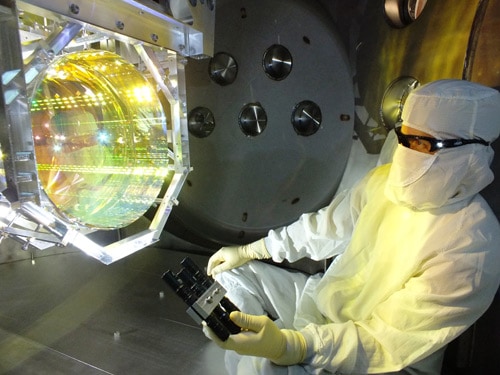
To start the process towards an African Light Source (AfLS), the First African Light Source Conference and Workshop was held at the ESRF in Grenoble in November 2015 (see above). Organized by Simon Connell of the University of Johannesburg and colleagues, it focused on research performed at light sources around the world that is relevant to Africa. Delegates also discussed the vital issue of whether it is feasible to build the AfLS in Africa modelled on the SESAME project.

The conference elected a steering committee and adopted the “Grenoble Resolutions”, which include stating that for African countries to “take control of their destinies” and become major players in the international community, “a light source must begin construction somewhere on the African continent in the near future, which will promote peace and collaborations among African nations and the wider global community”. The resolution also asserts that the AfLS is expected to contribute significantly to enhancing university education; training a new generation of researchers; aiding African industry; and advancing research that addresses issues, challenges and concerns relevant to Africa.

Participants also adopted a roadmap consisting of short-, medium- and long-term goals. These start with building awareness of the benefits of light sources, enhancing education, establishing international collaborations and developing African infrastructures that support research at light sources. The goals end with the construction of an AfLS, perhaps under the auspices of a UNESCO-type organization.

We envision that the conference in Grenoble will be the first in a series with most future events to be held in Africa. The global physics community should take advantage of these opportunities to provide its moral and financial support to realize the dream of Africa’s first ever light source.

New helmet material could protect against glancing blows

Researchers at Cardiff University in the UK have joined forces with the helmet-maker Charles Owen Inc. to develop a new material that could protect against a range of head injuries. Dubbed “C3“, the multilayered material can either be 3D printed to create bespoke helmets for professional athletes or injection moulded to create lower-cost consumer goods. The collaboration is being funded to the tune of $250,000 by the US-based Head Health Initiative to develop manufacturing and computer-simulation technology that could make commercialization of the material possible.

Helmets are ubiquitous – and often mandatory – in a wide range of activities from skiing to American football. They do a pretty good job of protecting the wearer from compression impacts in which the force of impact is directed towards the centre of the brain. Helmets are not very good, however, at absorbing the twisting forces that occur when the head suffers a glancing blow that causes it to rotate. Large twists of the head can cause the brain to rotate relative to the skull, damaging the blood vessels that supply the brain and so leading to serious injury.

“Strategies for the prevention of head injuries have remained relatively stagnant versus the evolution of other technologies,” explains Peter Theobald of Cardiff University, who leads the C3 development project along with Roy Burek of Charles Owen.

Explosive inspiration

The material was inspired by explosion-resistant materials created by Graham McShane and colleagues at the University of Cambridge in the UK. McShane’s team was developing materials for the military that are lightweight but also capable of absorbing huge amounts of energy from blasts. The idea the researchers hit upon employs origami-inspired steel structures that collapse by folding in a controlled manner to absorb blast energy.

Theobald and McShane realized that similar structures could be made from polymer-based materials. Furthermore, the folding parameters of the structures could be “tuned” to absorb different types of forces. Theobald explains that it should be possible to develop a layered structure in which one layer is good at absorbing compression impacts while the other is good at absorbing shear.

Described by McShane as a “highly designed foam”, the material comprises arrow-shaped elements that are packed together in layers (see image). A material with specific properties can be designed using mathematical modelling and its performance simulated using high-performance computing. 3D printing is then used to create a prototype that can be tested in the lab. While 3D printing could be used to create bespoke helmets for professional athletes, Theobald says that helmets could also be mass-produced using injection moulding.

The grant will allow the collaboration to spend one year improving the manufacturability of C3, as well as its response to compression and shear forces. The Head Health Initiative is funded by General Electric, the National Football League, the sportswear manufacturer Under Armour and the National Institute of Standards and Technology. It is making up to $20m available to scientists working towards the understanding and prevention of brain injuries.

Deployable protection

Theobald hopes that the new material will encourage manufacturers and standards bodies to focus on improving the ability of helmets to protect from shear forces. McShane says that other applications of origami-inspired materials include car bumpers and “deployable protection” devices that could quickly unfold upon impact, much like a vehicle’s airbag.

Physicists take entanglement beyond identical ions

Quantum entanglement has been created and measured between pairs of two different kinds of nuclei for the first time. Carried out by two independent research groups, the work is a key step towards the creation of ion-based quantum computers, in which different nuclei perform different functions. One of the groups is based at the University of Oxford in the UK and the other at the National Institute of Standards and Technology (NIST) in Boulder, Colorado.

Information in a quantum computer is stored and transmitted in quantum bits (qubits), which can be entities such as photons or ions. Qubits will quickly lose their quantum nature when in contact with the outside world, which is a challenge for those designing quantum computers. Individual qubits must interact with each other for a quantum calculation to proceed, and so cannot be completely isolated from the outside world.

Information transfer

One way round this issue is to use different types of qubits to perform different functions within a quantum computer. Qubits that are easy to isolate, for example, could store information, whereas qubits that interact in well-defined ways would process the data. For such hybrid schemes to work, however, quantum information must be transferred from one type of qubit to another, which requires the different types of qubit to be quantum-mechanically entangled.

Entanglement allows two or more particles to have a much closer relationship than is permitted by classical physics, no matter how far apart they may be. The states of entangled particles are inextricably linked, such that any change made to one particle instantly influences the state of the other.

Ions trapped in a tiny vacuum chamber are one way of creating such a hybrid quantum computer. This is because some ions will interact with each other (and their surroundings), while others can be held in relative isolation. Now, two independent teams have shown that pairs of different types of ion can be entangled.

Chris Ballance and colleagues at Oxford used two different isotopes of the same element as their ions: calcium-40 and calcium-43. Meanwhile at NIST, Ting Rei Tan, Dave Wineland and the team used beryllium-9 and magnesium-25 as their ions. Laser light (along with microwaves at NIST) was used to create a “ferromagnetic” interaction between the spins of a pair of two different ions separated by a few microns. This interaction means that if the spin of one ion points “up”, the spin of the other ion will tend to point in the same direction.

Close relationship

The teams then needed to verify that the two ions are entangled in this ferromagnetic state.

Both teams verified entanglement using a Bell inequality, which involves measuring the correlations between the spins of the two ions. The first ion is put into a quantum superposition of being in both the spin-up and spin-down states. Then the ferromagnetic interaction is switched on. The result is a pair of ions that are in a quantum superposition of being both spin-up and both spin-down.

A measurement is made on the first ion – forcing it into either a spin-up or spin-down state. The outcome of this measurement is random; but if the ions are entangled, the result will have a measureable influence on a subsequent measurement of the spin state of the second ion.

Some correlation between the spin states is expected from classical physics, and Bell’s inequality puts an upper limit on its value. If the correlations are any stronger, then the ions must be entangled quantum-mechanically. In this case, the upper limit for classical correlations is 2, and the NIST team measured a value of 2.70, which is a whopping 40 standard deviations from the classical value. The Oxford team achieved a more modest 2.228, which is still an impressive 15 standard deviations away from the classical outcome.

Similar but different

Ballance told physicsworld.com that the calcium-43 ion is “the best qubit around”, with single-ion quantum memories able to store quantum information for about one minute. Calcium-40, in contrast, is better suited for interacting with photons of light, which could be used to transmit quantum information within quantum computers and also from one quantum computer to another. Ballance adds that a benefit of using ions that are isotopes of the same element is that the isotopes are similar enough to be handled the same way in the ion trap.

“Each ion species is unique,” adds Tan. “Certain ones are better suited for certain tasks such as memory storage, while others are more suited to provide interconnects for data transfer between remote systems.”

The research is described in two separate papers in Nature.

Has Advanced LIGO found gravitational waves?

By Hamish Johnston

For the past few days, rumours have been swirling that the Advanced Laser Interferometer Gravitational-wave Observatory (Advanced LIGO) has detected gravitiational waves. Advanced LIGO comprises two huge (kilometre-sized) interferometers in the US, which began taking data in September 2015. The source of the rumours seems to be the physicist and author Lawrence Krauss, who wrote on Twitter yesterday that “My earlier rumour about LIGO has been confirmed by independent sources. Stay tuned! Gravitational waves may have been discovered!! Exciting.”

And it would be very exciting, except for the fact that LIGO spokesperson Gabriela González of Louisiana State University has since told the Guardian newspaper that “The LIGO instruments are still taking data today, and it takes us time to analyse, interpret and review results, so we don’t have any results to share yet.”

(more…)

Autonomous Maxwell’s demon displays chilling power

A “Maxwell’s demon” that operates without external control has been created by physicists in Finland. The device separates electrons in terms of their energies and prevents the higher-energy electrons from reaching a transistor – thereby cooling the transistor. The process occurs without the direct exchange of heat between the demon and the transistor and uses information about the energies of the electrons. While the demon does not violate any laws of thermodynamics, it highlights the role that information plays in thermodynamics and could have practical uses in cooling electronic circuits.

Maxwell first described his demon in 1867. He imagined a “finite being” that could operate a small door in a wall dividing a chamber into two halves. Initially, both halves are filled with a gas at a uniform temperature, which means that the molecules in the gas have velocities distributed about some average value. By opening and closing the door at just the right moments, the demon sorts the molecules so that faster-moving ones fill the left-hand side of the chamber, say, and slower ones the right. In the process, he transfers heat from a colder gas (the slower molecules) to a hotter one. If the door is frictionless, he appears to contravene the second law of thermodynamics.

Information about the position and velocity of each molecule is key to the demon’s success and the thought experiment has since been used to explore the role that information plays in thermodynamics. In 2010 Shoichi Toyabe of Chuo University in Tokyo and colleagues found that a micron-scale polystyrene particle immersed in a gas could be nudged slowly up an electrical “spiral staircase” – so gaining potential energy – as a result of random collisions with the gas molecules. This involved the researchers placing the electrical equivalent of barriers at just the right moments to prevent the particle from falling back down the stairs (see: “Information converted to energy“).

Outside action

This was the first time that scientists had quantified the extent to which information could be converted into energy; the particle’s ascent requiring no direct energy input but relying instead on information about its fluctuating position. That information, however, provided by a video camera and processed using image-analysis software, was analysed and acted upon from outside of the microscopic system. In other words, Maxwell’s demon was not acting autonomously.

In the latest work, Jonne Koski, Jukka Pekola, and colleagues at Aalto University in Finland have instead made a demon that acts without external control. The device consists of a single-electron transistor formed by connecting a micron-long copper island to two copper wires via tunnel junctions, which is linked to a tiny copper box. The box acts as the demon and initially contains a single electron generating a potential gradient across which an electron entering the transistor must climb (see figure). As soon as an electron reaches the island, the charge in the circuit changes, which causes the demon electron to tunnel out of its box. With the particles’ mutual repulsion lowered, the first electron becomes trapped on the island and then subsequently tunnels out of it.

Because only electrons with a certain minimum energy can reach the island, the most energetic electrons within a current flowing through the transistor will be siphoned off. The demon therefore cools the transistor, and thereby reduces its entropy, even though there is no direct heat exchange between it and the transistor. What has been exchanged instead, says Pekola, is information – via the electrons’ Coulomb interaction.

Demon watch

The researchers monitored their device by placing thermometers at the transistor’s input and output and also on a lead connected to the demon. As expected, they found that the transistor cooled down while the demon heated up. They also established that about four million electrons moved through the system every second. “In previous experiments, the demon consisted of macroscopic measurement devices, which meant there was no way to know about the energy flows within it,” says Pekola. “But here we can look at the thermodynamics of the demon itself.”

The device is described in Physical Review Letters and in an accompanying commentary, Sebastian Deffner of Los Alamos National Laboratory in the US says that the Finnish team has made the autonomous version of Maxwell’s demon “a physical reality”. The new device, he says, “fully agrees with our simple intuition – namely that information can be used to extract more work than seemingly permitted by the original formulations of the second law [of thermodynamics]”. He adds: “This doesn’t mean that the second law is breakable, but rather that physicists need to find a way to carefully formulate it to describe specific situations.”

Critical components

According to Pekola, the work does not have immediate practical applications, although he says that the information exchange between transistor and demon might in future allow heat to be channelled away from critical components within electronic circuits.

Pekola and colleagues are now turning their attention to the quantum regime, establishing how concepts such as heat and work change when electrons no longer “jump up and down hill”, as he puts it, but instead exist in quantum superpositions. To do this, they plan to use a chip containing superconducting rather than normal metal elements.

The rise of the quantum machines

It is hard to overstate the impact of thermodynamics. This theory helps us understand immensely complicated systems – such as a gas containing billions upon billions of particles – using only a few basic quantities, notably temperature, pressure and volume. The study of thermodynamics led to the discovery that energy is conserved (the first law of thermodynamics) and that an absolute zero of temperature exists (the third law). It also introduced the concept of entropy, a measure of disorder, and showed that the entropy of the universe increases – meaning that things progressively tend to get messier and less ordered (the second law). Entropy defines the direction in which time flows: a glass of water will never “un-spill” or a firework “un-explode”.

On a more applied level, thermodynamics explains how to convert a form of waste energy (heat) into useful energy (work) – a principle that helped bring about the industrial revolution. Our modern world of internal combustion engines, refrigerators and electricity generation would not exist if we had not understood and made use of this incredibly fundamental, and yet immensely practical, theory.

But thermodynamics does not only apply to large objects. As you read this, air molecules are constantly hitting you at an average speed of about 1600 kilometres per hour. Sometimes one will hit you travelling at 2000 kilometres per hour, sometimes at a quarter of that. You don’t notice these rare deviations from the average because molecules are small compared with human beings. However, for tiny objects, such as the molecular “motors” inside living cells, these thermal fluctuations are extremely important. Any microscopic devices we build must also be able to handle these fluctuations without being destroyed or thrown around.

But what happens if we shrink machines further and enter the quantum world? In this realm there are not only thermal but also quantum fluctuations to deal with: even at absolute zero, where classical mechanics tells us that things should stand still, the uncertainty principle of quantum mechanics means that nothing is ever at rest. Worse still, quantum states are even more delicate than a molecular motor. A single gas molecule colliding with a quantum particle could destroy its quantum state, for example by causing an atom in a superposition of its ground and excited states to collapse into one state or the other.

To solve such problems, we need to understand how thermodynamics works on a quantum scale. Do the ordinary laws of thermodynamics still apply under these conditions? Do phenomena such as quantum entanglement affect the power or efficiency of quantum machines? Questions like these are the province of a new and rapidly evolving field called quantum thermodynamics, and we need better answers to them before “quantum engineers” can begin to build quantum machines. Such machines could have some very unusual properties: they might use entanglement as a fuel, for example, or be made from a single atom. And in the future, when even classical computers will operate at the level of individual atoms, quantum machines would be the natural way to power these super-small computers, control them and stop them overheating.

Creating quantum engines

In the quantum world as well as the classical one, engines are machines that convert one form of energy, such as electrical energy, into another, such as mechanical motion. It is hard to imagine our modern, classical world without such devices, so a logical first step towards building quantum machines is to build quantum engines.

Over the past few years, researchers have built several truly tiny engines. One such device, developed by Valentin Blickle and Clemens Bechinger at the Max Planck Institute for Intelligent Systems in Germany, involved micron-sized plastic spheres that were suspended in water and held in place by the force from a focused beam of light. By selectively heating the water surrounding the spheres with a laser, the researchers were able to drive a sphere’s motion like the piston of an engine.

Experiments like this have highlighted how important thermal fluctuations are in microscopic settings. They have also produced some seemingly counterintuitive results. For example, tiny objects immersed in a cold surrounding can occasionally take heat away from their environment. At first glance, such behaviour might seem to violate the second law of thermodynamics, since making something colder makes it more ordered; in terms of entropy, it is like a tiny glass of water un-spilling itself (figure 1). In fact, there is a loophole: in the microscopic world the laws of thermodynamics only hold on average. If we had lots of tiny glasses of water, most of the water would tend to stay spilt, with only a few glasses un-spilling themselves. Thus, the second law of thermodynamics holds when applied to all the glasses as a group.

1 Un-spilling a tiny glass of water

Figure 1 series of cartoons showing water spilling from a glass but a single molecule flowing back into itWhen a glass of water is spilled (left) it is essentially impossible that all of the water molecules will spontaneously run back into the glass. However, in a microscopic glass of water that contains only one water molecule (right), random thermal fluctuations mean that it is possible that a single molecule will jump back into the glass.

Tiny engines help us to understand these effects, but as small as they are, they are not yet operating in the quantum world. So is it possible to build a truly quantum engine? One key point is that to operate, an engine needs to be connected to a hot environment (such as exploding fuel) and a cold one (such as the outside world). Then, as heat flows from the hot environment to the cold, work can be extracted. This sounds simple enough, but in the quantum world, being in contact with the environment is tricky, since quantum states are extremely sensitive to disturbances from their surroundings. Since a collision with a single air molecule can be enough to destroy a quantum state, connecting a quantum engine to its environment without destroying its “quantumness” seems a daunting task.

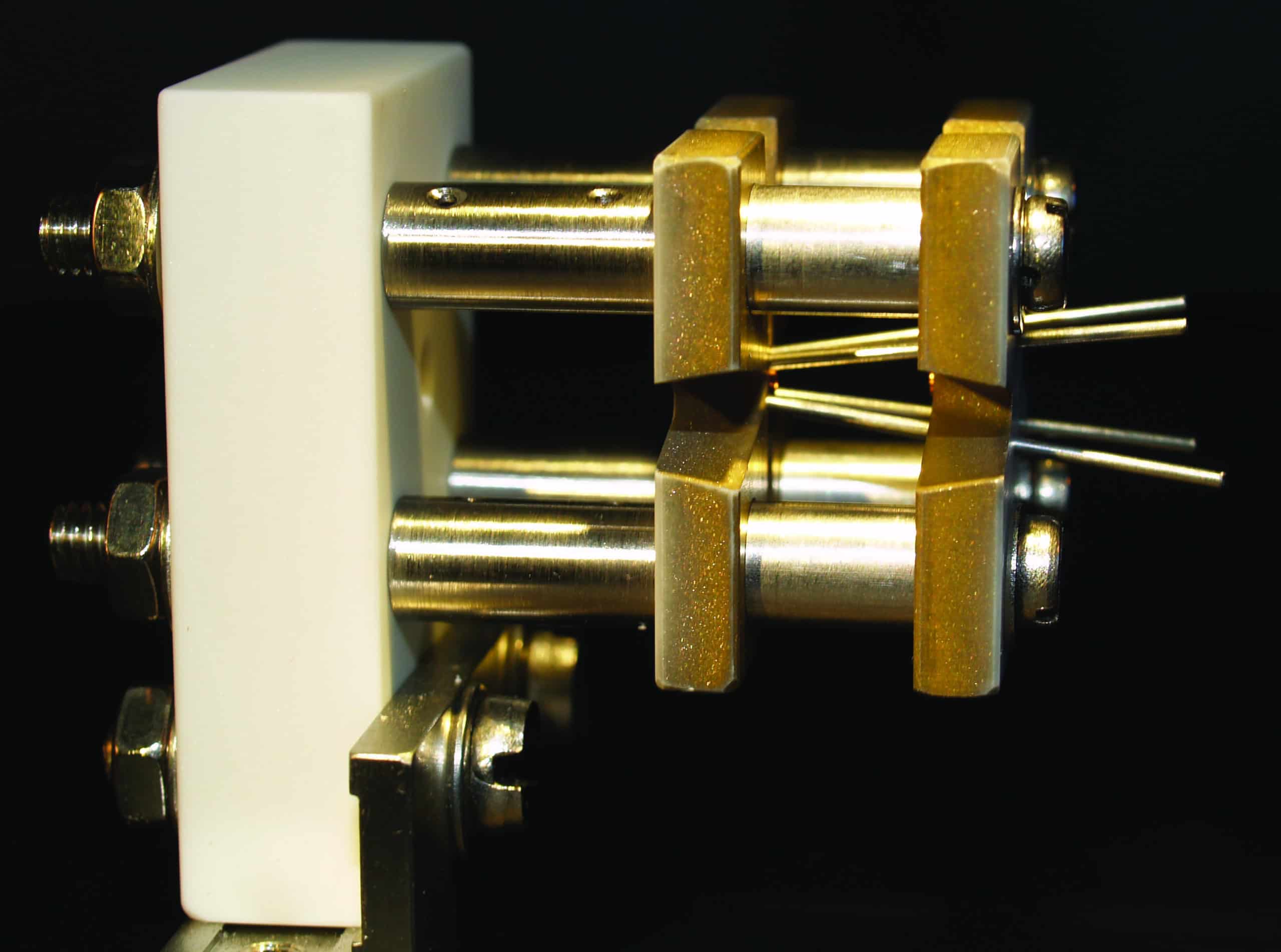
Recent research by several groups in optomechanics (the study of how light interacts with moving matter) has suggested various exciting ways of getting around this problem. One promising approach is to shine a beam of light on a single ion that has been isolated from its environment by being placed in a vacuum and suspended using an electric field. Some frequencies of light will cause the ion to move faster, thereby heating it, while others will slow it down, cooling it. These different frequencies of light can therefore be thought of as environments at different temperatures. The result would be an ion that moves back and forth like a piston in a car engine, similar to the microscopic spheres in Blickle and Bechinger’s work (figure 2).

2 A quantum ion engine
Model for a type of quantum engine

(Courtesy: James Millen and André Xuereb)

One proposal for building a quantum engine (put forward by researchers at the universities of Mainz and Erlangen, Germany) involves trapping single ions and then driving their motion like a piston using different frequencies of light. The ion would be trapped by electric fields provided by the angled rods shown in this image, and the light would act like a quantum environment, with the frequency determining its temperature.

Other ideas involve trapping light in a cavity between two parallel mirrors. When light reflects off a mirror, it exerts radiation pressure that pushes the mirror away from the light source, and this pressure could in principle be used to move one of the parallel mirrors like a piston. Alternatively, the light in the cavity could drive the motion of a quantum object such as an atom.

Efficiency enhanced

A key quantity we often hear about in practical thermodynamics is the efficiency of an engine – that is, the amount of useful energy the engine puts out for a given amount of energy put in. The point at which an engine is most efficient, known as the Carnot limit, is frustratingly also the point at which it produces the least power. A maximally efficient car, in other words, wouldn’t actually be able to move. However, quantum physics allows us to play tricks, and recent research by groups at the universities of Erlangen and Mainz has shown that a quantum engine should be able to beat the standard Carnot limit and yet still produce power. One way in which this is achieved is via “quantum squeezing” – a technique in which we come to know something about an object (such as its location) much more precisely, at the expense of knowledge about something else (such as how fast it is moving). Squeezing certain parameters of the environment will make it appear, in effect, hotter or colder than naively expected, and since the efficiency of an engine depends on the ratio of the environmental temperatures, an engine in contact with a squeezed environment may outperform the Carnot limit (figure 3).

3 Feeling the squeeze
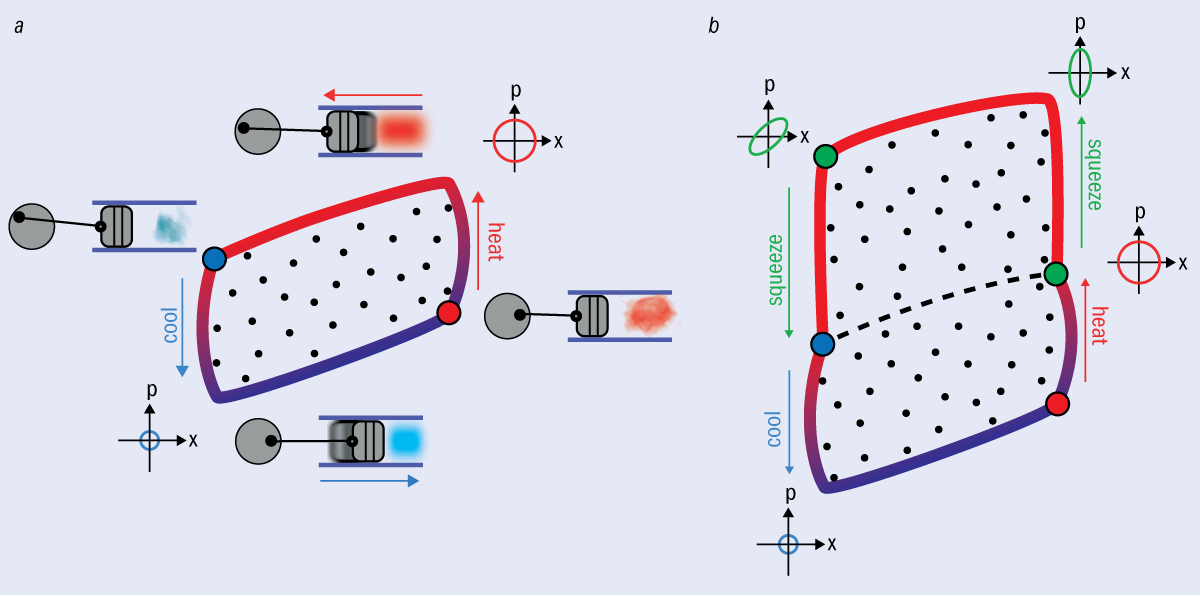
Figure 3Quantum engines can be more efficient than classical engines. (a) A diagram showing the evolution of an Otto engine, such as the spark-ignition piston engine commonly found in cars. Work, represented by the area inside the cycle, is extracted by heating gas (for example by burning fuel) to drive a piston. The position x and momentum p of the piston follow the rules of thermodynamics, and will most likely be found within the circles shown on the inset graphs. (b) A quantum Otto cycle. By “squeezing” the quantum piston – where the term “squeezing” means knowing where it is more precisely, at the expense of knowledge about its momentum – we can extract more work than the classical case, as shown by the larger area within the cycle. 

A quantum car might sound like good value for money, but there is a price to pay. We need to do more research to understand how to preserve the delicate nature of quantum states once they are deployed to power machines. Intriguingly, one possible application for quantum engines would be to produce or maintain an environment suitable for nearby quantum devices. For example, since heat easily destroys quantumness, a “quantum refrigerator” – a device that removes excess heat generated by a quantum machine – would be extremely useful. Amazingly, research by Noah Linden, Sandu Popescu and Paul Skrzypczyk suggests that a fully working refrigerator could be made out of a single atom. They pictured an atom with three internal energy states, immersed in an environment where two of the three states interact with a hot bath, and two with a cold bath. The researchers showed that this single atom may take heat away from the cold bath and dump it into the hot bath – just like a normal household refrigerator does.

Finding quantum analogues

Quantum physics is a theory rife with probabilities, offering a huge landscape of possibilities. The laws of thermodynamics, in contrast, place strong limits on what can actually happen in the quantum world

Quantum physics is a theory rife with probabilities, offering a huge landscape of possibilities. The laws of thermodynamics, in contrast, place strong limits on what can actually happen in the quantum world. If quantum physics were a game of football, quantum thermodynamics would dictate who is allowed to play (zeroth law), how you’re allowed to kick the ball (first law), whom you can pass to (second law) and how long the game will last (third law).

Marrying these two very different theories is challenging, but as it turns out, many of the powerful rules from classical thermodynamics have analogues in the quantum world, albeit in different forms. Jonathan Oppenheim, a physicist at University College London and an expert in fundamental aspects of thermodynamics at the microscopic level, explains that not only does the second law of thermodynamics hold for quantum systems, there is in fact an entire “family” of second laws. These additional second laws tell us that systems become more disordered, Oppenheim says, but each one also constrains the way in which they become more disordered.

For example, one way of phrasing the ordinary second law of thermodynamics is to say that the Helmholtz free energy, H, of a system (defined as the difference between the system’s internal energy U and the product of its temperature T and entropy S; H = U – TS) must decrease. Together with colleagues from Poland and Singapore, Oppenheim showed that in microscopic systems, a whole family of free energies exists, and all of these free energies must decrease. At the scale of ordinary objects, these other free energies become identical and, as Oppenheim concludes, “all the quantum second laws are equal to the one we know and love”.

Another important link between quantum physics and thermodynamics is that they are both theories of information. In quantum physics, the process of measurement, which basically means collecting information, plays a central role. For example, suppose you have an electron in a uniquely quantum superposition of being in two places at the same time. As soon as you try to measure, or gain information about, its position, the electron’s “quantumness” vanishes, and you will always find it in one place. The very act of gaining knowledge about a quantum state may change it irreversibly.

In thermodynamics, information plays a similarly important role. In 1929 Leo Szilard described how knowledge itself could be exploited to generate useful energy. In his “Szilard engine” thought experiment, he reasoned that if you measure where the hot gas is in an engine, you can then make the best decision about where to put a piston to drive the machine, thus extracting work from information. Some three decades later, another physicist, Rolf Landauer, observed that it also takes energy to forget things, and thus there is a cost to holding information. In fact, if all the computer servers in the world forgot all the information stored on them, one could, in theory, extract enough energy to run a light bulb for a few hours – not a lot of energy, but amazing considering that the only fuel is knowledge.

A quantum battery

Landauer’s principle and Szilard’s engine are both creatures of the classical world. So can we also extract useful energy from quantum information? Recent research by Lídia del Rio of the University of Bristol, UK, suggests that the answer is yes. In fact, by using quantum information (specifically quantum entanglement) as our “fuel”, it is possible to extract more energy, and do so more efficiently, than we can in a classical system.

Quantum information is stored more densely than classical information: if we flipped a quantum coin, the outcome could be heads, tails, or heads and tails

The origins of this conclusion lie in the fact that quantum information is stored more densely than classical information: if we flipped a quantum coin, the outcome could be heads, tails, or heads and tails. This is closely related to the phenomenon of quantum entanglement, and could have practical benefits, says John Goold, an expert in understanding complicated quantum systems who is based at the International Centre for Theoretical Physics in Trieste, Italy. Together with co-workers from the UK, Singapore and Australia, Goold considered the route through possible energy states that a cell in a battery has to take when it goes from being fully discharged to fully charged. When several such cells are combined into a battery, the route becomes much shorter when the intermediate state of the battery is entangled. In practical terms, this implies that a quantum battery would take significantly less time to charge than an ordinary one. According to Goold, further research into quantum batteries may help us develop novel materials that could function as the energy storage media of the future.

Building understanding

Quantum technologies are at the cutting edge of science and engineering, and the concept of a quantum engine is newer still. Researchers are only just beginning to understand the applications and limitations of these devices. The nature of the laws of thermodynamics and concepts as basic as heat and work at the microscopic scale are still under debate. Work on how to protect very delicate quantum states in any realistic quantum device is ongoing. But with unbreakable cryptography and teleportation already a reality, and quantum computers ever nearer, mastering quantum thermodynamics, and the quantum machines it describes, will be an invaluable step in helping to bring these new technologies to life.


Dark-matter satellite ushers in new era of Chinese space science

Scientists in China are preparing the country’s first dark-matter satellite to start taking data following its launch on 17 December 2015 from the Jiuquan Satellite Launch Center. The Dark Matter Particle Explorer (DAMPE), which is also dubbed “Wukong” (Monkey King) after the famous warrior from the 16th-century Chinese novel Journey to the West, is in a Sun-synchronous orbit at an altitude of about 500 km above the Earth. It is designed to operate for three years, with a possible extension of two further years.

Having taken four years to develop, DAMPE is designed to identify possible dark-matter signatures through an in-depth study of the particles making up cosmic rays. It is thought that dark-matter particles may annihilate or decay and then produce high-energy gamma rays or cosmic rays – in particular, electron–positron pairs. One of the probe’s main aims is to measure such particles with much higher energy resolution and energy range than achievable using existing space experiments.

To do this, DAMPE contains a plastic scintillator – built by a collaboration of scientists from China, Italy and Switzerland – to detect high-energy particles as well as a silicon–tungsten tracker to measure the direction of such particles. A bismuth-germanium-oxide calorimeter, meanwhile, will measure their energy. Finally, a neutron detector will aim to distinguish electrons from high-energy protons.

Yizhong Fan, deputy chief designer of DAMPE’s scientific application system, says that the team is currently carrying out calibrations on the craft that should be completed by the end of February, when the probe will begin full operations.

Part of a programme

DAMPE is the first satellite to be part of China’s Strategic Priority Program on Space Science. According to Ji Wu, director of the National Center for Space Science of the Chinese Academy of Sciences (CAS), three more satellites are scheduled for launch this year as part of this programme.

The Quantum Experiments at Space Scale, which is expected to launch in the first half of 2016, will aim to implement a high-speed quantum-key-distribution network between the satellite and Earth stations to test long-distance quantum communication. It will also investigate quantum-entanglement distribution, study quantum teleportation and test principles of quantum mechanics.

Also scheduled for launch in the first half of the year is Shijing-10 (SJ-10), which is a collaborative project involving 11 CAS institutes and six Chinese universities, as well as the European Space Agency and the Japanese space agency (JAXA). SJ-10 will carry out more than a dozen experiments to study microgravity fluid physics, microgravity combustion, materials science and space-radiation biology, among others.

The Hard X-ray Modulating Telescope (HXMT), meanwhile, will survey X-ray and gamma-ray sources in the region between 1 and 250 keV. HXMT’s chief scientist Tipei Li says that the space telescope has been tested and is ready for launch, which is expected sometime after September.

Soft hair on black holes, making concrete on Mars and exploring the cosmos in 2016

By Hamish Johnston


This week’s Red Folder looks to the cosmos, starting with a spiffy new video from the European Space Agency. The slick presentation is a preview of some of the extra-terrestrial exploits that the agency has planned for 2016. This includes the landing of the Schiaparelli probe on the surface of Mars. This stationery lander will survey its Martian environs to find a suitable location to drop the ExoMars rover in 2018. The mission’s namesake is the Italian astronomer Giovanni Schiaparelli, who mapped the surface of Mars and was the first to use the term canali to describe the straight lines that were thought to exist on the surface of the planet.

It’s possible that someday humans will colonize Mars and this will involve building dwellings and other structures on the Red Planet. In preparation, Lin Wan, Roman Wendner and Gianluca Cusatis at Northwestern University in the US have come up with a recipe for making concrete on Mars. The trio reckon that any successful colonization of the Red Planet will have to rely on local building materials because shipping stuff from Earth would be horrendously expensive.

(more…)

Recipe for new materials includes a good dash of statistical physics

A new computational method for predicting the properties of a wide range of materials has been created by researchers in the US. The algorithm is based on the principles of statistical physics, which the team says allows it to simulate a much wider range of materials than existing techniques. Others, however, point out that the new method is not ideal when the material constituents are too large to be described by statistical physics, or so small that a quantum-mechanical treatment is required.

Computational models allow scientists to predict the properties of new materials before they are actually made – saving time and money in the research and development process. However, these models are often specific to the development project at hand and the algorithms used to fine-tune designs can take a long time to run. As a result, materials scientists are keen to develop fast-running algorithms that can simulate a wide range of candidate materials.

“Gazillion interacting particles”

Now, scientists at the University of Chicago and Cornell University have created an algorithm that could be used to design any system that can be described by statistical physics. Chicago’s Heinrich Jaeger describes statistical physics as trying to “describe a gazillion interacting particles without describing every one”. Instead, statistical physics describes the likelihood of certain particle configurations at a given set of parameters, such as temperature.

The team’s algorithm answers a general question: given a statistical physical model for a collection of particles, how can a specific design goal be achieved in the lab? Using statistical information, the algorithm then searches for the correct parameters to achieve the desired design.

Denser memories

As a practical example, the team has shown how the algorithm could be used to design next-generation hard-disk drives with higher data density. “Let’s say, you need a terabyte per square inch,” says Cornell’s Marc Miskin. “What do you have to do to achieve that data density? To shrink things down, you’d need spacing on the order of 7 nm.” The team used the algorithm to design polymers to self-assemble nanometres apart on a substrate, a system based on a design problem on which they have collaborated with computer-storage-device company HGST in the past. These polymers serve as a stencil upon which electronics components can later be assembled. This is very different to traditional methods of building microcircuits such as optical or electron beam lithography, which “write” circuits onto a substrate and cannot achieve such fine spacing.

The new approach differs from other popular design algorithms in the field, such as the covariance matrix adaptation evolution strategy (CMA-ES) or the Monte Carlo method, because these ignore the physics of the system and optimize using numerical techniques. “That’s the strength of our algorithm,” Miskin says. “You can task it to solve [many problems], and it does it in a way using physics.” Furthermore, the team found that the new algorithm could solve certain design problems much faster than CMA-ES or Monte Carlo methods.

Because the algorithm is based generically on statistical physics, Miskin says it could be used to design many types of materials. For example, the algorithm could design proteins or other biological molecules that self-assemble into a pre-specified shape.

Granular problems

But the scope of statistical physics is still limited. Some materials, such as a granular material like sand, cannot be fine-tuned with the algorithm because they cannot be described using statistics. Statistics only applies when the particles experience random fluctuations, such as gas molecules kept at a specific temperature. “If particles get too large so that they don’t explore different configurations, the statistical description breaks down,” Jaeger says.

In addition, the algorithm overlooks quantum-mechanical interactions, which means that it cannot be used in some popular areas of materials-science research. For example, the algorithm can’t design solar cells, superconductors or other materials with desirable characteristics based on quantum mechanics, says Alex Zunger, a physicist at the University of Colorado, Boulder who also designs new materials. “The systems they deal with are systems where they have given up computing the interactions from a microscopic theory,” Zunger says.

The new algorithm represents a step in the ongoing transition away from humans making the best possible use of materials found in nature and towards using the laws of nature to create new materials that are best suited for our use. The goal, Miskin says, is a straightforward design process that would use the algorithm to “crank out exactly what you need in the lab” to create the material you want. “This can broadly turn the scientific community onto design,” he says.

The research is described in the Proceedings of National Academy of Sciences.

Quantum metaphors take the stage – again

When Tom Stoppard called his play Hapgood “a period piece”, he meant that its ostensible subject matter – Cold War espionage – became history soon after the play premiered in 1988. Yet after seeing the recent revival of Hapgood at London’s Hampstead Theatre, it occurred to me that one could make the same observation about the quantum physics that furnishes the play with Stoppard’s characteristically cerebral metaphors. It’s not exactly that the science is behind the times – the familiar tropes of the double-slit experiment, uncertainty and the role of measurement remain central to quantum-mechanical discourse. But what quantum theory seemed to be about in 1988 is not the same as it appears in today’s interpretations, in which information, entanglement and nonlocality take precedence.

That doesn’t make Hapgood stale, though. Stoppard’s wit, intelligence and humanity transcend any datedness in the science; moreover, physicist theatre-goers can have fun spotting resonances with current preoccupations. When, for example, a briefcase containing intelligence secrets seems to have been tampered with despite having been made immune to detection-free prying, one thinks immediately of quantum cryptography. Similarly, the theme of twins that runs through the play – allowing a character to do one thing while apparently doing another – could, with only slightly more effort, be read today as an allusion to entanglement. While there’s no reason to think that these references were intentional, it’s perhaps not surprising that so inventive and astute a playwright would leave us room to read such things into the script.

The play’s eponymous heroine (played with verve by Lisa Dillon) is an agent for the British intelligence services who has to track down a mole in her department. The key suspects are a rather thuggish British spy, Ridley; and Kerner, a defected Russian physicist who is also, thanks to an old affair, the father of Hapgood’s young son, whom he has never met. The Americans, represented by a weary (presumably CIA) agent called Wates, are impatient for the Brits to get their house in order, while Hapgood’s boss, the supercilious and slippery Blair (Tim McMullan), is initially suspicious of Hapgood, but turns out to be playing a game of his own.

The plot’s twists and turns are intentionally bewildering, and Stoppard has said that one of his challenges in writing Hapgood was to make sure the audience can “differentiate the information it must remember from the information it doesn’t have to remember”. Science writing poses the same problem, and there’s arguably an up-to-the-minute quantum metaphor here, too. One information-based interpretation of quantum theory suggests that the limited information content of particles prevents fully entangled pairs from being “imprinted” with any state information beyond their mutual correlations.

The superficial difficulty of the plot is perhaps one of the reasons why Hapgood has not generally been regarded as a classic. It received lukewarm reviews when it first appeared, and doesn’t enjoy the kind of revivals afforded to Stoppard’s more celebrated “science play” Arcadia (1993), which drew on chaos theory. This elegantly staged production, directed by Howard Davies and scheduled to run until 23 January, fully justifies the decision to give it another chance.

Copyright © 2026 by IOP Publishing Ltd and individual contributors