What is Shor’s factoring algorithm?

As well as being incredibly fascinating, quantum mechanics is also set to revolutionize the fields of information theory and computation. There exist certain problems that could be solved using a quantum computer in many fewer steps than is possible with a classical computer. One of the key explanations of why this is the case is Shor’s factoring algorithm, which was formulated by the US mathematician Peter Shor in 1994. In this short video, Shor introduces his eponymous mathematical concept.

If you enjoyed this video explainer, then check out more from our 100 Second Science series.

India launches ASTROSAT mission

India’s first dedicated astronomy satellite has been launched by the Indian Space Research Organisation (ISRO). The mission took off yesterday on a Polar Satellite Launch Vehicle from ISRO’s Satish Dhawan Space Centre, located in Sriharikota, Andhra Pradesh. Dubbed ASTROSAT, the Rs3.7bn ($70m) mission will study black holes, neutron stars and active galactic nuclei over a wide wavelength range from visible to hard X-rays.

Weighing around 1600 kg, ASTROSAT will operate for five years in a near-equatorial orbit 650 km above the Earth’s surface. It contains a 750 kg payload featuring a suite of five instruments, including imagers and detectors. ASTROSAT will use these instruments for a range of studies, including surveying the skies in the hard X-ray and ultraviolet bands, as well as monitoring the sky for new transients and studying X-ray binaries, active galactic nuclei and clusters of galaxies.

Unmatched capability

Sandip Trivedi is director of the Tata Institute of Fundamental Research (TIFR), which led the construction of three of the probe’s instruments – LAXPC, SXT and CZT. “These will give us a capability in X-ray astronomy that is unmatched, in many ways, globally,” says Trivedi. “We look forward to exciting science results coming out in the near future.”

ASTROSAT will help to replace some of the missing capacity in space-based X-ray observations, particularly following the demise of NASA’s Rossi X-ray Timing Explorer satellite, which was turned off in 2012 after 16 years of operation. “There are currently very few space-based missions able to provide data on transient and variable objects on a regular basis,” David Burrows, an astronomer from Penn State University in the US, told physicsworld.com. “I think that ASTROSAT will be able to contribute significantly to this effort.”

New era

The craft will be controlled by a ground station at ISRO’s Satellite Centre in Bangalore, with data download possible during every visible pass over the city. The satellite is capable of gathering 420 gigabits of data every day. TIFR scientist K P Singh, who is lead scientist for the SXT instrument, says that the mission will “usher a new era in, not just for X-ray astronomy”. “We hope that this will galvanize the astronomy community to use this observatory nationally and globally for the next 5–10 years,” he says. ASTROSAT’s instruments will now be tested for two months before full operation begins.

Maxwell’s Torch arrives in Birmingham to mark International Year of Light

By Matin Durrani 

Light was the theme in the UK’s second city last Friday when I and my colleague James Dacey attended Lightfest at the Library of Birmingham. Organized by Aston University and funded by the European Commission, the festival was a celebration of light in science, art, technology and culture during the International Year of Light (IYL2015).

(more…)

Carlo Rovelli discusses his ‘Seven Brief Lessons on Physics’

By  Matin Durrani

A tiny, 83-page book about some of the basic principles of physics has been a surprise hit in Italy – becoming the single bestselling book of any kind to be published in the country this year.

The book has now been translated into English, entitled Seven Brief Lessons on Physics, and its author – the Italian-born theoretical physicist Carlo Rovelli – dropped by the Physics World offices in Bristol yesterday en route to giving a sold-out lecture about the book as part of the city’s Festival of Ideas.

In the interview above, Rovelli explains what the book’s about, how he managed to condense big physics ideas into such a short space – and why its success was absolutely not what he expected.

When he’s not writing popular-science books, Rovelli is based at the University of Marseilles in France, where he carries out research into loop quantum gravity, which he once tackled for Physics World.

If you want to find out more about the book, check out Penguin’s rather splendid interactive website.

Disaster-proof astronomy?

Photograph of the ALMA array from the air

By Louise Mayor in San Pedro de Atacama, Chile

In many ways, the Chajnantor Plateau in the Chilean Andes seems like one of the worst places in the world to build a very large and expensive telescope array. I have already experienced or witnessed first-hand a host of hazards on my trip to the Atacama Large Millimeter/submillimeter Array (ALMA), which is my reward for winning the European Astronomy Journalism Prize 2014.

At 2.39 a.m. local time last Monday, I was rudely reminded that I was in a tectonically active region by a magnitude-6.3 earthquake. At the time, I was staying overnight in Santiago, with two flights down and one to go on my way to the ALMA site in the Atacama Desert further north.

(more…)

New magnetic memory devices are difficult to corrupt

A new kind of device that can store information using the magnetic permeability of a material has been created by physicists in the US. The devices could be much more stable than conventional magnetic data-storage devices, which can be corrupted by stray magnetic fields. The devices are also less susceptible to radiation damage, and the inventors claim that the storage method could be adapted to create high-density memory devices.

Magnetic memory chips, magnetic strips on credit cards and hard-disk drives (HDDs) all store information in the magnetization of materials. In this approach, a binary bit (0 or 1) is written to the device by magnetizing a very small region of it. The information can then be read out later by measuring its magnetization.

Corruption problem

But there is one big problem with storing data magnetically, which is that the information can be corrupted by external magnetic fields and by thermal fluctuations. In the case of data stored on credit cards, this has been solved by introducing radio-frequency (RF) chips – but this introduces its own problem. Unlike magnetic bits, which must be read at very short distances, RF chips can be read some distance away – and that can cause security concerns.

The new memory, which could solve both of these problems, has been created by Alan Edelstein and colleagues at the US Army Research Laboratory, along with scientists at Corning, the University of Nebraska and the Naval Research Laboratory. In the new devices, data are stored by changing the magnetic permeability of a tiny region of a magnetic material.

Permeability is a measure of the magnetization of a material that results from the application of a magnetic field. Being an intrinsic property of a material, it is much less susceptible to change by external agents such as stray magnetic fields.

Reading and writing

Edelstein and colleagues have taken an important step towards a practical permeability-based memory by coming up with a way of writing the data and then reading them back. They made several prototype devices using high-permeability alloys of iron and nickel. A thin layer of the alloy was deposited onto a non-magnetic substrate and then lithography techniques were used to create circular regions of alloy just 300 nm across that are the individual data bits.

Each alloy bit has an amorphous atomic structure, which gives it a very high magnetic permeability. However, when a bit is heated by a laser for about 100 μs, it becomes crystalline after cooling, thus giving it a much lower permeability. So, by firing a laser at specific bits, the team was able to write information to the device.

Data were then read from the device by measuring the permeability of the individual bits using a magnetic tunnel junction (MTJ) sensor, which works on the same principles as the read heads in HDDs. This involves applying a magnetic field to all of the bits and then scanning the MTJ across the bits to measure their magnetizations. The measurement confirmed that the bits that had been heated with the laser had much lower permeability than the bits that had not been heated.

Permeability in space

The team also investigated how the devices respond to gamma radiation, and found that their ability to store data is unaffected by relatively high doses of radiation. This could be important for creating memories for use on spacecraft. Current onboard memories are susceptible to radiation damage and must therefore be shielded, which adds to the weight and size of the components.

While the current writing process is limited by the wavelength of the laser, the team points out that technology developed for other heat-assisted memories could be adapted to create bits that are 20 nm across or smaller. Permeability also offers a way to get round an effect called superparamagnetism, which causes the magnetization of very small magnetic bits to randomly flip direction. While superparamagnetism scrambles information stored in the magnetization, it would not affect data stored in the permeability.

The current devices can only be written to once, which makes them suitable for applications such as credit-card strips. However, the team is now working on a re-writable memory based on magnetic permeability.

The new technology is described in the Journal of Physics D: Applied Physics.

Blood Moon at night, stargazers' delight

By Tushna Commissariat

I am rather tired as I type up this post, but I do have an excellent excuse for being so sleepy today as I was awake until the wee hours of the morning watching the  “super blood Moon” eclipse. As most of you know, today’s eclipse was particularly impressive as a super Moon (when the Moon is at its closest point to the Earth) coincided with a total lunar eclipse – when the Earth is perfectly in-between the Sun and Moon.

Rather unusually for the UK, we (in and around Bristol, at least) had a crystal-clear night, devoid of any clouds. I set up camp in my backyard, armed with a pair of binoculars, my camera with a zoom lens (but, unfortunately, no tripod) and a hot cup of tea…or two!

Despite the cold bite of an autumn night, the Moon really was a sight to behold. Before the eclipse, the super Moon was so bright that I could hardly look at it through my binoculars.

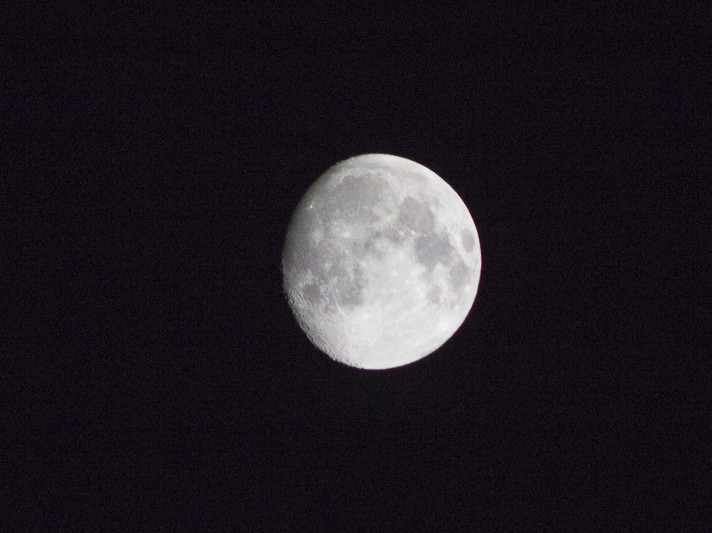
The full super Moon
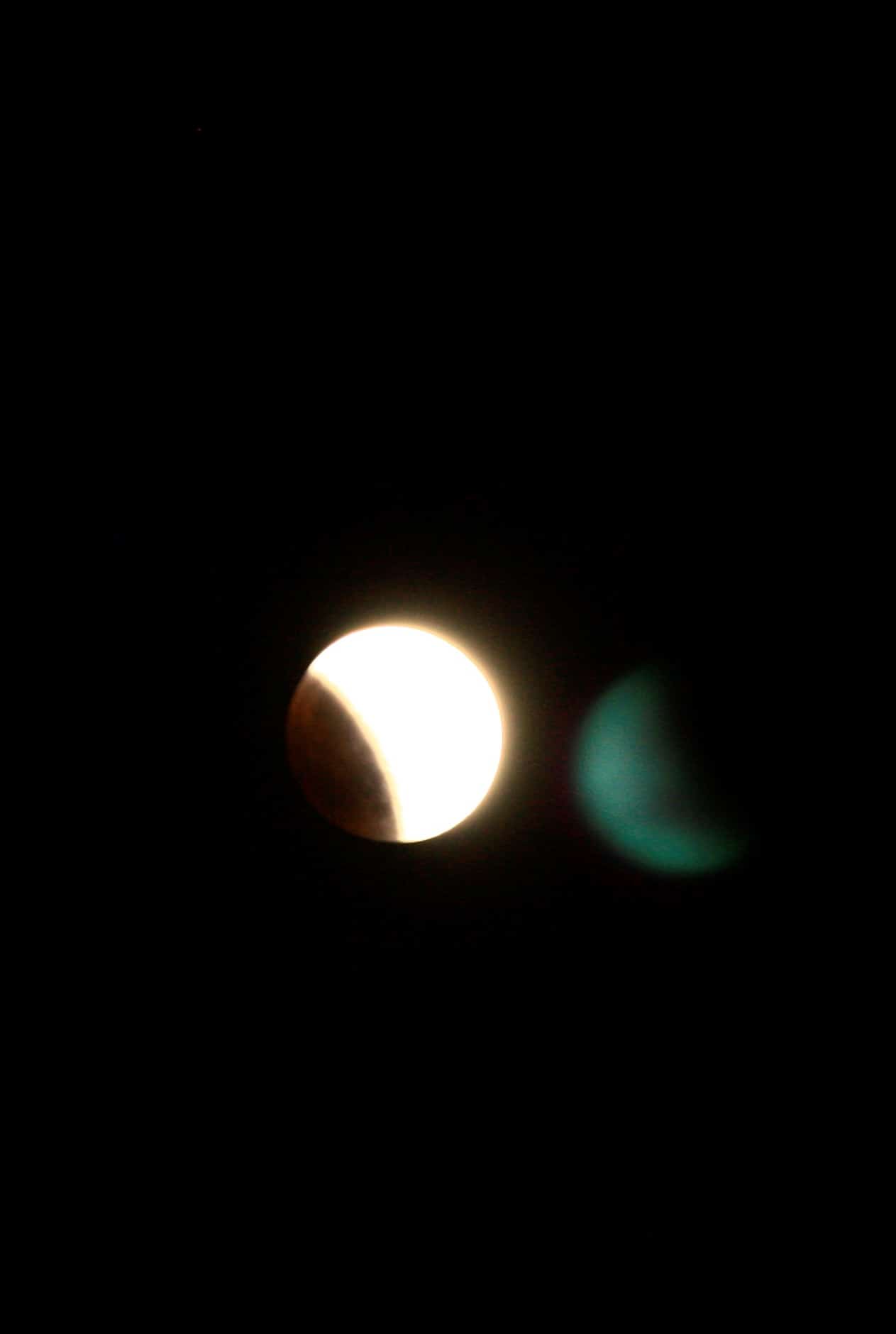
Lunar eclipse, just beginning

(more…)

Our true place in the universe, an eclipse for insomniacs and how far the Chilean landmass moved last week


By Tushna Commissariat

An image of the solar system – showing our luminous Sun ringed by nine (or is it eight?) evenly spaced planets and the asteroid belt – is a familiar feature in many school textbooks. In fact, such images are so commonplace that we often forget just how wrong they are when it comes to showing the true scale of the solar system. In particular, the billions and billions of kilometres of empty space that lie between each planet are rarely depicted.

Now, filmmakers and friends Wylie Overstreet and Alex Gorosh have “drawn” a realistic model of the solar system on a dry Nevada lakebed, complete with planetary orbits. The duo describes it as “a true illustration of our place in the universe”. Watch the video above to see how the pair planned and executed their massive portrait.

(more…)

Where is the cosmic rumble from merging black holes?

Astronomers have been left scratching their heads after an international team failed to find evidence for gravitational waves in 11 years’ worth of radio-telescope observations. The team had expected to see a modulation in the arrival time of pulsar signals caused by gravitational waves from binary supermassive black holes (SMBHs). The null result could mean that binary SMBHs collapse much faster than previously thought, and therefore spend much less time broadcasting gravitational waves. The result could also provide important information to astrophysicists who are trying to model binary SMBHs.

SMBHs have masses in excess of one million Suns and exist at the cores of many galaxies. When galaxies collide, their two SMBHs will form a rotating binary system that will eventually merge into one SMBH. As the two SMBHs get closer together, their gravitational potential energy is broadcast outwards in the form of gravitational waves. These waves are ripples in space–time that are predicted by Einstein’s general theory of relativity but have yet to be detected by astronomers.

Cosmic timekeepers

One proposal for detecting gravitational waves is to measure their effect on the signals we receive from millisecond pulsars. These cosmic timekeepers emit pulses of radio waves at extremely stable frequencies – some even rivalling the stability of an atomic clock. If the signal from a pulsar happens to travel through a binary-SMBH gravitational wave on its way to Earth, then the distance travelled by some of its pulses will be stretched or compressed by about 10 m. While this is a tiny distance compared with the overall journey, it should be revealed by tiny changes in the relative arrival times of several successive pulses.

The sensitivity of such a measurement is increased if a number of pulsars are monitored to create a pulsar-timing array. One such project is the Parkes Pulsar Timing Array, which is running at the Parkes Observatory in Australia. Now, astronomers working on the array have released the latest results in their attempt to measure something called the gravitational-wave background (GWB). This is a mishmash of gravitational waves generated by all of the binary SMBHs in the universe, and is described by the team as a “background rumble”.

Billionths of a second

The team focused on four pulsars that are known to have very high timing precisions, and are therefore best suited to reveal the GWB. Over an 11 year period, the team recorded the arrival times of the pulses to an accuracy of 10-billionths of a second – which is the time it takes for radio waves to travel about 3 cm.

We heard nothing. Not even a whimper
Ryan Shannon, Parkes Observatory

“But we heard nothing. Not even a whimper,” says team member Ryan Shannon of the Parkes Observatory. “It seems to be all quiet on the cosmic front – at least for the kind of waves that we are looking for.”

Now, astronomers and astrophysicists are left wondering why no sign of the GWB was seen. One possibility, according to the team, is that SMBHs merge much more quickly than expected. As a result, the binaries would spend less time generating gravitational waves. Team member Paul Lasky of Monash University speculates how this could happen: “There could be gas surrounding the black holes that creates friction and carries away their energy, allowing them to come to the clinch quite quickly.”

The null result means that the Parkes team will have to keep looking for many more years before it can hope to see evidence of the GWB. However, future telescopes such as the Square Kilometre Array – which will come online in 2020 – may have better luck.

Better models

Ben Stappers of the University of Manchester in the UK describes the latest work from Parkes as “an exciting result”. He told physicsworld.com that astronomers working on other pulsar-timing-array programmes such as the European Pulsar Timing Array and the North America Nanohertz Observatory for Gravitational Waves will now be looking at their newest data to see if they are able to confirm the result. Stappers also points out that the Parkes measurement provides important information to astrophysicists who are developing models of how SMBHs merge.

Parkes team member Vikram Ravi of the Californai Institute of Technology points out that the failure to detect the GWB has no implications on experiments such as Advanced LIGO, which are looking for gravitational waves from sources other than binary SMBHs.

The observations are described in Science.

Ultrafast detector spies on multiple electrons in quantum dots

Researchers at the Los Alamos National Laboratory in the US have developed the first ultrafast photodetector made from quantum dots that is capable of directly observing the extra electrons in a process called “carrier multiplication”. This process has the potential to boost the efficiency of solar cells and understanding how it occurs could lead to the development of new types of light and radiation detectors.

When a conventional solar cell or photodetector absorbs a photon, a single electron–hole pair called an exciton is created within the device’s active semiconductor layer. In nanometre-sized pieces of semiconductor called quantum dots, electrons can interact more strongly with each other after they have absorbed light, and this results in multiple electrons being unleashed by a single photon. This effect is known as carrier multiplication, and it could help to make cheaper and more efficient solar cells as well as new types of detectors.

Rapid changes

Until now, it has been difficult to observe and quantify this multiplication process as it happens in real time in working devices. To address this problem, researchers at the Center for Advanced Solar Photophysics at the Los Alamos National Laboratory led by Victor Klimov have created a specially engineered photodetector that reveals carrier multiplication by monitoring the rapid changes in electrical current that occur when light is absorbed by the device. Indeed, the device can distinguish between events occurring just 50 ps apart.

“Previous research in this field mainly relied on optical spectroscopy for detecting carrier multiplication and quantifying its efficiency,” Klimov explains. “However, it remained unclear whether results from these spectroscopic measurements could be reproduced in photocurrent measurements in real-life devices. Our new study has allowed us to address this important question.”

At the heart of the new photodetector are quantum dots made from lead selenide, which form the active photoconductive layer of the device. As team member Jianbo Gao explains, “Using an appropriate photodetector design combined with ultrafast electronics, we have been able to resolve very short photocurrent spikes coming from multiexcitons produced in a carrier multiplication process.”

Avoiding Augers

One of the main difficulties when studying carrier multiplication is being able to quickly extract charge carriers (electrons and holes) before they recombine, adds team member Andrew Fidler. “In the case of multiexcitons, the recombination process is governed by ‘Auger decay’, which occurs on extremely short, picosecond time scales. We have shown that by treating the outer layers of the quantum dots with 1,2-ethanedithiol and hydrazine, we can indeed extract the charges from the quantum dot before they recombine,” he says.

The research is described Nature Communications.

Copyright © 2026 by IOP Publishing Ltd and individual contributors