Tomorrow sees the announcement of the 2015 Nobel Prize for Physics, as one or more researchers joins the elite club of scientists whose achievements are scribed into the history of human innovation. Physics laureates come from a variety of different countries and research fields, as shown in this year’s inforgraphics and infographics from last year. But one feature these people do tend to have in common is that they are men. In fact, since the prize was first awarded in 1901, only two of the 199 individuals to win the prize have been women – Marie Curie in 1903 and Maria Goeppert-Mayer in 1963.
Among the female researchers who should arguably have been awarded a Nobel prize is Emmy Noether, the German mathematician whose life and work is introduced in this video for our 100 Second Science series.
The video’s presenter – Ruth Gregory of Durham University in the UK – explains how Noether’s eponymous theorem relates conservation laws to symmetries in nature. Noether did her groundbreaking work around a century ago but its significance has became increasingly apparent over the intervening years. For instance, the mathematical concepts of symmetry were applied to the study of fundamental particles, which became a key feature of the Standard Model of particle physics.
Sadly, Noether was not around to appreciate the full impact of her work, as she died at the relatively young age of 53, which is perhaps one of the reasons why she never won a Nobel.
The announcement of the 2015 Nobel Prize for Physics will be made tomorrow at 11.45 a.m. local time in Sweden (CEST). Stay tuned to this website and our Twitter feed @physicsworld for coverage tomorrow as events unfold. If we are to finally see another female physics laureate, then one worthy recipient would be Deborah Jin for her work on fermionic condensates. Jin is among the researchers predicted to win this year’s prize by the Physics World team.
If you enjoyed this video explainer, then check out more from our 100 Second Science series.
Pulsars are known to be the most precise cosmic timekeepers, but occasional “glitches” or a sudden increase in their spin rate disrupts the stars’ otherwise regular behaviour. A new study of the glitching process by an international team of researchers suggests that superfluid matter in the core of a pulsar may cause the poorly understood effect. The work combines radio and X-ray data to determine pulsar masses, and successfully explains glitches that are documented in 45 years’ worth of observational data.
Pulsars are highly magnetized, rapidly rotating neutron stars that emit “pulses” of broadband electromagnetic radiation at very regular intervals. Born in the collapse and subsequent supernova explosion at the end of a massive star’s life, pulsars are small and extremely dense. They normally have a radius of about 25 km and a mass greater than that of the Sun. They are mainly made up of neutron-rich matter that is tightly packed at densities greater than that of an atomic nucleus.
Speed up or slow down?
The spin periods of observed pulsars range between 1.4 ms and more than 1 s, but their rotation periods are normally exceedingly stable. Indeed, many pulsars rival the precision of an atomic clock. A pulsar’s rotation period is also known to decrease with time, as it loses energy through electromagnetic radiation. But in many young pulsars, this long-term slowdown is occasionally interrupted by a sudden increase in speed, called a glitch. After the speed-up, which can occur in less than one minute, the pulsar gradually returns to its previous speed, but this can take up to about a year. Just as rotation speeds vary from pulsar to pulsar, the magnitude of the speed-up can also be different for different pulsars.
Our current understanding of pulsar dynamics suggests that glitches occur because of some interaction between superfluid matter and normal matter within the star. Pulsar structure comprises three different regions – the outer crust, the inner crust and the core. While the core is made up of free neutrons in a liquid state, the inner crust contains neutron-rich nuclei swimming in a sea of free neutrons, which are expected to be in a superfluid state.
Spin reservoir
While the rest of the pulsar slows down, the superfluid does not – instead it acts as a reservoir of angular momentum. Previous theoretical models work on the principle that, when the difference in speeds between the superfluid and the rest of the pulsar reaches a critical (but currently unknown) value, the superfluid transfers some of its angular momentum to the normal matter, thus jolting the pulsar and making its speed of rotation increase. However, more recent work has shown that there is a sizable amount of uncertainty in this theory because the amount of superfluid available in the crust is not enough to create the glitch – a lot more would be required.
Using computer simulations, Wynn Ho of the University of Southampton in the UK, together with colleagues in Chile and Netherlands, has taken a closer look at pulsar superfluity and developed a model wherein the glitches gain the necessary momentum by tapping into the superfluid core. “We used the best current models of superfluids and pulsars, which are based on nuclear-physics experiments and calculations, to calculate how strong glitches should be as a pulsar ages,” explains Ho. “The age is important because the amount of superfluid in a pulsar depends on its temperature, and thus as the pulsar ages, it cools, and more of it becomes superfluid.”
Weighing up
Ho told physicsworld.com that while glitches are seen primarily in radio data, they also crop up in X-ray data, which gives the pulsar’s temperature. By comparing a pulsar’s observed temperature and glitch size, the researchers can also measure its mass. “This last point is what is really exciting about our work, because it allows us to measure the pulsar’s mass even if it is not in orbit near another star or planet,” says Ho. “Or in other words, we can measure mass using nuclear physics, not gravity. This is also extremely useful because most pulsars are isolated stars, not in binary systems.” The ability to measure the masses of such lone pulsars has not been demonstrated before.
In their latest work, the researchers looked at glitches in nine pulsars, but they plan to look at more with their new model in the months to come. Ho and colleagues hope that their research inspires more theoretical work on superfluids and promotes connections between astronomers and nuclear physicists. “We think that the potential of the Square Kilometre Array to discover and monitor many more pulsars could really help to revolutionize our understanding in the respective fields of study,” says Ho.
It’s a mug’s game, we know, but come the start of October we just can’t resist trying to predict who will win the Nobel Prize for Physics, which this year will be announced on Tuesday 6 October.
With the exception of 2013 – when most pundits were right in thinking that the prize would be related to the 2012 discovery of the Higgs boson – predicting the next Nobel winners (or winners) is a tough call. If you want to take an analytical approach, check out the infographic we published last year: “Which physics disciplines attract the most Nobel prizes”. It suggests that the field of atomic, molecular and optical physics is due a prize, and one of us (Hamish Johnston) thinks an excellent bet is Deborah Jin for her work on fermionic condensates. If Jin were to win, she would be only the third woman ever to win a physics Nobel – the other two being Marie Curie in 1903 and Maria Goeppert-Mayer in 1963.
Migration of minds: maps showing the movement of Nobel laureates (click to see full infographic). (Design: Paul Matson)
By Hamish Johnston
Next Tuesday the Nobel Prize for Physics will be announced at 11:45 CEST and I am making the bold prediction that the winner – or one of the winners – will be an immigrant. Why? Because this year’s Physics World Nobel-prize infographics show that of the 198 people who have won the prize, 51 are immigrants – so I reckon there is a reasonable chance that I will be right.
What do we mean by an immigrant? This is a tough question, especially in science, where people tend to move around a lot and don’t always settle in one place. For the purposes of these infographics, we have used a rather crude definition of an immigrant laureate: someone who died or currently lives in a country other than that of their birth. There is more about how we made the infographics later in this post – but first, what do they tell us?
Early in the morning of 27 April 1986, operators at the Chernobyl nuclear-power plant set in motion a chain of events that led to the world’s worst nuclear disaster. In the immediate aftermath of the explosion (which, ironically, happened during a test of one of the plant’s safety features), much of the blame fell on the operators themselves. Later investigators probed deeper, pointing out design flaws in the plant’s reactors and deficiencies in its safety culture, but few have analysed these issues with as much care as Sonja Schmid does in her book Producing Power: the Pre-Chernobyl History of the Soviet Nuclear Industry. Schmid begins with a detailed explanation of how the Soviet Union chose to develop its nuclear-power industry, and how two government ministries assumed competing and sometimes conflicting responsibilities. The machinations of these rival bureaucracies are important to Schmid’s argument, but unfortunately, they do not make exciting reading. General readers may wish to skip ahead to the third chapter, which deals with how the Soviet nuclear workforce was trained. At this point, what was previously a rather dry tale comes to life, with fresh insights on almost every page. The early US nuclear-power programme, Schmid explains, experienced “recurring incidents of human error”, which were addressed by increasing the degree of automation and engineered safety features. Early Soviet efforts, in contrast, encountered problems with unreliable instrumentation, leading to a greater reliance on human intelligence and ingenuity. Neither approach is inherently wrong, and Schmid avoids making hindsight-based judgements. Gradually, however, the Soviet nuclear cadre developed “a rigid and contradictory structure of accountability that…envisioned expert judgement as the ultimate redundancy feature, while simultaneously restricting operators in their actions and undermining their preparedness to exercise their judgement”. That is a recipe for disaster in any field, and there is something compelling in the way Schmid marshals her facts to explain how this and other factors contributed to the Chernobyl disaster.
2015 MIT Press £26.95/$38.00hb 384pp
Back to the imagined future
The astrophysicist Jayant V Narlikar is best known among scientists for his contributions to cosmology. His long career as a writer of science-fiction stories will be less familiar to many, perhaps because these stories have, until now, been published only in Narlikar’s native India. His “new” (at least to readers living abroad) three-part collection The Return of Vaman begins with a short story, “The rare idol of Ganesha”, about an obsessive physicist called Ajit and his old university pal John. This ingenious tale, written in 1975, cleverly combines mathematics, physics, cricket and Indian mythology as Ajit repeatedly risks his life while trying to perfect his potentially game-changing research. Some of the scientific terminology could confuse non-scientists, but Narlikar captivates via his vivid descriptions of each scene and his ability to raise interesting questions about research ethics. Ethical questions are also on display in the novel that forms the book’s core (and its title). The action here revolves around a team of experts (including physicists) assigned to probe the contents of a strange container found deep underground, and several criminals, who are likewise set on obtaining the secrets held within. Narlikar creates believable characters and skilfully weaves in real-life physics and realistic scientific scenarios. While some may guess a few of the impending plot twists, the fast-paced tension keeps it an enthralling read. Certain aspects of the novel, penned in 1986, do seem rather dated; for instance, one of the criminal characters uses an offensive term for Japanese people that may grate on modern ears. But the science-fiction elements have generally aged well, and the final part of the book – an autobiographical essay encompassing details of the Hindu mythology integral to each tale, as well as Narlikar’s thoughts on science communication and science fiction – makes an interesting conclusion.
2015 Springer International Publishing £15.00pb 142pp
Popular cosmology
The discovery of the cosmic microwave background (CMB) in the mid-1960s was a seminal event in modern cosmology. As a subject for a popular-science book, then, the CMB is an excellent choice, and The Cosmic Microwave Background: How It Changed Our Understanding of the Universe has a lot of things going for it. Author Rhodri Evans, an astronomer at Cardiff University, UK, has a pleasantly informal writing style, and the book would make an accessible guide for (say) first-year undergraduates in astrophysics. However, his stated audience is “all those people who want to learn more about where our universe comes from”, and his view of what these non-scientist readers will understand often seems optimistic. On page 73, for example, he provides a detailed explanation of the electromagnetic spectrum, complete with a nice analogy comparing the different parts of the spectrum to the keys on a piano. Bright 13 year olds or adults who have long since forgotten their school science classes could follow this passage easily; indeed, more advanced readers may wish to skip past it. However, on the next page Evans seems to think his readers will understand, without explanation, what is meant by “an electron in the ground state” and “the spin of the proton in the nucleus”. A separate concern is that the book’s coverage of the observations by the team behind the Background Imaging of Cosmic Extragalactic Polarization (BICEP2 ) telescope appears to be a victim of bad timing. Although the book has a 2015 copyright, Evans completed it in April 2014, when cosmic dust had only just begun to cloud BICEP2’s purported discovery of evidence for cosmic inflation in the form of “B-mode polarization” of the CMB – a debate that has rumbled on since. The timing is hardly Evans’ fault, but it makes parts of the discussion feel weirdly out of date – a drawback in a book that otherwise has much to recommend it.
Ferroelectricity can exist in a sheet of material just a few nanometres thick. This new and unexpected discovery by researchers in the US and South Korea could help in the development of new materials for nanoscale electronics.
Ferroelectric materials have permanent electric dipole moments – much like their ferromagnetic counterparts, which have permanent magnetic dipole moments. Ferroelectrics have the potential to be used in a wide range of devices because their dipole moments can be oriented using electric fields, which are much easier to create than the magnetic fields used to manipulate ferromagnetic materials. One possible application is memory chips that store data in terms of the polarization of ferroelectric thin films. A major problem, however, is that these materials cease to be ferroelectric as they become very thin, which limits their usefulness in modern electronic devices.
The researchers, led by Chang Beom Eom of the University of Wisconsin–Madison, have found that a thin film of a material that is normally not electrically polarized can be made polar by taking advantage of existing tiny polar nanoregions within the material. “This happens when the film is made so thin that its whole volume is occupied by these nanoregions,” explains Eom. “When these are electrically aligned in one direction, this leads to a net polarization – and the material becomes ferroelectric.”
The flexoelectric effect
The team’s new discovery stems from its earlier work, in which the researchers discovered naturally occurring polar nanoregions in strontium-titanate films and crystals, which are neither polar nor ferroelectric. “We found that we could reverse the polarization in this material without any applied voltage by simply exerting pressure on the film through the tip of an atomic force microscope,” says team member Alexei Gruverman of the University of Nebraska–Lincoln. “Such voltage-free ferroelectric switching is possible thanks to the ‘flexoelectric effect’, whereby a mechanical-strain gradient induces electrical polarization.”
The researchers wanted to see if the same thing happened in much thinner films of the non-polar material. “We found that we could induce a large flexoelectric effect in this material, but only if the films were very thin,” Eom and Gruverman explain. “To our surprise, we saw that these films behaved almost like ferroelectric ones – that is, they could be polarized not only by applying mechanical strain to them, but also with an applied voltage, and that this polarization was stable. The striking discovery was that the thinner the film, the more stable the polarization, and ferroelectrics typically tend to behave in the opposite way.”
Nanoregion takes over
The researchers say that they immediately connected this observation with their previous work on polar nanoregions, and can now clearly explain how the strain-free ultrathin films of otherwise non-ferroelectric strontium titanate become ferroelectric, says Eom. “As mentioned, when the film’s thickness becomes as small as individual polar nanoregions (which are several nanometres across), the whole volume of the film is occupied by them and the film starts to behave like a ferroelectric,” he says.
The researchers performed ferroelectric measurements, piezoresponse force microscopy and scanning transmission electron microscopy on their samples to confirm their results.
Strontium titanate is an important building block for oxide electronics and has superconducting, 2D gas and magnetic properties, and so is useful for a range of device applications. It also appears to be a good material for solar cells.
Unique or ubiquitous?
Eom and Gruverman say that they do not yet know whether the effect they have observed is unique to strontium titanate. However, they hope that it is valid for other perovskite dielectrics, in which polar nanoregions could be controlled by carefully engineering defect structures in these materials. If this is the case, nanoscale devices in which ferroelectricity is coupled to other properties such as magnetism might be possible.
It’s amazing the lengths physicists will go to get things done – from building telescopes on the tops of mountains to lowering neutrino detectors to the bottom of the sea and from firing satellites into space to colliding particles in tunnels. We’ve covered all those efforts in Physics World many times, but there’s one extreme activity that’s been off our radar – until now.
That is the new but little-known field of “speleophysics” – or “the physics of caves” – which we tackle in the cover feature of the October 2015 issue of Physics World magazine. For the small band of researchers who brave the journey underground, being a speleophysicist is almost the perfect job. Armed with helmets, ropes, torches and boots, they’re able to combine their love of physics with a fascination for the nether world – and experience the thrill (and danger) of caving, too.
Matt Covington didn’t sleep much the night before his big swim. Who could blame him? For two days, the wiry caver had, with the help of ropes and ladders, been making his way down through J2, a deep cave in the mountainous Mexican province of Oaxaca. Marcin Gala, an experienced caver from Poland, joined him on the descent, just as he had on multiple previous adventures.
The entrance to J2 is dramatic: it’s an enormous 100 m wide sinkhole, lined with stubborn plants and surrounded by tall trees. A small hole – about as tall as a person – leads from the bottom of the sinkhole deeper into the cave. Cables and ladders lead to a series of tight turns and drops. Because of the quick descent, once a caver enters J2, the Sun virtually vanishes. No-one knows how far down J2 goes.
The year was 2009 and Covington and Gala were in Mexico as part of a caving expedition dedicated to finding and exploring the untouched netherworld of the world’s deepest caves. “In mountaineering, you have Everest. In caving, there’s this push to find the deepest caves in the world,” says Covington, a physicist at the University of Arkansas. “The weird thing is, you never really know when you’ve found it.”
For this part of the mission, he and Gala were on their own. Already, they’d made their way through a tight spot called the Barbie Squeeze and rappelled down a series of striated cliffs known as the Jungle Series. By the third day, the duo were 1200 m below the cave entrance and putting on scuba suits outfitted with heavy oxygen tanks. They were preparing to swim through a sump – a dark underground passage filled with water – which was the only way to keep searching for J2’s secrets.
Gala was getting cold, so he plunged first into the clear water. Covington followed, weighed down by their supply bags and air tanks. They carefully made their submerged way along the floor of the sump, the bags snagging on jagged pillars of rock. About seven minutes into the dive, however, Covington became short of breath. Worrying that his air tank had malfunctioned, he reached for his back-up air – but again, his attempts to inhale were met with resistance. Panic lurked at the periphery. His wife was scheduled to arrive for a visit the next day. It was common knowledge among the team that there were no good rescue options in that sump or beyond, and the chances of being rescued alive from the bottom of J2 were slim to none. The key was not to let panic win.
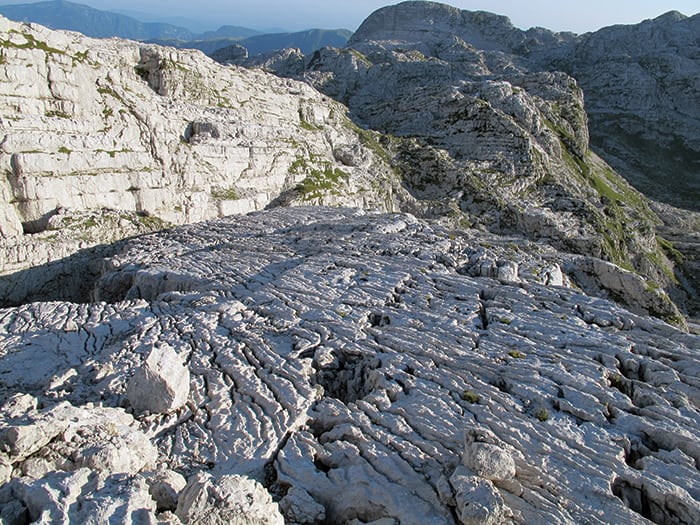
Caving isn’t for everyone, but among cavers Covington is something of an exception. He’s both an explorer and a physicist, which means his research lands him in a small and curious area of endeavour that merges physics, chemistry and mathematics to quantify how karst forms, evolves and moves water from one place to another. (Karst is the general term for landforms that have been sculpted by dissolution of soluble rocks such as limestone. It may include caves, sinkholes, cliffs and fissures.) He’s part of a small group – including maybe two dozen, maybe only a handful, depending on whom you ask – that is taking the rigour of physics to the netherworld. He light-heartedly refers to the field as “speleophysics”.
A quest for karst
Cavers and scientists alike see caves as a sort of last frontier. “Caves are the last parts of Earth which are not yet explored,” says Franci Gabrovšek, a physicist at the Karst Research Institute in Postojna, Slovenia. “They are full of surprises, and when you progress to the next step, you never know what your next challenge will be. Of course, that’s general in science, not just in our field.” He thinks the field is growing. “There are still so many open questions in speleogenesis,” or cave formation, says Gabrovšek. “What are the dynamics of growth? How do cave channels self-organize to form the geometry that we observe in nature?” Scientists have a good understanding of the dissolution process, but “we don’t know the exact circumstances that govern it”, he says. Gabrovšek adds that he and others also want to get a better understanding of the relative roles of chemical and mechanical processes both at the beginning of a cave’s formation and during its later growth.
Weathered and worn This Alpine karst landscape conceals a deep network of caves. (Courtesy: Matt Covington)
There’s also a practical concern at stake in speleophysics: karst and caves play a critical role in the water cycle. Roughly 20% of the fresh water supply in the US – and about half of that in Europe – comes from karst aquifers, where water can flow rapidly through labyrinthine networks of channels like water pipes through a city. The water’s movement can be fickle, changing by the season or during times of flood. Understanding how aquifers shuttle water from one point to another deepens our understanding of the water cycle, and may suggest solutions should something go wrong. Right now, “you put a pollutant in somewhere, and you don’t know where that pollutant will come out”, says Gabrovšek. “The caves control where the water’s going to go and how quickly it will get from one place to another,” Covington adds.
Wolfgang Dreybrodt, a pioneer in the field and now an emeritus professor of experimental physics at the University of Bremen, Germany, thinks that applying the laws of physics to caves can bring together an interdisciplinary understanding of a complex natural phenomenon. “Caves are usually described by geologists or geographers who don’t have a mathematical education,” he says. Rigorous models have the potential to stitch descriptive theories from other disciplines into a coherent whole. But he also says the field calls for geologists who have better training in physics – and physicists with a more thorough knowledge of geology.
“Engineers, physicists and chemists involved in karst must be ready to learn about geology to at least the extent which enables them to have a good idea of what they are dealing with,” he said in a 2011 interview with the journal Acta Carsologica (40 225). In a way, his advice mirrors the approach needed to tackle a cave like J2 – co-operation is the only way forwards.
Secrets of the caves
Caves, by their very nature, are always hiding something. What that something is, however, depends largely on time and place.
Thousands of years ago, caves were believed to harbour dragons or other beasts, gods and goddesses, or passages to the underworld. In Indonesia, caves are the canvasses for the oldest known art in the world. Seers from ancient Greek cults immersed themselves in caves to commune with the immortals and emerge with prophecies. The wonder has changed flavour in more recent times but it remains intact. Now, cavers search for unknown and unmapped subterranean chambers. Millions of tourists annually flock to show caves such as Mammoth Cave in Kentucky – the largest known cave system in the world – for the experience of simply being somewhere deep, somewhere dark, surrounded by a strange wonderland of natural sculpture.
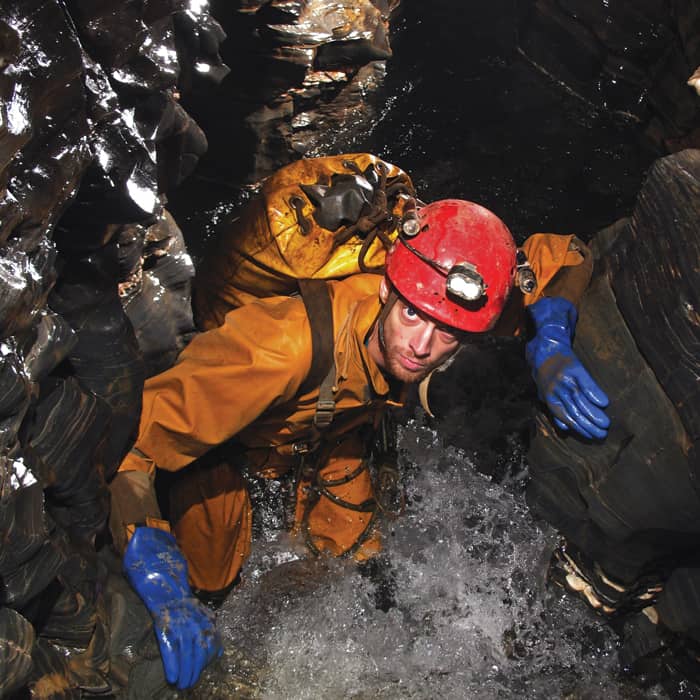
Deep down Matt Covington during his 2009 descent of the J2 cave system in Mexico. (Courtesy: Marcin Gala)
People have been describing caves and cave features for centuries. By the 1830s scientists began hammering out the basic recipe for karstification. It’s deceptively simple. Flowing water absorbs carbon dioxide from soil air and becomes carbonic acid, which Dreybrodt calls “the motor of erosion”. Carbonic acid is weak, but strong enough to dissolve limestone. As small channels grow wider, more water flows and more limestone dissolves, thanks to a feedback loop that allows more water through, which dissolves more limestone, and so on. The channels open up, the cave grows.
Scientists began to quantify that characterization of speleogenesis in equations in the mid-20th century. But new problems quickly emerged. A 1958 quantitative model published by Peter K Weyl of the Shell Development Company, for example, accounted for how water absorbs carbon dioxide and erodes limestone. On the one hand, that model was a welcome step forwards in the field, moving previous descriptive models into the realm of physics. On the other, that rigorous treatment led to a paradox.
According to the model, water flowing over limestone becomes saturated with calcium ions, which means it can’t dissolve any more limestone, which means deep caves shouldn’t exist at all. Scientists remained in the dark about explaining the existence of caves until the 1980s, when Dreybrodt and other researchers created 1D models showing how the evolution of caves depends on a nonlinear erosion behaviour that arises in the interaction between the water and the limestone. (But even that solution has been challenged: in 2010, speleophysicists in Poland and the US used a 2D model and avoided nonlinearity altogether.)
Researchers are now developing 3D models of speleogenesis and more powerful tools to collect data. Postojna in Slovenia hosts a giant show cave – complete with a mile-long “cave train” that whisks tourists into the belly of the karst – in which Gabrovšek has recently set up sensors to monitor air flow, temperature, humidity and carbon-dioxide levels, to build a cave climate model. Covington has similarly set up sensors in a cave in Arkansas more than a mile long, creating a field laboratory where he can keep tabs on the cave climate and send his students for research projects.
He’s also something of a hacker. “We’ve been doing 3D scans inside of caves that get reconstructed in real time,” he says, equipped with only an XBox Kinect and a laptop. “The XBox Kinect is basically a video game controller, but in reality it’s a very inexpensive 3D scanner.”
From hobby to research
Not surprisingly, “most of us who are doing this somehow started caving as a hobby”, says Gabrovšek. “You try to join your hobby with your profession, and I think speleophysics is one of those areas where you can do this.” Figuring out how to merge the two, like finding the next clear passage in an uncharted cave, isn’t always easy.
Danger physics Matt Covington during his 2009 descent of the J2 cave system in Mexico. (Courtesy: Marcin Gala)
Dreybrodt, who explored abandoned mines and canyons during his childhood in the German Democratic Republic, trained as an experimental physicist and in 1974 he joined the faculty at the newly founded University of Bremen. But Dreybrodt’s mood quickly soured due to the educational climate, which was wracked by student protests and even bullying in his lectures, which he says was supported by the Social Democratic Party, the leading political establishment in Bremen. In his 2011 interview, he described the university at that time as “an incredible realm of ignorance and intolerance”. As a means of escape from the hostile intellectual environment, he turned to the caves in Germany’s Harz mountains and began reading up on speleogenesis.
Those excursions gave him solace – and a rising curiosity. Dreybrodt describes his time in caves with reverence and awe. “I was fascinated by the realm of darkness in caves from which fantastic shapes emerge in the faint light on the helmet. How could such a variety of structures arise by dissolution of limestone and later by precipitation of calcite?” he said. More recently, Dreybrodt told Physics World “Going to caves for some people is a deep, spiritual thing, which is not easy to explain…If you go in there and see all those caves, then you want to understand why. It has to do with pure inspiration and something emotional and spiritual and philosophical.”
He tackled research projects aimed at understanding what he’d witnessed first-hand in the caves. Those included a mathematical explanation for the growth of stalagmites (the ones that point up), as well as that 1D model that uses nonlinearity to show how deep caves can evolve. In 2011, in the Journal of Hydrology (409 20), he and Gabrovšek published a model of how pollution can spread through a karst aquifer.
Gabrovšek says that when he began looking at graduate schools, nearly 20 years ago, there were only a few physicists studying caves in earnest. “The Internet had just started,” he says, “and I had a hard time finding a supervisor who could guide me to a doctoral thesis.” He’d just finished an undergraduate degree in physics and was spending almost every weekend in caves, which helped inspire the questions he wanted to answer in his research. His quest led him to Dreybrodt, who agreed to take him on as a student – and the two went on to become close collaborators.
Covington, too, travelled a circuitous route before he arrived at speleophysics. He was finishing his PhD in astrophysics at the University of California, Santa Cruz, when he attended a lecture that helped send him on a different path. The speaker began describing how the statistical technique of Markov Chain Monte Carlo can be applied to theories of galaxy formation. But Covington began to wonder if physics equations could be applied to caves – and discovered an entire body of research. After he finished his PhD, he secured a fellowship from the National Science Foundation in the US to study with Gabrovšek in Slovenia. Another collaboration was born.
“I felt like when I first started working in this field, there was almost a whole playground of things to work with,” he says. And he kept caving, of course. He’s noticed that the experience of mapping or studying a cave differs noticeably from the experience of pure exploration. “When you’re mapping, you move through a cave in a different way,” he says. “If you’re the one who’s sketching, drawing the features of the cave, you experience the cave at a slow pace and absorb a lot of information about the cave that you wouldn’t necessarily observe if you were just going through.”
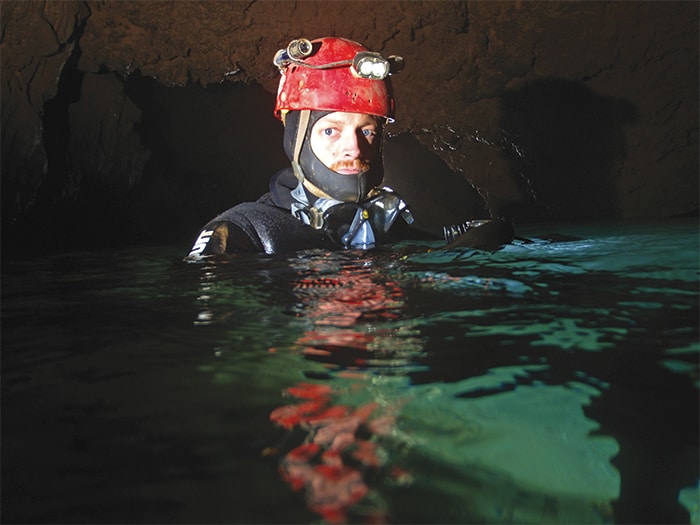
Still alive Matt Covington in 2009 still wearing his scuba gear after diving through the sump leading to the J2 cave system in Mexico. (Courtesy: Marcin Gala)
He also knows the benefits of slowing down. That night in 2009, finding it hard to breathe in a flooded channel 1200 m beneath J2’s entrance, Covington remembered to open a valve on his rescue air. The air flowed, and he was relieved. He paused there, at the bottom of the lake, buried deep in the cave, to gather his wits. Down there, in such an extremely wild environment, panic was the enemy. Then he picked his way again, and two minutes later emerged at the other side. He didn’t know whether the mishap was due to faulty equipment or stress, but in some ways it didn’t matter. He knew that on the way back, staying calm would be his top priority.
In July this year Covington returned to Slovenia to investigate a cave he’d begun to explore on a previous visit, but he couldn’t say whether his trip was more research- or exploration-related. As he explains, “It’s not always 100% clear which one I’m doing at any given time.”
Around the world: how has immigration shaped the global physics community? (Courtesy: iStockphoto/Joel Carillet)
By Hamish Johnston
In December 1938 Enrico Fermi travelled to Stockholm, where he was presented with that year’s Nobel Prize for Physics for his insights into the atomic nucleus. But after the ceremony, Fermi did not return to his native Italy. Instead, he joined his wife and young children on a voyage to the US. Fermi went on to make major contributions to physics in that country – including playing crucial roles in developing nuclear weapons and nuclear energy.
A new type of compact infrared laser promises to make it easier to identify specific molecules at very low concentrations within complex chemical samples. That is the claim of physicists in Germany and Spain, who have created the high-power, ultrashort-pulsed, broadband laser. They add that the device shows particular promise for spotting molecules within exhaled breath that are indicative of certain kinds of disease.
Molecular spectroscopy, or “molecular fingerprinting”, involves shining a laser beam spanning a certain portion of the electromagnetic spectrum through a liquid or gas and then comparing the beam before and after it travels through the sample – the specific wavelengths absorbed revealing the composition and structure of molecules within the sample. Most molecular vibrations can be stimulated by mid-infrared radiation (2–25 μm), and therefore laser light covering this part of the spectrum is very useful for molecular fingerprinting.
Because no existing lasing media are able to emit light across a broad range of mid-infrared (MIR) wavelengths, current devices operating in this part of the spectrum use nonlinear crystals to shift shorter-wavelength near-infrared (NIR) radiation to longer wavelengths. However, these crystals have significant limitations, and practical fingerprinting systems would benefit from a different approach.
In the latest work, Ioachim Pupeza of the Max Planck Institute of Quantum Optics near Munich and colleagues have created a system that makes use of a different type of nonlinear crystal. NIR radiation is first created in a novel high-power, diode-pumped femtosecond laser “oscillator”, in which a thin disc made from a ytterbium-doped material forms the active medium. The light from the oscillator is compressed into pulses lasting just 20 fs (2 × 10–14 s) and is then converted into the MIR using a nonlinear crystal made from lithium–gallium-sulphide. The current prototype device occupies an area of about 2 m2.
Crucial crystal
“Apart from developing the oscillator, the choice of the nonlinear medium was crucial,” explains Pupeza. “It was not clear that any crystal could be found that fulfils the necessary requirements of low absorption and high damage threshold.”
Pupeza says that the new system combines a number of features that make it useful for molecular fingerprinting – including its power. As Pupeza points out, many molecules studied using the technique exist in minuscule concentrations. Exhaled human breath, for example, containing organic compounds that are present at the level of just a few parts per billion. An intense light source is therefore needed to have a decent chance of detecting such molecules. The average power of the pulse train in the current work is 0.1 W.
The new system also spans a broad range of wavelengths (6.8–16.4 μm), which allows a large number of individual absorption lines to be recorded for any given type of molecule.
Clear identification
This means that a molecule can be more clearly identified against the very high background noise. “It’s the same with one’s fingerprints,” explains Pupeza. “To precisely identify a person, an entire fingerprint is much more useful than just a tiny fraction of it.”
Another useful characteristic of the new laser is its spatial coherence. This increases the distance the beam can travel through a sample without undergoing significant losses, which boosts its sensitivity to low-concentration molecules. In addition, the beam has phase coherence, which means that the electric field of its ultrashort pulses – each less than two wavelengths long – is identical from one pulse to the next.
Phase coherence increases the amount of information that can be extracted from the sample because the phase of the light will change as it interacts with the sample molecules. In addition, the laser’s MIR beam can be combined with a part of the original NIR beam. This allows the laser’s output to be measured using NIR detectors, which have far lower noise levels than their MIR equivalents.
Designed for hospitals
The group has designed its new device so that it can be used for one application in particular: detecting molecular markers of disease. The air we breathe out is believed to contain very small traces of molecules specific to certain types of disease, including some forms of cancer, and Pupeza says that the new laser could help scientists to better understand the cellular processes underpinning those diseases. He also says that such a compact device, being potentially easy to install in hospitals and clinics, could “facilitate a standardized collection of disease-specific molecular fingerprints”.
The researchers are currently working to increase the bandwidth of their device so that it covers the full 2–25 μm band that is relevant to molecular fingerprinting. Other potential applications include detecting explosives or monitoring air quality.
Søren Rud Keiding, a chemist at Aarhus University in Denmark, describes the latest work as “an impressive example of the development of new few-cycle infrared and terahertz sources with extreme brightness”, adding that such sources have “spurred a renewed interest in molecular spectroscopy”. But he notes that the new device is not without precedent. It is, he says, a more powerful version of an ultrashort-pulse source developed by Alfred Leitenstorfer and colleagues at the Technical University of Munich in 2000.