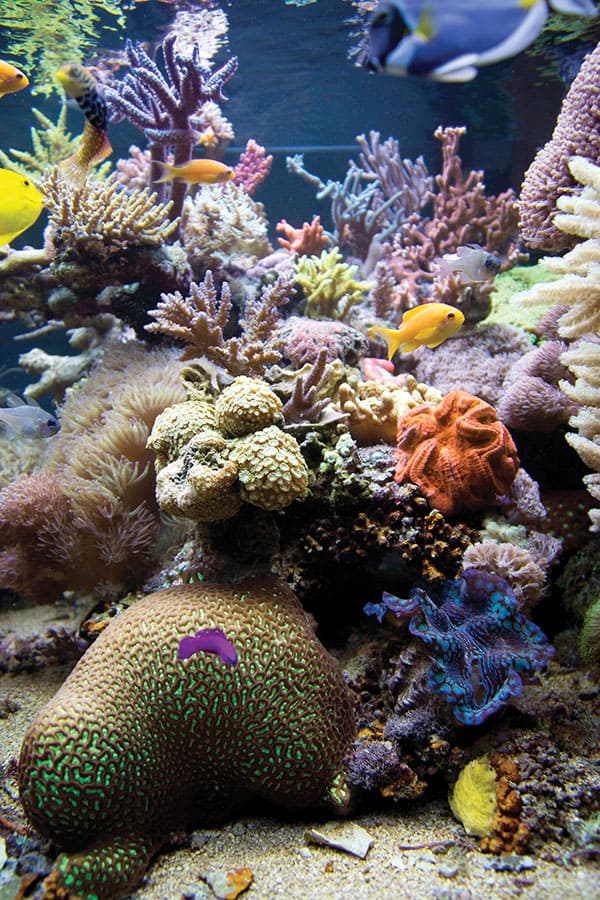
Reasons to be cheerful: Although the Great Barrier Reef is almost certainly doomed, Tim Flannery finds room for optimism in his new book about climate science. (Courtesy: iStock/Michael Leidel)
For a book with the word “hope” in the title, the latest work from the Australian climate scientist Tim Flannery certainly gets off to a depressing start. Atmosphere of Hope was written in the run-up to the climate summit in December 2015, when world leaders met in Paris to hash out a plan for reducing carbon emissions enough to limit global warming to 2 °C (a target that was later revised, optimistically, to 1.5 °C). But as the opening chapters of the book make clear, a planet that is “only” 2 °C warmer is not exactly a utopia. Both wild habitats and marginal crop-growing regions are expected to suffer at the 2 °C mark, while a mere 1.5 °C rise above pre-industrial average temperatures (which some experts regard as inevitable despite the Paris agreement)would be enough to damage most of the ocean’s coral reefs beyond recovery. “It fills me with despair to admit it, but my beloved Great Barrier Reef is doomed,” Flannery writes sadly.
But within this generally pessimistic picture, he argues that there are still reasons to be cheerful. Falling demand for coal, he notes, has hit prices in Australia and other major exporters, making it more likely that this dirty fuel will remain in the ground. Better still, he writes, there are signs that “some of the same mice that are eating away at coal’s future have entered the oil business”. The main reason for Flannery’s optimism, however, is what he calls “third-way technologies”: biological and chemical processes that could be harnessed to withdraw huge amounts of carbon dioxide (CO2) from the atmosphere. Most of them – from seaweed farms to a silicate mineral called olivine that naturally absorbs CO2 – are still at the demonstration stage, with more research required before they can be turned into large-scale projects.
As usual, the devil will be in the details, and in Atmosphere of Hope most of the really fine details are relegated to the footnotes. But with the outcomes of political negotiations uncertain, and geoengineering a minefield of unintended consequences, it is hard to argue with Flannery’s view that such technologies represent our best hope for avoiding a catastrophic degree of warming. The real question is whether the size of the solutions will match the magnitude of the problems – and at the moment, neither Flannery nor anyone else knows the answer.
It seems that a growing number of physicists have cottoned on to the fact that origami – and the related art of kirigami, where cuts are allowed – can be very interesting from a physics point of view, with properties that can lead to novel applications over a range of length scales. If you are a member of the Institute of Physics, you can read all about it in “Flat-pack physics”, a feature by science writer Simon Perks published in this month’s edition of Physics World.
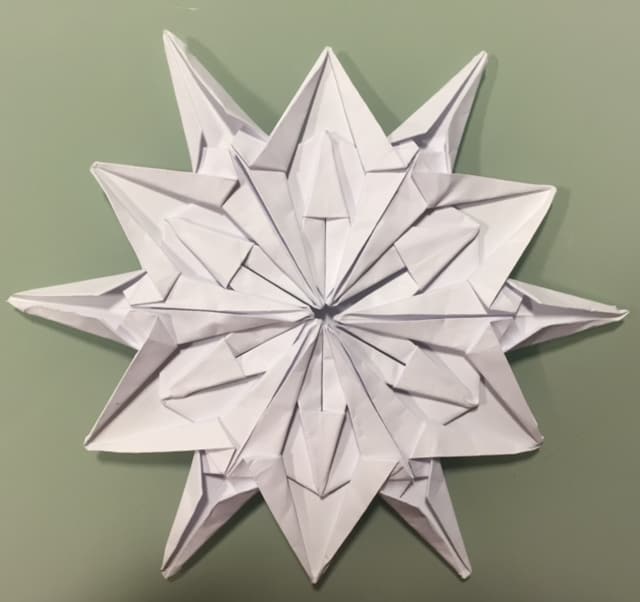
As part of some background research for this feature I came across some great origami designs. One in particular – a snowflake – caught my eye and I got in touch with its designer Dennis Walker, who has been a paper folder for about 35 years. Walker very kindly agreed to update his instructions for making the snowflake especially for Physics World. They are now nice and clear and you can find Walker’s updated pattern here (PDF).
As an origami novice I can attest that the pattern is possible to follow albeit challenging (one of my attempts is shown in the photo above). In following the instructions it will help to know that dashed lines represent “valley” folds, where the paper is folded upwards into a “V” shape with a crease at the bottom; and the lines containing alternate dots and dashes represent “mountain” folds, where the crease is at the top and the paper is folded downwards into a “Λ” shape.
To start with you will need a piece of paper in the shape of a hexagon; you can find out how to cut a hexagonal piece of paper here. If you get stuck, do post a comment below describing exactly where you have got to. It may be that I or someone else can chime in to help you become unstuck.
What have snowflakes got to do with physics? Well, I am a physicist who just happens to enjoy puzzles and crafts, and I had a hunch that some of you might enjoy attempting this origami pattern too. But if I had to justify the link then I would point to Caltech physicist Kenneth Libbrecht’s classic Physics World feature “The enigmatic snowflake”, in which he describes the complex physics that governs how ice crystals grow, as he discovered by growing beautiful snowflake specimens in his lab.
What kind of scientist are you? In a world where astronomers are getting into (exo)biology, geologists file their programming manuals next to their rock hammers and three physicists shared a chemistry Nobel prize for work with medical implications, it can be hard to keep track. But fear not. For behold, in the midst of this glorious interdisciplinary muddle (and, for many readers, the holiday season), we bring you tidings of great clarity. As it turns out, your scientific identity crisis can be solved with a simple flowchart.
The idea for the flowchart came last summer, when physicist Eugene Hickey submitted his ideas on sorting the geoscientists from the cosmologists to Lateral Thoughts, Physics World’s column of humorous and otherwise off-beat essays about physics and physicists. Hickey began his essay by observing that in his university (the Institute of Technology, Tallaght, near Dublin, Ireland) the interdisciplinary spirit has even trickled down to undergraduate level. For example, to create a materials-science degree, “the right physicist met up with the right chemist [and] decided to bolt together the best elements of both disciplines into a coherent bundle”. Students taking this degree, he added, “spent half their time in each department, like some sort of joint custody arrangement”.
The search for life beyond Earth is what drives much of astronomy. In 1992 scientists came closer to the goal of finding it when they began detecting planets around stars other than the Sun by observing the ways those worlds affect the light or their parent star. No signs of life have yet been discovered, but a new instrument being developed by NASA could change that within the next couple of decades.
Once in space, this “starshade” would block the light from a star in the hope that a telescope flying in formation with it could see the starlight reflected off that star’s exoplanets. Astronomers would then use an onboard spectrometer to study absorption lines in the reflected light, looking for hints of an atmosphere around any of the exoplanets. They are specifically looking for significant amounts of carbon dioxide, oxygen and methane – “biosignatures” that would suggest life on the exoplanet.
But an Earth-like exoplanet that lies as far from its Sun-like star as our Earth is from the Sun is hard to see. The planet reflects so little light that it glows at just one 10-billionth of the star’s brightness. It is like seeing a firefly buzzing around a spotlight, except that the spotlight and firefly are in New York City and the observer is in Los Angeles.
Sunflower shade
Exoplanet scientists therefore need to find a way to block the light streaming from the star, which is where a starshade comes in. By flying separately from a telescope, it can be precisely aligned to block the starlight. The beauty of such an instrument is that, even when paired with just a small telescope, say 1 m or 2 m in diameter, it could find signs of life.
The shape of that starshade matters. As light behaves like a wave, a simple disc will not work. A pinpoint of light from a star striking a disc would create a diffraction pattern that would overwhelm the signal from an exoplanet. Of course, you can never stop diffraction, but you can lessen its effects.
Computer modelling led by Jeremy Kasdin of Princeton University in the US has guided scientists to the ideal starshade shape: a disc with at least 20 petals attached along the disc’s edge, similar to a sunflower. “The petals redirect the light away from the telescope, so the telescope now sits in the shadow that’s created by the starshade,” says Nick Siegler, technology manager of NASA’s Exoplanet Exploration Program.
To further study the idea of a starshade that flies separately to a telescope, NASA commissioned a report a few years ago that was released earlier this year. “One of the goals of the study was to come up with the things that have to be done, and how much will they cost, and how hard do we think they are,” says Sara Seager, an exoplanet scientist at the Massachusetts Institute of Technology who chaired the study. While the technology is not yet ready, Seager and her colleagues have no doubt that a starshade could be on track for launch within a decade.
There are many hurdles that scientists and engineers must overcome to build a starshade, but Seager does not see “any major showstoppers with this technology, based on heritage or ongoing technology development”. However, one major obstacle is how to deploy the starshade once it is built. Some 30–40 m wide, the structure would be much too large to fit into the 4 m wide fairing of a rocket. Instead, current designs envisage collapsing the central disc using a method inspired by origami and then curling the petals around that central region. Once in space, the starshade “has to deploy to exactly the right positions”, says Kasdin. “All the petals have to go to the same place, within about half a millimetre,” he says.
Formation flying
The starshade then needs to move 50,000 km away from the telescope but remain aligned to no more than 1 m from the line of sight to the stellar target. Space agencies have used a similar kind of formation flying for decades, for example to dock a capsule to the International Space Station. The challenge, says Siegler, is that “the telescope has to sense where the starshade is and then it has to correct its position”.
Work in progress The Starshade Deployment Testbed at NASA’s Jet Propulsion Laboratory. (Courtesy: NASA/JPL)
Another potential concern is light scattered from the Sun. The starshade will be aligned edge-on to our Sun, but glinting sunlight on the petal edges could overwhelm the faint signals from exoplanets. “We know that the edges are going to need to be sharp, we know it needs to be dark,” says Steve Warwick, starshade programme manager at the US-based aerospace firm Northrop Grumman. “The research at the moment is how sharp and how dark.” Research at NASA’s Jet Propulsion Laboratory suggests the edges can be only a few microns thick, but Northrop Grumman studies suggest about 40 μm. NASA has issued contracts for both teams to study this issue further to determine the required specifications.
While the starshade edges will be razor sharp, the central disc and most of the surface area of the petals will be made of some thicker material. The current work is looking at a membrane two or three layers thick. The edges’ maximum allowed thickness will affect how scientists work with the material of the entire structure, how the starshade collapses in the rocket fairing, and how it deploys. “If it touches anything, it’s going to either bend the razor end or rip the membrane,” warns Siegler.
Technology challenges
Of the technologies required for a starshade to be launch-ready, Warwick considers this edge-scatter problem the most difficult. Another obstacle, he adds, is making sure that as all the technologies are brought together, the starshade is a working system. And testing this full system will be impossible on the ground.
What scientists really want is to launch a full-scale starshade alongside a proposed future NASA mission – the 2.4 m diameter Wide-Field Infrared Survey Telescope (WFIRST). The separate starshade would not be part of this mission’s budget, and the WFIRST craft would need only a few minor instrument modifications onboard to make it operational with a starshade rendezvous, says Siegler. And even if the starshade–WFIRST combination cannot suppress enough light to study Earth-like planets orbiting their stars, the combination will still give researchers incredibly important data. They would be running a full-scale technology test that sets the stage for the next possible mission in the 2030s of a larger telescope, and beyond. “We’d like to see every telescope that gets launched to be starshade-ready,” says Seager.
The scientists involved with this technology development are all looking forward to the next few decades of starshade work. “It is incredibly exciting to work on something that gives us the best chance of finding life outside of Earth,” says Warwick. “And that’s what gets me up in the morning.”
NASA’s Curiosity Mars rover shows the Marias Pass. (Courtesy: NASA/JPL-Caltech/MSSS)
By James Dacey in San Francisco
Rocks rich in silica have been discovered on the surface of Mars, bearing a resemblance to environments on Earth that support microbial life. It’s the latest finding from NASA’s Mars Curiosity rover, presented today in San Francisco at the annual meeting of the American Geophysical Union.
After landing in the Gale crater region of Mars in 2012, NASA’s car-sized rover spent the first couple of years exploring the planes around the elevated region known as Mount Sharp. Since 2014 the rover has started exploring the mountain itself, working its way up from the base.
Father Christmas will soon be on his way to the International Space Station. (Courtesy: NASA)
By Hamish Johnston
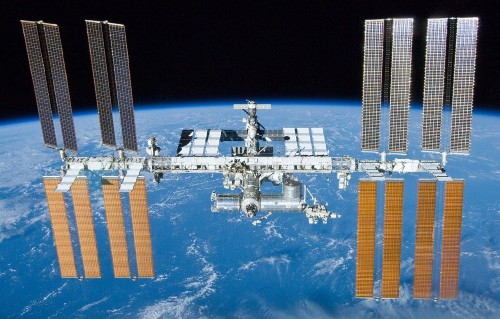
In this festive edition of the Red Folder, NASA has come up with a great way for youngsters to spot Santa’s sleigh as it streaks across the sky on Christmas Eve. It turns out that Santa hitches a ride with the International Space Station, so you can use NASA’s Spot the Station tool to find out when Father Christmas will be visible above your town. A search on Bristol, UK reveals that Santa will be overhead at 17:21 – perfect for getting the children to bed early.
Undeterred, Allain has just posted a new item on Wired that looks at the physics – or lack thereof – in this Christmas’s blockbuster film: “The physics in Star Wars isn’t always right and that’s ok”. I look forward to Hossenfelder’s riposte!
Ivelina Momcheva finds she spends a lot of her time programming. Whether it is to analyse data or to produce figures for papers, she sits at her keyboard at Yale University in New Haven, US, writing line after line of code. Despite it being a major part of her job, however, she has never received any formal training in software development. “Once I started graduate school, I mostly taught myself,” she says. “I picked up a few recommended books, took some online classes and looked at code written by colleagues.”
Momcheva’s Yale colleague Erik Tollerud has a slightly different story. The son of a professor in computer science, he took a computing course as an undergraduate. With that background, he was better prepared than Momcheva – though perhaps not by much – for a life in modern astronomy. So are Momcheva and Tollerud typical of today’s astronomers – some trained a little in software development, others not at all? In December last year the pair attended the .Astronomy 6 (pronounced “dot astronomy”) conference in Chicago, US, where they found a lot of their fellow astronomers debating how software is used, and about the current levels of training. Seeing there was no consensus, the pair decided to find out for themselves by conducting an informal survey.
The results, based on responses from more than 1100 astronomers at all career levels, reveal just how ill-prepared astronomers are for what constitutes much of their working life. Some 90% of the respondents write at least some of their own software, according to the survey, yet fewer than one in 10 have received “substantial” training for it. About half said they have received “little” training, while 43% say they have had none at all (arXiv:1507.03989).
Momcheva and Tollerud, it turned out, were not in any way unrepresentative. “One of the points we wanted to make with the paper was that there is very little training for something that is a substantial portion of our jobs, and that is a problem,” says Momcheva. “We should consider it very seriously.”
The lack of training has caught the attention of others in the field, too. “It’s quite surprising that more than 40% of astronomers claim to have had no training in software development,” wrote theoretical astrophysicist Peter Coles of the University of Sussex in Brighton, UK, on his blog In the Dark. “We do try to embed that particular skill in graduate programmes nowadays, but it seems that doesn’t always work!”
On the job
Some might argue that a lack of training is not a problem. Scientists have always been quick to turn to computers to benefit their work, and there is a long history of them learning coding on the job without resorting to formal classes. Isn’t immersion like this actually the best way to learn, just as people learn a foreign language by living in its native country? Tollerud dismisses the comparison. “Despite the word ‘language’, the analogy is not so much learning a language as it is learning maths,” he says. “Maths is one of the fundamental underpinnings of science, but you would never say you can just pick up calculus and linear algebra as you go along.”
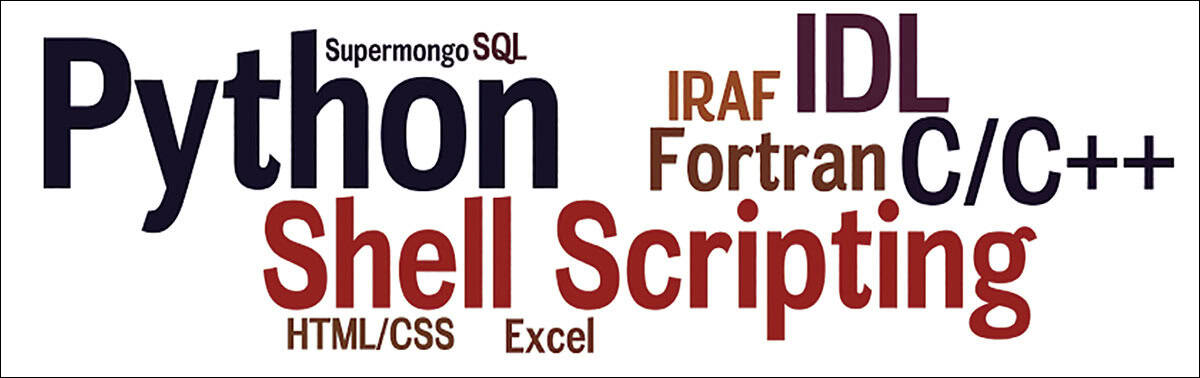
Even so, astronomers apparently have a good way of picking out what works for them, and what does not. Despite hundreds of programming languages in popular use, astronomers stick to just a trusted handful. Two-thirds of astronomers use Python, according to the survey, while 44% use IDL, 37% use C or C++ and 28% use Fortran. “Historically, a lot of scientific code was written in Fortran,” Tollerud explains. “And even though it’s now generally recognized as being more difficult to work with, it’s still used because it’s got decades and decades of astronomers’ brainpower embedded in it. They don’t want to change to something new.”
Tollerud admits, however, that languages such as Fortran, which are closer to actual machine code, can actually produce faster software. Jonathan McDowell, an astrophysicist at the Harvard–Smithsonian Center for Astrophysics in Cambridge, US, agrees. “Software engineers sometimes try and push us towards the latest greatest language that will be forgotten in 10 years,” says McDowell, who is leading software development for NASA’s Chandra X-ray Observatory. “Fortran may be a legacy language in the rest of the world but it’s a living one for us, and for a bunch of good reasons.”
Tools of the trade The 10 most popular software languages for astronomers.
Training needed
McDowell also shares Momcheva and Tollerud’s view that software training is inadequate. “A quick glance at [many astrophysicists’] code shows how deep the need is for some formal training,” he says. “Astronomer code is sloppy, tangled and often stuck in the styles of the 1960s.” He believes software courses ought to focus on the “simple stuff”: loops, subroutines, established coding styles, and so on. “Most astronomers only need the basic stuff, because they’re not trying to do anything super-fancy,” he explains. “A few do need fuller software-engineering training, [but] for those we probably only need to give them the basics and then point them in the right direction.”
Astronomer code is sloppy, tangled and often stuck in the styles of the 1960s
Momcheva believes the best time for would-be astronomers to learn programming is not at undergraduate level, as not all students will be planning to stay in academia, but as a graduate, because by that stage your path into research is more certain. Tollerud agrees that programming should be a “central” part of the graduate curriculum, although he notes that, in many US institutions, curricula are being shrunk to make way for research. Perhaps, he concludes, only those who have not had any prior training as an undergraduate should be required to take extra computer-science classes. “Personally, I think that might be the best way to do it – to give everyone the same fundamentals,” he says.
There are already ways for scientists to brush up on their programming skills, if they want to. In the US, astronomer Demitri Muna runs week-long “SciCoder” workshops on software development for astronomers. Internationally, the volunteer organization Software Carpentry runs two-day workshops for scientists of all disciplines.
Much of this, in fact, is an effort to take programming more seriously as a part of modern science – not just to make the software better, but to give proper credit to all those who create it. “There is less recognition of software as being a thing that is critical for doing the science as there is [for] actual instrumentation,” says Tollerud. “Even though, in modern astronomy, it is.”
As another year draws to a close, it’s time for me to peer into my crystal ball and predict the key events in physics that could take place in 2016. I always find it simpler and easier to say what’s coming up in “big science” – dominated as it is by massive projects in particle physics, astronomy and cosmology that are planned years in advance. And next year is no exception.
Fresh direction: new CERN director-general Fabiola Gianotti, whose priority in 2016 will be to get as much data as possible from Run II of the Large Hadron Collider. (CC-BY-SA Claudia Marcelloni)
So let’s start at CERN, where physicists at the Large Hadron Collider (LHC) will spend 2016 continuing to smash protons together at an energy of 13 TeV as part of “Run II”, which began last year. Fabiola Gianotti, who takes the reins from Rolf-Dieter Heuer next month as CERN’s 15th director-general, will be keen to ensure the lab gathers as many top-quality data as possible, even if the LHC’s unlikely to reach its planned collision energy of 14 TeV or get “new physics” beyond the Standard Model in 2016. Indeed, a presentation at CERN just before Christmas of the first Run II data from the ATLAS and CMS experiments already appears to limit the possibility of “supersymmetric” particles to yet higher energies.
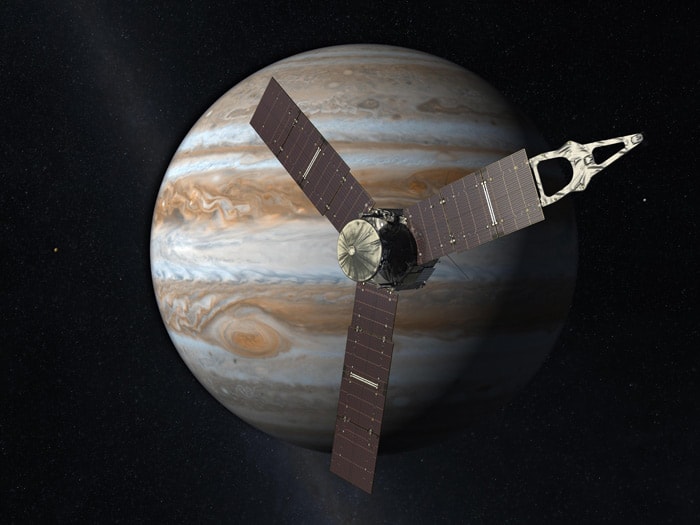
Up in space, NASA’s Juno mission is set to enter the orbit of Jupiter on 4 July, handily timed for a watching US public. After a five-year journey, Juno will be the first craft to visit Jupiter since Galileo in 1995. The Japanese Space Agency (JAXA) is set for a busy year, too. Its Akatsuki spacecraft entered orbit around Venus last month, and mission scientists expect to receive its first data in April. JAXA also plans to launch the ASTRO-H X-ray telescope into low Earth orbit this year, to study everything from the large-scale structure of the universe to the distribution of dark matter in galaxy clusters.
Following a five-year journey, NASA’s Juno craft will arrive at Jupiter handily timed for Independence Day in the US. (Courtesy: NASA/JPL)
Astroparticle physicists, meanwhile, are set to start work in 2016 on a $14m upgrade to the Pierre Auger Observatory – the world’s largest cosmic-ray observatory – in Argentina. The AugerPrime upgrade will involve installing scintillation detectors alongside the 1660 existing water Cerenkov detectors, allowing researchers to more efficiently separate the electrons and muons that are created in the cascade of secondary particles created when a comic ray hits the Earth’s atmosphere. This, in turn, should make it easier to identify cosmic rays that are high-energy protons.
Ups and downs
All is not entirely rosy in astronomy, though. Hawaii’s Supreme court recently ruled that the construction permit for the $1.4bn Thirty Meter Telescope (TMT) on top of Mauna Kea mountain is invalid. The ruling will force the telescope’s backers to restart the entire permit process, delaying the project and adding further uncertainty. Construction of the TMT has already been on hold since last April following protests by native Hawaiians, who see its construction on Mauna Kea as desecration of their spiritual and cultural pinnacle.
In nuclear physics, the ITER tokomak fusion reactor, which is being built in Cadarache in southern France, faces another turbulent year. After last November’s ITER council meeting, rumours surfaced that the project’s completion could slip by six years, from 2019 to 2025. The council will now carry out its own review to see if there is scope for tightening the timeline and cutting costs, with a new plan, or “baseline”, due out in June. On a related note, the Wendelstein 7-X stellerator in Greifswald, Germany, which switched on last week, is set to be put through its paces next year as researchers test this type of fusion device.
Quantum frontiers
Predicting what will happen across the rest of physics and in physics-based industry is harder, where progress is vital but fragmented across myriad groups, sectors and businesses. My tip is seeing “Li-Fi” – a light-based alternative to radio-frequency Wi-Fi – gaining commercial traction. Work on graphene and other 2D materials will continue, with the focus on layering a few 2D materials to make novel “designer” heterostructures using, say, graphene layers as electrodes and boron nitride as insulators.
Applications of physics are crucial, and it is thanks to them – and through the advocacy of organizations like the Institute of Physics (IOP), which publishes Physics World – that science funding in the UK survived cuts in the country’s recent Comprehensive Spending Review. There will be further positive developments for UK science in 2016, with the opening of the massive new £650m Francis Crick Institute in London. Named after the co-discoverer of the structure of DNA, the institute will be the country’s flagship biomedical-science lab, with as many as a fifth of the 1250 staff being physicists, chemists, mathematicians and engineers. Remember that biosciences and the environment dominate Altmetric’s list of the top 100 most popular scientific papers of 2015, as judged by how much they were shared and discussed in mainstream and social media.
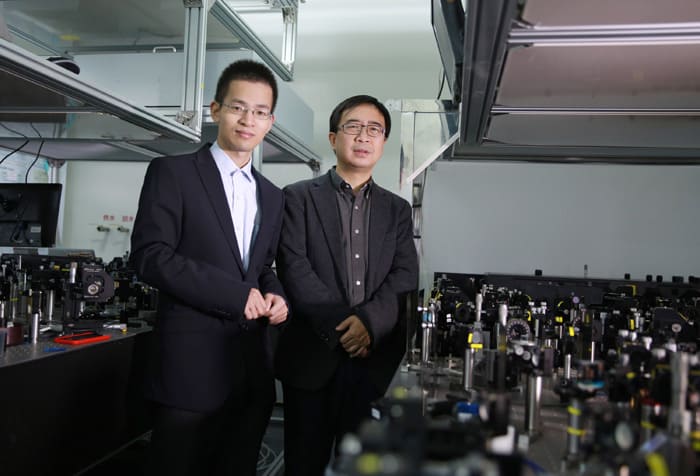
Jian-Wei Pan and Chaoyang Lu of the University of Science and Technology of China in Hefei won this year’s Physics World Breakthrough of the Year award, and we can expect further exciting advances and applications in quantum physics in 2016. (Courtesy: University of Science and Technology of China)
The beauty of physics, however, is that even the most esoteric research can unleash unforeseen benefits – as the winners of the Physics World 2015 Breakthrough of the Year will concur. We picked Jian-Wei Pan and Chaoyang Lu of the University of Science and Technology of China in Hefei, for being the first to achieve the simultaneous quantum teleportation of two inherent properties of a fundamental particle – the photon. The researchers are already talking about applications, such as “long-distance quantum communications that provide unbreakable security, ultrafast quantum computers and quantum networks”. We can also look forward to further developments in 2016 from the UK’s ambitious £270m National Quantum Technologies Programme, which seeks to stimulate applications of quantum physics.
Speaking of which, surely 2016 will be the year when Anton Zeilinger – the doyen of quantum communication, computation and information – will finally win a long-overdue Nobel Prize for Physics? I’ve backed the Austrian quantum guru for Nobel glory for a long time, and 2016 has to be his year, possibly with Alain Aspect and John Clauser for their Bell’s inequality experiments. The Nobel Committee for Physics take note.
Season’s greetings
As for Physics World, in 2016 we’ll be keeping an eye on the industrial side of physics via our “Focus on” series, which includes nuclear energy (April), nanotechnology (May), optics and photonics (June) and vacuum technology (August). There will also be focus issues on neutron scattering (October), and astronomy and space (December). Also don’t miss our special report on China in September, which will see the editorial team visiting the world’s fastest rising physics powerhouse. We have special issues coming up on diversity (March), planetary physics (July) and natural hazards (November). Plus, on this website, we will be following all of the developments in the world of physics through our news and blog channels as well as our podcasts, videos and 100 Second Science. And finally, remember that all IOP members can read the award-winning digital magazine online or through our apps, and, if you are not already an IOP member, don’t forget to join to get instant access to every issue.
Happy with our predictions? Annoyed at something we missed? Tell us what you think by commenting below
The International Year of Light and Light-based Technologies (IYL 2015) will soon draw to a close, in a year that has seen thousands of events celebrating the science and applications of light in more than a 100 countries worldwide. Officially launched in January at the headquarters of the UN Educational, Scientific and Cultural Organization (UNESCO) in Paris, IYL 2015 has involved more than 100 partners from 85 countries – including the Institute of Physics, which publishes Physics World.
“IYL 2015 is among the most successful and visible of any of UNESCO’s international observances,” says John Dudley, president of the European Physical Society (EPS), which came up with the idea for the year of light in 2009. “This year has seen unparalleled co-operation between partners who have not traditionally worked together.”
A range of international and national events have been held, touching on light in everything from archaeology and communications to medicine and the arts. The Light: Beyond the Bulb project, for example, has put the science of light into public settings around the world, such as parks, metro-stations, airports and libraries, while the Study after Sunset initiative promoted the use of solar-powered light-emitting-diode (LED) lanterns in parts of the world where there is little or no reliable source of light after dark. The iSPEX-EU campaign has used “citizen science” to measure air pollution with smartphones; while children, teachers, scientists and artists from more than 25 countries came together to write the “SkyLight” science opera.
Leaving a legacy
Organizers behind the year hope that the impact of IYL 2015 will be felt for many years to come. Dudley says that a number of projects are already under way to put long-term programmes into place. The international firm Royal Philips Lighting, for example, has already called on governments to work together and end light poverty by 2030.
“In developing countries, the need for reliable and safe lighting for education and improved quality of life is now clear at both the public and political level,” says Dudley. “Another example is the awareness of how smart lighting and good design can reduce energy waste and cut light pollution – it is hoped that standards associations will now follow this up to influence building codes.”
Dudley says that IYL 2015 has also allowed the scientific community to make governments and funding agencies aware of the “many ways in which photonics and associated technologies impact their lives, in areas from medicine to communications”. One important message, he adds, is that many of the applications we benefit from today have their origins in basic curiosity-driven research carried out decades ago. “It is not easy to change the mindset of short-term budgets,” he says. “But if we have succeeded even a little, this will be among the most important legacies of the year.”
The closing ceremony for IYL 2015 will take place on 4–6 February in Mérida, Mexico, and is set to be attended by senior figures behind the year, including Nobel laureates, diplomats and business leaders, with a scientific programme consisting of plenary lectures, panel sessions and parallel workshops. It will review the year and its successes, and will focus in particular on ensuring an enduring legacy. A series of light-themed films created by Physics World over the last year will be shown in Mérida as part of a film festival.
“The ceremony aims to identify new projects and products that can have a positive impact on people’s lives and the environment,” says Ana María Cetto of the National Autonomous University of Mexico. “It will address major issues such as light in medicine, the build environment, culture and the arts, as well as the use of light in research, education, energy and industry. We will also look at how to create a dark-sky-friendly future.”
Raising awareness
The UN has declared “international years” since 1959, to draw attention to topics deemed to be of worldwide importance. In recent years, there have been a number of successful science-based themes, including physics (2005), astronomy (2009), chemistry (2011) and crystallography (2014).
This year was picked to celebrate light because it marks a number of anniversaries, including 1000 years since the publication of the work on optics by Ibn al-Haytham, during the Islamic Golden Age. The year also marks 200 years since Augustin-Jean Fresnel’s seminal paper introducing the notion of the wave nature of light, 150 years since James Clerk Maxwell’s work on electromagnetism that paved the way for technologies from lasers to mobile phones, as well as the centenary of the incorporation of the speed of light as an essential part of our description of space and time in Einstein’s equations of general relativity.
A resolution endorsing IYL 2015 was first adopted by UNESCO in October 2012 and submitted to the UN in November 2013. At the 68th session of the UN General Assembly in Paris in September 2013, the resolution was then adopted to declare 2015 the International Year of Light and Light-Based Technologies, to “raise awareness of how optical technologies promote sustainable development and provide solutions to worldwide challenges in energy, education, agriculture, communications and health”.
A free-to-read digital edition containing 10 of our very best feature articles on the science and applications of light is available in the Physics World app
For a selection of the best Physics World videos on light, including a series of specially commissioned videos for IYL 2015, visit Physics World Showcase: Light
From a physicist creating an award-winning beer to a font based on Albert Einstein’s handwriting, physics has offered up its fair share of interesting stories this year. Here is our pick of the 10 best, in chronological order.
UK to open its first “pub observatory”
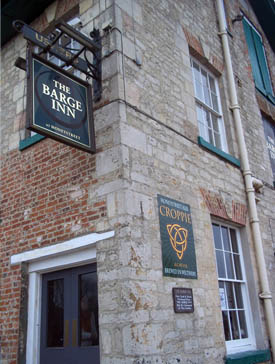
Fancy having a few pints while gazing at the stars? Well soon you could do just that, thanks to a new initiative at the Barge Inn in Honeystreet on the banks of the Kennet and Avon Canal in Wiltshire, UK.
The Barge Inn. (Courtesy: The Barge Inn)
The boozer is already a favourite among UFO aficionados and crop-circle hunters, but now the free house, which has its own brewery making beers such as Alien Abduction and Roswell, is creating the UK’s first pub observatory. The 205-year-old, rural inn received planning permission earlier this year from Wiltshire County Council to construct a 6 m-tall domed observatory in its neighbouring campsite.
Dubbed the Honeystreet Observatory, it will be able to accommodate groups of about 20 people and will feature a Celestron 14″ 1400 Pro telescope. Images from the instrument will also be relayed onto screens in the pub.
But will it be a good idea to mix alcohol with astronomy, particularly with the tricky ascent to the telescope? “Gazing at the stars and falling down the stairs is a regular activity, so we think it will be business as usual,” says pub landlord Ian McIvor. The observatory is set to open in spring 2016 and Physics World editorial staff are looking forward to checking out this important new scientific venue.