Quantum cryptography set for lift-off

Exchanging messages with almost complete security by exploiting the strange laws of quantum mechanics should in future be possible on a global scale. That is the conclusion of physicists in Italy, who have found that the delicate states needed for quantum cryptography can be transmitted via laser beam from an orbiting satellite to a receiver on the surface of the Earth. The researchers say that the relatively simple technology needed for such encryption could be incorporated into conventional communications satellites.

Quantum cryptography involves two parties sharing a secret key that is created using the states of quantum particles such as photons. The communicating parties can then exchange messages by conventional means, in principle with complete security, by encrypting them using the secret key. Any eavesdropper trying to intercept the key automatically reveals their presence by destroying the quantum states.

Losses and curvature

Such cryptographic systems are already produced commercially, but they use fibre-optic cables. Losses in the cables limit the distance over which quantum keys can be sent to about 100 km, and that distance cannot be increased using repeaters, as is the case with classical data, because it is impossible to carry out the necessary amplification. Alternatively, quantum bits, or qubits, can be transmitted through the atmosphere, but this approach has a similar distance limit imposed by the curvature of the Earth.

This is where satellites could help. A single satellite, for example, could be used to send quantum data to two people on the Earth’s surface to enable those people to share a secret key. To date, however, no device capable of generating or detecting quantum states – such as single photons – has been placed in orbit.

Paolo Villoresi of the University of Padua and colleagues have taken a creative approach to this problem by using the Matera Laser Ranging Observatory in southern Italy. This facility usually directs laser pulses at passing satellites and then measures the reflected pulses in order to measure tiny variations in the Earth’s gravitational field. In 2008 Villoresi’s team worked with a group of physicists at the University of Vienna to bounce very weak laser pulses from a satellite and then show that less than one photon per pulse could be detected on the ground (see “Single photons make the trek from space”).

Polarization is preserved

In this latest research, the Italian group has gone one better, showing that it is possible to preserve the polarization state of those photons. Doing so is essential to quantum cryptography because it is the property of polarization – the orientation of a wave’s oscillation – that is used to define the value of the qubits that make up a quantum key.

The researchers prepared the observatory’s laser photons in one of four polarization states – horizontal, vertical, left-circular or right-circular – and beamed each of the states in 10-second bursts towards five satellites (including NASA’s Jason-2) in orbits up to 2000 km above the Earth’s surface. Their aim was to establish whether or not they could limit the fraction of qubits in each burst that had the wrong polarization after reflection to less than 11%. Above this figure, information theory dictates that no secret key can be established.

Villoresi and colleagues found, as hoped, that the error rates from four of the satellites were in single-figure percentages. These satellites employ corner-cube retroreflectors with metallic coatings, which are needed to preserve polarization states. The fifth satellite has uncoated retroreflectors and generated error rates of about 40%.

“Our results prove that quantum-key distribution from an orbiting terminal and a base station is not only a promising idea but nowadays is realizable,” the researchers write.

Rotation on the fly

The tests did not involve the satellites transmitting qubits that could be used to make actual quantum keys, since the polarizations of the qubits were determined on the ground. But the researchers say that a straightforward modification of existing retroreflectors could make quantum-key generation a reality. All that is needed, they say, is to add a device known as a Faraday rotator and a random-number generator to each retroreflector in order to rotate the polarization of incoming photons on the fly.

Scientists in China have already developed a satellite that will generate quantum keys, and plan to launch it next year. This mission will create entangled pairs of photons in space and then send the two halves of each pair simultaneously to two communicating parties on the ground. The retroreflector-based scheme, on the other hand, involves transmitting the key to each user separately. According to Villoresi, the latter approach will be much cheaper and easier to implement and, he says, could “piggyback” on satellites due to be launched anyway.

The research will be described in Physical Review Letters and a preprint of the paper is available on arXiv.
Could lasers guide and control the path of lightning?

Electrical discharges could be controlled and guided along complex paths and even around obstacles, by using a variety of lasers, according to the latest work done by an international team of researchers. Forks of lightning, and on a much smaller scale, the tiny arcs of electricity used in everything from lighting to combustion engines, all follow highly unpredictable paths. The novel method has shown that lasers cannot only be used to guide discharges along straight lines, but also arcs and s-shapes. Greater control over discharge paths could open up a variety of potential applications, including in industrial-machining devices and lightning-protection systems.

While one might be more familiar with lightning, electrical discharges are used in many different technologies, in everything from gas-discharge lamps, arc welders, in spark machining and even to ignite fuel in combustion engines. Despite these many uses, however, our ability to control the exact path these currents take is limited – between the fixed points of the two electrodes the arcs are unpredictable, affected by various factors from air temperature to the presence of pre-ionized matter.

Wielding control

Past research, however, has demonstrated one method of controlling the discharges through the use of laser beams. These can ionize a channel through the air, locally lowering the gas density through heating and thereby creating a guide for the discharge along which there is reduced breakdown voltage.

“Controlling the gas breakdown and the associated electric discharge with laser beams is extremely appealing,” explains Matteo Clerici, a physicist at INRS and Heriot-Watt University. Recent developments in optical physics have brought to light new types of “non-diffracting” laser beams with interesting properties. Made using different lenses, these beams are not concentrated on a single point, as with a regularly focused laser.

Self-healing beams

Instead, the light may be concentrated along a line, as within a Bessel beam (created using an axicon, or conical, lens), or along a parabola, as within an Airy beam (created using a binary phase mask). Both Airy and Bessel beams have the unusual ability of being able to “self-heal” – if their intensity peaks are blocked, these lasers may be able to reconstruct themselves on the other side of the obstacle. This is thanks to how different points along these lasers are sustained by different portions of the input beam that creates them.

Clerici and his colleagues wondered if these unusual beam properties might be applied to better guide electrical discharges. To test their hypothesis, the researchers fired different laser beams between two wire electrodes, placed five centimetres apart, between which a high voltage (of 15 kV) was then applied. Photographs of the beams were taken, showing both the initial, ionization-induced fluorescence along the laser, as well as the path of the subsequent discharge.

In the case of a regular (Gaussian) laser beam, a distorted and largely unpredictable discharge was seen to form along the beam’s path. In contrast, a Bessel beam – whose high-intensity peak is much smaller in cross-section – resulted in a discharge guided along a significantly more defined straight line. In a similar fashion, a curved and well-defined discharge was seen to form along the path of a self-bending Airy laser beam – and combining two Airy beams enabled the researchers to guide the discharge along an s-shape.

Laser lasso

Furthermore, when an obstacle was placed in the direct line of both the Airy and Bessel beams, the self-healing properties were seen to allow the discharge to leap over the obstacle – leaving it undamaged – with the spark returning to the laser guide on the other side.

Practical considerations

“This work opens the way of directing electric discharges and possibly energy along arbitrary paths in free space,” comments Stelios Tzortzakis, an optical physicist at the University of Crete, who was not involved in this study. Jean-Claude Diels, a physicist at the University of New Mexico, who was also not involved, similarly commends the study for its interesting results. He cautions, however, that the use of laser beams may scale up poorly to applications requiring discharges over larger distances – as might be required for lightning triggering and protection systems. “The experiments are quite interesting for small-gap-discharge experiments, where the air is ionized, and the [laser beam] indeed produces a conductor for triggering and guiding the discharge,” says Diels. But he adds that we now know that long-gap discharge is triggered and guided by “air rarefaction by the shock wave created in air by recombining ions. Indeed, the discharge is seen to start a long time after the ions have recombined, and the channel created by the light filament is no longer conducting”, meaning that it will be quite a challenge to apply Clerici’s findings to guide lightning.

With their initial study complete, Clerici and colleagues are now exploring the potential to guide discharges along more elaborate trajectories, and around tighter arcs, by using more complicated optical elements. While the current work utilized only static optical elements, Clerici notes that the potential also exists to guide discharges using reconfigurable devices such as spatial light modulators or deformable mirrors. He adds that “this may become relevant for machining and welding applications, where complex operations may be performed without moving the samples.”

The research is described in Science Advances.

A galaxy for a Galáctico and astronomers weigh in on a famous kiss

By Hamish Johnston

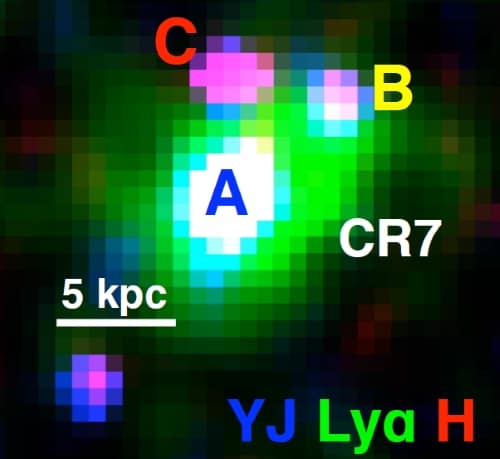
Over the past decade or so the Real Madrid football club has acquired a string of high profile players dubbed the “Galácticos”. Now the most expensive of these footballers – the Portuguese forward and Real Madrid number 7 Cristiano Ronaldo – has a distant galaxy named after him. The galaxy is dubbed “CR7” and was discovered by a team of astronomers led by David Sobral of the University of Lisbon using several different telescopes.

CR7 actually has two meanings, the second being “COSMOS Redshift 7”. COSMOS refers to the Cosmological Evolution Survey, which is using a number of telescopes to search for very old galaxies.

(more…)

Frequency combs smooth out optical-fibre signals

A new technique to reduce the effect of noise in fibre-optic cables, by adapting signals to compensate for it in advance, has been demonstrated by researchers in the US. The team has increased the maximum power – and consequently, the distance – at which optical signals can be sent through the fibres. Its technique could potentially be implemented in existing optical fibres that carry information all over the globe, thereby significantly enhancing their capacity, and could be a first step toward a faster Internet.

While there are many benefits of using fibre-optic fibres to transmit data, one of the most significant is that photons do not significantly interact with one another, so multiple optical signals can travel down the same line. However, as the signal propagates, noise gradually creeps in, and this creates “crosstalk” between the signals. To reduce the crosstalk and prevent the signals becoming lost in noise, engineers cannot squeeze different signals too close together within a single channel, or from spacing the channels too close in frequency, limiting the capacity of a fibre.

Noisy crosstalk

The noise comes from two main sources. First, from amplifiers spaced regularly along the fibres to regenerate the signal as it propagates. If this were the only noise, one could simply turn up the signal power, reducing the number of amplifiers needed and the resulting noise they inject. However, another type of noise is caused by the fact that the refractive index of silica is not perfectly linear, which creates high harmonics of the signals that interfere with one another, creating crosstalk. This type of noise gets worse at higher power levels, so above a certain threshold, turning up the power actually increases the overall amount of noise contaminating the signals.

Unlike the random noise from amplifiers, however, this nonlinear interaction noise is deterministic. This makes it possible, in principle, to modulate the signals in advance to compensate for it. However, various groups’ efforts to achieve this had met with little success. “A system typically has about 30 to 200 optical channels, each transmitted by an independent laser,” explains optical physicist Nikola Alic, of the University of California, San Diego. “These lasers are by no means perfect: their exact frequency has a certain tolerance, and furthermore they wander in frequency over time.” This uncertainty in the relative frequencies of the channels makes it impossible to calculate the exact nonlinear interaction noise and compensate for it effectively. Instead, in August last year, Alic and colleagues proposed using a frequency comb – in which one laser produces a series of pulses with equally spaced frequencies that act as a “ruler” – and transmitting each channel using a different tooth of the comb. If the fundamental laser frequency changes, all of the teeth move in step, so the relative frequency does not change and the nonlinear interaction is unaffected.

More power, less noise

The researchers have now put their proposal into practice, sending signals down three separate frequency channels in over 1000 km of standard optical fibre, and using computer software, have attempted to compensate for the nonlinear interaction noise. When the three channels were transmitted by three separate lasers, the researchers found that, despite their attempts to compensate for it in advance, there remained significant crosstalk between the signals, and as a result, signal clarity declined if they put more than 200 μW of power into each signal. Conversely, when the channels were transmitted via the teeth of a frequency comb, the researchers could reduce crosstalk far more effectively. They could therefore make the signals 10 times as powerful before nonlinear noise became a problem. If implemented in practice, this would mean fewer amplifiers needed, less random noise injected into the signals, and much greater fibre capacity.

Govind Agrawal, of the University of Rochester in New York, who was not involved in the current work, told physicsworld.com that “frequency combs have been used for metrology and other applications, but this paper is showing, for the first time, that they can have a big impact on telecommunications.” Peter Andrekson, of Chalmers University of Technology in Sweden, who was also not involved, agrees that the work is “significant”, although he cautions that “if you want to apply this in a real live information traffic situation, you will have to implement real circuits that do this pre-compensation on the fly. That will require the development of very sophisticated, expensive, power-hungry and high-bandwidth circuits.” Alic agrees, but he remains optimistic: “Yes, a push will be necessary from both researchers and industry,” he says, “but I think the rewards will be worth it.”

The research is published in Science.

Vidya Deepa: the lamp of knowledge

The simple act of turning on a light to continue studying after sunset is a standard solution for many students around the world. But for the approximately 1.5 billion people who live outside of electricity grids, this is a luxury they do not necessarily have. Instead, many students in the developing world have been forced to use kerosene lanterns that are inefficient, expensive to fuel and a fire hazard, not to mention the toxic fumes they produce that can be lethal.

Fortunately, in recent years an alternative solution has arrived in the form of LED lanterns, which can be far safer and more sustainable. This short film takes you to a small rural community in the Indian state of Karnataka where a school has been issuing students with these LED lights free of charge, supported by the Srivali Trust. Homes in this community do not always have a steady supply of electricity, which has caused students to strain their eyes while attempting to study by candlelight.

It is an inspiring short documentary, produced by Indian filmmaker Maithili Padukone, which explores the impacts of these LED lights on the students, many of whom are the children of farmers, potters and fishermen. India is home to an estimated one third of those people in the world who live outside of electricity grids.

This is film number three in a series we have commissioned for the International Year of Light (IYL2015), with each film telling local stories involving light and its applications and how they can affect people’s lives. The first film in the series followed an amateur astronomer seeking out a patch of dark sky amid the dazzling lights of New York City. The second was a film about the role of light in regulating sleep cycles and how this regular pattern has been significantly disrupted in a British woman who had her eyes removed.

  • To find out more about light and its applications, take a look at the March special issue of Physics World. If you’re a member of the Institute of Physics (IOP), you can get access to the special issue about light in our lives with the digital edition of the magazine

Agreeing to disagree at the next Convergence conference

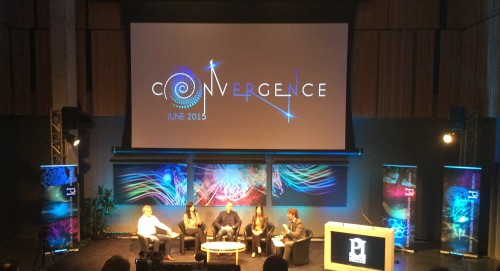
I have just returned from the Perimeter Institute (PI) in Waterloo, Canada where I enjoyed a fantastic few days immersed in discussions involving some of the sharpest minds in physics. The great and good were at the PI for the first Convergence conference and from what I have heard, the participants are calling it a great success.

But could it be even better next time?

At the panel discussion that closed the conference on Wednesday, several people suggested that “challenge” should be the theme of the next meeting. In particular, the structure of the meeting should facilitate questioning the views of individual researchers as well as more general critiques of accepted wisdom – cosmic inflation was one topic suggested from the audience. Indeed, one person in the audience suggested that participants in a forum could be asked to argue on behalf of an idea that they don’t accept.

In my experience, most physicists are extremely pleasant and polite people who are interested in understanding and developing the ideas of their colleagues rather than challenging them in a public forum. As a result, a “Challenge” conference could be difficult to pull off but it would certainly be an event I would want to attend.

The talk that came closest to fitting the bill for “Challenge” was Kendrick Smith’s lecture “Planck results and future prospects in cosmology”, which you will shortly be able to watch for yourself here.

First image of a black hole expected a year from now

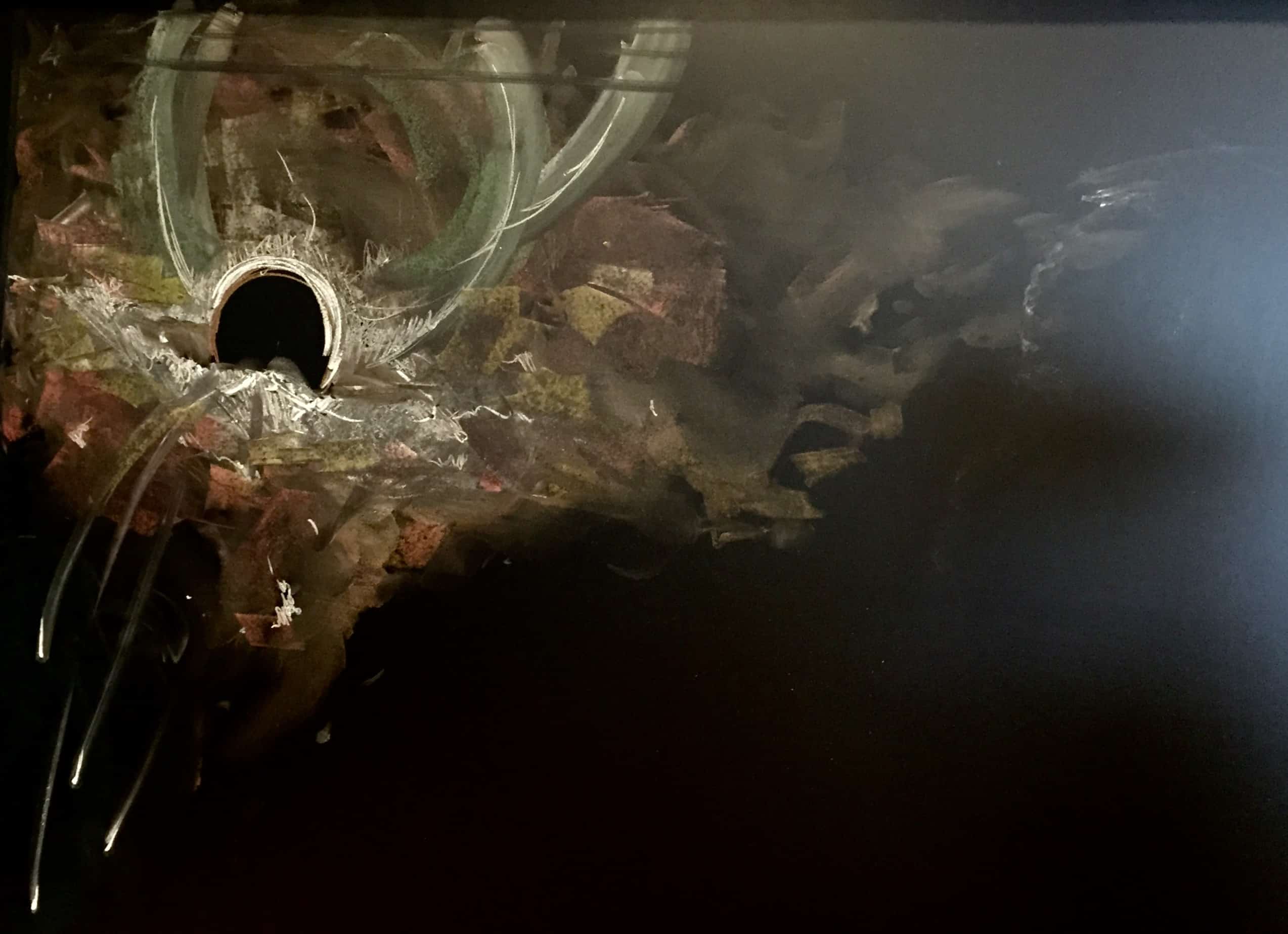
Chalk art of a black hole at the Perimeter Institute for Theoretical Physics (PI).

By Louise Mayor in Waterloo, Canada

According to Avery Broderick, a physicist at the University of Waterloo and the Perimeter Institute for Theoretical Physics (PI) in Canada, the iconic picture of a black hole from the film Interstellar “really only presages astronomical reality by about a year”. That’s because, as Broderick explains, “as soon as next spring the Event Horizon Telescope is gonna produce images of the black hole at the centre of the Milky Way”.

(more…)

The ins and outs of black holes and a new way of thinking about general relativity


By Hamish Johnston

While at the Convergence conference at the Perimeter Institute (PI), Physics World’s Louise Mayor and I had dinner with Sean Gryb. He did his PhD at the PI and is now doing a postdoc at Radboud University Nijmegen in the Netherlands. In the above video he shares some of his highlights of the conference.

Gryb is working on “shape dynamics”, which is a new idea for re-evaluating Albert Einstein’s general theory of relativity (GR). The idea was initiated by Julian Barbour and Gryb became involved in the development of shape dynamics while he was at PI. He now belongs to a small international band of physicists who are developing the concept. While shape dynamics is an alternative treatment of GR, the ultimate goal of their work seems to be the creation of a new framework for a theory of quantum gravity – an important goal of theoretical physics.

(more…)

Thin semiconductors go through the Mott transition

The optical response of atomically thin materials has been successfully controlled on very short timescales by a group of researchers at Columbia University in New York and Stanford University in California, US. The finding advances our understanding of many-body phenomena in low-dimensional systems. They could also help in the development of photonic devices, such as light emitters and lasers made from novel 2D transition metals.

The team, led by Tony Heinz, studied the 2D material tungsten selenide (WS2). This semiconductor belongs to the family of the transition metal dichalcogenides (TMDCs) – these have the chemical formula MX2, where M is a transition metal (such as Mo or W) and X is a chalcogen (such as S, Se or Te).

The materials go from being indirect band-gap semiconductors in the bulk, to direct band-gap semiconductors when scaled down to monolayer thickness. These monolayers efficiently absorb and emit light, and so might find use in a variety of optoelectronics device applications, such as light-emitting diodes, lasers, photodetectors and solar cells. TMDCs might also be used to make circuits for low-power electronics, low-cost or flexible displays, sensors and even flexible electronics that can be coated onto a variety of surfaces.

Strong photoexcitations

To explore the optical response of these materials in more detail, especially when they are strongly photoexcited, Heinz and colleagues subjected monolayers and bilayers of WS2 to very short and intense laser pulses, which lasted just 250 fs. They probed the resulting photoresponse over a range of wavelengths, using a technique known as “spectrally resolved ultrafast pump–probe spectroscopy”. When the sample absorbs an ultrafast laser pulse, an extremely high density of excited charge carriers (electrons and holes) is injected into the material (up to roughly one electron per square nanometre).

“In this so-called electron–hole plasma regime, the semiconductor material starts to behave somewhat like a metal,” explains team-member Alexey Chernikov, “although the comparison should not be taken too literally, since the band gap in the material is still present.”

Transition time

The presence of these carriers strongly modifies the character of the optically excited states in the material, he says. “In the unexcited material, when a photon is absorbed, it creates an exciton (a bound electron–hole pair), formed by the Coulomb attraction between the oppositely charged carriers,” explains Chernikov. He adds that “at the limit of high excitation density, however, the photogenerated charges mutually screen one another, and a plasma of free electrons and holes is produced. Going from a regime of excitons to one of free carriers is known as a Mott transition, and is of fundamental interest in many-body physics. Understanding the Mott transition in these materials is also important for applications involving high excitation densities of charge carriers”.

That these monolayer materials can sustain very intense light pulses is a property that would benefit devices operating at high intensity, such as lasers, concentrator solar cells and intra-cavity saturable absorbers and modulators, adds team-member Claudia Ruppert, who is currently at the Technical University of Dortmund in Germany.

Electron behaviour

“From a more fundamental point of view, the Mott threshold of the transition from semiconducting to metal-like behaviour identified in our study roughly defines the limit of the regime where phenomena associated with stable exciton particles can be observed,” says Chernikov. “Excitons have attracted a lot of attention in our field, thanks to their large binding energies and their peculiar ‘spin-valley’ and related properties. It is thus important to determine when these particles exist and when they are unstable and ionized.”

The Columbia–Stanford team says that it is now trying to better understand how interacting electrons behave in this class of material. “We will do this by both mapping the ‘phase-space’ diagram for the electronic many-body states in 2D films such as WS2 and by finding out how to efficiently manipulate them,” says Heinz.

The research is published in Nature Photonics 10.1038/nphoton.2015.104.

Women in graphene

 By James Dacey in Manchester

Women in Graphene posterToday is the third day of Graphene Week, a conference at the University of Manchester devoted to the fundamental science and applications of 2D materials. While many of the talks require a PhD in materials science to even understand the title (I for one am struggling), one session taking place this evening has the refreshingly simple title: Women in Graphene. Intrigued, I caught up with the session organizer Katarina Boustedt from Chalmers University of Technology in Sweden.

Graphene Week is an annual event organized by the Graphene Flagship, the EU’s biggest ever research initiative with a budget of €1 billion. As promoting equality is a key part of the Flagship’s mission, Boustedt has launched this initiative to support women working in 2D materials research. Tonight’s two-hour session is designed to start the conversation and find out the types of support that women researchers would like.

(more…)

Copyright © 2026 by IOP Publishing Ltd and individual contributors