The cradle of modern science

Why did Newton’s laws take the form they did? We are so familiar with the three laws of motion, the inverse square law of gravity and even “toys” such as Newton’s cradle that we can easily overlook how such achievements were actually reached and how they fit in with our present understanding of the world.

In To Explain the World: the Discovery of Modern Science, the particle physicist and Nobel laureate Steven Weinberg addresses this gap by giving us a historical tour of the development of the scientific method as we know it today. On the way, he gives us plenty of his own comments on what he, as a physicist, thinks about the way we got there.

This story is fascinating, with plenty of ups and downs throughout history, yet a big question remains: why does Weinberg avoid placing this narrative squarely in the context of the philosophy of science? After all, he is dealing with some big questions, such as the degree to which laws really “explain” the world and the sense in which modern science was there to be “discovered”. Many philosophers have already pored over these topics in much greater depth, so why not make use of their expertise?

I will return to this question later, for Weinberg’s tour is worth taking in itself. He guides us through four main “landscapes” of scientific thought, starting with the early years of ancient Greece and some of the first major efforts to speculate about nature. Once these foundations are laid, he moves on to the great developments in Greek astronomy that culminated in the competing Aristotelian and Ptolemaic theories of planetary motions.

The next landscape is the Middle Ages, which is more multicultural, being a mix of Greek thought and contributions from Arab science and European universities – all of which prepared the ground for the next landscape, which is the scientific revolution that took place in the 17th century.

Here, Weinberg plunges us into the writings and thinking of the familiar characters of Copernicus, Galileo, and Kepler, ending with Newton and the beginning of what we would call “modern science” (the final landscape in this journey).

On the way, he introduces us to less familiar but important contributors, such as Hipparchus, who is generally regarded as the greatest astronomical observer of the ancient world, and al-Khwarizmi, an Arab scientist of the 8th century who brought us our familiar “Arabic” numbers (which are actually of Indian origin).

One aspect of the book that I particularly enjoyed was the inclusion of many quotes from works that I knew of, but had never had the time to look up myself, such as Aristotle’s On the Heavens (containing his empirical evidence for the spherical shape of the Earth) or the annotated quotes of the three laws of motion from Newton’s Principia. Some of Weinberg’s comments on the way we do science also serve as a good reminder for us today. For example, Newton achieved what he did by realizing the power of being able to predict simple phenomena (the law of gravity) without necessarily being able to explain the more complicated aspects (what gravity is). Very good advice; start with the simple.

The book is not overlong (the main text runs to just 267 pages) and is fairly easy to follow. It is technically thorough from the physics point of view, and the generous endnotes, bibliographic sources and index make it a useful resource for further exploration. On the other hand, though, I rather suspect that philosophers of science will have a field day with it.

While Weinberg offers some useful historical commentary, and makes some attempts to acknowledge certain aspects of the philosophy of science (such as the uncertainty of theories or the possibility that the Standard Model could change significantly), the book’s lack of connections to important previous works on the subject considerably weakens Weinberg’s attempts to shore up the position of realism – the idea that an objective reality exists that is independent of human beliefs, philosophical systems and so on.

Indeed, there is a stark contrast between Weinberg’s evident suspicion of philosophers (he does not appear to appreciate the philosophy of Bacon, Descartes or Kuhn much at all) and his obvious desire to contribute to the philosophy of science by putting forward his own arguments for realism and reductionism.

An example of this reluctance to engage may be found in the way in which Weinberg describes the separation between science and religion during the scientific revolution. He calls this a “divorce” brought about by the need to “outgrow a holistic approach to nature”. The classical view, though, is that the shift had more to do with the desire of Bacon, Galileo, Newton and others to remove personal bias from scientific endeavour (despite their having religious convictions). This fundamental change in thinking – one that is crystallized in the writings of Descartes as being a separation between matter and spirit, res extensa and res cogitans – is what gave modern science its objectivity. Why does Weinberg celebrate the pleasure scientists experience when a law is “discovered” and not want philosophers to experience the same pleasure in discovering patterns within the history of the scientific method?

In some ways, Weinberg’s desire to keep philosophy at a respectable distance is understandable. There are two major reasons for this. The first is the difficulty scientists have in getting a handle on the philosophy of science as a subject. To remedy this difficulty, I would recommend having Mel Thompson’s very accessible Introduction to the Philosophy of Science (2001 Hodder Headline) at hand when reading To Explain the World in order to help judge what Weinberg is saying. The second, more fundamental, reason for keeping philosophy at arm’s length is due to the attacks on science made by adherents of social constructivism. The Sokal–Bricmont affair of the mid-1990s, in which Weinberg was involved, illustrates well the disturbing gulf that still exists today between science and some strands of philosophy.

This incident was part of what was dubbed the “Science Wars”, although this was in fact less a meeting of armies (or minds) than the lobbing of boulders from entrenched positions (see for example Knowledge and the World, M Carrier et al., Springer 2004). If Weinberg wants to reinforce the position of realism – a worthy cause – I think he would do better to reconcile himself with classical philosophy of science. By admitting its usefulness and achievements, he would be better equipped to fight against the real enemy of science – the relativism at the base of post-modernism – without falling into the extremism of scientism. He could also take courage from a more recent philosophical movement, known as speculative realism, that appears in, for example, the work of Quentin Meillassoux (After Finitude) and the physicist-philosopher Bernard d’Espagnat (Veiled Reality).

In this way, instead of skirting round the battlefield, Weinberg could take us into it, equipped with the sort of weapons that philosophers understand and respect, to defend science against relativism in hand-to-hand combat. And, on the way, by raising again questions about the basis of science, radical progress might be made in such fields as reconciling quantum mechanics with general relativity – just as Kuhn observed often happens before a paradigm change.

  • 2015 Allen Lane/Harper Collins £20.00/$28.99hb 432pp
The physics of Alzheimer’s disease

By Hamish Johnston at the CAP Congress in Edmonton, Alberta

One promising route to understanding the causes of Alzheimer’s disease (AD) –  and hopefully finding a cure – is the study of how and why proteins in the brain sometimes form neurotoxic plaques. These plaques are disc-like structures that are about 50 µm in diameter and made from polypeptides. Their presence in the grey matter of the brain is strongly associated with AD and some other neurological conditions, but why they form and why they cause dementia are both not understood.

(more…)

Getting the best glimpse of first-generation stars in the universe

The first possible detection of the earliest stars formed in our universe has been made by an international team of researchers. Using ESO’s Very Large Telescope, the team discovered the brightest distant galaxy observed in the early universe, and in the process found evidence for the as-yet-undetected first generation of massive stars that lie within it. While there has been no conclusive physical proof of their existence until now, astronomers have been keen to study these early behemoths as they had a significant effect on the environment of the nascent universe.

Immediately after the Big Bang, the only chemical elements that existed were hydrogen, helium and some trace amounts of lithium. All heavier elements such as oxygen, nitrogen, carbon and iron – referred to as “metals” by astronomers – require the presence of stars to form. Some are forged in the high-pressure centres of stars, and the heaviest ones are created when the first, enormous stars exploded in supernovae.

Elusive population

The stars we currently observe in our universe fall into two categories: metal-rich “population I” stars such as our Sun, which contain large amounts of heavier elements, and older, metal-poor “population II” stars, such as those in the Milky Way’s halo, which contain less recycled material.

A population that has remained conspicuously absent, however, are the very first stars, which should have formed before the recycled materials existed. These hypothetical, extremely metal-poor stars, termed “population III” stars, should have started forming between 106 and 107 years after the Big Bang. Not only would these early stars have been extremely hot and enormous – several hundred or even a thousand times more massive than the Sun – they would have exploded as supernovae after only about two million years, seeding the universe with the metals to form population II stars. But while they have been theoretically predicted, they are yet to be directly detected, as spotting these stars is very difficult. They were extremely short-lived and would have shone at a time when the universe was largely opaque to their light, towards the end of the “dark ages”.

A team led by David Sobral at the University of Lisbon, and Leiden Observatory in the Netherlands, may have changed this paradigm with the recent detection of an extremely bright galaxy in the early universe. Indeed, as the team’s survey looks at exceedingly distant galaxies, it lets us look back in time, revealing the universe as it was a mere 800 million years after the Big Bang. The survey uncovered several unusually bright galaxies, including the brightest galaxy ever seen at this distance – an important discovery in itself.

But further scrutiny of this galaxy, named CR7, produced an even more exciting find – a bright pocket of the galaxy contained no sign of any metals, and further observations with other telescopes confirmed this initial detection. “By unveiling the nature of CR7 piece by piece, we understood that not only had we found by far the most luminous distant galaxy, but also started to realize that it had every single characteristic expected of population III stars,” says Sobral.

Formation waves

Sobral and his team postulate that we are observing this galaxy at just the right time to have caught a cluster of population III stars – the bright, metal-free region of the galaxy – at the end of a wave of early star formation. The observations of CR7 also suggest the presence of regular stars in clumps around the metal-free pocket. These older, surrounding clusters may have formed stars first, helping to ionise a local bubble in the galaxy and allowing us to now observe the light from CR7.

It was previously thought that population III stars might only be found in small, dim galaxies, making them impossible for us to detect. But CR7 provides an interesting alternative: this galaxy is bright, and the candidate population III stars are surrounded by clusters of normal stars. This suggests that these first-generation stars might in fact be easier to detect than was originally thought.

Additional observations with other telescopes will help to confirm the identity of these stars. In particular, NASA’s upcoming James Webb Space Telescope, set to launch in 2018, is expected to further advance the pursuit of the earliest galaxies and stars in the universe.

The work is to be published in the Astrophysical Journal. A preprint is available on arXiv.

Muzzling scientists leads to mistrust of government says physicist MP

By Hamish Johnston at the CAP Congress in Edmonton, Canada

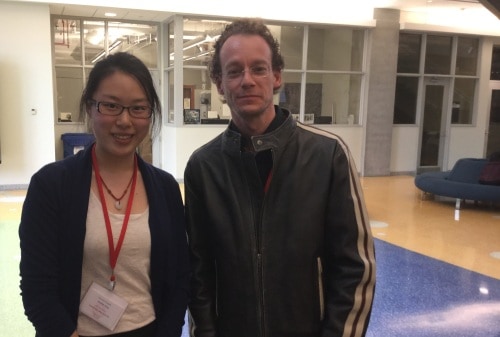
Yesterday I caught up with Ted Hsu, who is member of the Canadian parliament for Kingston and the Islands – and a former physicist. Hsu is a member of the Liberal party, which means he sits on the opposition benches. There he has been an outspoken critic of the current Conservative government over its apparent “muzzling” of scientists on the federal payroll. He believes that when governments seek to silence their experts it leads to more public mistrust of government.

(more…)

Physics World 2015 Focus on Optics & Photonics is out now

PWoptics2015-cover-500By Matin Durrani

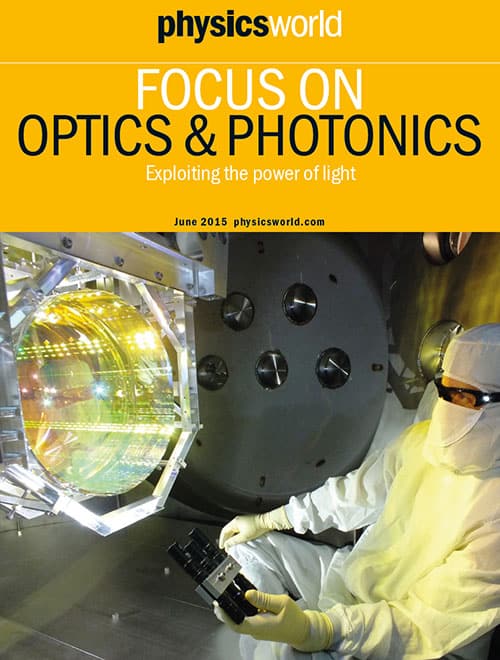
With the 2015 International Year of Light now in full swing, it’s time to tuck into the latest focus issue of Physics World, which explores some of the latest research into optics and photonics.

The focus issue, which can be read here free of charge, kicks off by looking at the giant laser interferometers underpinning the latest searches for gravitational waves. We also report on recent efforts to use optical instead of radio waves for satellite communication and have an interview with Ian Walmsley from the University of Oxford about the vital role that optics and photonics play in the UK’s new £270m Quantum Technologies Programme.

(more…)

US cosmic-ray observatory set for expansion

The Telescope Array observatory in Utah, US, is set for a $6.4m upgrade that will see some 400 detectors added to the facility. This will quadruple its collecting area from 730 km2 to 2500 km2. Increasing the size of the northern hemisphere’s largest ultrahigh-energy cosmic-ray detector will allow astronomers to learn more about the origins of the most energetic particles in the universe.

When a cosmic ray hits the Earth’s atmosphere, it produces a cascade of secondary particles. The Telescope Array currently has 507 scintillation detectors, which generate light in response to incident radiation. By detecting the cascade of particles, astronomers can then obtain information on the direction and energy of the original ray.

Scintillating science

Many astrophysicists believe that ultrahigh-energy cosmic rays are just protons, although some argue that they may include helium and nitrogen nuclei. Possible sources for the highest energy rays include active galactic nuclei, supernova remnants and colliding galaxies. The Telescope Array, which started collecting data in 2008, is able to observe cosmic rays with energies greater than 1 × 10¹⁸ eV.

The observatory involves institutions from Belgium, Japan, Russia, South Korea and the US. Japan has announced it will provide ¥450m ($4.6m) to fund the majority of the expansion, with researchers seeking to find the remaining $1.8m to complete the upgrade. One possible source could be the National Science Foundation in the US. The new detectors will be built over the next three years.

“These experiments are very large because the flux of cosmic rays at the highest energies is very low, about two per square kilometre per century,” says Gordon Thomson, co-principal investigator for the Telescope Array and an astrophysicist at the University of Utah.

Cosmic hotspot

The Telescope Array has previously identified a possible “hotspot” of ultra-high-energy cosmic rays centred on the constellation Ursa Major. The observatory detects around 15 events per year, with a quarter in the hotspot – although this could be a statistical fluctuation. “If cosmic rays were [uniform], we would expect 0.9 events per year in the hotspot area of the sky, whereas we see about 3.5 events per year on average,” says Thomson. To confirm and study the hotspot, researchers need to collect more data. “With the fourfold increase in data rate from a four-times-larger detector, we expect to answer interesting questions about the origin of cosmic rays,” he adds.

The expansion, when complete, will make the Telescope Array similar in size to the Pierre Auger Observatory in Argentina, which is currently the world’s largest cosmic-ray detector with a 3000 km2 collecting area. “Having observatories of a similar size in both the northern and southern hemispheres will enable full-sky surveys of ultrahigh-energy cosmic rays,” says Karl-Heinz Kampert, a particle physicist at the University of Wuppertal in Germany who is co-spokesperson for the Pierre Auger Observatory. “The Telescope Array suffers a lot from the relatively low rate of events set by the present area, so expanding the detector array is a natural step – this should strengthen indications of a hotspot seen in the northern sky.”

Debating warp bubbles and quark novae over beer and samosas

Photograph of Miguel Alcubierre lecturing in Edmonton

By Hamish Johnston at the CAP Congress in Edmonton, Canada

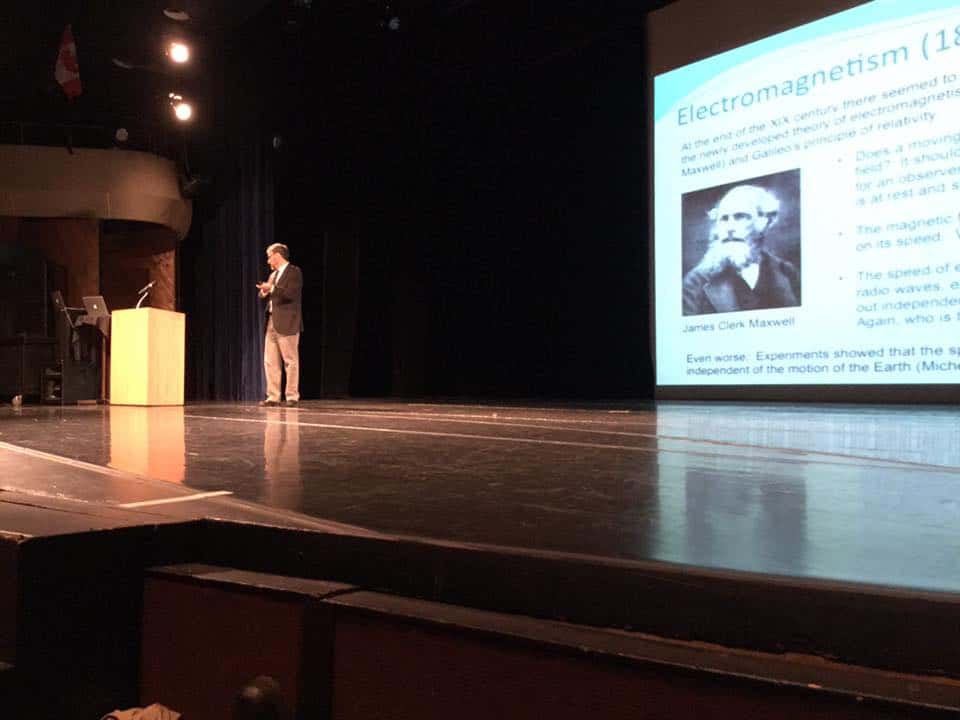
The first day of the Canadian Association of Physicists (CAP) Congress at the University of Edmonton closed yesterday on the theme of time travel. Surely that is science fiction, you are thinking? But Miguel Alcubierre of the National Autonomous University of Mexico (UNAM) wasn’t joking when he delivered the Herzberg Memorial Lecture yesterday evening (although he did giggle a lot during his talk, which was very endearing). The session was called “Faster than the speed of light” and it was a fascinating romp through some of the more bizarre implications of Einstein’s general theory of relativity (GR) – which is 100 years old this year.

(more…)

Lament for ‘the reactor that can do everything’

By Hamish Johnston at the CAP Congress in Edmonton

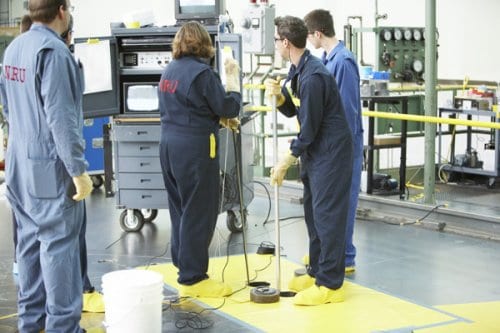
In 1957 Atomic Energy of Canada built “a reactor that can do everything” at Chalk River, Ontario. Dubbed the National Reactor Universal – or NRU – that facility will shut down for good in 2018 and Canada’s neutron-science community is now pondering its future.

In the short term, physicists will have to travel abroad to use neutron sources, such as those at Oak Ridge in the US and Grenoble in France. The challenge during this 10–15 year period will be to keep the research community together and make sure that vital skills and expertise built up over decades at the NRU will be retained. In the longer term, there are calls for Canada to build a new neutron facility, but it is by no means clear whether that will happen.

(more…)

'Physics across Canada' tour kicks off in Edmonton


By Hamish Johnston

Greetings from Edmonton on the western edge of the Canadian prairies, where I am starting my “Physics across Canada” tour. The nation’s physicists are gathering here for the annual Canadian Association of Physicists Congress at the University of Alberta.

The congress opens today with a session that promises to be out of this world. Exoplanet expert Sara Seager of the Massachusetts Institute of Technology is talking about the search for habitable worlds beyond our blue planet. I am really keen to learn more about the latest techniques for studying the atmospheres of exoplanets and I plan to record an interview about that very subject later this week.

(more…)

Philae comet lander wakes up from hibernation mode

The European Space Agency’s Philae lander has woken up following seven months in hibernation mode. Controllers at the agency received a signal from the lander at 22.28 CET on 13 June, and are now hopeful that the mission will soon be able to restart science operations.

Philae was part of the Rosetta mission that was launched in 2004 to study Comet 67P/Churyumov–Gerasimenko. While Philae successfully landed on the comet last year, it touched down in an awkward position, meaning that its solar panels could not charge. The craft still managed to carry out experiments using its onboard instruments, but after around 60 hours of observations – with the battery fully depleted – it entered hibernation mode on 15 November.

As the comet moved closer to the Sun this year, researchers were hopeful that Philae would slowly emerge from the shadows, allowing its solar panels to charge its battery. It is only when Philae receives around 19 W of power that it can start to reboot and then make contact. Since 12 March, the communication unit on orbiter Rosetta has been turned on to listen for the lander.

Late on Saturday, the Lander Control Center at the German Aerospace Center announced it had received a signal from Philae, when around 300 “data packets” were sent from the probe during an 85 s period. “Philae is doing very well: it has an operating temperature of –35 °C and has 24 W available,” Philae project manager Stephan Ulamec said in a statement. “The lander is ready for operations.”

Starting science

The Rosetta researchers will now try to piece together what happened to the lander in the past few days, as Philae would have woken a couple of days before it sent the signal. Indeed, there are still more than 8000 data packets in Philae’s memory that will give the team crucial information about the status of the lander. “We have only had brief interaction with the lander, but it seems in very good shape,” Matt Taylor, Rosetta project scientist, told physicsworld.com.

Taylor adds that the first priority is to get Rosetta in the best location for it to be able to communicate with Philae. “This is a major challenge, given that the comet is active and the dusty environment is challenging to navigate safely,” says Taylor. “Once we optimize things, then we can start lander science.”

With Philae receiving around three hours of sunlight each day, it is hoped that the craft will be able to spend this time doing experiments. In particular, a high priority will be drilling into the surface of the comet to obtain a sample that can then be analysed.

Taylor adds that he is hopeful that Philae can then spend a couple of months doing science before the comet starts heading back towards the outer solar system. “We will have to see how things evolve in the next days from the analysis of housekeeping data from the lander,” he says. “But I hope for a few months [of measurements].”

  • The Rosetta mission was awarded the Physics World 2014 Breakthrough of the Year, for being the first to land a spacecraft on a comet. Watch the Google Hangout video below, where physicsworld.com editor Hamish Johnston talks to Rosetta Mission manager Fred Jansen

Copyright © 2026 by IOP Publishing Ltd and individual contributors