An interstellar culture clash

Ever since we first dreamed of life on other planets, science-fiction writers have explored the potential consequences of an interstellar culture clash. Typically, they depict alien species as either hostile and seeking to conquer Earth – as in H G Wells’ War of the Worlds – or friendly and misunderstood, as in the blockbuster film E.T. It is the former scenario that drives the fictional events of Cixin Liu’s The Three-Body Problem.

This book – the first in a trilogy that is already a bestseller in Liu’s native China, and has now been translated into English by Ken Liu – offers a refreshing take on the well-worn “hostile aliens” trope, creating an intricate, suspenseful and multi-layered novel peppered with memorable characters marked by tragedy. Among these characters is an astrophysicist called Ye Wenjie who, as a young woman during China’s violent Cultural Revolution, witnesses the brutal murder of her physics professor father at the hands of his former students during a public rally, or “struggle session”. His crime: refusing to denounce modern physics theories deemed ideologically incompatible with the Communist regime.

Ye Wenjie is more fortunate than her father. She survives the purge, and as part of her cultural redemption, she is recruited to work on a secret military project to transmit radio signals into space in search of intelligent life – the Chinese equivalent of SETI. Those signals eventually reach an alien race on the brink of extinction, who set forth to conquer Earth.

Fast forward 40 years. New and wildly inconsistent results from particle accelerators are baffling physicists, including many members of the Frontiers of Science, an elite cadre of influential scholars. Several members have begun committing suicide, purportedly devastated by the possibility that invariance might not hold across the universe. “All the evidence points to a single conclusion: physics has never existed and never will exist,” one despairing string theorist writes in her suicide note.

Meanwhile, a nanomaterials researcher named Wang Miao is recruited by the military and asked to infiltrate the Frontiers of Science as part of a top-secret programme to prepare the planet for interstellar warfare. In the course of his investigations, Wang soon finds himself enthralled by a strange online immersive video game called Three-Body.

The name of the game alludes to a problem outlined in Isaac Newton’s Principia in 1687: predict the movement of three moving objects, taking into account the effects of their mutual gravitational attraction. It is a relatively simple matter to calculate the movement of two objects, such as the Earth and the Sun, but adding a third body, like the Moon, makes for a much more difficult calculation.

Three-Body players attempt to solve the three-body problem in order to predict the strange weather patterns on a virtual world with three suns. This world vacillates between chaotic and stable eras, and civilization can thrive only during stable eras. Players propose solutions and then see how their hypothesis plays out in the ensuing simulation – how long can their virtual civilization survive?

It is not a frivolous exercise. The game turns out to be part of an elaborate campaign by the same aliens who received those radio signals 40 years ago – inhabitants of an actual planet with three suns – to recruit possible allies from the disillusioned ranks of mankind. Those who think humanity is beyond redemption square off against those seeking to defend our planet from the coming invasion, and the fate of two different species lies in the balance.

Liu infuses his world with impressively accurate scientific detail, deftly straddling the boundary between real-world research and imaginative speculation. While Wang’s ultrathin, high-strength nanomaterial – code-named “Flying Blade” because a mere hair’s breadth filament could slice a car in half – is fictional, the molecular self-assembly technique he is trying to develop to scale up production of Flying Blade will be recognizable to any materials researcher. The discussions of invariance and descriptions of modern astronomical instruments and accelerator technology are spot on. Even the Three-Body gaming platform, with its panoramic viewing helmet and haptic feedback V-suit, is firmly rooted in today’s cutting-edge gaming technology.

Unfortunately, after taking so much care to set his plot in motion, in the end, Liu brings his various narrative threads together in uncharacteristically clumsy and ham-fisted fashion. The final pages seem rushed, with long stretches of dry exposition, some of which doesn’t make much sense. Also, the notion that theoretical physicists would be killing themselves in despair over discovering that invariance does not hold across space and time strains credibility. In reality, theorists are made of sterner stuff, like the more pragmatically minded Wang. Most would be thrilled at the prospect of exciting new physics, particularly since whoever solved the conundrum would be a lock for a Nobel prize.

Liu shines most in his gut-wrenchingly evocative depiction of the Cultural Revolution, particularly its bewildering hostility to science. It may strike modern readers as strange that relativity was once considered hopelessly bourgeois, part of a “reactionary academic authority” – especially since Albert Einstein visited Shanghai in 1922. This was an era when teaching general relativity, the Big Bang or the Copenhagen interpretation of quantum mechanics would lead to arrest and torture – and in the case of Ye Wenjie’s father, death. As one of his former students observes when explaining his decision to focus on applied physics, “It’s easy to make ideological mistakes in theory.”

Blind ideology has no place in science. Granted, physicists continue to debate the viability of the Copenhagen interpretation of quantum mechanics, although they need not risk their lives to do so. Yet while the specific points of controversy might be different, a similar strain of denialism still runs through our society. The Three-Body Problem is set in China, but its central theme about the danger of valuing politics and personal belief over objective science transcends time, culture and geography. It’s a warning we should all heed. We may need that science one day to fight off invading alien hordes.

  • 2014 Tor Books £17.99/$25.99hb 336pp
Particle-physics lab beneath a Mexican pyramid

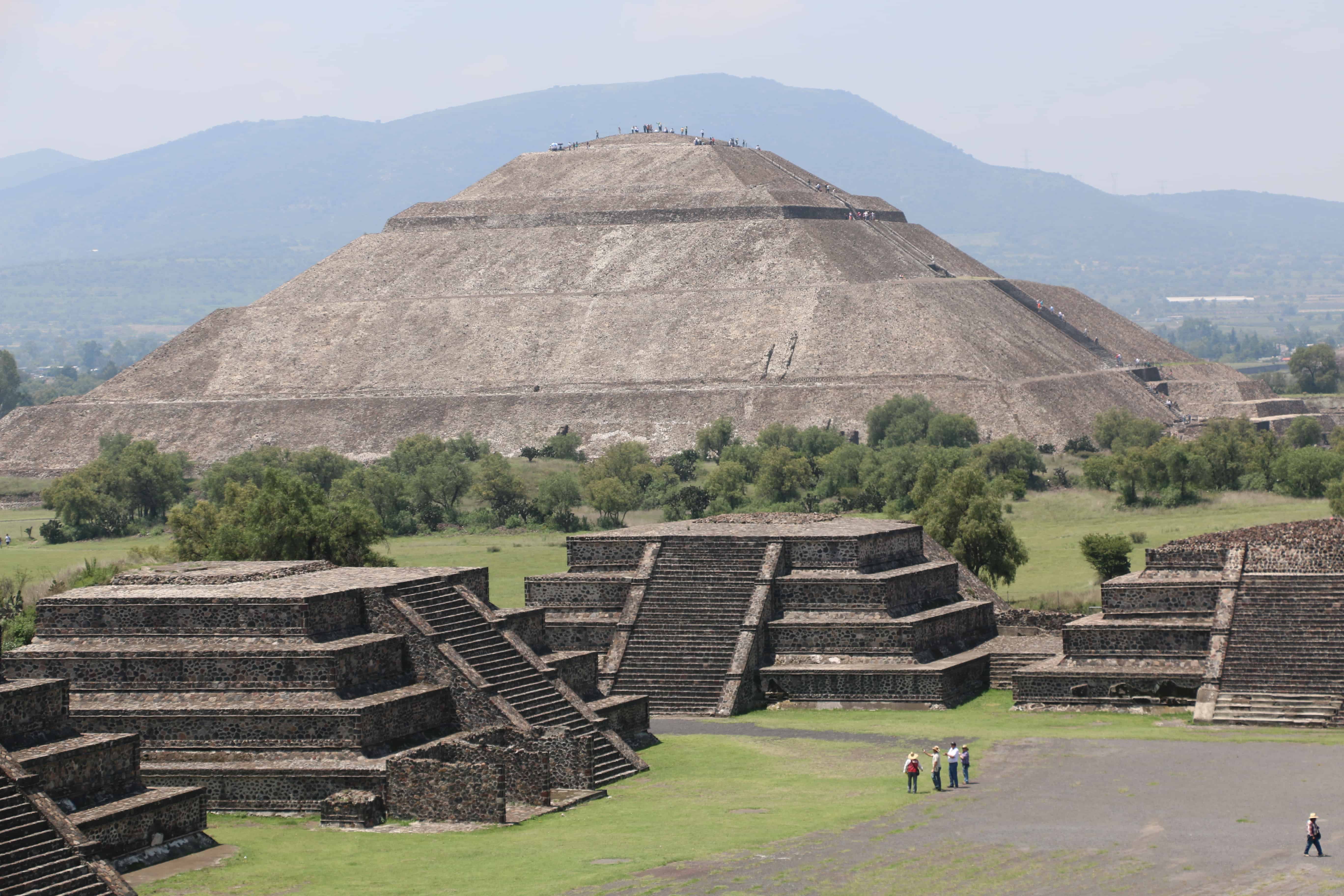
The Sun Pyramid at Teotihuacan

By James Dacey in Mexico

Yesterday was day three of the Physics World Mexican adventure and it turned out to be a really exciting 24 hours. Matin Durrani and I visited Teotihuacan – the “City of the Gods”– located 30 miles north-east of Mexico City. We were there to witness some of the closing moments of a 15-year particle physics experiment designed to “see” inside the Sun Pyramid, the world’s third biggest pyramid by volume.

(more…)

Extraordinary magnetic shield could reveal neutron’s electric dipole moment

One of the “quietest” magnetic environments in the Milky Way has been unveiled at the Technical University of Munich (TUM). Built by physicists based in Germany, the US and Switzerland, the shielded chamber is claimed to be the most effective for its size, and is able to reduce magnetic fields by a factor of more than one million. It could be used to measure the charge distribution within the neutron and, ultimately, determine whether the particle has an electric dipole moment (EDM). The shield could also be used in biomedical applications such as brain scanning and treating cancer using magnetic nanoparticles.

Lab-based tests of fundamental physical parameters often require the near-total exclusion of electromagnetic disturbances. Some of the main customers of shielding apparatus are those who make high-precision measurements based on a particle’s intrinsic angular momentum, or “spin”, because this is highly influenced by stray magnetic fields. By measuring spin precession – the cycling orientation of spin in an applied magnetic field – researchers can, for example, test whether the neutron has an EDM. The Standard Model of particle physics allows the neutron to have a tiny EDM as a result of the violation of charge–parity (CP) symmetry. However, measuring a larger EDM could point to new physics that explains why there is much more matter than antimatter in the universe.

In 2006 a magnetic shield at the Institut Laue-Langevin in Grenoble, France, reduced external magnetic fields by a factor of about 10,000, allowing for an extraordinary experimental precision that could, in principle, separate two fundamental charges at a distance of less than 10–28 m. That experiment did not reveal any EDM inside the neutron, but it did place an upper limit on the parameter that has yet to be surpassed.

Lots of computation

Improving on this limit is what motivated Peter Fierlinger of the TUM and colleagues to design a better magnetic shield. In principle, creating a magnetic shield is straightforward: a volume simply needs to be surrounded by a magnetizable material, so that any stray magnetic field lines are guided around sensitive instruments, like water flowing around a stone. In practice it is more difficult, requiring Maxwell’s equations of electromagnetism to be solved for a specific material and shape – and this requires a lot of computation.

The team’s shield consists of concentric shells of aluminium and a proprietary, highly magnetizable alloy known as Magnifer. The entire shield occupies a volume of 4.1 m3 and the shielded volume is about 1 m3. It excludes magnetic fields – depending on their frequency – by a factor of roughly one million, which equates to an internal magnetic field of about 0.5 nT (0.5 × 10–9 T). In contrast, the average magnetic field throughout the Milky Way is thought to be about 0.6 nT.

“We are, so far, the first collaboration that has realized such an apparatus with such a small magnetic field, suitable for a hundred times improved measurement,” says Fierlinger, whose group calls the shield the new “state of the art”.

More work to be done

While the team intend to use the shield to measure the neutron’s EDM, not everyone is convinced that it will dramatically improve the result. Werner Heil of Johannes Gutenberg University in Mainz, Germany, says that the shield should not be “overvalued”. “Who benefits from whether the residual field is now less than 0.5 nT or, say, only 1.5 nT?” he asks. “Fundamental-physics experiments such as the search for an EDM of the neutron do not work at such low magnetic fields; instead, one has to apply an additional magnetic holding field inside the shield that is about a factor of 1000 bigger than the residual field. The real challenge is to make the applied magnetic field as homogeneous as possible – and that’s not addressed in the work.”

Whatever the implications for the neutron EDM, the new shield could find applications elsewhere. Magnetic shields are also used in the detection of “biomagnetic” signals from the brain, for instance, as well as in the development of injectable magnetic nanoparticles that target cancerous cells in medicine.

“I am sure some clever people will eventually find other applications,” says Barry Taylor, a scientist at the National Institute of Standards and Technology in the US who helps to set the internationally accepted set of values for the fundamental physical constants. “I am reminded of the two following old saws: ‘Necessity is the mother of invention’ and ‘Build a better mousetrap and the world will beat a path to your door’.”

The shield is described in the Journal of Applied Physics.

Fermionic microscope sees first light

A microscope that can see up to 1000 individual fermionic atoms has been developed by a team of physicists in the US. Using two laser beams, the research team traps a cloud of potassium atoms in an optical lattice, cools the atoms and then simultaneously images them. The new technique allows researchers to clearly resolve single fermions, directly observe their magnetic interactions and even detect entanglement within the ensemble.

Fermions are particles that have half-integer spin, and therefore are constrained by the Pauli exclusion principle, which dictates that no two identical fermions can occupy the same quantum state simultaneously. Fermions include many elementary particles – quarks, electrons, protons and neutrons – as well as atoms consisting of an odd number of these elementary particles. As a result, the collective behaviour of fermions is responsible for the structure of the elements in the periodic table, high-temperature superconductors, colossal magnetoresistance materials, the properties of nuclear matter and much more. Despite their importance, however, we still do not have a complete picture of strongly interacting systems of fermionic particles because they are notoriously difficult to image and study.

Researchers have been studying bosons – particles that have integer spin and can occupy the same quantum state – by cooling clouds of bosonic atoms down to temperatures near absolute zero to form a Bose–Einstein condensate and then studying their interactions. But doing the same with fermions is no mean feat – the exclusion principle does not allow two fermions to be in exactly the same state. Therefore, as more fermions are added to a system, each succesive one comes in at an increasingly higher energy, making the system very tricky to cool. Furthermore, ultracold atoms are easily perturbed by just the light from a single photon, which makes it difficult to confine atoms for long enough to obtain a clear image.

Supercool light

To get round these problems, Lawrence Cheuk, Martin Zwierlein and colleagues at the Massachusetts Institute of Technology have developed a microscopy technique that involves imaging the atoms with the same light that cools them. The fermions are first cooled to a temperature of just above absolute zero using standard methods, including laser cooling, magnetic trapping and evaporative cooling of the gas, until the temperature of all of the atoms is just above absolute zero. At this point the atoms settle into the wells of an optical lattice, thereby stopping any contact between neighbouring fermions and preventing them from interacting with each other. The optical lattice is located just 7 μm from the microscope’s imaging lens, and is made of criss-crossing laser beams that form an “egg carton” structure with a fermion trapped in each well.

The atoms are then cooled even more by using two lasers, each at a different wavelength. This method makes use of Raman transitions: an atom absorbs one photon, is immediately stimulated to emit another and so drops down one vibrational level in the process. The location of each of the atoms is identified by the stimulated photon that it emits as it cools. These photons are captured by the microscope lens above the lattice, and this allows the team to detect the fermion’s exact position within the lattice to an accuracy better than the wavelength of the light.

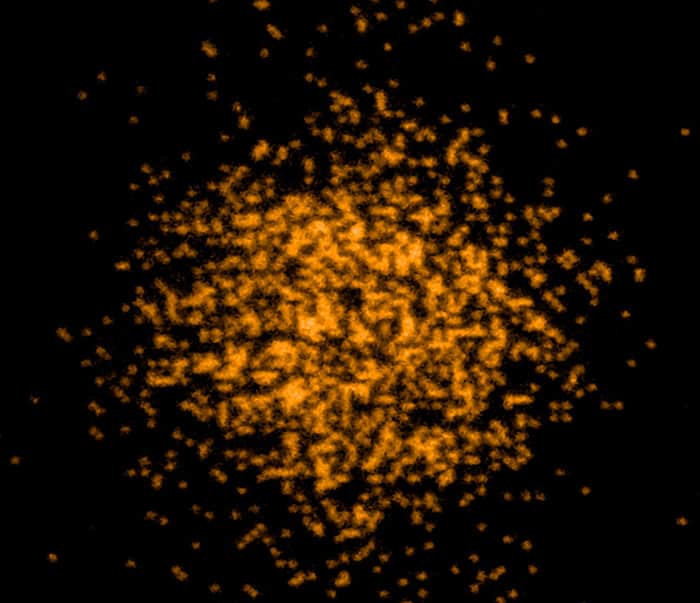
Image of the individual atoms in the ultracold potassium cloud

Using this method, Zwierlein and colleagues were able to cool and image more than 95% of the atoms in a potassium-40 gas cloud. The team was surprised to find that the fermions remained cold even after the imaging was complete. “That means I know where they are, and I can maybe move them around with a little tweezer to any location, and arrange them in any pattern I’d like,” says Zwierlein. To make sure that their experiment did not suffer any light-assisted losses, the researchers looked at how the atoms move around between successive images, and at the statistics of how the atoms are distributed around the lattice. The team found that it was not losing a significant number of atoms.

Cold-atom toolbox

Chad Orzel, a physicist at Union College in the US who was not involved in the work, is impressed with the research because it opens up the possibility of using fermionic atoms to create a wider range of condensed-matter analogues. “If you look at the behaviour of bosons in an optical lattice, that’s analogous to the behaviour of superconductors, where electrons have paired up to act like bosons. But a system of fermions in a lattice is more analogous to a normal conductor, where the electrons are subject to Pauli exclusion, and you can see other fun behaviours that way.” He adds that with fermionic systems, “you can also think about using light fields to manipulate the interactions between atoms in interesting ways, and watch how particles move around”. Orzel told physicsworld.com that Zwierlein’s work is a nice addition to the cold-atom experimental toolbox. “Because the atoms are out in the open and directly imaged, you have all sorts of freedom to change parameters without needing to make whole new samples,” he adds.

The research is published in Physical Review Letters.

Exploring the expanding world of high-temperature superconductors

By Hamish Johnston

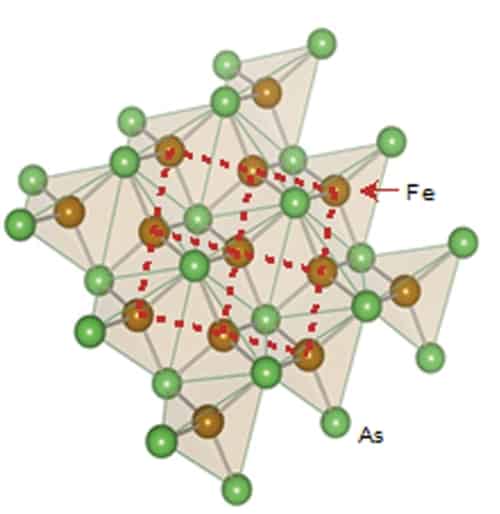
High-temperature (high-Tc) superconductivity has given hope and heartbreak in equal measure to physicists since the phenomenon was first discovered in 1986.

The hope is two-fold: that we will soon understand why superconductivity arises in this complex group of materials; and that this knowledge will lead us to a material that is a superconductor at room temperature. The former would be a triumph of the physics of highly correlated systems and the latter would spark a technological revolution.

(more…)

How to fund physics using the wisdom of crowds

Doing physics research costs money and today most of it comes from government funding agencies. Grant applications are reviewed by expert scientists and funding policies are shaped by bureaucrats and politicians. This inevitably leads to mountains of paperwork, and Jackson argues that this wastes valuable time that could be spent on actually doing research.

His solution is for physicists to appeal directly to the public for research money by using Fiat Physica, which he launched late last year. Jackson tells physicsworld.com editor Hamish Johnston about how crowd-funding works and describes some of the projects that have used his service. He also explains how Fiat Physica will avoid paying for crackpot research on topics such as perpetual motion.

Inside Mexico’s giant centre of learning


By Matin Durrani in Mexico City

It’s one of the biggest universities in the world with several hundred thousand students, but the Universidad Nacional Autonóma de México (UNAM) is certainly not the oldest. In fact, the first person to get a degree and PhD in physics at UNAM – Fernando Alba – is still alive. Aged 95, he studied at UNAM’s Institute of Physics shortly after it opened its doors in 1939.

(more…)

A bright light in Mexico City's historic centre

Museo de la LuzBy James Dacey in Mexico City

When you visit an unfamiliar city, you can often discover some hidden gems by just wandering the streets with your eyes wide open. This is what happened to Physics World editor Matin Durrani and me yesterday here in Mexico City when we stumbled across the Museo de la Luz (Museum of Light) in the backstreets of the historic city centre.

Located in an old Jesuit college with a beautiful courtyard, the exhibits are spread over three floors covering a wide spectrum of themes, from human vision to the history of the theories of light. What I loved about the place is that it really did offer something for everyone. Too often I find that museums can be great for kids or great for the type of serious adult who loves to leaf through tea-stained archives. El Museo de la Luz manages to hit a sweet spot, being informative and interactive but not too whizz-bang – that is certainly not what I needed yesterday with this jetlag!

(more…)

E-mail triggers row over Hawaii telescope

The delay in the construction of the Thirty Meter Telescope (TMT) on Hawaii’s tallest mountain, Mauna Kea, is continuing to cause turmoil within the astronomy community. First, the Office of Hawaiian Affairs (OHA) Board of Regents announced in April that it had withdrawn its support for the telescope. Then, last month, an e-mail forwarded to some 200 astronomy faculty, researchers and students sparked outrage when it claimed that the telescope was being “attacked by a horde of native Hawaiians”.

Construction of the TMT – featuring a primary mirror 30 m across that will be housed in a structure 66 m wide and 56 m tall – had been halted in early April, following protests by native Hawaiians. Mauna Kea is currently home to 13 telescopes, and TMT supporters maintain the newest and largest observatory will be constructed with care for the environment and the mountain’s cultural importance. TMT members say they have obtained all of the necessary permits for the observatory, and that they have the legal right to proceed. But indigenous Hawaiians claim that Mauna Kea – their spiritual and cultural pinnacle – is being desecrated, and a growing number of astronomers are now at odds with the project, too.

On 20 April, the situation became tense when an e-mail by University of California astronomer Sandra Faber to a group of astronomers – which was then forwarded to 200 astronomy faculty, researchers and students – sparked outrage. In the e-mail, Faber stated that the TMT is “in trouble, attacked by a horde of native Hawaiians who are lying”. Faber has since apologized.

Professional environment

On 6 May, Megan Urry, president of the American Astronomical Society (AAS), released a statement in which she underlined the diversity in the astronomical community. “I tell all of you, very clearly,” she wrote, “that racism is unacceptable, that referring to groups as monolithic is not acceptable, and that the AAS is firmly committed to an inclusive, welcoming, professional environment.” Urry added “Astronomers may have a range of opinions and perspectives on various matters, but we speak as one on the principle of respectful discourse at all times.”

Urry’s statement came a week after the OHA Board of Regents voted to rescind its 2009 decision to support Mauna Kea as the site of the TMT. The OHA is a public agency that is responsible for improving the well-being of native Hawaiians. The decision on 30 April, which followed some four hours of testimony, is a neutral stance because the board could have voted to oppose the construction – indeed, some were upset that it did not do so. The OHA board says that the neutral stance provides it with a bargaining chip of sorts in future negotiations regarding how Mauna Kea is used.

Physics World visit to Mexico kicks off

By Matin Durrani in Mexico City

I don’t know about you, but my trick whenever flying halfway across the world is to shoehorn myself as fast as possible into the new time zone I’m in. Having travelled from the UK to Mexico City with my colleague James Dacey yesterday, that tactic seems to have worked…so far. After staying up till midnight following a mini-feast of fabulous spicy tacos at a nearby restaurant while a thunderstorm broke, I woke up on cue at 7 a.m. as dawn broke in one of the biggest urban areas in the world.

We’re both here to gather material for a Physics World special report on physics in Mexico, which is due out in September. Following fast on the heels of recent reports on India, Brazil, Korea, India (again), Japan and China, the report will shine a light on some of the exciting physics research going on in the country and highlight some of the challenges and opportunities the country’s physicists face, too.

(more…)

Copyright © 2026 by IOP Publishing Ltd and individual contributors