Data centres that house AI infrastructure are on track by the end of the decade to consume nearly three times as much electricity annually as Pakistan, Bangladesh and Nigeria combined. That is according to a report published by the United Nations University Institute for Water, Environment and Health (UNU-INWEH), which also discovers that the water footprint of such centres could match the annual domestic needs of all 1.3 billion people in Sub-Saharan Africa by 2030.
For hundreds of millions of people, generative AI is now woven into their daily lives. ChatGPT processes 2.5 billion prompts each day and, by integrating AI into its search engine, Google processes billions of AI-assisted interactions.
Behind every virtual compute, however, stands sprawling data centres that operate thousands of high-performance processors. Data centres consume vast amounts of electricity and water to operate, cool servers and transmit data.
Day-to-day search queries account for 80-90% of data centres’ energy costs. An average text-based prompt consumes about 0.42 Watt-hours (Wh) of electricity. ChatGPT interactions alone result in 383 GWh per year — enough to cover the domestic electricity needs of nearly three million people in Sub-Saharan Africa.
As of late 2025, only 32 countries had AI-specialized data centres, with nearly half of global data centres located in the US. More than 150 countries, including most of Africa and South America, lack infrastructure to participate in the AI economy.
Those who benefit least from AI, however, often bear a disproportionate share of its cost. Vulnerable communities near data centres face air pollution, drought conditions, and land shortage.
Even regions in the Global South that are devoid of data centres are impacted by mineral extractions to build AI hardware. Such extractions are energy-intensive, deplete water, and pollute the environment.
A responsible ecosystem
The report finds that the land footprint of data centres could span an area roughly 10 times the size of Mexico City by the end of the decade. Additionally, it projects that 2.5 million metric tonnes of e-waste could be produced annually from AI hardware — equivalent to scrapping 250 Eiffel Towers each year.
UNU-INWEH director Kaveh Madani says that the report is not “a case against artificial intelligence” adding that the technology is improving the lives of billions of people worldwide. “[The report] is a call for using it responsibly and addressing its unintended impacts proactively to make it sustainable and equitable,” adds Madani.
To build a responsible AI ecosystem, the report calls for a multilateral approach. AI developers should improve efficiency of design and transparently report their environmental footprint. International and national governance should engage local communities in siting decisions and enforce standardized environmental disclosure while investors should consider environmental impact in their due diligence.
For individuals, the report encourages users to avoid unnecessary use, choose the smallest model capable of the task and write concise prompts.
A new contact-free way of rotating delicate samples, such as biological cells, undergoing three-dimensional (3D) optical microscopy increases the image resolution and could reveal more details about microscale structures and processes.
Current optical microscopes provide extremely good image resolution in a single plane, but since depth information is often lacking, samples are routinely rotated and imaged at multiple different angles to create a 3D picture. Because rotating via mechanical microtools such as tiny grippers, needles or pipettes can damage samples, contact-free approaches such as optical tweezers, magnetic manipulation or optothermal forces are often used instead. However, these methods rely on the sample being birefringent, magnetic, light-absorbing or specially shaped.
By contrast, the laser-based technique developed by a team led by Moritz Kreysing and Fan Nan from the Institute of Biological and Chemical Systems at the Karlsruher Institut für Technologie (KIT) in Germany can rotate and spin floating microscopic objects no matter what their shape or material properties.
Their method involves focusing a 1455 nm infrared laser beam on a small region of a highly viscous liquid – initially at 25°C – in which the sample will be suspended. This gently heats that region of the liquid by a few degrees. But rather than focusing on one spot, an acousto-optic deflector steers the beam rapidly along a carefully designed two-dimensional (2D) pattern.
“Because the viscosity of the liquid changes with temperature, this moving heat pattern generates tiny fluid flows, known as thermoviscous flows. By choosing the scan geometry and timing correctly, these flows become three-dimensional and helical, like microscopic corkscrew-shaped currents,” explain Kreysing and Nan. Once a small object is floated freely in these 3D helical flows, it can be rotated, spun, transported or stabilized solely via software-defined scan patterns, with different symmetries controlling the movement of the surrounding liquid.
The KIT technique allows stacks of high-resolution images focused at different depths to be acquired along multiple different angles by re-orienting the sample, a feature that “can help overcome the anisotropic resolution of conventional 3D microscopy”, explain the researchers. Using a high-viscosity liquid to suspend the samples not only enables kinematic stop-and-go actuation, it also suppresses Brownian motion (the jiggling around of tiny particles in fluids), which otherwise decreases image resolution and makes the study of cellular transport processes tricky.
Since previous methods of laser-driving fluid flows could only create motion in one plane, the researchers found it “particularly exciting” when they first observed their laser scanning in a 2D plane generating 3D flow fields. “Another key moment was the observation of opto-hydrodynamic focusing. The particles did not just rotate; their spiral motion converged toward a stable height and position. This was significant because it meant that the optofluid could stabilize the sample, rather than requiring mechanical confinement or complex feedback control.”
As detailed in their recent Light: Science & Applications paper, the KIT team demonstrated rotation and spinning of various samples including stained biological cells, nano-printed micro-tiles and perfectly spherical beads. “We see immediate potential in advanced optical microscopy, especially multi-view imaging of suspended cells, cell clusters, organelles, microstructures or soft materials,” Kreysing and Nan tell Physics World.
Since the basic hardware components of their system will be familiar to many optics and microscopy labs, they are hoping for early adoption by specialized research groups. But to optimize the technique for biological applications, they will now investigate the use of different liquids and operating conditions “that better preserve the viability of live mammalian cells while still providing sufficient stability for precise rotation and imaging”.
The researchers suggest that future areas of application could include microfluidics, microrobotics, colloidal assembly, materials science and 3D microfabrication. As such, they also want to develop more advanced scan patterns that can generate curved, programmable or multi-axis helical flows. “This could allow more complex 3D manipulation, such as controlled orientation of irregular objects, coordinated actuation of multiple particles, or integration with microfabrication workflows,” they explain.
Quantcore is a spin-out from the University of Glasgow and is based at the university’s Advanced Research Centre.
Quantcore builds the superconducting processors, resonators and sensors used in quantum computers and certain sensing systems. The firm uses niobium-based components, which can operate at higher temperatures than materials currently used in quantum computers. The firm recently received £2.5m in seed funding from several backers.
The qBIG award, now in its fourth year, is sponsored by the UK-based venture capital firm Quantum Exponential and includes a £10,000 cash prize as well as mentoring from Quantum Exponential and business support from the IOP. The award was presented yesterday in London at the Economist Commercialising Quantum 2026 event.
Accepting the prize on behalf of the company, Quantcore chief executive officer Jack Brennan says he is “delighted” to win the award.
“The previous winners are a great example of up-and-coming quantum companies, and it’s a privilege to be part of that list,” he says. “A huge thanks to the qBIG group for choosing Quantcore, and a huge thanks to my fantastic team for working so hard to build the company.”
Two runners up were commended by the IOP. One is Mater-AI, which develops thermoelectric materials for energy conversion and cooling. The other is Skydiamond, which produces lab-grown diamonds that can be used in quantum computing as a material for creating qubits.
“The UK quantum industry is going from strength to strength – and is becoming a major growth engine,” says Louis Barson, IOP’s director of science, business & education. “The qBIG prize is all about celebrating the strong pipeline of new physics-powered quantum innovators like Quantcore coming through – and giving them a platform to help accelerate that growth.”
Photos of research facilities in the former Soviet Union and its satellite nations might not seem the most promising subject matter for a coffee-table book. But French photographer Eric Lusito has done just that with Soviet Scientific Institutes, which contains more than 150 pictures from his travels across the former Soviet bloc. Unable to travel to Russia, Azerbaijan and Belarus, images from what Lusito calls the “authoritarian remnants” of the Soviet Union are absent. However, his photos across eight other countries depict the downfall of many once vibrant labs, from a rusty cosmic-ray telescope in Armenia to a defunct nuclear reactor in Georgia. The grim reality stands in contrast to the colourful 1970s mosaics in a Ukrainian cybernetics institute that seemed to herald a utopian future. Matin Durrani
Meet the Neighbours: Life on Mars and How to Find It By Steven A Benner
In 1976 Viking 1 achieved two remarkable things: it performed the first successful landing on Mars and it sent home evidence for life on the red planet. Yet shortly after, Mars was again declared dead and for decades any scientist who suggested otherwise was ostracized. What happened? This is the story that astrobiochemist Steven Benner traces in his book Meet the Neighbours. He clearly explains the science and history, but most of all the machinations and philosophy of how science works. The work is a little polemical and very US-focused, but also extremely enlightening. Kate Gardner
2026 Allen Lane
Amazing Worlds of Science Fiction and Science Fact By Keith Cooper
Fans of the British TV show Doctor Who might recall the 10th Doctor visiting the stunning and terrifying planet “Midnight” – a diamond-encrusted place, bathed in extreme radiation, replete with a “sapphire waterfall”. While some aspects of this fictional world will remain in the realms of fantasy, as of 2011 astronomers believe that the supermassive exoplanet 55 Cancri Ae orbits so close to its parent star that it is indeed bathed in extreme radiation. And it is mainly made up of carbon, in the form of diamond and graphite. This is a perfect example of the symbiotic relationship that science fiction and fact can have with one another, as Keith Cooper outlines in his fascinating book Amazing Worlds of Science Fiction and Science Fact. From the many “strange new worlds” of Star Trek to the Dyson spheres of Ringworld and beyond, this book is a must for “hard sci-fi” aficionados and astronomers alike. Tushna Commissariat
An Anthology of Stargazing: a Collection of Constellations and Other Wonders in the Sky By Abigail Beall, illustrated by Angela Rizza and Dilbag Singh
While the target audience of children will likely be immediately attracted to its beautiful cover and gold-edged pages, what makes An Anthology of Stargazing special is journalist Abigail Beall’s clear explanations alongside the artistic talents of Angela Rizza and Dilbag Singh. Despite covering everything from the history of stargazing and careers in the field, to the life of a star and the celestial sphere, Beall manages to tread that fine line of being informative while not losing the attention of young readers. There is a page devoted to each of the 88 recognized constellations, providing details on when and where you can see them, and a diagram of their configurations. These are accompanied by illustrations of the animals, people and objects astronomers saw in the patterns, and snippets of their myths and legends, helping the next generation of stargazers see the stories in the sky. Sarah Tesh
2025 DK Children
Hum
By Helen Phillips
A mother loses her job to AI, so to make some cash she agrees to have her appearance altered to fool face-recognition technology. With this money she takes her family on a trip of a lifetime to the Botanical Garden – the only place to glimpse nature in their arid, dirty city. A treat only for the well-off, the children are amazed to see trees, swim in waterfalls and encounter wildlife. Hum by Helen Phillips has just won the Climate Fiction Prize 2026 for its view of a harsh world where nature is something you have to pay to see – but perhaps its real power is in Phillips’ portrayal of the future of day-to-day technology. This fabulous book will leave you with a lot to think about. It will likely make you put down your phone, too. Kyla Rushman
Spain’s transition to a low‑carbon economy requires expanding renewable technologies such as wind, solar, and electric vehicles. These technologies depend on specific materials, and demand for materials, such as cobalt, lithium, and nickel, already represents a significant share of Spain’s total use.
The researchers analysed how much materials Spain would need up to 2050 under different decarbonisation pathways. They enhanced the MEDEAS‑Spain model by adding sector‑specific material intensities, improving the tracking of material stocks and flows, and expanding coverage to more than forty materials, a comprehensive assessment of the material requirements of decarbonisation.
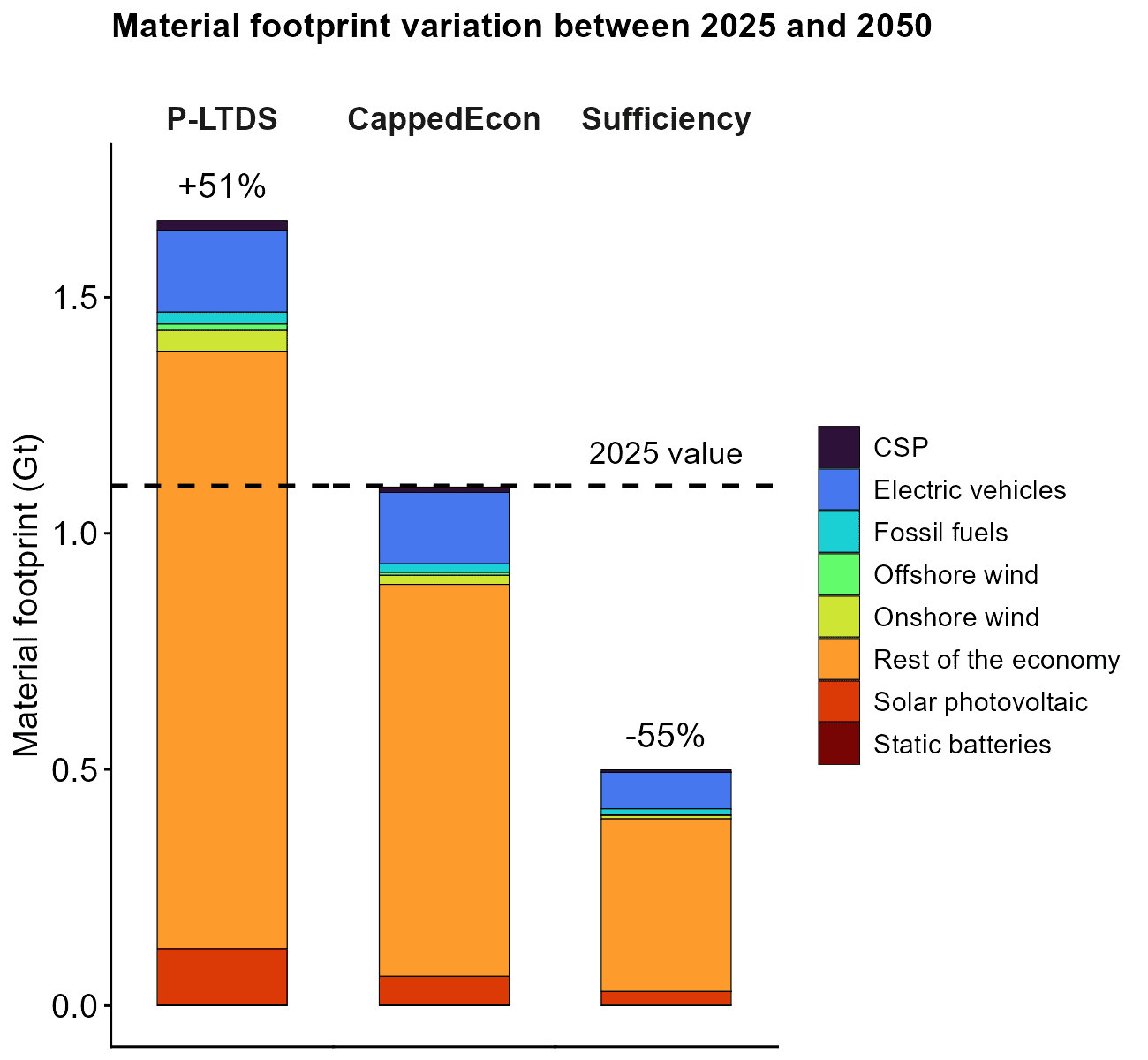
They evaluated three scenarios: Spain’s official energy and climate plan (PNIEC‑LTDS), a scenario where economic demand stops growing after 2025 (CappedEcon), and a Sufficiency scenario where consumption is reduced in a sectorally explicit manner to levels consistent with decent living standards.
While low-carbon technologies require large quantities of materials, most material demand comes from wider (unrelated to decarbonisation) economic activities. As a result, and as shown in the figure below, the PNIEC-LTDS, which features a high level of economic growth, increases the material footprint by 51% between 2025 and 2050. In contrast, the Sufficiency scenario reduces the material footprint by over 50% while reducing greenhouse gas emissions by 93%.
The study concludes that a rapid expansion of renewable energy is only environmentally sustainable if overall material and energy demand is reduced. Green‑growth pathways sharply increase material use, whereas sufficiency‑based post‑growth approaches enable deep decarbonisation with far lower resource pressure. Ultimately, consumption levels determine the sustainability of the transition.
Light normally spreads out and escapes from optical devices, so it is not obvious how photons can ever behave like the atoms in a Bose–Einstein condensate (BEC). Yet experiments have shown that, under the right conditions, photons trapped in microscopic semiconductor cavities can collect into a single quantum state, even at room temperature. What has been missing is a clear explanation of how this happens in real semiconductor materials.
New research provides that explanation. The authors develop a detailed theory that tracks how photons interact with the electrons and holes inside a semiconductor while the system is continuously pumped with energy. Unlike earlier models that treated the semiconductor as a simple thermal background, this theory follows how all parts of the system evolve together, including particle collisions, energy losses and heat exchange with the surrounding material.
The key finding is that collisions between charge carriers (Coulomb scattering) allow the photons to share energy and effectively cool down. At high particle densities, this process is strong enough to make photons behave as if they were in thermal equilibrium, enabling them to form a condensate. This mechanism is very different from that in dye‑based photon condensates, where vibrations of molecules do most of the thermalising.
The theory also predicts several distinct regimes: ordinary thermal light, single‑mode and multimode photon condensation, and standard laser behaviour. Importantly, experiments can move between these regimes by adjusting parameters such as the cavity design and the pumping strength.
By explaining how quantum states of light can emerge in compact, room‑temperature semiconductor devices, this work could enable new quantum photonic technologies, including advanced light sources for communications, sensing and information processing.
Physics ideas often travel far from their origins, but few make the leap from the Standard Model of particle physics to a circuit board. A surprising new experiment shows that custodial symmetry, best known for stabilising fundamental particle masses, can also emerge in an entirely classical electrical system built from off‑the‑shelf components.
Symmetry plays a central role across physics. As formalised by Noether’s theorem, every continuous symmetry is linked to a conserved quantity. This principle underpins everything from energy conservation to modern field theory. In particle physics, custodial symmetry acts as a safeguard, suppressing large corrections and keeping key quantities stable even when other symmetries are broken. A classical analogue of this idea was theoretically proposed several years ago, but its experimental realisation had remained elusive until now.
A team of researchers from China have now brought this concept to the laboratory using a topolectrical circuit — an electrical analogue of a topological lattice. Their system is based on the Su–Schrieffer–Heeger (SSH) model, a one‑dimensional chain known for hosting edge states that remain pinned to a boundary as long as a certain symmetry is present. The researchers deliberately disrupted that symmetry by introducing memristors: circuit elements whose resistance changes depending on how they have been used in the past.
Surprisingly, the edge states do not simply vanish. Instead, the team finds that a weaker form of protection remains. By measuring how the circuit’s behaviour changes, they identified a correction that shrinks smoothly as the memristive effect is reduced. This closely mirrors how custodial symmetry suppresses mass‑like corrections in quantum field theory.
The novel work shows how tabletop circuits can serve as accessible testbeds for ideas drawn from fundamental physics, opening new ways to explore symmetry, topology and memory using electronics rather than particles.
The trap lobes of the Venus flytrap – a carnivorous plant – snap shut by the rapid softening of their outer walls. This discovery by researchers in France is at odds with previous hypotheses that the mechanism involves water transport through the lobes.
The Venus flytrap is native to temperate and subtropical wetlands in the eastern US. These habitats are very poor in nutrients, so the plants capture insects and spiders to obtain nitrogen. “[Charles Darwin] was completely amazed by the motion, and he thought that if the plant was moving that fast it was because the plant had muscle,“ says biophysicist Yoël Forterre of Aix-Marseille University. “He thought, ‘OK, if the plant has muscle then it must also have nerves’.” Darwin asked his colleagues, who had recently discovered electrophysiological signals in animals like frogs, to measure the plants, and was proved partially correct: ionic signalling in plant cells was first detected in the Venus flytrap. Nonetheless, plants have no muscles or nerves.
In 2005, Forterre and colleagues in the UK and US discovered that the trap’s rapid closure is amplified by a “snap-buckling instability”. In the trap’s open state, the two lobes adopt buckled, convex shapes that resist closure. These store elastic energy until a potential barrier is overcome. They then release the energy, suddenly becoming concave and snapping the trap shut in around 0.2 s. The underlying driving force has remained mysterious, however, and the instability makes measurement difficult.
“Many biological and chemical tools are kind of invasive and trigger the plant,” explains Forterre; “It’s not easy to probe the state of the plant before, after and most importantly during the motion.”
Poroelastic limit
One hypothesis is that osmosis causes water to diffuse from one side of the lobe to the other, causing bending. This is the most common driver of motion in plants, but its speed limit can be calculated theoretically from the permeability and elasticity of the host material. To work out whether or not the intrinsic speed of the trap exceeded this “poroelastic limit”, the researchers had to remove the amplificatory effect of the snap-buckling instability.
They devised two ways to do this. First, they cut the trap in several places, allowing it to open and close without storing elastic energy. Second, they clamped traps open between two fixed walls, one equipped with a force sensor. In both cases, they found that the closure timescale – inferred in the case of the trap that did not actually close – was around 4 s. Though much longer than in a trap with a snap-buckling instability, this time would have required water to cross the lobes more than an order of magnitude faster than the porolastic limit. This suggested osmosis could not be responsible.
Another popular hypothesis, first advanced in 1981, is that enlargement and softening of the outer walls drives the lobes into the concave shape. The researchers triggered the trap and probed the pressure of the outer surface with a nano-indenter, confirming that it did indeed decrease. However, this did not affirmatively prove that the material had become more flexible, because an osmotic pressure drop would also cause softening.
Forterre and colleagues used dental impression paste to make moulds of the topography of the cell walls before and after the trap was triggered. “If a balloon becomes softer because you have decreased the pressure, that means it has deflated,” explains Forterre; “If you keep the pressure inside the balloon constant but make the material softer, it will inflate.” The researchers confirmed using microscopy that the cells bulged more after the trap was triggered, showing that the driving force was cell-wall softening, not water movement.
Biologist Anja Geitmann of McGill University in Canada describes the new work as “paradigm changing”. “Usually we always talk about changes in turgor pressure that induce movement,” she says; “Here they show that it’s not a change in turgor pressure but a very rapid change in the mechanics of the primary cell wall. That’s completely new: I know of no other system where this happens on this kind of timescale, and they prove it in very smart and clever ways.”
Plant biologist Daniel Cosgrove of Pennsylvania State University in the US, whose group discovered the proteins that allow cell walls to expand and soften, agrees that the research proves conclusively that osmosis is not the cause of the trap’s closure. “What will complete the story is when there’s a paper out explaining the molecular mechanism of how that cell wall gets softened or loosened in a couple of seconds,” he says.
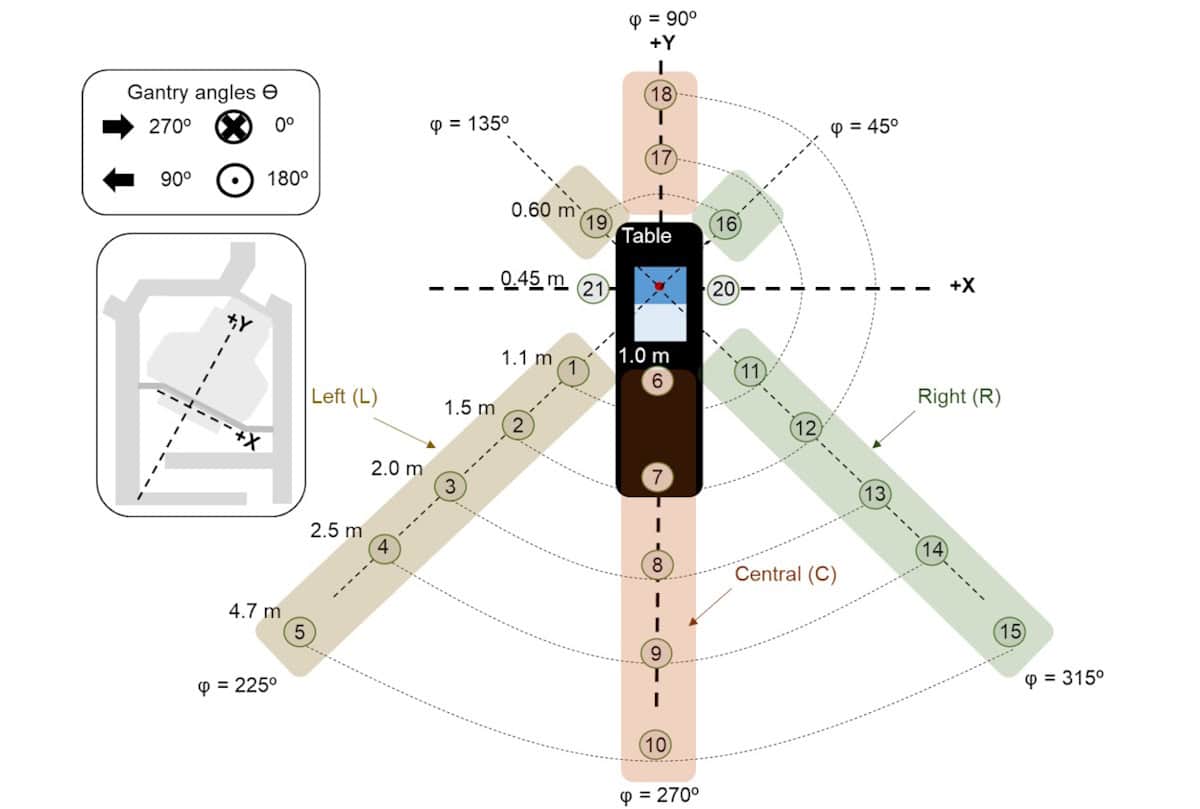
Experimental setup Neutron dose measurement points within the treatment room, showing gantry angles, measurement lines (φ) and distances from the isocentre. (Courtesy: Phys. Med. Biol. 10.1088/1361-6560/ae72e7)
Proton therapy plays an increasingly important role in cancer treatments, targeting tumours with high precision while sparing nearby healthy tissues. Proton irradiation can, however, also produce secondary neutrons due to nuclear interactions of the therapeutic beam. In modern pencil-beam scanning proton therapy, neutrons generated inside the patient are the main source of out-of-field dose – unwanted radiation that could potentially contribute to secondary cancer risks.
A research team headed up at Clínica Universidad de Navarra in Spain has experimentally characterized the neutron field in a proton therapy treatment room using a range of different detectors. They used their findings to create a practical Python-based calculation tool to estimate neutron dose for arbitrary irradiations.
“The tool provides a fast first-order estimate of neutron doses anywhere in the treatment room using information from the treatment plan,” explains medical physicist Verónica Morán. “It could support radiation protection studies, workplace dose assessments, research projects, and the evaluation of neutron exposure in situations where direct measurements are not available.”
Neutron field characterization
For their study, reported in Physics in Medicine & Biology, Morán and colleagues employed a Hitachi PROBEAT-CR proton therapy system with pencil-beam scanning. They measured neutron dose using a range of devices, including two ambient detectors and four types of personal dosimeter: thermoluminescent dosimeters (TLDs); track-etch detectors; bubble detectors (BDs); and electronic personal dosimeters (EPDs).
Using up to 21 measurement points within the treatment room, the team examined the dependence of out-of-field neutron dose on various beam and room parameters, including gantry angle, field size, proton energy and distance to isocentre.
At each measurement point, they assessed the neutron ambient dose equivalent, which is used to characterize the radiation field at a specific location, plus the personal dose equivalent, which estimates the dose that a person may receive while occupying that location. The ambient detectors performed the best, working as expected in a synchrotron-based facility, while the personal dosimeters exhibited clear variations in response.
To determine whether neutron doses measured on one side of the treatment room can predict doses at equivalent locations on the opposite side, the team investigated room symmetry. Measurements with the ambient detectors indicated that the treatment room was symmetric for the 270°–90° gantry pair, while for the 0°–180° pair, doses at 0° were on average 8% lower than at 180°.
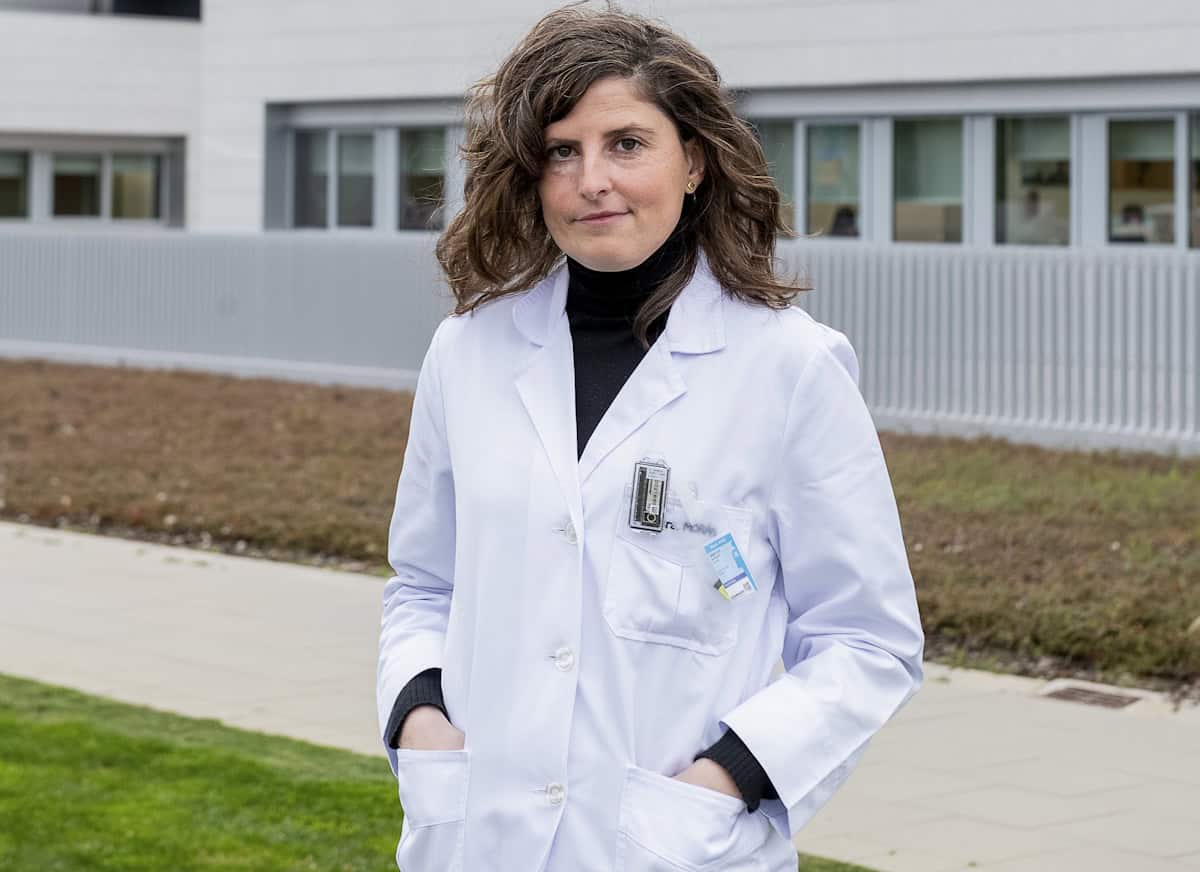
Corresponding author Medical physicist Verónica Morán. (Courtesy: Clínica Universidad de Navarra)
“We found that the room was largely symmetric for certain gantry orientations,” notes Morán. “This reduces the number of measurements needed and helps extend the applicability of the dose calculation model.”
The measurements also showed that neutron doses created by a single spot field and a 10×10 cm field were similar (and can be regarded as interchangeable). The 20×20 and 30×30 cm fields differed by up to 22% relative to the single spot. Neutron dose dependence on proton energy followed the expected power law, with best fits for the ambient detectors, followed by the BDs and TLDs.
The researchers also delivered a clinical proton treatment comprising 27 energy layers (from 121.6 to 173.1 MeV) to a scattering phantom. They examined whether the total neutron dose from such an irradiation can be expressed as a weighted sum of contributions from the individual energy layers. If this assumption holds, the total neutron dose for an arbitrary plan could be reconstructed from measurements at discrete proton energies. Comparing calculated and measured neutron doses revealed that this linear superposition approach worked with the ambient detectors and the BDs, but not the EPDs.
A practical tool
The team then developed a Python-based tool to estimate neutron dose at any point in the treatment room for arbitrary irradiations and detectors (including ambient detectors, BDs and EPDs). As inputs, the tool requires the radiotherapy plan, detector data and calculation parameters including the gantry angle, and measurement distance and angle. It then outputs neutron dose estimates along with associated uncertainties.
The researchers verified the tool by assessing additional measurement points that weren’t used in its development. Comparisons of experimental and calculated dose values showed that the tool provided reliable and useful estimates for the ambient detectors and BDs, even at points where no prior measurements existed.
For the EPDs, however, the calculated intervals were often broad and the researchers suggest that EPD results should be interpreted with caution. They point out that such detectors were retained in the tool because “not all proton therapy centres have access to the same detector types, and approximate detector-specific estimates may still be of practical interest in such settings”.
The tool is thought to be the first to estimate out-of-field neutron dose based on treatment room measurements, and should also work at other clinical centres. “Because modern pencil-beam scanning proton therapy systems have been shown to generate similar neutron fields across different facilities, we believe the methodology behind the tool may be transferable to other centres using comparable technology,” says Morán.
The researchers are now extending the tool to include paediatric cases, and different proton energies, patient sizes and treatment configurations. “We are also investigating how these methods could be applied to estimate neutron doses received by patients, with the long-term goal of improving the characterization of out-of-field radiation exposure in proton therapy,” Morán tells Physics World.