Leidenfrost drops race through a maze

In this fantastic video, physics students at the University of Bath in the UK have had some fun with the Leidenfrost effect. This occurs when a liquid drop comes in contact with a hot surface that produces an insulating layer of vapour that keeps the drop from evaporating rapidly. This layer also allows the drop to glide effortlessly over the surface – and that’s where the fun begins.

It turns out that if you replace a smooth surface with the sort of asymmetrical teeth found in a ratchet, the drop will move rapidly in one direction. By using ratchet surfaces to accelerate liquid drops, the team has made the drops move uphill and even follow a predetermined path through a maze.

And if you wonder what would happen if you combined the Leidenfrost effect with the paramagnetic response of a liquid, check out the beautiful image in the article “Levitating drops controlled by fridge magnets”.

Physicists claim further evidence of link between cosmic rays and cloud formation

A Danish group that has reproduced the Earth’s atmosphere in the laboratory has shown how clouds might be seeded by incoming cosmic rays. The team believes that the research provides evidence that fluctuations in the cosmic-ray flux caused by changes in solar activity could play a role in climate change. Other climate researchers, however, remain sceptical of the link between cosmic rays and climate.

The conventional view of climate scientists, as expressed in the 2007 report of the Intergovernmental Panel on Climate Change, is that most of the warming of the Earth’s surface over the last few decades is down to the atmospheric build-up of manmade greenhouse gases such as carbon dioxide. But Henrik Svensmark of the National Space Institute in Denmark believes that an effect related to the Sun’s fluctuating magnetic fields may also play a major role in the warming.

For well over a decade Svensmark has studied how the energetic particles reaching Earth from deep space, known as cosmic rays, can influence the planet’s climate as a result of changes to the Sun’s output. The idea is that cosmic rays seed clouds by ionizing molecules in Earth’s atmosphere that draw in other molecules to create the aerosols around which water vapour can condense to form cloud droplets. The low-lying clouds that result then have the effect of cooling the Earth by reflecting incoming sunshine back out to space. Since the Sun’s magnetic field tends to deflect cosmic rays away from the Earth, the planet will be warmer when solar activity is high and, conversely, cooler when it is low.

Laboratory tests

In 1997 Svensmark backed up this idea with a study showing correlations between the distribution of clouds and cosmic-ray flux around the world, as measured by satellites and neutron counters, respectively. Although subsequent studies by other scientists suggest that no significant correlations exist, Svensmark stands by his claim. But in 2007 he and his colleagues at the National Space Institute provided an alternative line of evidence in support of their theory, carrying out controlled laboratory tests showing how ionizing radiation in the form of gamma rays could stimulate atmospheric molecules to clump together into aerosols.

The researchers then supported these findings with further results published in 2011, which showed that the ionizing effects of electrons from a particle accelerator were identical to those from the gamma rays, so allaying doubts about the suitability of the latter to serve as a surrogate for cosmic rays. Independent confirmation of cosmic rays’ fecundity then came later that year, when the CLOUD collaboration at CERN in Geneva found that it could boost aerosol production at least 10-fold when it sent charged-pion beams through a 27 m3 artificial atmosphere.

Too small to form clouds

Those results were not, however, enough by themselves to prove that cosmic rays can indeed seed clouds. The particle clusters produced measured just a few nanometres across, whereas aerosols typically need to have a diameter of at least 50 nm in order to serve as so-called cloud condensation nuclei (CCN). In fact, there were theoretical grounds for thinking that such seeding would not be possible to any significant degree. Computer simulations carried out by Jeffrey Pierce of Dalhousie University in Canada and colleagues showed that competition for raw material in the atmosphere as well as merging mean that relatively few of the small aerosols brought about by ionization should go on to form CCNs.

The latest experiment was designed to find out whether – the results of this modelling notwithstanding – cosmic rays could in fact generate significant quantities of CCNs. To do so, Svensmark and colleagues measured the number and size of aerosols produced over extended periods – up to 36 hours – inside an 8 m3 stainless-steel chamber filled with varying concentrations of water vapour, ozone and sulphur dioxide. The chamber was exposed to ultraviolet radiation in order to stimulate production of sulphuric acid – one of the main components of atmospheric aerosols – as well as ionizing radiation from two caesium-137 gamma-ray sources, to mimic incoming cosmic rays.

First, the researchers carried out a control experiment in which they continually injected pre-made small aerosols into the chamber but kept the production of sulphuric acid – which is needed to feed the growing aerosols – constant, without ionization. As expected, there was not enough sulphuric acid to go around and hardly any clusters grew to more than 30–40 nm in diameter. But when the researchers let the clusters form of their own accord inside the chamber and switched on the ionization, the result was significant numbers of aerosols measuring at least 50 nm across – large enough to serve as CCNs.

More experiments needed

In their paper reporting the results, the researchers point out that this growth of larger aerosols presumably requires the generation of fresh raw material inside the experiment. They suggest that, thanks to the ionization, “the charged clusters are producing additional sulphuric-acid molecules from reactions involving negative-ion chemistry of ozone, sulphur dioxide and water”. Svensmark, however, describes this proposed mechanism as just a “guess”, and he says that the group hopes to carry out a new round of experiments in order to identify the substance being produced. “This is something that needs to be investigated in more detail,” he adds, “but it is potentially an important piece in the puzzle of how cosmic rays affect cloud formation.”

Others, however, remain to be convinced. Pierce, who carried out the earlier modelling work, describes the result as “an extremely interesting and potentially important finding”, but he questions just how many CCNs could be produced in this way in the real atmosphere. “It is not clear”, he says, “how much of an effect a 10% change in the cosmic-ray flux – which would occur from the solar minimum to the solar maximum – would affect sulphuric-acid production, CCN formation and clouds.”

The researchers have a really long way to go before they can convince anyone that this is fundamental to climate change
Gavin Schmidt, NASA

In fact, according to Gavin Schmidt of the NASA Goddard Institute for Space Studies in New York, proving the real-world applicability of its aerosol research is only one of several hurdles that the Danish group must overcome. Others, he says, relate to cloud properties, degree of radiative forcing and climate trends. “The researchers have a really long way to go before they can convince anyone that this is fundamental to climate change,” he adds.

There is also an experiment at CERN in Switzerland that is investigating the possible links between cosmic rays and clouds. In the video below, CERN’s Jasper Kirby explains the aims of the CLOUD experiment, which mimics conditions in the Earth’s atmosphere.

The research is reported in Physics Letters A.

Laser imaging spots brain cancer

Researchers in the US have developed a new technique to distinguish tumours from healthy tissue in the brain. Based on stimulated Raman-scattering microscopy, the technique could boost the success rate for the complete surgical removal of brain tumours.

Normal cancer surgery on the brain starts with a magnetic-resonance image to plan the operation and to predict the location of the tumour. However, during the surgical procedure it is largely up to the surgeon to determine which tissue is tumorous and which is healthy. Tumorous tissue often feels different and has a different colour. But the differences are slight and for this reason more than 75% of brain-cancer patients are thought to leave theatre with a less-than-optimal amount of their tumour eradicated.

With much room for improvement, medical scientists have spent decades developing more advanced ways of delineating tumours from healthy tissue. One accurate yet expensive option is to have a magnetic-resonance imaging system installed in the theatre so that surgeons can have images of remaining tumour tissue continually updated while they are operating. Another more widely used technique is known as fluorescence-guided surgery and involves the application of a certain acid that breaks down into a fluorescent compound in tumour cells only. Through a microscope this compound can reveal tumorous tissue but it only works for the tumours – so-called high-grade gliomas – that are the least operable.

Vibrational signatures

The latest imaging technique is based on Raman scattering and was developed by chemical biologist Sunney Xie at Harvard University and colleagues, who believe it could prove more successful than either of these existing methods. In normal Raman-scattering microscopy, the presence of a specific molecular species can be detected by firing laser light at a sample and looking for species-specific shifts in the wavelength of some of the scattered light – shifts that correspond to vibrational transitions in the molecule. Potentially this allows a user to uncover several different chemical components of a sample, although the process is time consuming. A slightly different method known as stimulated Raman scattering (SRS) microscopy uses two lasers whose frequency difference is tuned to match specific vibrational signatures. As long as the user knows what they are looking for, this technique can generate much stronger, faster images.

Xie has pioneered the medical development of SRS microscopy in recent years and now his group has turned it to brain-tumour surgery. The technique makes use of the fact that tumours contain large amounts of protein and far less lipids (fatty compounds), while healthy brain tissue is rich in both. The researchers therefore tuned their lasers to the signatures of both lipids and proteins. Then they used the system to illuminate the brains of mice that had grown brain tumours.

Blue and green tissue

The researchers found that their imaging system clearly delineates tumours, which appear blue, from healthy tissue, which appear green. It could even uncover tumorous regions of the mice brains that appeared normal to the naked eye. “At the margin between tumour and normal brain we could see cells – presumably tumour cells – infiltrating into normal brain,” says neurosurgeon group member Daniel Orringer at the University of Michigan in Ann Arbor, US. “This microscopic tumour-brain margin is something that we can only imagine [being able to see] in the operating room today.”

In the long run, I think this will give exquisite images, which will allow you time to look at the structure of the tissue
Nick Stone, University of Exeter

Medical physicist Nick Stone at the University of Exeter in the UK is enthusiastic about the technique: “In the long run, I think this will give exquisite images, which will allow you time to look at the structure of the tissue.” Stone believes that, unlike in-theatre magnetic-resonance systems, SRS microscopy has the potential to be made much more affordable. However, he says that it is an open question whether a non-specialist will be able to interpret – and trust – the images.

Orringer says that the next step will come next year, when he and his colleagues collect SRS images of human brain-tumour specimens. If that is successful, they plan to develop a handheld SRS imaging system. “We anticipate that our initial clinical trial utilizing SRS microscopy in living patients will occur within the next five years,” he says.

The research is described in Science Translational Medicine 5 201ra119.

Physics World Special Report: Republic of Korea

By Matin Durrani

The Republic of Korea – known colloquially as South Korea to outsiders – has transformed itself over the last 50 years from a nation based primarily on agriculture to a hi-tech industrial powerhouse.

No longer in the shadow of its neighbouring powerhouses in Asia – China and Japan – the country is fast becoming a hotbed of top-quality research, as you can find out by reading the new Physics World Special Report on the Republic of Korea.

We delve into some of the areas of science, including synchrotron science, graphene and fusion energy, where Korea is leading the way.

The report begins with an overview of the country’s research scene, including interviews with Kookrin Char (head of physics at Seoul National University), Hawoong Jeong (head of physics at the Korean Advanced Institute of Science and Technology) and Cheol Eui Lee, a nanophysicist at Korea University in Seoul, who is also president of the Korean Physical Society.

(more…)

Quantum cryptography reaches out to multiple users

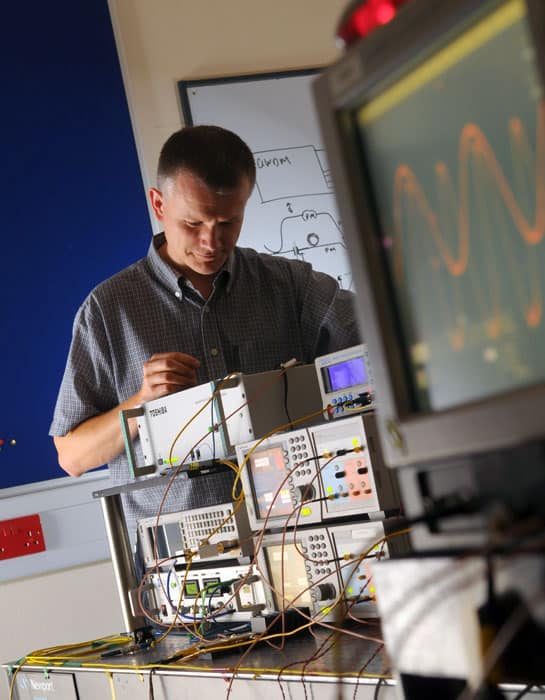
Photograph of a researcher at Toshiba's cryptography lab in Cambridge

Quantum cryptography is the most secure method of communication available – but it is also expensive, because each pair of users requires its own set of specialized equipment. That could soon change, however, now that physicists working at Toshiba have developed technology to allow up to 64 users to share the same transmission line.

In conventional cryptography one person, Alice, wants to send another person, Bob, an encrypted message. To do so she first sends him a “key” so that the message can be decrypted. But transmitting the key is a security hazard: an eavesdropper, Eve, could easily intercept it, read it and send it on, without Alice and Bob’s ever noticing.

Twisted outcomes

Quantum mechanics offers a way round this problem, because of the way that measurements can indelibly alter quantum states. Suppose that part of the quantum key that Alice sends Bob is a photon polarized in the vertical direction. Bob receives the photon and measures it in one of two orientations, or “bases”: vertical–horizontal as Alice sent it, or diagonal–antidiagonal. If he chooses the vertical–horizontal base, he will measure the photon’s polarization correctly but if he chooses the diagonal–antidiagonal base then he will, in fact, measure either a diagonal or an antidiagonal polarization. The photon’s original vertical polarization will have been twisted – but no matter: afterwards, Alice can let Bob know which base she used to send the photon, so that Bob can keep only the measurements that did not give a twisted outcome.

This technique is a type of quantum key distribution (QKD) and it is totally secure. If Eve tries to intercept and measure one of the photons, she will sometimes pick the wrong base to measure it in, and end up twisting its polarization. When Bob then tries to measure in the correct base, the photon’s polarization will be twisted again – introducing an error rate that Alice and Bob can easily detect.

Unfortunately, quantum cryptography is expensive. In current incarnations, each Alice-and-Bob pair requires its own dedicated, point-to-point fibre-optic transmission line – and a highly specialized single-photon detector. As a result, the scheme is currently thought to be employed only by banks, government agencies and other high-profile users.

One Bob, many Alices

Now, physicists working for Toshiba in Cambridge, UK, and Kawasaki, Japan, have demonstrated a new technology that could make quantum cryptography much more widely accessible – according to Andrew Shields, one of its developers at Toshiba Research Europe. The idea is to make the scheme similar to the way regular telecommunications works, with several transmission lines fanning out over great distances from one central location – which would be one “Bob”. At the other end, each of these high-capacity lines would branch out to multiple “Alices” in a local network.

Such a scheme requires that quantum keys from several Alices are combined into a single fibre. This is not a problem in itself but the single-photon detectors at Bob’s end, which consists of so-called avalanche photodiodes (APDs), must distinguish between such frequently arriving signals. Normal APDs struggle to detect photons arriving within 10 μs of one another, because they must wait for the photon-generated charge to decay to avoid false counts.

Shields and colleagues have now designed APDs that generate much smaller electron currents, so that less decay time is required before the detector resets. The researchers’ new APD detector can detect a photon every nanosecond – enough to allow up to 64 Alices to share quantum keys with the one central Bob. In addition, the researchers have moved timing and polarization adjusters from the receiver to the transmitters, to compensate for irregularities in the signal propagation through the fibre.

Closer to everyday use

Quantum physicist Alexander Sergienko at Boston University in the US agrees that the new system brings quantum cryptography closer to everyday use by regular telecommunications customers. The new system “offers multiple users a possibility to share same hi-tech hardware,” he says. “This reduces a costly technology overhead for some ordinary customers, thus expanding the quantum communication coverage in the future beyond governments and big banks.”

The research is published online today in Nature 501 69.

‘Death ray’ reflections from skyscrapers modelled by scientists

by Michael Bishop, who is the IOP’s press officer

The designer of London’s Walkie Talkie skyscraper has come under scrutiny this week as reports of flaming bicycle seats and melting cars have resulted in a temporary scaffold being erected at street level to block the intense reflection of the Sun’s rays as they beat off the curved building.

One thing you can’t say is that nobody saw this coming.

In a study published last summer in the European Journal of Physics (EJP), two researchers from Germany performed a number of experiments that gave an in-depth explanation of why some skyscrapers have these undesired effects.

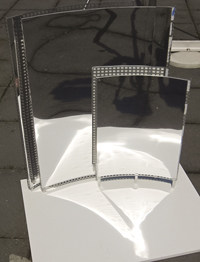
In addition to a number of computer simulations that investigated the reflecting effects of a building’s height, width and curvature, as well as the angle and position of the Sun, the researchers also performed experiments on a scale model (right) of the Vdara hotel in Las Vegas.

(more…)

To the world’s end, in 15 questions

The universe is made of (at least) stars and galaxies, dark matter and dark energy, cosmic rays and neutrinos. But cosmology is made of cosmologists. The index of Paul Halpern’s book Edge of the Universe bears this out, listing no fewer than 228 names of individuals and eponyms; even so, half a dozen names are missing just from the book’s discussion of dark matter. Of the 228, I know or knew 113, from Abell (George, who catalogued clusters of galaxies) and Abel (Tom, who makes computer simulations of them) to Zel’dovich (Yakov, who helped describe what passage through hot gas would do to microwave radiation left over from the very early universe) and Zwicky (Fritz, who saw what dark matter does to radiation trying to get away from its vicinity). And of the scientists mentioned, 17 are women, which is – believe it or not – a lot for this subject.

In his chapter titles, Halpern asks 15 challenging questions, from “How far out can we see?” to “What are the ultimate limits of our knowledge about the cosmos?” The answer to the first question is about 46.6 billion light-years, which is further than the 13.8 billion that light can travel in the age of the universe because the universe has been expanding while the light travelled. Not surprisingly, Halpern provides no answer to the last question, but the way it is worded (rather than “Are there ultimate limits to our knowledge?”) suggests he thinks such limits exist.

There are some very good approximations to explanations in the book of recent alternatives to the “chocolate” (in the sense of being everybody’s second-favourite flavour) inflationary standard cosmological model. These include models where 3D surfaces in higher-dimensional space bang into and bounce off each other to start new cycles of expansion, as well as assorted string theories in which both point material particles and particles that carry the forces of gravity (and so on) are replaced by loops and extended 1D strings.

On the observational side, 2013 data from the Planck satellite – the latest to observe the microwave background radiation – have, as the author anticipated, strengthened some results and weakened others. The winners include, especially, the now-standard model of a universe with 4–5% matter such as what we are made of, about 23% dark matter and about 73% cosmological constant or dark energy. On the other hand, the evidence for a preferred direction in the universe as a whole, and for patches in the microwave “sky” that possibly represent our cosmos colliding with other members of the multiverse in the distant past, is not looking as strong as it was.

The book’s light-hearted style will either become more appealing or more grating as you proceed through intermediate questions such as “What is dark energy”, “Do we live in a hologram?” and “Can we journey to parallel universes?” My own reaction is that some of Halpern’s puns are both delightful and telling, as when he uses the phrase “a tangled Webb” to describe the 20-year saga of the intended successor to the Hubble Space Telescope, while others are less so (“It is the best of times and the weirdest of times for cosmology”). Ditto for the analogies, which average about one per page. A memorable one concerns parallel universes: “It would be strange to be born in an alternative reality, but not paradoxical, if such parallel strands turn out to exist. It would be in some ways like being born in Yugoslavia or Czechoslovakia, countries that no longer exist, except that you would have much more explaining to do and couldn’t possibly recover your birth certificate unless you had brought it with you”. Another analogy, also memorable, but less happily, comes as part of a description of why our universe can harbour life, otherwise known as the fine-tuning problem: “Is ours a Goldilocks universe – uniquely suited for life – or is it just one of many, like the offspring in ‘The Old Woman who Lived in a Shoe’?”

Who are the intended readers of Edge of the Universe? Not modern cosmologists, whose teeth will be set on edge by repeated non-disambiguation between Doppler redshifts (caused by motion of light sources and receivers through space) and cosmological redshifts (caused by the expansion of space-time itself). And not us old-fashioned astronomers, who still hold to the 1922 decision of the International Astronomical Union that distances outside the solar system should be expressed in parsecs and multiples like kilo-, mega- and gigaparsecs, not in light-years.

Instead, the book is meant for the general public, and books that attempt to bring the universe to the people have become so many and so diverse in their viewpoints that e pluribus unum begins to seem a vain hope. If I were permitted to lay out a course of reading for this purpose, it would begin with Malcolm Longair’s The Cosmic Century (2006, Cambridge University Press), which takes the reader from stars to galaxies to the universe. It has a good many pictures, numerous graphs and even a few equations, along with more than 700 indexed people, including 33 women. Next might come Heart of Darkness by J P Ostriker and S Mitton (2013, Princeton University Press), which confines strings and such to the last few pages, has lots of pictures, a few graphs, no equations and nine women. Next, read in tandem this book (no pictures, graphs or equations) and Richard Panek’s The 4% Universe (2011, Oneworld Publications), which also has no pictures, graphs or equations, just six women, and fewer people in total than Edge, but much more human, detailed tales of some. You will then be ready for the more careful, equally charming history in Marcia Bartusiak’s The Day We Found the Universe (2009, Pantheon) and current events as they appear in the news columns of whatever publications you normally read.

Perhaps by then you will even join me in noticing that none of these books really mentions the best chance we have for observing the first stages of galaxy formation, which took place after protons and electrons combined to make (neut-ral) hydrogen atoms but before the first stars turned on to re-ionize the gas. The period in-between is often known as the Dark Ages, because although recombination freed the microwave background to stream toward us (carrying information about the very earliest stages of structure formation), it also made the universe opaque to visible light that would have come from stars, galaxies and clusters that were beginning to form around the low-amplitude density fluctuations revealed by the microwave background. The only wavelength of light emitted or absorbed in this period that can reach us is the 21 cm line from hydrogen, by now redshifted to very long radio wavelengths (2–200 m). This radiation will look a bit brighter in the directions of warmer and denser gas, and a bit fainter in the directions of cooler and more tenuous gas. Thus, by mapping the radiation across the sky as a function of received wavelength we can trace out the important initial stages of galaxy and cluster formation – where and when, how many, and how massive these first structures were. Several radio telescopes that should be able to study that dark era are currently under construction or planned, and I wish the book had mentioned them.

But the last word should go to Halpern and his example of Occam’s razor: “Thus if you walk outside and see puddles of water, Occam’s razor would suggest that you check if it had rained recently before jumping to the conclusion that a truck transporting piranhas to a nearby aquarium must have sprung a leak after a collision with an escaped rhinoceros.” If you can visualize this, you will like the book.


Between the lines

An insider’s tale of Curiosity

When the Mars rover Curiosity landed safely after its “seven minutes of terror” descent to the red planet’s surface, Roger Wiens’ sigh of relief was bigger than most. As the principal investigator for the rover’s ChemCam instrument – which uses a laser to vaporize Martian rocks and a spectrometer to sniff out the chemical composition of the resulting debris – Wiens had more than a decade’s worth of work invested in the craft’s survival. And survival, as he explains in his book Red Rover, was anything but assured. Before becoming involved with Curiosity, he worked on a spacecraft called Genesis, which spent 27 successful months collecting particles from the solar wind only to crash into the Utah desert when its parachute failed to deploy during re-entry. That disaster was far from total, since Wiens and his colleagues were able to recover significant amounts of data from the craft’s shattered innards. Nevertheless, he acknowledges in the book that the last-minute failure of Genesis coloured his view of Curiosity’s chances: “In my dreams, everything that could go wrong played itself out at least once,” he writes. The list of things that could have prevented Curiosity from settling safely in Mars’ Gale Crater was indeed long. Wiens gives roughly equal time to bureaucratic obstacles and technical ones, but although descriptions of scientific review panels are unlikely to set the literary world alight, he has a good eye for interesting details and is clearly passionate about his work. He is also immune from the scourge of “mention-itis” (a disease that compels some scientist-authors to mention the name of everyone who ever contributed to a project), and is frank but not rude when it comes to describing disagreements and disappointments. The result is a book that anyone interested in a career in space science should read, and many outside the field will appreciate.

  • 2013 Basic Books £17.99/$25.99hb 256pp

Moonshine and sunshine

In the early 1930s Ernest Rutherford called the energy gained from fusion “a very poor kind of thing”, adding that “anyone who expects a source of power from [fusion] is talking moonshine”. By the 1950s the situation seemed more promising: one researcher, James Tuck, named his fusion device at the Los Alamos National Laboratory “the Perhapsatron”. Since then, the fortunes of fusion have oscillated between moonshine and sunshine, and in his book A Piece of the Sun: the Quest for Fusion Energy, Daniel Clery skilfully chronicles this complex history. He begins by outlining the great attractions of fusion, such as the abundance of the fuel and the relatively small amount of waste produced. Unfortunately, there are numerous practical barriers to achieving controlled fusion, and Clery spends the rest of the book describing how scientists in (mostly) the UK, US and Russia overcame some of them and continue to struggle with others. Throughout fusion’s history, he notes, funding has “ebbed and flowed depending on the eagerness of governments to find alternative sources of energy”. Unfortunately for fusion’s proponents, that pattern may not bode well for the future. Although construction on the ITER fusion reactor is under way in France, and the US National Ignition Facility is (theoretically) still trying to live up to the middle part of its name, the emergence of fracked natural gas as a politically popular new source of conventional energy suggests that fusion funding could be heading for another fallow period. Certainly, we are unlikely to return to the glory days of the late 1950s when one Soviet researcher, Vladimir Mukhovatov, suggested to his boss that lining the walls of his fusion device with gold might prevent the plasma from being contaminated. As Clery puts it, “A week later a 2 kg lump of gold was sitting on his desk.”

  • 2013 Overlook Press $27.95hb 320pp/Gerald Duckworth £25hb 336pp

The hardest problems

What constitutes a hard problem? For a computer scientist like Lance Fortnow, the answer can be summed up by an acronym: NP. In The Golden Ticket: P, NP, and the Search for the Impossible, Fortnow explains what these two letters mean and why it matters. Initially, he defines NP only loosely, as “the collection of problems that have a solution that we want to find”, while its counterpart, P, is “the problems to which we can find a solution quickly”. If P = NP, he explains, we live in “the beautiful world” where computers can work out most anything we ask them to. But if P ≠ NP, as most mathematicians and computer scientists believe, we are going to have to do some things the hard way. Later, Fortnow elaborates on his definitions of P and NP by describing the imaginary land of “Frenemy”, in which everyone is either friends or enemies with everyone else. In Frenemy, the government needs to know how many colours of paint are required if neighbouring houses must not share the same colour; primary-school teachers would like their classes to contain as few pairs of enemies as possible; and children play a game in which pairs of friends pass a stick to each other and everyone must get the stick exactly once. These challenges may sound simple, but in fact they are all NP problems. In fact, they are “NP-complete”, the hardest type of NP problem, and a solution to one of them – if it existed – could also be used to solve the others. Fortunately, many NP-complete problems do have “good enough” inexact solutions, which is why your sat nav can work out a good route even though finding the absolute shortest route between n points (the “travelling salesman” problem) is NP-complete. Fortnow uses examples such as these rather than equations, and in the introduction he explains that he borrowed this tactic from Stephen Hawking’s A Brief History of Time. The book’s more direct connections to physics are perhaps less happy; the chapter on how quantum computing might affect the NP conundrum is cursory, and Fortnow’s suggestion that algorithms in “the beautiful world” could predict the weather a year in advance seems to conflict with chaos theory. Still, The Golden Ticket does a good job of explaining a complex concept in terms that a secondary-school student will understand – a hard problem in its own right, even if not quite NP.

  • 2013 Princeton University Press £18.95/$26.95hb 192pp

Vintage snaps from space history

By James Dacey

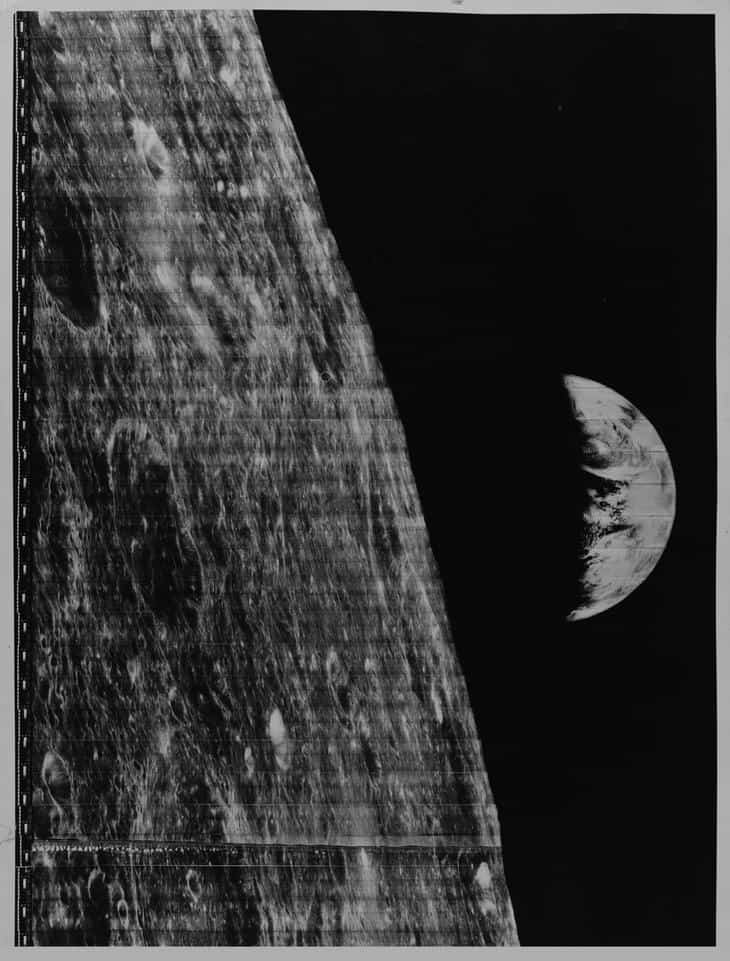
1966 Lunar Orbiter picture of the Earth and Moon

If you look incredibly closely you may just be able to make out John Lennon’s flares or the England football team lifting the World Cup. This portrait of our planet from 1966 is part of the first collection of photos of the Earth taken from beyond the Moon. It was taken by a camera on board Lunar Orbiter I, the first US spacecraft to orbit the Moon, which helped pave the way for the Moon landings at the end of the decade.

(more…)

Graphene pioneer Konstantin Novoselov goes Dutch

The 2010 Nobel-prize winner Konstantin Novoselov of the University of Manchester in the UK has taken up a part-time role at Radboud University Nijmegen in the Netherlands. Novoselov, 40, will hold a special chair in the electronic properties of novel materials at the university, which will be funded by Nijmegen’s High Field Magnetic Laboratory (HFML), where the Nobel-prize winner carried out parts of his PhD research.

The Dutch physics community has welcomed the appointment, adding that it underlines the “special relationship” between Novoselov and Radboud University Nijmegen. Between 1997 and 2001, Novoselov worked at the university together with his former mentor Andre Geim, with whom he shared the 2010 Nobel prize for their work on the properties of graphene. Since its discovery in 2004, interest in this “wonder material” has rocketed – both in terms of fundamental science and potential future applications.

Novoselov, who was born and raised in Russia, says that he is honoured by the new position – which will not be paid, except for expenses – stressing that it seals a long-standing collaboration with Nijmegen. Indeed, Novoselov visits the HFML regularly to conduct experiments and he will continue to give occasional colloquia, although the new job will not involve any formal teaching commitments.

Nijmegen created a similar academic chair for Geim in 2010 and Novoselov has now been honoured in the same fashion. “Somehow, exact academic positions seem to be much more important to the Dutch than they are here,” Novoselov told physicsworld.com. “I am only interested in doing my research as much as possible, the where and how is irrelevant, frankly.”

Part of the scene

In 2001 both Novoselov and Geim left the Netherlands to take up positions at Manchester, apparently after Geim failed to find a position at several Dutch universities. Indeed, after the pair won the Nobel prize, which was for work they did in 2004 while at Manchester, both Novoselov and Geim complained that the Dutch research system was too rigid and did not give researchers space for creative fundamental research. The comments caused a storm in the Dutch media and within the Dutch research community.

Graphene theorist Carlo Beenakker of Leiden University calls Novoselov’s appointment “a smart academic move” and says that the current relationship between the Dutch community and the graphene duo is excellent. “He comes to Nijmegen a lot anyway, working with graphene-theorist Michael Katsnelson, and with Geim already holding a visiting professorship, adding Novoselov seems logical,” says Beenakker. “Geim and Novoselov are part of the Dutch graphene scene.”

Gerard Meijer, dean of Nijmegen, adds that having Novoselov at the HFML will be “a true inspiration” for students and staff there. “To work with him is a unique opportunity that we would like to preserve for our university, as well as the future.” However, Jan Kees Maan, director of the HFML, who supervised Novoselov during his PhD, admits that while the appointment is welcome, it comes a little late. “I think it is healthy for a young, brilliant scientist like Novoselov to find a career elsewhere, like at Manchester,” says Kees Maan. “Even if in hindsight our university appears to have missed a Nobel laureate in the process.”

Copyright © 2026 by IOP Publishing Ltd and individual contributors