Between the lines

An insider’s tale of Curiosity

When the Mars rover Curiosity landed safely after its “seven minutes of terror” descent to the red planet’s surface, Roger Wiens’ sigh of relief was bigger than most. As the principal investigator for the rover’s ChemCam instrument – which uses a laser to vaporize Martian rocks and a spectrometer to sniff out the chemical composition of the resulting debris – Wiens had more than a decade’s worth of work invested in the craft’s survival. And survival, as he explains in his book Red Rover, was anything but assured. Before becoming involved with Curiosity, he worked on a spacecraft called Genesis, which spent 27 successful months collecting particles from the solar wind only to crash into the Utah desert when its parachute failed to deploy during re-entry. That disaster was far from total, since Wiens and his colleagues were able to recover significant amounts of data from the craft’s shattered innards. Nevertheless, he acknowledges in the book that the last-minute failure of Genesis coloured his view of Curiosity’s chances: “In my dreams, everything that could go wrong played itself out at least once,” he writes. The list of things that could have prevented Curiosity from settling safely in Mars’ Gale Crater was indeed long. Wiens gives roughly equal time to bureaucratic obstacles and technical ones, but although descriptions of scientific review panels are unlikely to set the literary world alight, he has a good eye for interesting details and is clearly passionate about his work. He is also immune from the scourge of “mention-itis” (a disease that compels some scientist-authors to mention the name of everyone who ever contributed to a project), and is frank but not rude when it comes to describing disagreements and disappointments. The result is a book that anyone interested in a career in space science should read, and many outside the field will appreciate.

  • 2013 Basic Books £17.99/$25.99hb 256pp

Moonshine and sunshine

In the early 1930s Ernest Rutherford called the energy gained from fusion “a very poor kind of thing”, adding that “anyone who expects a source of power from [fusion] is talking moonshine”. By the 1950s the situation seemed more promising: one researcher, James Tuck, named his fusion device at the Los Alamos National Laboratory “the Perhapsatron”. Since then, the fortunes of fusion have oscillated between moonshine and sunshine, and in his book A Piece of the Sun: the Quest for Fusion Energy, Daniel Clery skilfully chronicles this complex history. He begins by outlining the great attractions of fusion, such as the abundance of the fuel and the relatively small amount of waste produced. Unfortunately, there are numerous practical barriers to achieving controlled fusion, and Clery spends the rest of the book describing how scientists in (mostly) the UK, US and Russia overcame some of them and continue to struggle with others. Throughout fusion’s history, he notes, funding has “ebbed and flowed depending on the eagerness of governments to find alternative sources of energy”. Unfortunately for fusion’s proponents, that pattern may not bode well for the future. Although construction on the ITER fusion reactor is under way in France, and the US National Ignition Facility is (theoretically) still trying to live up to the middle part of its name, the emergence of fracked natural gas as a politically popular new source of conventional energy suggests that fusion funding could be heading for another fallow period. Certainly, we are unlikely to return to the glory days of the late 1950s when one Soviet researcher, Vladimir Mukhovatov, suggested to his boss that lining the walls of his fusion device with gold might prevent the plasma from being contaminated. As Clery puts it, “A week later a 2 kg lump of gold was sitting on his desk.”

  • 2013 Overlook Press $27.95hb 320pp/Gerald Duckworth £25hb 336pp

The hardest problems

What constitutes a hard problem? For a computer scientist like Lance Fortnow, the answer can be summed up by an acronym: NP. In The Golden Ticket: P, NP, and the Search for the Impossible, Fortnow explains what these two letters mean and why it matters. Initially, he defines NP only loosely, as “the collection of problems that have a solution that we want to find”, while its counterpart, P, is “the problems to which we can find a solution quickly”. If P = NP, he explains, we live in “the beautiful world” where computers can work out most anything we ask them to. But if P ≠ NP, as most mathematicians and computer scientists believe, we are going to have to do some things the hard way. Later, Fortnow elaborates on his definitions of P and NP by describing the imaginary land of “Frenemy”, in which everyone is either friends or enemies with everyone else. In Frenemy, the government needs to know how many colours of paint are required if neighbouring houses must not share the same colour; primary-school teachers would like their classes to contain as few pairs of enemies as possible; and children play a game in which pairs of friends pass a stick to each other and everyone must get the stick exactly once. These challenges may sound simple, but in fact they are all NP problems. In fact, they are “NP-complete”, the hardest type of NP problem, and a solution to one of them – if it existed – could also be used to solve the others. Fortunately, many NP-complete problems do have “good enough” inexact solutions, which is why your sat nav can work out a good route even though finding the absolute shortest route between n points (the “travelling salesman” problem) is NP-complete. Fortnow uses examples such as these rather than equations, and in the introduction he explains that he borrowed this tactic from Stephen Hawking’s A Brief History of Time. The book’s more direct connections to physics are perhaps less happy; the chapter on how quantum computing might affect the NP conundrum is cursory, and Fortnow’s suggestion that algorithms in “the beautiful world” could predict the weather a year in advance seems to conflict with chaos theory. Still, The Golden Ticket does a good job of explaining a complex concept in terms that a secondary-school student will understand – a hard problem in its own right, even if not quite NP.

  • 2013 Princeton University Press £18.95/$26.95hb 192pp
Vintage snaps from space history

By James Dacey

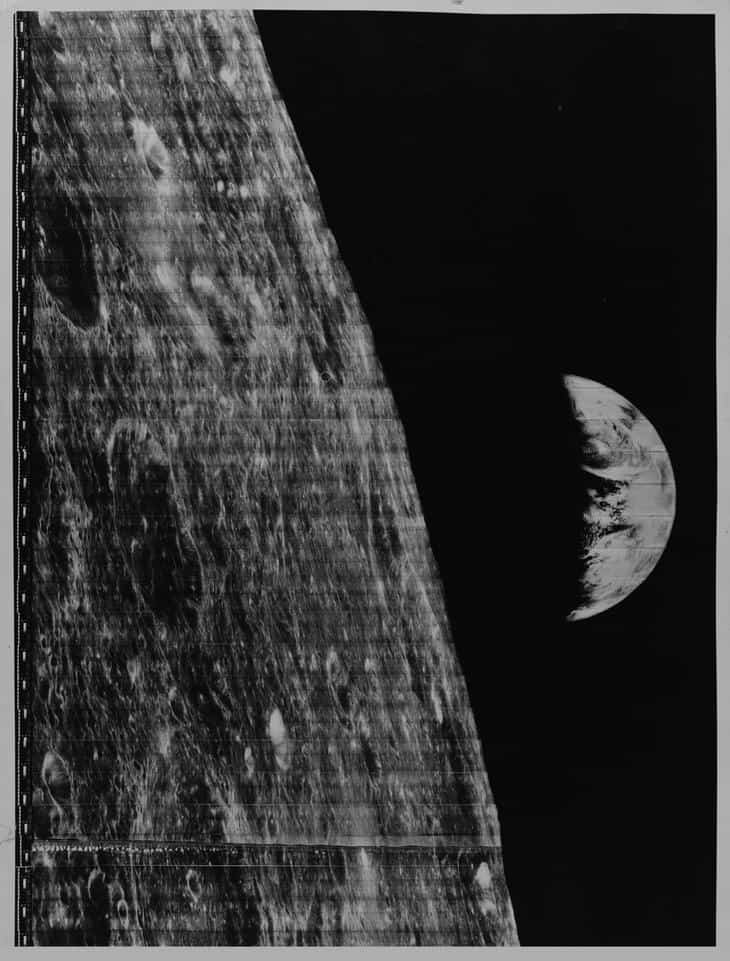
1966 Lunar Orbiter picture of the Earth and Moon

If you look incredibly closely you may just be able to make out John Lennon’s flares or the England football team lifting the World Cup. This portrait of our planet from 1966 is part of the first collection of photos of the Earth taken from beyond the Moon. It was taken by a camera on board Lunar Orbiter I, the first US spacecraft to orbit the Moon, which helped pave the way for the Moon landings at the end of the decade.

(more…)

Graphene pioneer Konstantin Novoselov goes Dutch

The 2010 Nobel-prize winner Konstantin Novoselov of the University of Manchester in the UK has taken up a part-time role at Radboud University Nijmegen in the Netherlands. Novoselov, 40, will hold a special chair in the electronic properties of novel materials at the university, which will be funded by Nijmegen’s High Field Magnetic Laboratory (HFML), where the Nobel-prize winner carried out parts of his PhD research.

The Dutch physics community has welcomed the appointment, adding that it underlines the “special relationship” between Novoselov and Radboud University Nijmegen. Between 1997 and 2001, Novoselov worked at the university together with his former mentor Andre Geim, with whom he shared the 2010 Nobel prize for their work on the properties of graphene. Since its discovery in 2004, interest in this “wonder material” has rocketed – both in terms of fundamental science and potential future applications.

Novoselov, who was born and raised in Russia, says that he is honoured by the new position – which will not be paid, except for expenses – stressing that it seals a long-standing collaboration with Nijmegen. Indeed, Novoselov visits the HFML regularly to conduct experiments and he will continue to give occasional colloquia, although the new job will not involve any formal teaching commitments.

Nijmegen created a similar academic chair for Geim in 2010 and Novoselov has now been honoured in the same fashion. “Somehow, exact academic positions seem to be much more important to the Dutch than they are here,” Novoselov told physicsworld.com. “I am only interested in doing my research as much as possible, the where and how is irrelevant, frankly.”

Part of the scene

In 2001 both Novoselov and Geim left the Netherlands to take up positions at Manchester, apparently after Geim failed to find a position at several Dutch universities. Indeed, after the pair won the Nobel prize, which was for work they did in 2004 while at Manchester, both Novoselov and Geim complained that the Dutch research system was too rigid and did not give researchers space for creative fundamental research. The comments caused a storm in the Dutch media and within the Dutch research community.

Graphene theorist Carlo Beenakker of Leiden University calls Novoselov’s appointment “a smart academic move” and says that the current relationship between the Dutch community and the graphene duo is excellent. “He comes to Nijmegen a lot anyway, working with graphene-theorist Michael Katsnelson, and with Geim already holding a visiting professorship, adding Novoselov seems logical,” says Beenakker. “Geim and Novoselov are part of the Dutch graphene scene.”

Gerard Meijer, dean of Nijmegen, adds that having Novoselov at the HFML will be “a true inspiration” for students and staff there. “To work with him is a unique opportunity that we would like to preserve for our university, as well as the future.” However, Jan Kees Maan, director of the HFML, who supervised Novoselov during his PhD, admits that while the appointment is welcome, it comes a little late. “I think it is healthy for a young, brilliant scientist like Novoselov to find a career elsewhere, like at Manchester,” says Kees Maan. “Even if in hindsight our university appears to have missed a Nobel laureate in the process.”

Seeing the past with X-ray vision

This short film takes you inside what has been described as “the world’s finest fossil photo booth”. The European Synchrotron Radiation Facility (ESRF) has pioneered a technique that enables palaeontologists to see 3D details of fossils with unprecedented clarity – without causing any damage to samples. When using the technique, known as X-ray microtomography, researchers scan fossils with synchrotron radiation from thousands of different angles to produce a set of radiographs. These virtual slices can then be combined to create 3D reconstructions of the samples, including the exquisite detail of internal structures.

The mastermind behind the imaging technique is Paul Tafforeau, a palaeontologist and beamline scientist based at the ESRF. In this film, Tafforeau demonstrates how fossils are scanned in his fossil photo booth; he describes the history of the technique and how palaeontology has become an important area of scientific research at the ESRF. One recent study that received a lot of media attention involved a fossilized ancient primate known as Archicebus Achilles. The film looks at the significance of this breakthrough to palaeontology and Tafforeau describes how his team was able to produce a near-perfect 3D reconstruction of Archicebus Achilles, despite the fact that several bones were missing from the fossil.

Another recent study that features in the film is the analysis of a 250 million-year-old fossilized burrow, recently discovered in South Africa. By peering inside the burrow using the X-ray microtomography technique, researchers discovered that two unrelated vertebrate animals appeared to have been cohabiting in the same burrow before they both met their demise. This was a great surprise to the researchers, who were left trying to piece together a scenario into why this might have happened.

Asia-Pacific particle physicists back ILC

Particle physicists in Asia and Oceania have issued a joint statement calling for the construction of the International Linear Collider (ILC), describing the proposed design as “the most promising electron–positron collider to achieve next-generation physics objectives”. The announcement also backs Japan’s intention to host the facility and comes less than two weeks after Japanese physicists announced their location of choice for the ILC. Together, these announcements make it look increasingly likely that the next major particle-physics experiment after CERN’s Large Hadron Collider (LHC) will be built in Japan rather than Europe or North America.

The statement comes from the Asia-Pacific High Energy Physics Panel (AsiaHEP) and the Asian Committee for Future Accelerators (ACFA). AsiaHEP comprises particle physicists in Australia, China, India, Japan, Korea and Taiwan, while ACFA promotes accelerator facilities in Asia, Oceania and the Middle East.

If built, the ILC will be about 30 km in length and will smash electrons into positrons at energies of about 500 GeV. While this is only about 4% of the collision energy planned for the next run of the LHC, it is more than enough energy to create the Higgs boson – which was discovered last year at the LHC with a mass of about 125 GeV/c2. What is more, ILC collisions would produce far less unwanted debris than the proton–proton collisions in the LHC. This should allow the linear collider to make very precise measurements of the properties of the Higgs and other subatomic particles.

CLIC versus ILC

There are currently two competing designs for a next-generation electron–positron linear collider: the ILC and the Compact Linear Collider (CLIC). While the ILC is based on established superconducting accelerator technology, CLIC aims to use a newer two-beam acceleration concept. The latter involves using a high-current electron beam that runs parallel to the main beam. Radio-frequency energy is extracted from this beam and sent to accelerating structures that drive the main electron and positron beams. According to CLIC supporters, the design could achieve collision energies as high as 3 TeV for a 48 km collider – although a shorter, less-energetic collider is also possible.

As well as choosing the ILC over CLIC, the AsiaHEP/ACFA statement also backs plans announced on 23 August by Japanese particle physicists to build the ILC in the Tōhoku region about 400 km north of Tokyo. The 50 km route under the Kitakami mountains was selected over an alternate location at Sefuri on the island of Kyushu. Initially, Japanese physicists hope to build a scaled-down version of the ILC that will create 250 GeV collisions – which is enough energy to study the Higgs. This would then be upgraded to 500 GeV and ultimately 1 TeV. The proposal is backed by KEK – Japan’s High Energy Accelerator Research Organization – which earlier this year said it wanted to begin operation of a Japan-based ILC in the 2020s. However, the Japanese government and others worldwide have yet to guarantee the money needed to build such a massive facility.

Quantum cryptography is coming to mobile phones

The first practical way of carrying out quantum cryptography using a mobile phone has been developed by researchers at Nokia and the University of Bristol in the UK. Quantum cryptography – which allows messages to be sent with complete secrecy – is currently limited to banks and other organizations that can afford to have expensive and extremely sensitive quantum-optical components at both ends of a communications link. What the Nokia/Bristol team has done is to work out how to perform “quantum key distribution” (QKD) using simple and potentially inexpensive “client” electronics that could be integrated within a single chip.

QKD is a popular quantum-cryptography technique that is already being used commercially. It allows two parties – usually called Alice and Bob – to exchange an encryption key, secure in the knowledge that the key will not have been read by an eavesdropper (Eve). This guarantee is possible because the key is transmitted in terms of quantum bits (qubits) of information, which if intercepted and read are changed irrevocably, thus revealing the actions of Eve.

Twisting and turning

The new system, which gets round several practical barriers to implementing quantum cryptography in portable electronics, has been developed by Anthony Laing and colleagues at Bristol’s Centre for Quantum Photonics (CQP) and at the Nokia Research Center in Cambridge, UK. It uses a variant of QKD called reference frame independent QKD, (rfiQKD), which was developed by Laing and several other team members. It solves one big restriction with conventional QKD methods: that they only work if Alice and Bob measure the properties of photon qubits – such as phase or polarization – relative to a fixed reference frame.

The advantage of rfiQKD is that it allows for some twisting and turning – even if this relative motion is unknown. The technique works by having Alice and Bob each compute a specific combination of observables whereby the effect of the twisting angle cancels itself out. According to Laing, this “angle independent” value can be thought of as the purity of the quantum state exchanged by Alice and Bob. When it falls below a certain threshold, the pair is alerted to Eve’s spying presence.

Jeremy O’Brien, director of the CQP, believes that the system could ultimately make it possible to use quantum cryptography to protect the growing amount of personal information, such as passwords, that is transmitted using mobile phones. Automated teller machines, for example, could be set up as rfiQKD servers and a user could simply point their phone at an optical system to receive a quantum key.

“This is the first real prospect of putting quantum technology in the hands of the average person,” says O’Brien, adding that Nokia – which together with the CQP has patented the technology – is now looking at how it could be engineered into a mobile device.

Alice does the difficult bits

In the new system, Alice is described as a server because she sits in a fixed location and performs all the delicate measurements required for the rfiQKD. Bob is described as a client because he performs simple and robust actions that can be achieved using a portable device.

First, the server creates a very weak pulse of light that is sent to the client using an optical fibre. The client takes the weak pulse and passes it through an attenuator, which outputs a single photon. The client then sets the polarization of the photon and sends it back to the server via the optical fibre. The server then measures the polarization of the photon. Then, the client and server compare their measurements using a conventional link, which allows them to extract both the cryptography key and the purity of the link.

The team also implemented a well-known conventional QKD protocol called BB84 on its system. While BB84 began to fail as the alignment of the client and server was allowed to drift over time, rfiQKD held up. The team also found that rfiQKD was able to rapidly recover from noise intentionally introduced to the communication link at a debilitating level, while BB84 continued to fail.

The research is described in a preprint on arXiv.

The September 2013 issue of Physics World is out now

By Matin Durrani

If you’re a member of the Institute of Physics (IOP), it’s time to get stuck into the September 2013 issue of Physics World, which has a great range of articles that are sure to pique your interest.

Remember that all members of the IOP can  access the entire new issue free via the digital version of the magazine or by downloading the Physics World app onto your iPhone or iPad or Android device, available from the App Store and Google Play, respectively.

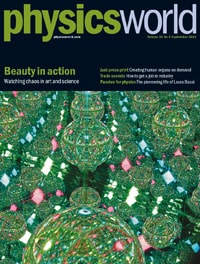
This month we catch up with the latest developments in what seems almost like science fiction: creating artificial organs with a 3D printer that uses a patient’s own cells as ink. We also look at the life of Laura Bassi, who in 18th-century Italy became possibly the first ever female professional physicist. Our final feature this month examines the interplay between chaos in art and science, which has included everyone from Jackson Pollock to Edward Lorenz.

Don’t miss either a great Lateral Thought about the link between physics and bringing up babies, while this month’s careers article has some top tips for anyone wanting to get a job in industry.

(more…)

Looking beyond the Standard Model in Liverpool

Liverpool physicist John Fry (right) gets ready for his close-up

By Hamish Johnston

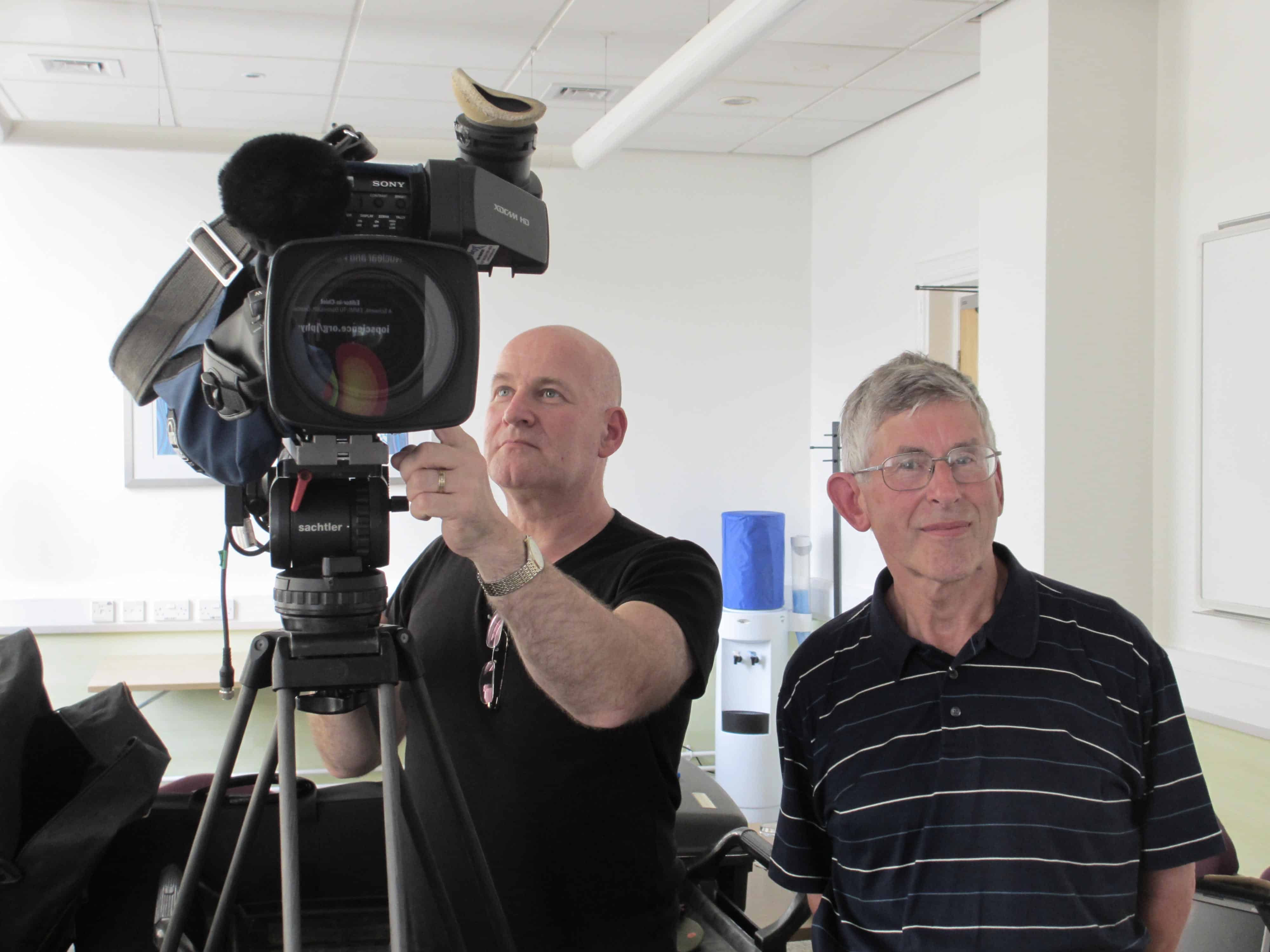
Earlier this week the Physics World film crew was on Merseyside to document some of the exciting physics done in Liverpool and its environs. Our first stop was a meeting of the NA62 collaboration at the University of Liverpool that was organized by the particle physicist John Fry (above right with our cameraman David Hart).

The finishing touches are currently being put on the NA62 experiment, which will start up at CERN in Geneva next year. The international collaboration running the experiment will focus on making precise measurements of the decay of a charged kaon to a pion and two neutrinos. If all goes to plan, NA62 could find that the decay is not completely described by the Standard Model of particle physics, which could point towards new and exciting physics.

(more…)

Star’s flicker reveals its surface gravity

Flicker, flicker little stars
Now we know what your surface gravities are

This update of a classic nursery rhyme was inspired by astronomers in the US, who by serendipity have found a new method of measuring the strength of gravity on the surface of a star. Surface gravity is a key stellar parameter and having a new way to determine its value could lead to further insights into extrasolar planets (exoplanets), which are planets that orbit stars other than the Sun.

Surface gravity is important because it provides information about two fundamental properties of a star. These are its mass – which governs how the star behaves – and its diameter, which can affect estimates of the sizes of planets seen to be orbiting it.

Not surprisingly, the star with the most precisely known surface gravity is our own. The Sun is 109 times larger than the Earth and 332,946 times more massive, so simple calculations indicate you would weigh 28 times more there than here – if you could survive the heat. For more distant stars, surface gravity can be estimated using a spectroscopic technique, but only with an accuracy of 25–50%.

Spotted by Kepler

Now, Fabienne Bastien and Keivan Stassun of Vanderbilt University in Nashville, Tennessee, and colleagues have chanced upon a new method that can deliver an accuracy of 15–25%. The story begins with Bastien examining data from the Kepler space observatory, which makes very precise measurements of the brightness of stars. Kepler’s primary goal is to find the tiny dips in brightness that occur when orbiting planets pass in front of their stars.

For some stars, Kepler has also detected internal oscillations in brightness and Bastien noticed that the more a star’s light flickers during a period of eight hours, the lower its surface gravity. “It was an accident,” says Bastien, a graduate student who is using Kepler data to study stellar magnetic fields. “I actually did not quite know what to make of it.”

Stassun, her advisor, recalls what happened next. “She came into my office. ‘Look at this pattern’, she said. ‘It’s pretty dramatic. But what is it?'”

Rising bubbles

Bastien and Stassun then hit upon the answer. Most stars, including the Sun, have surface temperatures of less than 6500 K. Such stars have outer layers that are convective: their surfaces boil like a pot of water on a hot stove. Hot bubbles of gas rise to the surface; cooler ones descend.

Following the Stefan–Boltzmann law, the hot bubbles are brighter, so the star’s surface looks granulated, with dark areas surrounding bright ones. The granules, the astronomers think, cause the starlight to flicker. On a star with a high surface gravity, like the Sun, the granules are small, producing only tiny flickers. In contrast, a low-surface-gravity star, like a puffy red giant, has large granules and therefore larger flickers.

“Surprisingly nice, tight correlation”

“It’s an innovative technique to measure something interesting that will have impact on several different fields,” says Marc Pinsonneault, an astronomer at Ohio State University in Columbus who was not involved with the discovery. He calls the link between stellar flicker and surface gravity “a surprisingly nice, tight correlation”.

“What the flicker method will do is to greatly improve the accuracy of planet diameters,” Stassun says. Good estimates of planetary sizes help determine whether a far-off world is a gas giant like Jupiter, an ice giant like Neptune, or a rocky planet like Earth. Kepler scientists use the amount of starlight a planet blocks to estimate its size relative to its star. So determining the planet’s absolute size requires knowing the star’s diameter, which the flicker technique will provide via the surface gravity.

The flicker technique does have its limitations. It will not work on the hottest stars, which have outer layers that do not bubble. And the flickers are small, so the method requires a sensitive spacecraft such as Kepler. Kepler recently suffered a major malfunction, but NASA does plan to launch a successor, the Transiting Exoplanet Survey Spacecraft, later this decade.

Easier but less accurate than asteroseismology

The technique is also not as accurate as asteroseismology, which exploits a star’s internal oscillations to derive its surface gravity. “Nothing compares to asteroseismology,” says Stassun. “It really is the gold standard.” But flicker measurements are much easier to make than asteroseismic ones.

The new work also suggests that the Sun will someday lose its spots. Young sun-like stars have strong magnetic fields that pepper their surfaces with spots and flares, producing much larger stellar fluctuations than the flickers. But as stars age, their magnetic activity dwindles. Ultimately, they reach what Bastien and her colleagues call a “flicker floor”: no spots besmirch their surfaces and all variability arises instead from the granules.

At sunspot minimum, our star is already near this flicker floor. When will the Sun be completely spotless? “My guess is that we’re probably talking something in the neighbourhood of a billion years,” says Stassun.

The astronomers have published their discovery in Nature.

Meet the engineers who talk to aeroplanes

By Ian Randall

For most people, it’s considered rather eccentric to talk to inanimate objects – and if the objects seem to be talking back, then it’s probably time to seek medical advice! Not, however, for Alex Ng and his colleagues at the University of Adelaide in Australia, who are working on a way to “chat” to buildings, bridges, aeroplanes and other structures, so they can report back on their structural health.

(more…)

Copyright © 2026 by IOP Publishing Ltd and individual contributors